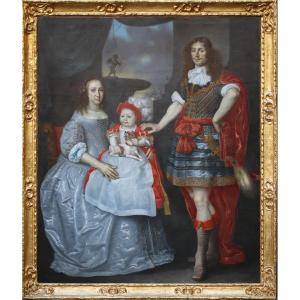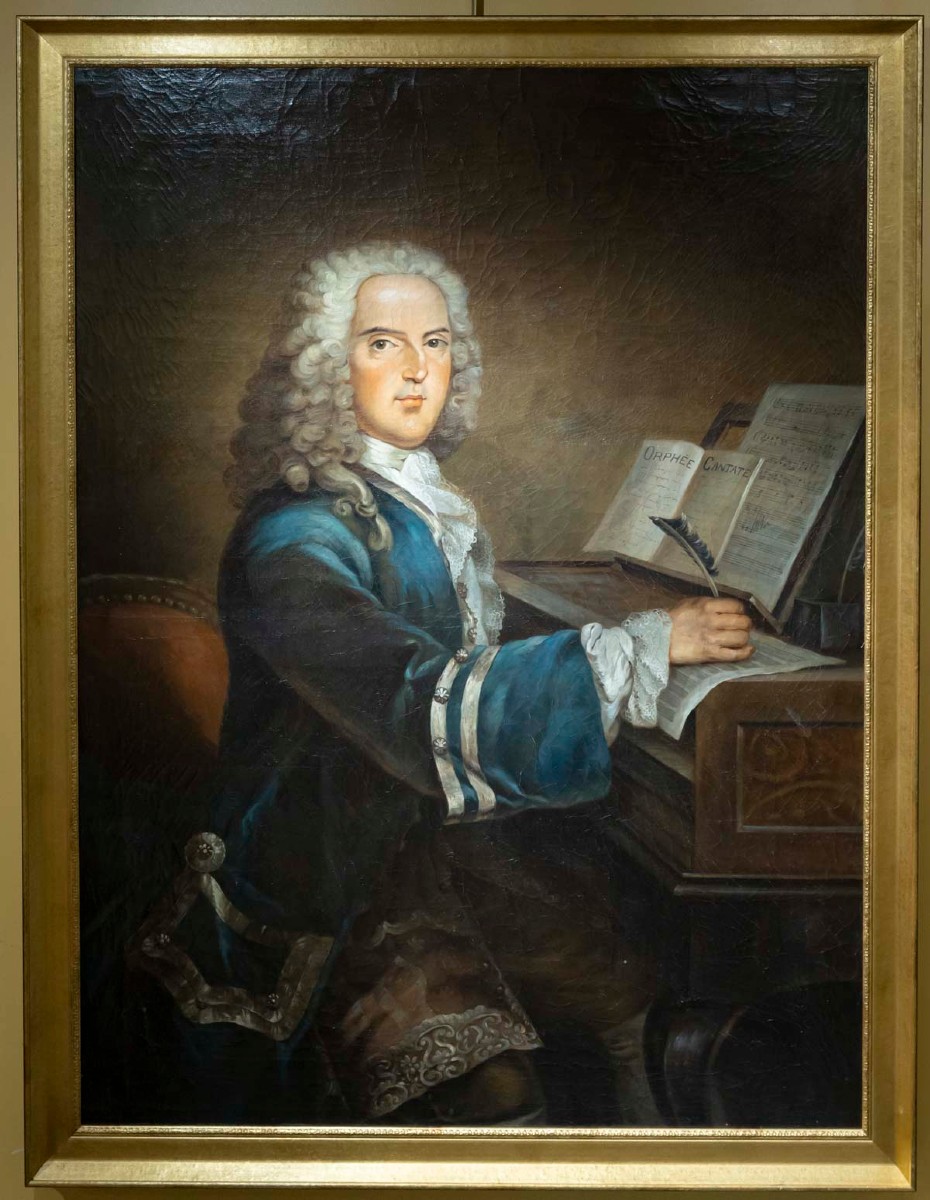


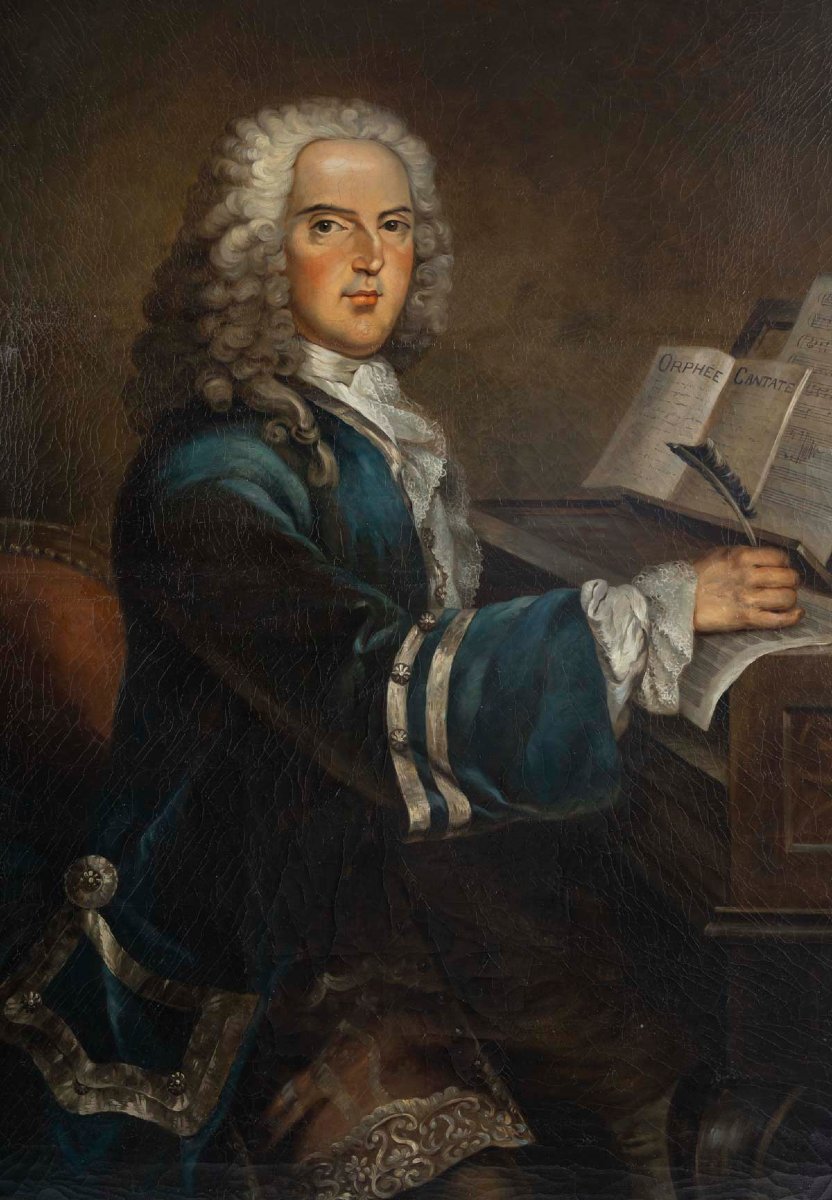
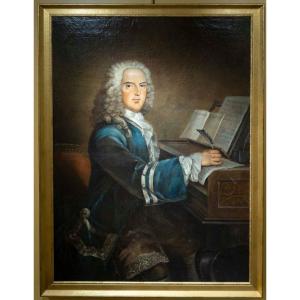


Portrait Of Louis-nicolas Clerambaut (1676-1749) French School, 18th Century
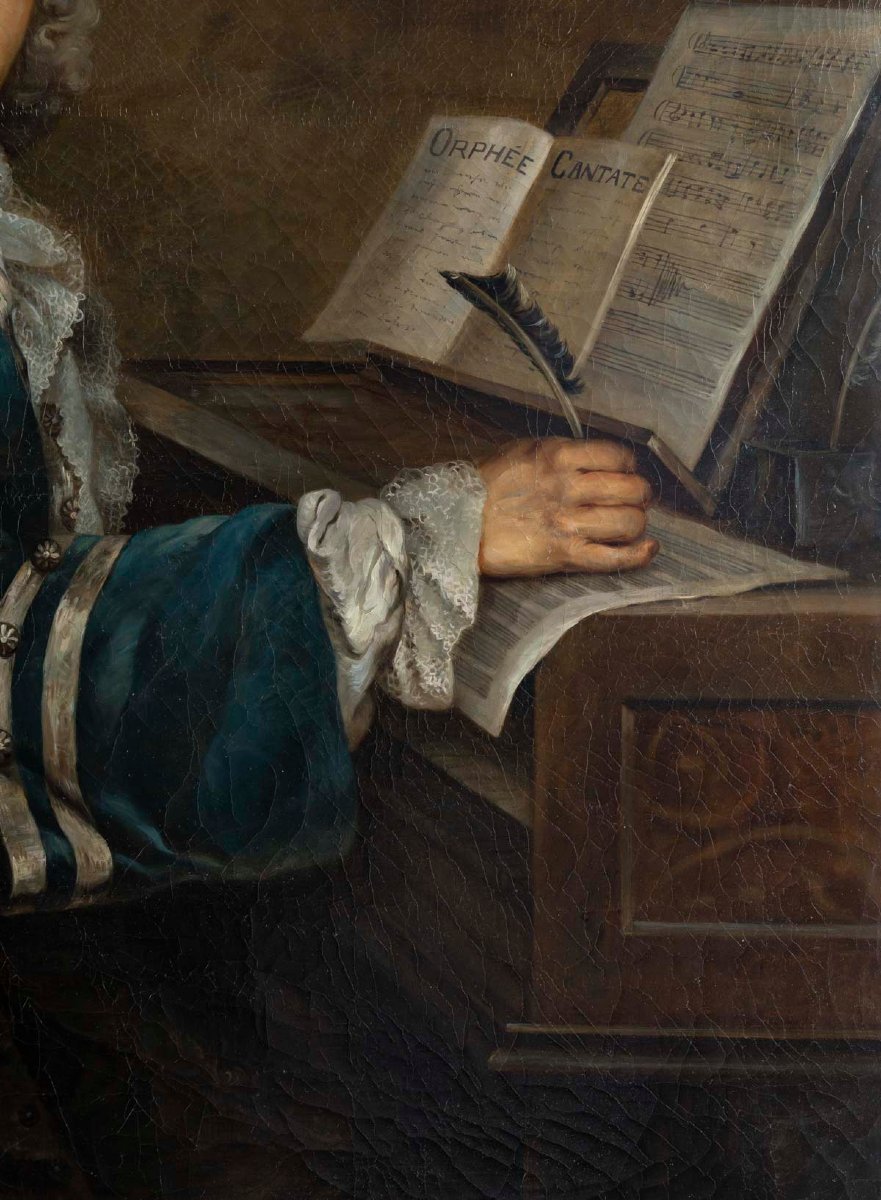
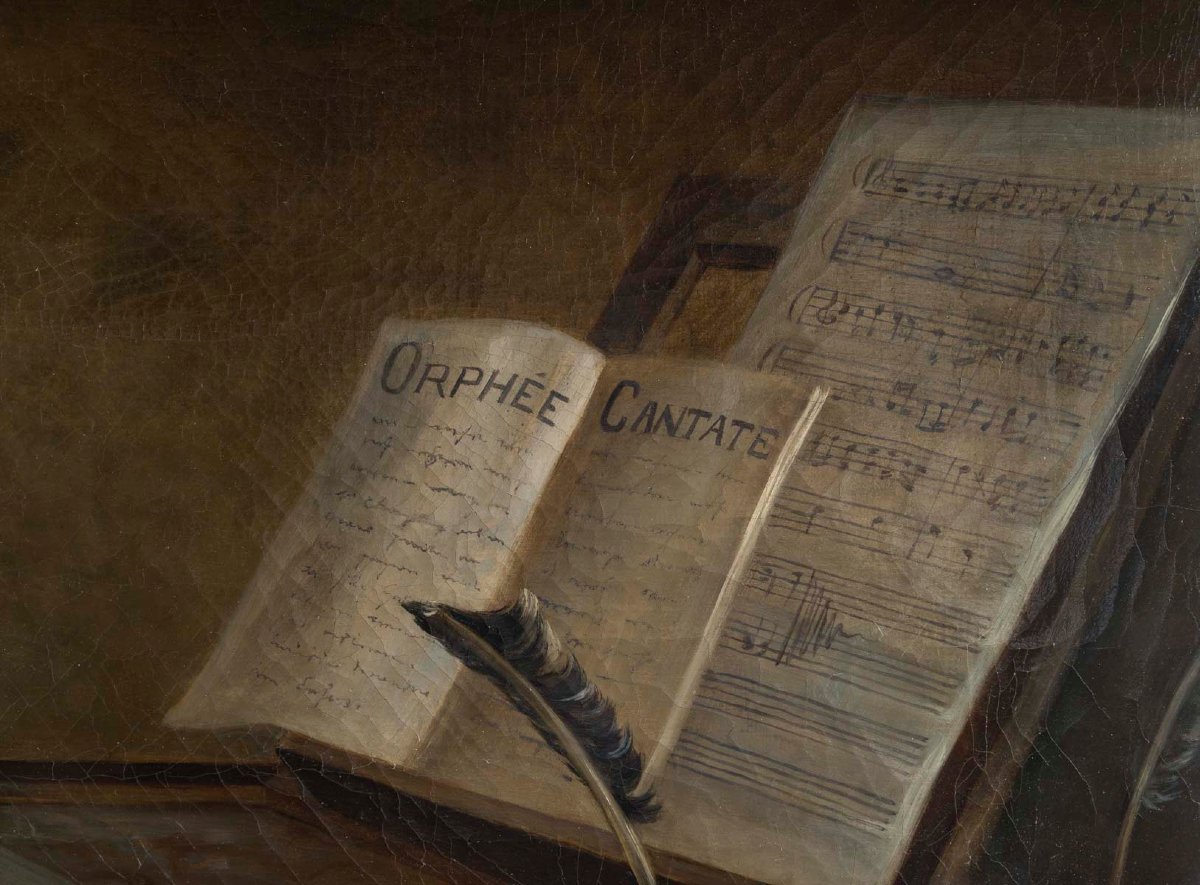
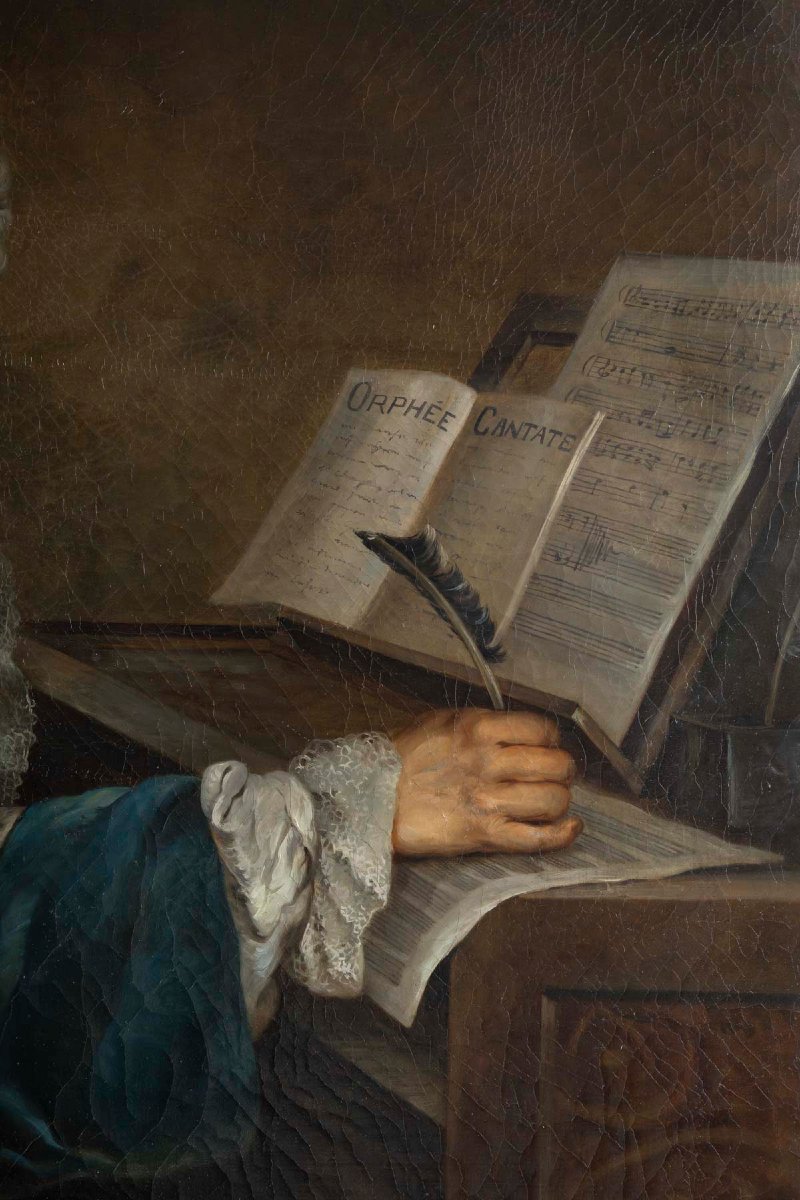
Portrait of Louis-Nicolas Clerambault (1676-1749), late 18th century. Oil on original canvas. Dimensions: 110 x 90 cm (excluding frame). The painter presents the artist in three-quarter view, dressed in an elegant blue velvet frock coat over a pink silk waistcoat trimmed with lace. He is seated before his harpsichord, a score of "Cantata of Orpheus" resting on his easel. Our portrait was engraved by Louis-Simon Leempereur, an engraver of interpretation, born in 1728 and died in 1807, who was engraver to the King. This engraving is held at the BNF (National Library of France). Born into a family of musicians in Paris in 1676, Louis-Nicolas Clerambault studied violin and harpsichord. He was a pupil of André Raison, organist of the Abbey of Sainte-Geneviève and the Jacobins church on Rue Saint-Jacques. He also studied composition and singing with Jean-Baptiste Moreau. Louis XIV, having heard one of his cantatas, commissioned him to compose several for his chamber music and appointed him superintendent of music for Madame de Maintenon. Organist of the Church of the Grands-Augustins since 1704, he succeeded Nivers, who died in 1714, at the organs of Saint-Sulpice and the Royal House of Saint-Cyr. It was in this position, which was confirmed after the death of Madame de Maintenon, that he developed the genre of the "French cantata," of which he is the undisputed master. In 1719, he succeeded his teacher André Raison as organist of the church of the Grands-Jacobins. He is known as the first master of the French sonata and cantata, inspired by Italian models.
5 400 €
Period: 18th century
Style: Louis 14th, Regency
Condition: Excellent condition
Material: Oil painting
Width: 90 cm
Height: 110 cm
Reference (ID): 1705782
Availability: In stock
Print