

19th Century Boulle Style Chest Of Drawers
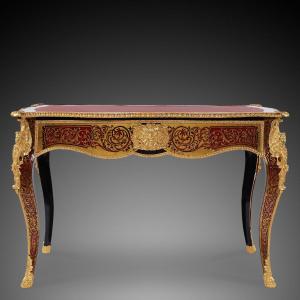
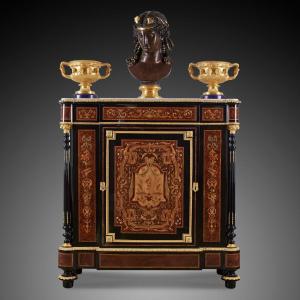
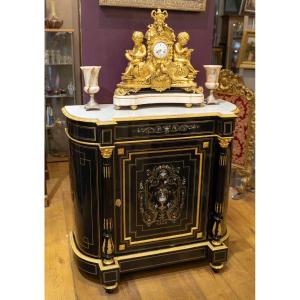
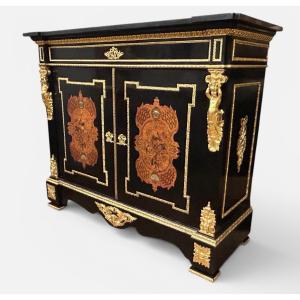
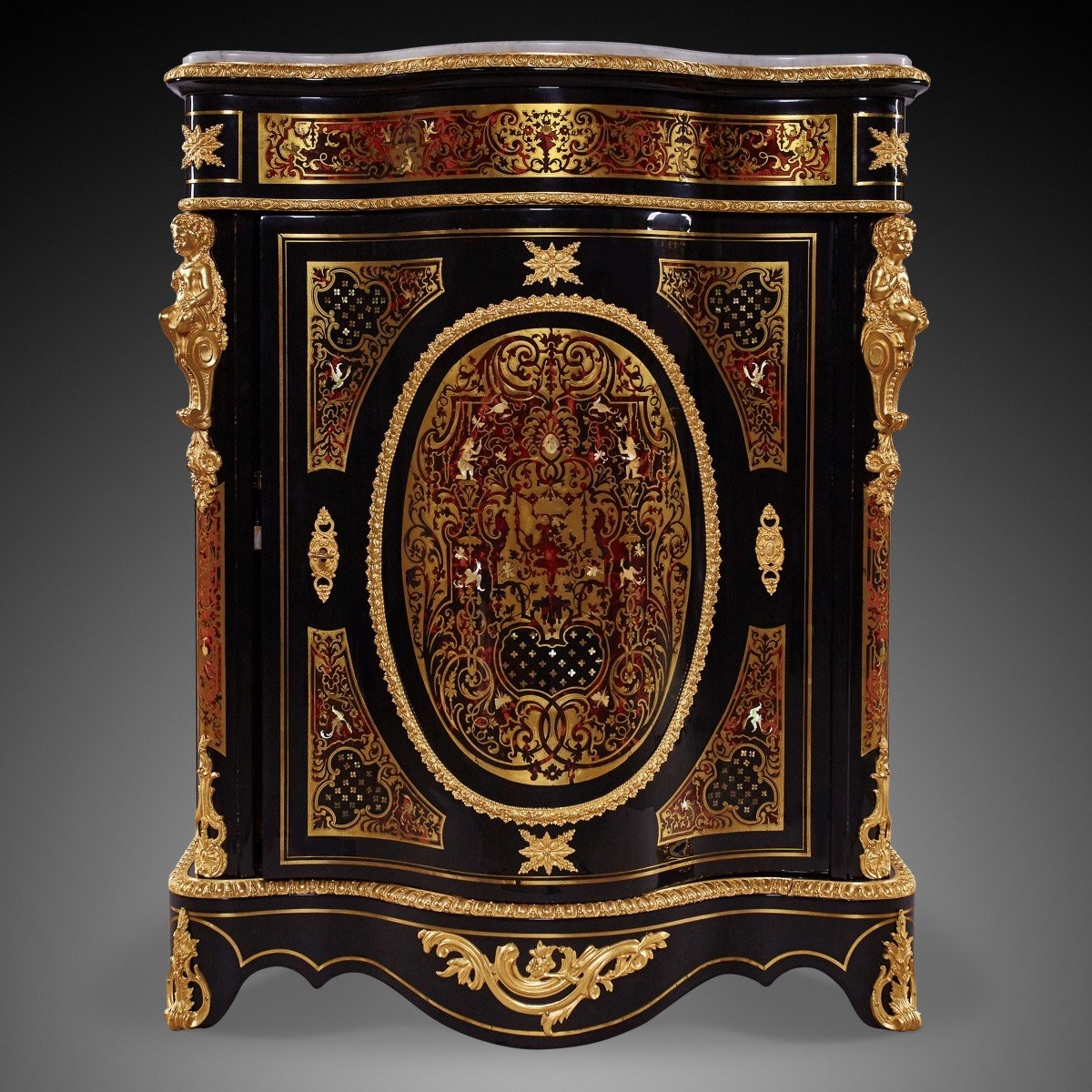
Royal Antique is honored to present this sumptuous two-door cabinet, of museum-quality craftsmanship, perfectly illustrating the revival of the Boulle style during the French Second Empire. This exceptional piece is a shining testament to the taste for opulence and refinement that characterized the Napoleon III period, brilliantly reinterpreting the work of the master cabinetmaker André-Charles Boulle (1642-1732).
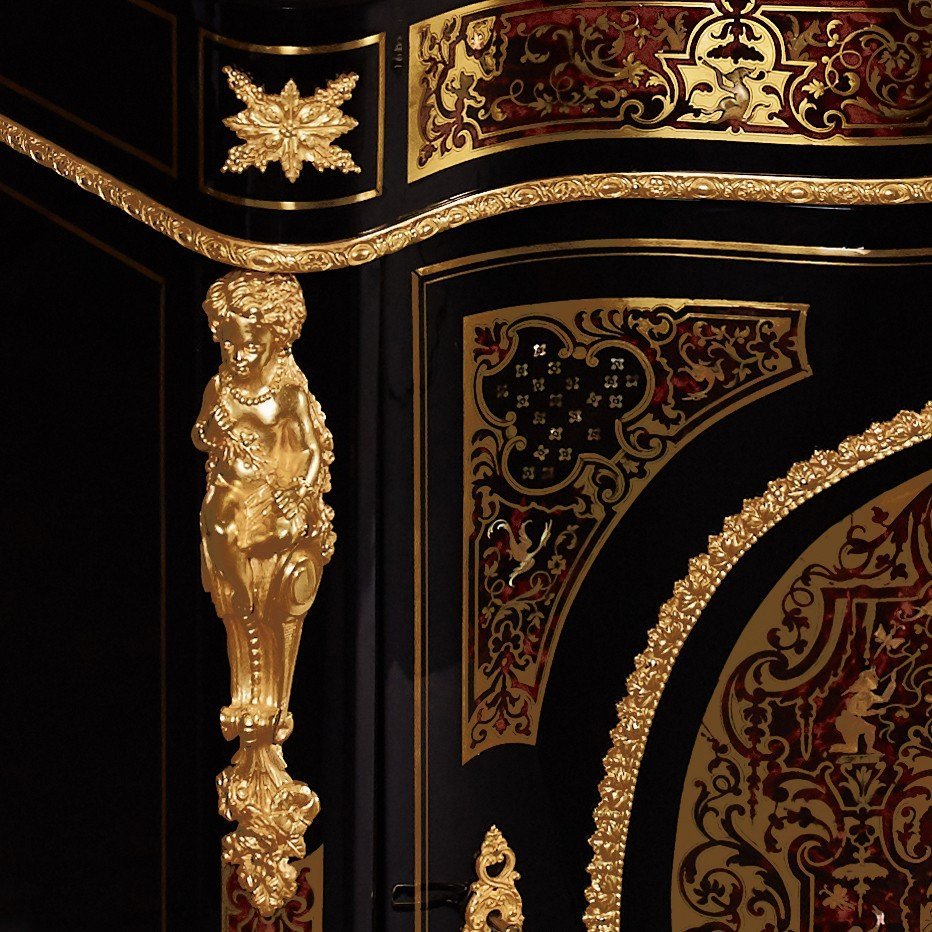
Exceptional Materials and Techniques: Boulle Marquetry: This cabinet is entirely adorned with the renowned Boulle marquetry, combining with unparalleled mastery thin sheets of (gilded) brass and tortoiseshell, inlaid in a richly varnished ebony background. The intricate, often floral, arabesque and acanthus scroll motifs create a striking contrast and a dazzling play of light on the dark surface. Gilt Bronze (Ormolu) Mounts: The structure is sumptuously enhanced by finely chased gilt bronze (ormolu) mounts. These ornaments include elegant caryatids, foliate friezes, openwork corner mounts, and delicate sabots, which not only protect the corners of the piece but also contribute to its architectural grandeur and regal appearance. The quality of the chasing and gilding is exemplary, attesting to high-level craftsmanship.
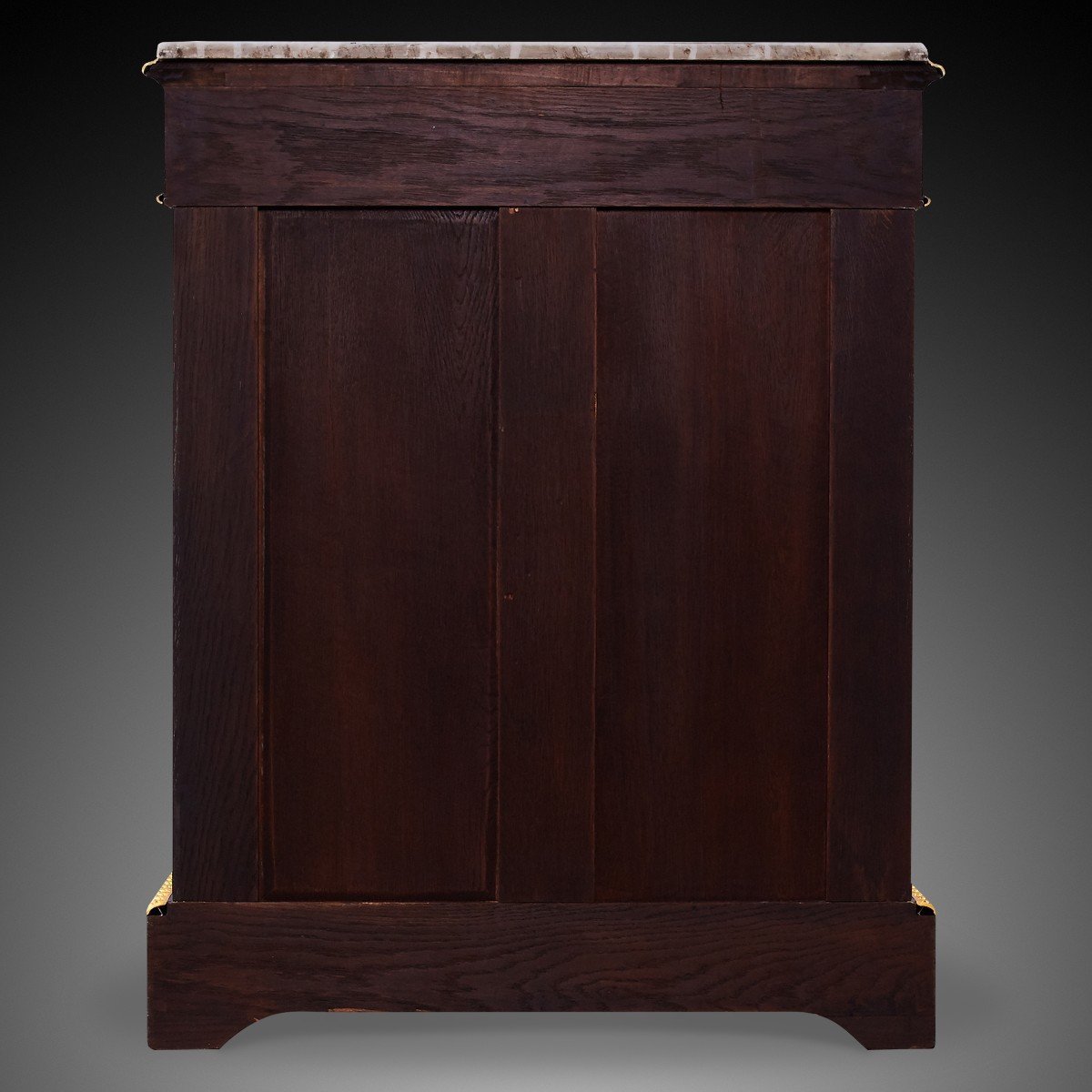
Marble Top: The piece is topped with a thick, dark-colored marble slab, often Belgian black marble or Portoro marble, with subtle veining, which adds both solidity and elegance, and a luxurious contrast to the marquetry and bronze.
Design and Characteristics: Architectural Form: The cabinet presents an imposing and balanced silhouette, typical of 19th-century state furniture. The two main doors, richly decorated with large marquetry panels, are flanked by similarly ornate pilasters or vertical supports, accentuating its monumental appearance.
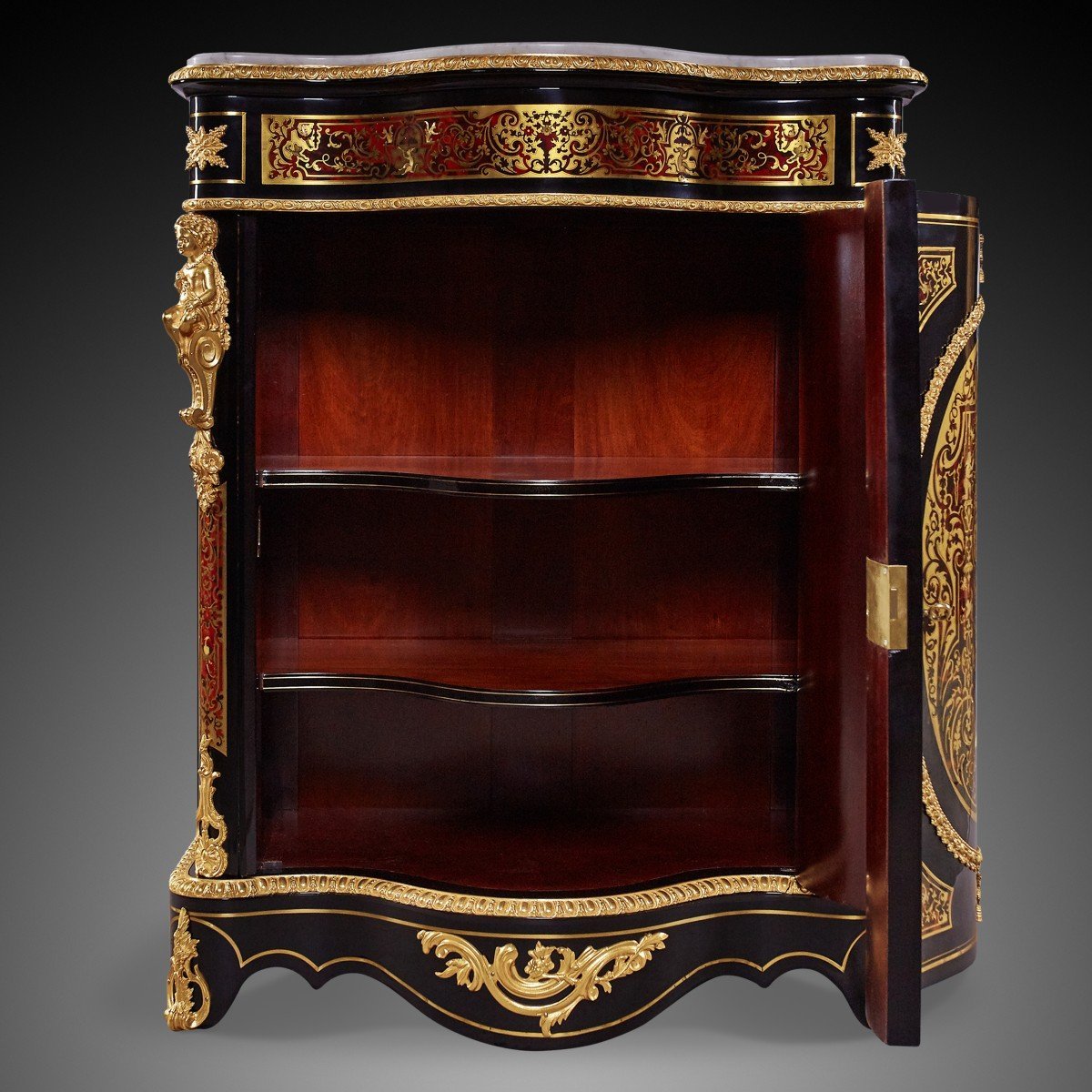
Classical and Mythological Motifs: Beyond plant motifs, it is common to find elements inspired by Antiquity, such as masks, mythological figures, or allegorical symbols, integrated into the marquetry or bronze mounts, reinforcing the historical and noble character of the piece. Interior Details: The interior of the cabinet typically reveals shelves or a spacious compartment, often made of exotic wood, attesting to the functionality of this type of furniture, designed for the display or storage of precious objects.
Historical Context and Appeal to Collectors: This cabinet perfectly embodies the revival of the Louis XIV and Louis XV styles under Napoleon III, when the demand for richly ornamented state furniture was immense. Cabinetmakers of the Second Empire, such as the renowned Maison Cremer, Paul Sormani, and Henri Dasson, produced Boulle-style pieces of exceptional quality, often faithful to the original models or reinterpreting them with a contemporary touch. This type of furniture was prized by the aristocracy, the rising bourgeoisie, and international collectors eager to display their taste and wealth. This Boulle-style cabinet is much more than a piece of furniture; it is a work of art that transcends time. It will bring a touch of historical elegance and undeniable grandeur to any classic interior, library, or reception room, making it a valuable investment for any connoisseur of French furniture art.
Exceptional Materials and Techniques: Boulle Marquetry: This cabinet is entirely adorned with the renowned Boulle marquetry, combining with unparalleled mastery thin sheets of (gilded) brass and tortoiseshell, inlaid in a richly varnished ebony background. The intricate, often floral, arabesque and acanthus scroll motifs create a striking contrast and a dazzling play of light on the dark surface. Gilt Bronze (Ormolu) Mounts: The structure is sumptuously enhanced by finely chased gilt bronze (ormolu) mounts. These ornaments include elegant caryatids, foliate friezes, openwork corner mounts, and delicate sabots, which not only protect the corners of the piece but also contribute to its architectural grandeur and regal appearance. The quality of the chasing and gilding is exemplary, attesting to high-level craftsmanship.
Marble Top: The piece is topped with a thick, dark-colored marble slab, often Belgian black marble or Portoro marble, with subtle veining, which adds both solidity and elegance, and a luxurious contrast to the marquetry and bronze.
Design and Characteristics: Architectural Form: The cabinet presents an imposing and balanced silhouette, typical of 19th-century state furniture. The two main doors, richly decorated with large marquetry panels, are flanked by similarly ornate pilasters or vertical supports, accentuating its monumental appearance.
Classical and Mythological Motifs: Beyond plant motifs, it is common to find elements inspired by Antiquity, such as masks, mythological figures, or allegorical symbols, integrated into the marquetry or bronze mounts, reinforcing the historical and noble character of the piece. Interior Details: The interior of the cabinet typically reveals shelves or a spacious compartment, often made of exotic wood, attesting to the functionality of this type of furniture, designed for the display or storage of precious objects.
Historical Context and Appeal to Collectors: This cabinet perfectly embodies the revival of the Louis XIV and Louis XV styles under Napoleon III, when the demand for richly ornamented state furniture was immense. Cabinetmakers of the Second Empire, such as the renowned Maison Cremer, Paul Sormani, and Henri Dasson, produced Boulle-style pieces of exceptional quality, often faithful to the original models or reinterpreting them with a contemporary touch. This type of furniture was prized by the aristocracy, the rising bourgeoisie, and international collectors eager to display their taste and wealth. This Boulle-style cabinet is much more than a piece of furniture; it is a work of art that transcends time. It will bring a touch of historical elegance and undeniable grandeur to any classic interior, library, or reception room, making it a valuable investment for any connoisseur of French furniture art.
7 000 €
Period: 19th century
Style: Napoleon 3rd
Condition: Excellent condition
Material: Gilted wood
Width: 85 cm
Height: 110 cm
Depth: 51 cm
Reference (ID): 1704510
Availability: In stock
Print