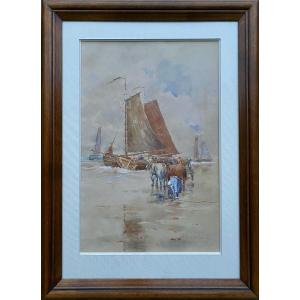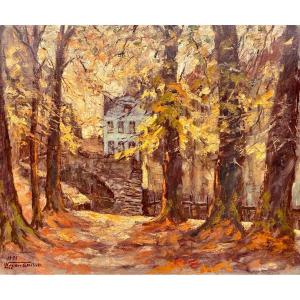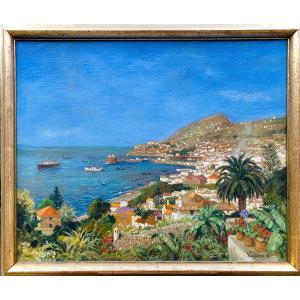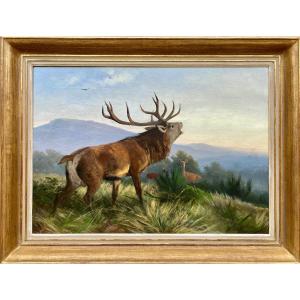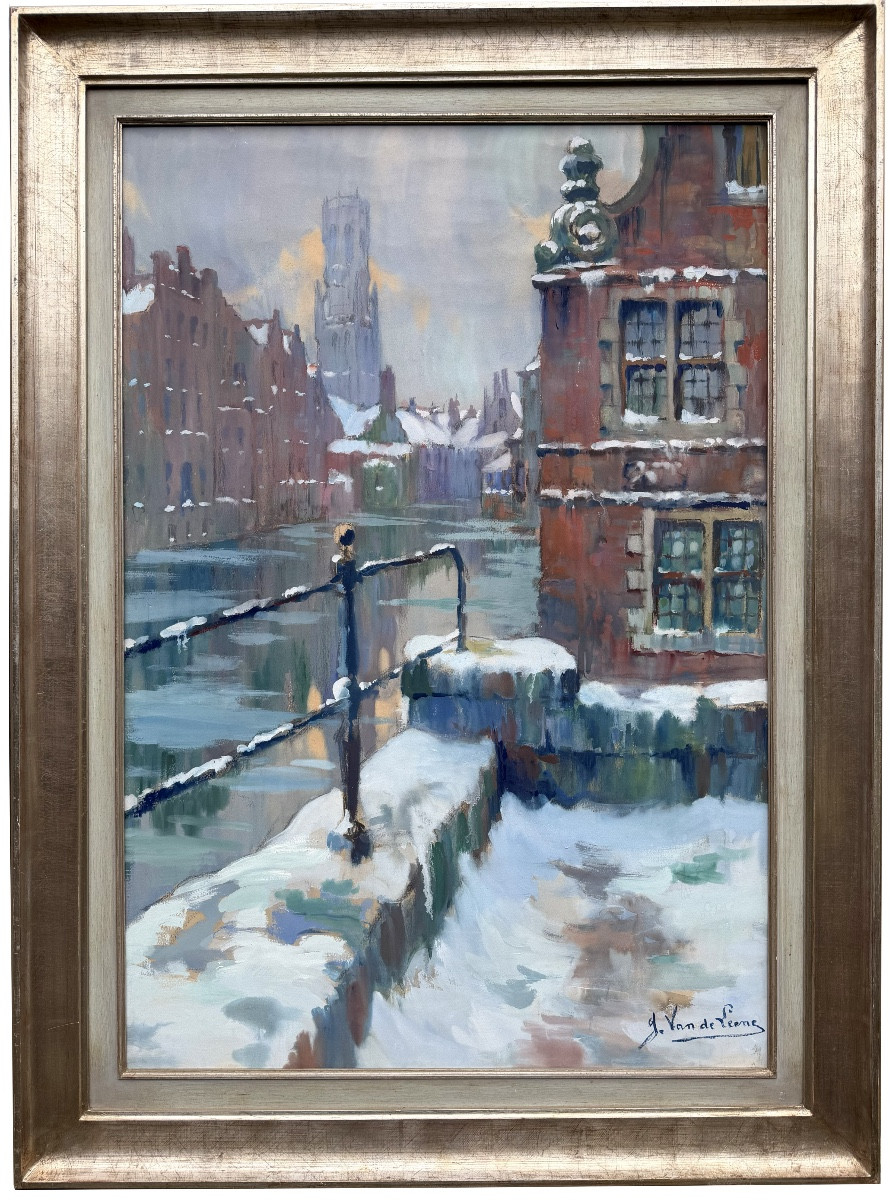
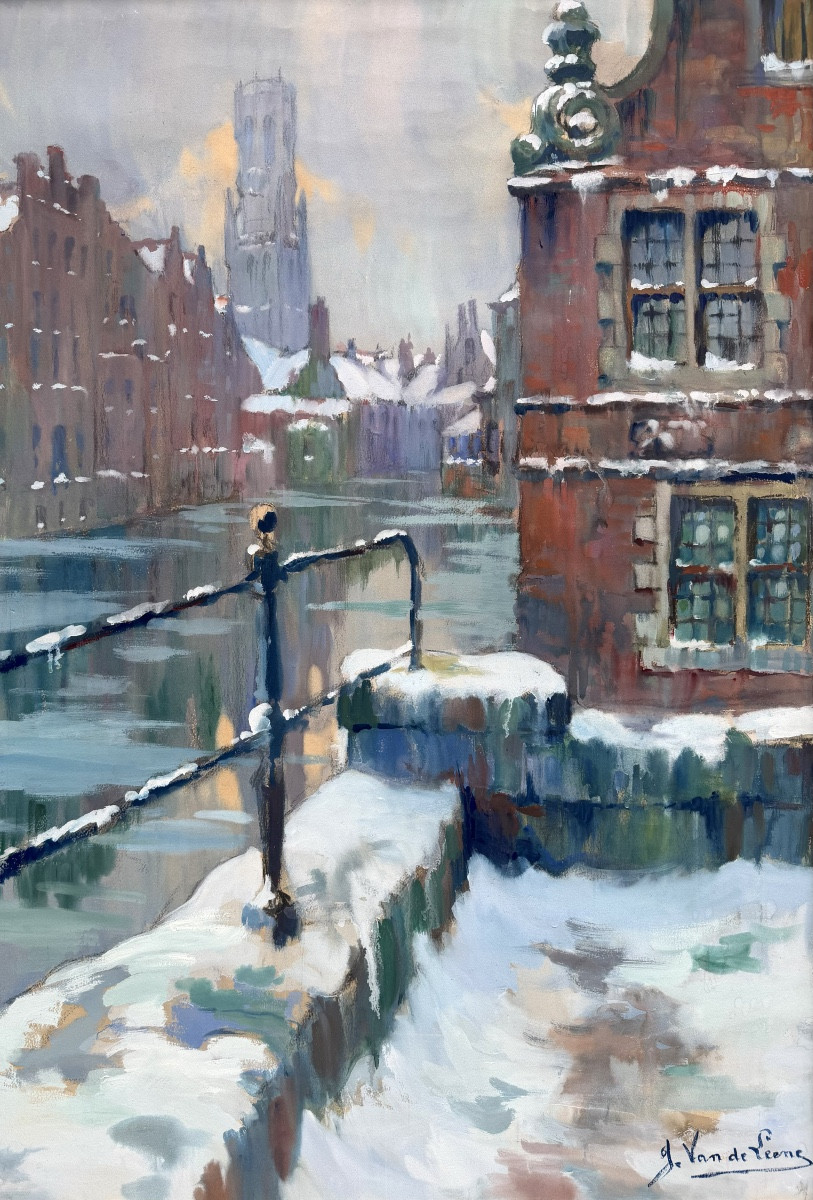
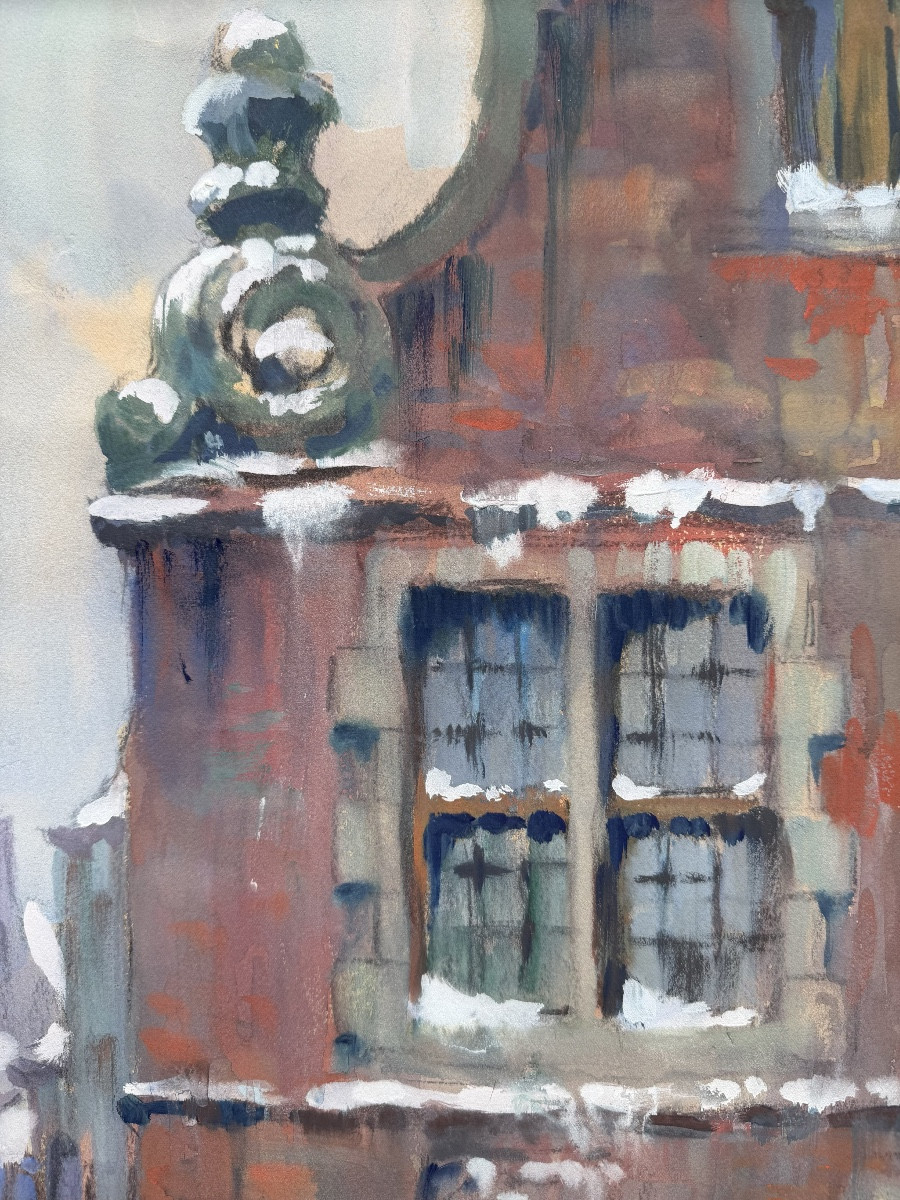
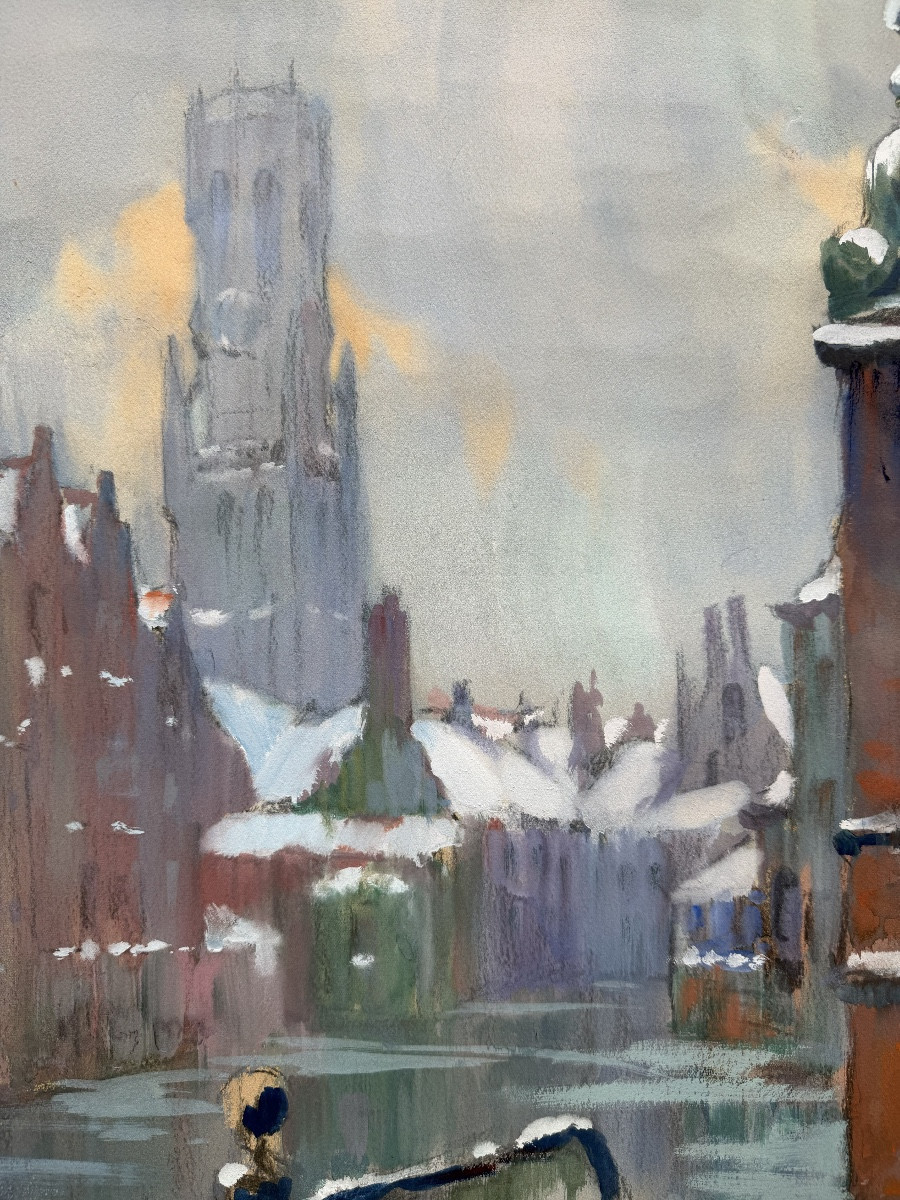
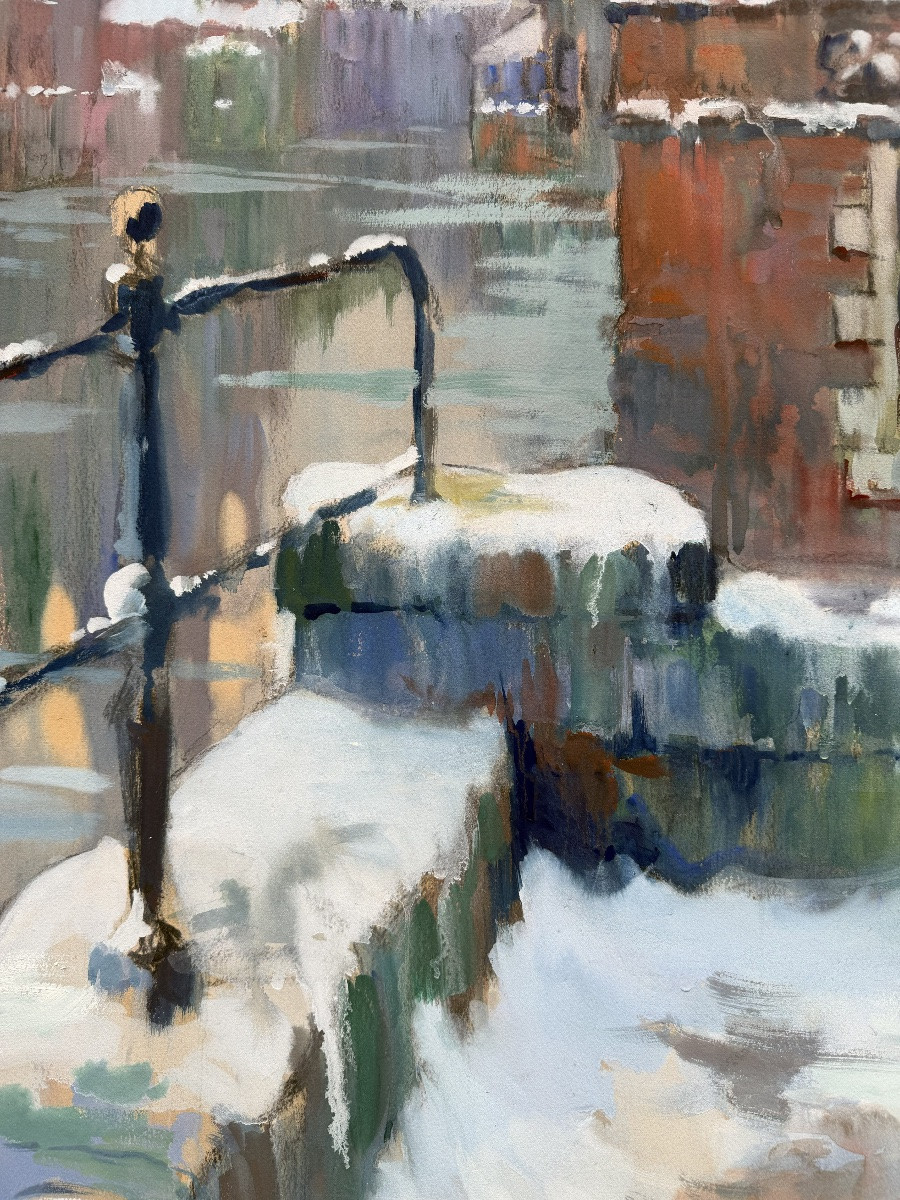
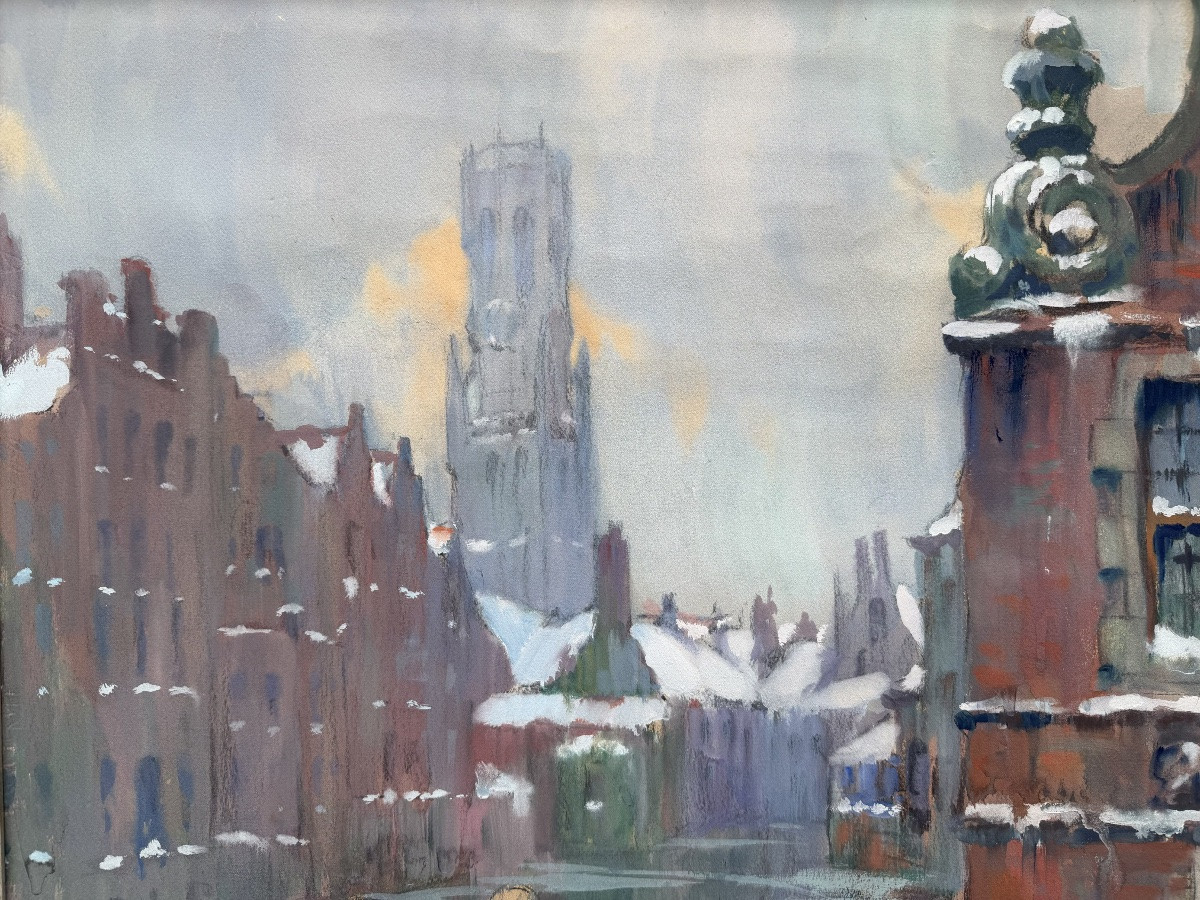
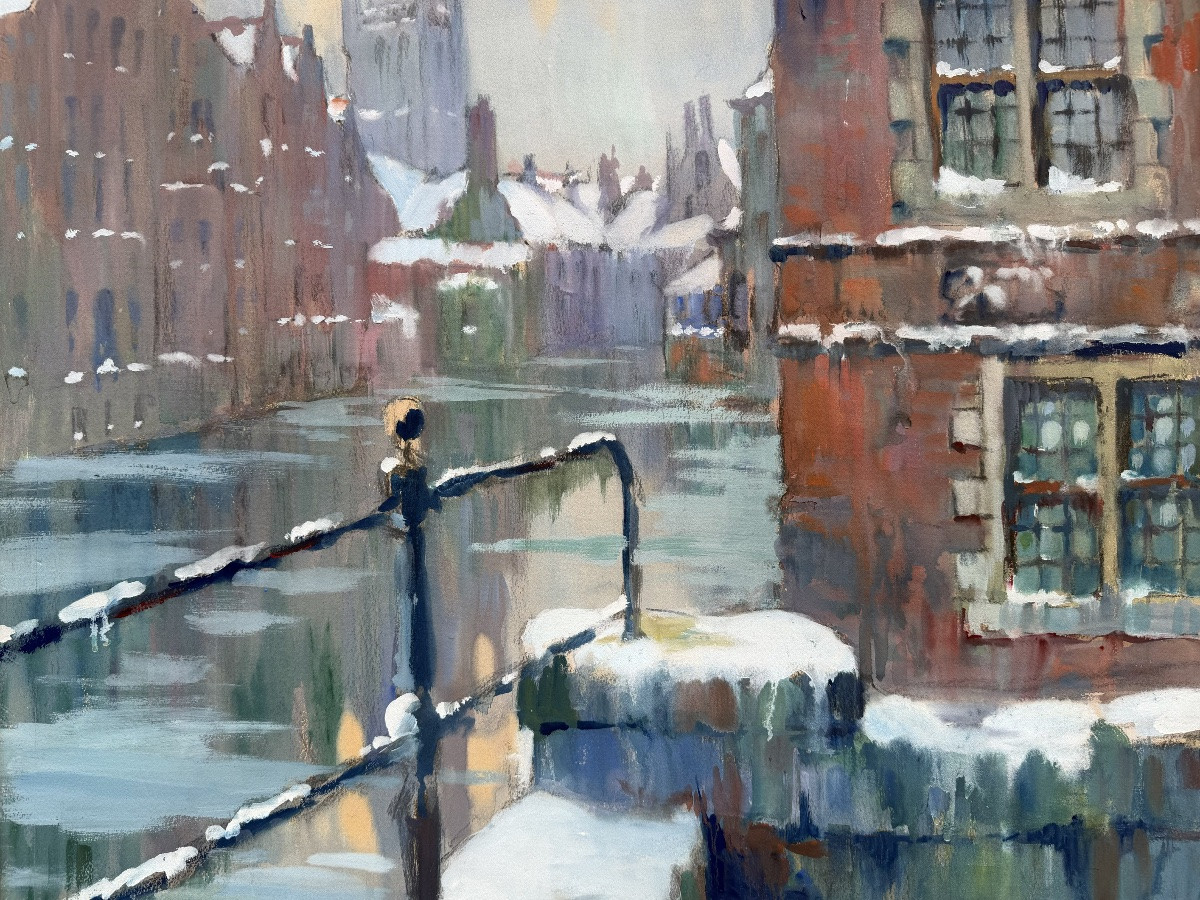
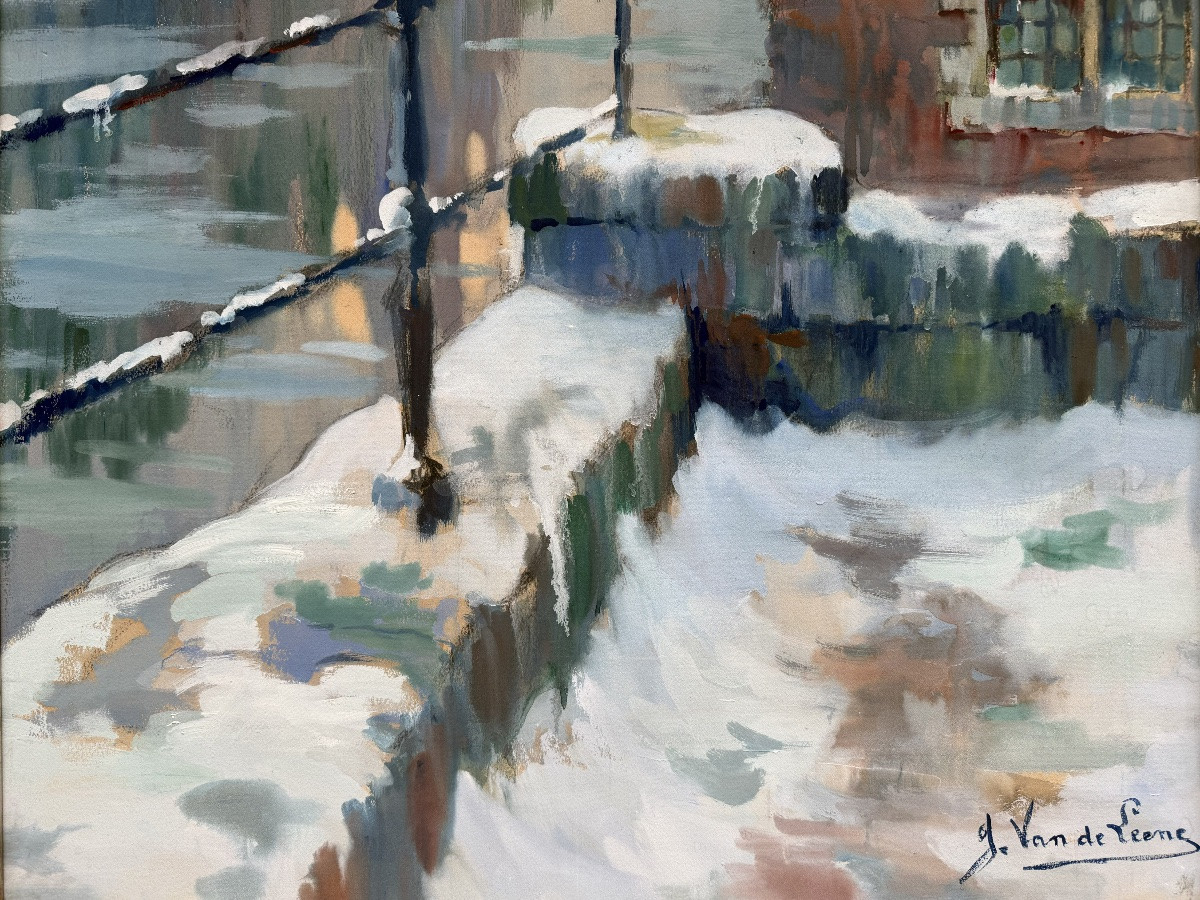
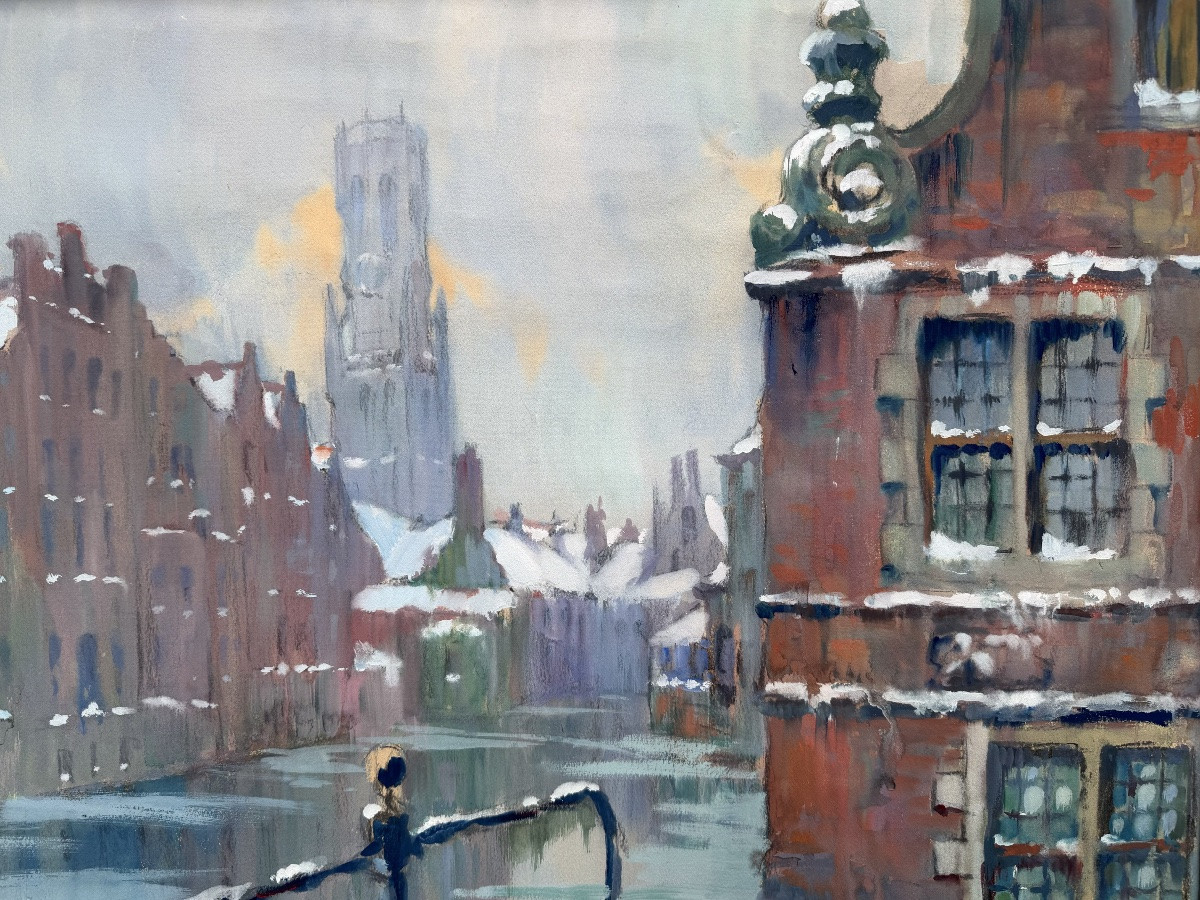
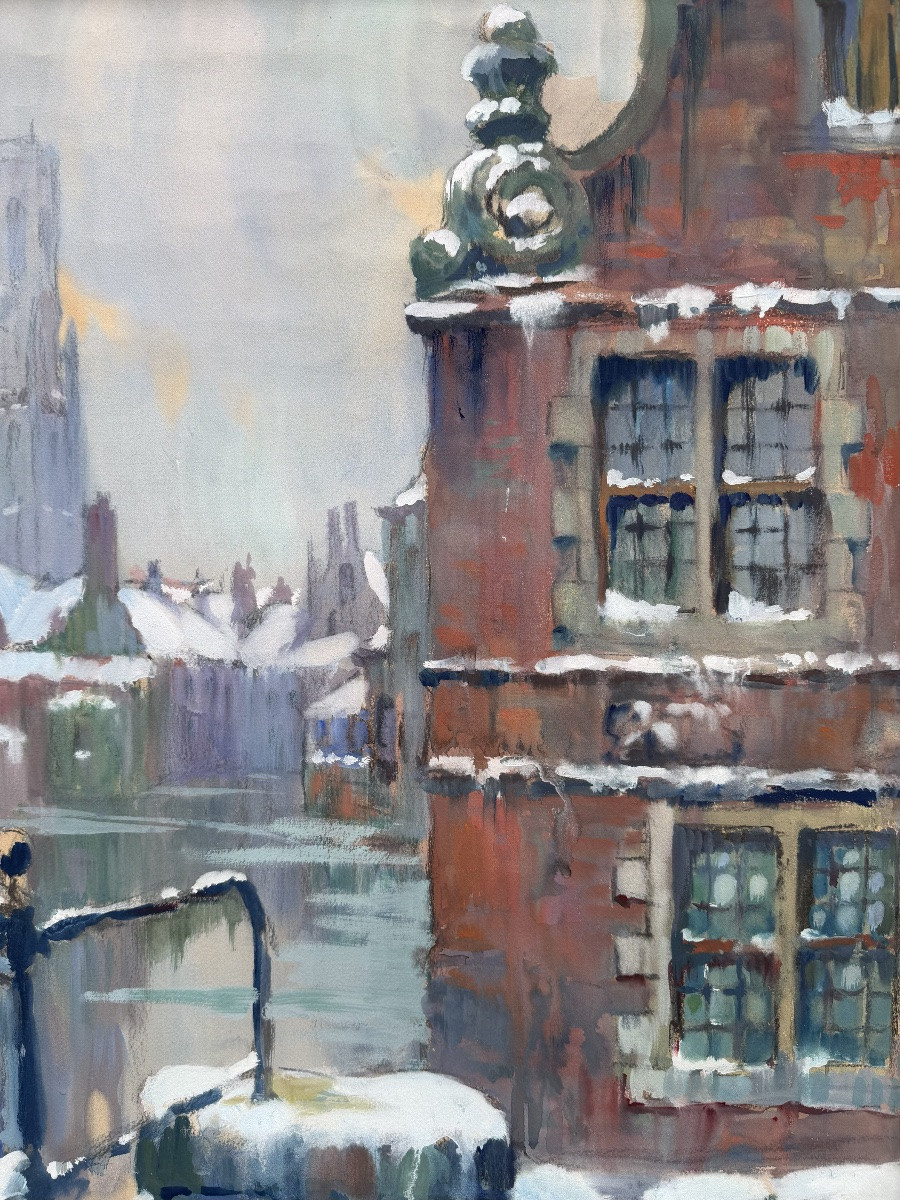
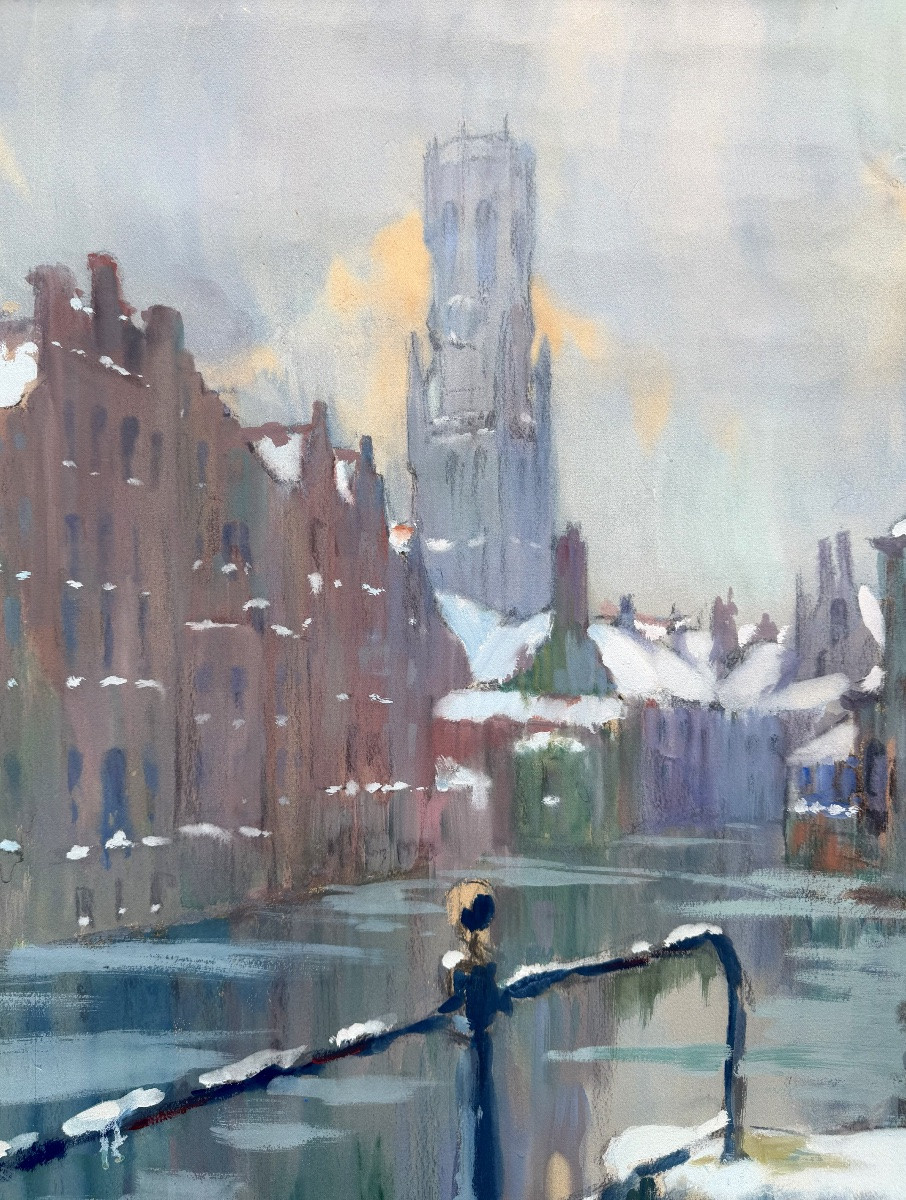
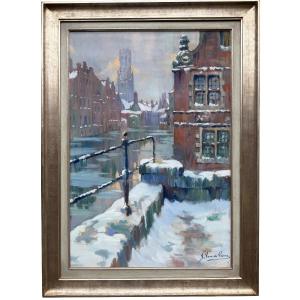


Jules Van De Leene ( 1887 – 1962 ) - ' The Belfry Of Bruges '
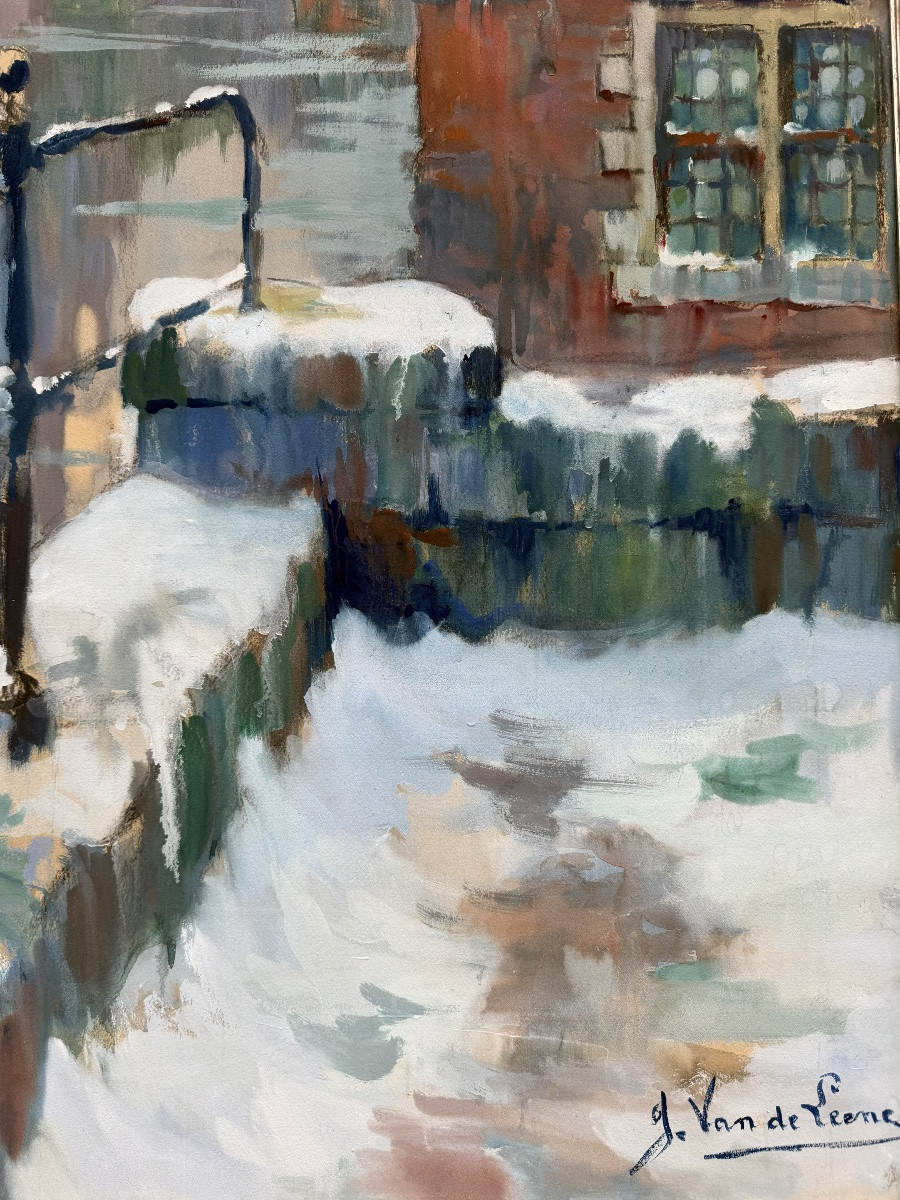
Artist: Jules Van De Leene, Ixelles 1887 – 1962 Auderghem, Peintre Belge, Signature : Signé En Bas à Droite « J. Van De Leene »
Jules Van de Leene
Ixelles 1887 – 1962 Auderghem
Belgian Painter
'The Belfry of Bruges'
Signature: signed lower right 'J. Van de Leene'
Medium: mixed media, tempera on paper
Dimensions: image size 99 x 68 cm, frame size 119,5 x 88 cm
Biography: Jules Van de Leene was a Belgian painter, watercolorist, draftsman, and etcher, born in Ixelles (Brussels) in 1887 and deceased in Auderghem in 1962. He belongs to the generation of early twentieth-century Belgian artists who remained rooted in realism while absorbing the technical freedoms and painterly experimentation that followed Impressionism and Post-Impressionism.
Van de Leene received his artistic training between 1899 and 1905 at the Academies of Ixelles and Brussels, studying under the renowned Constant Montald and also influenced by teachers such as Constantin Meunier. These formative years coincided with a period of intense artistic renewal in Belgium, when new ideas about colour, light, and personal expression circulated widely, shaped by figures such as Paul Cézanne and Paul Gauguin.
Initially, Van de Leene worked primarily as an aquarellist, mastering transparency, atmosphere, and subtle tonal transitions. In 1923, however, he increasingly embraced oil painting, which allowed him to develop a richer material presence through generous, creamy paint application and vigorous brushwork. His mature style is characterized by a free yet realistic approach, a keen sensitivity to the play of light, and textured surfaces animated by energetic touches of colour.
His oeuvre is broad and versatile. Van de Leene painted landscapes and seascapes, urban views, still lifes and flowers, as well as figures, nudes, portraits, and intimate interior scenes. He also practiced etching and worked in a wide range of media, including gouache, charcoal, and drypoint, demonstrating a remarkable technical diversity. Critics and historians have noted the affinity of his work with that of Albert Bastien, placing him within a traditionalist school of Flemish realism grounded in solid craft and observation.
Travel played an important role in his artistic development. In 1912 and 1913 he worked in the Netherlands, where he became deeply impressed by the masters of the Dutch Golden Age—above all Frans Hals and Johannes Vermeer, whose command of light and painterly immediacy left a lasting imprint on his own art. From 1919 to 1922 he spent several months each year in France, absorbing contemporary currents there, before feeling drawn once more to the Netherlands from 1927 onward, returning regularly for extended stays until 1930.
During his lifetime and afterward, his work entered numerous important public collections. Paintings and works on paper by Van de Leene are preserved in museums in Ixelles, Brussels, Bruges, and Kortrijk, including institutions such as the Groeningemuseum in Bruges, the Royal Museums of Fine Arts of Belgium, the Museum of Ixelles, and the Musée de l’Armée in Brussels, as well as provincial collections in Brabant and West Flanders.
Today he is remembered as a sensitive and technically accomplished painter whose art bridges Flemish and Dutch traditions with the expressive freedom of early twentieth-century modernity, distinguished above all by its luminous atmosphere, tactile surfaces, and quietly vibrant realism.
Ixelles 1887 – 1962 Auderghem
Belgian Painter
'The Belfry of Bruges'
Signature: signed lower right 'J. Van de Leene'
Medium: mixed media, tempera on paper
Dimensions: image size 99 x 68 cm, frame size 119,5 x 88 cm
Biography: Jules Van de Leene was a Belgian painter, watercolorist, draftsman, and etcher, born in Ixelles (Brussels) in 1887 and deceased in Auderghem in 1962. He belongs to the generation of early twentieth-century Belgian artists who remained rooted in realism while absorbing the technical freedoms and painterly experimentation that followed Impressionism and Post-Impressionism.
Van de Leene received his artistic training between 1899 and 1905 at the Academies of Ixelles and Brussels, studying under the renowned Constant Montald and also influenced by teachers such as Constantin Meunier. These formative years coincided with a period of intense artistic renewal in Belgium, when new ideas about colour, light, and personal expression circulated widely, shaped by figures such as Paul Cézanne and Paul Gauguin.
Initially, Van de Leene worked primarily as an aquarellist, mastering transparency, atmosphere, and subtle tonal transitions. In 1923, however, he increasingly embraced oil painting, which allowed him to develop a richer material presence through generous, creamy paint application and vigorous brushwork. His mature style is characterized by a free yet realistic approach, a keen sensitivity to the play of light, and textured surfaces animated by energetic touches of colour.
His oeuvre is broad and versatile. Van de Leene painted landscapes and seascapes, urban views, still lifes and flowers, as well as figures, nudes, portraits, and intimate interior scenes. He also practiced etching and worked in a wide range of media, including gouache, charcoal, and drypoint, demonstrating a remarkable technical diversity. Critics and historians have noted the affinity of his work with that of Albert Bastien, placing him within a traditionalist school of Flemish realism grounded in solid craft and observation.
Travel played an important role in his artistic development. In 1912 and 1913 he worked in the Netherlands, where he became deeply impressed by the masters of the Dutch Golden Age—above all Frans Hals and Johannes Vermeer, whose command of light and painterly immediacy left a lasting imprint on his own art. From 1919 to 1922 he spent several months each year in France, absorbing contemporary currents there, before feeling drawn once more to the Netherlands from 1927 onward, returning regularly for extended stays until 1930.
During his lifetime and afterward, his work entered numerous important public collections. Paintings and works on paper by Van de Leene are preserved in museums in Ixelles, Brussels, Bruges, and Kortrijk, including institutions such as the Groeningemuseum in Bruges, the Royal Museums of Fine Arts of Belgium, the Museum of Ixelles, and the Musée de l’Armée in Brussels, as well as provincial collections in Brabant and West Flanders.
Today he is remembered as a sensitive and technically accomplished painter whose art bridges Flemish and Dutch traditions with the expressive freedom of early twentieth-century modernity, distinguished above all by its luminous atmosphere, tactile surfaces, and quietly vibrant realism.
3 200 €
Period: 20th century
Style: Other Style
Condition: Excellent condition
Material: Acrylic
Width: 88 cm
Height: 119,5 cm
Depth: 6 cm
Reference (ID): 1704479
Availability: In stock
Print