


Important Chinese Vase Made Of Papier-mâché, Fiber, And Mother-of-pearl Marquetry
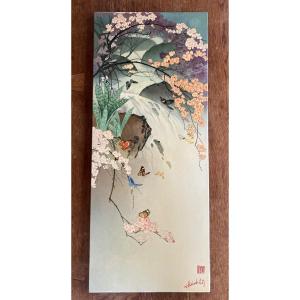
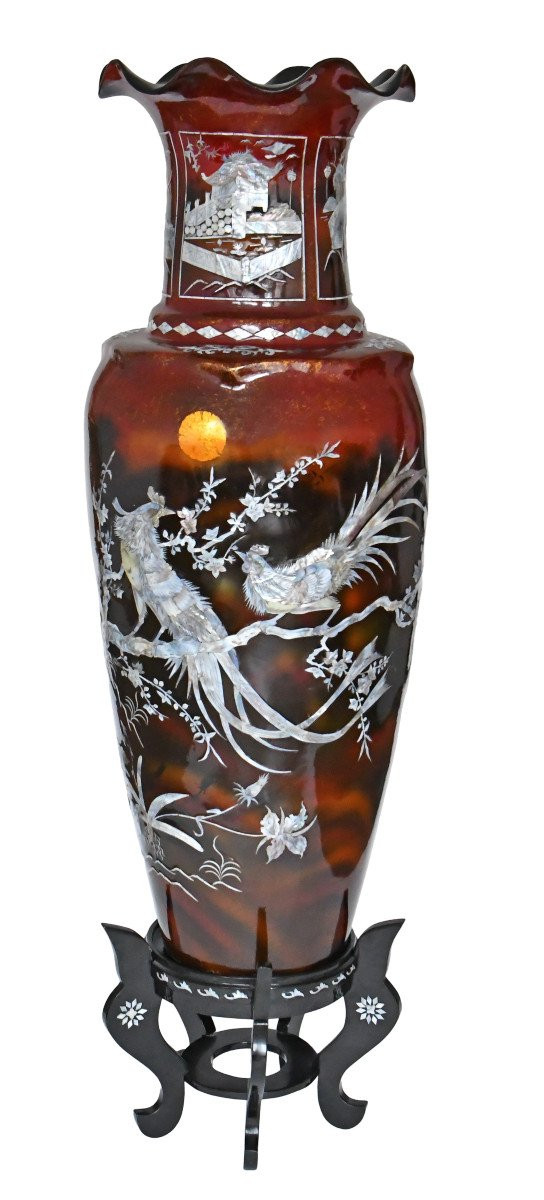
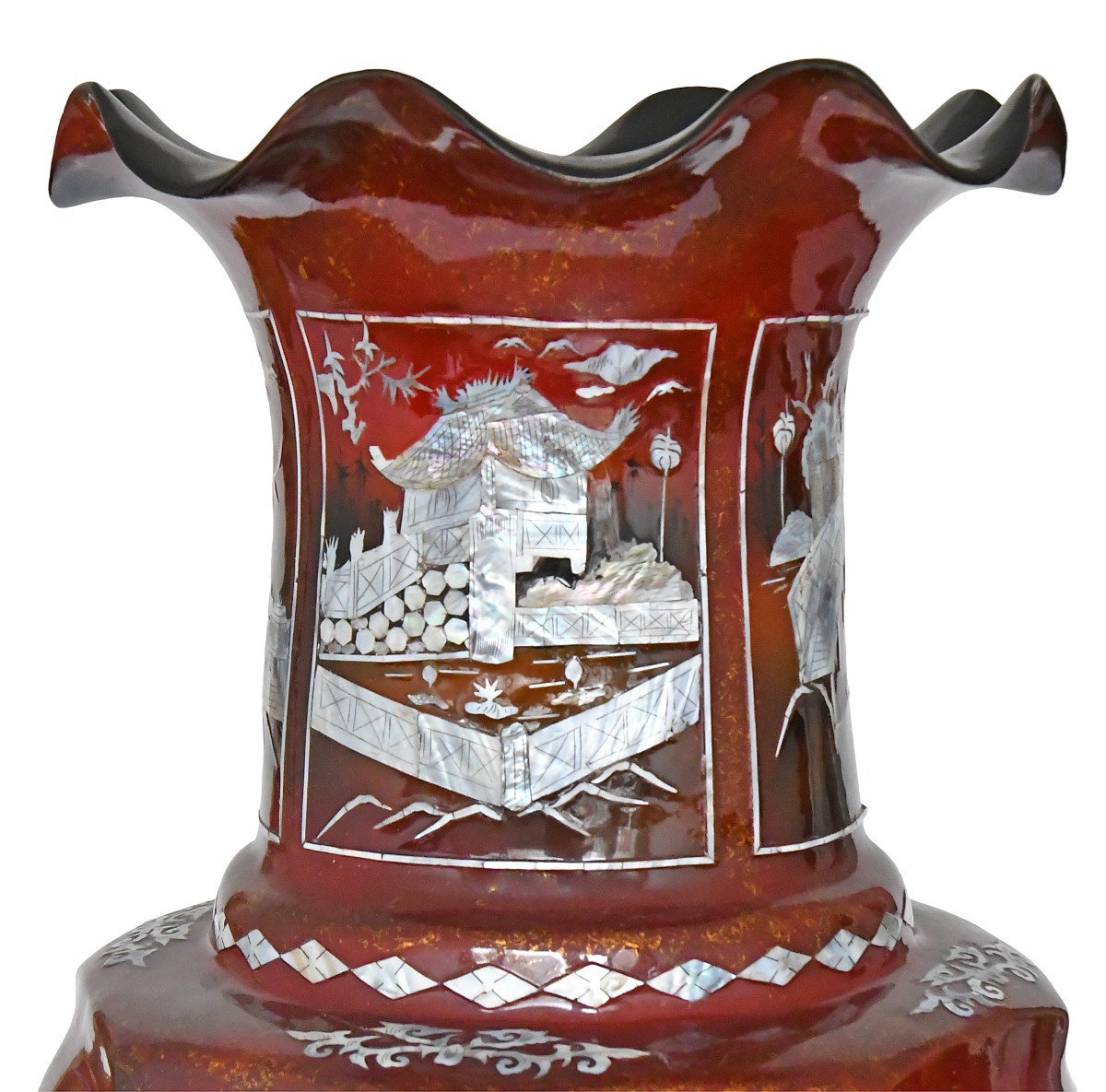
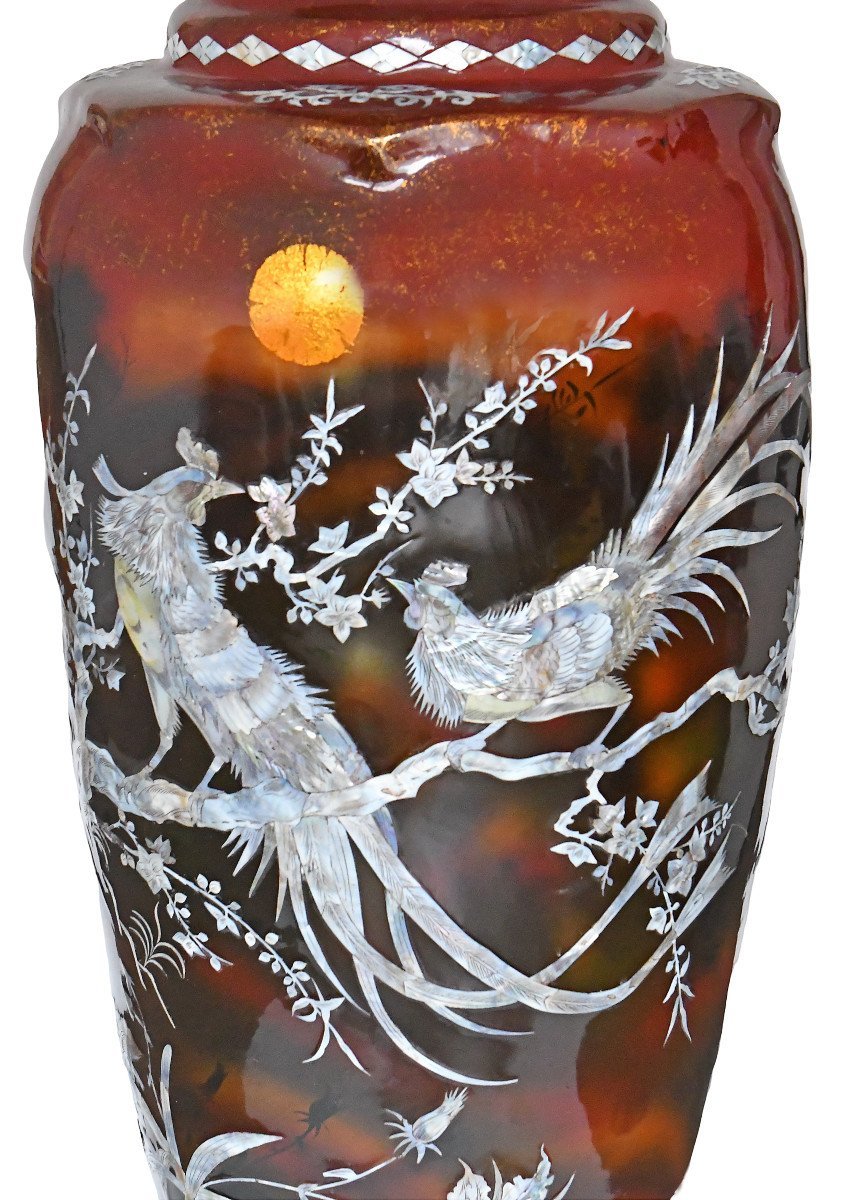
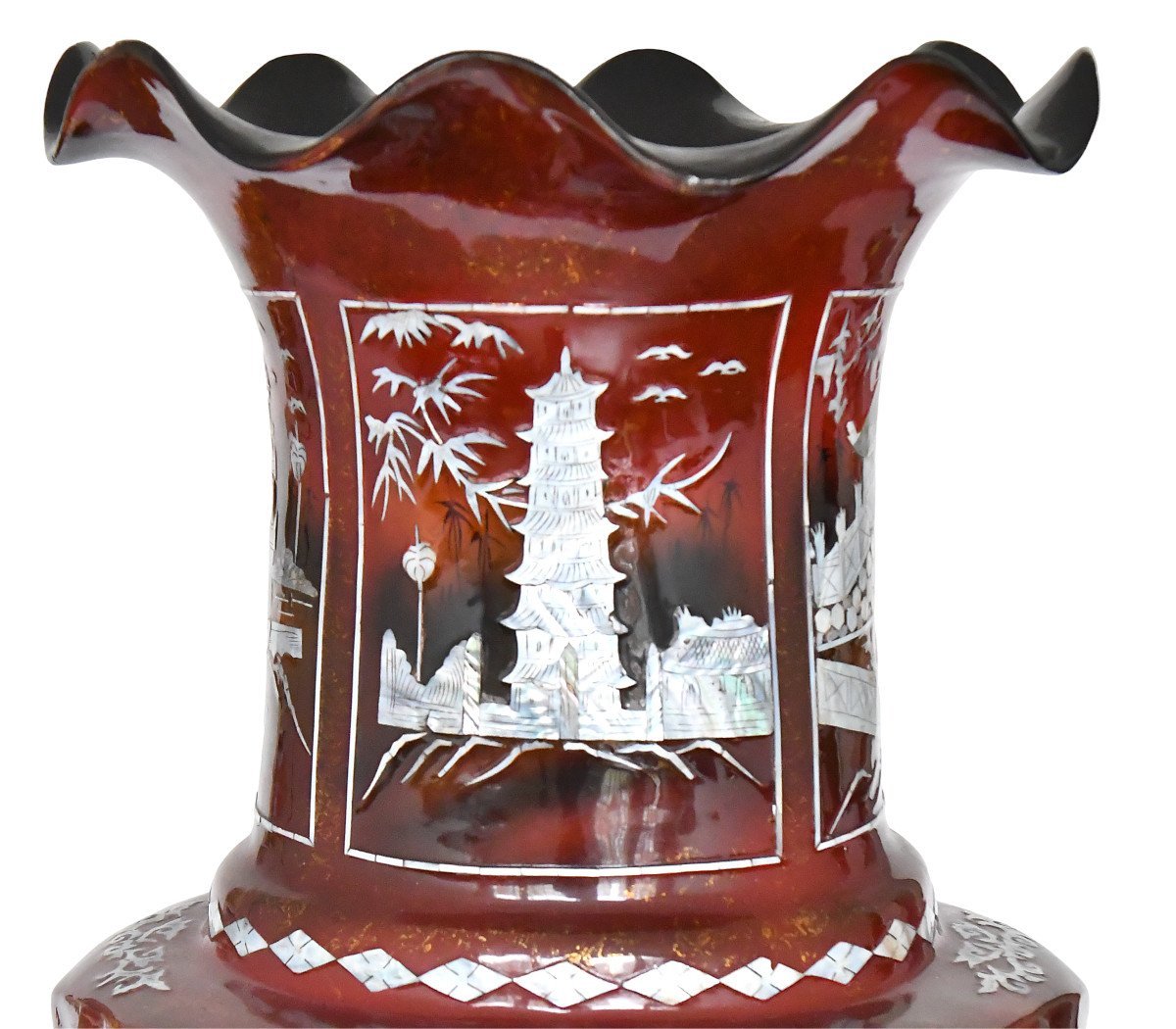
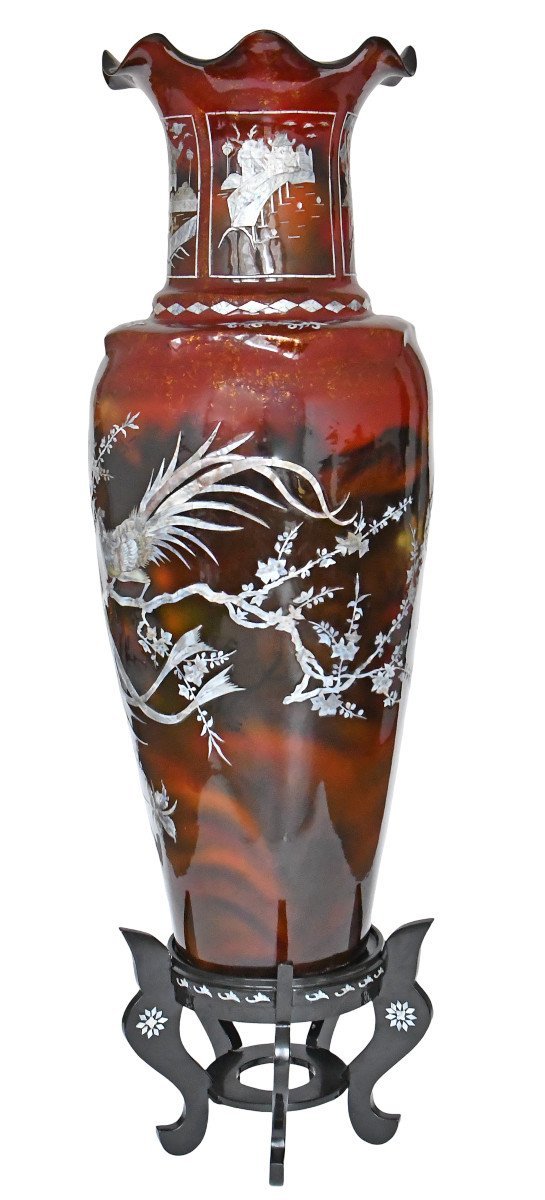
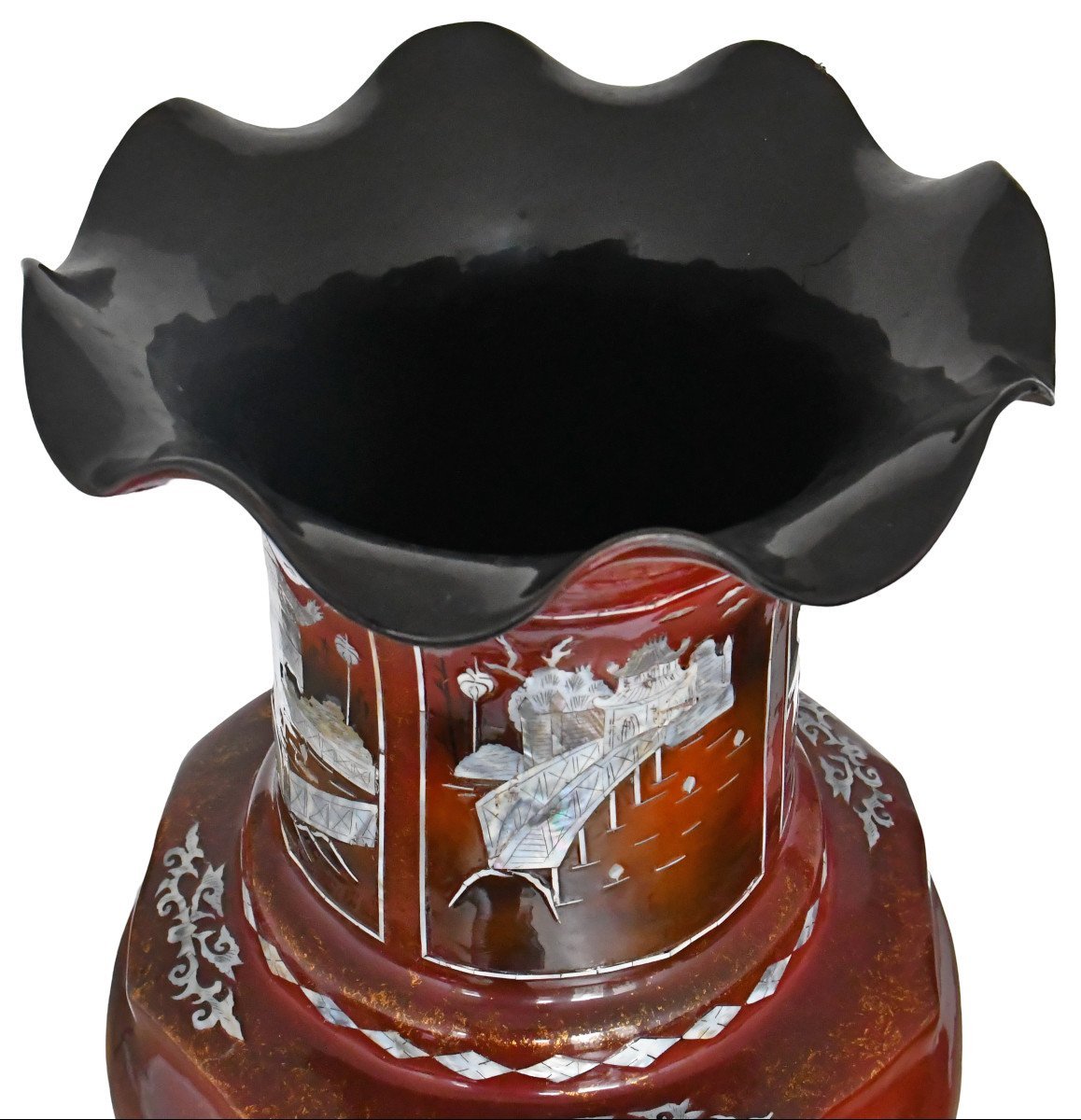
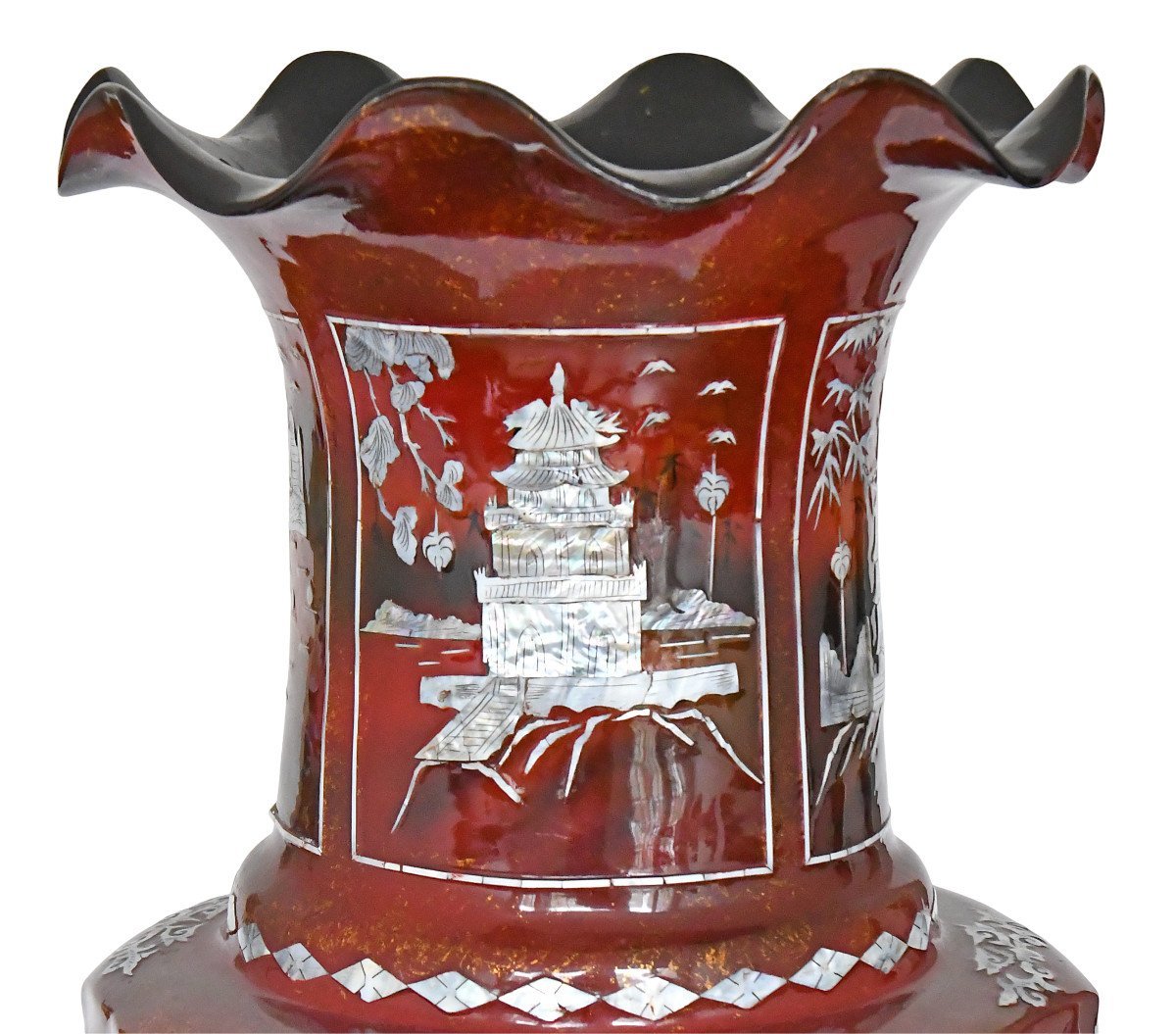
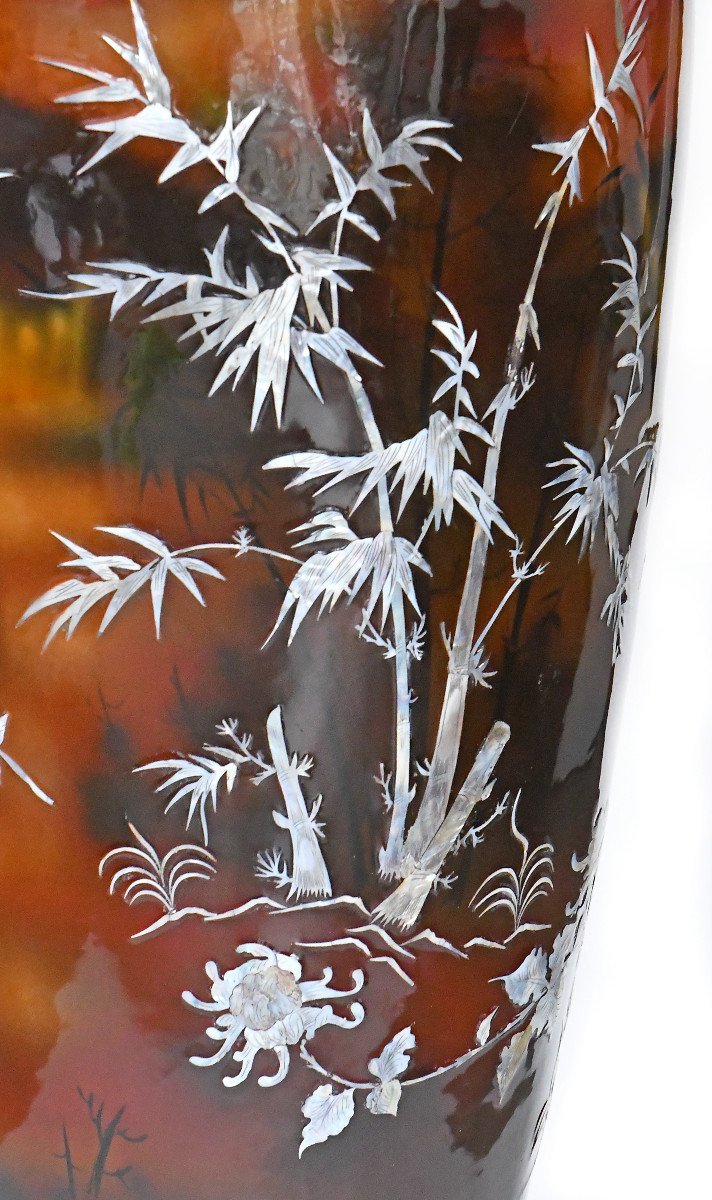
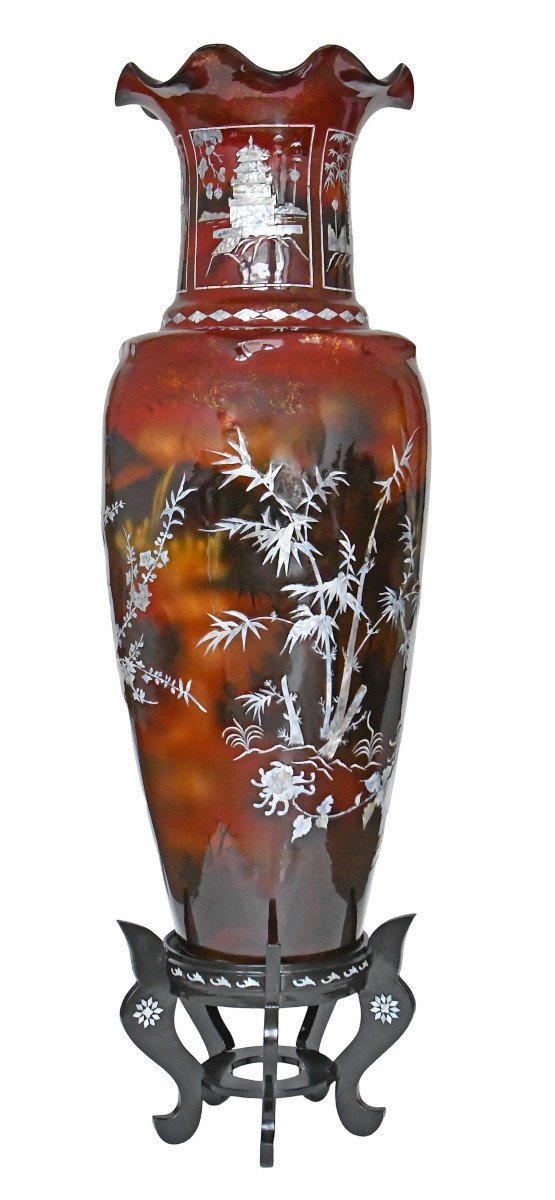
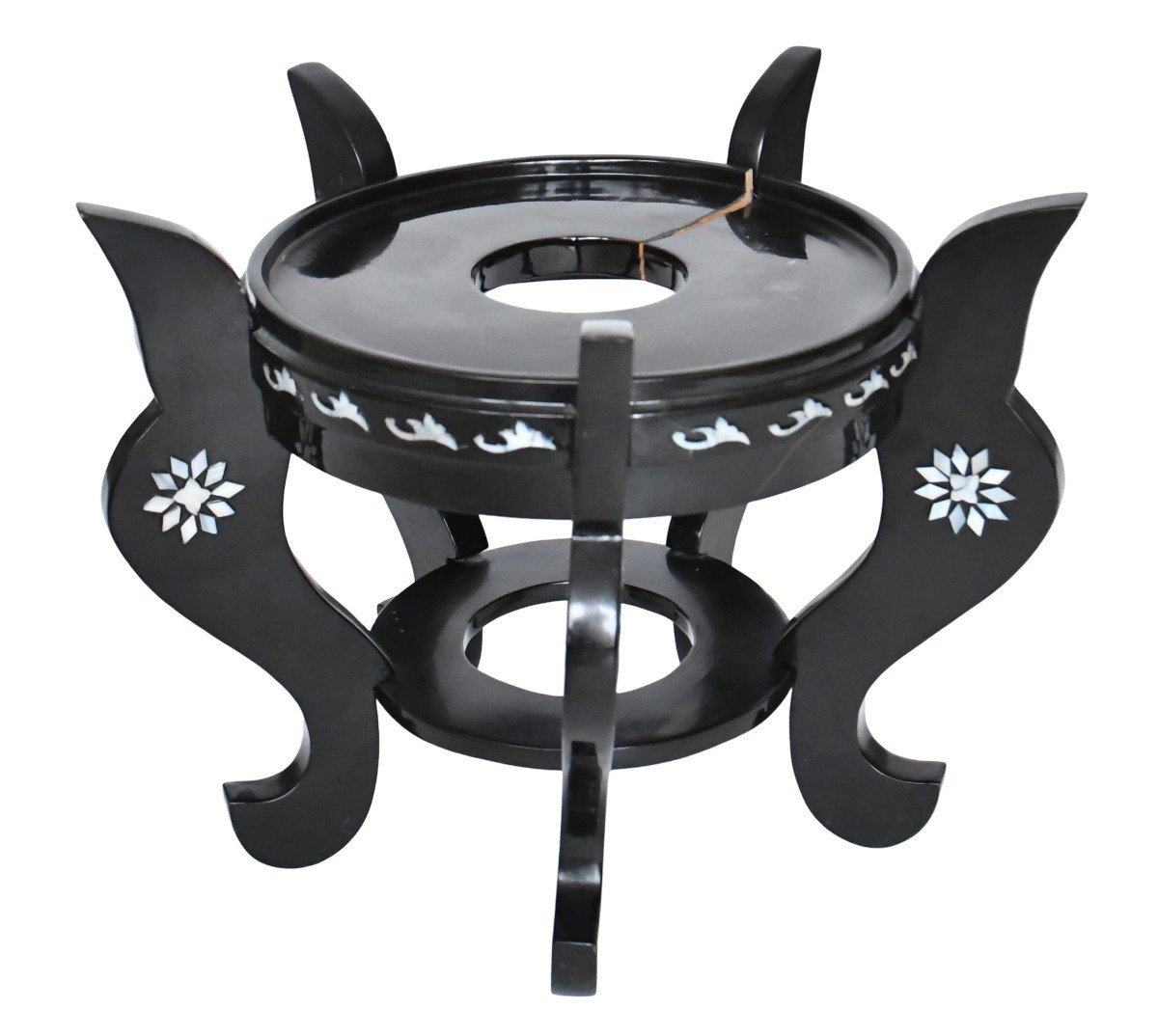
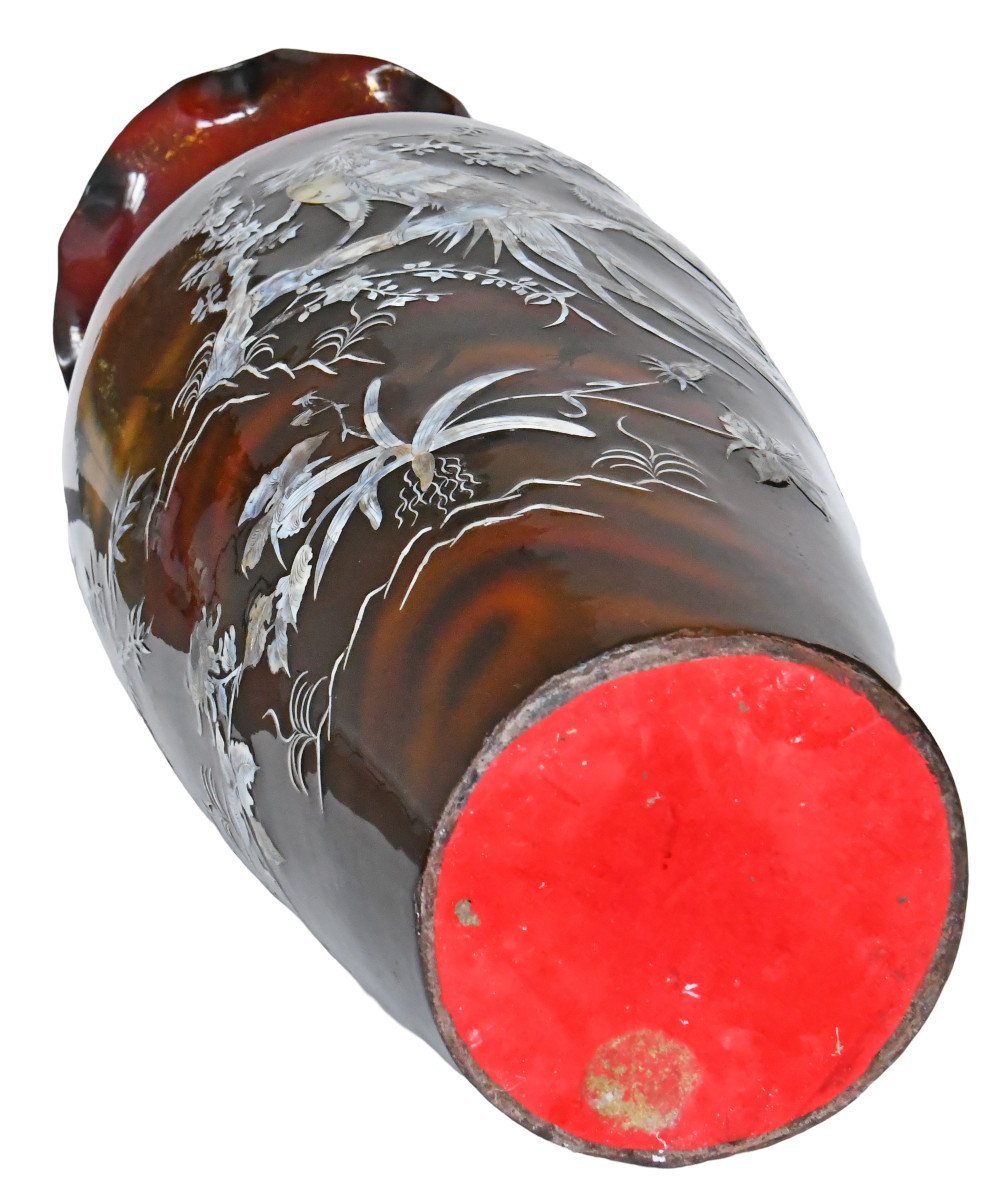
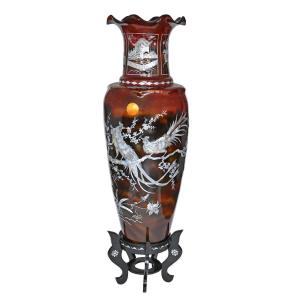
Important Chinese vase made of papier-mâché, fiber, and mother-of-pearl marquetry. The mother-of-pearl decoration depicts oriental landscapes and birds on flowering branches against a red-orange and black background. Very large size. There is a small imperfection on the base, but this does not affect its stability and is invisible once the vase is placed on it. 20th century. Dimensions: Total height with base: 141 cm; Height of the vase alone: 116 cm; Neck diameter: 38 cm. Free shipping within the Paris region. Shipping to France and neighboring countries is possible via the Cocolis website. In the 19th and 20th centuries, furniture and decorative objects were made of papier-mâché. This manufacturing technique became very popular in France and Europe in the mid-19th century, under Napoleon III, and in the 20th century. One family particularly distinguished itself in the manufacture of papier-mâché objects: the Adt family. In the Saarland region, there is a village called Ensheim. In the 18th century, the local miller, Mathias Adt, had the idea of making wooden snuffboxes. This marked the beginning of the great saga of snuffboxes and a wide variety of other items made for all sorts of uses. Mathias learned of an invention by a Parisian printer who had the idea of gluing sheets of paper together: papier-mâché was born. The miller's eight sons, and later their descendants, developed production, improving it thanks to all the technological innovations of the 19th century. Steam presses, for example, made a decisive contribution in terms of the variety of shapes and the quality of the diverse papier-mâché items. But the obstacles were also numerous and varied, including in the area of customs, where the taxes to be paid were high. This is why Peter Adt III, Mathias's great-grandson, structured his business by creating the Adt Brothers Company in 1839 for his three sons, Franz, Peter, and Jean-Baptiste. The new company considered establishing itself in Forbach, as France had become a very promising market in the meantime, particularly for snuff boxes (at that time, people "sniffed" tobacco). A first attempt in 1844 was short-lived, and after three years, the Adts moved to Sarreguemines. Probably attracted by the fact that Forbach was served by the railway from November 1851, and even connected to Saarbrücken a year later, the Adts settled permanently in Forbach in May 1853. They produced papier-mâché objects industrially and in large quantities. They specialized particularly in tableware and decorative objects: trays, candy dishes, coolers, bread baskets, cutlery baskets, boxes, etc., but also furniture, tables, chairs, sideboards, etc. They produced a significant quantity of these items until the beginning of the 20th century. Papier-mâché could be molded into the most whimsical and astonishing shapes. Craftsmen created exceptional furniture imitating lacquered wood or bamboo. From 1860 onwards, the emperor campaigned in China. Chinese and Japanese motifs were then very popular. Lightweight, strong, and inexpensive, papier-mâché became the surprising raw material for some furniture during the Second Empire. This style was known as the Napoleon III style in France and the Victorian style in England. After the Second World War, the papier-mâché industry declined because the development of chemicals made it possible to manufacture objects from plastic (trays, for example). Nowadays, papier-mâché has returned to being a craft, and the objects are produced mainly in Asian countries.
680 €
Period: 20th century
Style: Asian art
Condition: Good condition
Material: Nacre
Diameter: 38
Height: 141
Reference (ID): 1703493
Availability: In stock
Print