THIS OBJECT WAS SOLD
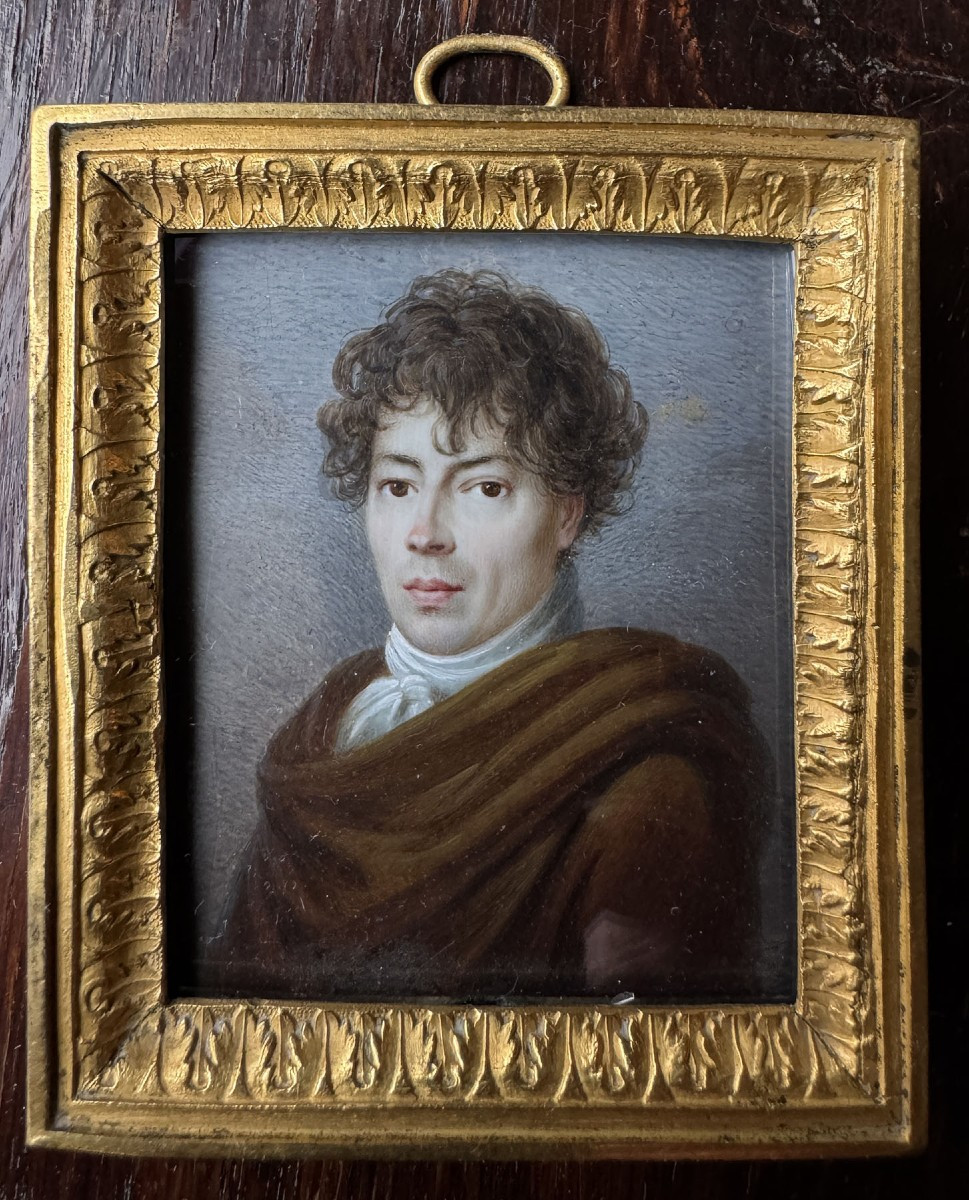
Johann Michael Weixlbaum, Portrait Of A Gentleman


JOHANN MICHAEL WEIXLBAUM
PORTRAIT OF A GENTLEMAN
JOHANN MICHAEL WEIXLBAUM
(also Weichselbaum)
Lichtental near Vienna, 1752 – Vienna, 1840
Miniature
Miniature: 6 × 5 cm / 2.4 × 2 in
Frame: 8 × 7 cm / 3.1 × 2.8 in
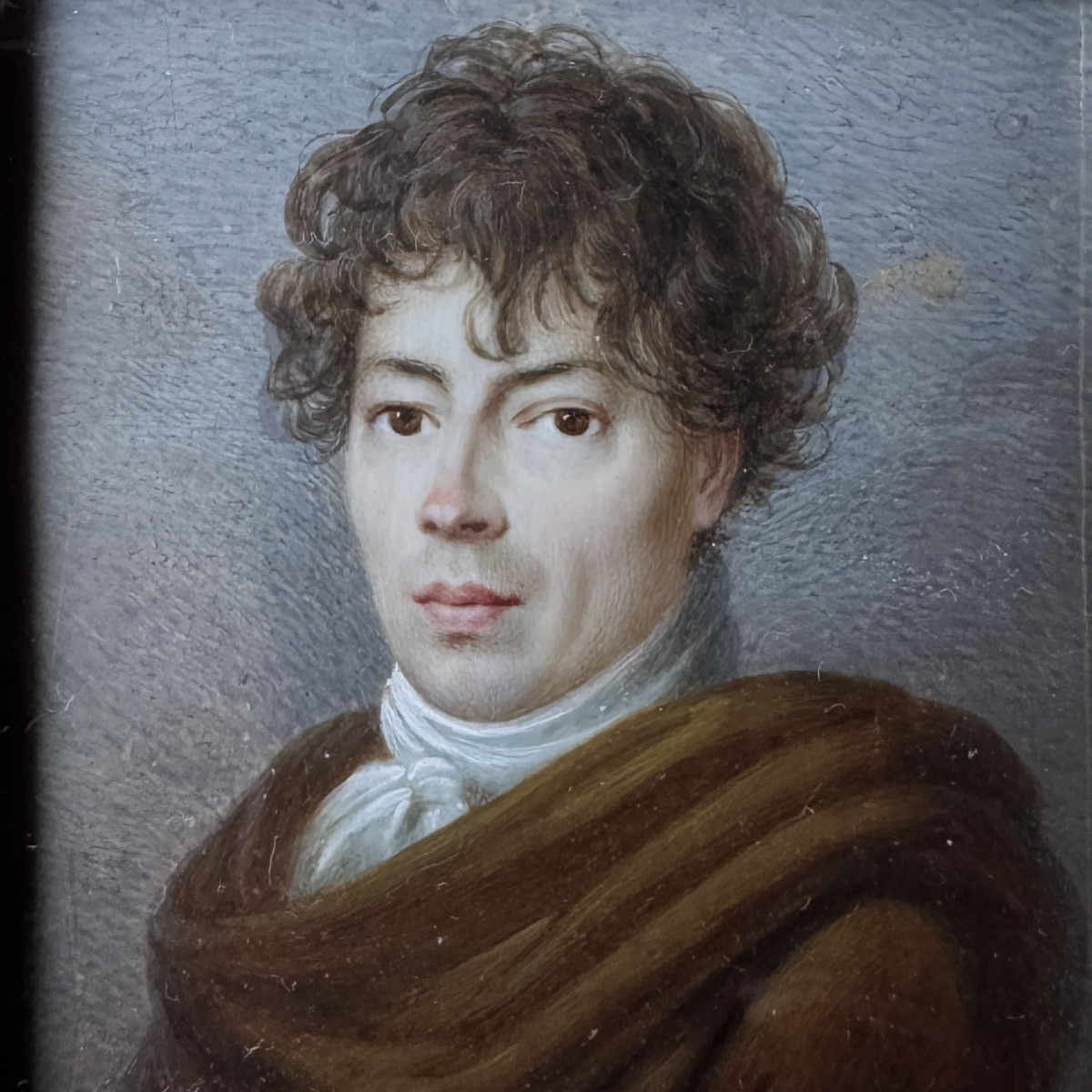
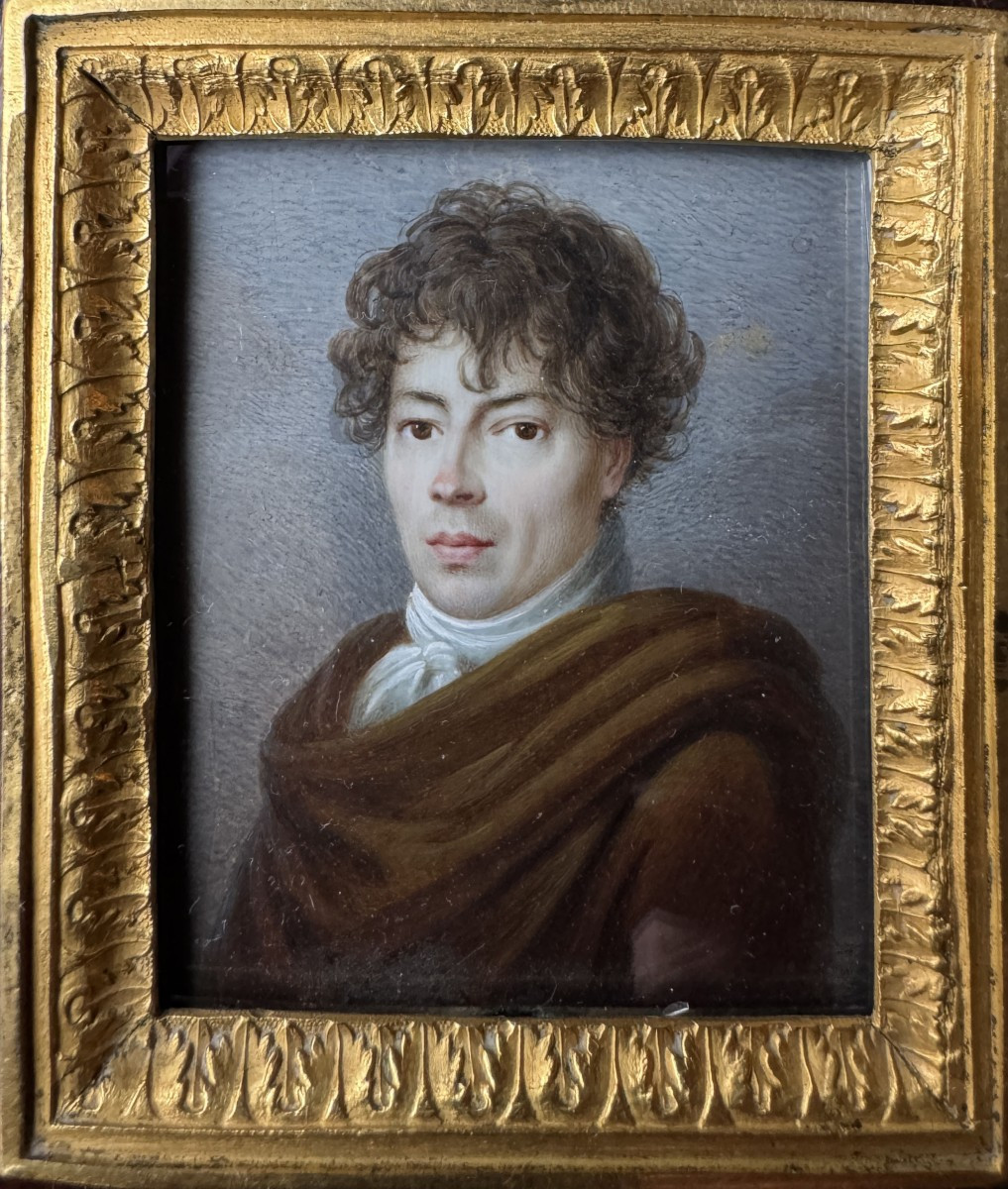
This refined portrait miniature is attributable to Johann Michael Weixlbaum, one of the most accomplished Viennese miniaturists active around 1800. The work is signed Weixl… and can be dated to approximately 1810–1812, a period that likely corresponds to the artist’s documented presence in Lemberg (today Lviv), then part of the Habsburg Empire.
Weixlbaum received his initial training at the Vienna Academy between 1763 and 1768 and worked for many years as a painter of figures at the Vienna Porcelain Factory. In 1784 he returned to the Academy to further refine his skills and became a pupil of Heinrich Friedrich Füger, one of the leading figures of Viennese Neoclassicism. In 1797, Weixlbaum was appointed Obermaler of the porcelain factory, a position reflecting both his technical mastery and his established artistic reputation. Among his pupils was Moritz Michael Daffinger, whom he likely knew from the porcelain factory.
The present miniature follows a compositional type particularly associated with the portraiture of Johann Baptist Lampi the Elder, whose influence was widespread in the Habsburg lands at the turn of the nineteenth century. The restrained pose, calm frontal presentation, and subtle psychological characterization suggest that the miniature may have been based on a painted prototype, a common practice in elite portrait production of the period.
Executed during Weixlbaum’s presumed stay in Lemberg, the portrait may represent a member of the local aristocracy, a milieu that maintained close cultural and artistic ties with Vienna. The work thus reflects the circulation of Viennese academic models within the broader imperial context.
The frame is an object of considerable interest in its own right.
It is a finely executed Empire-period gilt bronze frame, most likely of Russian origin and of a high quality consistent with court production. Its presence enhances both the historical and aesthetic value of the miniature and underscores its status as a luxury object intended for an elite patron.
PORTRAIT OF A GENTLEMAN
JOHANN MICHAEL WEIXLBAUM
(also Weichselbaum)
Lichtental near Vienna, 1752 – Vienna, 1840
Miniature
Miniature: 6 × 5 cm / 2.4 × 2 in
Frame: 8 × 7 cm / 3.1 × 2.8 in
This refined portrait miniature is attributable to Johann Michael Weixlbaum, one of the most accomplished Viennese miniaturists active around 1800. The work is signed Weixl… and can be dated to approximately 1810–1812, a period that likely corresponds to the artist’s documented presence in Lemberg (today Lviv), then part of the Habsburg Empire.
Weixlbaum received his initial training at the Vienna Academy between 1763 and 1768 and worked for many years as a painter of figures at the Vienna Porcelain Factory. In 1784 he returned to the Academy to further refine his skills and became a pupil of Heinrich Friedrich Füger, one of the leading figures of Viennese Neoclassicism. In 1797, Weixlbaum was appointed Obermaler of the porcelain factory, a position reflecting both his technical mastery and his established artistic reputation. Among his pupils was Moritz Michael Daffinger, whom he likely knew from the porcelain factory.
The present miniature follows a compositional type particularly associated with the portraiture of Johann Baptist Lampi the Elder, whose influence was widespread in the Habsburg lands at the turn of the nineteenth century. The restrained pose, calm frontal presentation, and subtle psychological characterization suggest that the miniature may have been based on a painted prototype, a common practice in elite portrait production of the period.
Executed during Weixlbaum’s presumed stay in Lemberg, the portrait may represent a member of the local aristocracy, a milieu that maintained close cultural and artistic ties with Vienna. The work thus reflects the circulation of Viennese academic models within the broader imperial context.
The frame is an object of considerable interest in its own right.
It is a finely executed Empire-period gilt bronze frame, most likely of Russian origin and of a high quality consistent with court production. Its presence enhances both the historical and aesthetic value of the miniature and underscores its status as a luxury object intended for an elite patron.
Explore similar pieces and discover your ideal find:
Miniatures