THIS OBJECT WAS SOLD
Large Bust Of A Young Woman, Art Nouveau Style, Marble, Bronze Patina, Signed Hypolite Moreau
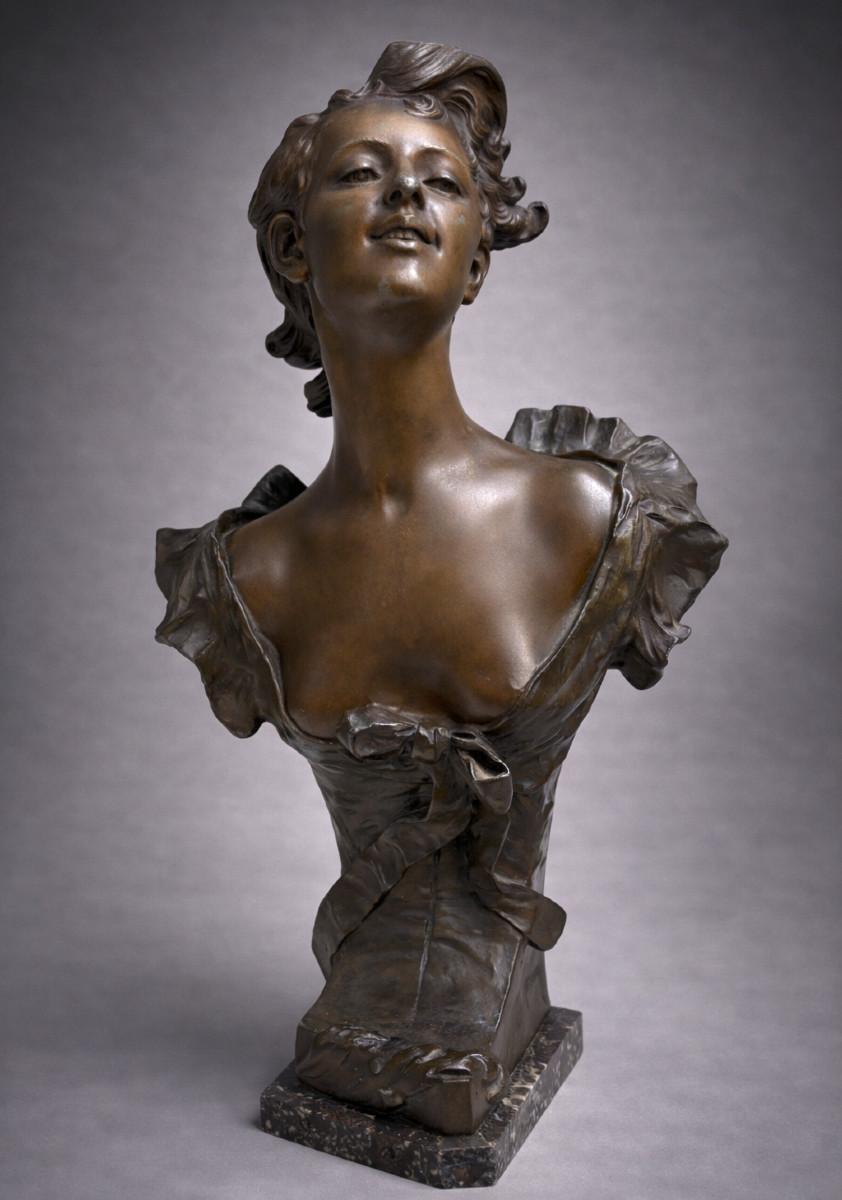
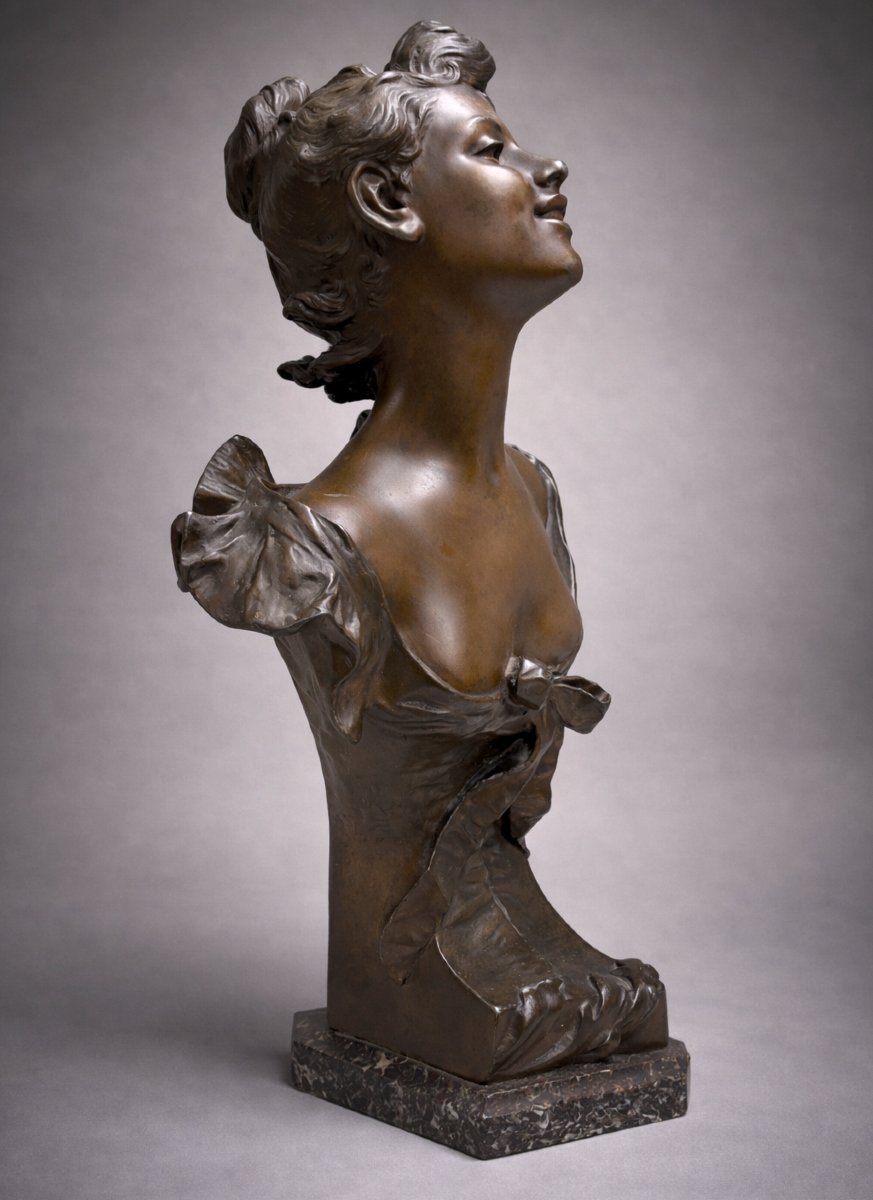
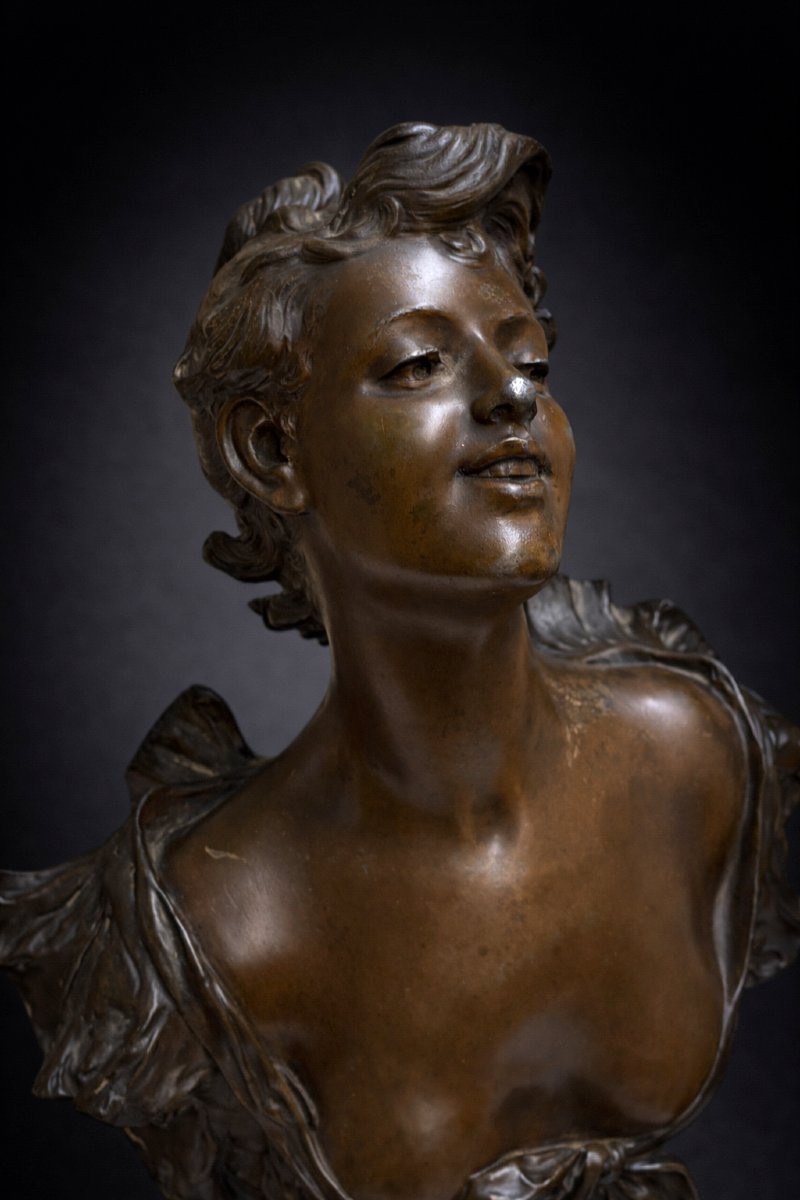
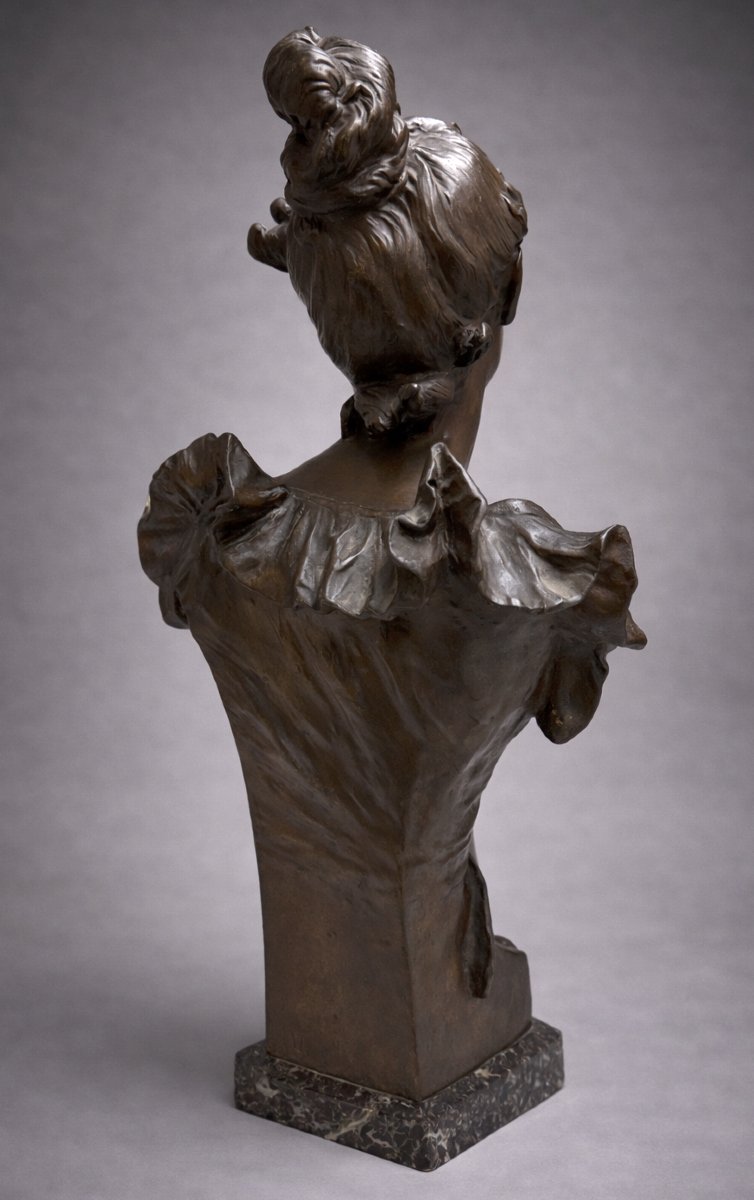
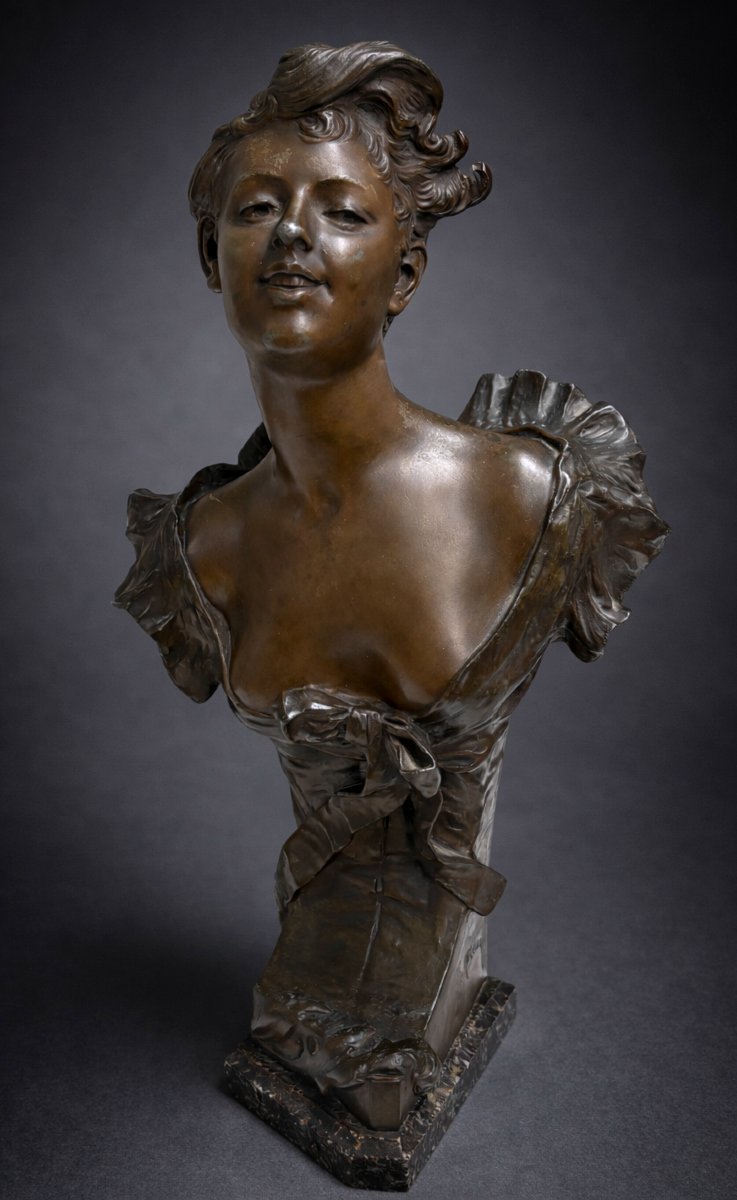
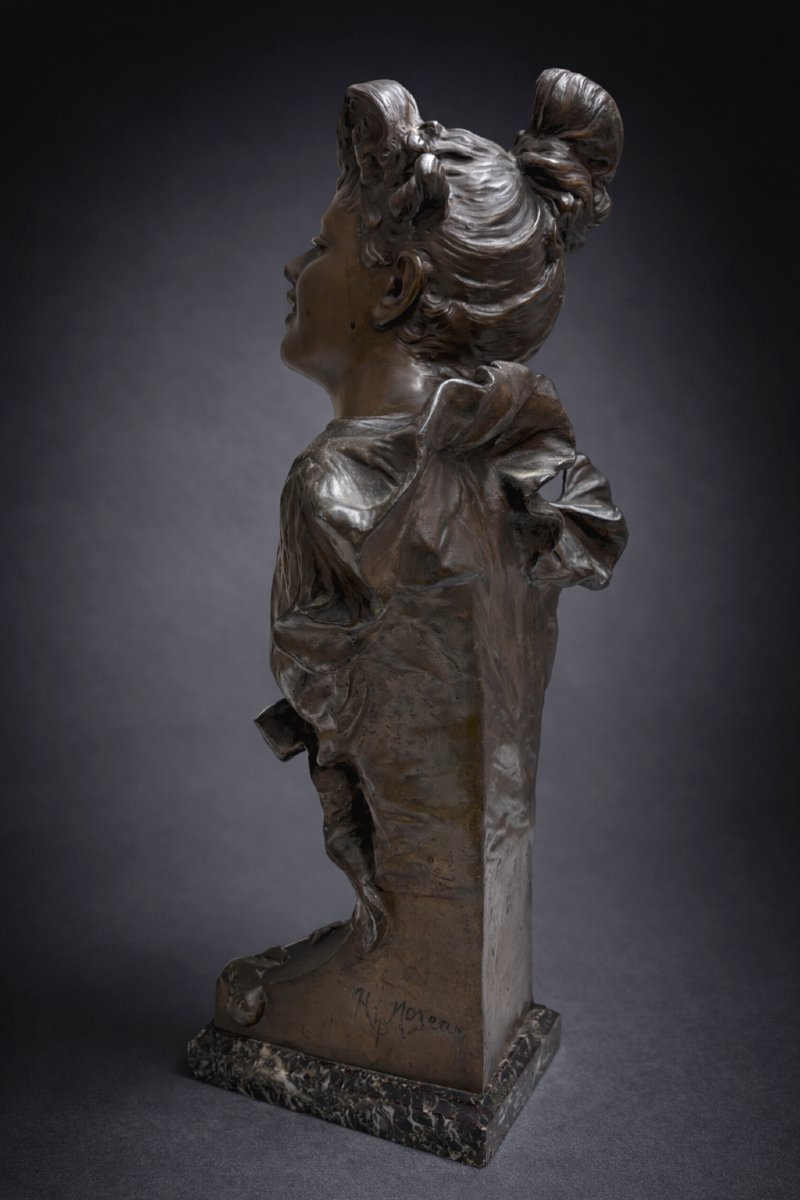
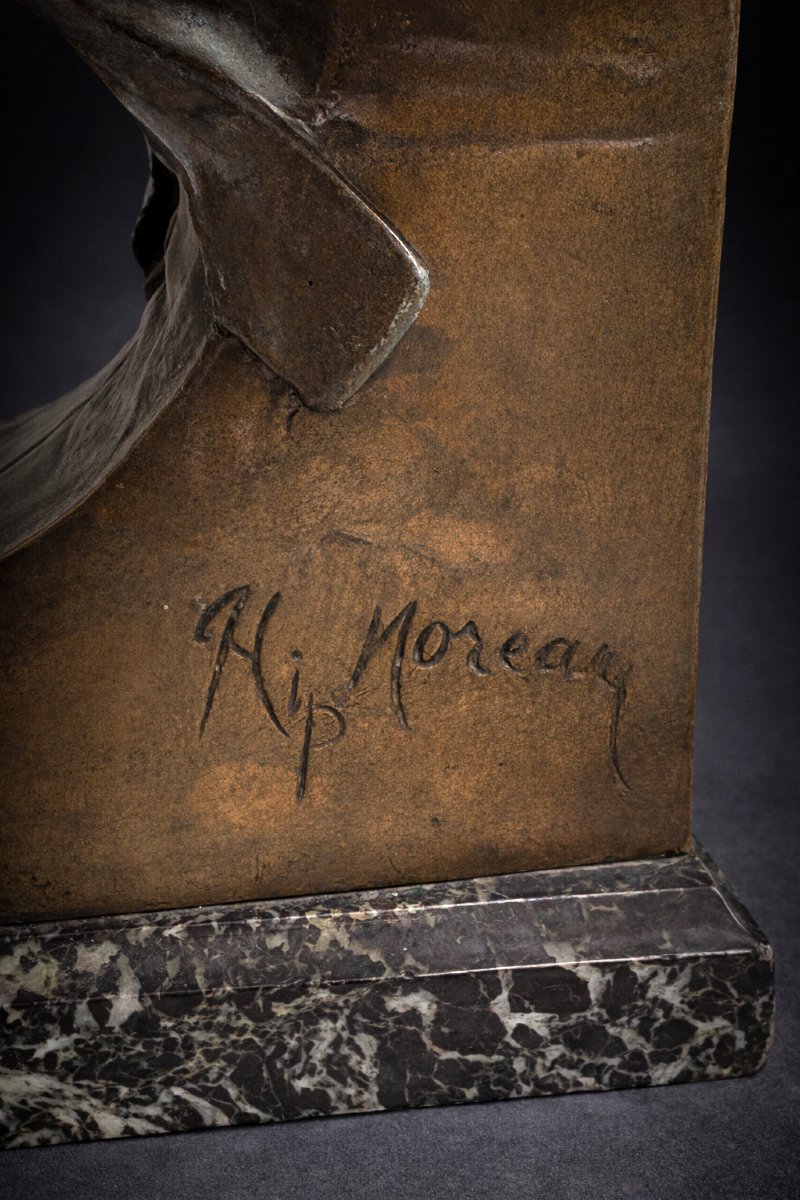
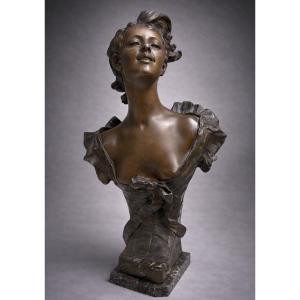


Antique and large bust depicting an elegant young woman of the Belle Époque. Work by the artist Hypolite Moreau. Body in patinated bronze metal, marble base. Very fine movement on a column. Bust measuring 56cm in height. Good condition. Hypolite Moreau was born in 1832 in France into a family deeply rooted in the world of sculpture. He was the son of the sculptor Jean-Baptiste Moreau, and grew up in an environment where the family workshop served as a school, a living space, and a place for the transmission of art. For the Moreaus, sculpture was not just a profession: it was a tradition. Trained in accordance with the academic canons of the 19th century, Hypolite Moreau developed very early on a marked taste for allegorical figures, mythology, and idealized representations of women. He worked primarily in bronze and spelter, materials well-suited to the production of decorative sculptures intended for a rapidly expanding bourgeois public during the Belle Époque. His elegant and expressive style lies at the crossroads between academicism and the more fluid lines of Art Nouveau. A prolific family of artists, the Moreau family was a true artistic phenomenon of the 19th century. Several brothers and close relatives were sculptors, sometimes exhibiting or producing stylistically very similar works simultaneously. A telling anecdote: this artistic affinity was such that even today, some works are sometimes mistakenly attributed to one or another member of the family. The signatures "Moreau" or "H. Moreau" long caused confusion among collectors and art historians. Unlike other academic sculptors who primarily sought institutional recognition, Hypolite Moreau fully embraced the commercial distribution of his works. His sculptures were produced in multiple copies, which greatly contributed to his renown but also, paradoxically, to a certain discretion in the grand narratives of art history. Hypolite Moreau enjoyed lasting recognition throughout almost the entire 19th and early 20th centuries, bearing witness to the profound artistic transformations of his time. He died in 1927, leaving behind a substantial body of work. Today, his pieces are highly sought after in the art and antiques market, particularly prized for their refinement, elegance, and decorative value.
Explore similar pieces and discover your ideal find:
Other Sculptures