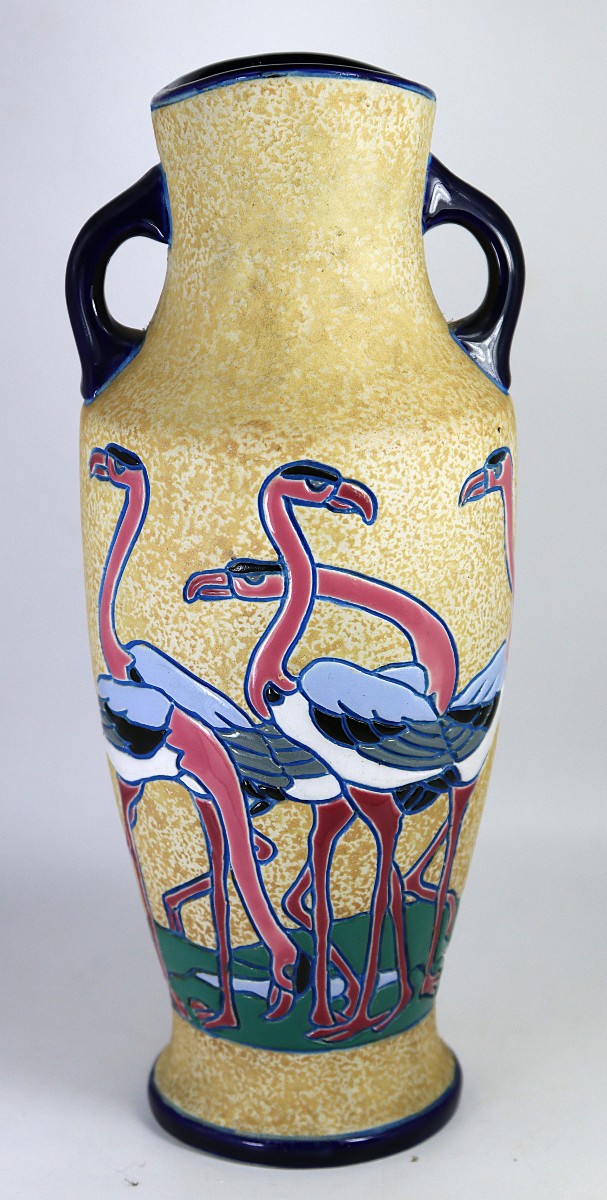
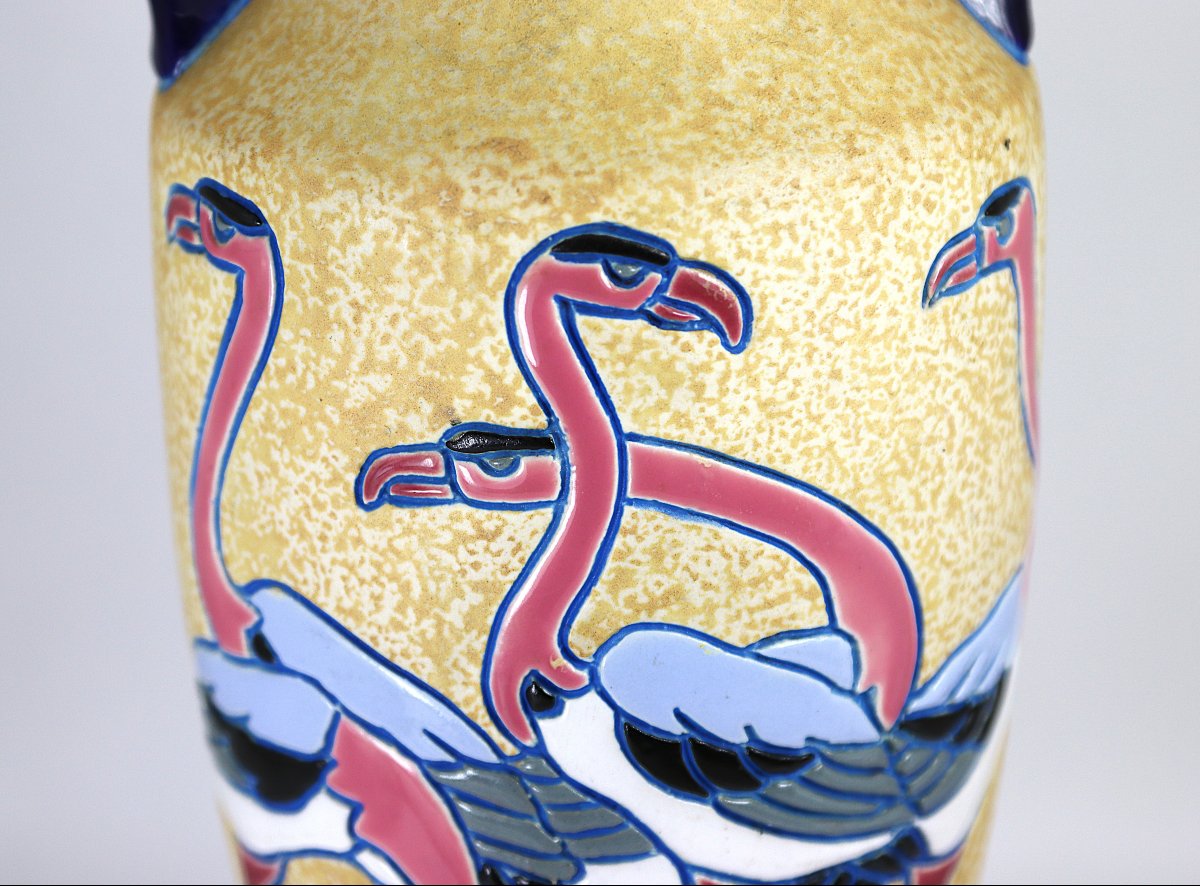
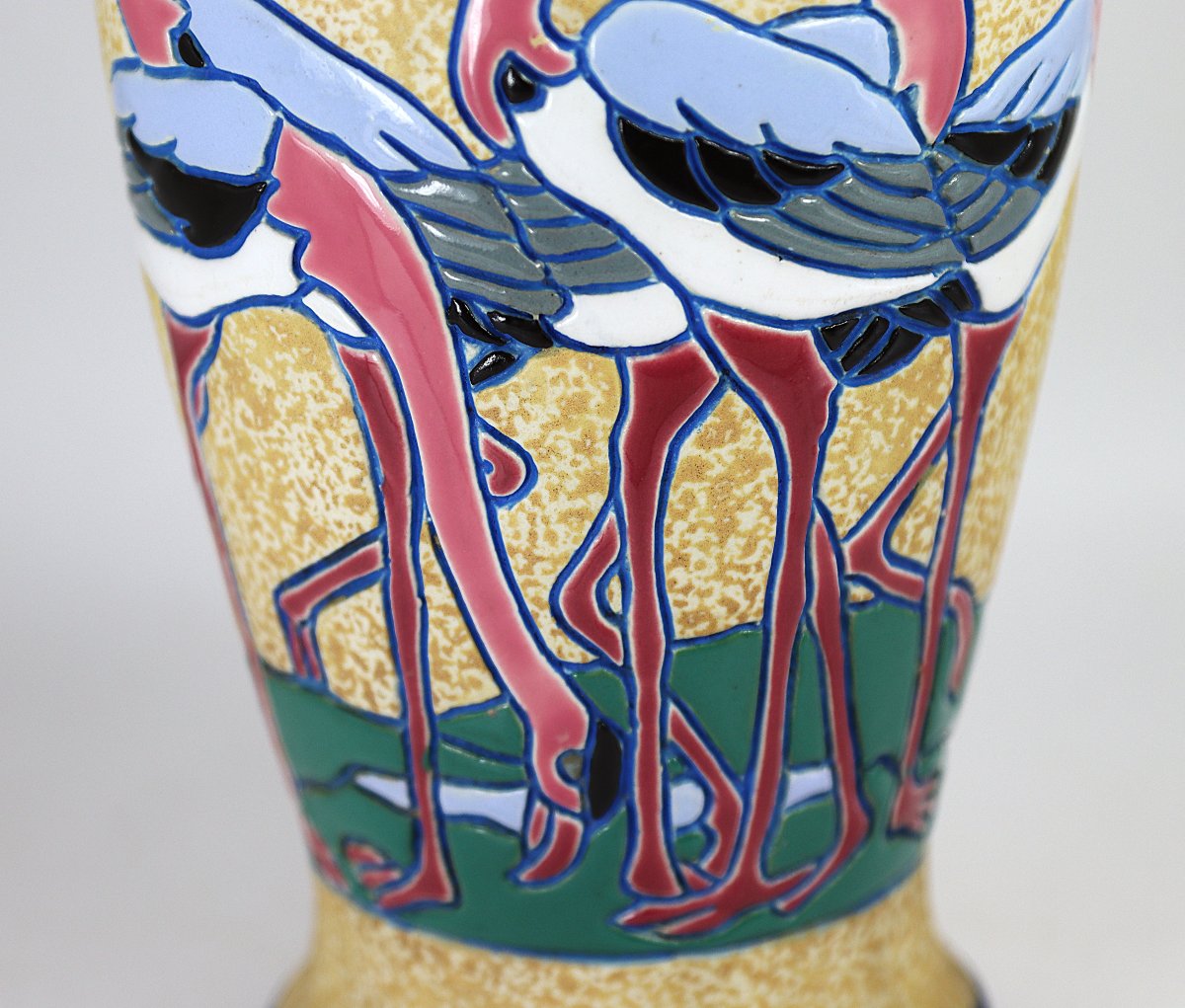
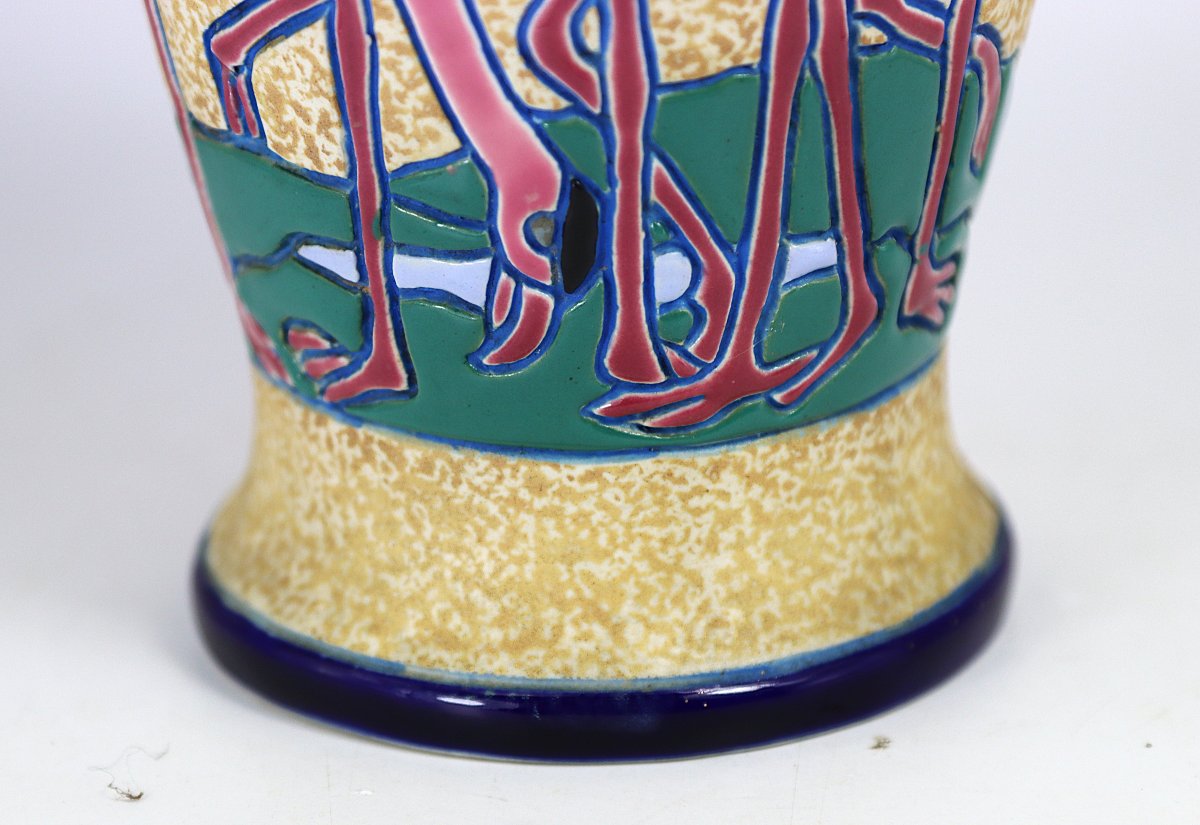
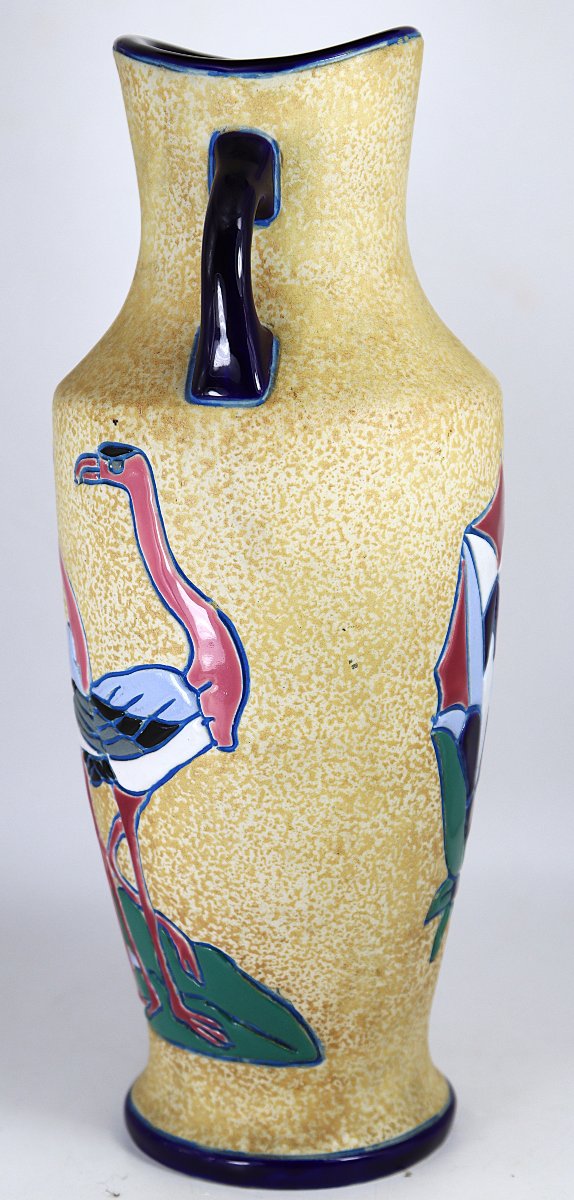
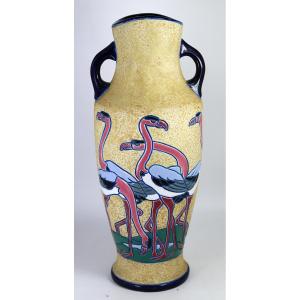


Art Deco, Amphora Vase "flamingo Decoration", Signed, 1930
Artist: Amphora
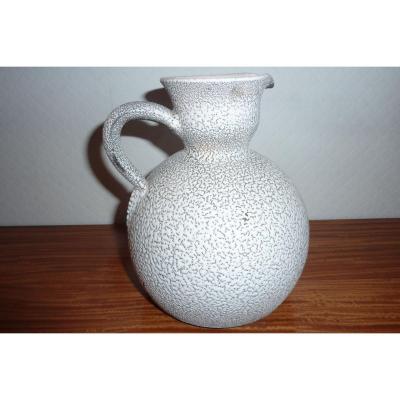
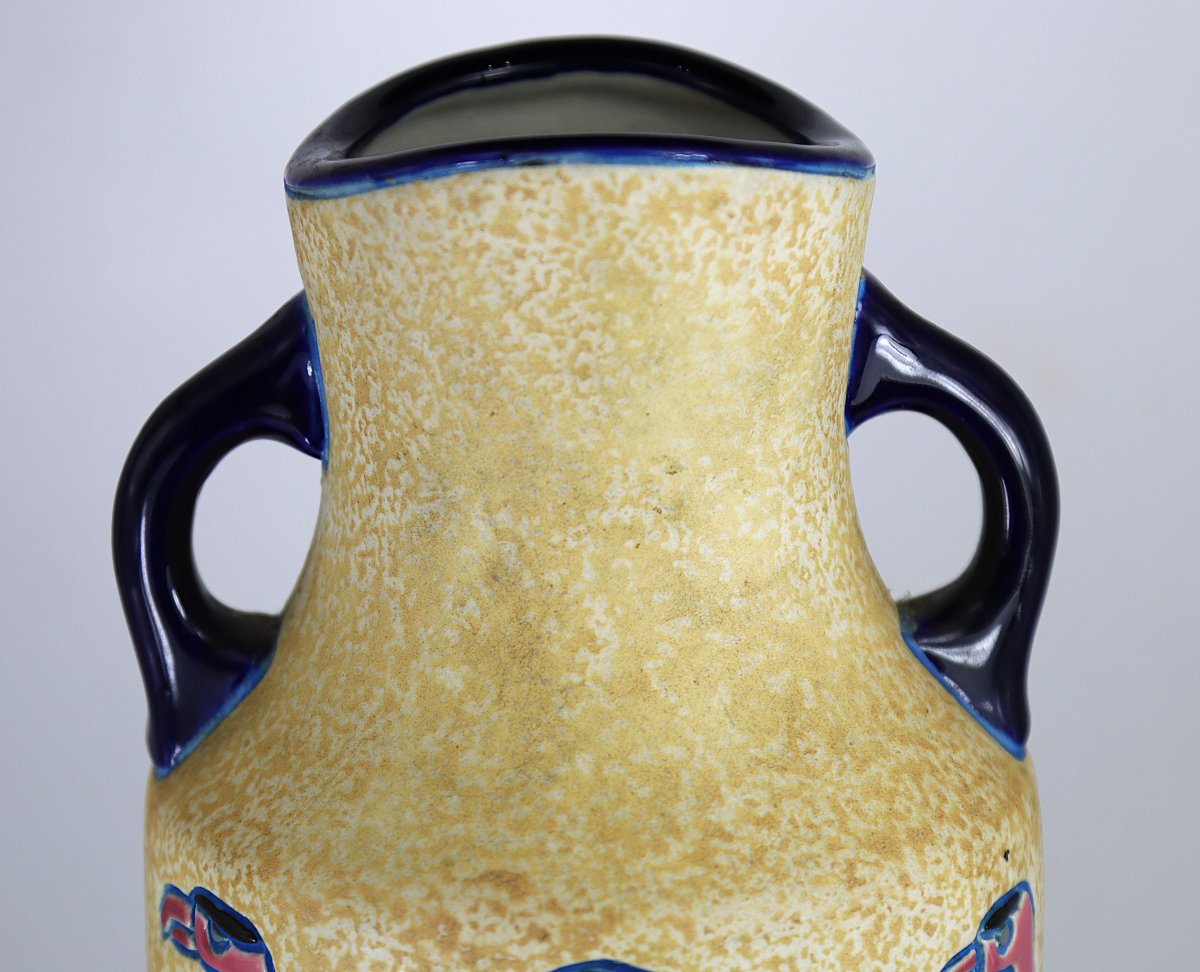
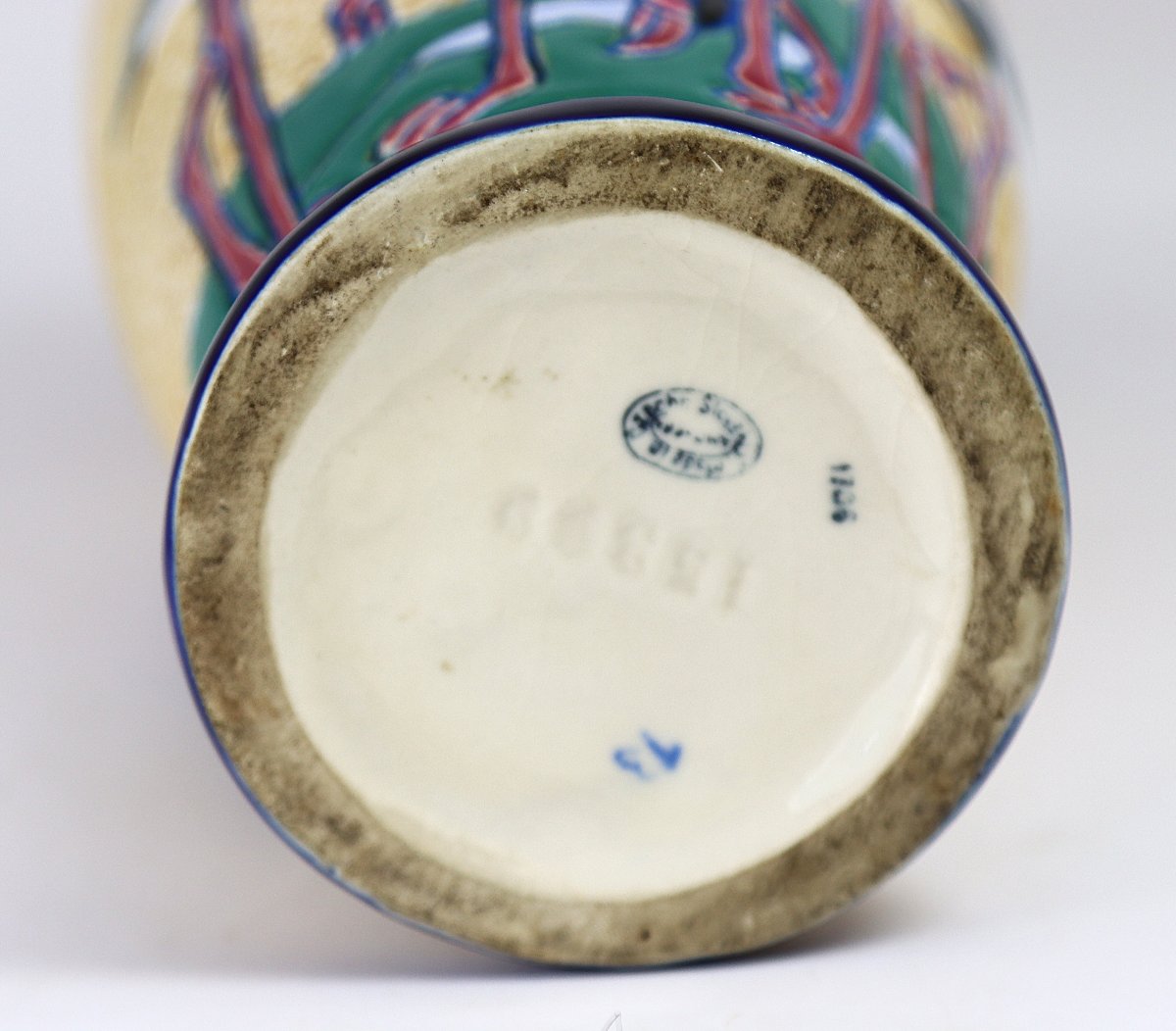
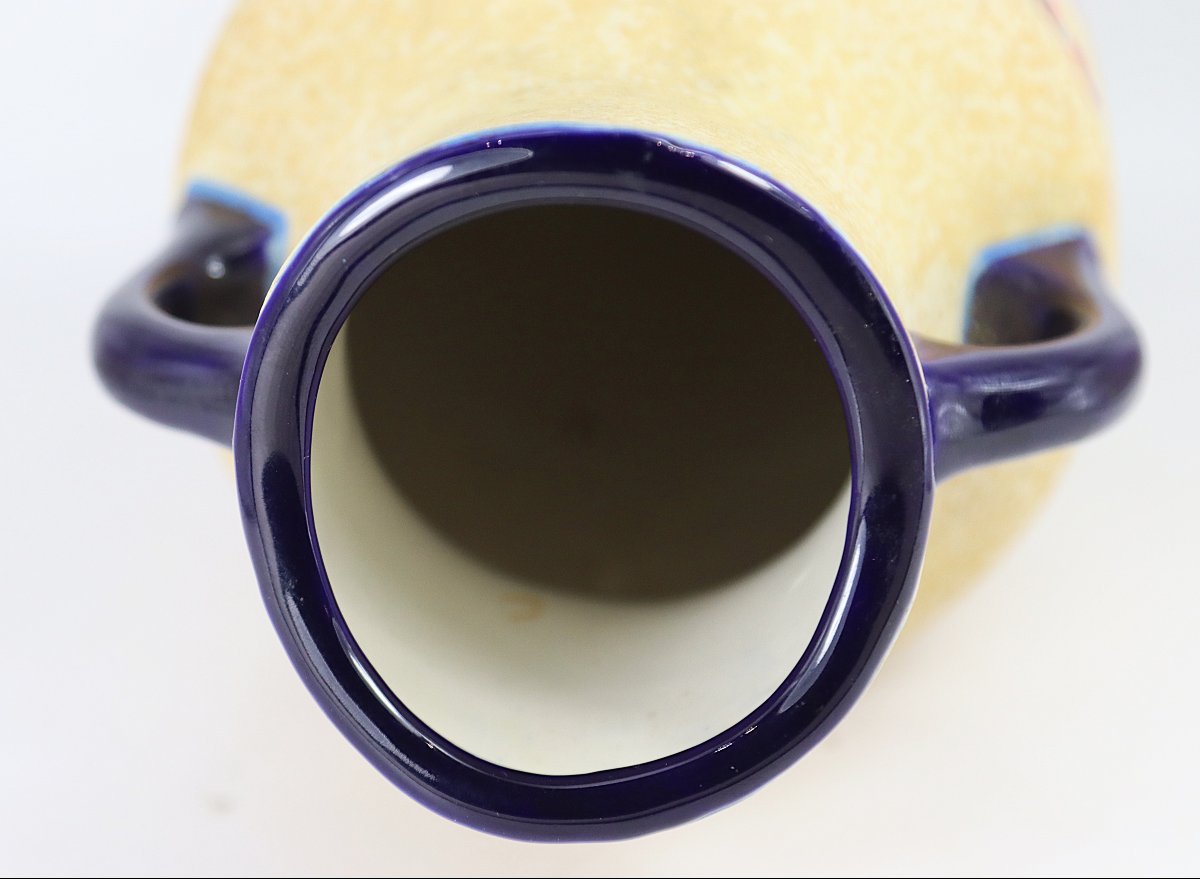
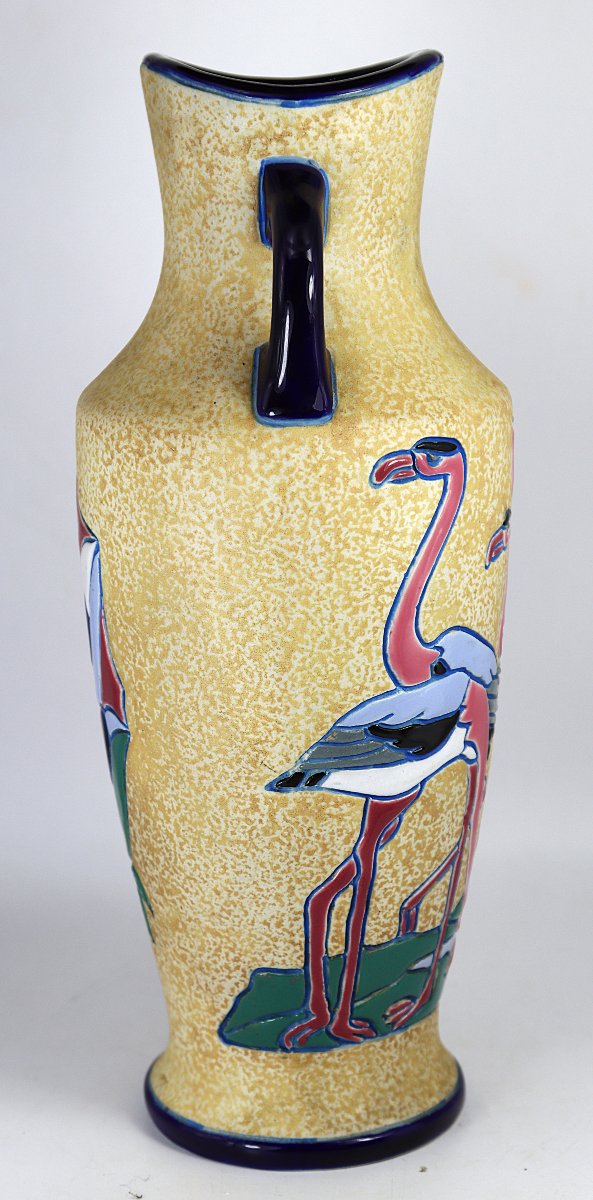
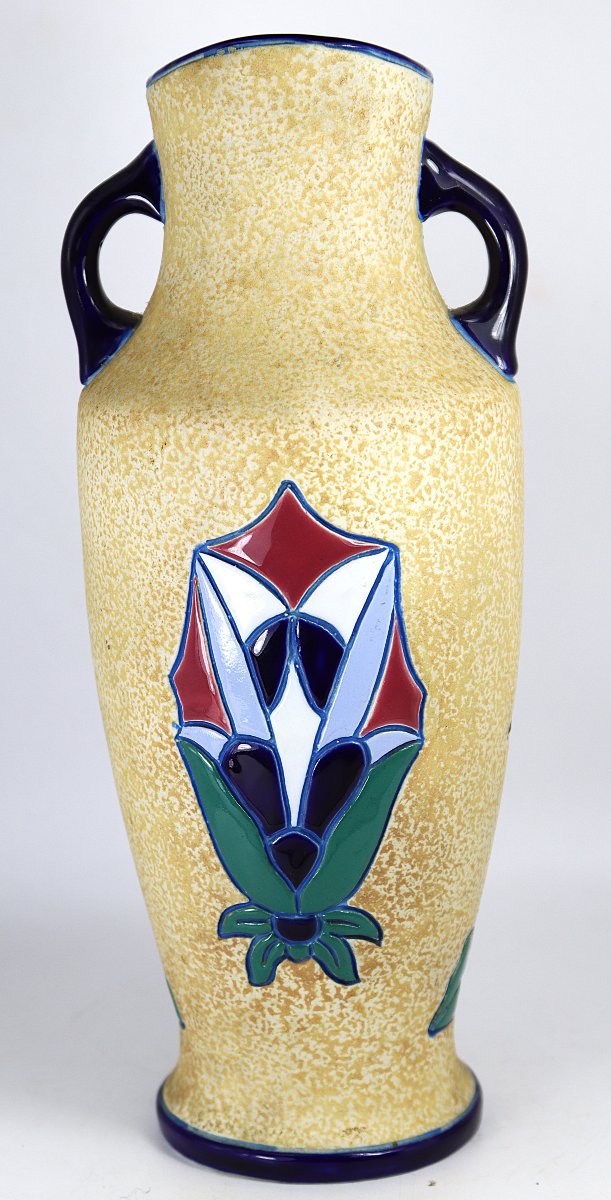
Amphora factory vase in a baluster shape with handles, decorated in polychrome with stylized flamingos on a beige, grainy background, signed with a stamp and numbered underneath, 20th century, Art Deco, circa 1930. The Amphora factory, founded at the end of the 19th century in Bohemia (present-day Czech Republic), is renowned for its Art Nouveau ceramic creations. In 1892, after 17 years at the head of ceramic production, Alfred Stellmacher encouraged his son and sons-in-law to establish a porcelain factory. Named Riessner, Stellmacher & Kessel (RSt&K), the factory marked its pieces with the name "Amphora" from the late 1890s onward, thus becoming renowned under this name. Located in Turn-Teplitz, Austria (Czech Republic), a former spa town known for having hosted Goethe and Beethoven, the Amphora factory is situated in a region transformed by industrialization, yet still fertile for ceramic production thanks to its kaolin deposits and transport infrastructure. Initially influenced by the Orientalist and Neo-Baroque styles of Alfred Stellmacher, Amphora quickly developed a unique aesthetic in Art Nouveau ceramics, thanks to the combined talents of designers like Eduard Stellmacher and Paul Dachsel, and decorators trained at the Teplitz Special School of Ceramics. Amphora distinguished itself with its unique pieces, often adorned with naturalistic motifs such as flowers, animals, or mythological figures. These finely sculpted and richly colored works blend innovative glazing techniques with oriental influences, captivating collectors and art lovers worldwide. The factory's distinctive material, "ivory porcelain," invented by Alfred Stellmacher, is characterized by its matte yellowish hue and resistance to high temperatures, allowing for unprecedented creativity. From 1894 to 1904, Amphora's production reached its peak with works combining plants, animals, mythical creatures, and biomorphic motifs inspired by Klimt and Mucha. This period marks the golden age of the factory, until the departure of Paul Dachsel in 1903 and Eduard Stellmacher in 1904, thus sealing the end of an era of creativity and innovation that made Amphora a world leader in artistic ceramics. The creations of the Amphora factory are today highly prized for their exceptional craftsmanship and their characteristic aesthetic, embodying the refinement and avant-garde spirit of the European Art Nouveau movement.
160 €
Period: 20th century
Style: Art Deco
Condition: Perfect condition
Material: Earthenware
Diameter: 13
Height: 31,5
Reference (ID): 1702234
Availability: In stock
Print