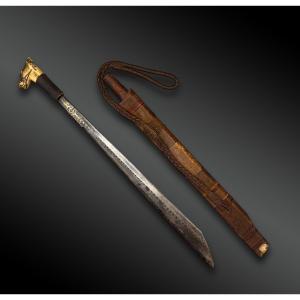


"Headhunter's Sword Called Mandau - Borneo Island, Indonesia - 19th Century Or Earlier"
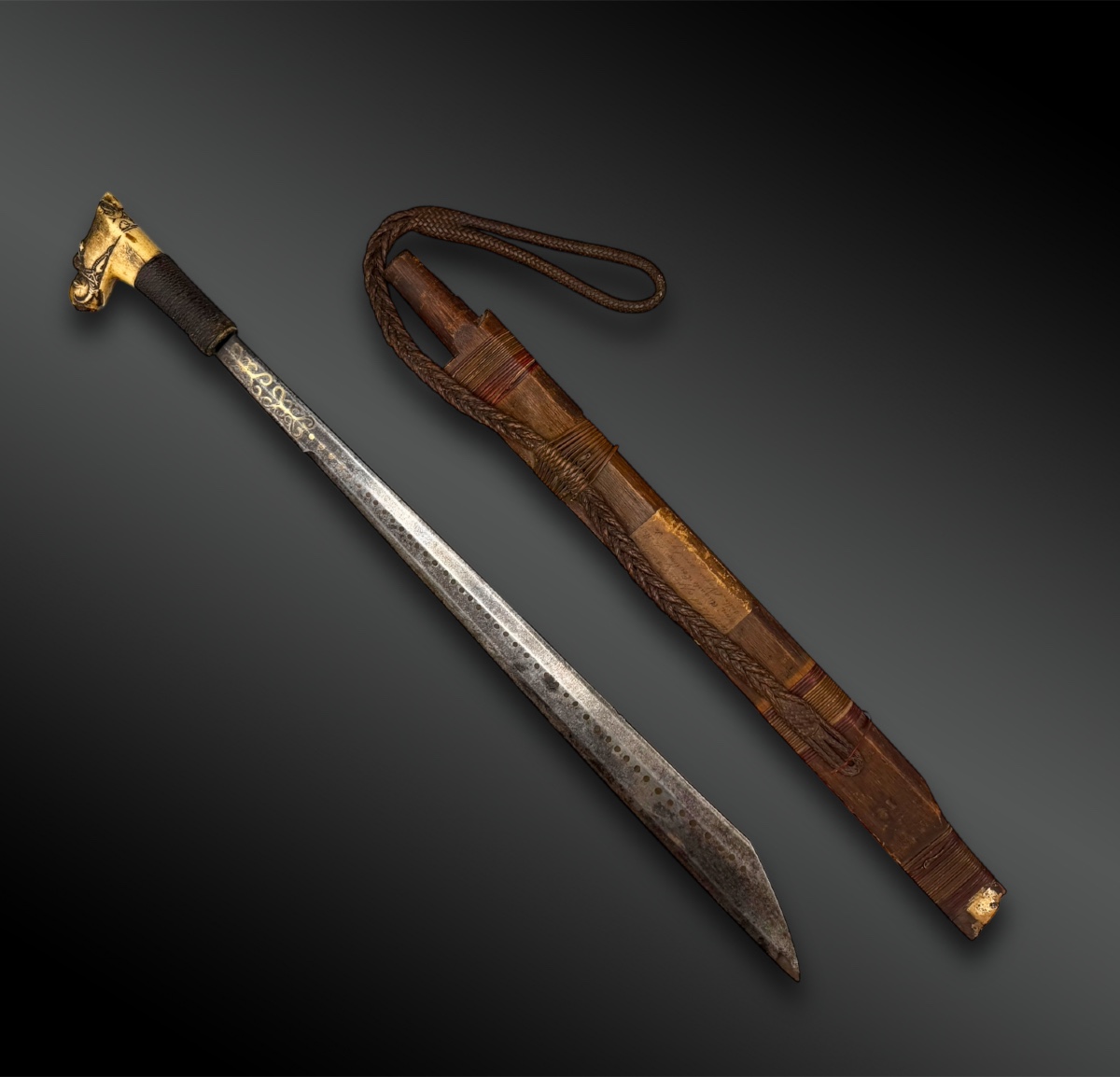
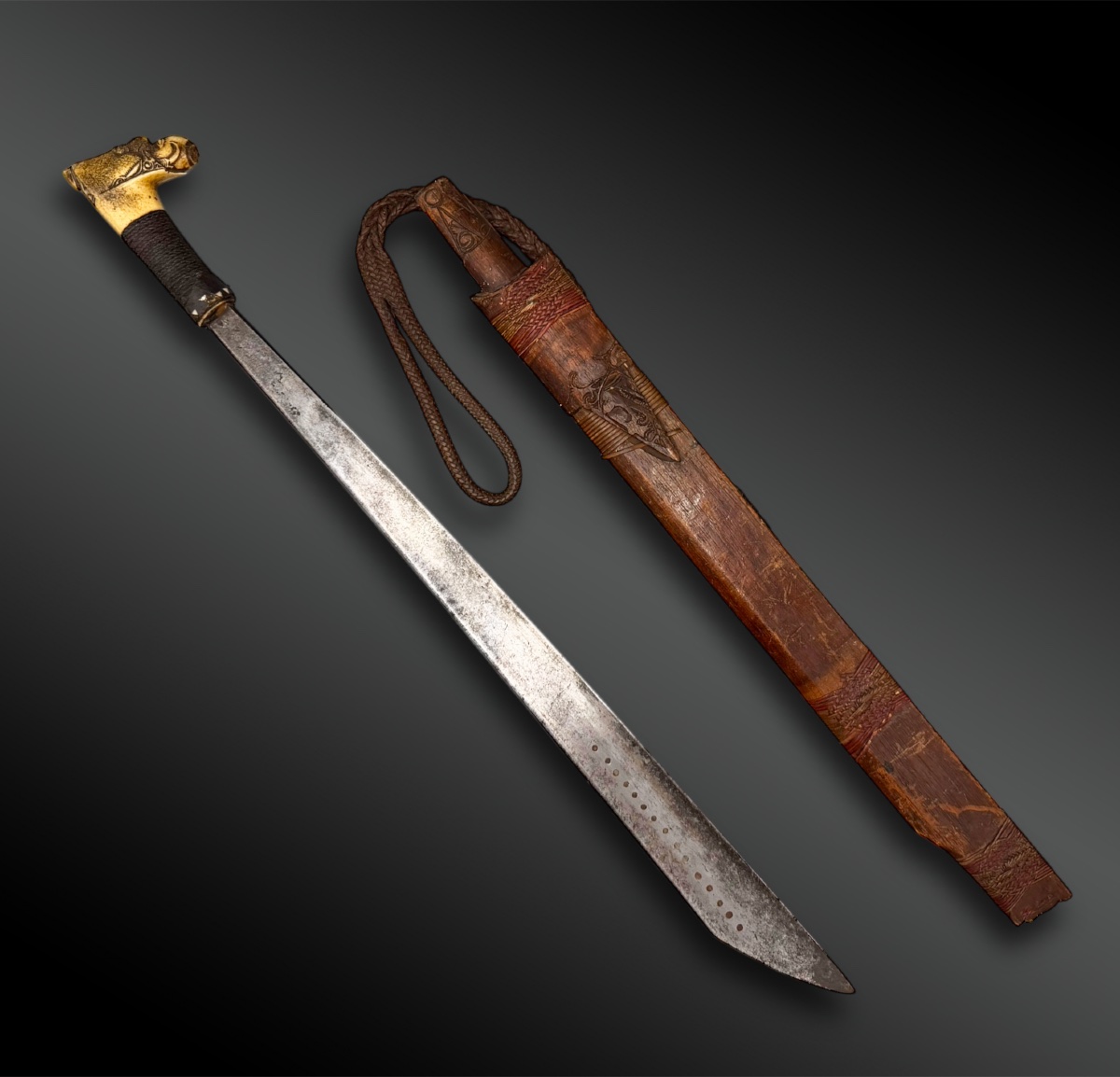
Headhunter's sword called MandauDayak culture, Borneo Island, Indonesia
19th century or earlier
Wood, plant fibres, antler, iron, mother-of-pearl and plant resin
Total length with sheath: 67 cm; L: 4 cm; Blade length: 64 cm
(very slight damage)
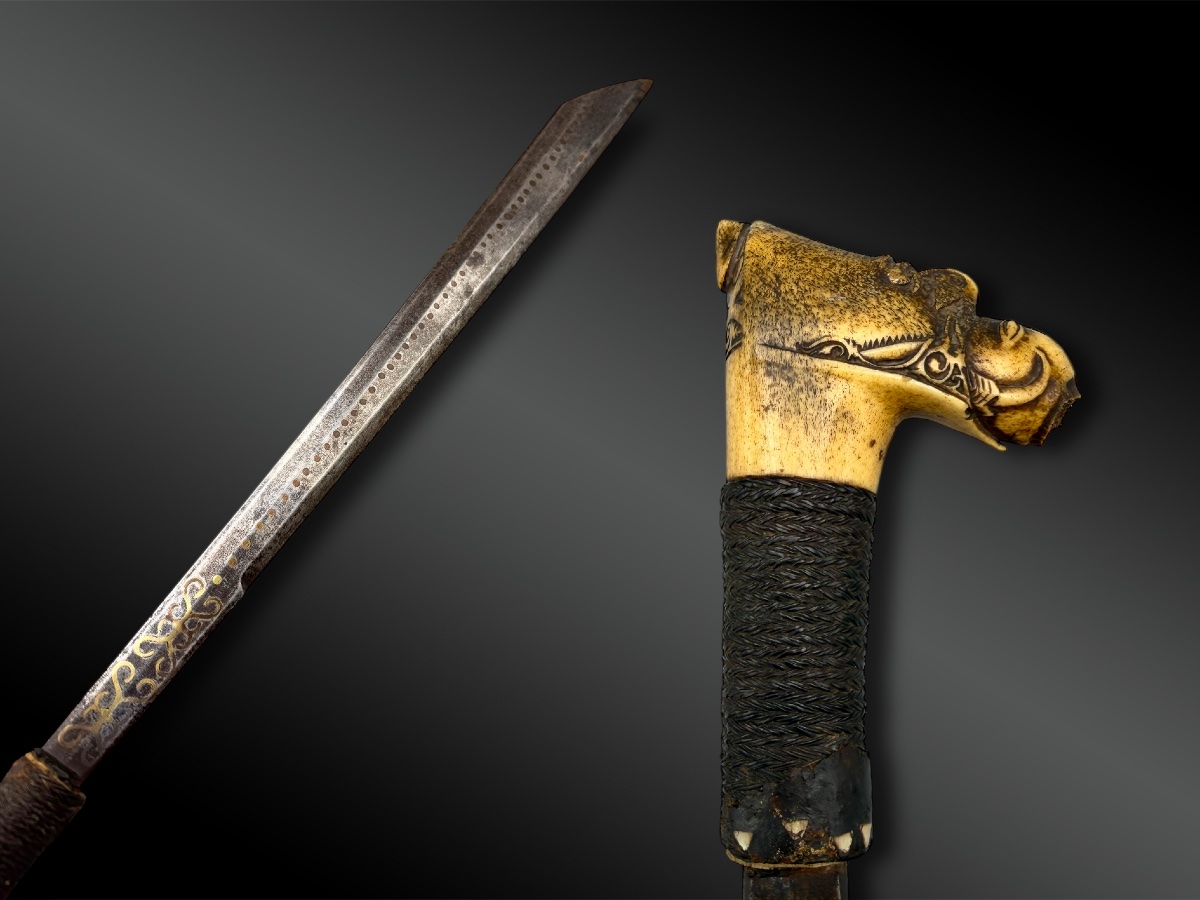
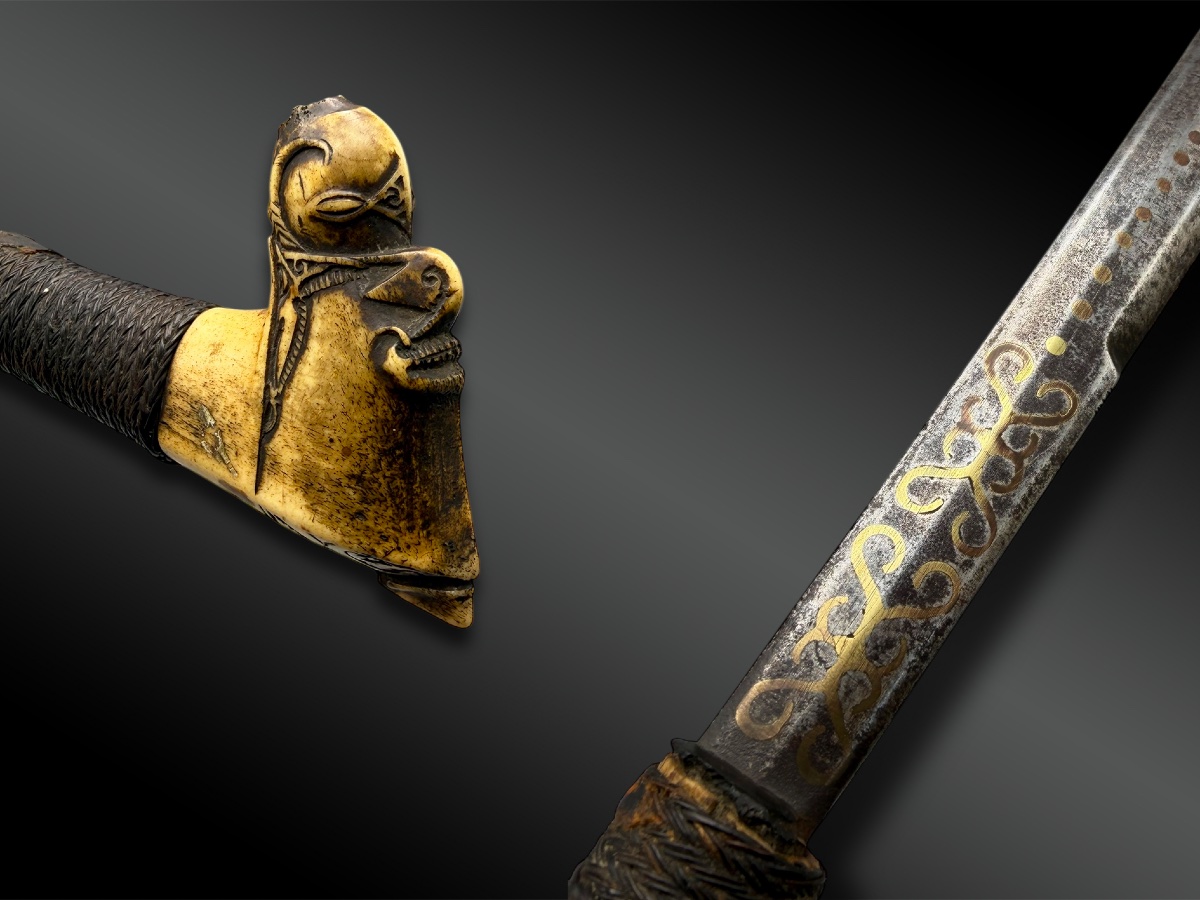
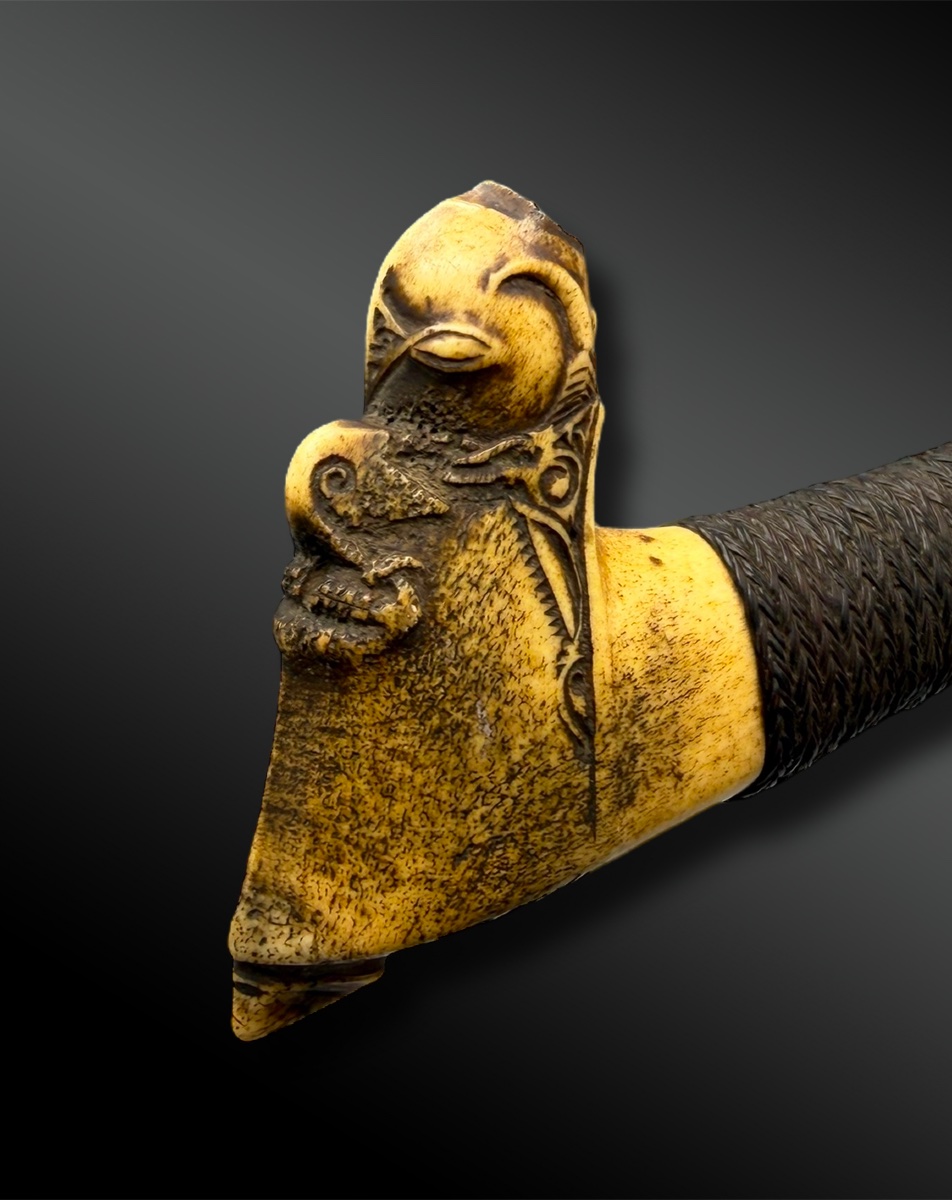
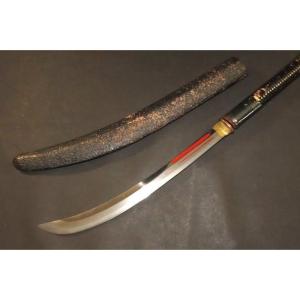
The handle, called ulu, is made of antler, carved with an anthropomorphic mask showing pointed incisors, almond-shaped eyes and ears carved in volutes that refer to the pair of horns on the two deer half-masks that complete the decoration of the handle.
The handle also features finely woven plant fibre ligatures, the end of which is fitted with a natural rubber ring decorated with a frieze of carved mother-of-pearl triangles.
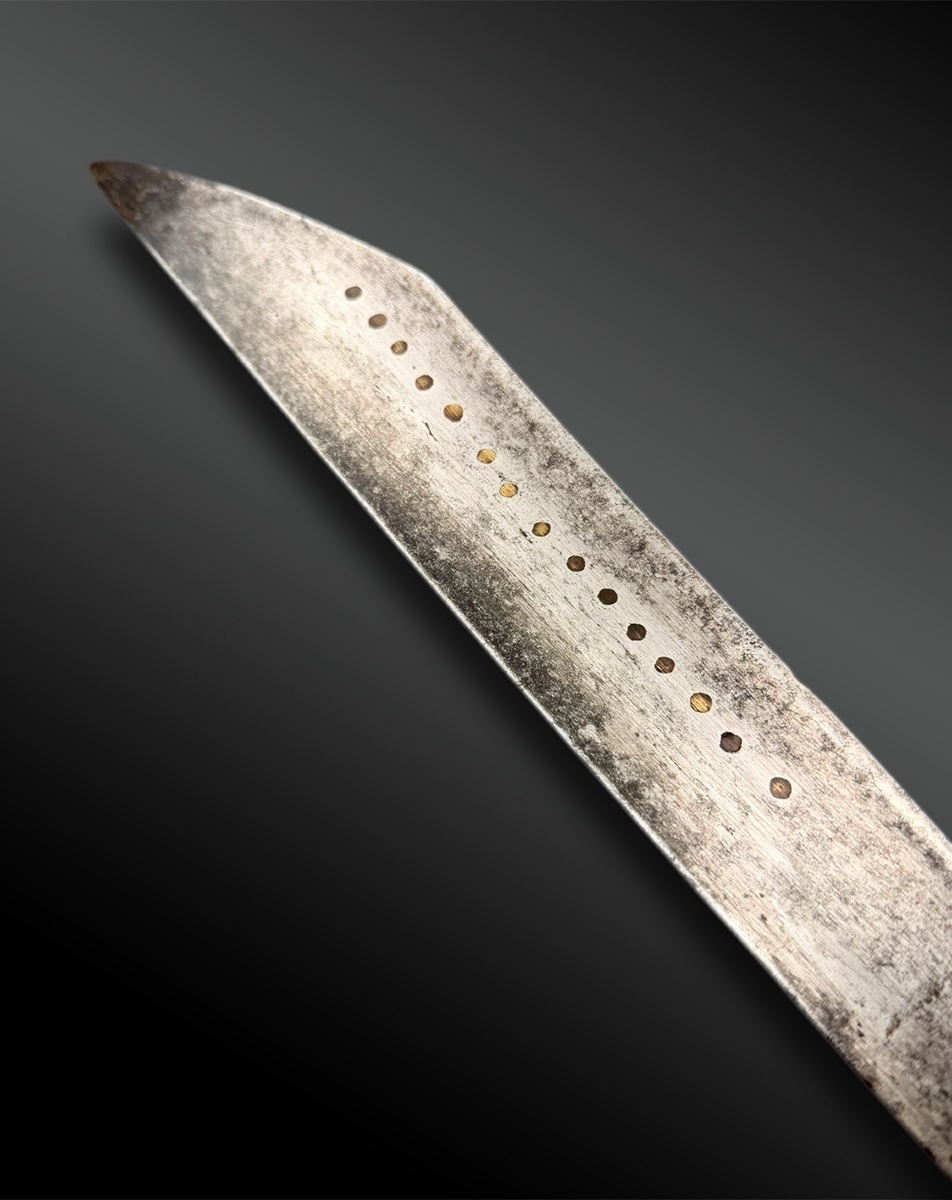
The blade has a single cutting edge, a flat back and two small teeth, and is made of iron with a bevelled tip. On the first section, it is decorated with a stylised double kamang motif and a series of small inlaid blackened iron discs – a motif that continues on the third section.
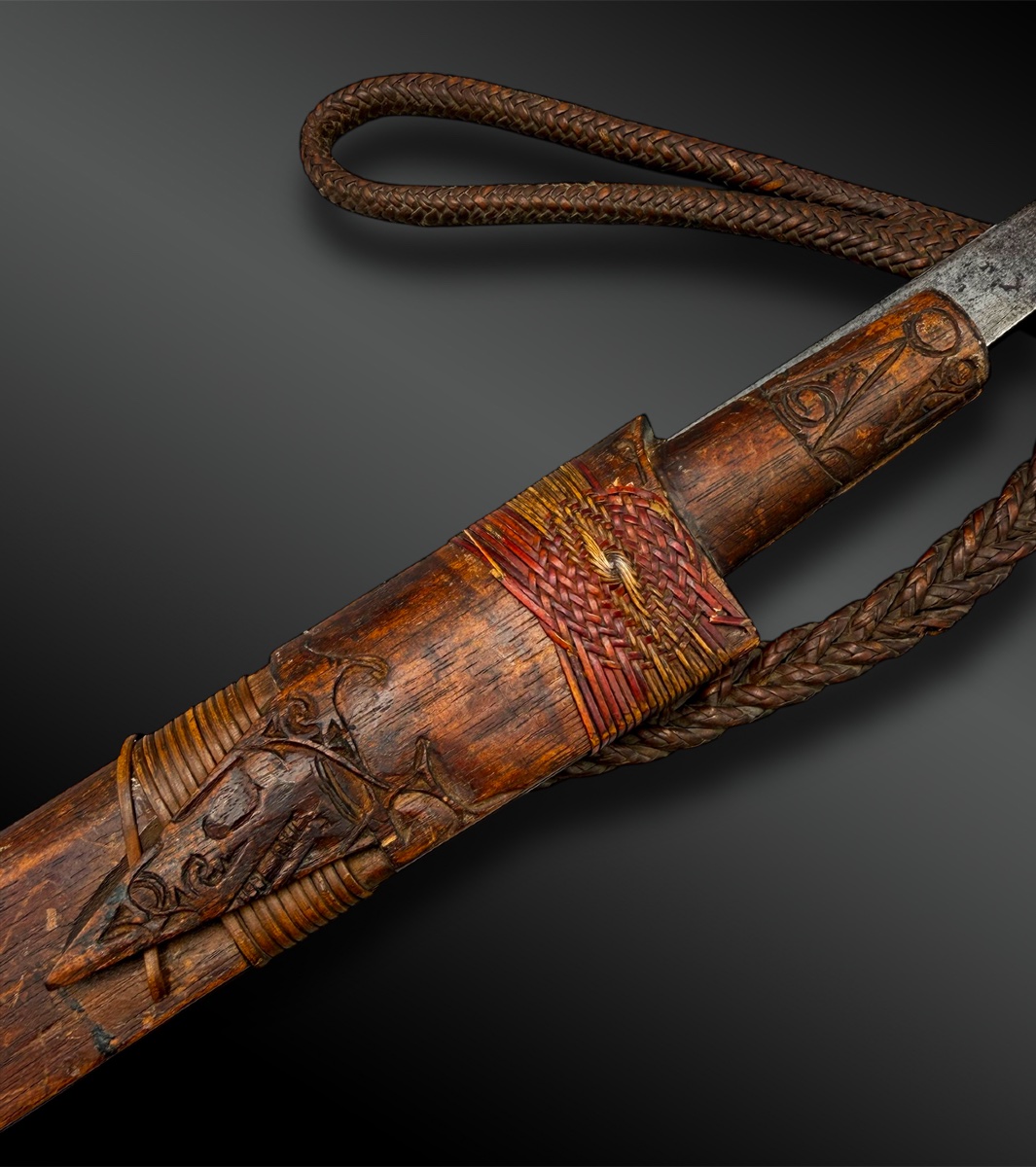
The sheath, called a kumpang, consists of two wooden blades held together by three rings of plant fibres tied in rosettes and dyed red. A third tie, held in place by a triangular notch, supports the braided plant cord used as a suspension strap for carrying the weapon at the waist.
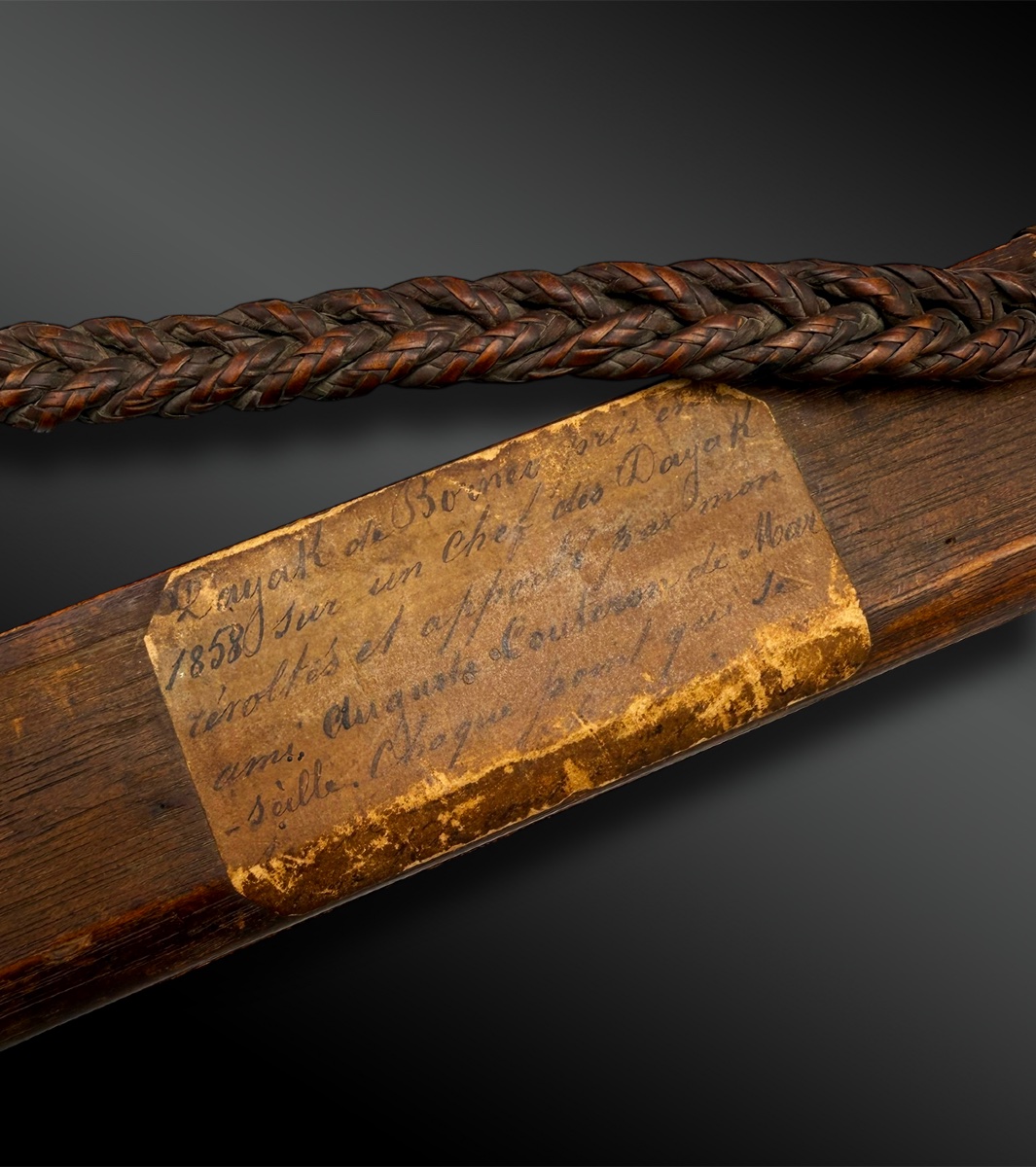
On the reverse side, an old handwritten label bears the following inscription (passage interpreted in italics):
‘Dayak of Borneo taken in 1858 from a leader of the rebellious Dayaks and brought by my friend Auguste Couteron of Marseille. Each point on the blade refers to a severed head [...]’.
Today, mandau are associated with headhunting ceremonies. They are both weapons and symbols of prestige. They belonged to hunters and warriors and were passed down from generation to generation. It is said that these weapons had supernatural powers. The spirit was planted in a hair, placed on the handle of the sword. The sacred combination of the mandau is amplified by the combination of mother-of-pearl and antler materials.
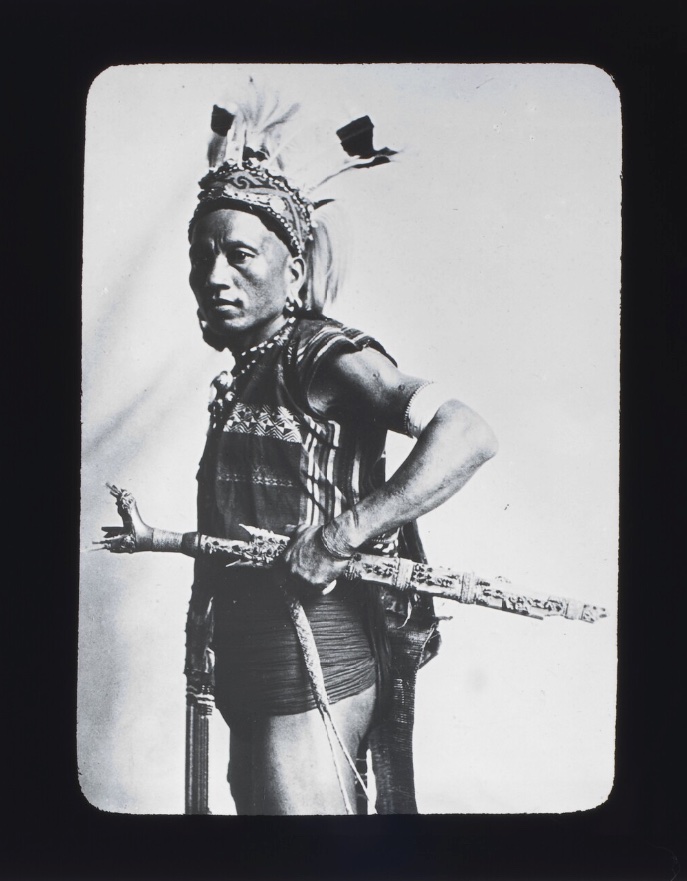
Illustrative image: Lacroix, Alfred François Antoine (1863 - 1948), Att. to, ‘Borneo. Dayak chief in war costume. Lacroix Collection’ 1929 © Musée du quai Branly.
Text and photos © FCP CORIDON
Ref.: 6736












 Le Magazine de PROANTIC
 TRÉSORS Magazine
 Rivista Artiquariato