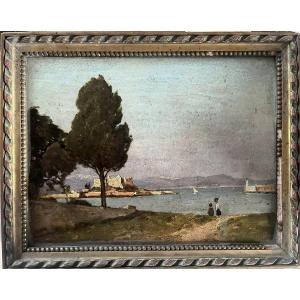



Charles Sprague Pearce (boston, 1851 - Paris, 1914) The Shore At Low Tide
Artist: Charles Sprague Pearce (boston, 1851 - Paris, 1914)
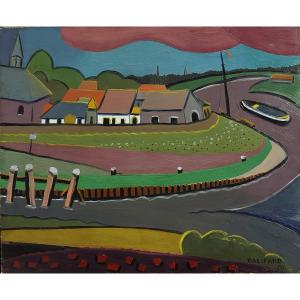
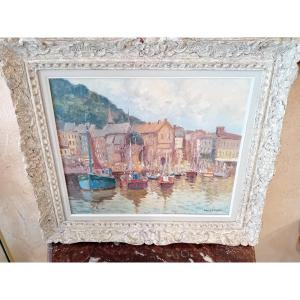
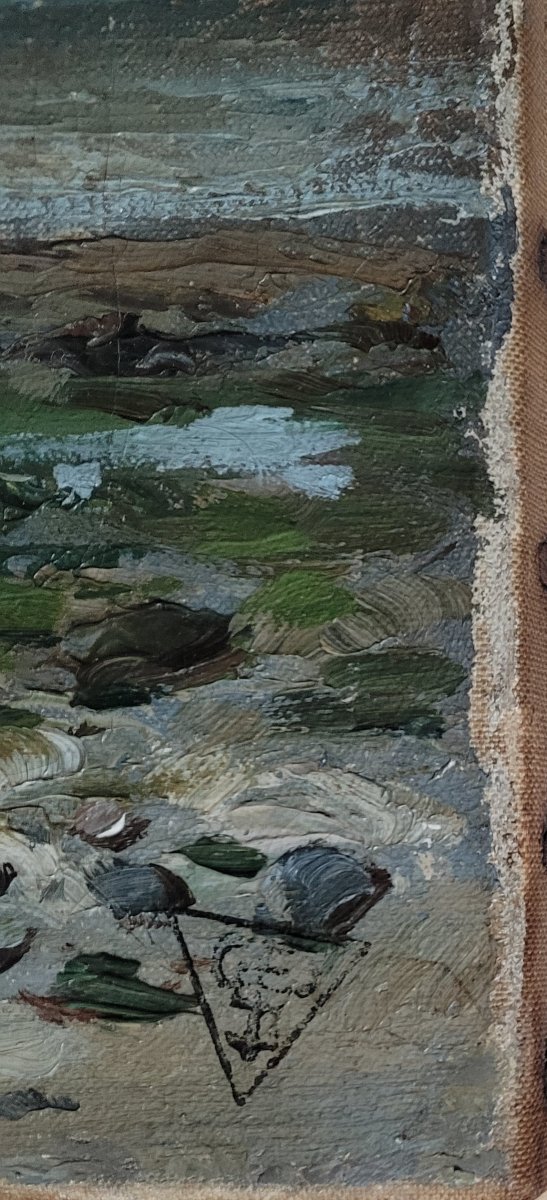
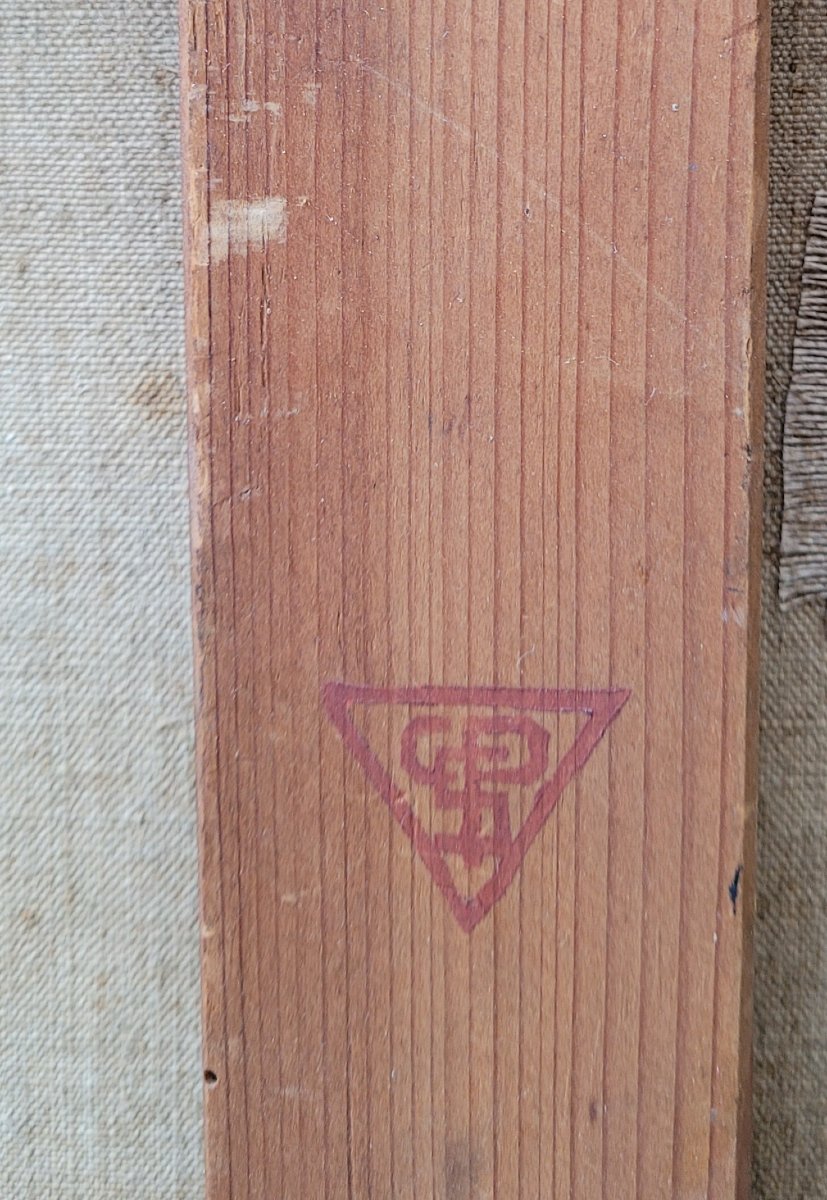
Charles Sprague Pearce (Boston, 1851 - Paris, 1914) The Shore at Low Tide, oil on canvas, 29.5 cm x 45.5 cm, artist's stamp lower right and on the reverse of the stretcher.
Charles Sprague Pearce was born on October 13, 1851, in Boston, Massachusetts, into a family steeped in art and culture. His father, a Chinese porcelain dealer, surrounded him with exotic treasures, awakening in him from a very young age a fascination for art. Although his family hoped he would take over the family business, Pearce felt another calling: that of painting.
After a brief stint in his father's shop, he decided to dedicate himself to his passion and left Boston for Paris in 1873. In the French capital, he entered the studio of the renowned painter Léon Bonnat (1833–1922), whose academic rigor profoundly influenced his early works.
Paris became the stage for his artistic development, where he immersed himself in the vibrant community of expatriate American artists, including John Singer Sargent (1856–1925), Edwin Blashfield (1859–1949), and Daniel Ridgeway Knight (1839–1924).
Under Bonnat's tutelage, Pearce focused on realism and historical subjects, achieving his first significant successes at the 1877 Paris Salon with The Death of the Firstborn, inspired by his travels in Egypt. At the same time, he became interested in Japonisme, the European artistic movement fascinated by Japanese art, blending traditional European themes with Japanese motifs. Yet, even as exotic styles began to influence his work, Pearce maintained a deep connection to the French countryside.
In the 1880s, he found solace and inspiration in the village of Auvers-sur-Oise, drawing on the simple, profound lives of the peasants. Works such as Water Carrier, which earned him a third-class medal at the 1883 Salon, and Heartaches in 1885, reflected his sensitivity to rural hardships and his empathy for the farmers' struggles. Throughout his career, Pearce imbued his work with Symbolist elements, drawing on Christian, mythological, and folk traditions, which allowed his paintings to transcend time and space. His marriage to Louise Catherine Bonjean, known as Antonia, further grounded him in French culture, deepening his understanding of the country and its people.
In the years that followed, Pearce's artistic influence and renown continued to grow. His work was widely exhibited throughout Europe and the United States, and he received numerous accolades, including the prestigious Legion of Honor. His oeuvre was further enriched by large-scale frescoes, notably those commissioned for the Thomas Jefferson Building of the Library of Congress in Washington, D.C.
His later works, such as Jeune Picarde, exhibited at the Salon of 1906, marked a return to more intimate and humanist themes. Pearce's life ended in Auvers-sur-Oise on May 18, 1914, where, having immersed himself in the landscapes and lives he had so passionately depicted, he passed away, leaving behind a legacy of evocative and profoundly human works, intimately connected to the rural scenes and human stories that defined his art.
Charles Sprague Pearce was born on October 13, 1851, in Boston, Massachusetts, into a family steeped in art and culture. His father, a Chinese porcelain dealer, surrounded him with exotic treasures, awakening in him from a very young age a fascination for art. Although his family hoped he would take over the family business, Pearce felt another calling: that of painting.
After a brief stint in his father's shop, he decided to dedicate himself to his passion and left Boston for Paris in 1873. In the French capital, he entered the studio of the renowned painter Léon Bonnat (1833–1922), whose academic rigor profoundly influenced his early works.
Paris became the stage for his artistic development, where he immersed himself in the vibrant community of expatriate American artists, including John Singer Sargent (1856–1925), Edwin Blashfield (1859–1949), and Daniel Ridgeway Knight (1839–1924).
Under Bonnat's tutelage, Pearce focused on realism and historical subjects, achieving his first significant successes at the 1877 Paris Salon with The Death of the Firstborn, inspired by his travels in Egypt. At the same time, he became interested in Japonisme, the European artistic movement fascinated by Japanese art, blending traditional European themes with Japanese motifs. Yet, even as exotic styles began to influence his work, Pearce maintained a deep connection to the French countryside.
In the 1880s, he found solace and inspiration in the village of Auvers-sur-Oise, drawing on the simple, profound lives of the peasants. Works such as Water Carrier, which earned him a third-class medal at the 1883 Salon, and Heartaches in 1885, reflected his sensitivity to rural hardships and his empathy for the farmers' struggles. Throughout his career, Pearce imbued his work with Symbolist elements, drawing on Christian, mythological, and folk traditions, which allowed his paintings to transcend time and space. His marriage to Louise Catherine Bonjean, known as Antonia, further grounded him in French culture, deepening his understanding of the country and its people.
In the years that followed, Pearce's artistic influence and renown continued to grow. His work was widely exhibited throughout Europe and the United States, and he received numerous accolades, including the prestigious Legion of Honor. His oeuvre was further enriched by large-scale frescoes, notably those commissioned for the Thomas Jefferson Building of the Library of Congress in Washington, D.C.
His later works, such as Jeune Picarde, exhibited at the Salon of 1906, marked a return to more intimate and humanist themes. Pearce's life ended in Auvers-sur-Oise on May 18, 1914, where, having immersed himself in the landscapes and lives he had so passionately depicted, he passed away, leaving behind a legacy of evocative and profoundly human works, intimately connected to the rural scenes and human stories that defined his art.
2 500 €
Period: 19th century
Style: Other Style
Condition: Excellent condition
Material: Oil painting
Length: 45,5
Height: 29,5
Reference (ID): 1697139
Availability: In stock
Print