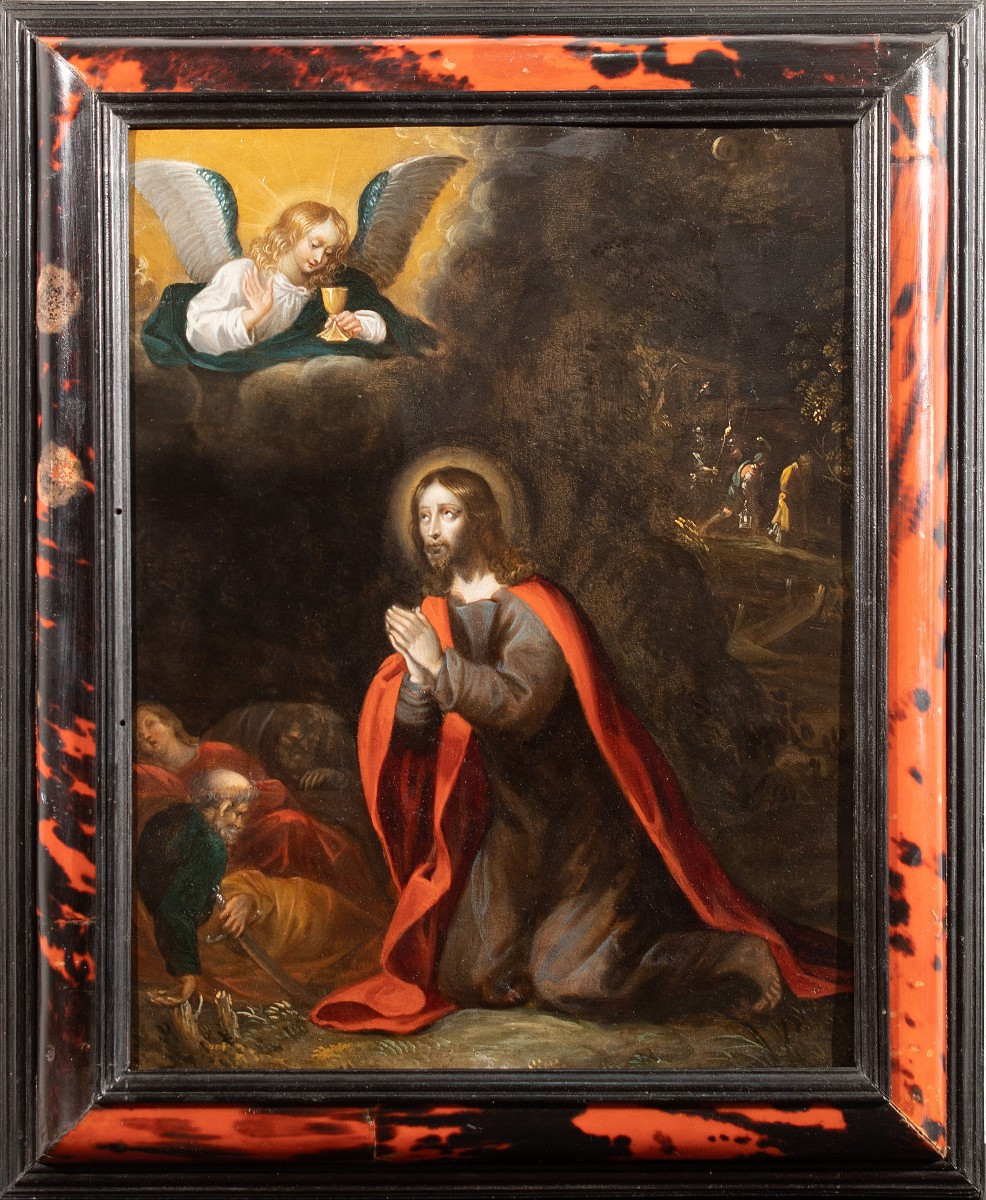
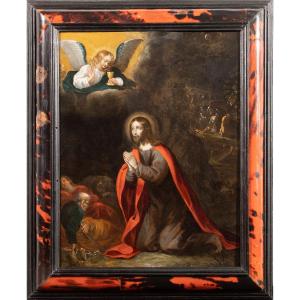


Christ In The Garden Of Olives, Flanders, Mid-17th Century
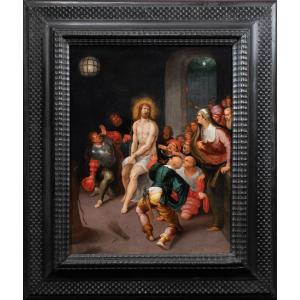
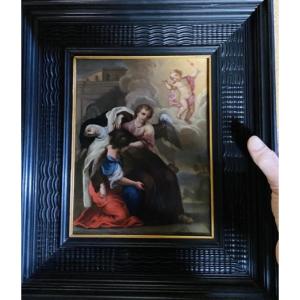
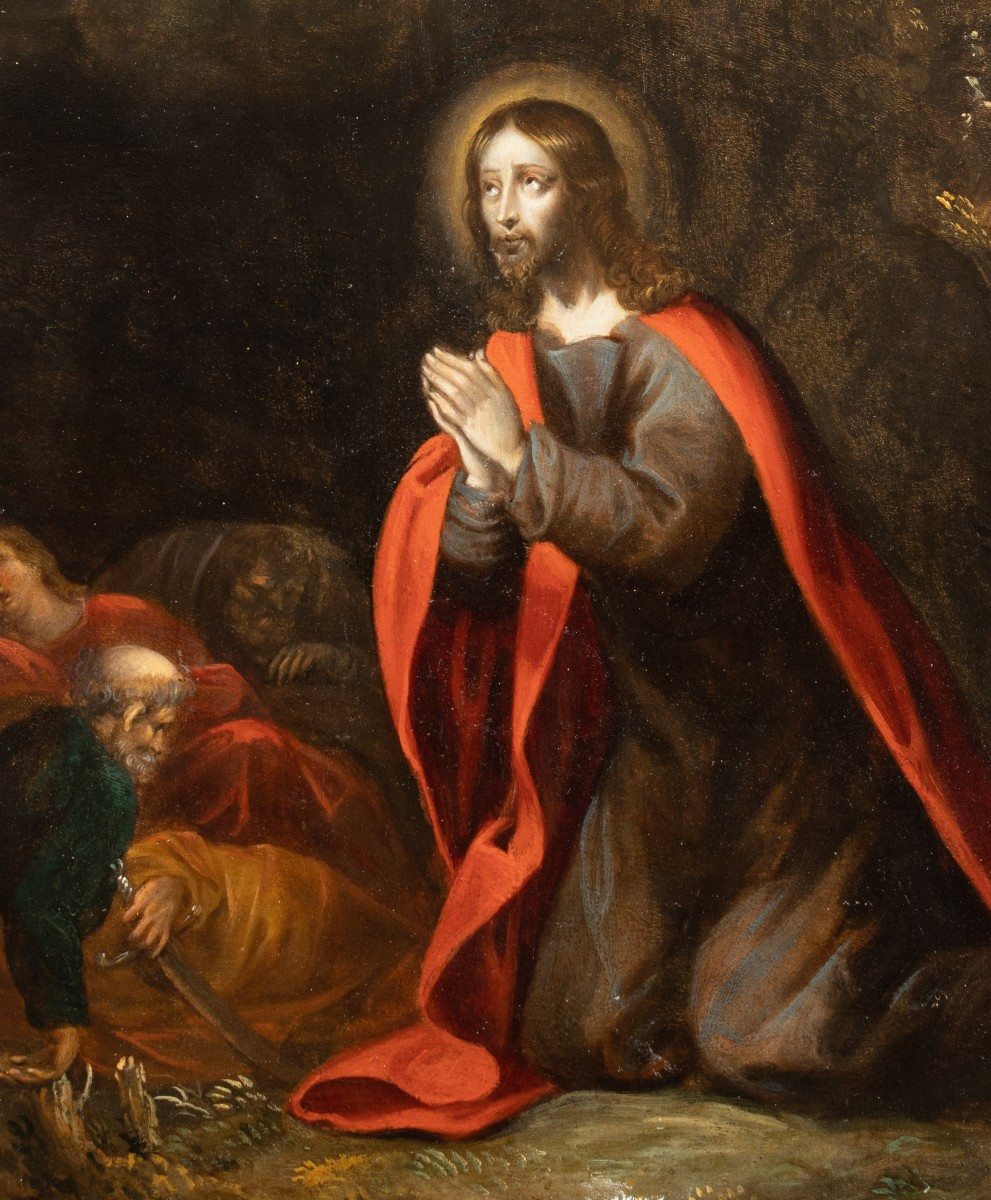
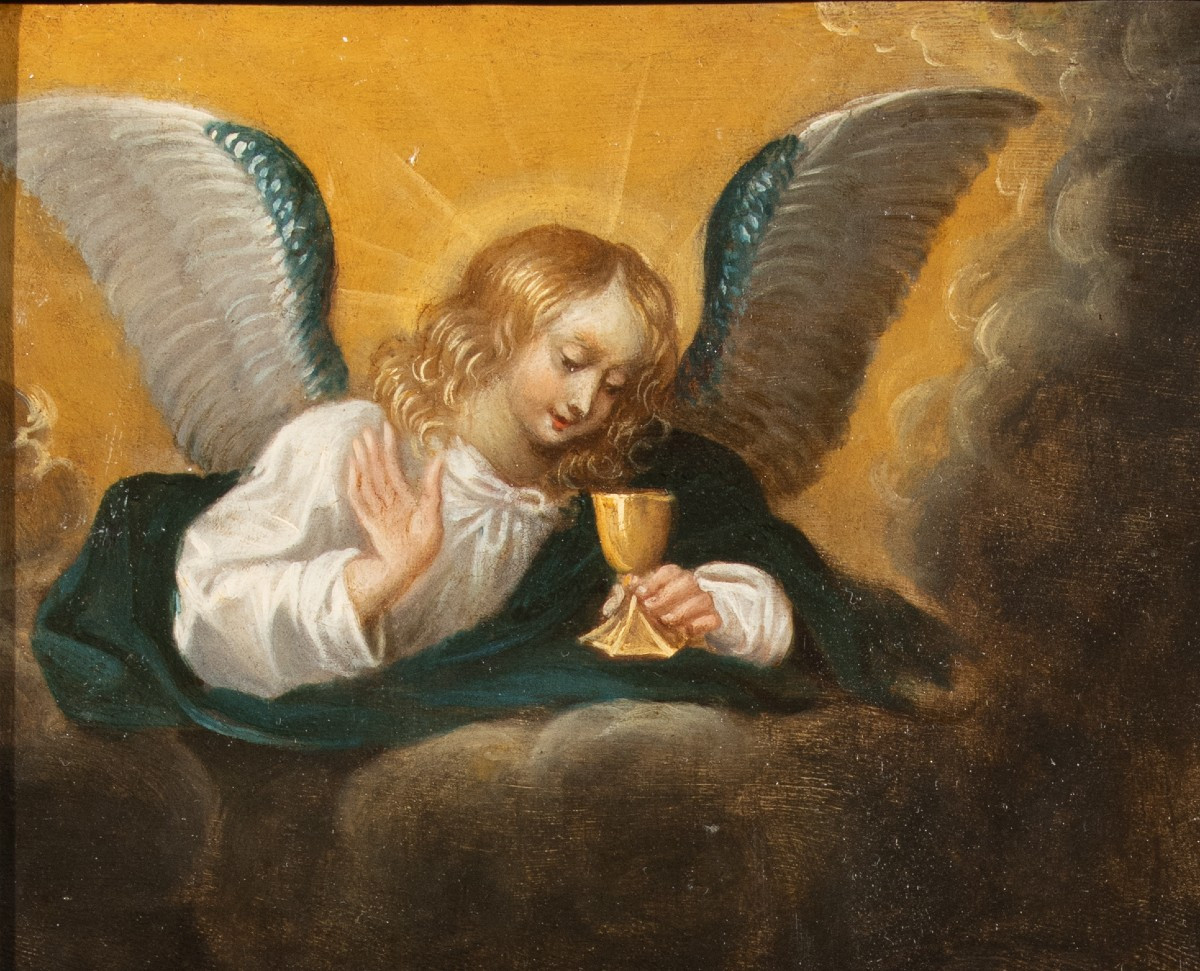
Christ in the Garden of Olives, oil on copper, dimensions 30 cm x 23 cm, with its frame 39 cm x 32 cm, Flanders circa 1650. This work depicts the biblical episode of Christ's Agony in the Garden of Olives, as recounted in the Gospels. In the foreground, Jesus kneels in prayer, wearing a red cloak symbolizing sacrifice over a more subdued brown tunic. His face, turned towards heaven, expresses profound sorrow mingled with submission. A luminous halo surrounds his head, a sign of his divinity. In the upper part, an angel with outstretched wings descends from heaven to present him with a golden chalice, an allegory of the sacrifice to come. In the background, the three disciples Peter, James, and John are asleep, while a group of soldiers stealthily approaches, signaling their imminent arrest. Painted on copper, this work demonstrates great finesse of execution. The metal support allows for greater precision in the rendering of details, particularly in the drapery, faces, and lighting effects. The palette is dominated by warm, contrasting tones, typical of 17th-century Flemish painting. Dated around 1650, this painting belongs to the Flemish Baroque tradition, influenced by masters such as Rubens and Van Dyck. The dramatic treatment of the scene, the emotional intensity, and the marked chiaroscuro convey a desire to inspire the viewer's devotion. The painting is presented in a black and red frame with molded decoration, which accentuates the solemnity of the scene while highlighting the copper tones. This type of devotional painting, often small in size, was intended for private use. The choice of copper as a support, more expensive than wood or canvas, suggests a carefully commissioned piece, probably for a collector or a member of the clergy.
3 300 €
Period: 17th century
Style: Louis 14th, Regency
Condition: Excellent condition
Material: Oil painting on copper
Length: 30 cm ( 39 cm avec le cadre )
Width: 23 cm ( 30 cm avec le cadre )
Reference (ID): 1696284
Availability: In stock
Print