THIS OBJECT WAS SOLD
Louis-auguste Lapito (1803-1874), View Of Fribourg Cathedral, Salon Of 1831
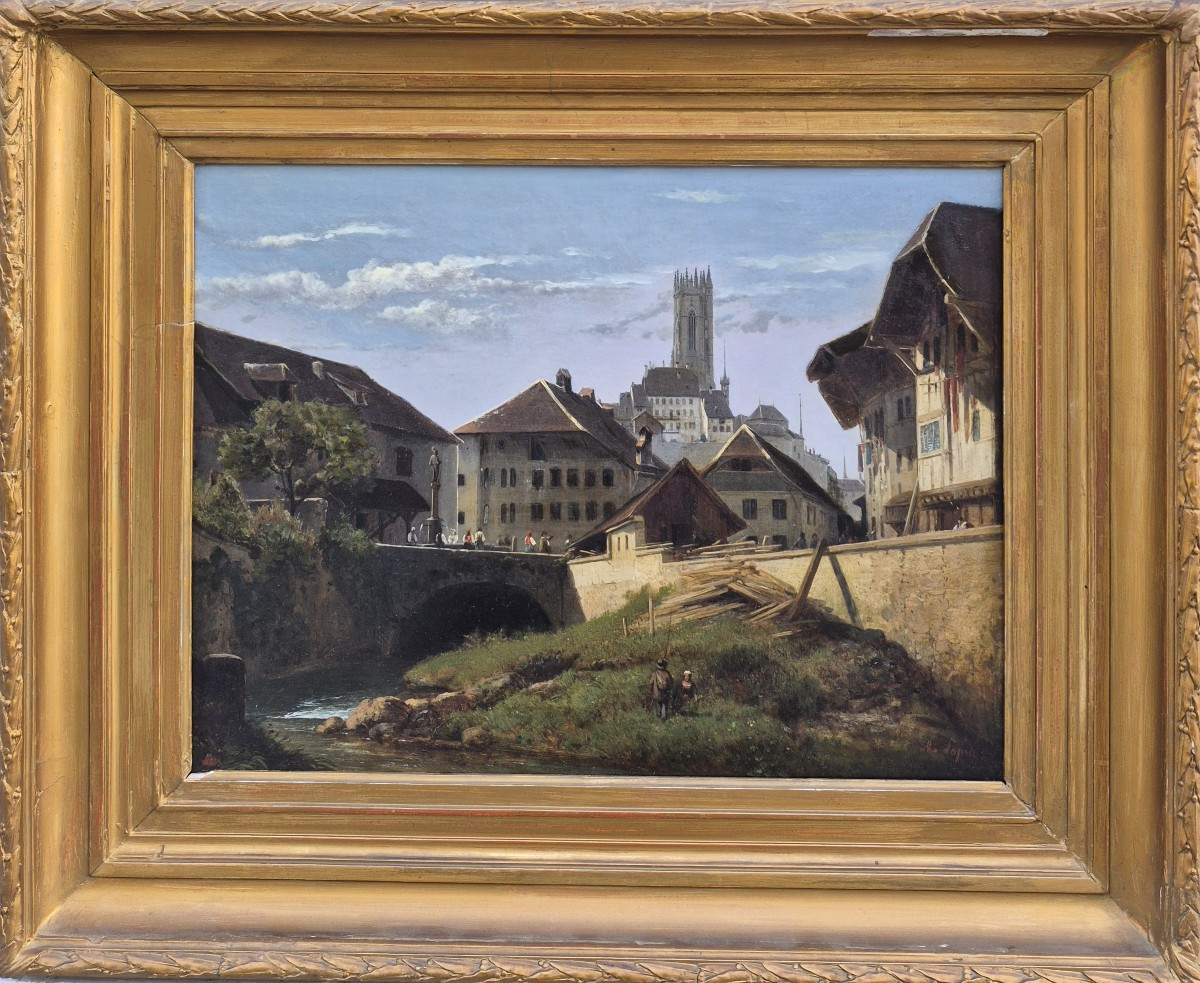


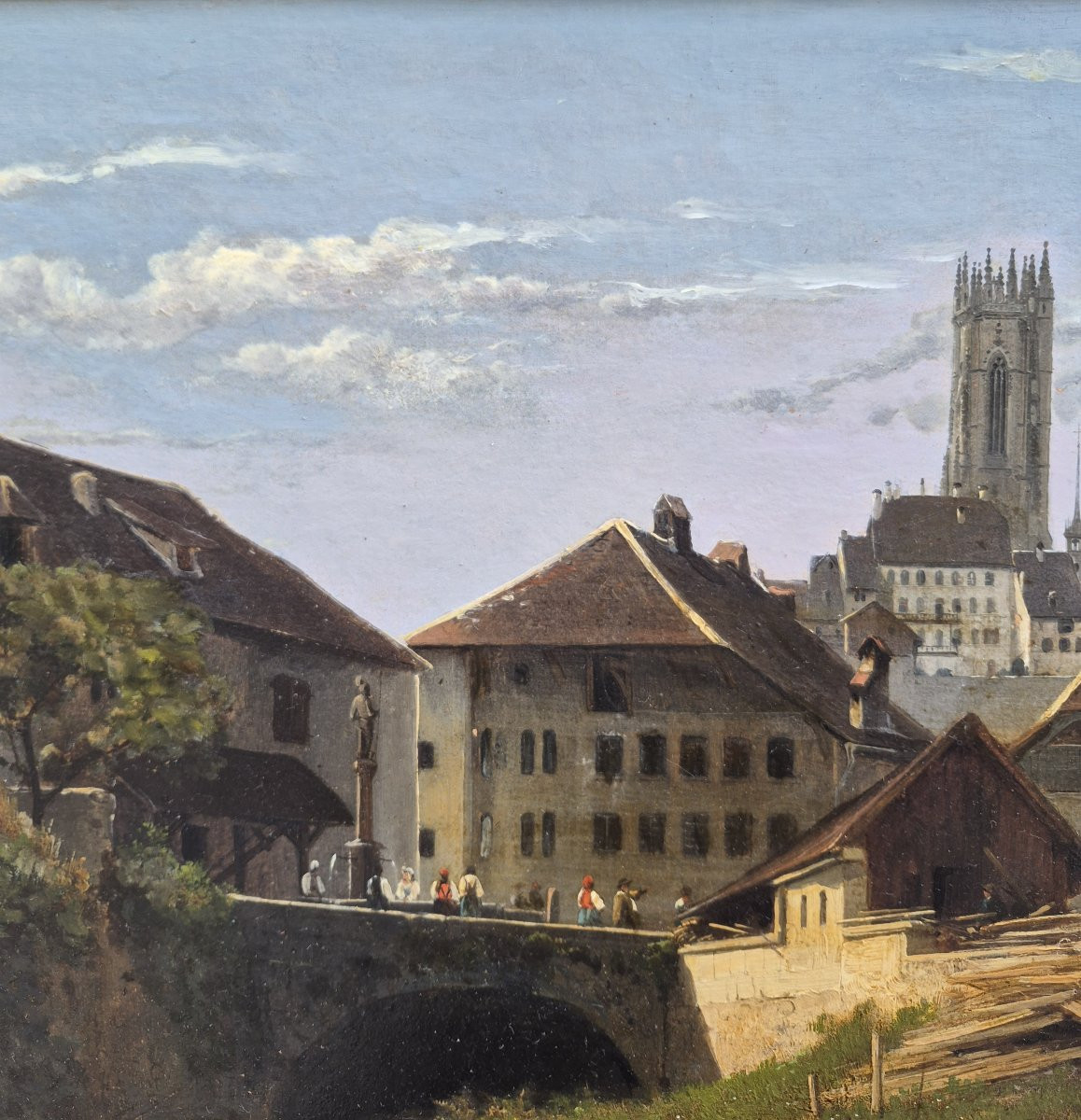
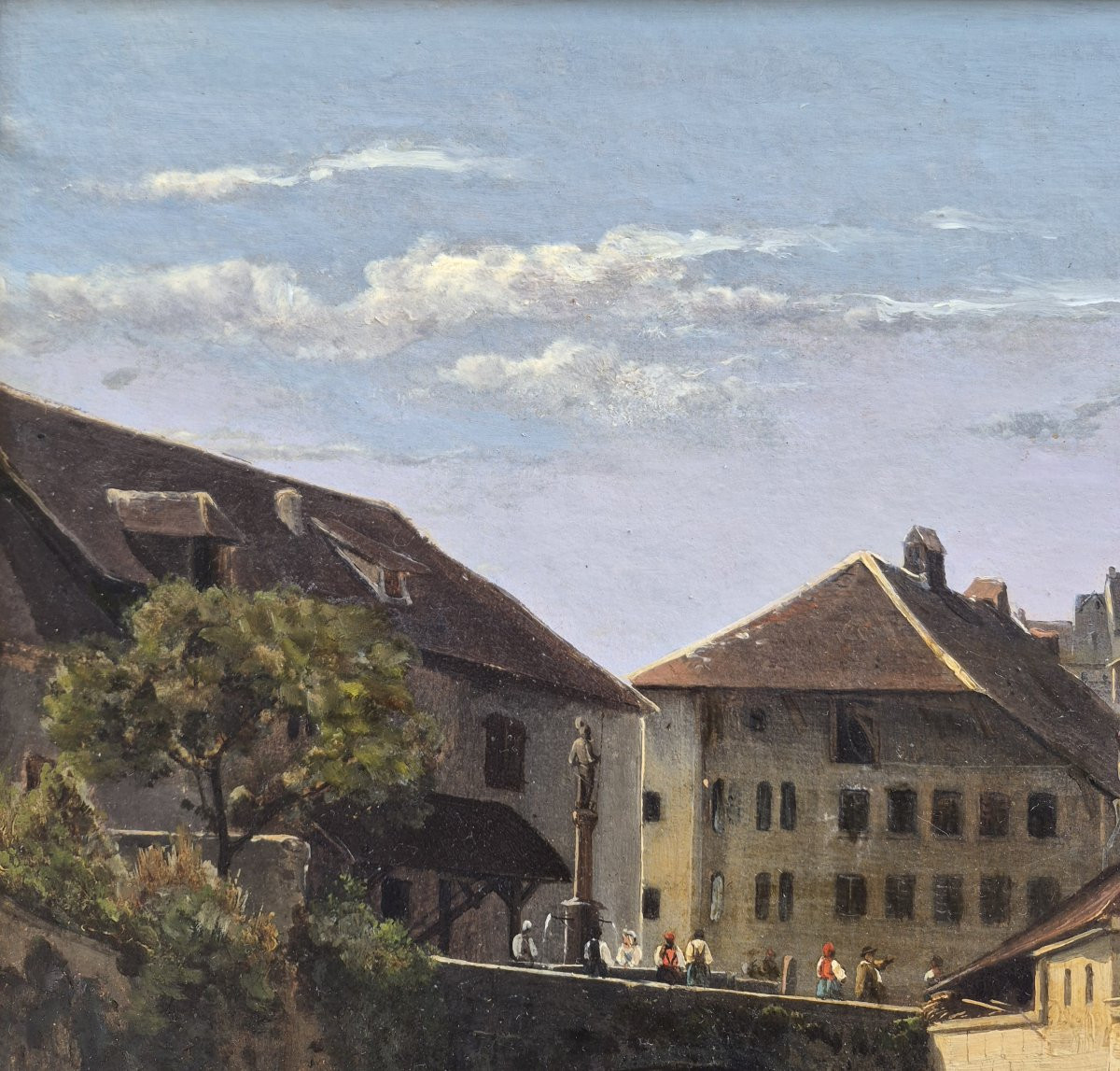
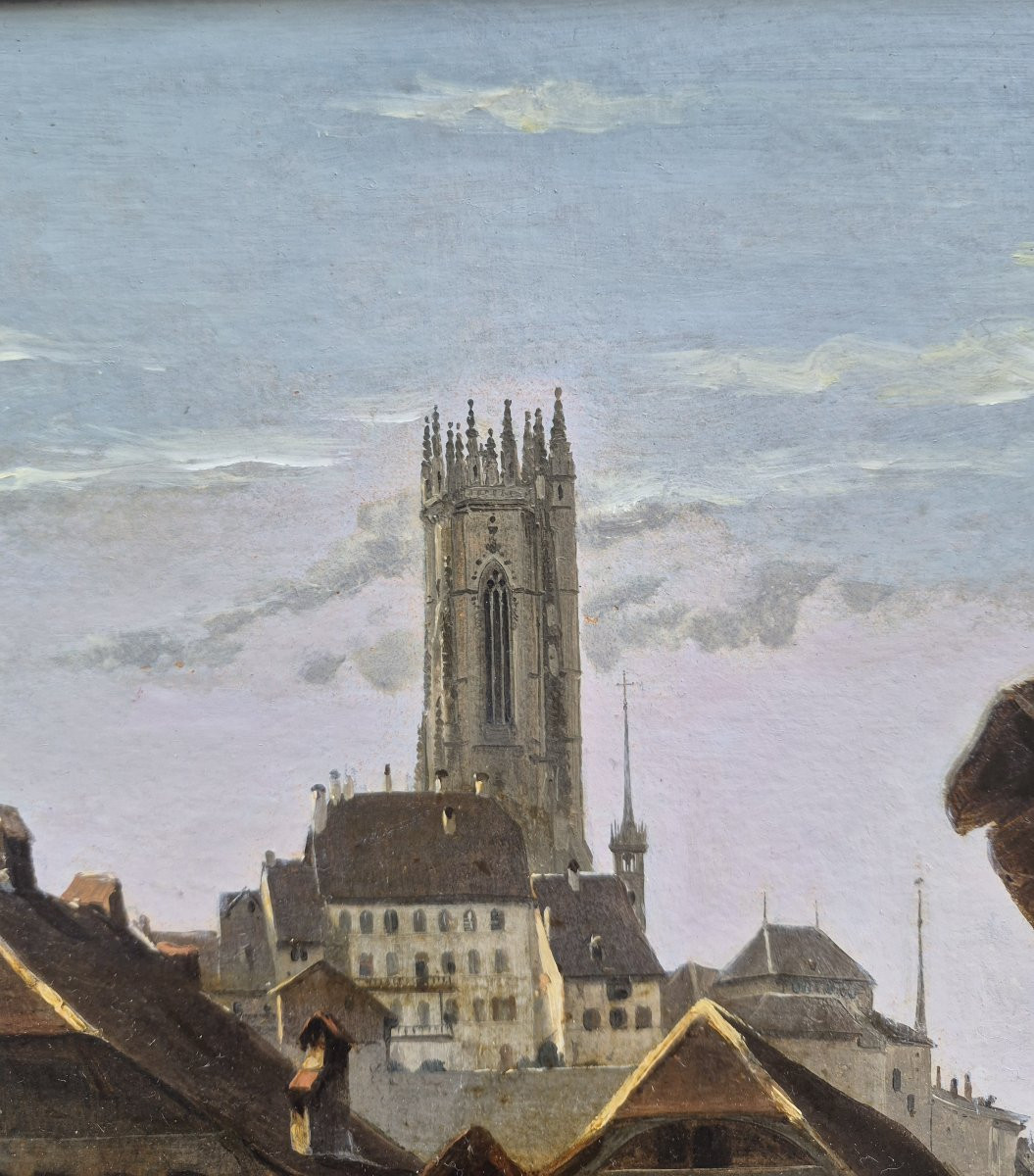
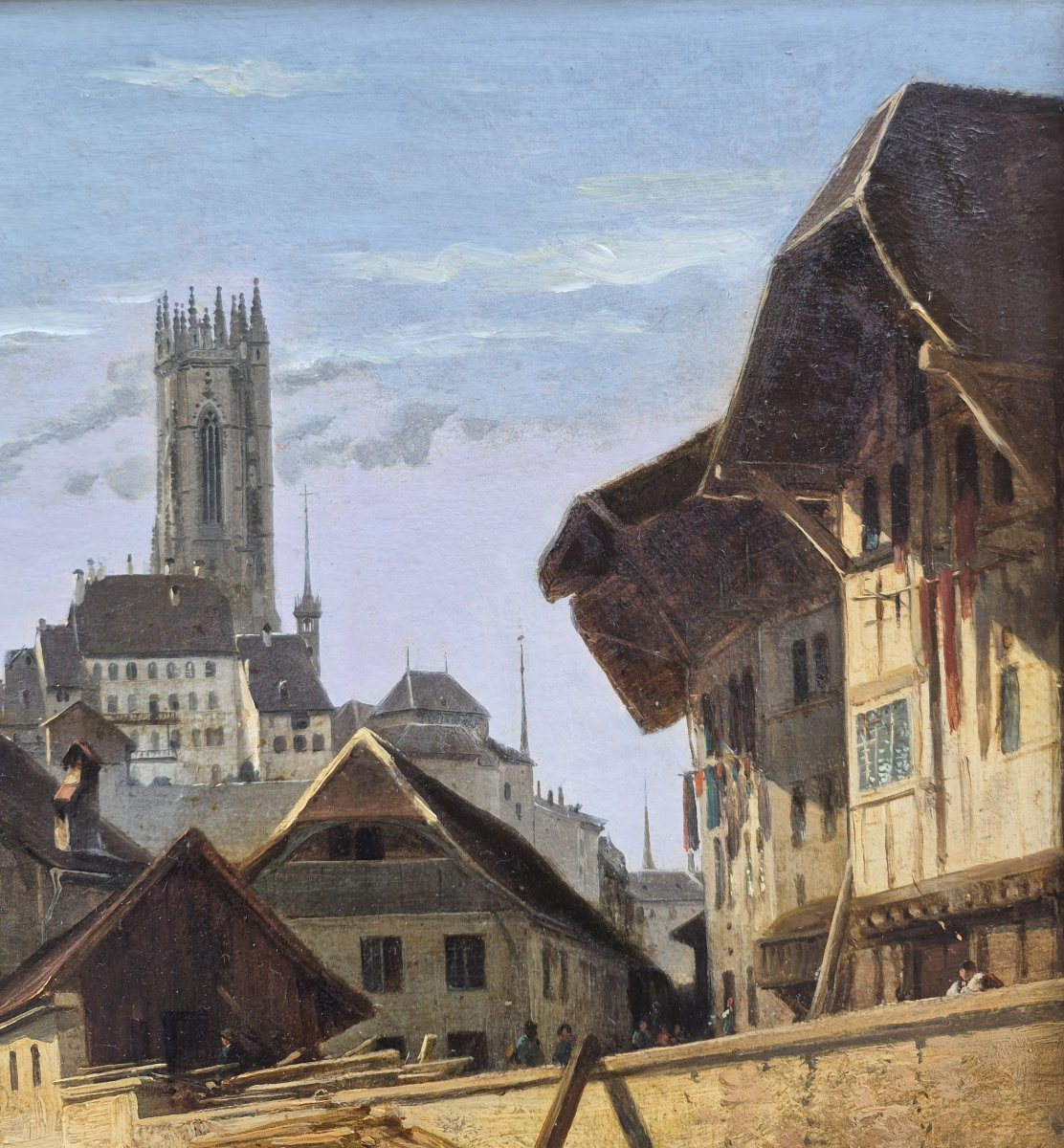
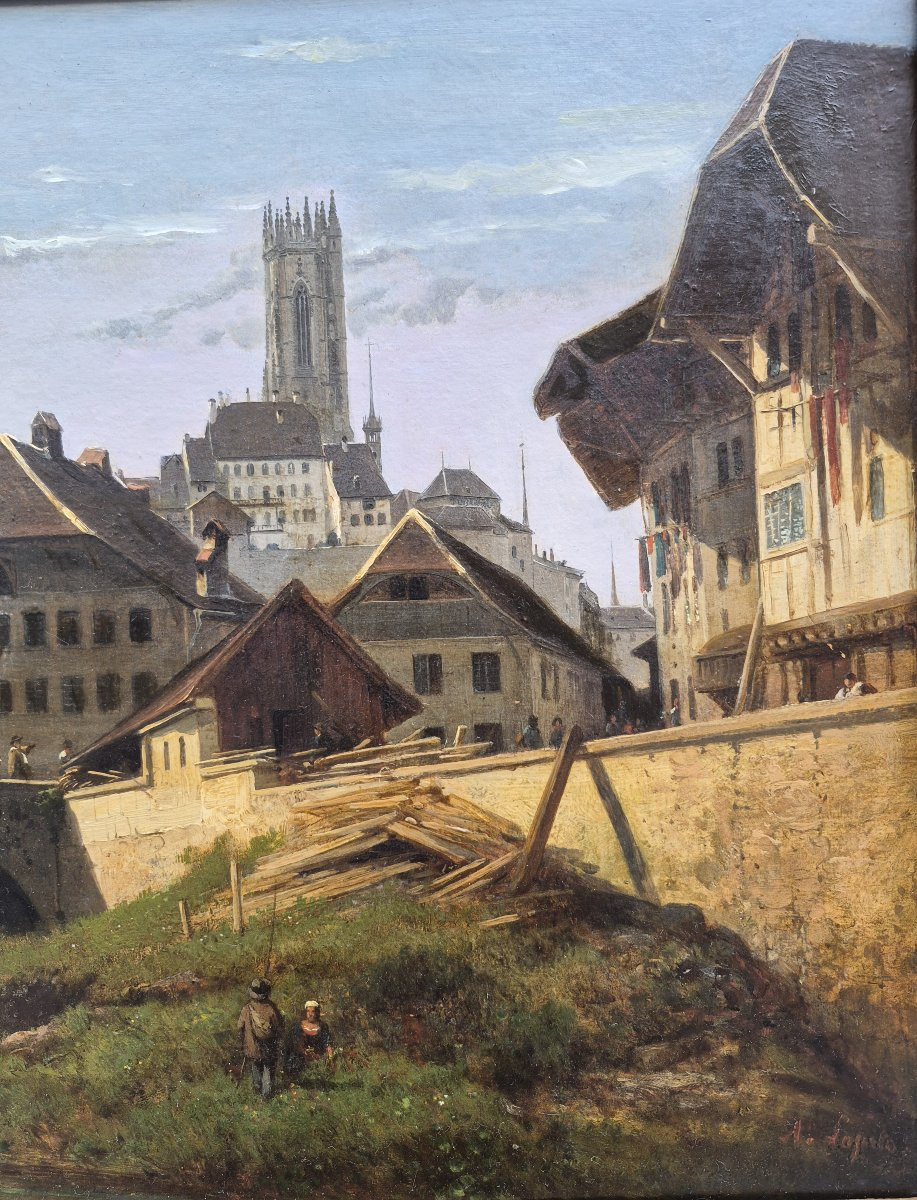
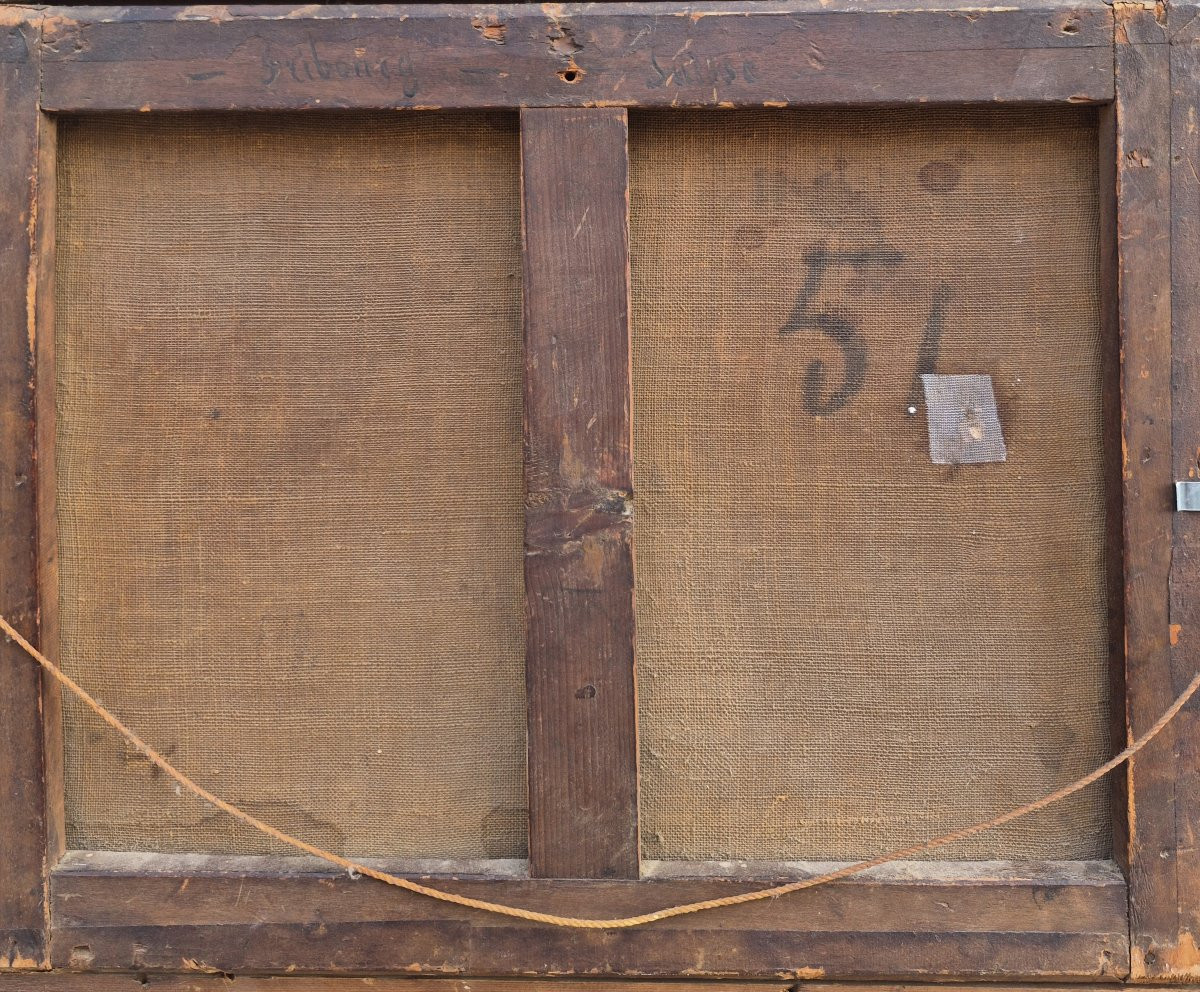
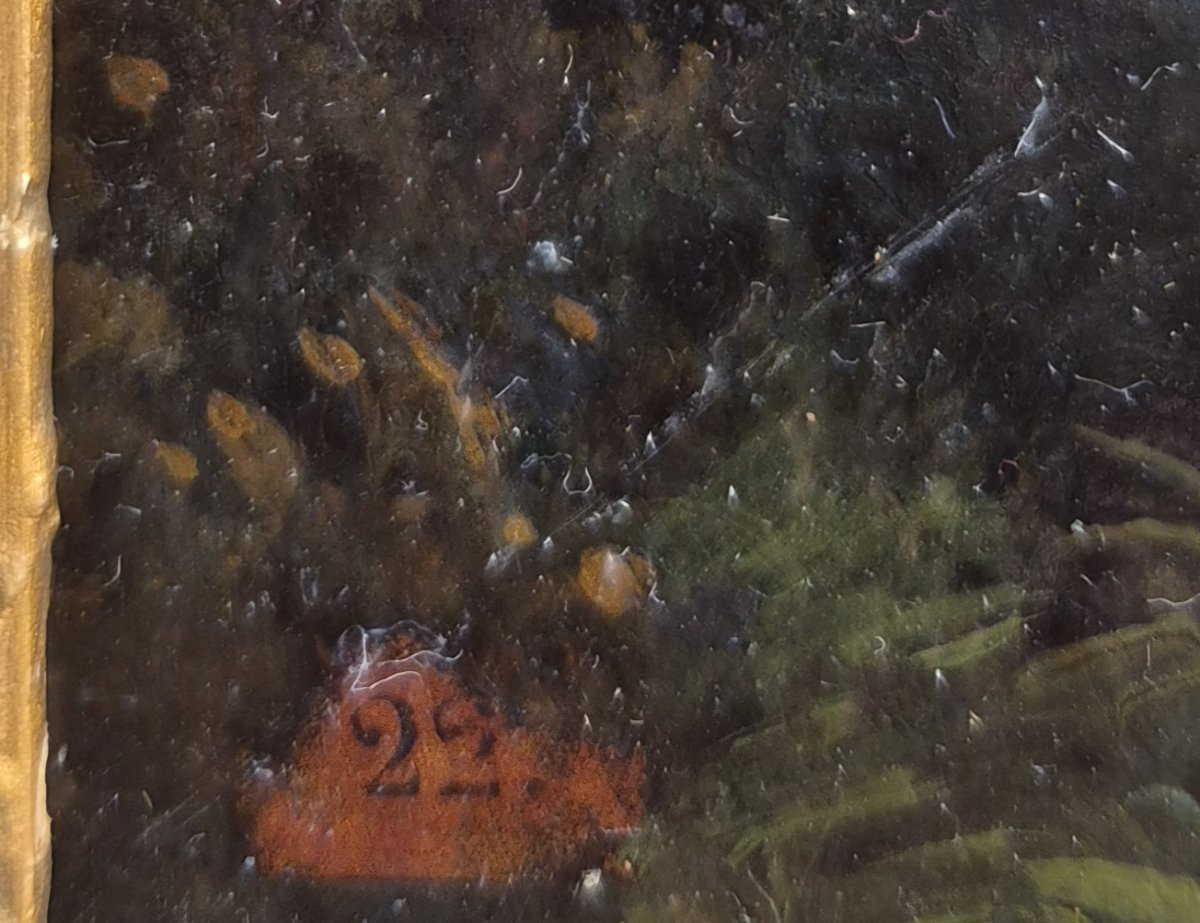
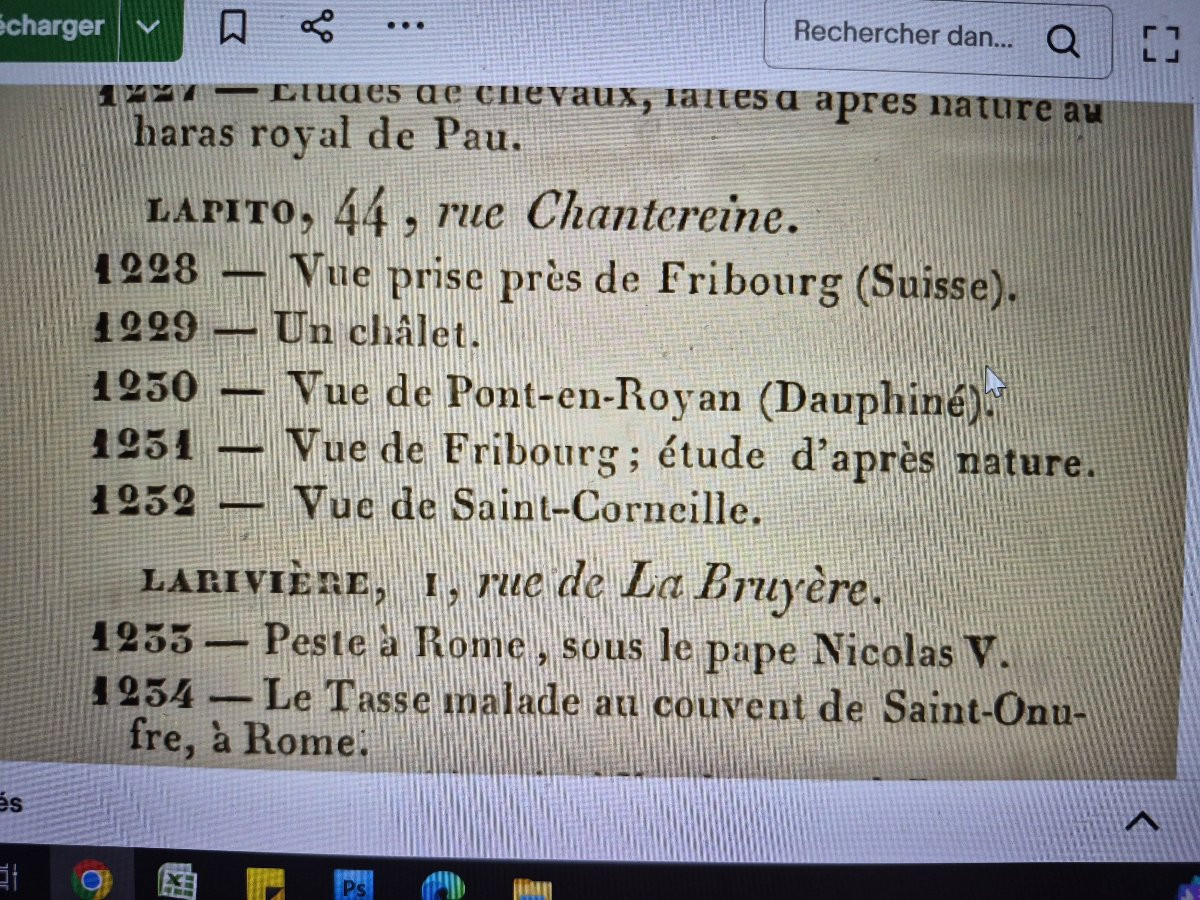


Louis-Auguste Lapito (1803-1874) View of Fribourg Cathedral (Switzerland) Oil on paper laid down on canvas, signed lower right A. Lapito. Traces of an old label in the lower left reveal two numbers "?22?" On the back of the canvas, the number 51 is written in ink. The stretcher is inscribed in ink "Fribourg - Switzerland". Dimensions: 33.5 x 44 cm. Dimensions with frame: 49 x 59 cm. The artist exhibited only two works depicting Fribourg at the Salon of 1831. Only one work has two consecutive views of Fribourg: number 1228 - View taken near Fribourg (SWITZERLAND). The second Fribourg work is number 1231 from the Salon. Louis-Auguste Lapito (1803–1874) French landscape painter. Trained from the age of fifteen with the A landscape painter trained by Louis-Étienne Watelet, and later by the history painter François-Joseph Heim, Louis-Auguste Lapito began his career at a very young age and exhibited at the Salon from 1827. While initially met with some reserve by critics who considered his landscapes too idealized, he quickly achieved widespread public success, culminating in a gold medal in 1835. His official recognition also resulted in several state purchases, notably under Louis-Philippe, for the châteaux of Saint-Cloud and Compiègne. Lapito belongs to the second generation of Neoclassical landscape painters, heirs to Valenciennes, Jean-Victor Bertin, and Watelet, while developing a more naturalistic sensibility, sometimes tinged with Romanticism and the picturesque. His painting is distinguished by a subtle balance between direct observation of nature and recomposition in the studio, reflecting his solid classical training. His precise touch, rigorous drawing, and pronounced sense of color, often subtly golden, lend his works a great visual harmony. Contemporary critics regularly emphasized the quality of his work. In 1838, the Journal des Artistes praised "the accuracy of his drawing, the precision of his color, and the picturesque arrangement of his compositions." His landscapes always give pride of place to nature, while the discreet human figures add a touch of life and charm. A traveling artist and lover of plein air painting, Lapito journeyed through Italy, Germany, the Netherlands, and Switzerland, while also crisscrossing France as far as Corsica. These sojourns nourished a rich and varied body of work, blending luminous panoramas, rural scenes, and landscapes structured by vast horizons. A friend of Corot and close to the Barbizon circle, which he frequented without ever fully adopting its aesthetic, Lapito nevertheless heralded the emancipation of landscape painting as an independent genre in the 19th century. His works, now sought after, are appealing for their classical elegance, their sense of light and their ability to convey an idealized yet sensitive vision of nature and rural life in the 19th century.
Explore similar pieces and discover your ideal find:
Landscapes