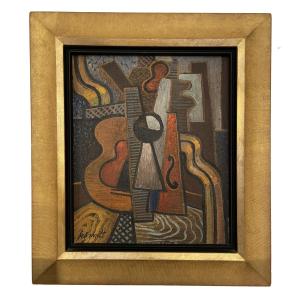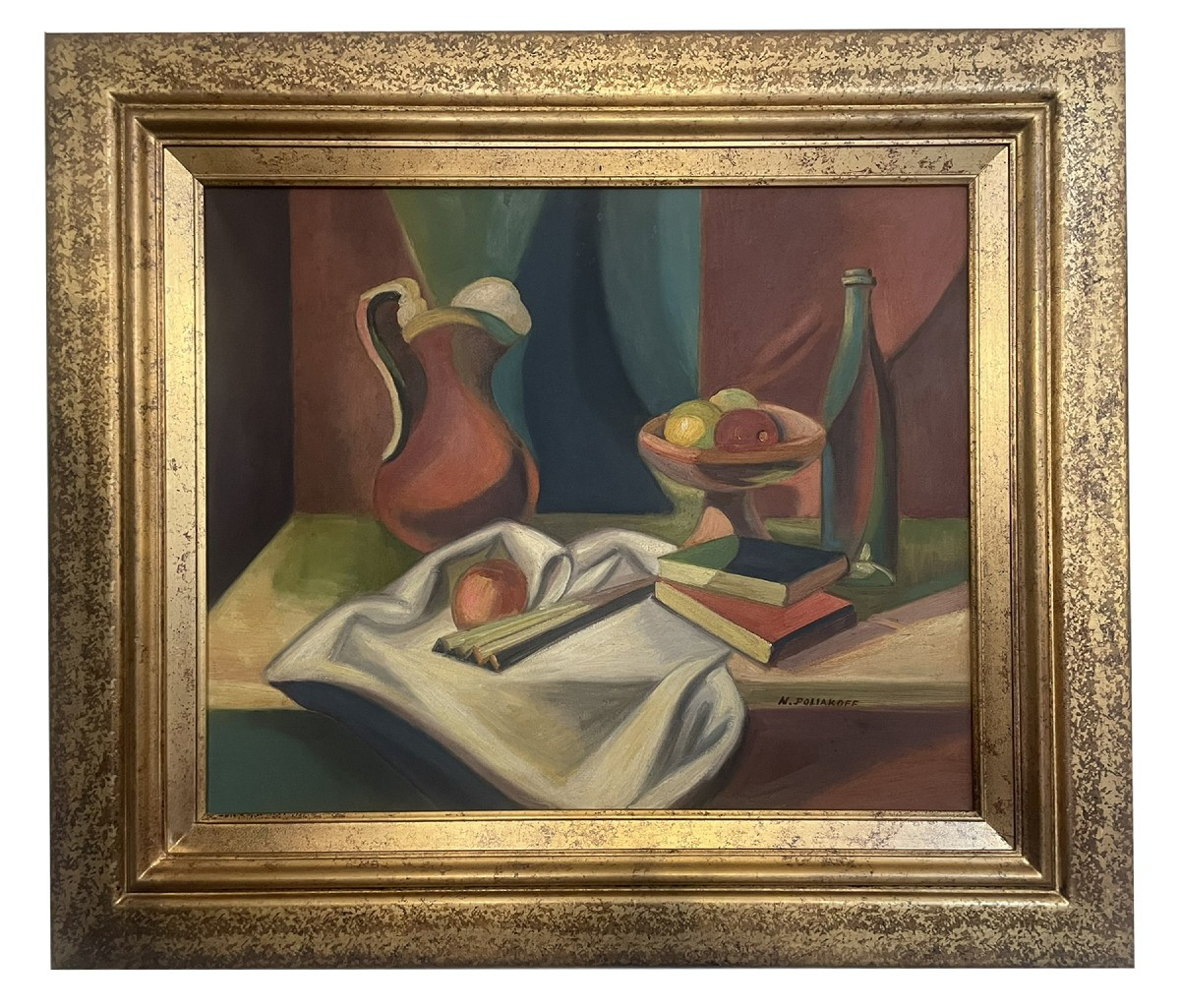
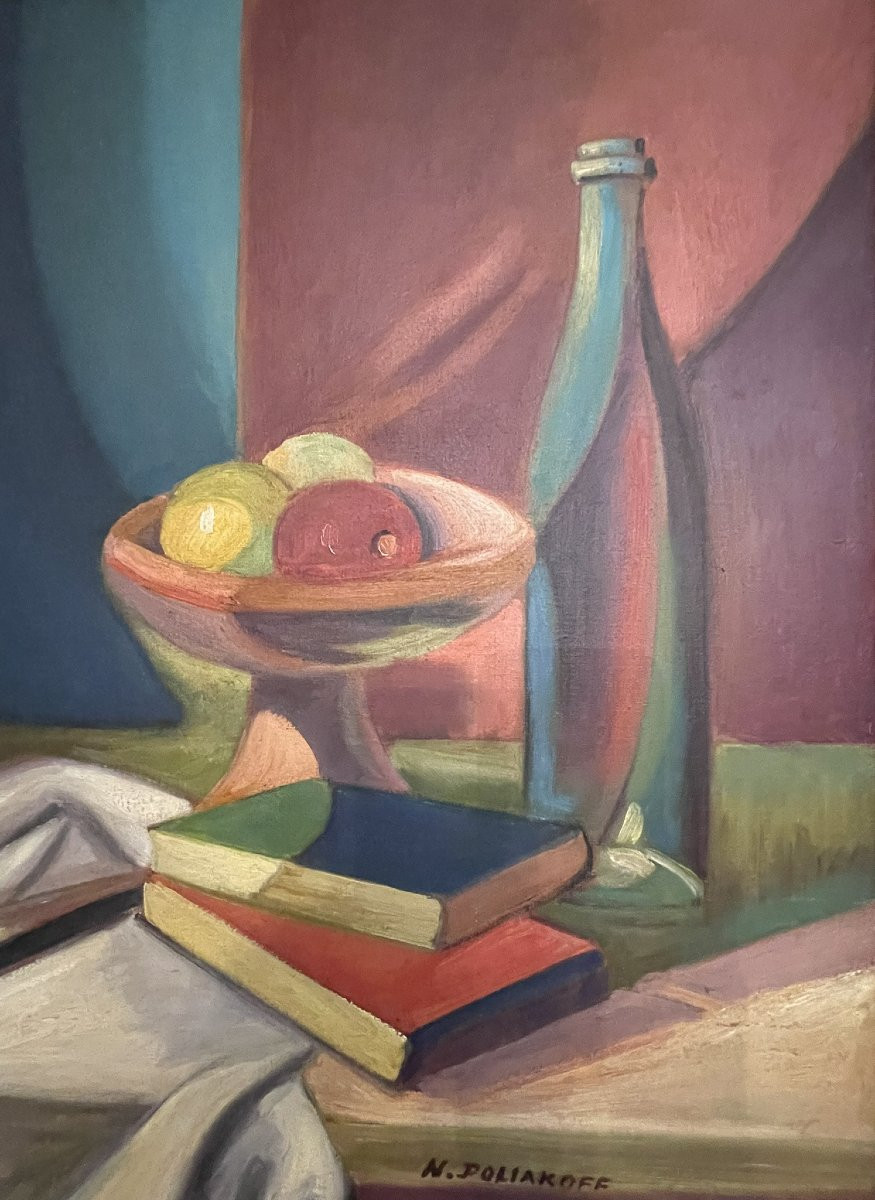
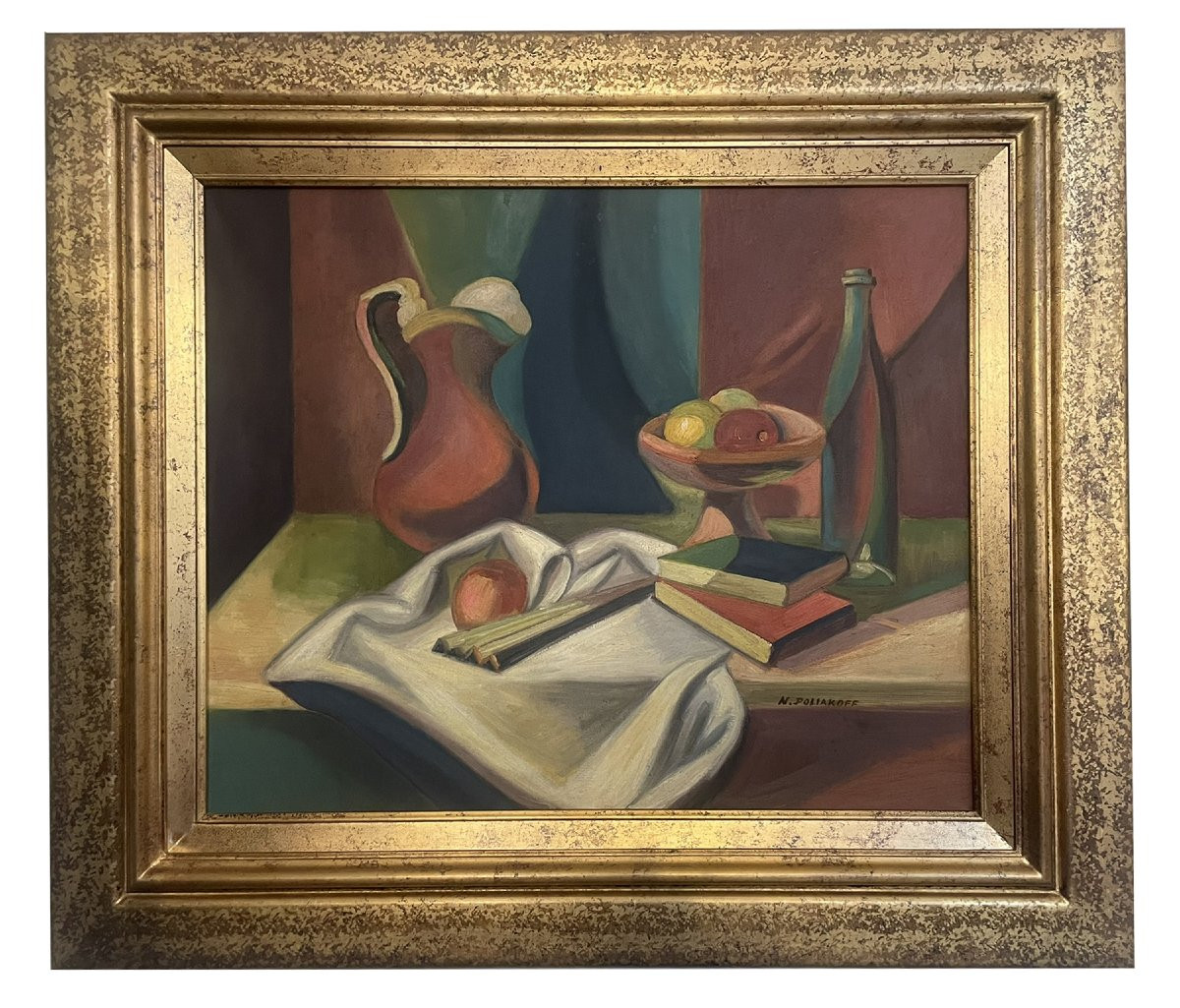
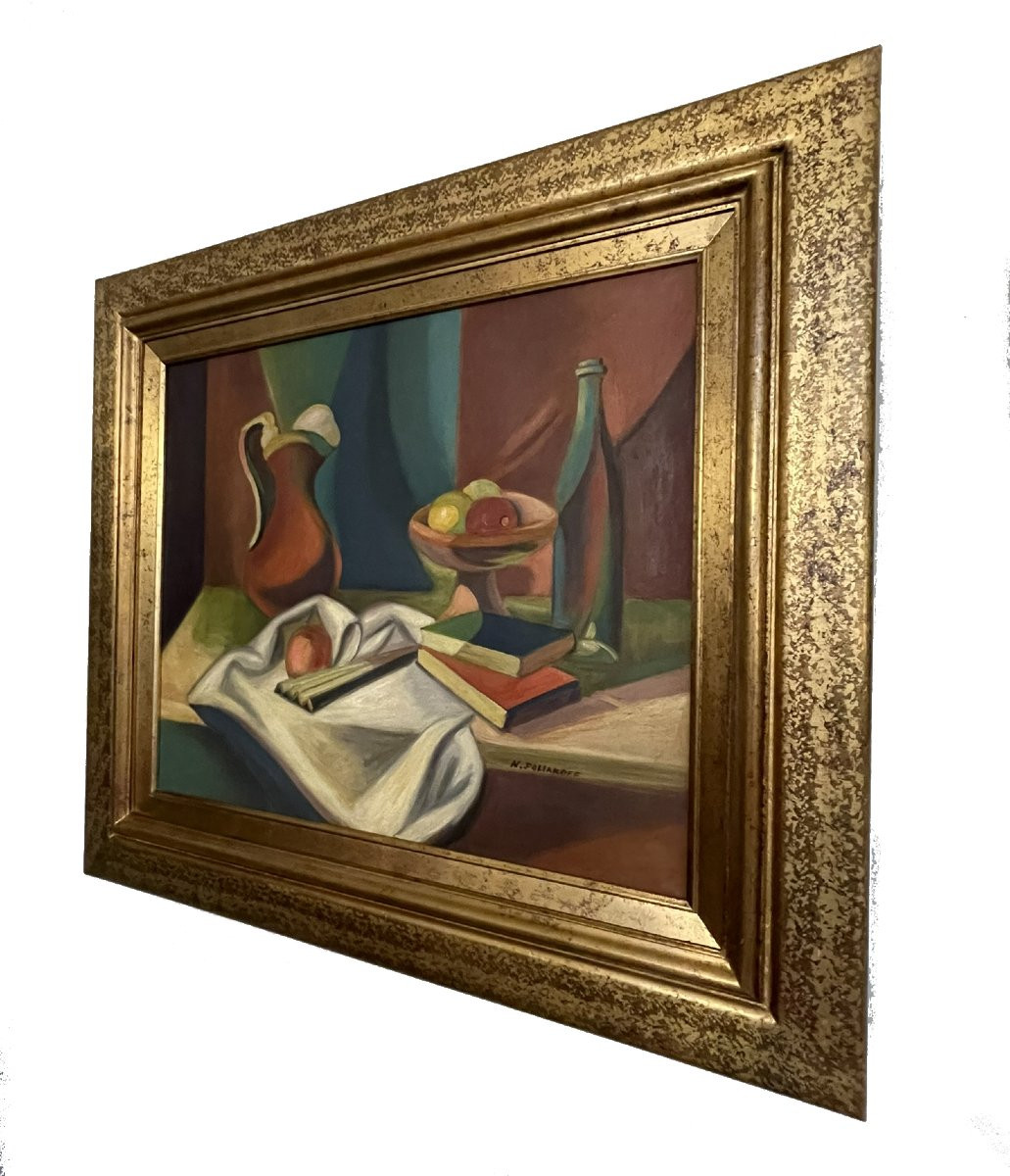
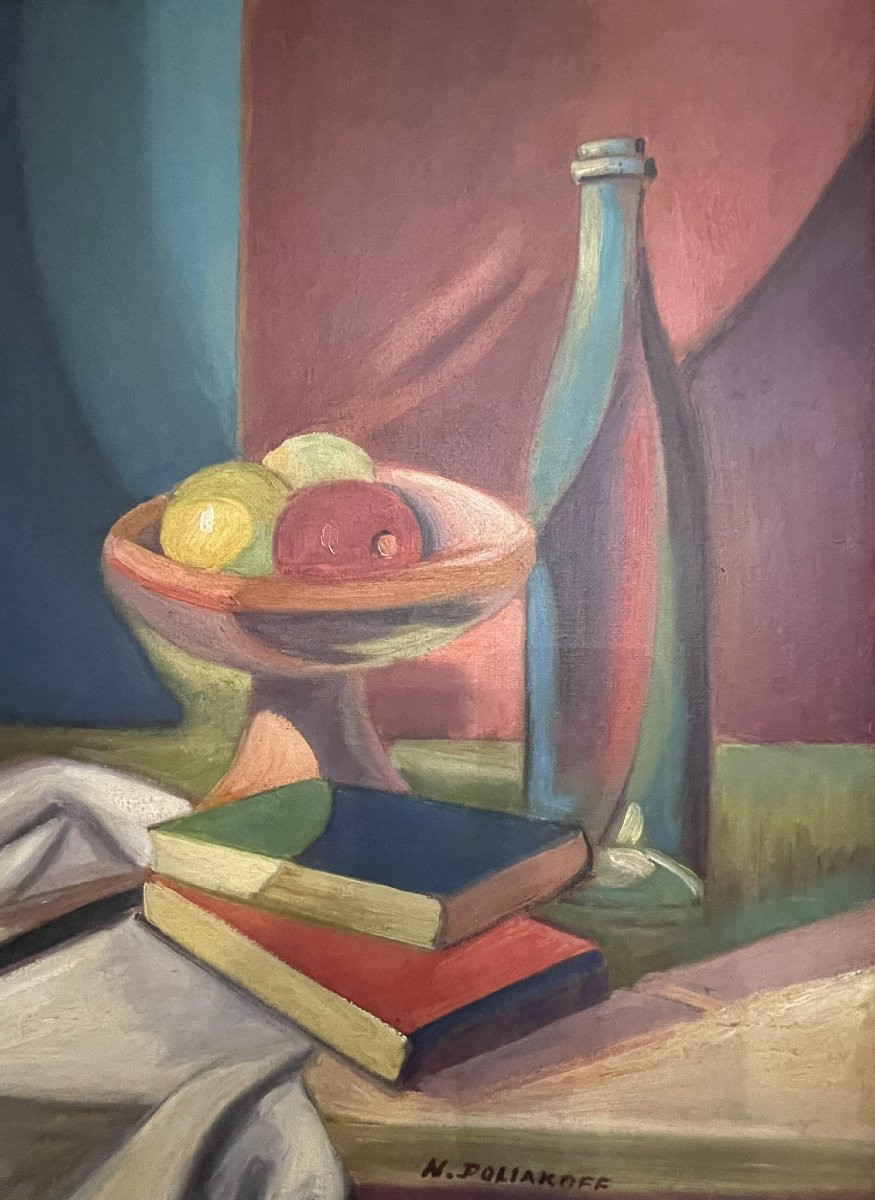
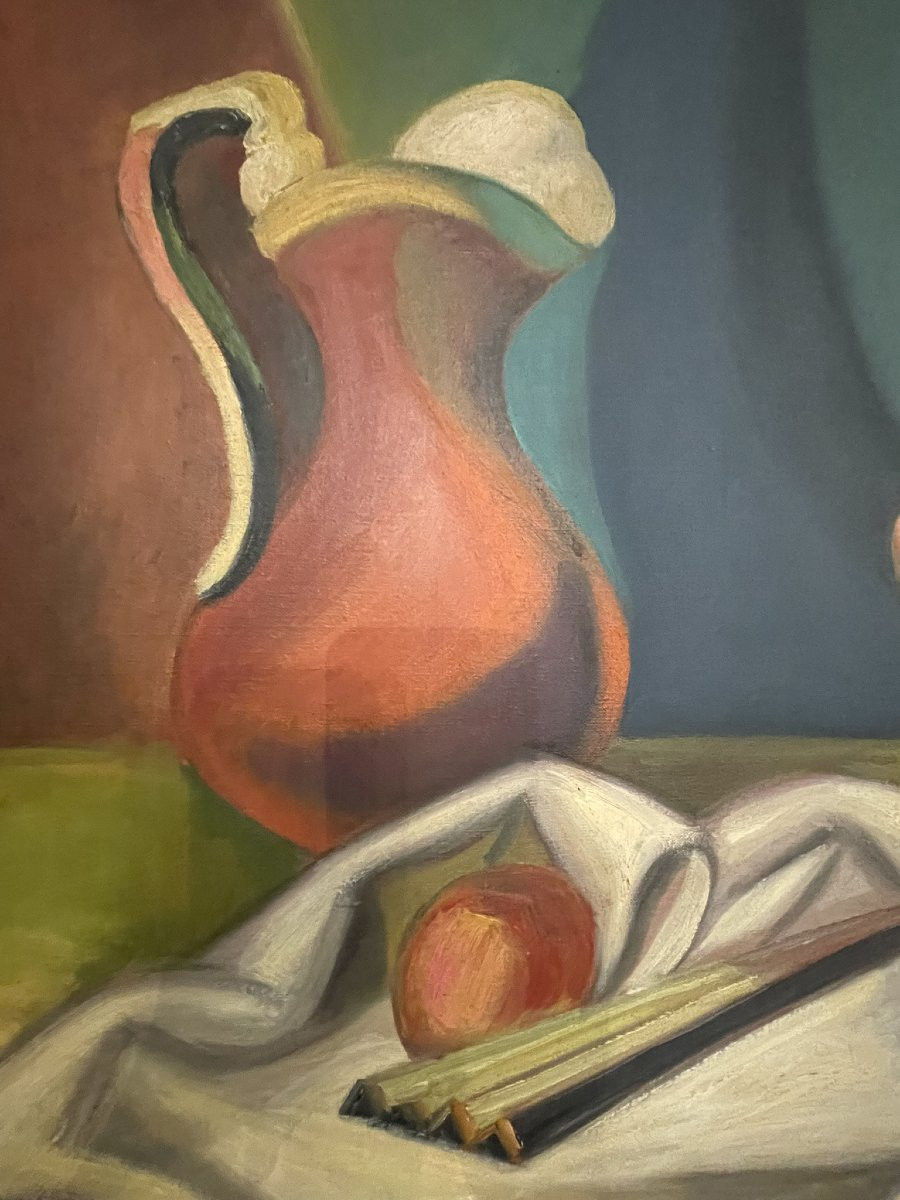
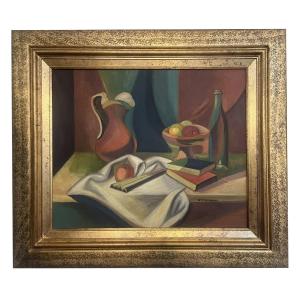


Nicolas Poliakoff (1899–1976) Still Life With Pitcher, Fruit Bowl, Bottle And Books. Oil
Artist: Nicolas Poliakoff (1899–1976)
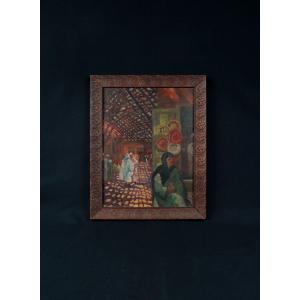
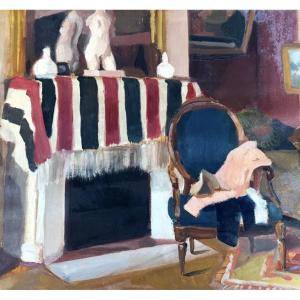
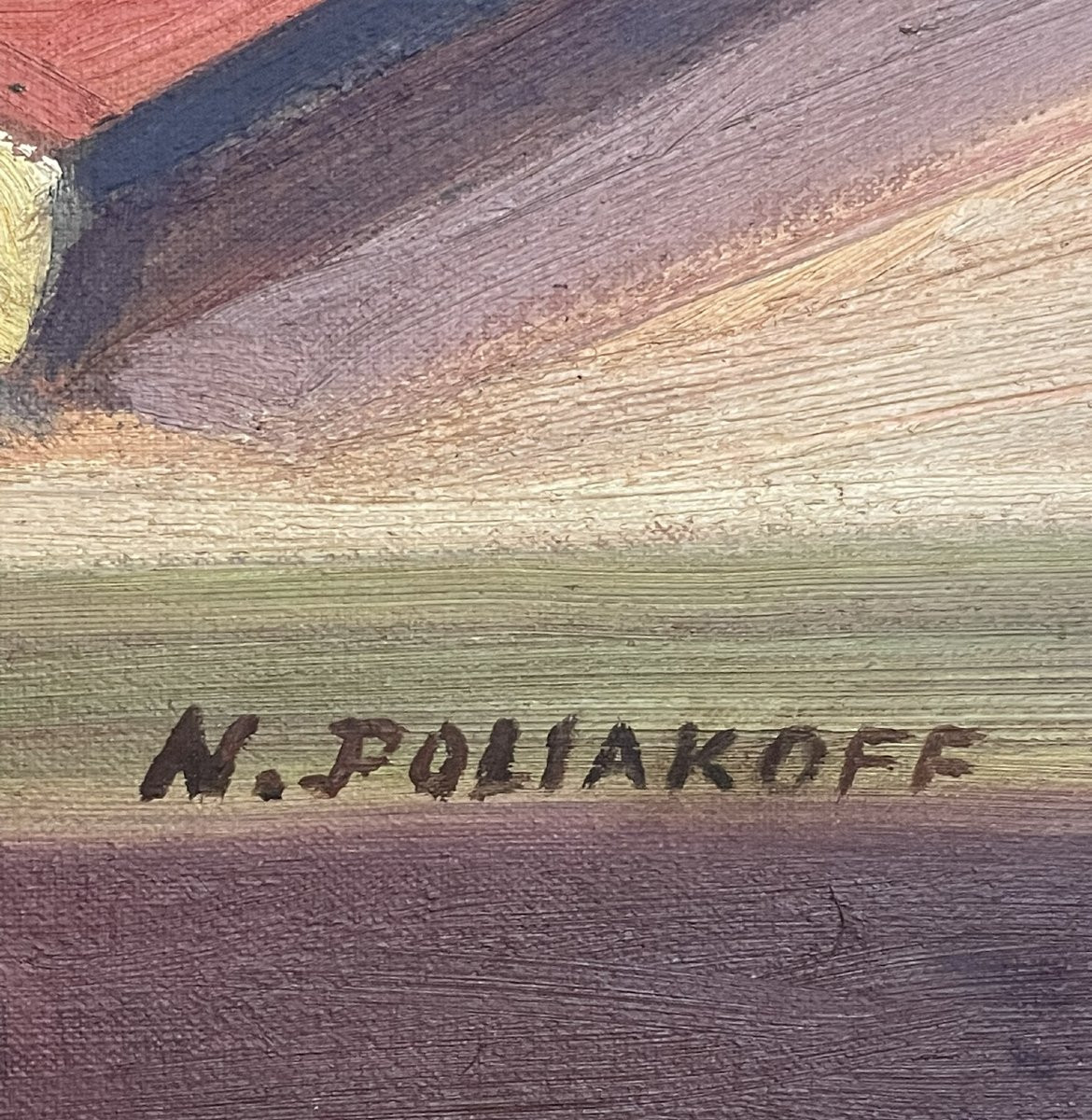
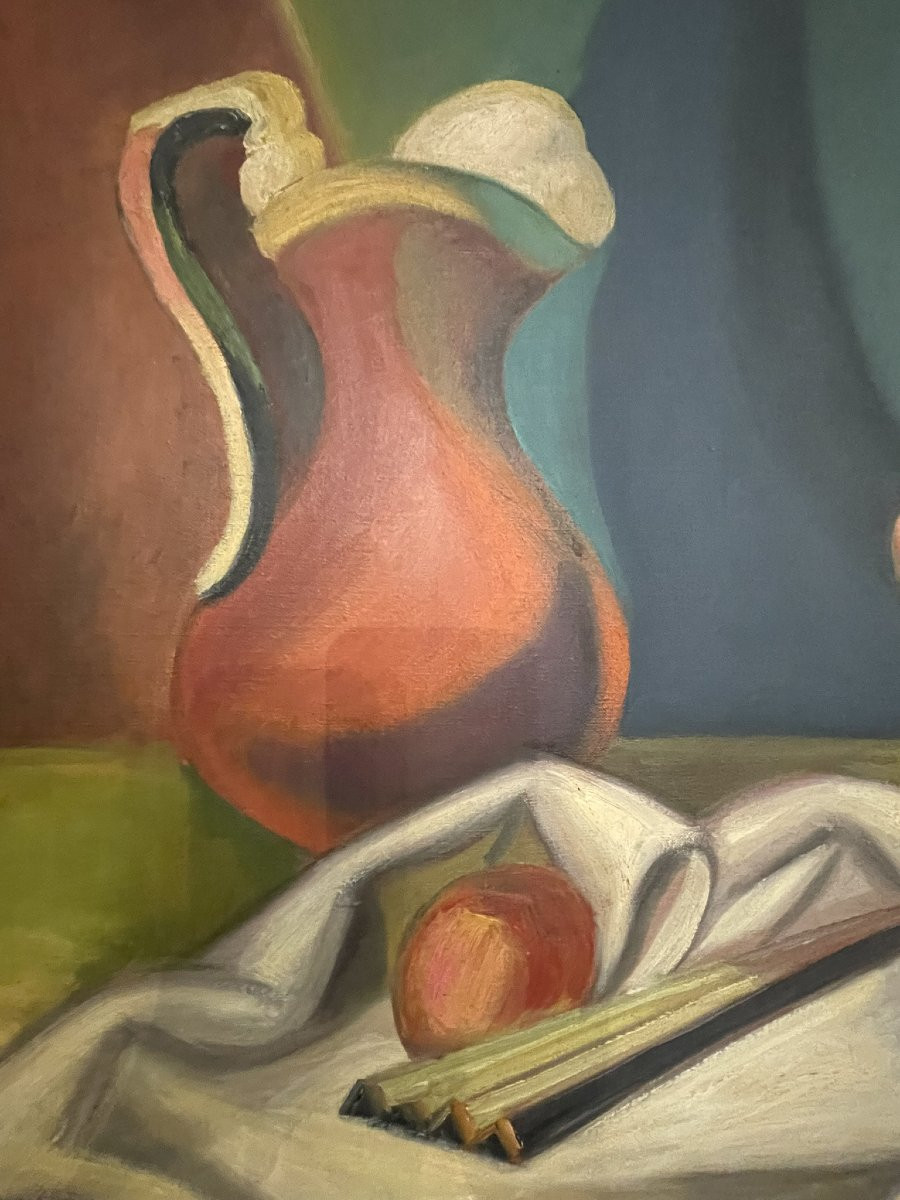
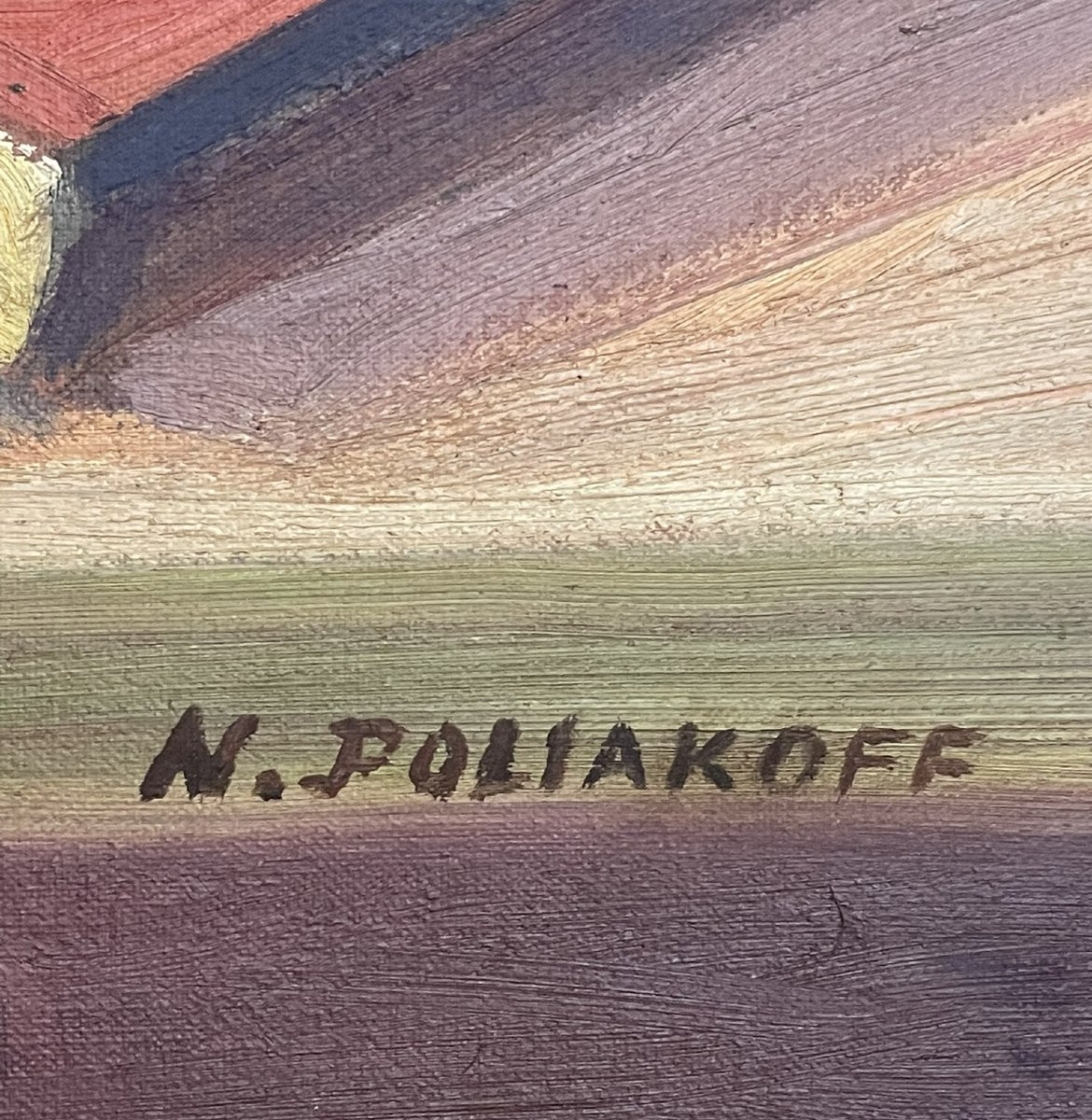
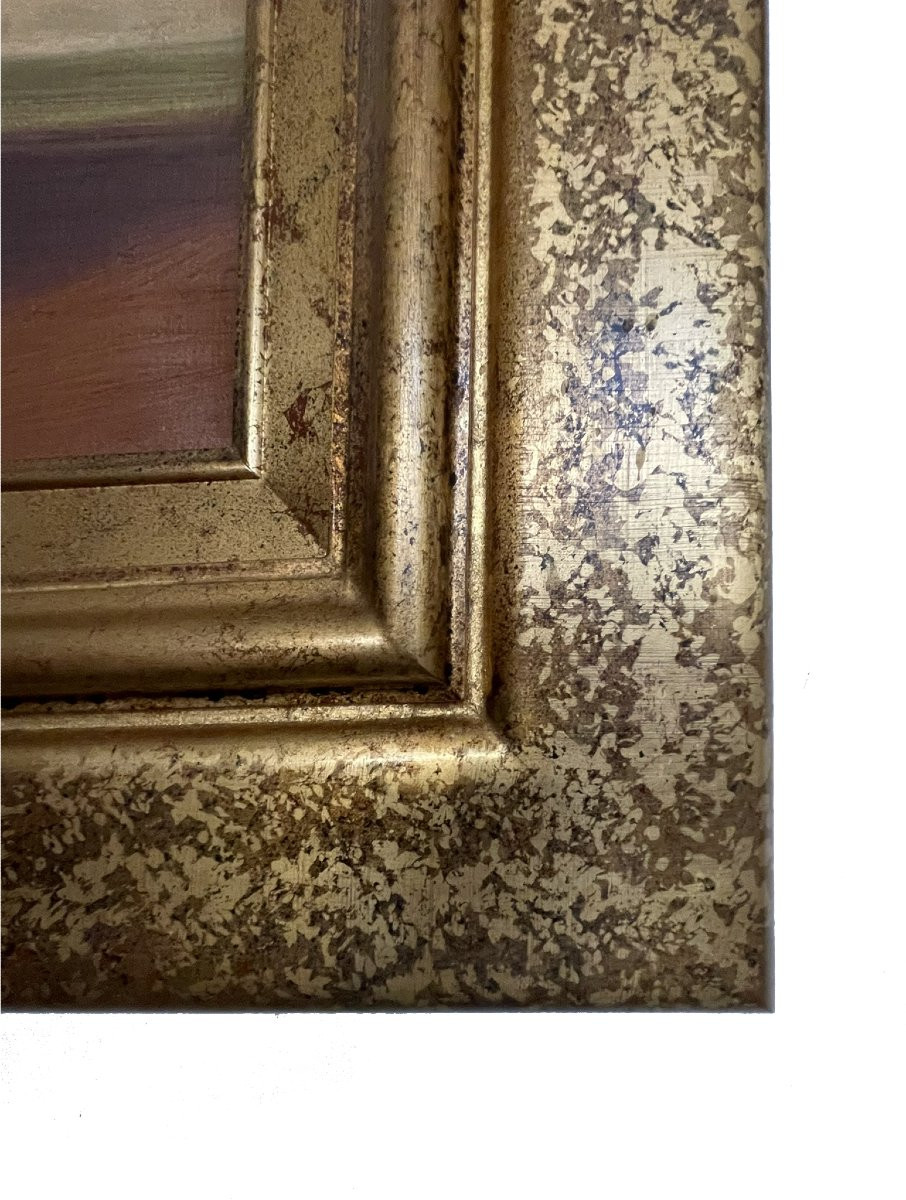
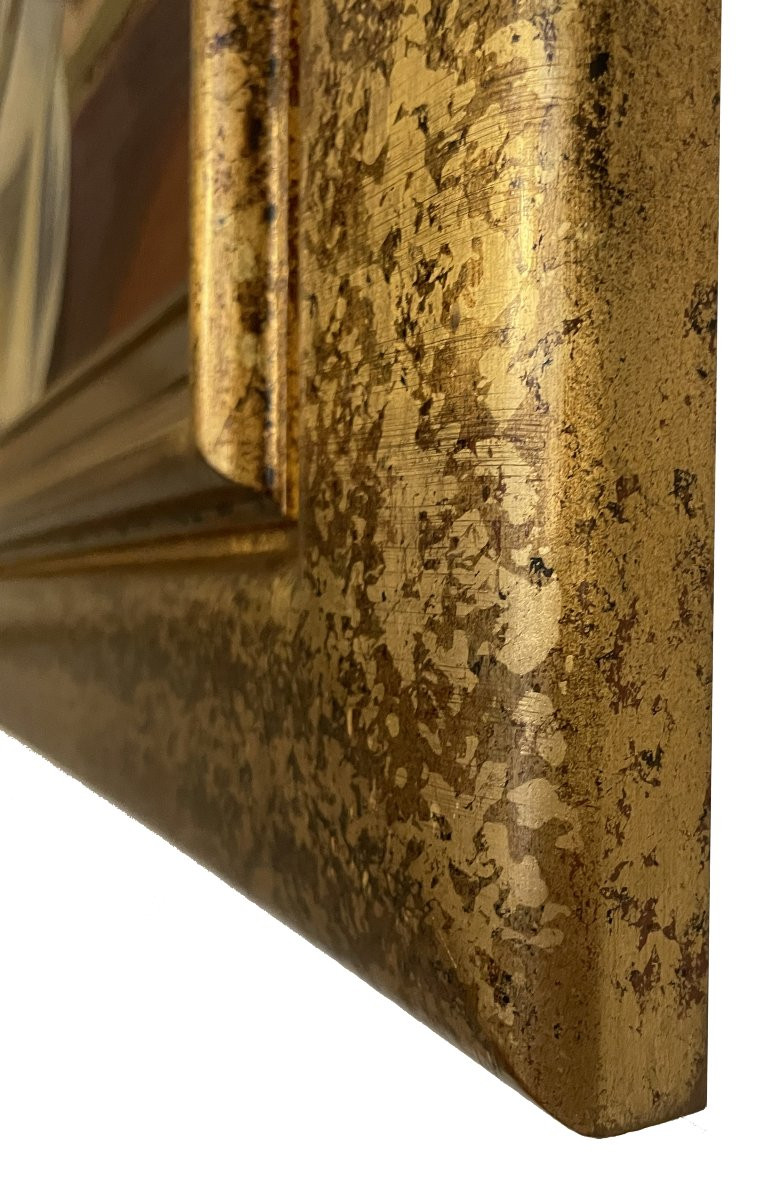
Nicolas Poliakoff (1899–1976) Still Life with Pitcher, Fruit Bowl, Bottle, and Books. Oil on canvas, signed lower right “N. Poliakoff”. Height: 101 cm | Width: 88 cm. In this still life, Nicolas Poliakoff condenses familiar studio objects into a constructed pictorial order. Pitcher, bottle, and books are arranged in geometric volumes, while the background fabrics and draperies divide the space into flat areas of color. Poliakoff thus combines the tradition of Parisian still life with a post-Cubist grammar where drawing, the definition of contours, and flat planes of color create a field of balanced tension. The work illustrates Poliakoff's place within the School of Paris: modern in form, yet resolutely oriented towards a classical compositional discipline. Image description: Woman with a Tulip, Oil on canvas. The stylized composition of the figure combines still-life elements with a modern, two-dimensional conception of space. The color rhythms and reduced forms reference the influences of classical modernism and lend the work a timeless and collectively appealing presence. The painting depicts a stylized female half-figure in profile, shown indoors before a window or fresco. The figure is geometrically simplified and flat; the head, torso, and limbs are clearly outlined and deliberately distorted in perspective. In her hands, the figure holds a vase adorned with a tulip, the flower of which is accentuated by a dark, diagonal shape. The color palette is restrained and harmonious, dominated by greens, blues, ochres, and pinks. The spatial representation is achieved not through linear perspective, but rather through superimposed colored surfaces and frames, which create the image within the pictorial structures. Still-life elements (shoes, fabric, flowers) are arranged in the foreground, reinforcing the static nature of the scene. The painting style is imprinted and visibly textured, indicating a conscious approach to materiality. Overall, the work combines figurative representation and formal abstraction and stylistically references the influences of classical modernism, particularly Expressionism and Cubism.
7 800 €
Period: 19th century
Style: Art Deco
Condition: Perfect condition
Material: Oil painting
Width: 88cm avec cadre
Height: 101 cm avec cadre
Reference (ID): 1692165
Availability: In stock
Print