

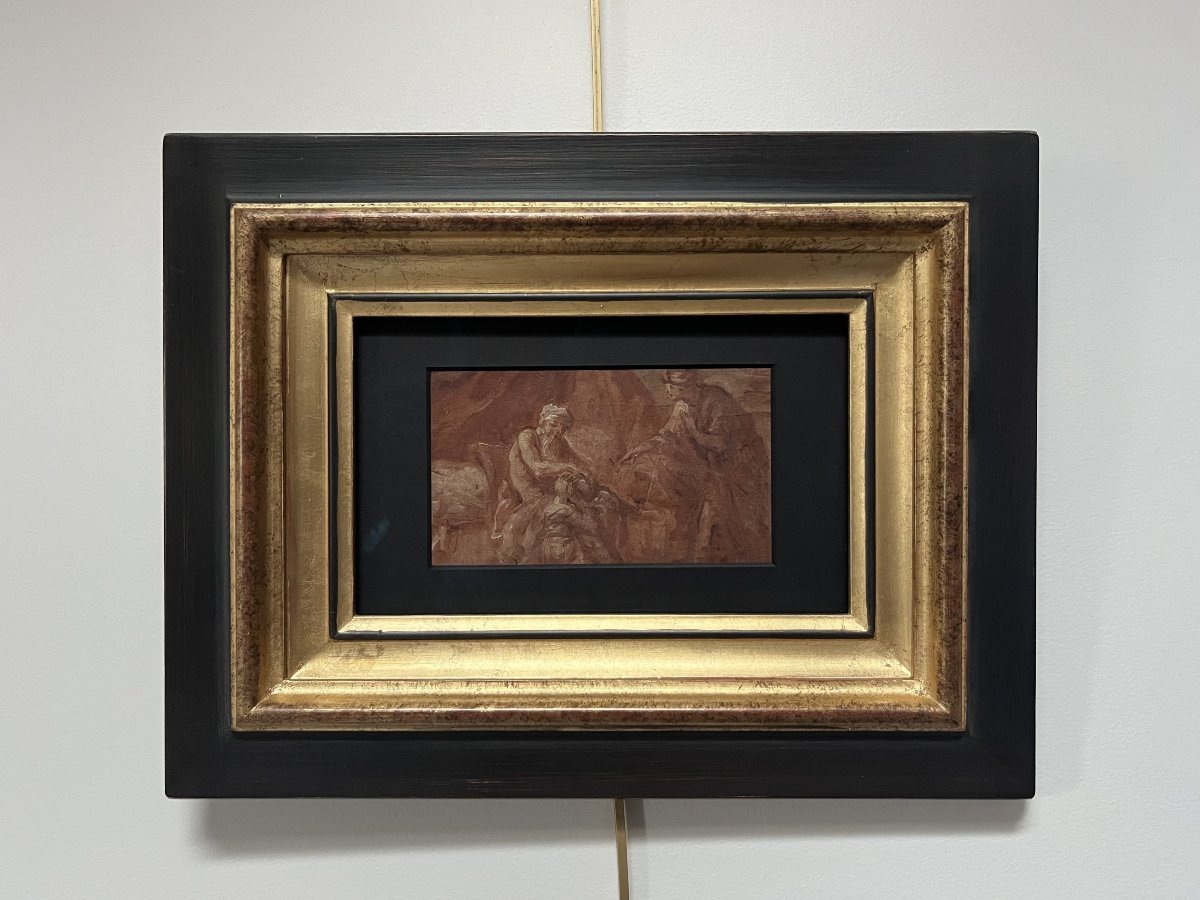





French School, 18th Century, Jacob Blessing The Sons Of Joseph, Oil On Paper
18th-century French school
Jacob Blessing the Sons of Joseph
oil on paper
8 x 14 cm (view)
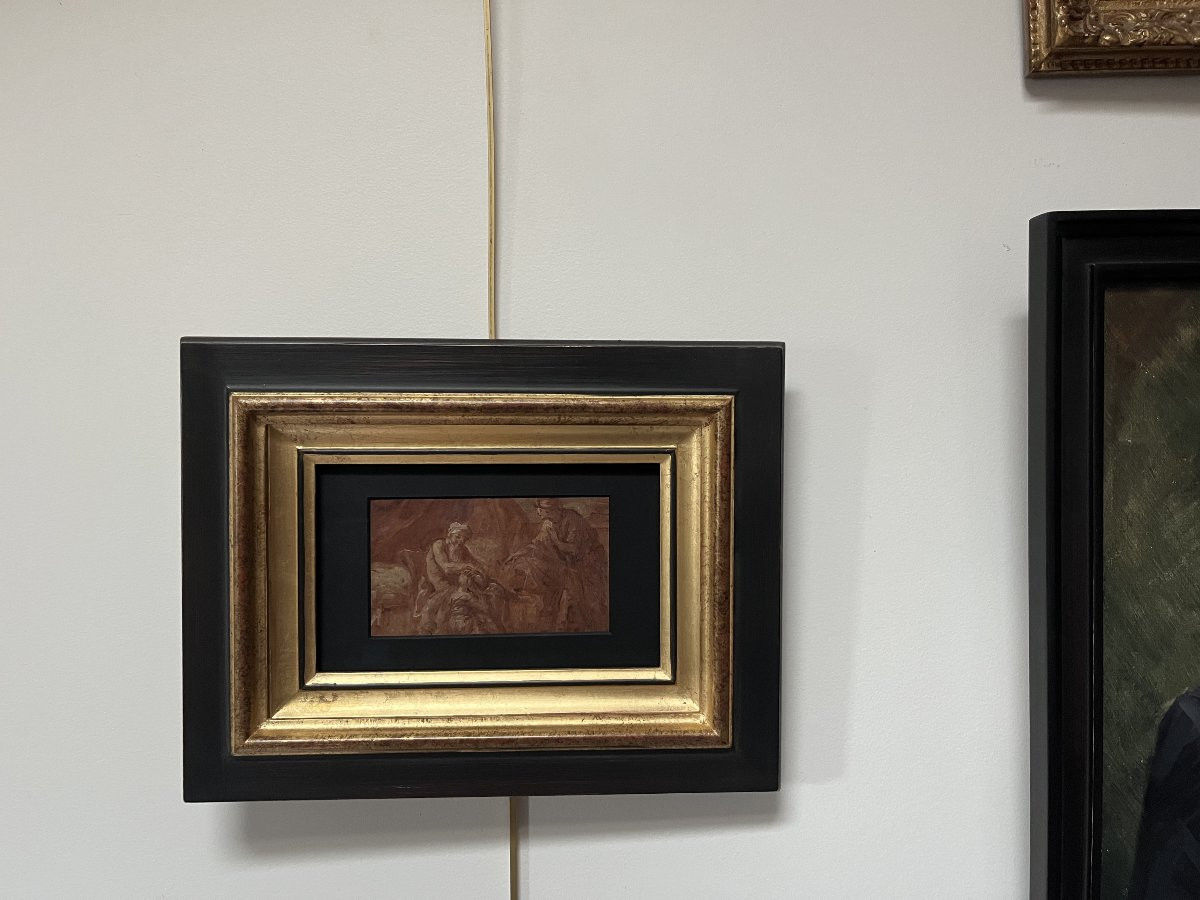
In a modern frame 27 x 35 cm
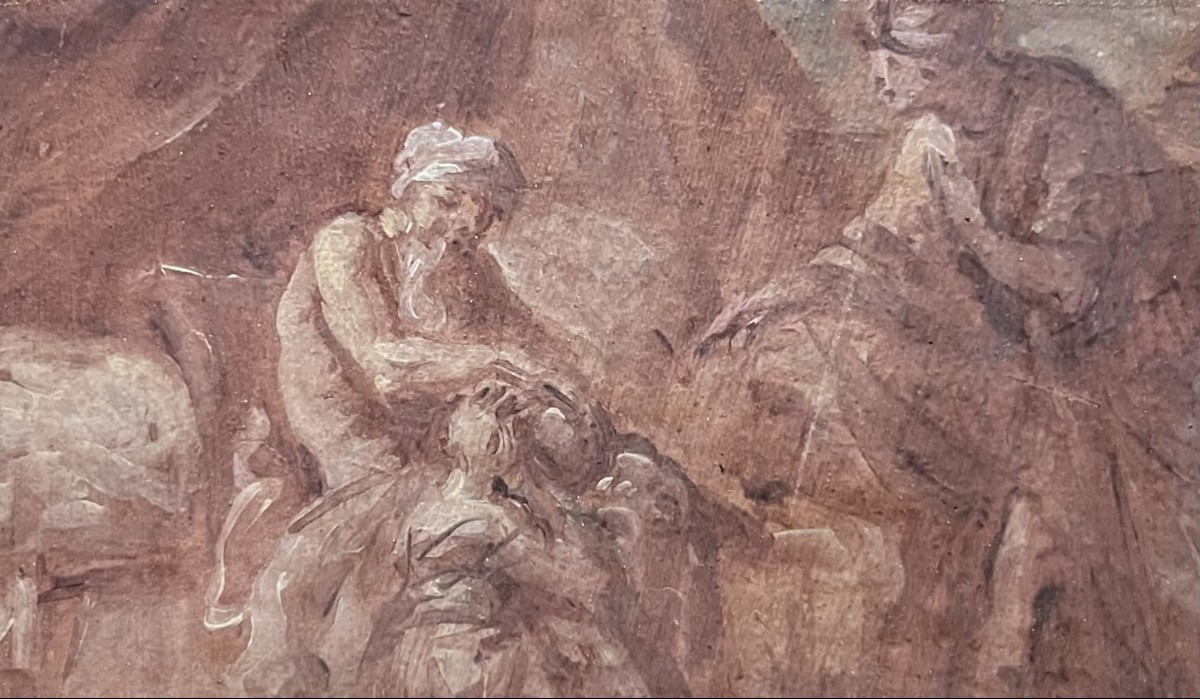
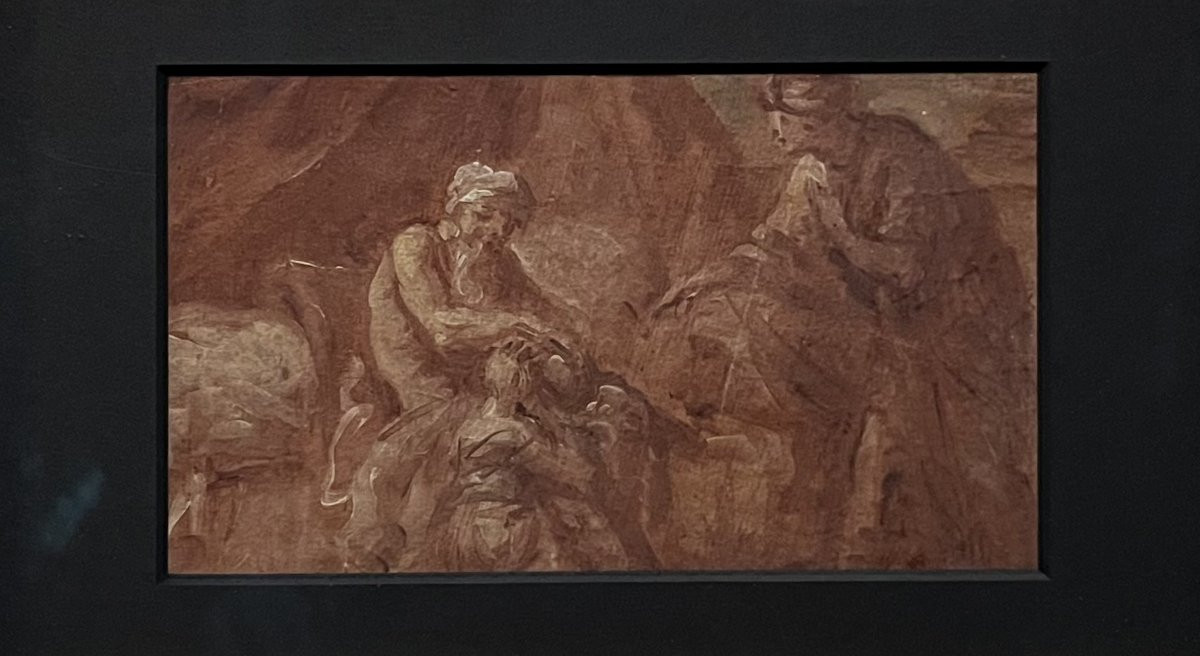
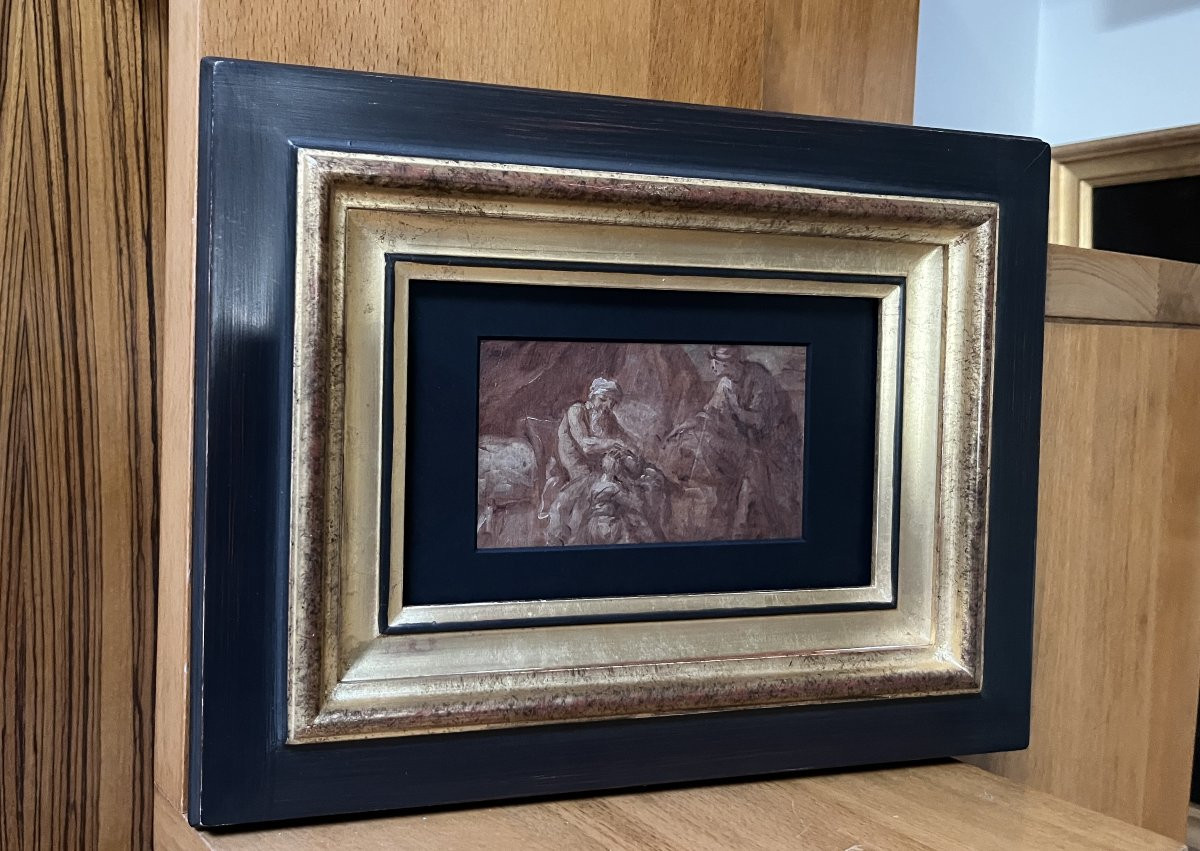
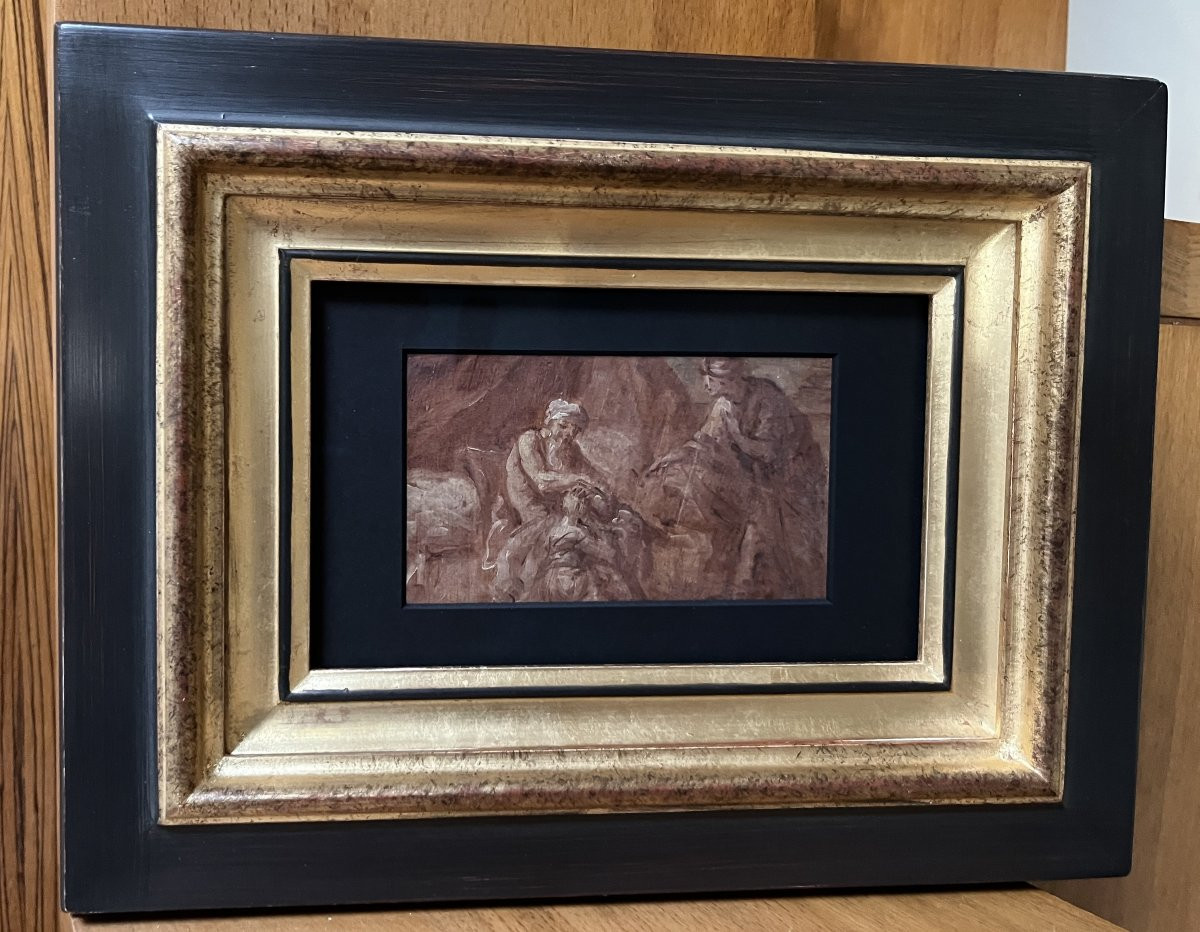
The subject of this small painting can be identified as Jacob Blessing the Sons of Joseph (Book of Genesis, chapter 48). This can be recognized by the fact that the main character is crossing his arms to bless the children. In this scene, Joseph brings his two sons (Manasseh and Ephraim) to his dying father, Jacob, so that they may receive his blessing. Jacob adopted his grandsons, who thus became the ancestors of the Twelve Tribes of Israel. According to tradition, the eldest son must be blessed with the patriarch's right hand. However, Jacob, who is almost blind, deliberately crosses his arms and places his right hand on Ephraim's head (the younger son) and his left hand on Manasseh's head (the elder son). When Joseph protests and tries to correct his father, it turns out that his act is deliberate: Jacob refuses and tells Joseph that he is deliberately blessing the younger son. Jacob justifies this with the following words: "This one will also become a people and will be great; but his younger brother will become greater than he. " Indeed, Ephraim would later produce a larger tribe than his brother. Early Christian interpretations also see Ephraim as the ancestor of Christianity, while Manasseh is linked to Judaism.
This episode was painted many times in the 17th and 18th centuries by Rembrandt and Mattia Preti, for example and it was bound to be recognized by art lovers of the time.
The technique and execution in shades of red are particularly interesting, typical of 18th-century art with its free and lively execution.
The name of Nicolas Vleughels (1668-1737) has been mentioned as a possible attribution, and there is indeed an interesting similarity in the style and inspiration of this artist and our painting.
Jacob Blessing the Sons of Joseph
oil on paper
8 x 14 cm (view)
In a modern frame 27 x 35 cm
The subject of this small painting can be identified as Jacob Blessing the Sons of Joseph (Book of Genesis, chapter 48). This can be recognized by the fact that the main character is crossing his arms to bless the children. In this scene, Joseph brings his two sons (Manasseh and Ephraim) to his dying father, Jacob, so that they may receive his blessing. Jacob adopted his grandsons, who thus became the ancestors of the Twelve Tribes of Israel. According to tradition, the eldest son must be blessed with the patriarch's right hand. However, Jacob, who is almost blind, deliberately crosses his arms and places his right hand on Ephraim's head (the younger son) and his left hand on Manasseh's head (the elder son). When Joseph protests and tries to correct his father, it turns out that his act is deliberate: Jacob refuses and tells Joseph that he is deliberately blessing the younger son. Jacob justifies this with the following words: "This one will also become a people and will be great; but his younger brother will become greater than he. " Indeed, Ephraim would later produce a larger tribe than his brother. Early Christian interpretations also see Ephraim as the ancestor of Christianity, while Manasseh is linked to Judaism.
This episode was painted many times in the 17th and 18th centuries by Rembrandt and Mattia Preti, for example and it was bound to be recognized by art lovers of the time.
The technique and execution in shades of red are particularly interesting, typical of 18th-century art with its free and lively execution.
The name of Nicolas Vleughels (1668-1737) has been mentioned as a possible attribution, and there is indeed an interesting similarity in the style and inspiration of this artist and our painting.
920 €
Period: 18th century
Style: Louis 15th - Transition
Condition: Good condition
Material: Oil painting on paper
Width: 14
Height: 8
Reference (ID): 1686782
Availability: In stock
Print