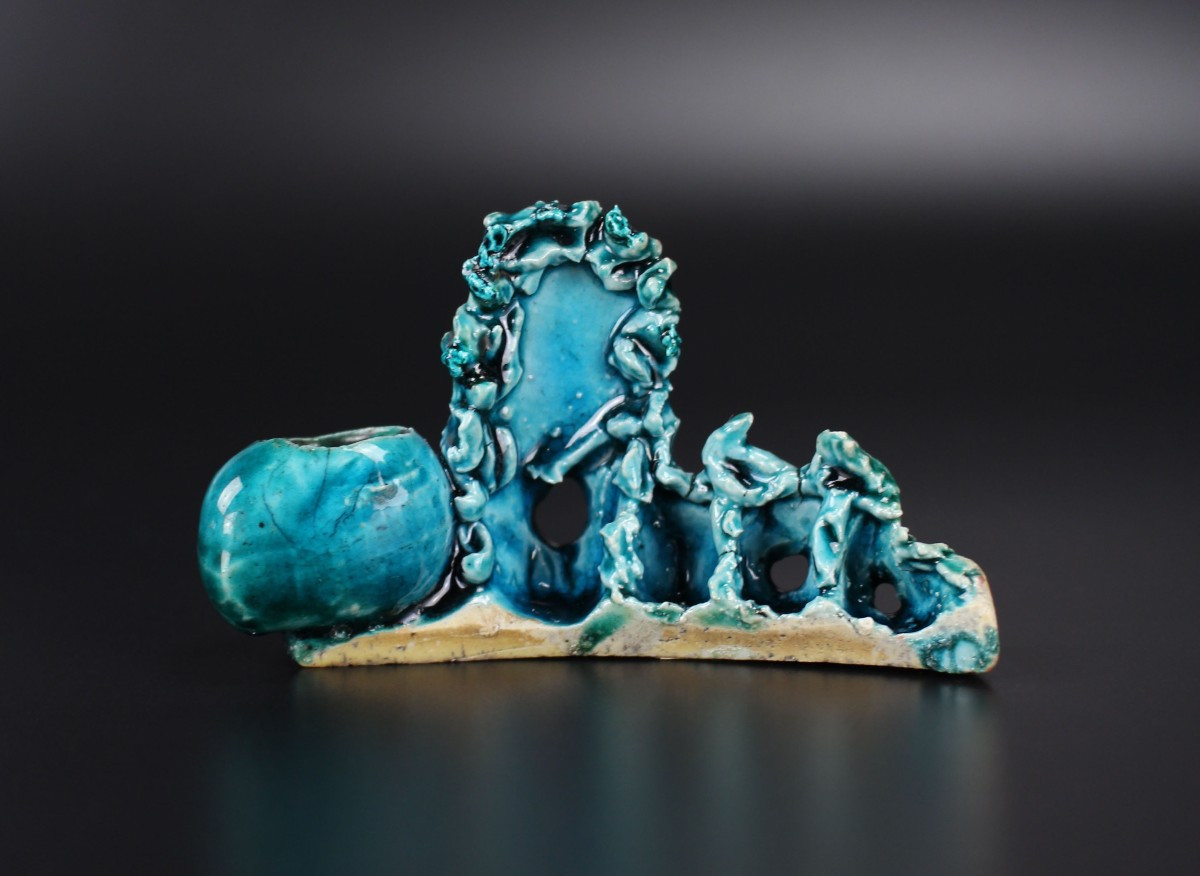


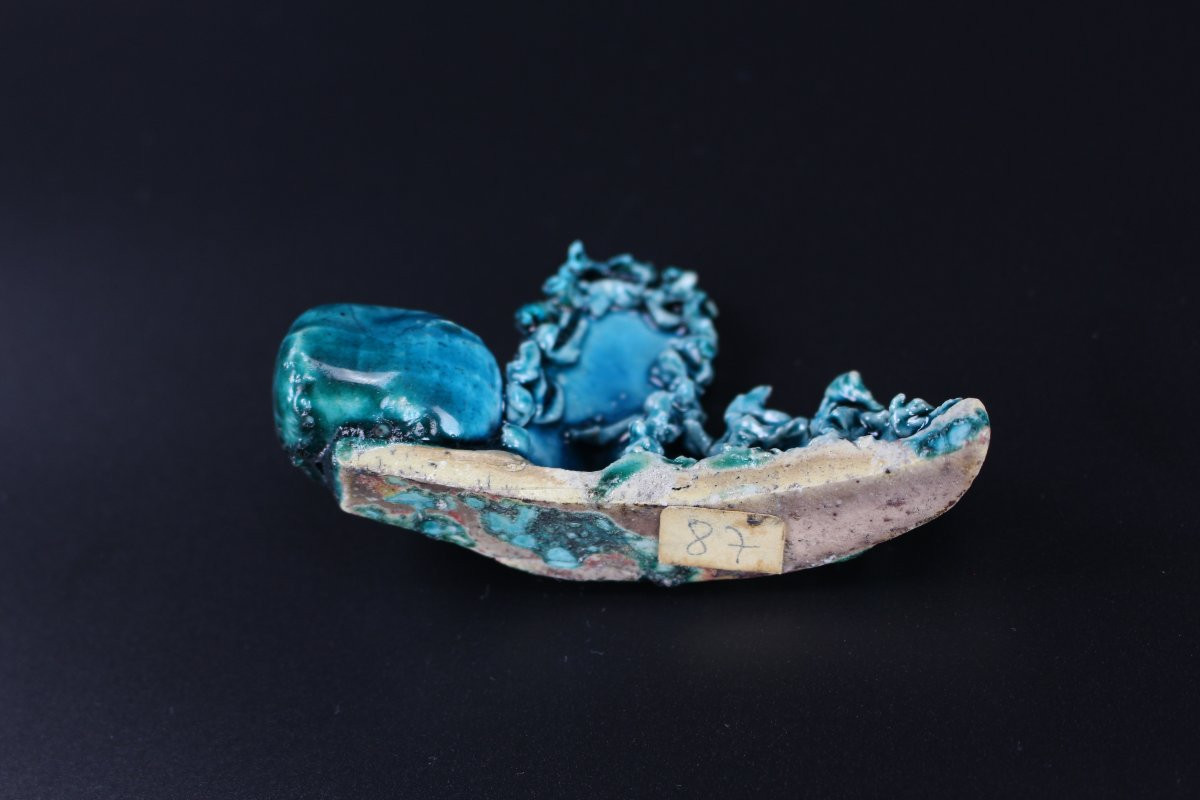


Chinese Porcelain Brush Rest With Turquoise Glaze, "mountain And Peach" Decoration, Kangxi
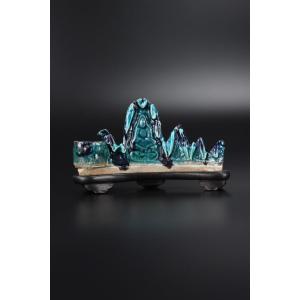
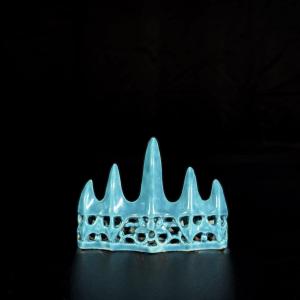
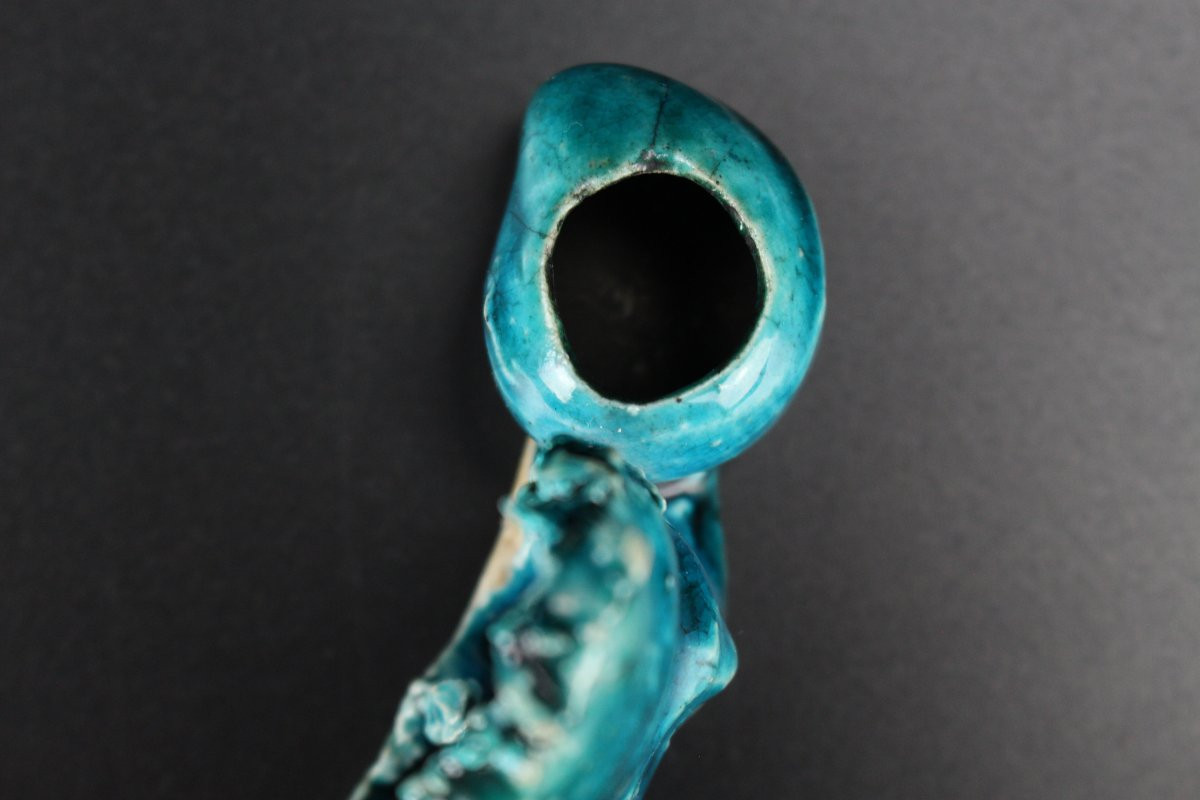
A Chinese turquoise-glazed ‘Mountain and Peach’ brush rest and water pot.
Kangxi period (1662-1722).
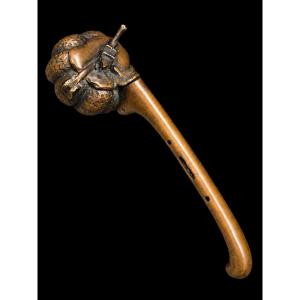
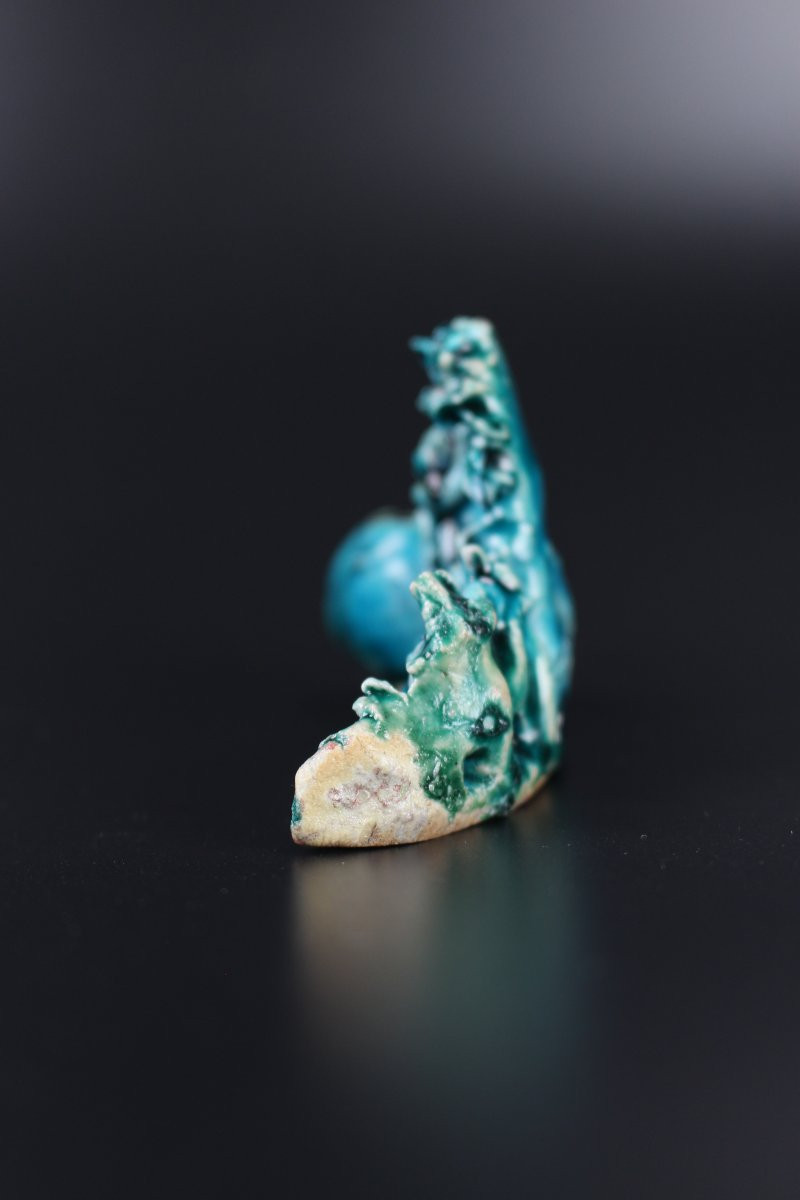
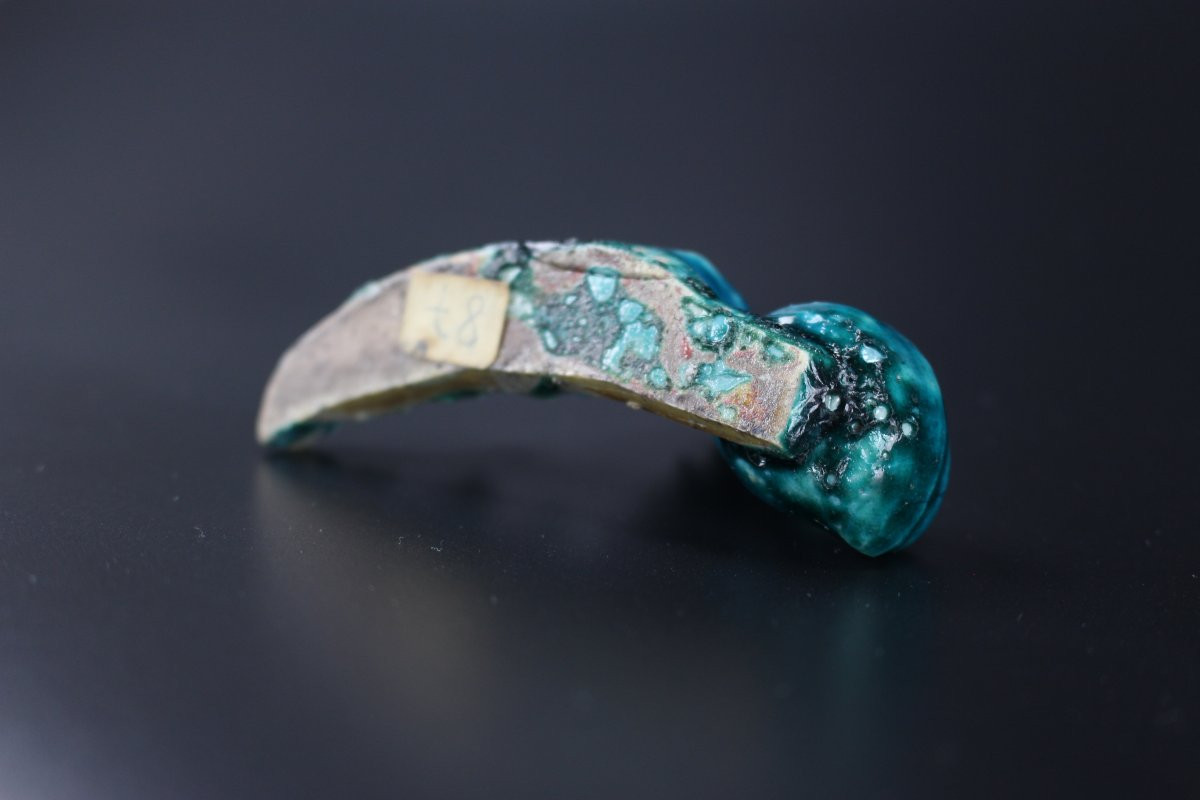
The gently curved brush rest is modelled as a four-peaked mountain, accompanied by a peach-shaped water pot. It is covered overall, except for the base, in a thick turquoise glaze. Interestingly, the water pot still contains dark ink, providing evidence of its practical use rather than being merely decorative.
Height 5.5 cm, width 9.2 cm.
Provenance:
From a French private collection
Note:
This mountain-shaped brush rest held calligraphy or painting brushes when not in use, preventing the tips from smudging ink or staining the table. The peach-shaped water pot contained small amounts of water used to mix ink and adjust its tone when grinding an ink stick on the inkstone.
Such objects were used by the Chinese literati (文人 wenren), a class of scholar-artists devoted to art, learning, and self-cultivation. In their studios, tools like these were essential for both artistic creation and the expression of refined taste.
The Chinese literati (文人 wenren) traditionally cultivated what were known as the “Four Arts” (四艺 sì yì):
Qín (琴) – playing the guqin, a seven-string zither symbolizing harmony and self-reflection.
Qí (棋) – playing the strategy game Go (known as weiqi), representing intellect and strategic thinking.
Shū (书) – practicing calligraphy, seen as the highest form of visual art and self-expression.
Huà (画) – painting, often landscapes that expressed the artist’s inner spirit and relationship with nature.
Together, these arts embodied the literati’s ideals of balance, intellect, moral integrity, and aesthetic sensitivity — the hallmarks of a true gentleman-scholar.
Worldwide registered and insured shipping.
Inv. No: MW355
Period: 18th century
Style: Asian art
Condition: Good condition
Material: Porcelain
Width: 9.2 cm.
Height: 5.5 cm.
Reference (ID): 1684348
Availability: In stock