THIS OBJECT WAS SOLD
Sculpture - The Troubadour Emile Boisseau (1842-1923) - Bronze
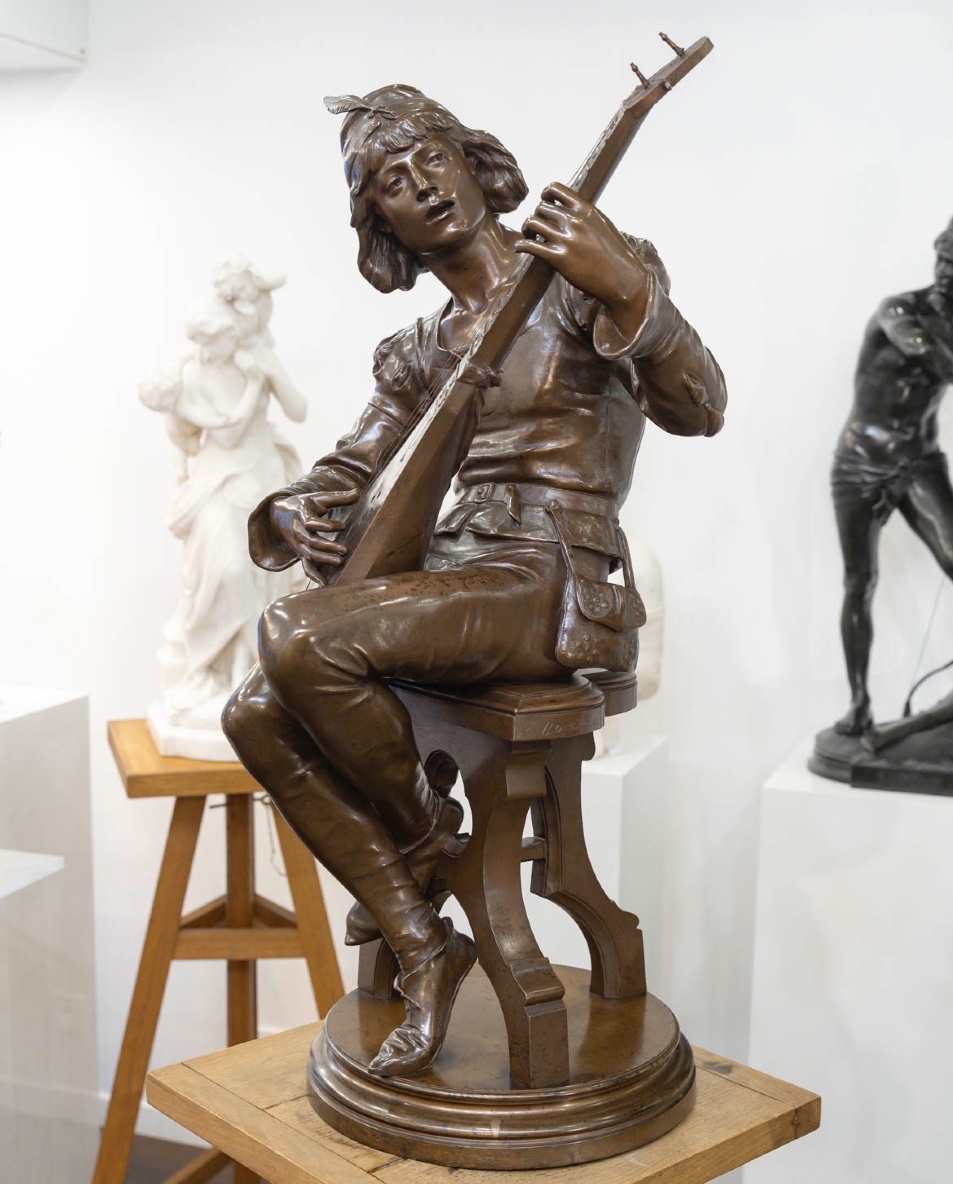

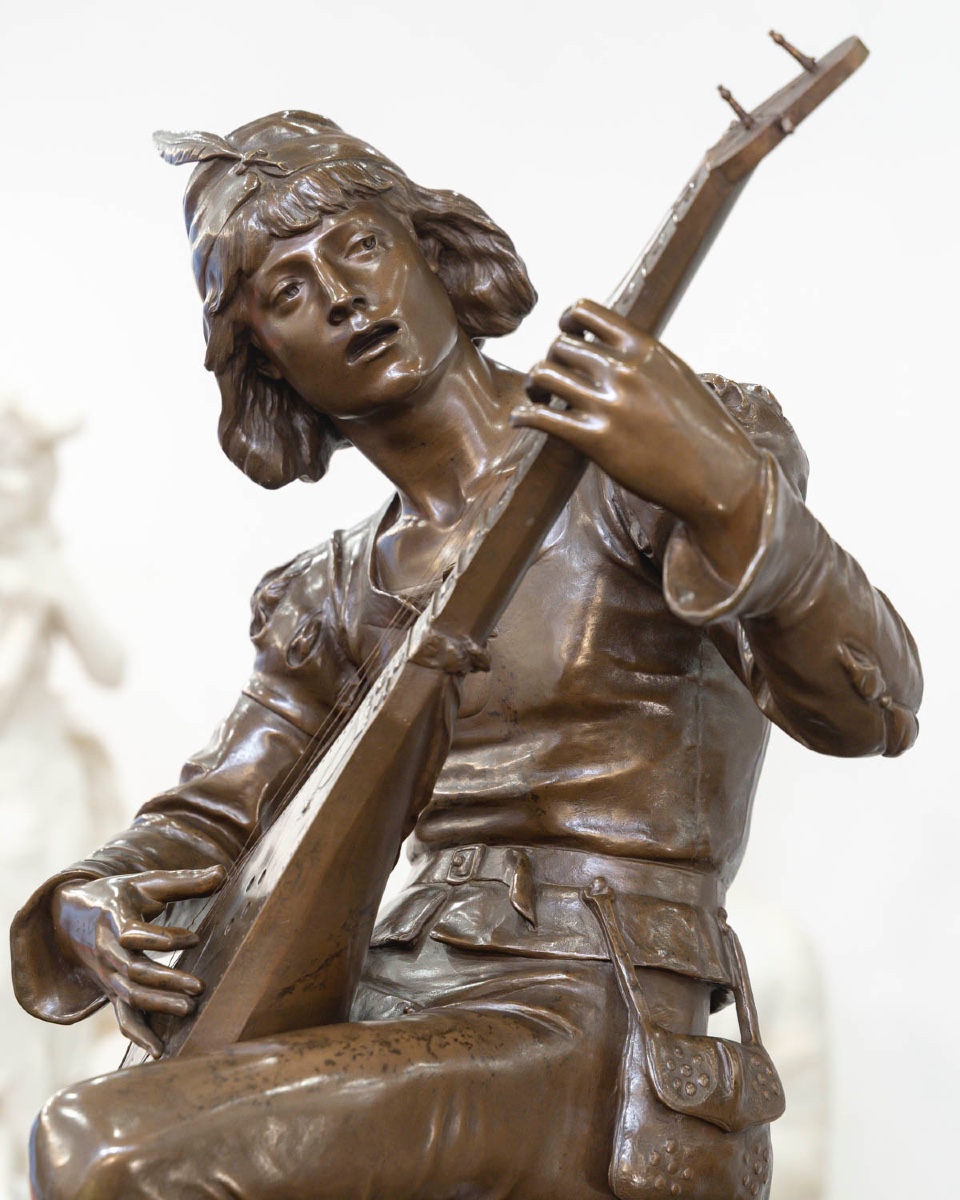

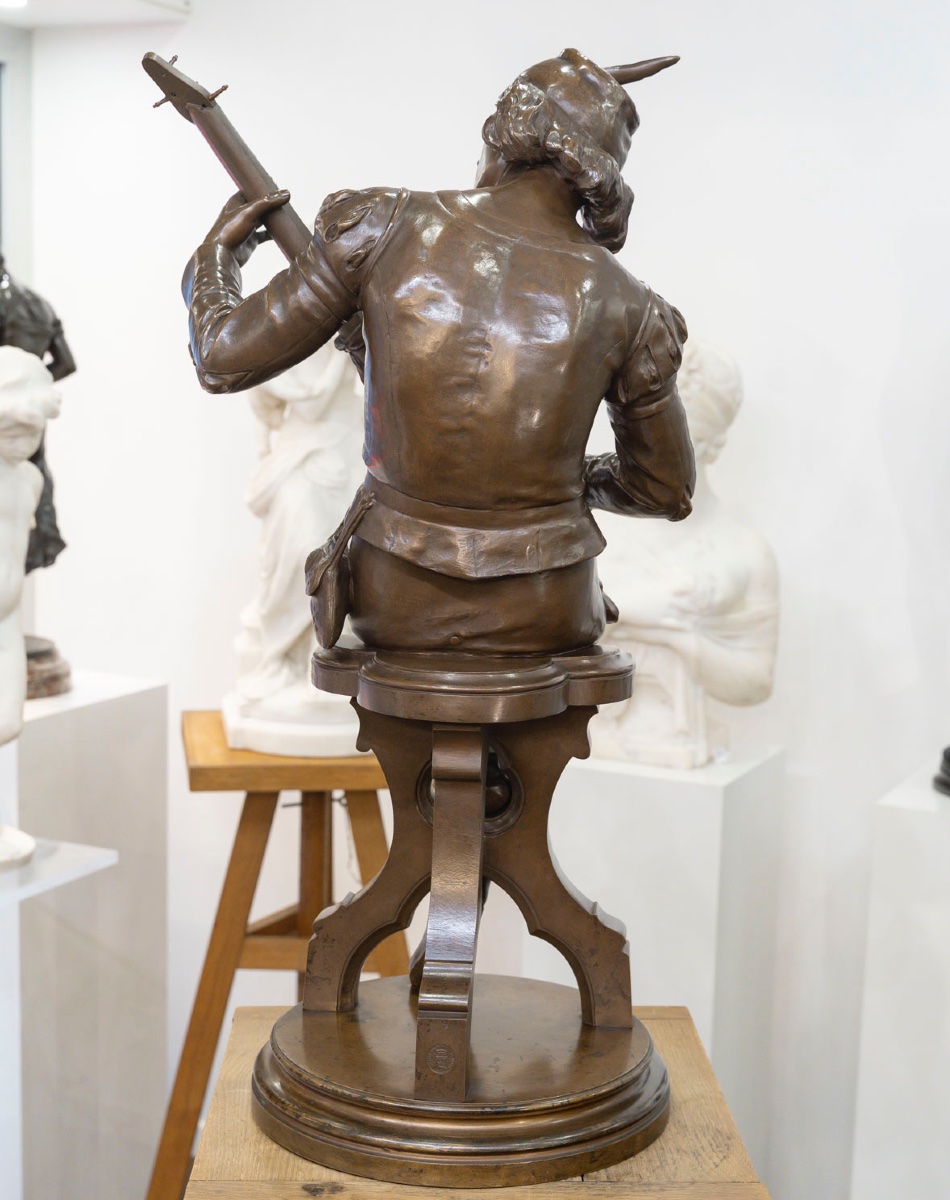




Important bronze proof with brown patina , depicting "Oysel The Troubadour", by the sculptor Emile Boisseau (1842-1923) .
The troubadour is represented here in his traditional costume , with his lute , one of the most popular plucked string instruments of the time .
Signature of the sculptor "E.Boisseau" on the top of the stool .
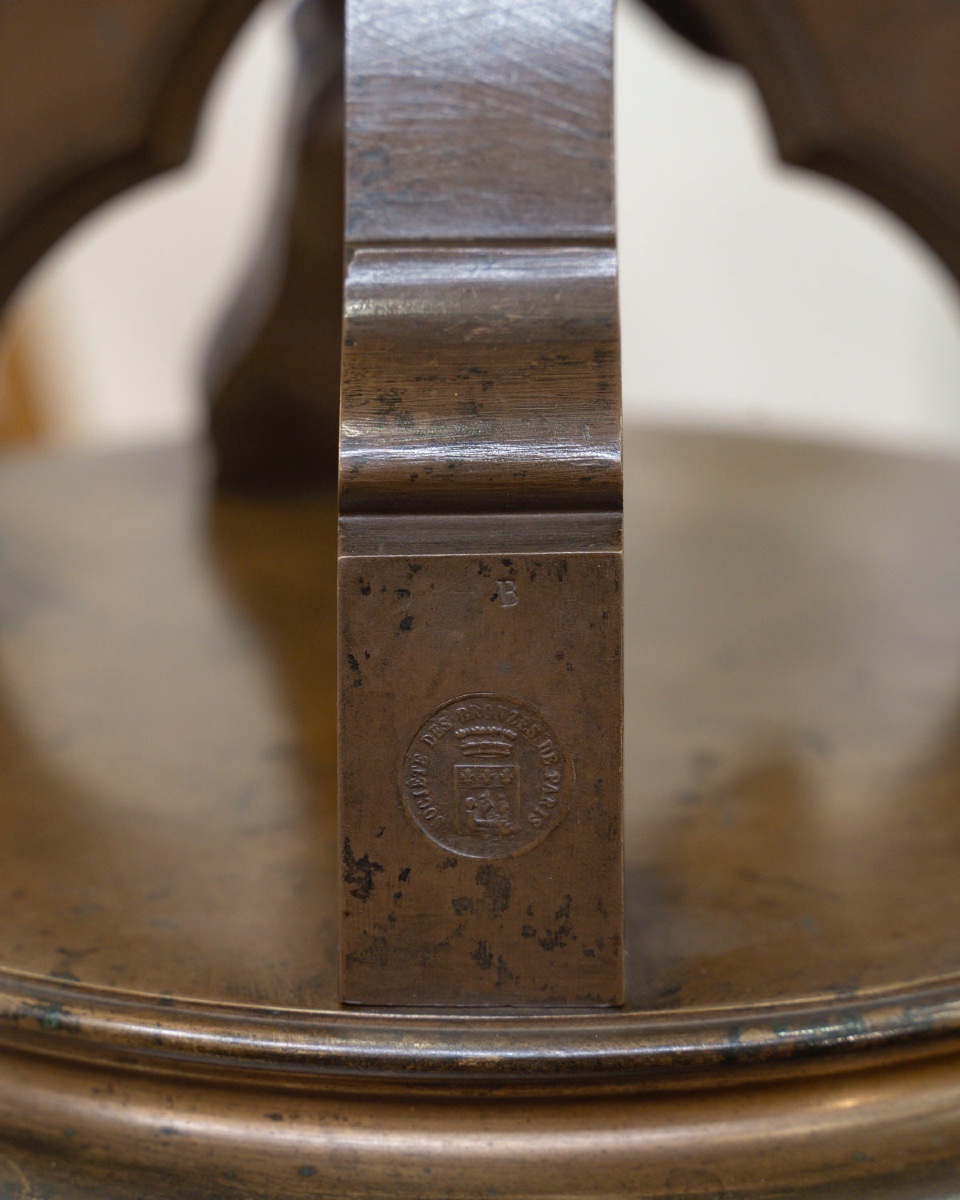
Circular stamp of the founder "Société des bronzes de Paris" (Paris Bronze Company), on the bottom of the stool .
Old edition sculpture , period second half of the 19th century .
Very good condition of conservation and patina .
Height : 79 cm
The Troubadour movement began towards the end of the 11th century in Occitanie , among the high Occitan nobility .
It then spread to other social strata and spread to northern Italy and Spain .
The troubadours actively participated in the social , political and religious life of the society of the time .
Under the influence of the troubadours , movements of the same type arose all over Europe .
Accompanied by their instrument , most often the lute or the flute , they advocate courtly love , an essential theme .
Although they are often inspired by religious songs , they do not hesitate to get involved in social and political life by proclaiming values dear to their hearts .
Emile Boisseau (1842-1923)
Emile Boisseau is a french sculptor , born March 29 , 1842 in Varzy.
Seduced at a very young age by the attraction of the arts , the sight of churches and monuments , Emile Boisseau left his Nivernais cradle to go to Bourges , where he met an archaeologist sculptor , who employed him in the restoration of diocesan buildings including he's charged .
The carving of ornaments and figures sharpens his natural penchant for all forms of statuary .
Emile Boisseau , then entered the School of Fine Arts in Paris , where he was taught by Auguste Dumont , then by Jean-Marie Bonnassieux .
In 1868 , Emile Boisseau made his debut at the Paris Salon , he sent there the bronze statue of his compatriot General Dupin , and "Celuda mourning his child" , much noticed by critics and his colleagues .
He regularly appears at the Paris Salon , then at the Salon of French Artistes .
His works were rewarded in 1869 , 1880 , 1889 , and 1899 .
Among his shipments , "Captive Love" from 1891 and "Twilight", a marble group from 1883 .
In 1882 , he sculpted a statue of " Beaumarchais " for the facade of the Paris City Hall .
A marble version of his "Defense of the Home" of 1884 was acquired by the City of Paris , which erected it in the Champ-de-Mars Square .
Secretary of the sculpture jury , Fine Arts section at the 1900 Universal Exhibition , president of the Sculpture jury at the 1904 Salon , he has served since 1892 as treasurer of the Society of French Artists .
Emile Boisseau, received the Legion of Honor in 1886 , and was elevated to the rank of officer in 1900.
Emile Boisseau died on February 17 , 1923 , in his Paris Hotel .
The troubadour is represented here in his traditional costume , with his lute , one of the most popular plucked string instruments of the time .
Signature of the sculptor "E.Boisseau" on the top of the stool .
Circular stamp of the founder "Société des bronzes de Paris" (Paris Bronze Company), on the bottom of the stool .
Old edition sculpture , period second half of the 19th century .
Very good condition of conservation and patina .
Height : 79 cm
The Troubadour movement began towards the end of the 11th century in Occitanie , among the high Occitan nobility .
It then spread to other social strata and spread to northern Italy and Spain .
The troubadours actively participated in the social , political and religious life of the society of the time .
Under the influence of the troubadours , movements of the same type arose all over Europe .
Accompanied by their instrument , most often the lute or the flute , they advocate courtly love , an essential theme .
Although they are often inspired by religious songs , they do not hesitate to get involved in social and political life by proclaiming values dear to their hearts .
Emile Boisseau (1842-1923)
Emile Boisseau is a french sculptor , born March 29 , 1842 in Varzy.
Seduced at a very young age by the attraction of the arts , the sight of churches and monuments , Emile Boisseau left his Nivernais cradle to go to Bourges , where he met an archaeologist sculptor , who employed him in the restoration of diocesan buildings including he's charged .
The carving of ornaments and figures sharpens his natural penchant for all forms of statuary .
Emile Boisseau , then entered the School of Fine Arts in Paris , where he was taught by Auguste Dumont , then by Jean-Marie Bonnassieux .
In 1868 , Emile Boisseau made his debut at the Paris Salon , he sent there the bronze statue of his compatriot General Dupin , and "Celuda mourning his child" , much noticed by critics and his colleagues .
He regularly appears at the Paris Salon , then at the Salon of French Artistes .
His works were rewarded in 1869 , 1880 , 1889 , and 1899 .
Among his shipments , "Captive Love" from 1891 and "Twilight", a marble group from 1883 .
In 1882 , he sculpted a statue of " Beaumarchais " for the facade of the Paris City Hall .
A marble version of his "Defense of the Home" of 1884 was acquired by the City of Paris , which erected it in the Champ-de-Mars Square .
Secretary of the sculpture jury , Fine Arts section at the 1900 Universal Exhibition , president of the Sculpture jury at the 1904 Salon , he has served since 1892 as treasurer of the Society of French Artists .
Emile Boisseau, received the Legion of Honor in 1886 , and was elevated to the rank of officer in 1900.
Emile Boisseau died on February 17 , 1923 , in his Paris Hotel .
Explore similar pieces and discover your ideal find:
bronze sculptures