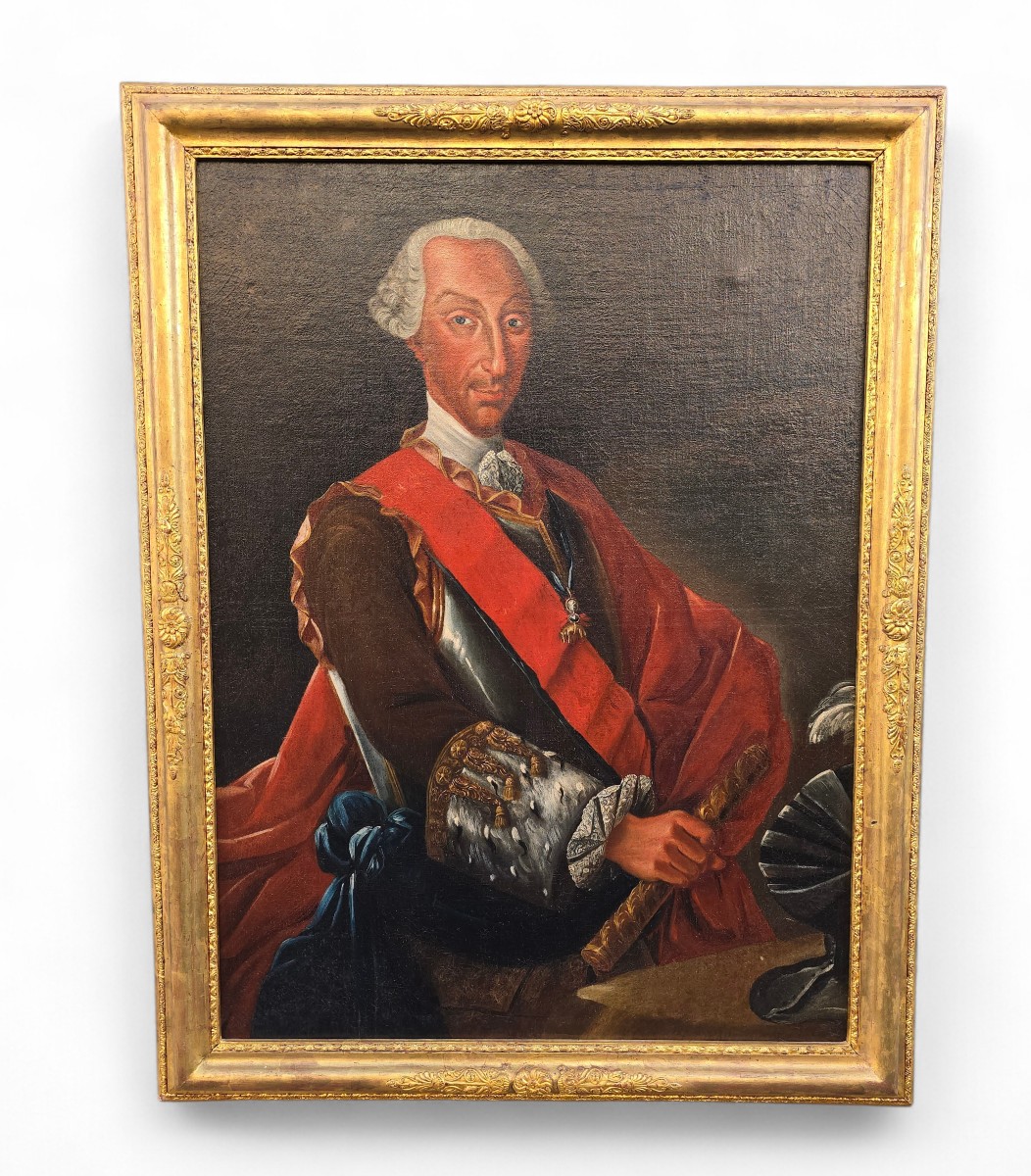
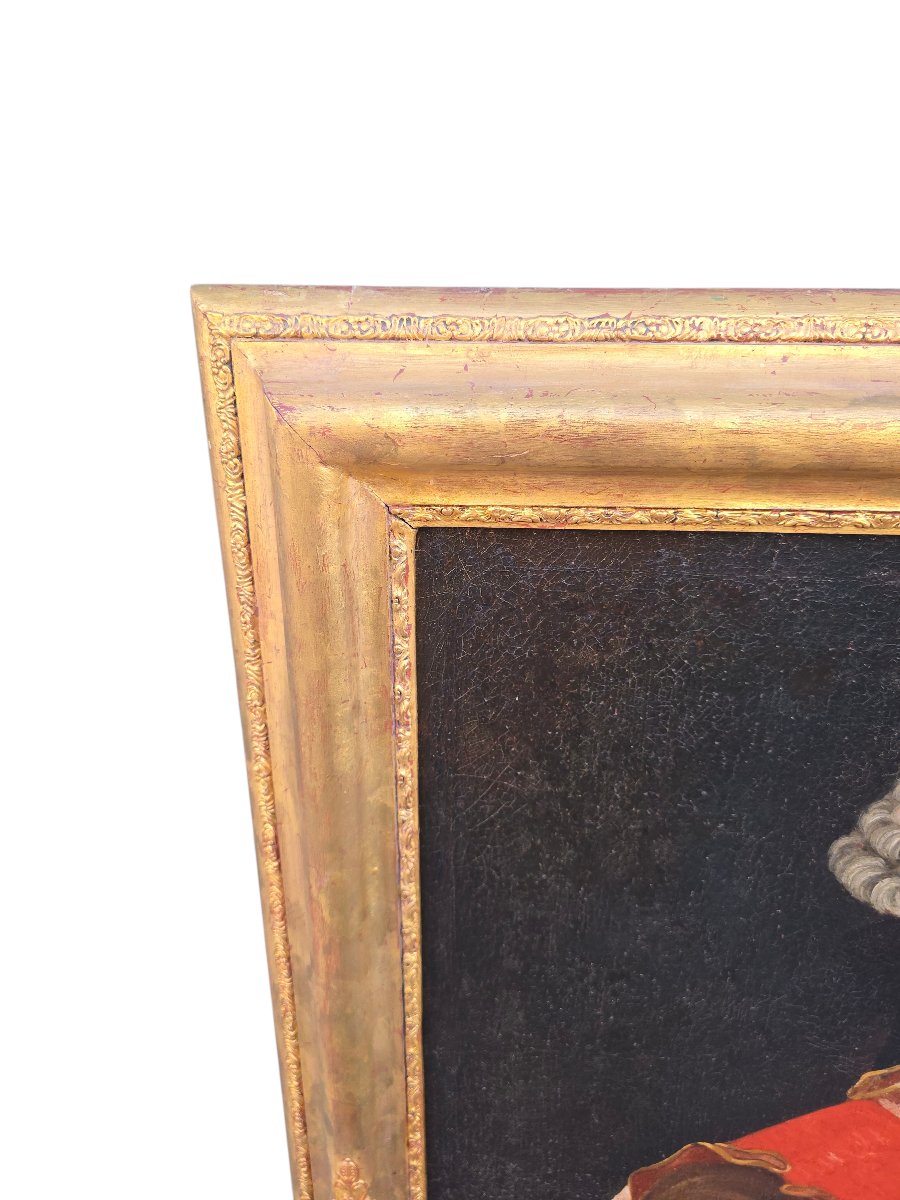
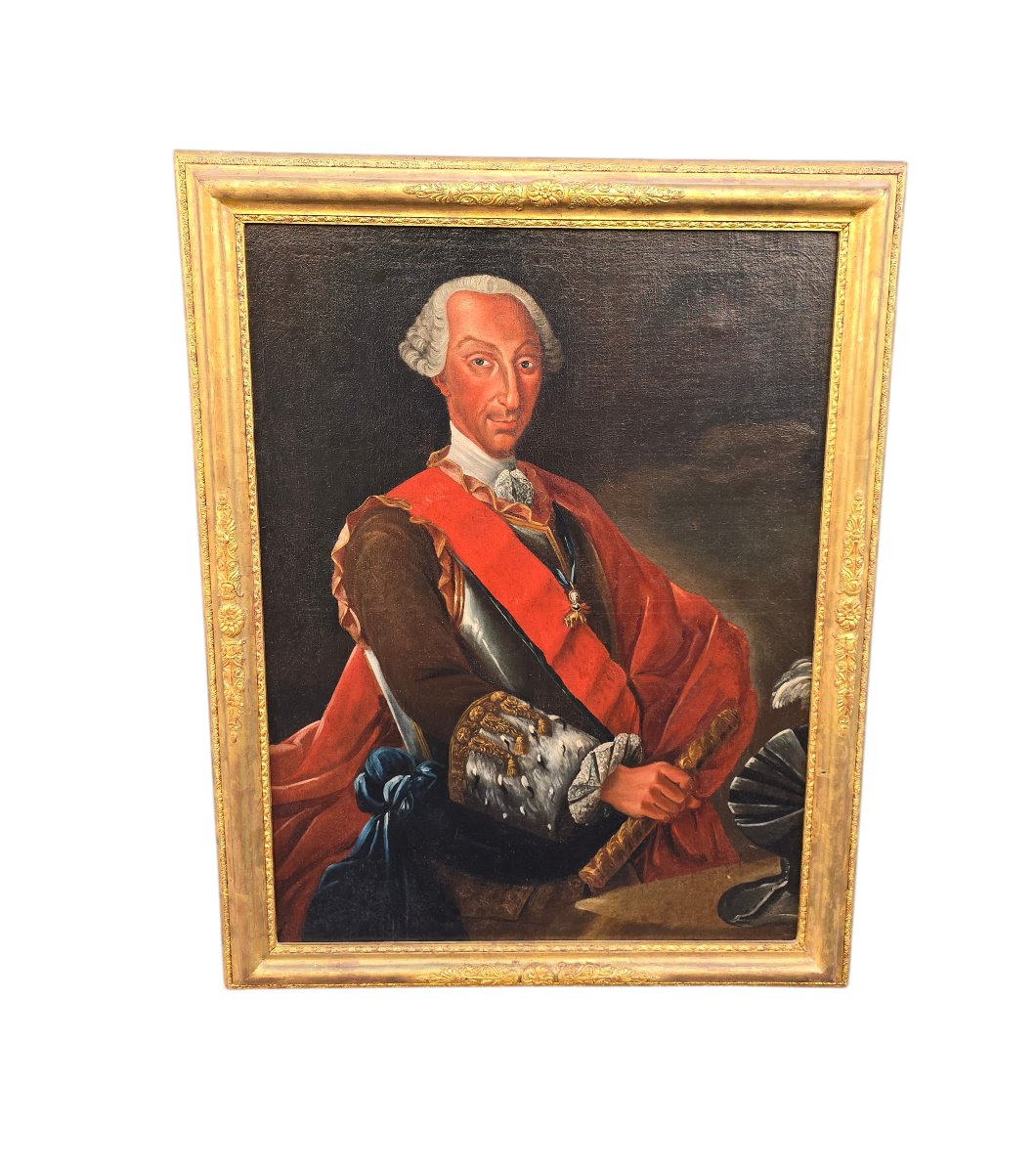
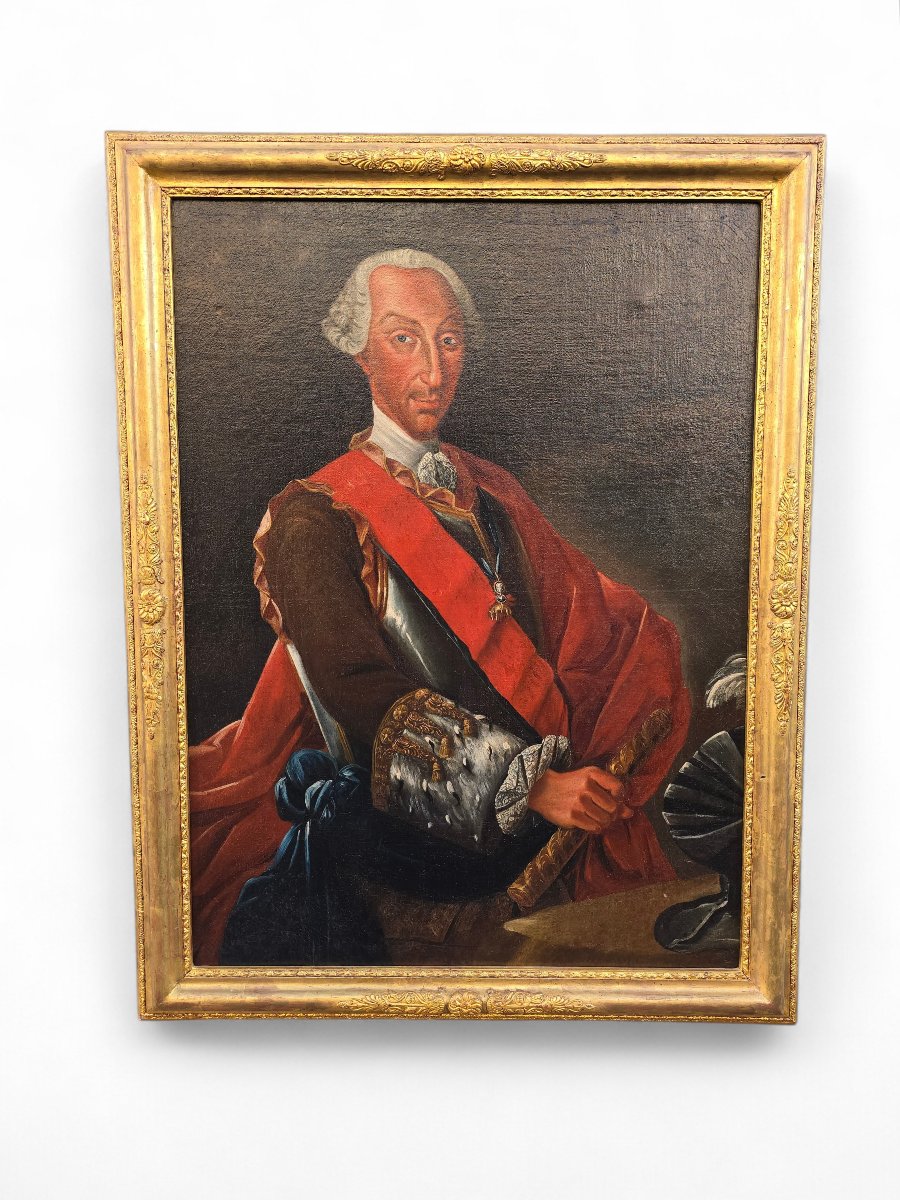
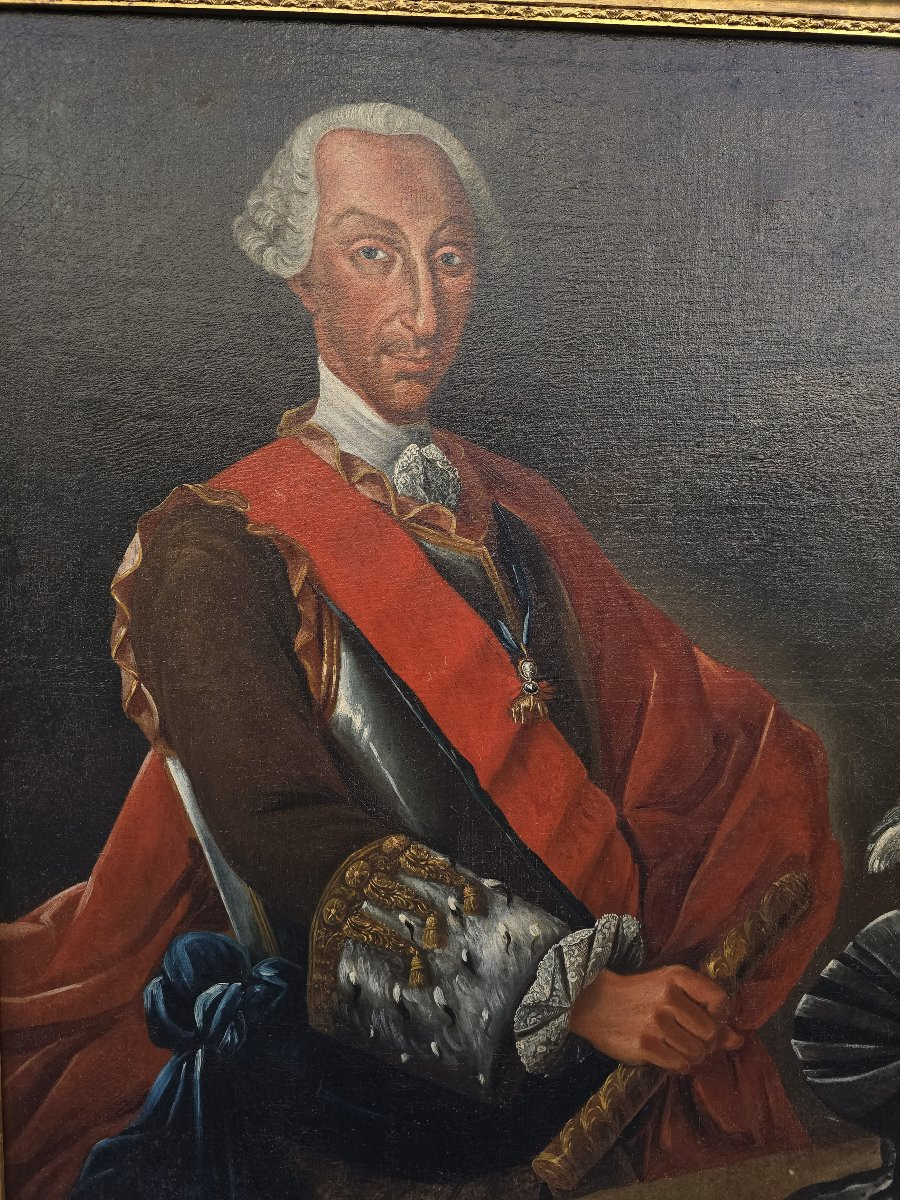
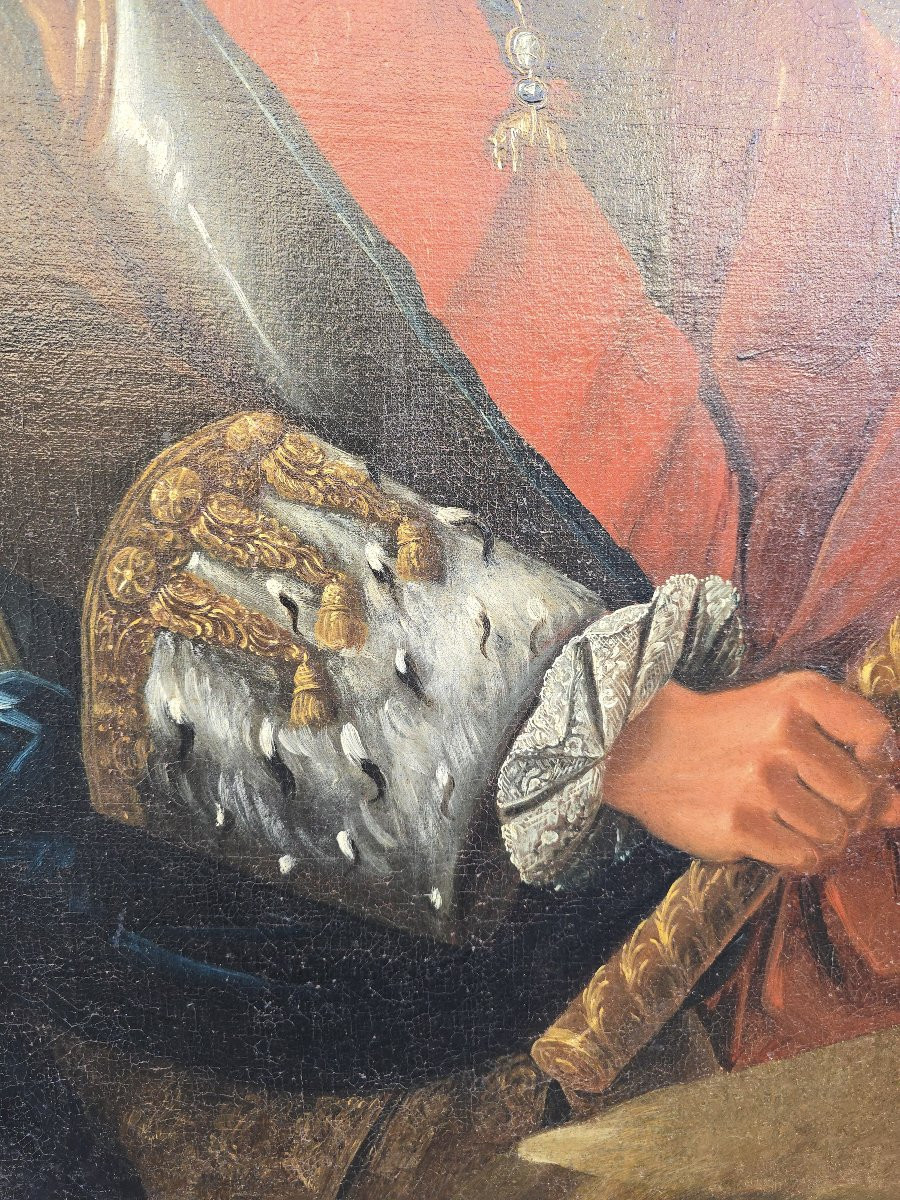


Portrait Of Charles De Bourbon As King Of Naples. Oil On Canvas.
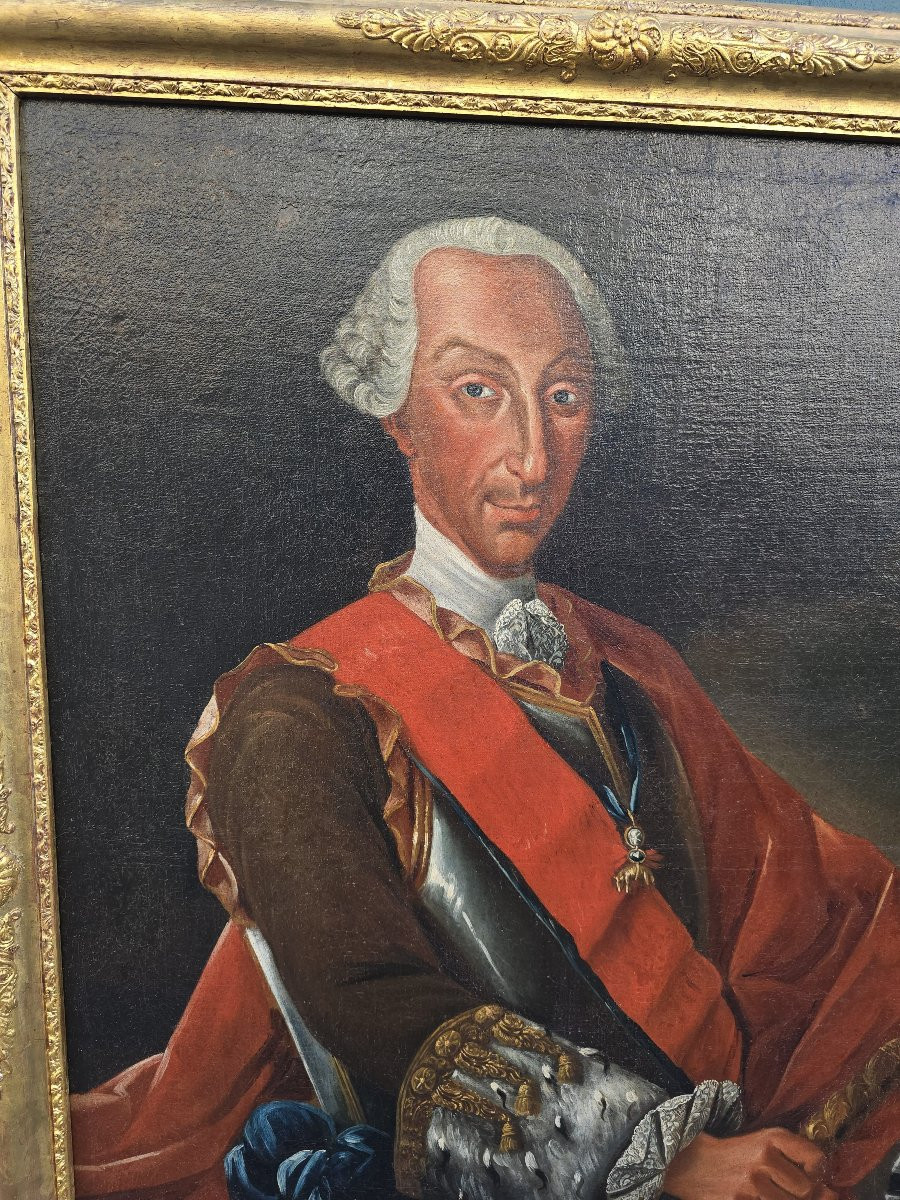
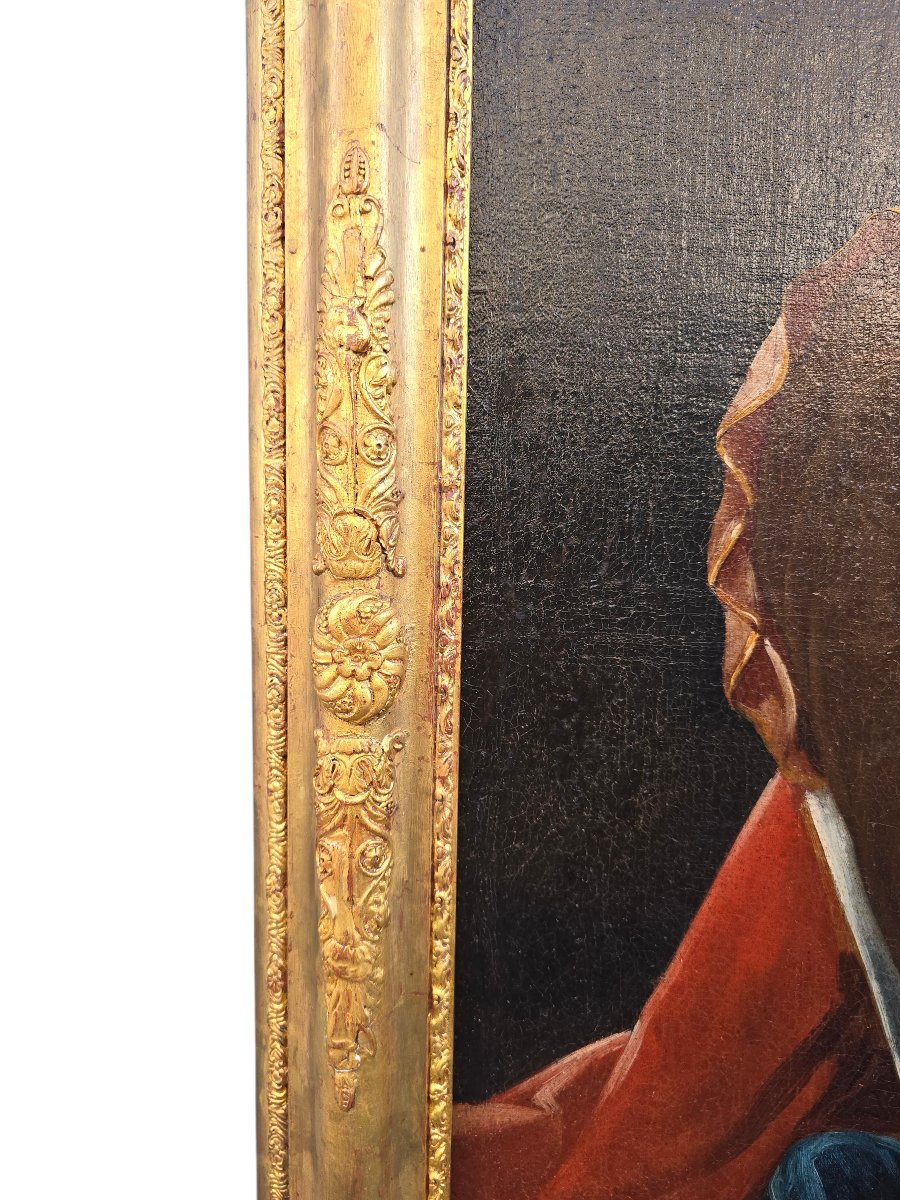
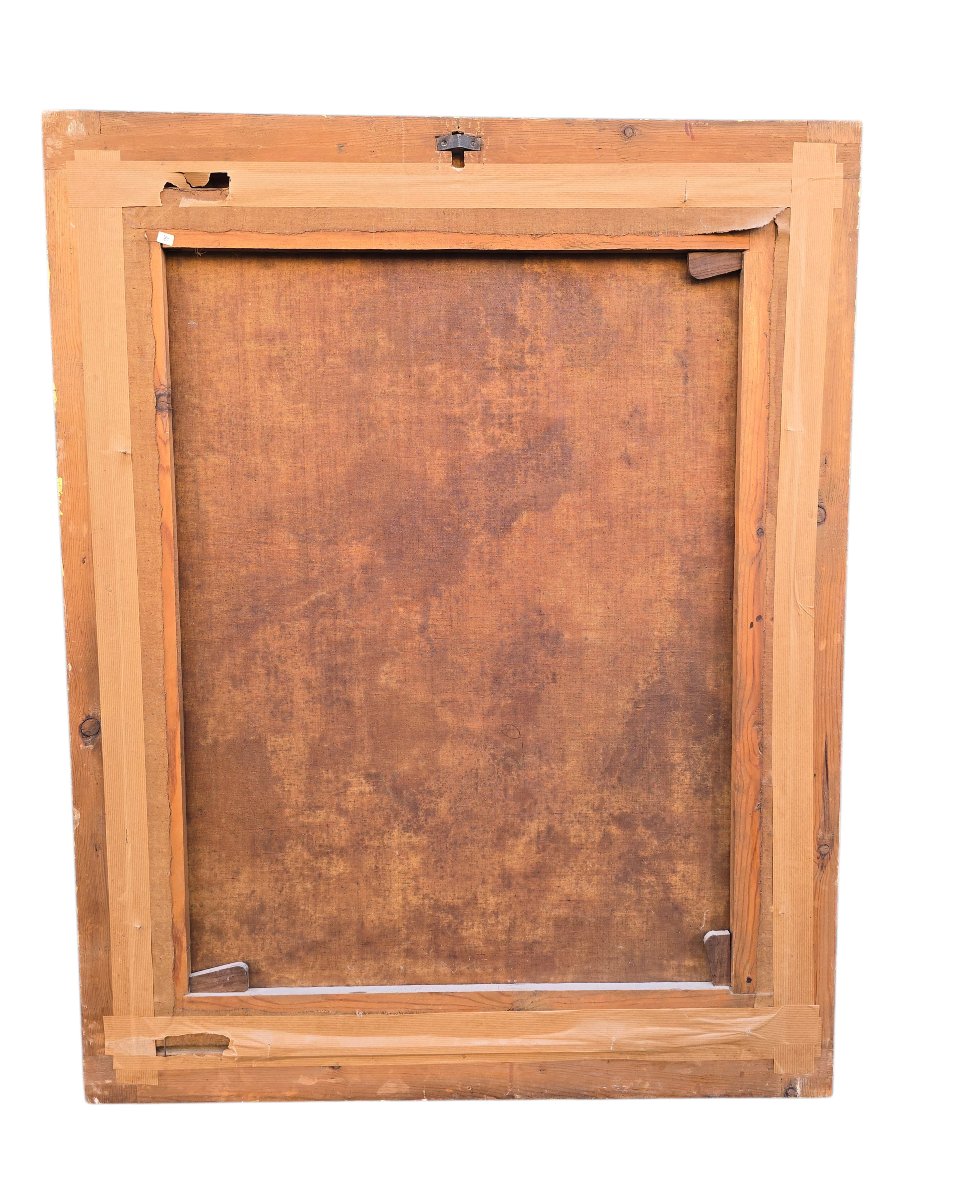
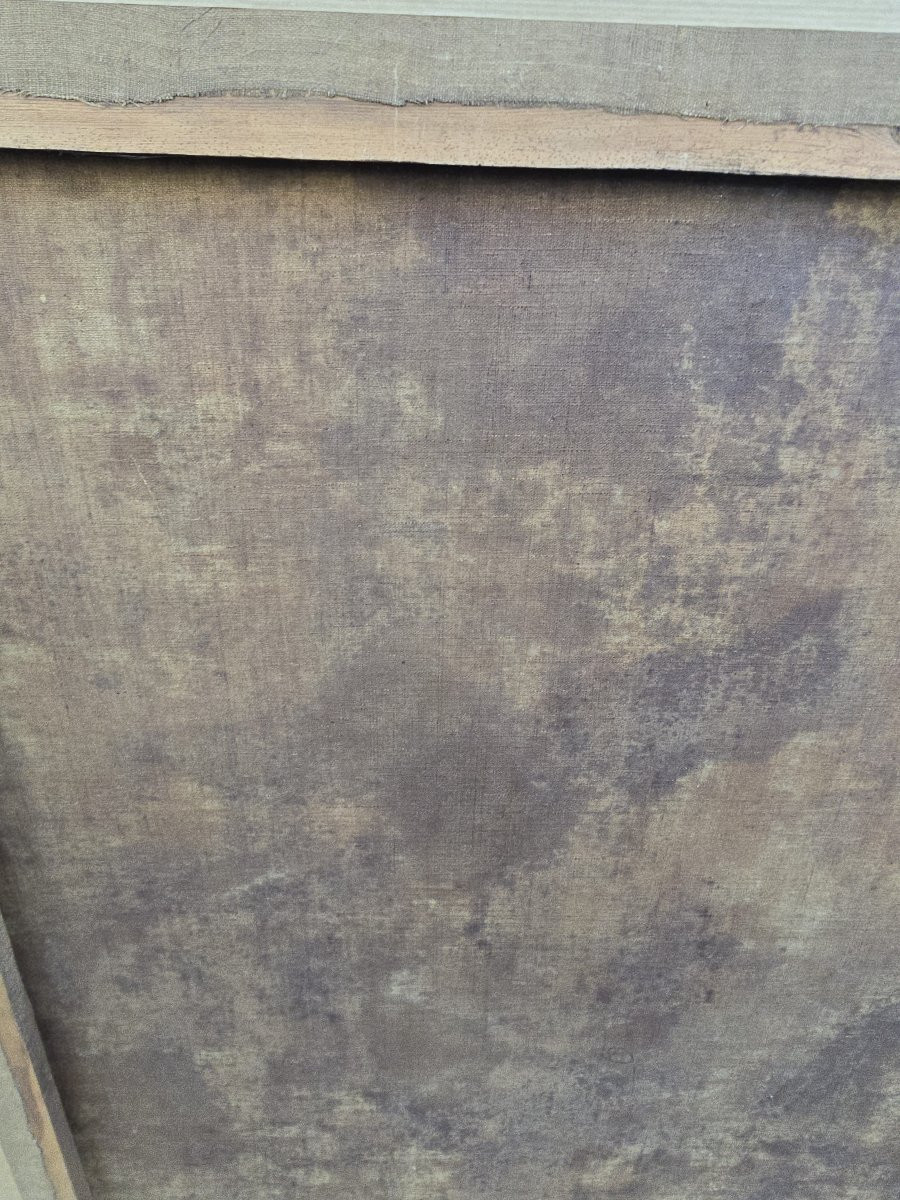
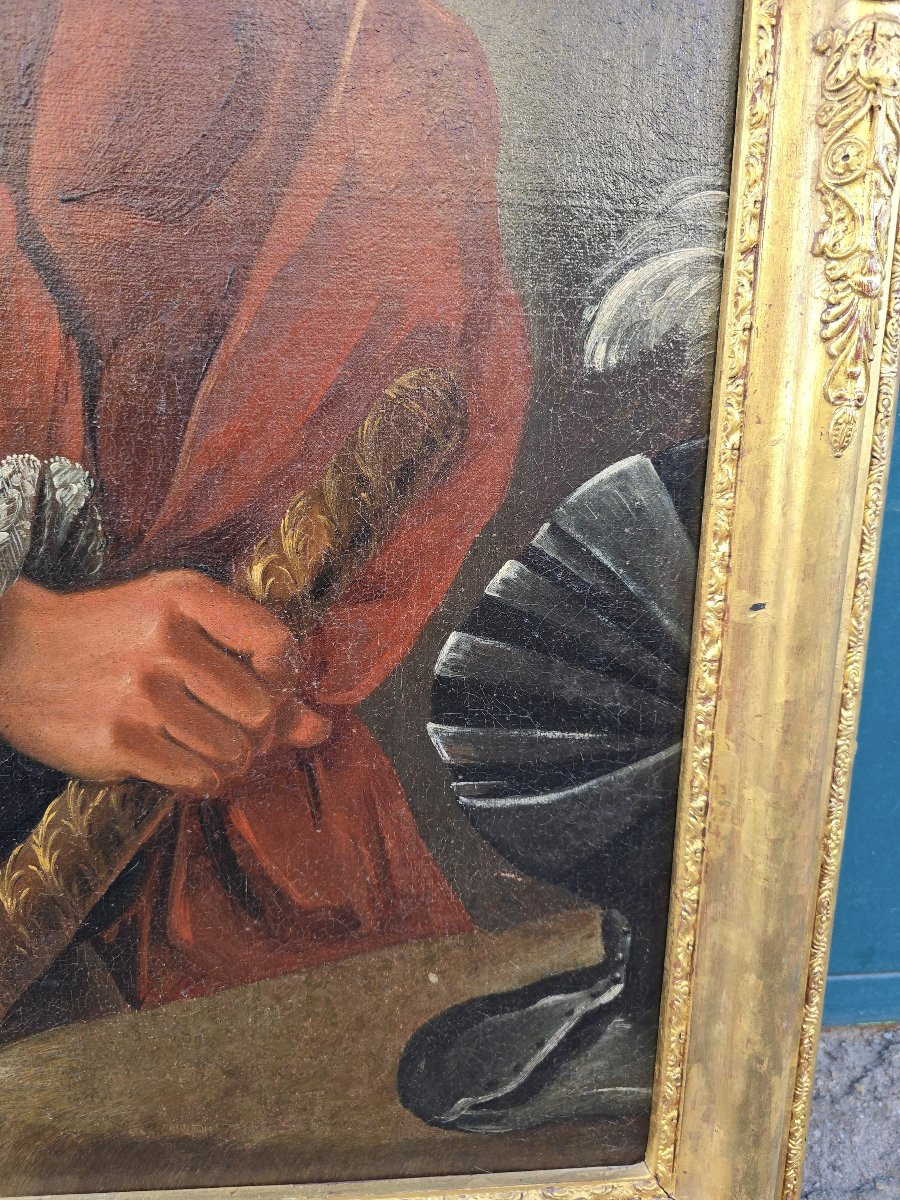
Circle of Giuseppe Bonito (Castellammare di Stabia, 1707 – Naples, 1789). "Portrait of Charles of Bourbon as King of Naples." Oil on relined canvas. 19th-century frame. Dimensions: 102.5 x 80 cm; 118 x 93.5 cm (framed). This work is inspired by the portrait "Charles of Bourbon, King of the Two Sicilies," painted in 1745 by Giuseppe Bonito and held at the Prado Museum in Madrid. It depicts Charles III in military uniform, his helmet resting on a table, holding his baton of command. Unlike the Prado painting, where the background opens onto a landscape, here the focus is more on the figure, which stands out clearly against a neutral background. In this painting, Charles III is shown in three-quarter view, in the purest tradition of the Neapolitan Rococo style, of which Giuseppe Bonito was one of the leading figures. Bonito's influence is evident in the satiny color of the sumptuous velvet cloak, the gold brocade, and the delicate lace of the sleeves. The subject's face, with its subtly rosy complexion, conveys an aristocratic personality befitting his rank. Giuseppe Bonito was one of the most influential Neapolitan painters of the 18th century. A pupil of Francesco Solimena, he nevertheless quickly embraced the Rococo style. It was his portraits that opened the doors of the Neapolitan court to him, as well as numerous commissions for altarpieces and frescoes for churches. As court painter, in 1741 he created a strikingly realistic portrait of the Ottoman Sultan's embassy in Naples, a canvas immediately sent to Madrid and now housed in the Prado Museum. Around 1745, he painted the portraits of Charles VII of the Two Sicilies, the future Charles III of Spain, and his wife, Queen Maria Amalia of Saxony, now in the Prado Museum. The portrait of the Infantes Ferdinand and Gabriel, displayed in the Palace of Caserta, is particularly noteworthy. Painted shortly before the proclamation of Ferdinand, then only eight years old, as King of Naples, it depicts them in their study, compass in hand, before a globe. In 1751, he was appointed court painter, then member of the Academy of Saint Luke in Rome in 1752, director of the newly established Academy of Fine Arts in Naples in 1755 and director of the Royal Tapestry Manufactory of Naples, for which he produced a series of allegorical and literary cartoons, including the first cartoons for a series of illustrations of Don Quixote woven between 1758 and 1779 for the Royal Palace of Caserta.
5 250 €
Period: 18th century
Style: Other Style
Condition: Excellent condition
Material: Oil painting
Reference (ID): 1683611
Availability: In stock
Print