THIS OBJECT WAS SOLD
A Late 17th Century Spanish Devotional Pendant.


H. 4 cm (1 ⁵/₈ inches)
Total weight 10,78 gr
Spain, Late 17th century
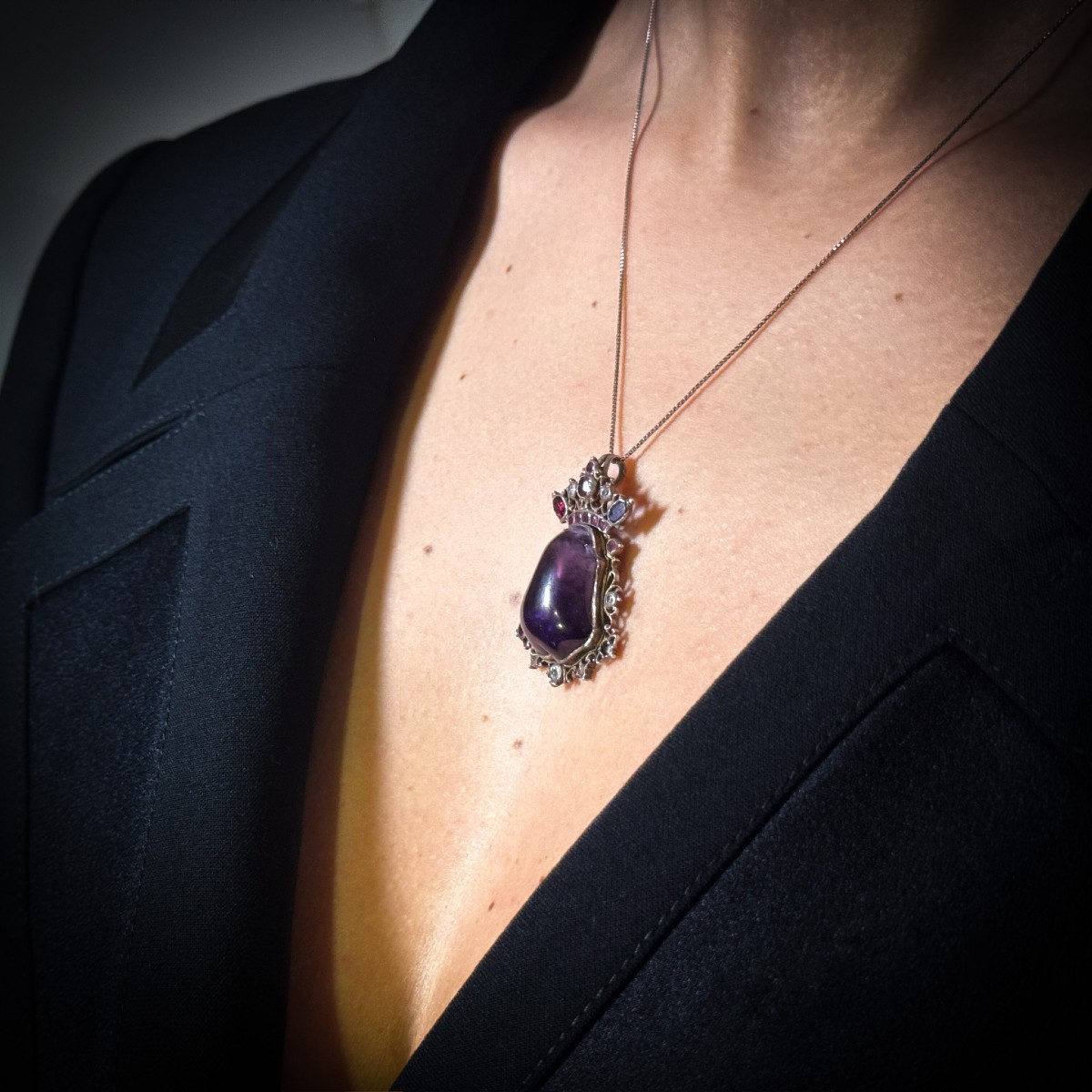
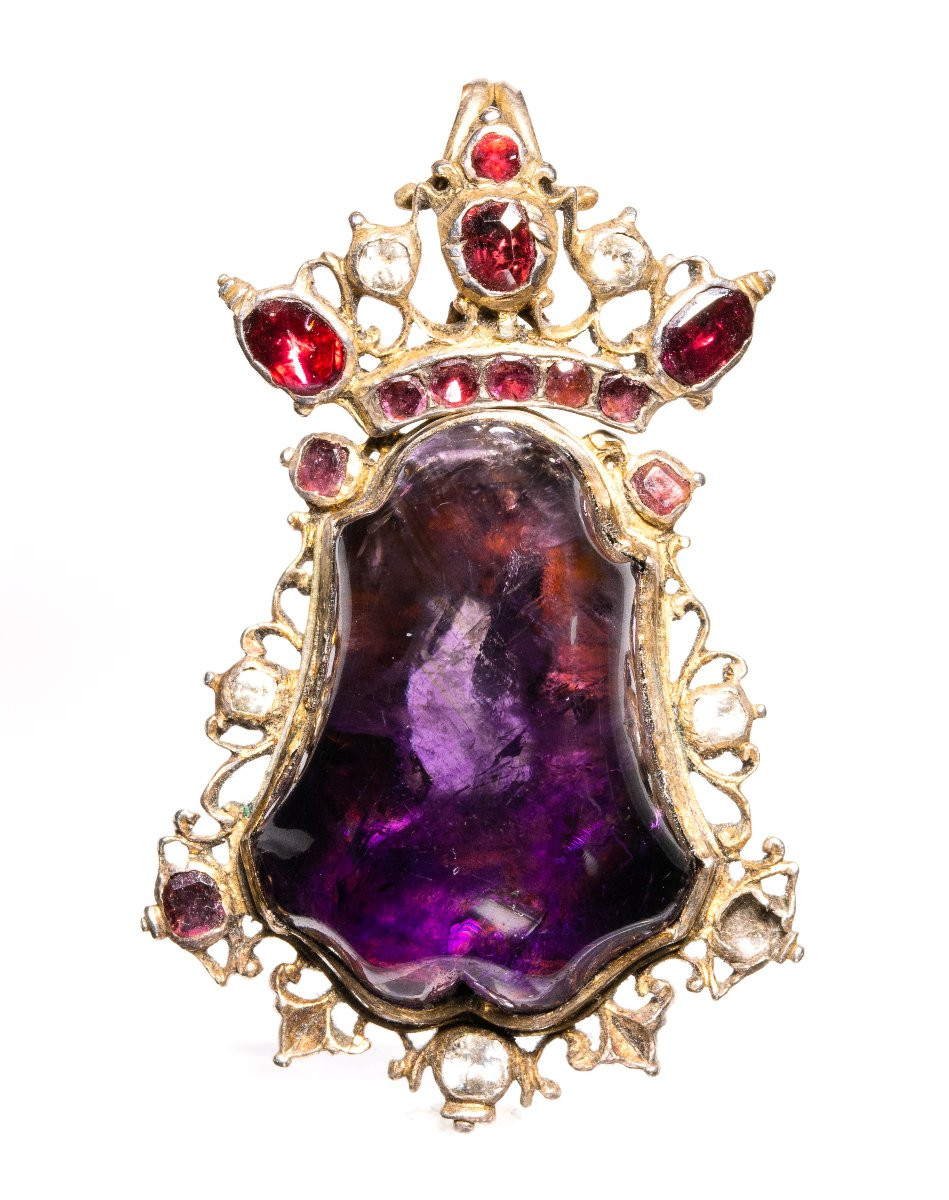
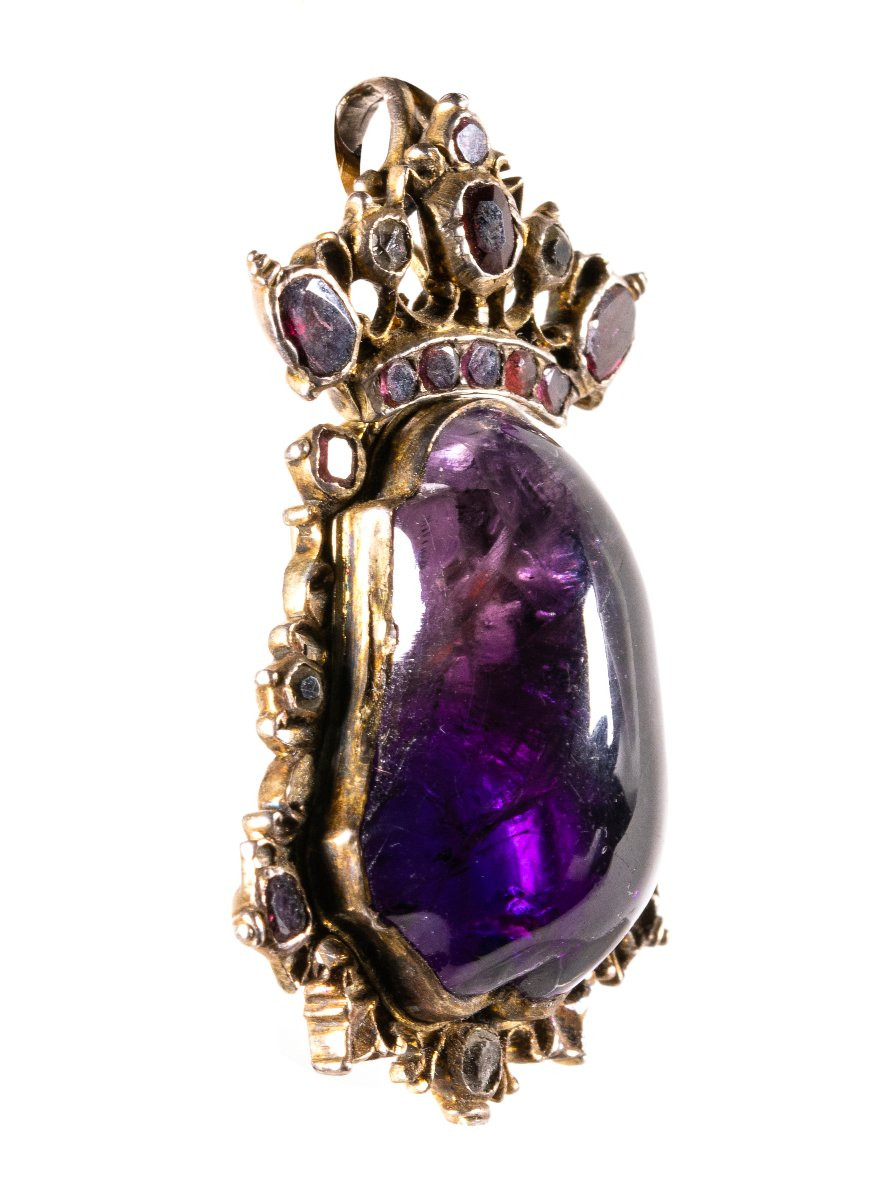
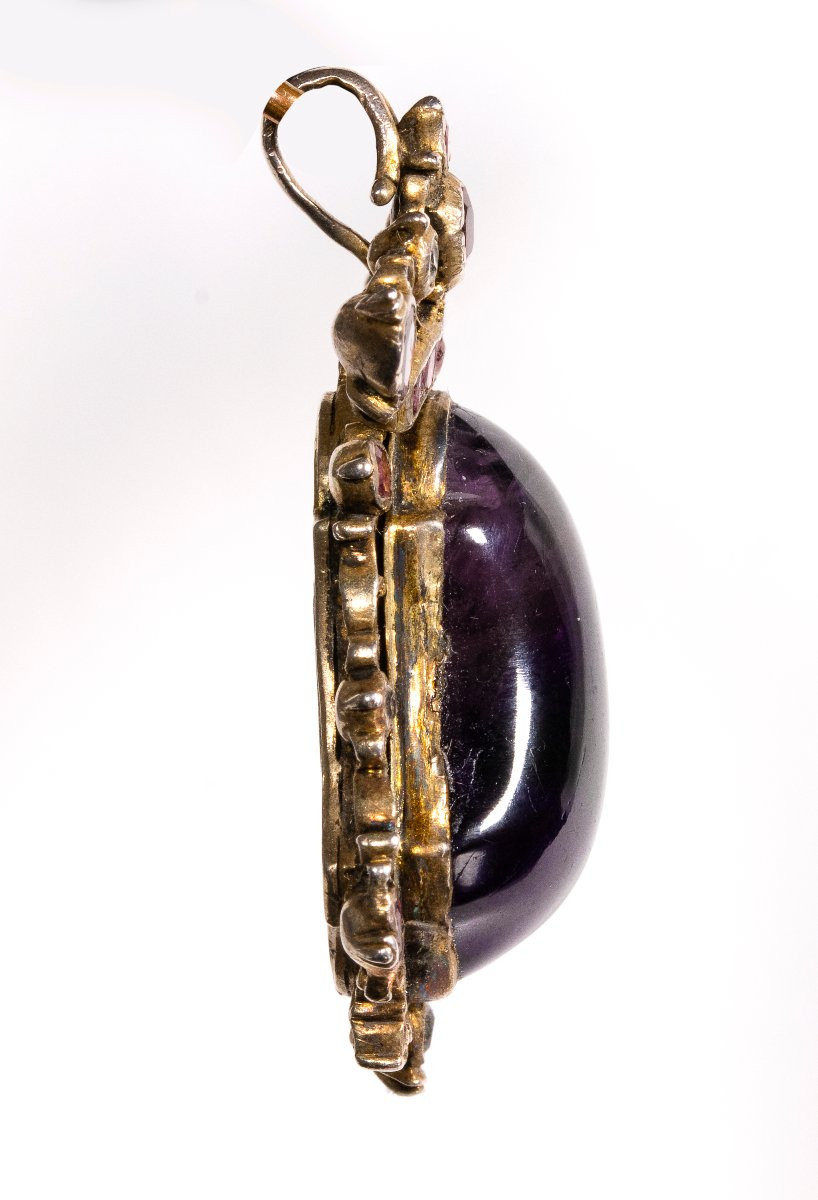
A magnificent gilded silver devotional pendant in the shape of a bell, surmounted by an elaborate crown set with garnets and diamonds. The central body showcases a large convex amethyst of deep violet hue, its irregular cabochon form adding to the organic, mystical quality of the piece. The gemstone is framed by an openwork scrolling mount punctuated with garnets and table-cut diamonds. The reverse features highly intricate pierced decoration characteristic of Spanish Baroque goldsmithery.
HISTORICAL FUNCTION & USE
Spain in the late 17th century, under the reign of Charles II (1665–1700), was a profoundly devout Catholic society. The Counter-Reformation had intensified religious fervour, and devotional jewellery became an essential expression of personal piety, spiritual protection, and social identity.
SYMBOLISM OF SHAPE AND STONES
Devotional pendants such as this one served multiple purposes in 17th-century Spain: worn close to the heart as constant reminders of faith, they offered talismanic protection and often contained relics or sacred images. Gemstones were believed to possess spiritual properties — the amethyst symbolising piety and protection, garnets evoking Christ's sacrifice, and diamonds representing purity and eternal faith. The richness of materials also reflected the wearer's social standing and devotion to the Church. The bell shape held deep religious significance: bells called the faithful to prayer and warded off evil spirits, while the crowned summit evoked the celestial kingdom and the Virgin Mary as Queen of Heaven. Such pieces were often commissioned as ex-votos, offerings of gratitude for answered prayers.
This pendant perfectly exemplifies the exuberant Spanish Baroque style — rich, colourful, and deeply emotive. The openwork decoration (calado) on the reverse demonstrates the virtuosity of Spanish goldsmiths, who were renowned throughout Europe for their exceptionally fine metalwork. Such pieces were often produced in major centres such as Madrid, Seville, Toledo, and Valencia.
Total weight 10,78 gr
Spain, Late 17th century
A magnificent gilded silver devotional pendant in the shape of a bell, surmounted by an elaborate crown set with garnets and diamonds. The central body showcases a large convex amethyst of deep violet hue, its irregular cabochon form adding to the organic, mystical quality of the piece. The gemstone is framed by an openwork scrolling mount punctuated with garnets and table-cut diamonds. The reverse features highly intricate pierced decoration characteristic of Spanish Baroque goldsmithery.
HISTORICAL FUNCTION & USE
Spain in the late 17th century, under the reign of Charles II (1665–1700), was a profoundly devout Catholic society. The Counter-Reformation had intensified religious fervour, and devotional jewellery became an essential expression of personal piety, spiritual protection, and social identity.
SYMBOLISM OF SHAPE AND STONES
Devotional pendants such as this one served multiple purposes in 17th-century Spain: worn close to the heart as constant reminders of faith, they offered talismanic protection and often contained relics or sacred images. Gemstones were believed to possess spiritual properties — the amethyst symbolising piety and protection, garnets evoking Christ's sacrifice, and diamonds representing purity and eternal faith. The richness of materials also reflected the wearer's social standing and devotion to the Church. The bell shape held deep religious significance: bells called the faithful to prayer and warded off evil spirits, while the crowned summit evoked the celestial kingdom and the Virgin Mary as Queen of Heaven. Such pieces were often commissioned as ex-votos, offerings of gratitude for answered prayers.
This pendant perfectly exemplifies the exuberant Spanish Baroque style — rich, colourful, and deeply emotive. The openwork decoration (calado) on the reverse demonstrates the virtuosity of Spanish goldsmiths, who were renowned throughout Europe for their exceptionally fine metalwork. Such pieces were often produced in major centres such as Madrid, Seville, Toledo, and Valencia.
Explore similar pieces and discover your ideal find:
Pendants, Lockets