THIS OBJECT WAS SOLD
Sculpture - The Roaring Tiger , Omori Mitsumoto , Also Known As Kôgen - Bronze

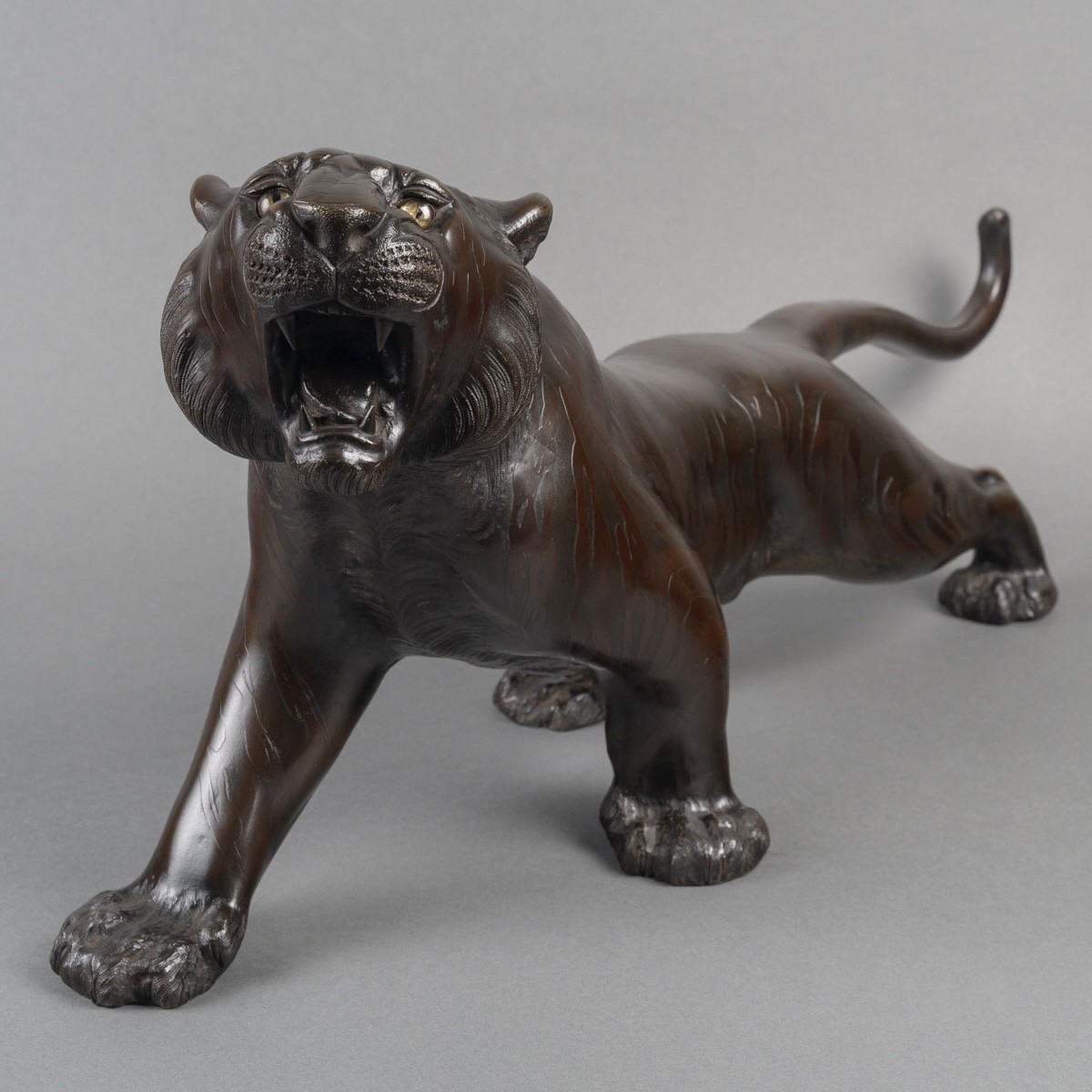
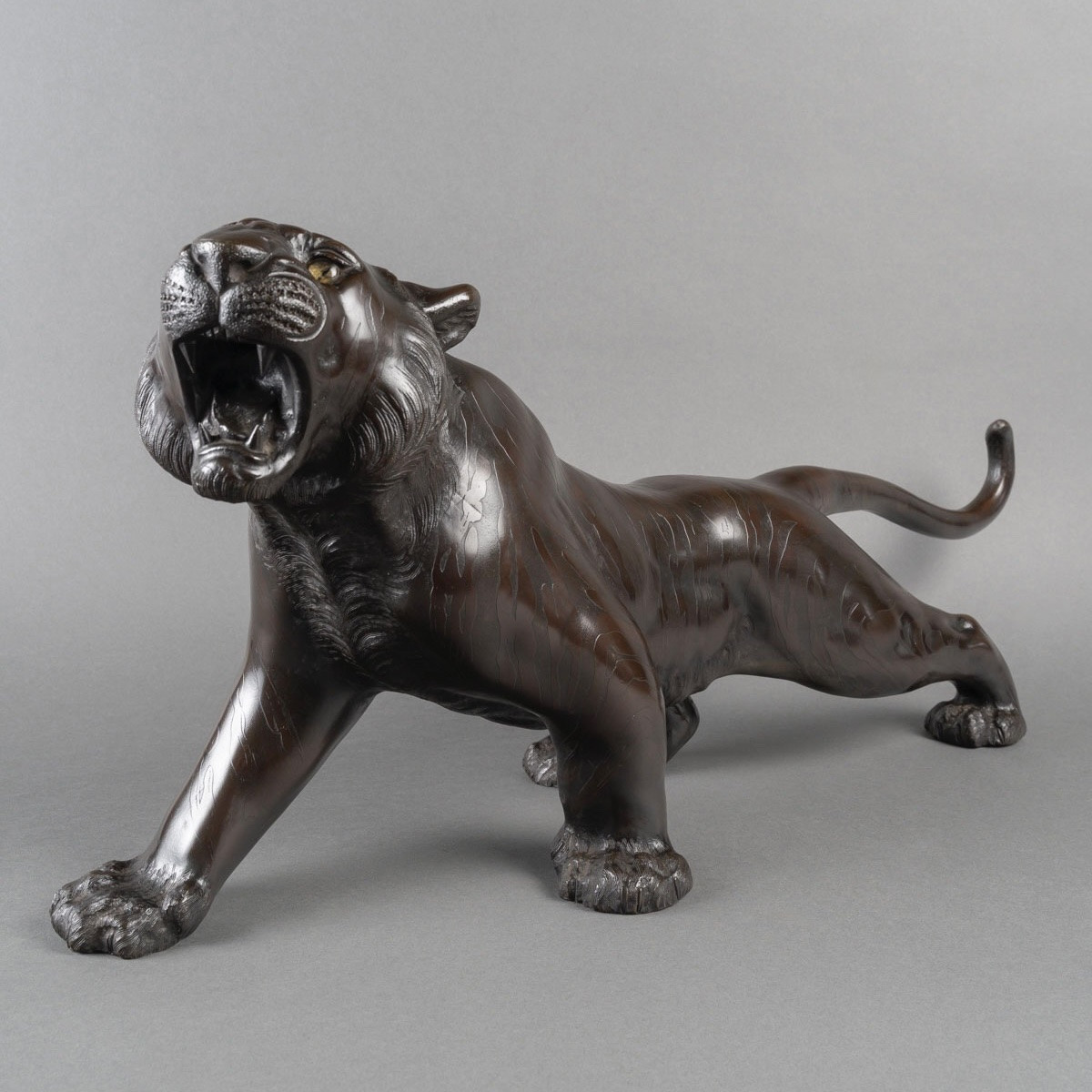


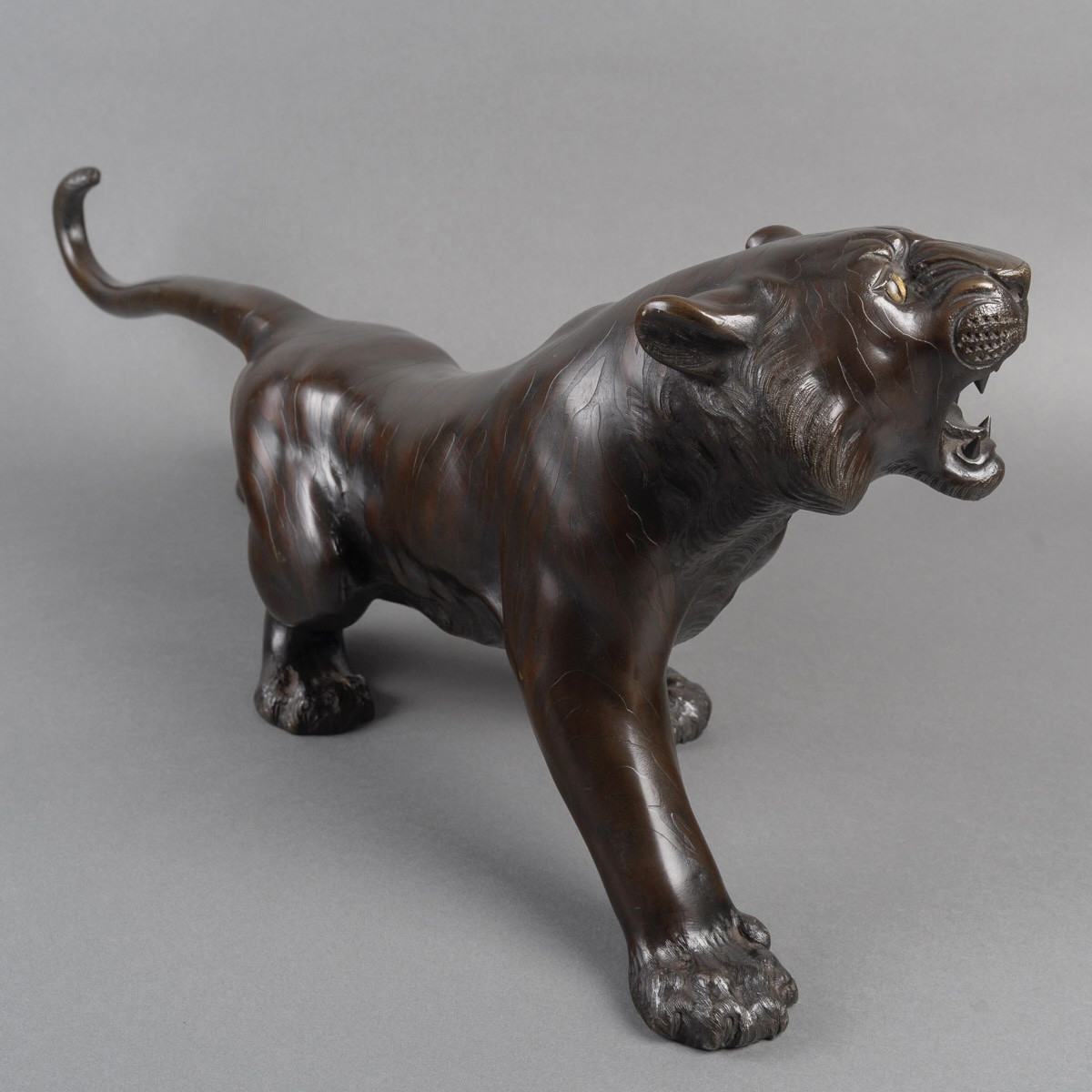
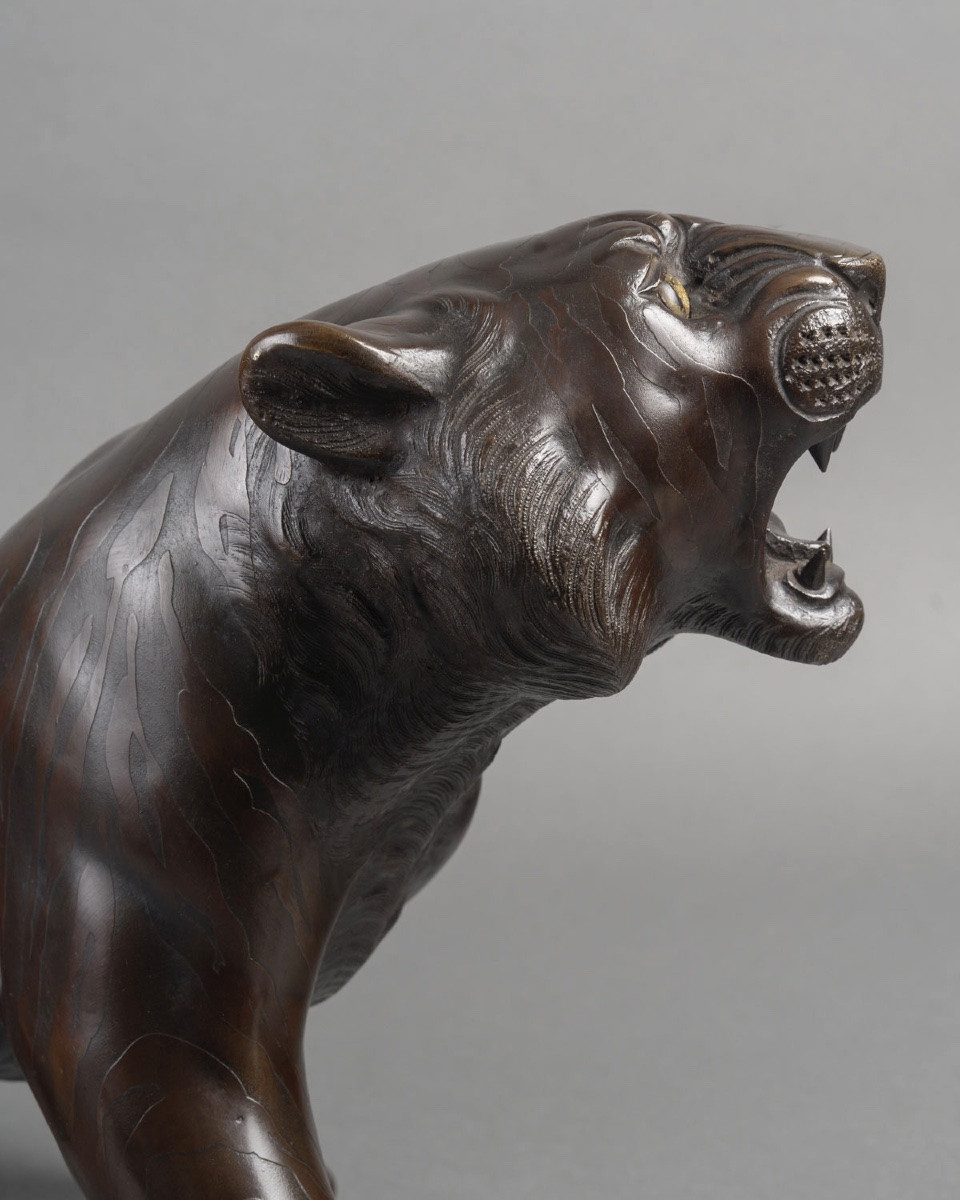
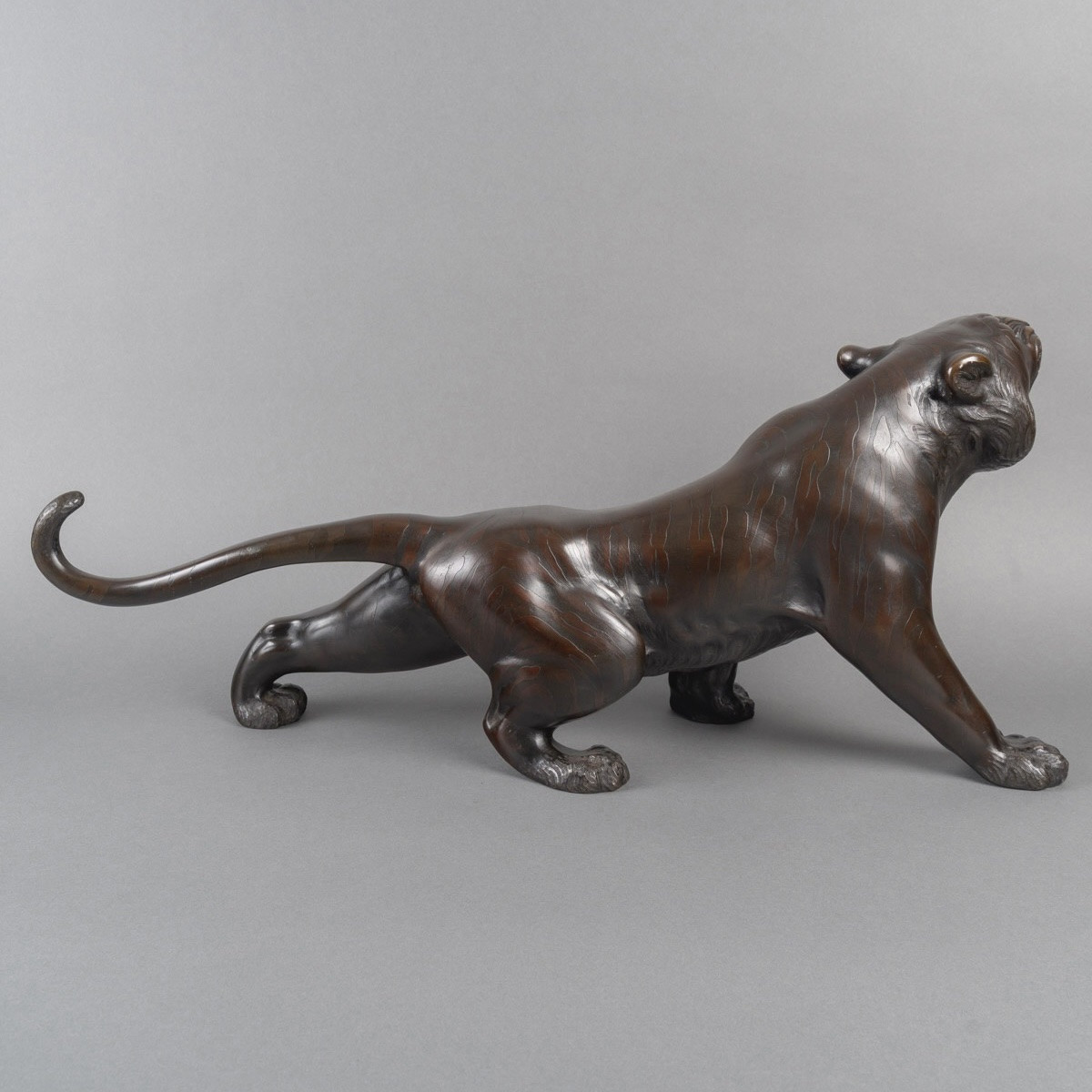
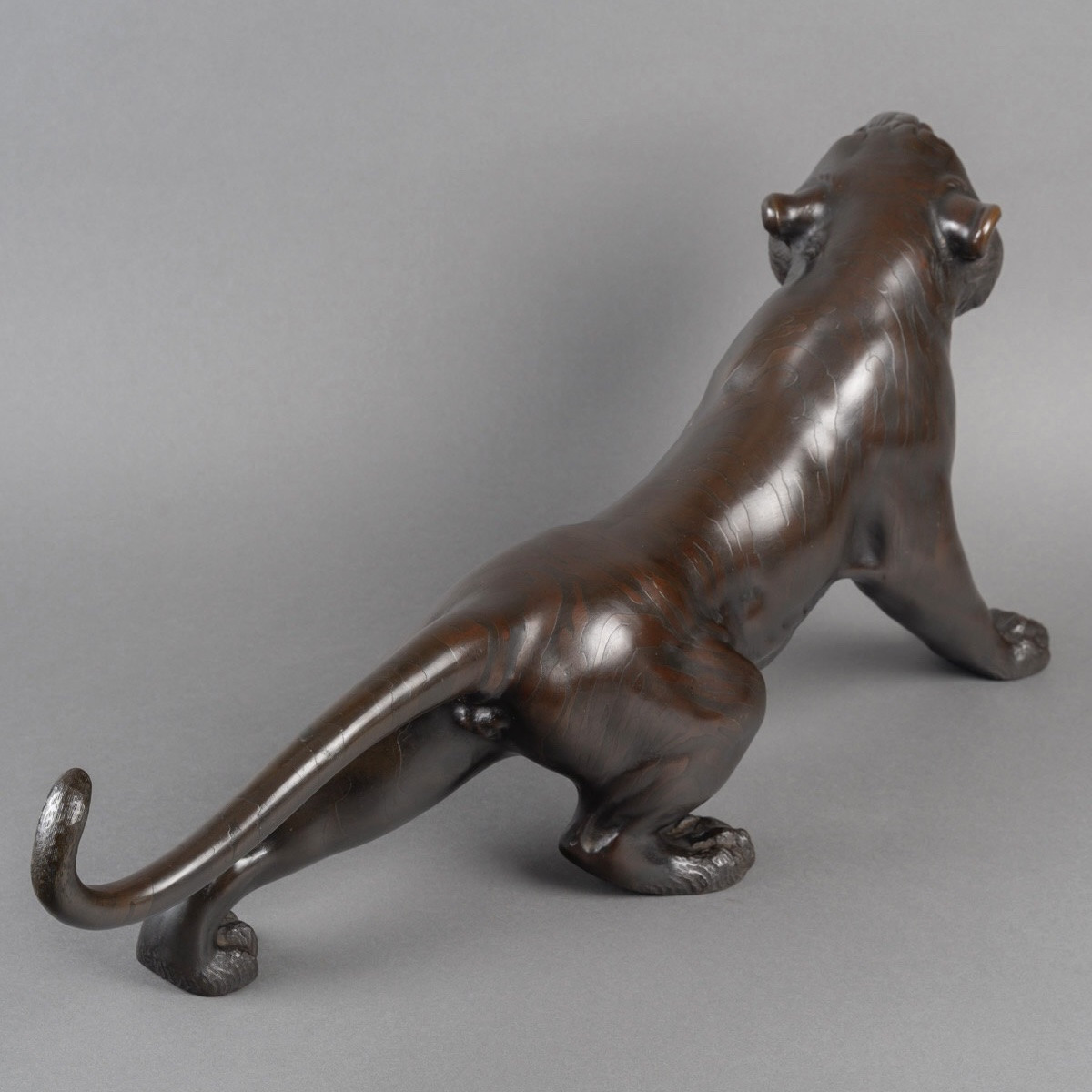
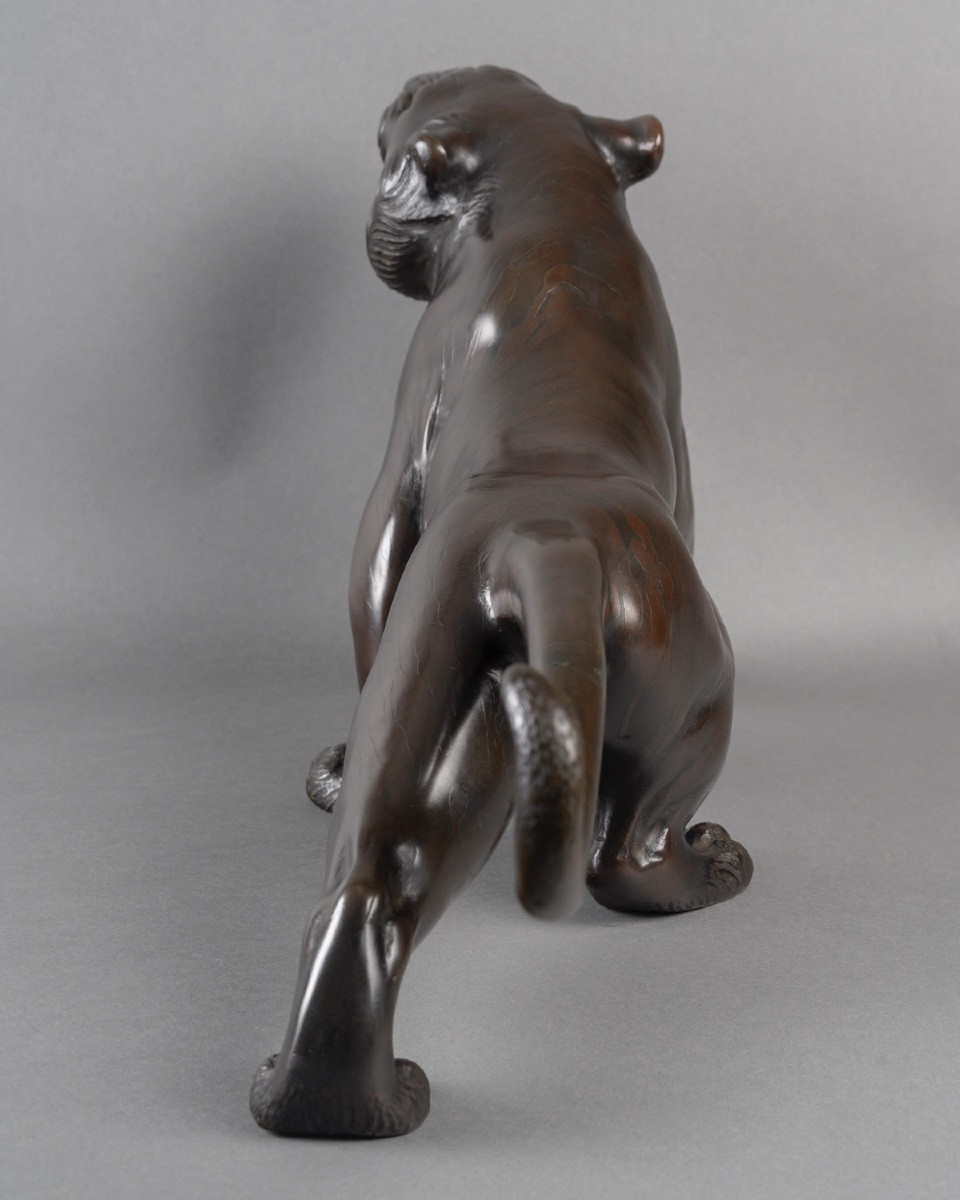
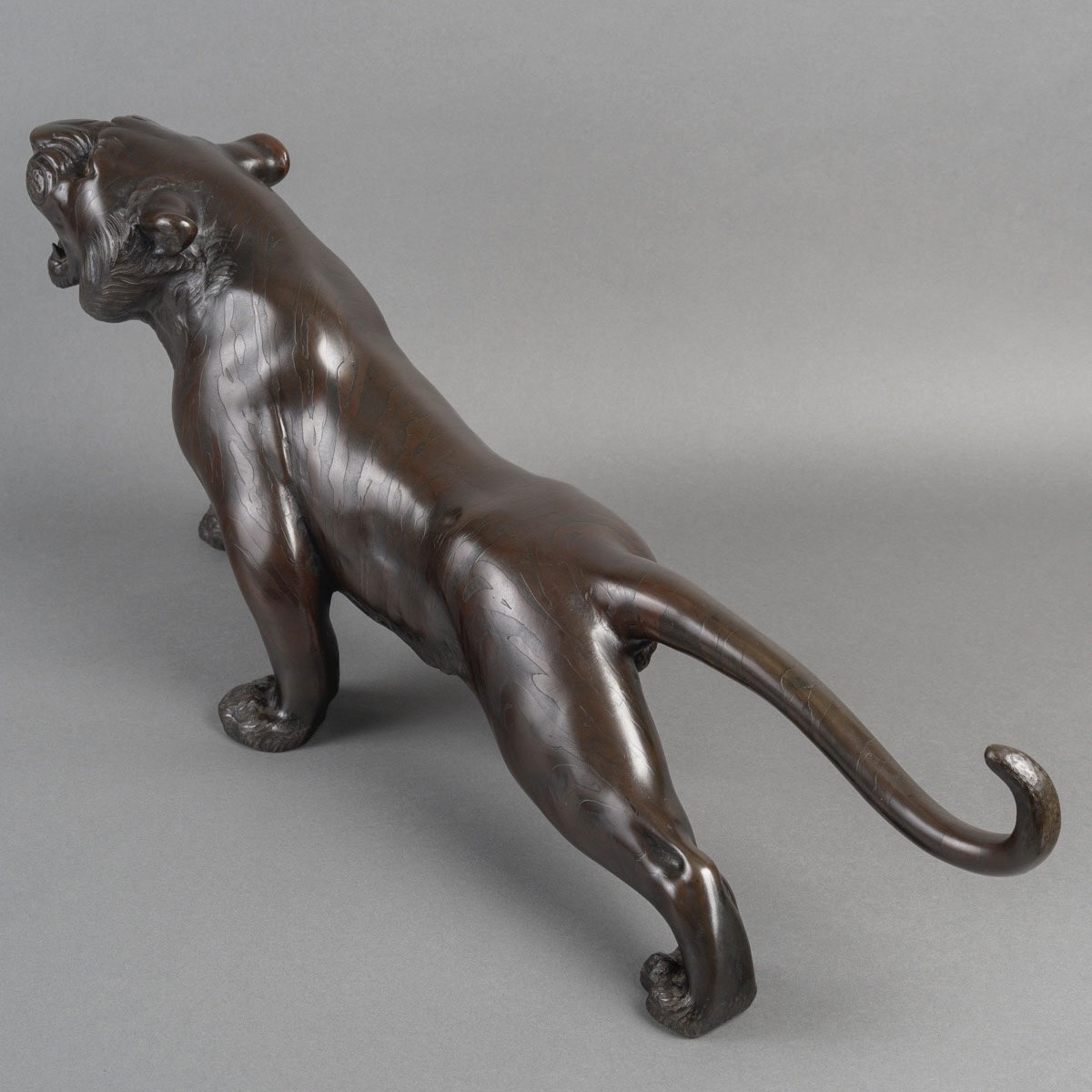


A remarkable Japanese bronze sculpture , from the Meiji period (1868-1912) , depicting a roaring tiger , by the sculptor Omori Mitsumoto , also known as Kogen .
In Japanese culture , the tiger is often associated with strength , courage, and protection .
It is considered a guardian , a protective animal capable of warding off demons and evil spirits .
At a time when Japan was seeking to define itself in the face of imperialist powers , the tiger became an emblem of the Japanese aspirations to assert themselves on the world stage , to rival Western powers , and to claim their place in the modern world .
It represented a Japan capable of resisting and defending itself against external threats .
In this context , it symbolizes not only military strength but also the cultural pride and adaptability of a society embracing change . The values of honesty , loyalty , and hard work are often associated with the tiger in popular culture .
In short , the representation of the tiger during Japan's modernization period reflects the tensions and aspirations of a society undergoing profound transformation .
It illustrates a delicate balance between respect for tradition and the aspiration for a future full of strength and pride .
This is an early edition sculpture from the Meiji period , signed by the Japanese sculptor Omori Mitsumoto , also known as Kogen , in a seal on the tiger's belly .
Omori Mitsumoto , also known as Kogen , stands out from other artists of the Meiji era due to his commitment to tradition while subtly integrating elements of modernity .
Kogen's art typically features harmonious and balanced compositions , incorporating elements of symmetry and perspective, but often with a unique interpretation all his own .
Renowned for his incredible ability to render realism in his works , particularly in his depictions of tigers , he integrates symbolic and cultural elements specific to Japanese culture .
He adds an extra dimension to his representations , making his works not only realistic but also imbued with meaning .
Unlike some of his contemporaries who fully embraced Western styles , Kogen created a unique space that celebrates Japanese identity while responding to the socio-cultural changes of the time .
Dimensions : 26.5 cm x 61 cm
In Japanese culture , the tiger is often associated with strength , courage, and protection .
It is considered a guardian , a protective animal capable of warding off demons and evil spirits .
At a time when Japan was seeking to define itself in the face of imperialist powers , the tiger became an emblem of the Japanese aspirations to assert themselves on the world stage , to rival Western powers , and to claim their place in the modern world .
It represented a Japan capable of resisting and defending itself against external threats .
In this context , it symbolizes not only military strength but also the cultural pride and adaptability of a society embracing change . The values of honesty , loyalty , and hard work are often associated with the tiger in popular culture .
In short , the representation of the tiger during Japan's modernization period reflects the tensions and aspirations of a society undergoing profound transformation .
It illustrates a delicate balance between respect for tradition and the aspiration for a future full of strength and pride .
This is an early edition sculpture from the Meiji period , signed by the Japanese sculptor Omori Mitsumoto , also known as Kogen , in a seal on the tiger's belly .
Omori Mitsumoto , also known as Kogen , stands out from other artists of the Meiji era due to his commitment to tradition while subtly integrating elements of modernity .
Kogen's art typically features harmonious and balanced compositions , incorporating elements of symmetry and perspective, but often with a unique interpretation all his own .
Renowned for his incredible ability to render realism in his works , particularly in his depictions of tigers , he integrates symbolic and cultural elements specific to Japanese culture .
He adds an extra dimension to his representations , making his works not only realistic but also imbued with meaning .
Unlike some of his contemporaries who fully embraced Western styles , Kogen created a unique space that celebrates Japanese identity while responding to the socio-cultural changes of the time .
Dimensions : 26.5 cm x 61 cm
Explore similar pieces and discover your ideal find:
Bronze Animal Sculptures