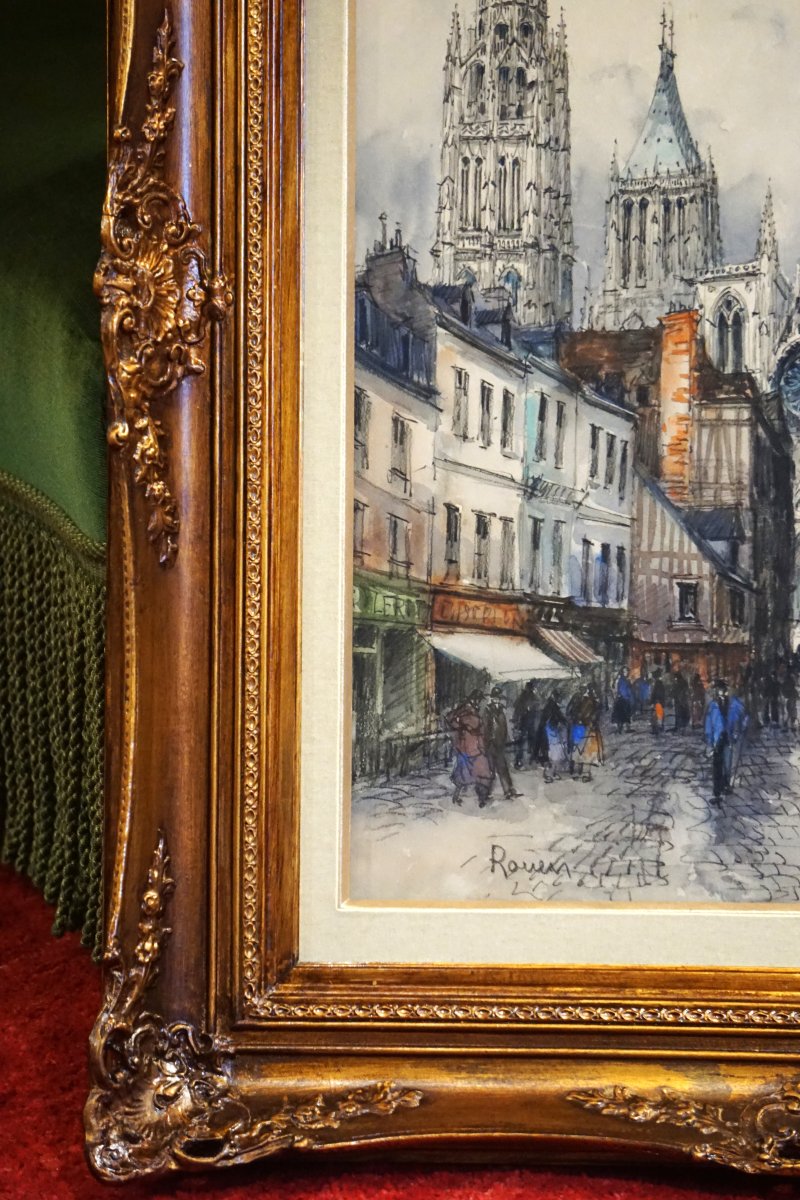
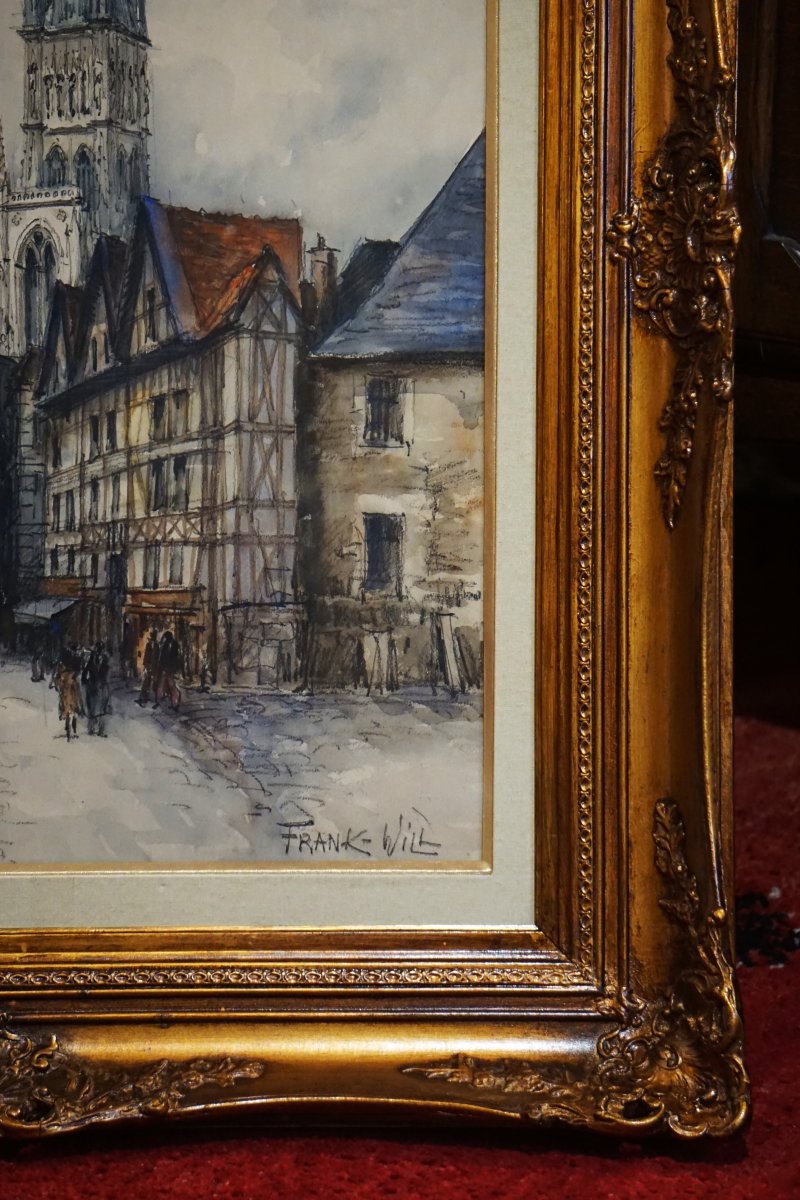


Rouen Cathedral / Normandy / Frank Will (1900–1951) / Circa 1930 / Watercolor
Artist: Frank William Boggs Dit Frank Will (1900–1951)
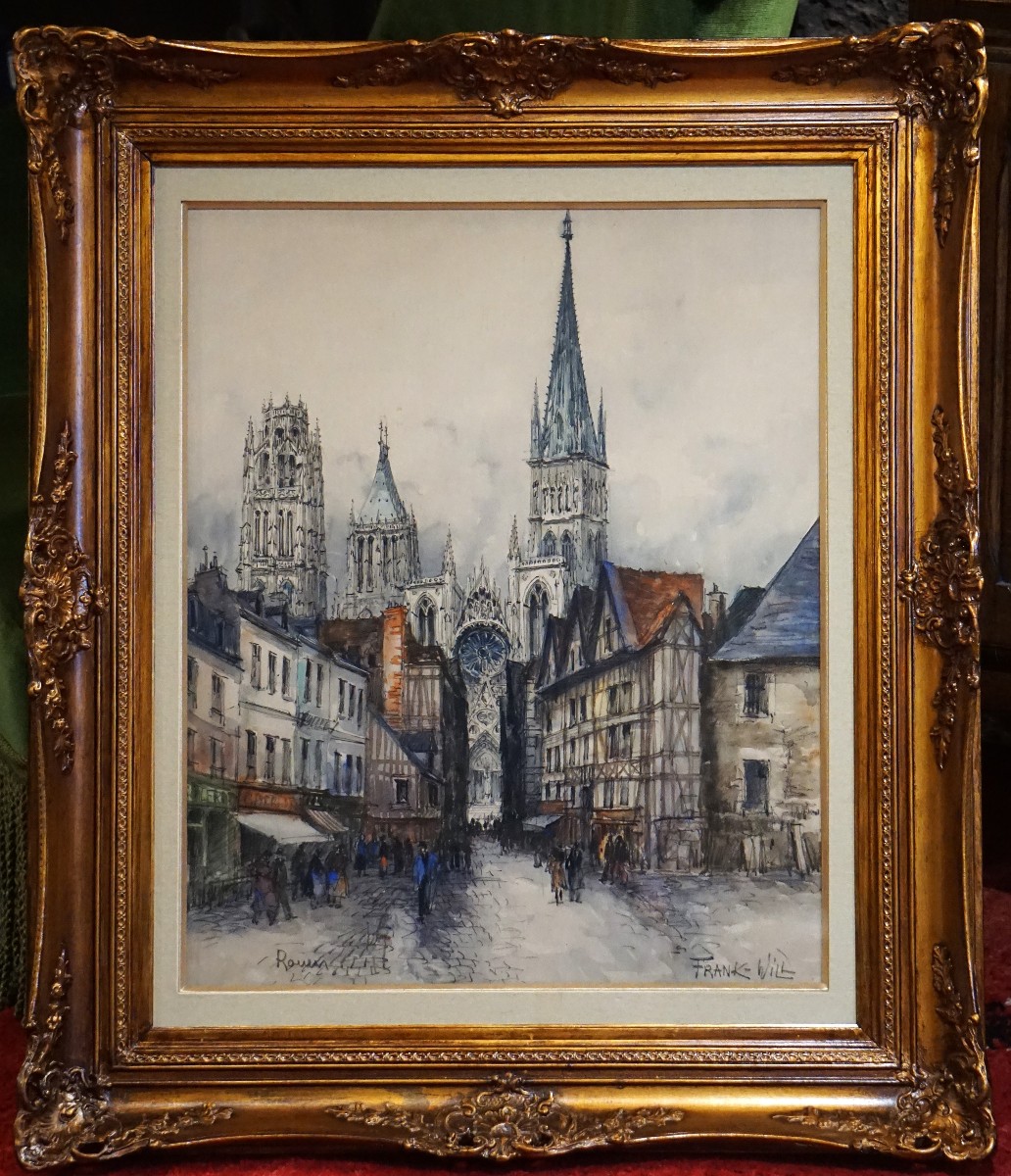
Frank William Boggs, known as Frank Will (1900–1951) Rouen Cathedral, circa 1930s
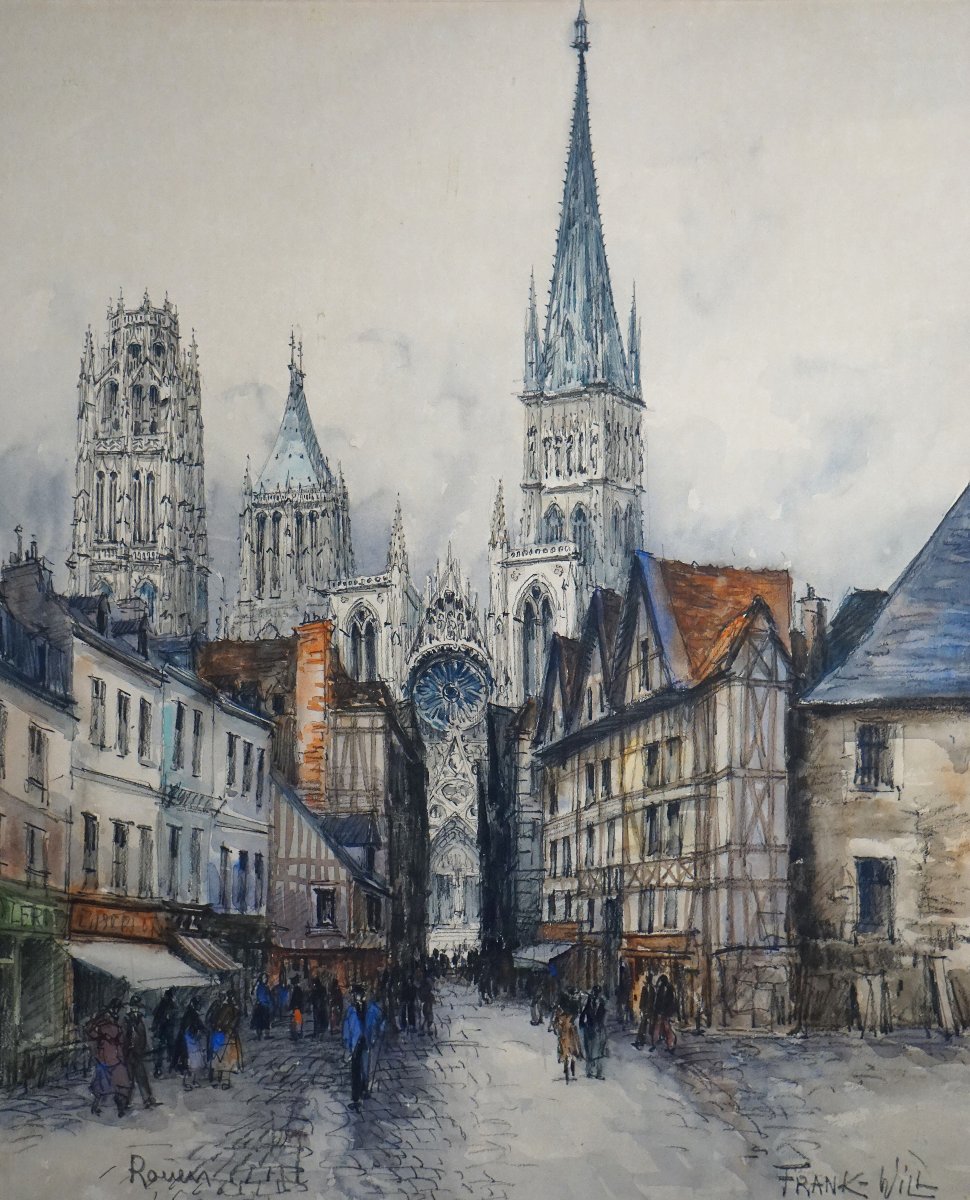
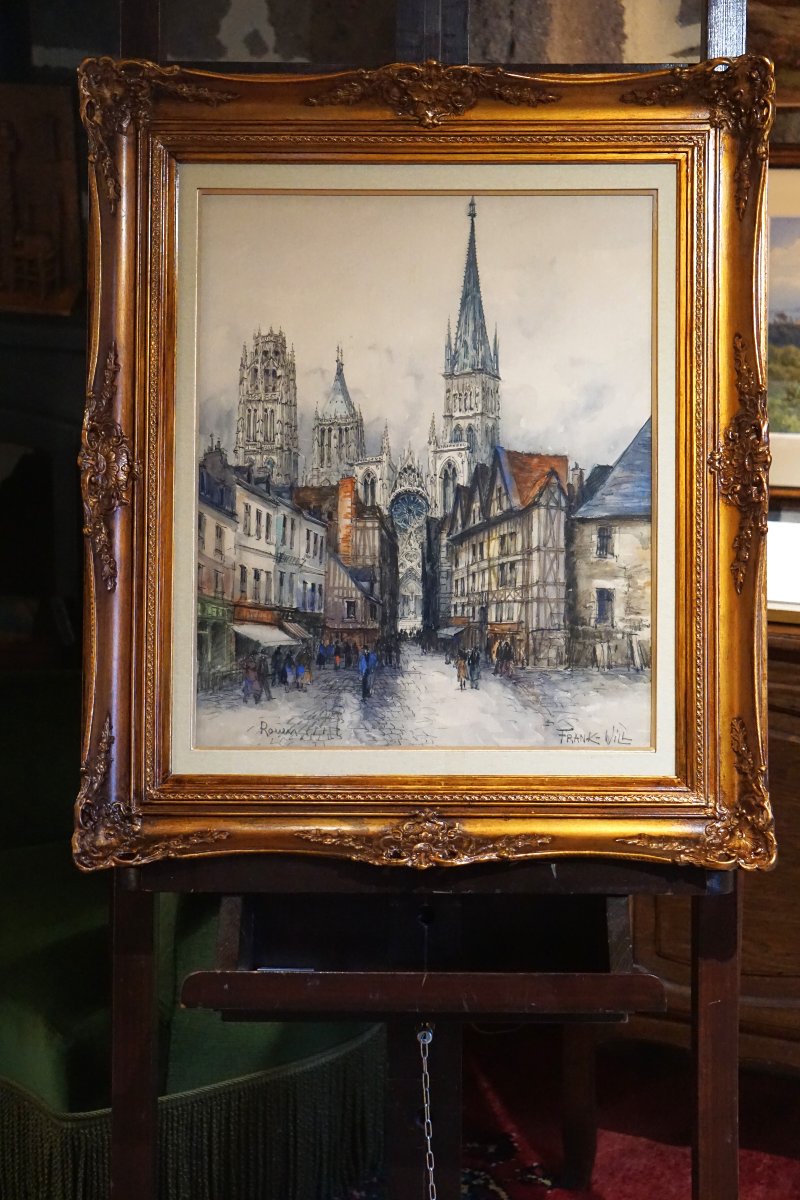
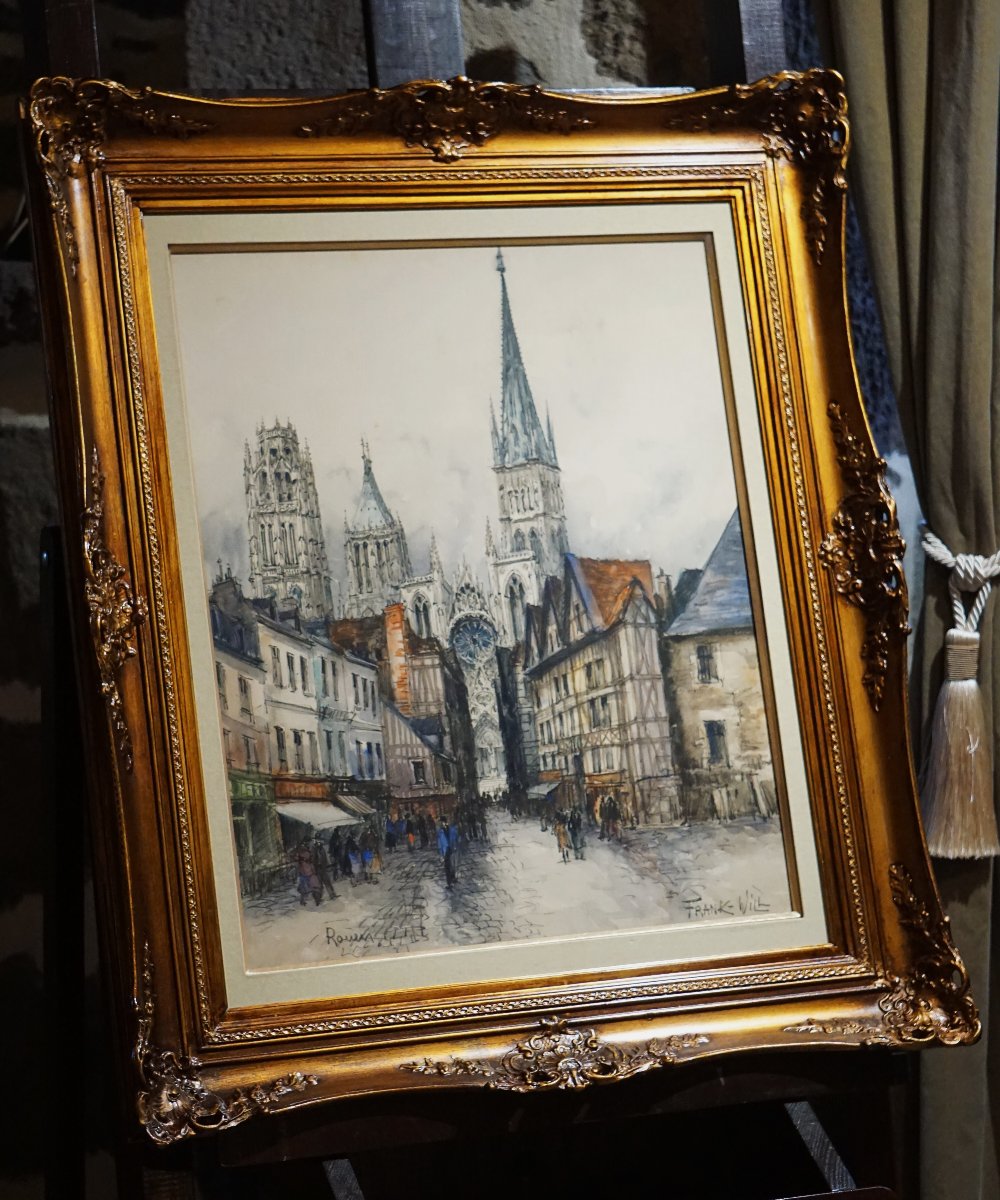
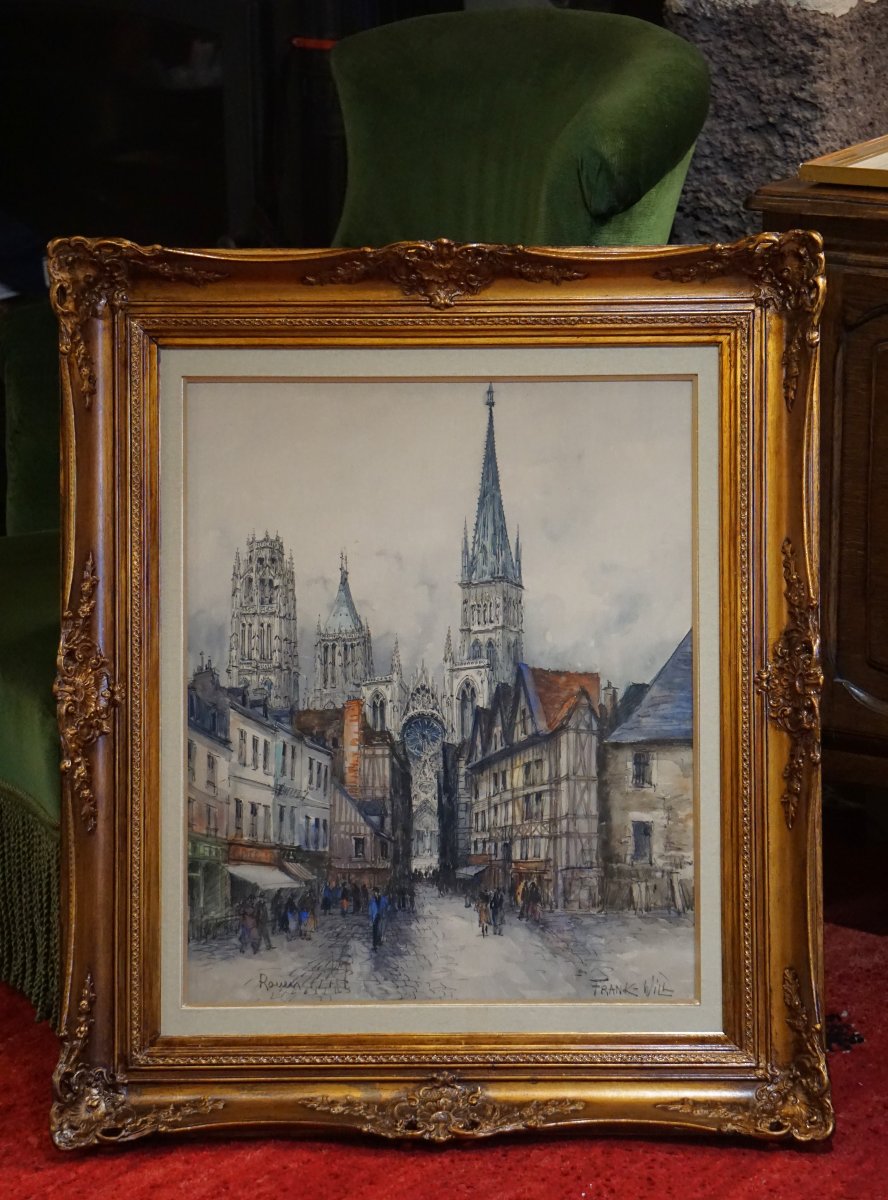
Watercolor, signed lower right, inscribed "Rouen" lower left.
54 x 44 cm (sight size), 78 x 67 cm (framed).
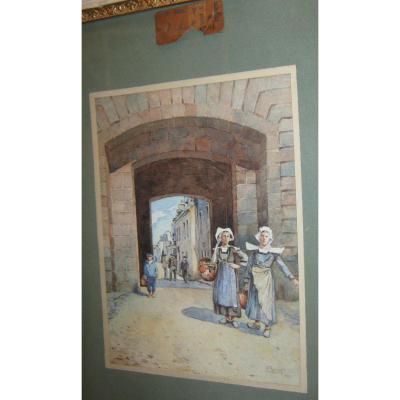
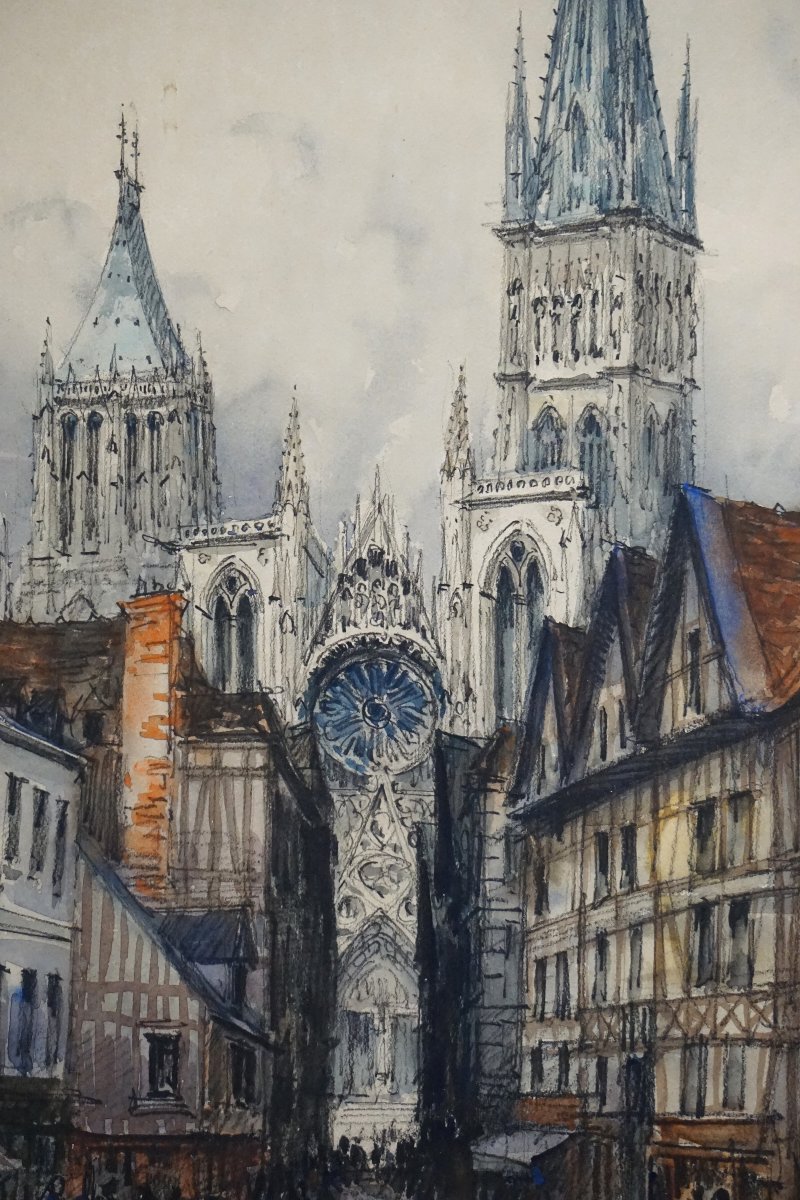
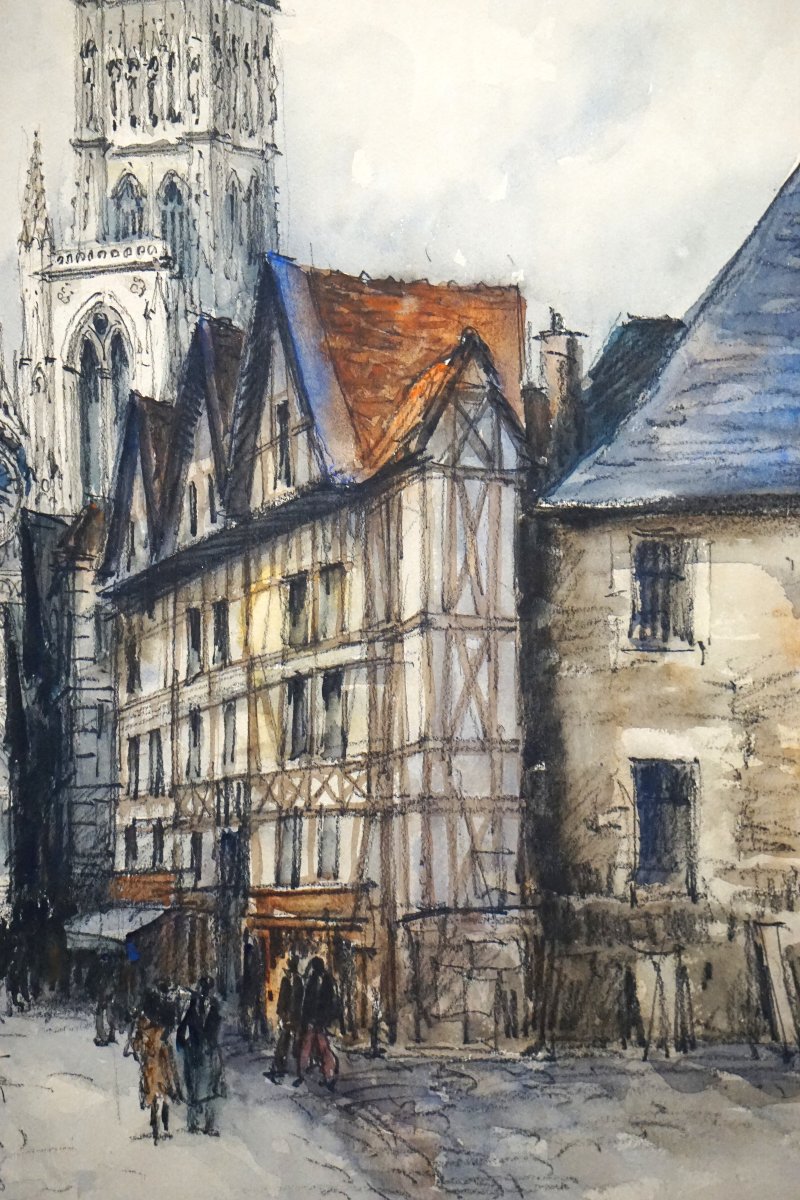
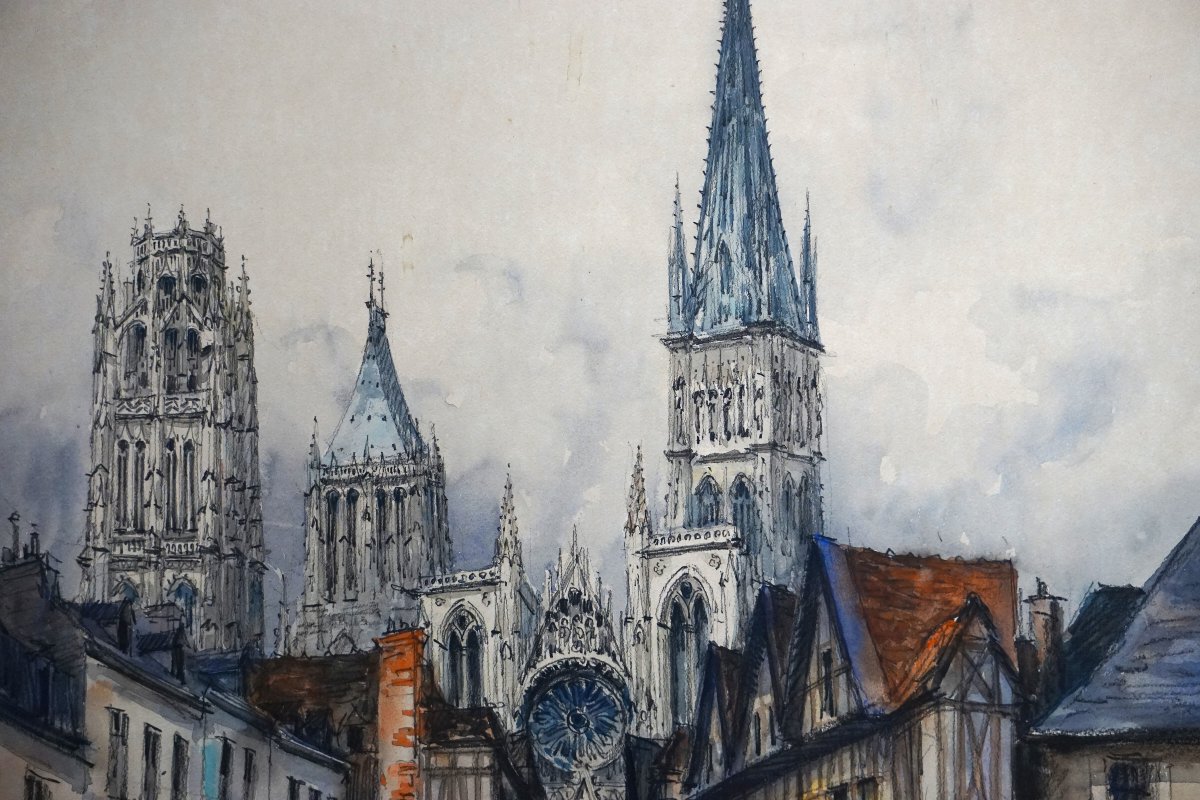
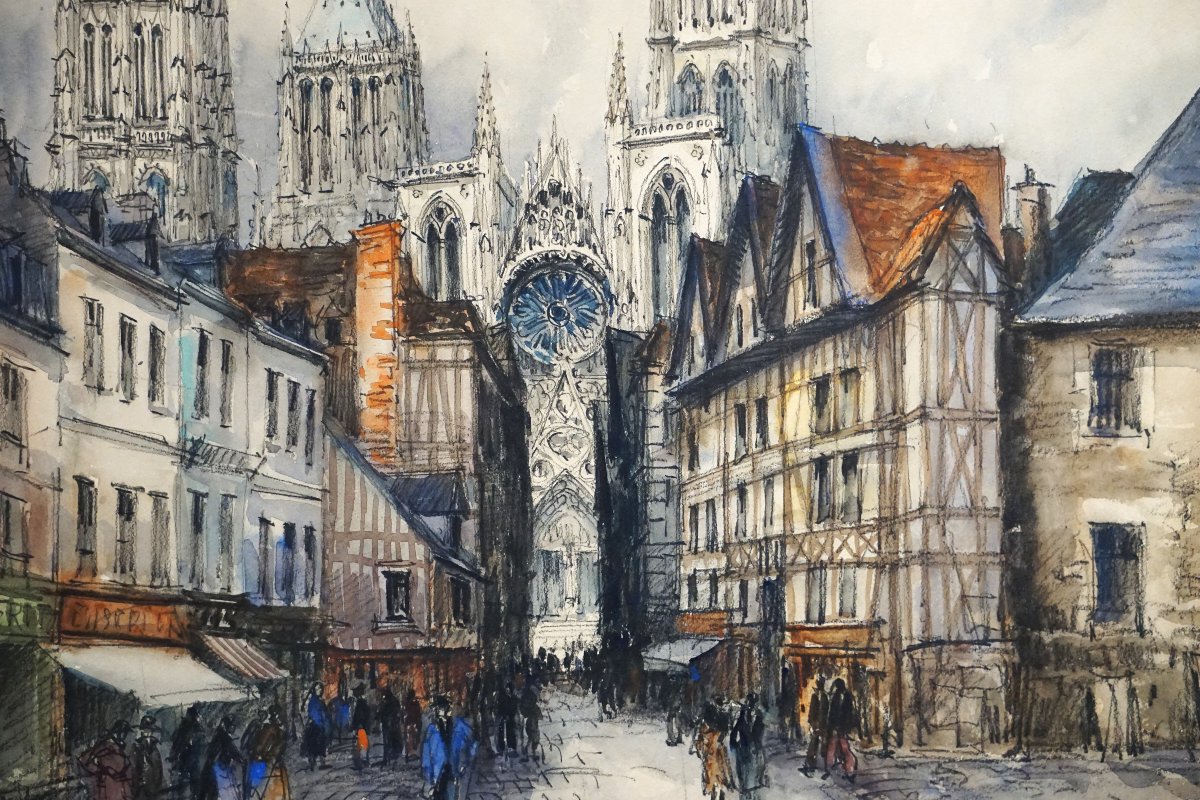
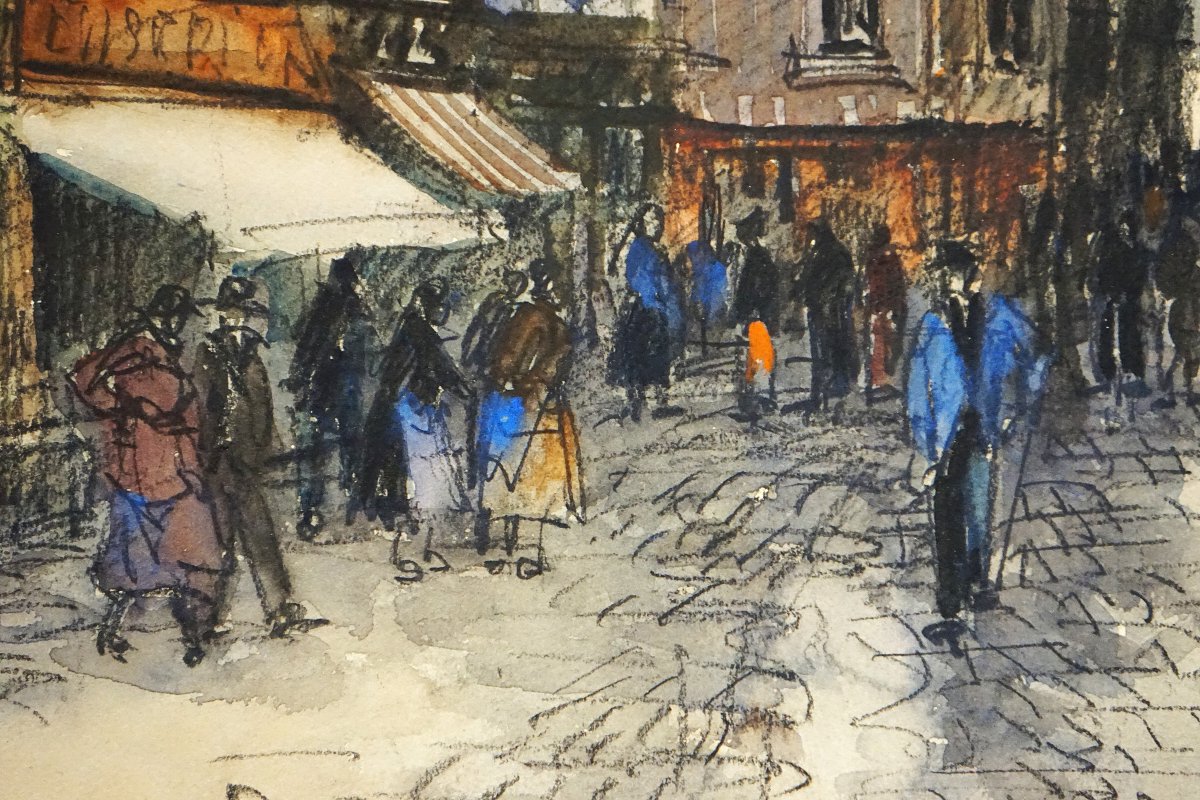
This watercolor depicts Rouen Cathedral as seen from the Rue de l'Épicerie, an old street in the historic center offering a narrow and profoundly structuring perspective of the building's west facade. This very precise angle, framing the cathedral between old half-timbered houses, has been a favored vantage point for many artists, both for its visual impact and for the contrast it creates between the monumental Gothic architecture and the medieval urban landscape. This perspective was notably exploited by Camille Pissarro, but also by several painters and draftsmen active between the late 19th and early 20th centuries, who found in this street a particularly expressive and immediately recognizable motif of Rouen. Frank Will demonstrates a masterful command of architectural drawing, combined with a confident and nuanced watercolor technique. The subtle washes, the deliberately limited palette, and the discreet animation of the street by sketched figures convey a sensitive and measured vision of the city. The clothing of the figures—straight coats, simple silhouettes, and an absence of worldly elements—strongly places the scene in the 1930s, at the heart of the interwar period, a time corresponding to the artist's artistic maturity. A work that is both documentary and poetic, this view of Rouen fits perfectly within the tradition of 20th-century French urban painting and constitutes a finished and decorative example of Frank Will's work.
Frank William Boggs, known by the pseudonym Frank Will (sometimes written Frank-Will), was a French-American painter and watercolorist born on March 13, 1900, in Nanterre. He was the son of painter Frank Myers Boggs, a prominent figure in harbor and urban scene painting, which introduced him to art at a very young age. After abandoning his architectural studies, he turned definitively to painting and gradually adopted his pseudonym from 1917 onwards, before officially adopting it in 1921 to distinguish himself from his father. Montmartre played a central role in his development: he frequented artists' studios there and befriended figures such as Gen Paul and Leprin, participating in the artistic and musical life of the neighborhood. From the late 1920s, Frank Will exhibited regularly in renowned Parisian galleries such as Georges Petit, Hector Brame, and Henri Bureau, and participated in group exhibitions. His work, primarily based on watercolors and urban scenes, explores motifs of Paris, Montmartre, Norman towns, ports, the Paris region, and even landscapes of Morocco, demonstrating a wide variety of subjects in a style oscillating between Post-Impressionism and Expressionism. Frank Will died on December 29, 1950, in Clichy (Seine) at the age of 50, following surgery, and was buried on January 4, 1951, in Père-Lachaise Cemetery in Paris. Frank Will's works are now held in several public collections, attesting to the institutional recognition of his work. These include the Musée d'Art et d'Histoire de Meudon, the Musée Lambinet in Versailles, the Musée des Beaux-Arts in Menton, the Petit Palais in Geneva, and, in the United States, the Mennello Museum of American Art (Orlando). After his death, his work was the subject of several major exhibitions, including Montmartre from yesterday to today at the Madeleine Horst gallery in 1951, Landscape and painting: Henri Marret, Frank Boggs, Frank-Will, André Dunoyer de Segonzac at the Meudon museum in 1981, or The landscapes of Mantes inspire artists at the Hôtel-Dieu in Mantes-la-Jolie in 2015-2016, confirming the lasting interest in his work and his place in 20th century French urban painting.
Watercolor, signed lower right, inscribed "Rouen" lower left.
54 x 44 cm (sight size), 78 x 67 cm (framed).
This watercolor depicts Rouen Cathedral as seen from the Rue de l'Épicerie, an old street in the historic center offering a narrow and profoundly structuring perspective of the building's west facade. This very precise angle, framing the cathedral between old half-timbered houses, has been a favored vantage point for many artists, both for its visual impact and for the contrast it creates between the monumental Gothic architecture and the medieval urban landscape. This perspective was notably exploited by Camille Pissarro, but also by several painters and draftsmen active between the late 19th and early 20th centuries, who found in this street a particularly expressive and immediately recognizable motif of Rouen. Frank Will demonstrates a masterful command of architectural drawing, combined with a confident and nuanced watercolor technique. The subtle washes, the deliberately limited palette, and the discreet animation of the street by sketched figures convey a sensitive and measured vision of the city. The clothing of the figures—straight coats, simple silhouettes, and an absence of worldly elements—strongly places the scene in the 1930s, at the heart of the interwar period, a time corresponding to the artist's artistic maturity. A work that is both documentary and poetic, this view of Rouen fits perfectly within the tradition of 20th-century French urban painting and constitutes a finished and decorative example of Frank Will's work.
Frank William Boggs, known by the pseudonym Frank Will (sometimes written Frank-Will), was a French-American painter and watercolorist born on March 13, 1900, in Nanterre. He was the son of painter Frank Myers Boggs, a prominent figure in harbor and urban scene painting, which introduced him to art at a very young age. After abandoning his architectural studies, he turned definitively to painting and gradually adopted his pseudonym from 1917 onwards, before officially adopting it in 1921 to distinguish himself from his father. Montmartre played a central role in his development: he frequented artists' studios there and befriended figures such as Gen Paul and Leprin, participating in the artistic and musical life of the neighborhood. From the late 1920s, Frank Will exhibited regularly in renowned Parisian galleries such as Georges Petit, Hector Brame, and Henri Bureau, and participated in group exhibitions. His work, primarily based on watercolors and urban scenes, explores motifs of Paris, Montmartre, Norman towns, ports, the Paris region, and even landscapes of Morocco, demonstrating a wide variety of subjects in a style oscillating between Post-Impressionism and Expressionism. Frank Will died on December 29, 1950, in Clichy (Seine) at the age of 50, following surgery, and was buried on January 4, 1951, in Père-Lachaise Cemetery in Paris. Frank Will's works are now held in several public collections, attesting to the institutional recognition of his work. These include the Musée d'Art et d'Histoire de Meudon, the Musée Lambinet in Versailles, the Musée des Beaux-Arts in Menton, the Petit Palais in Geneva, and, in the United States, the Mennello Museum of American Art (Orlando). After his death, his work was the subject of several major exhibitions, including Montmartre from yesterday to today at the Madeleine Horst gallery in 1951, Landscape and painting: Henri Marret, Frank Boggs, Frank-Will, André Dunoyer de Segonzac at the Meudon museum in 1981, or The landscapes of Mantes inspire artists at the Hôtel-Dieu in Mantes-la-Jolie in 2015-2016, confirming the lasting interest in his work and his place in 20th century French urban painting.
1 300 €
Period: 20th century
Style: Other Style
Condition: Excellent condition
Material: Water color
Reference (ID): 1681768
Availability: In stock
Print