
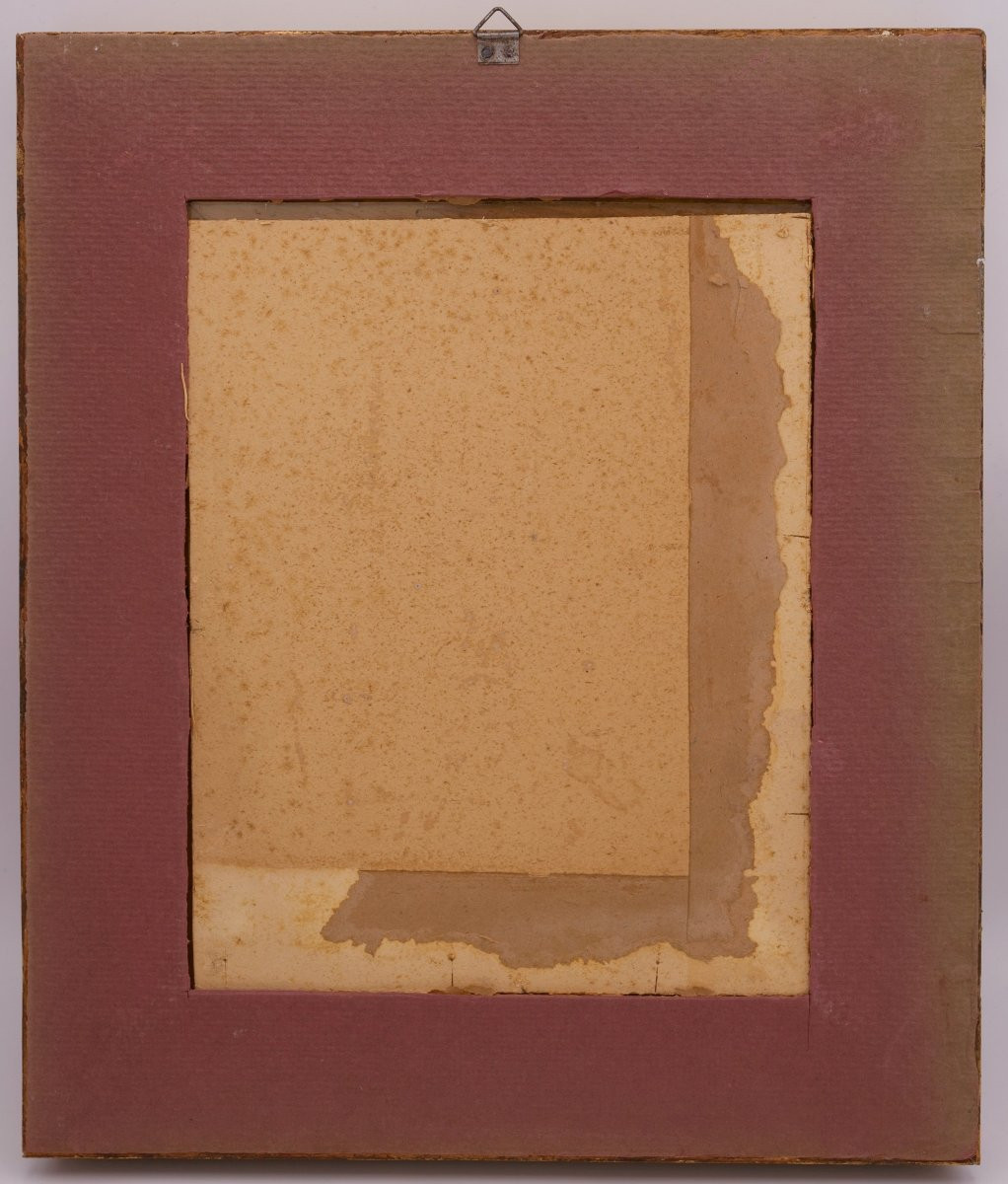


Hans Thoma (1839-1924), Stooped Old Man With Walking Stick And Cigarette, Circa 1910
Artist: Hans Thoma
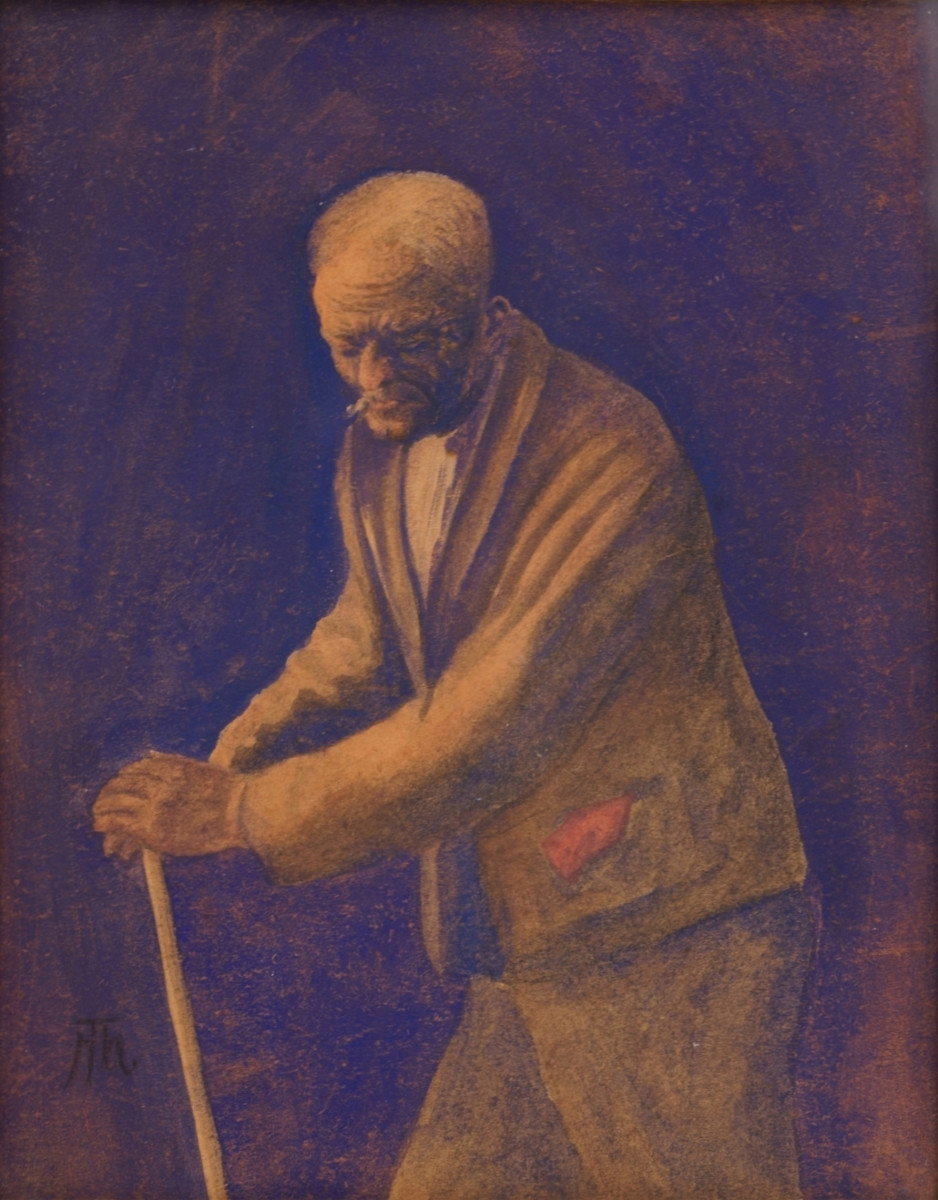
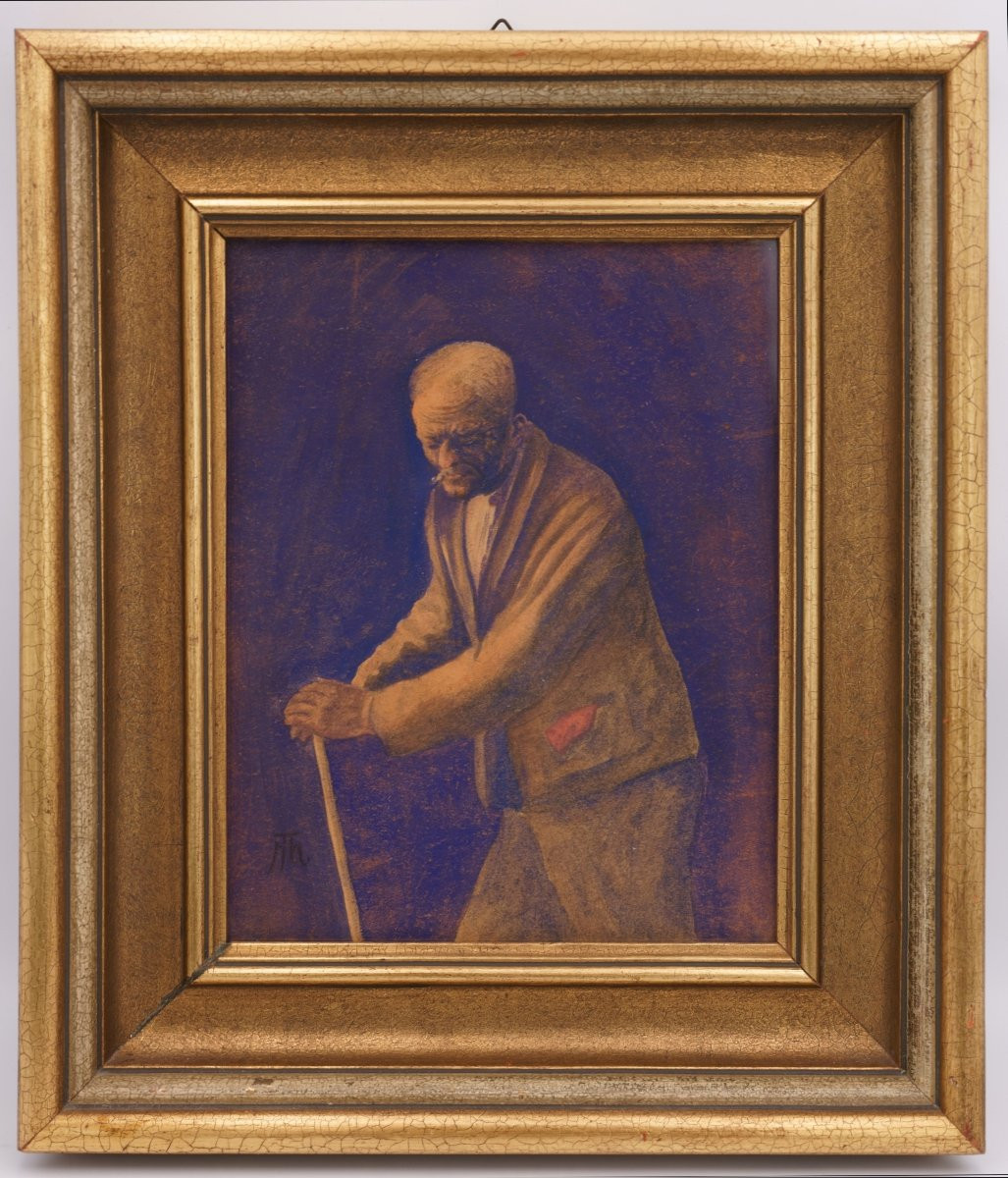
Hans Thoma(1839 Bernau - 1924 Karlsruhe), Stooped Old Man with Walking Stick andCigarette, circa 1900. Watercolor and pastel on paper, mounted on cardboard,29.5 cm x 23.5 cm (sheet size), 45 cm x 38 cm (frame), monogrammed “HTh” lowerleft, framed behind glass.
- Slightlyrubbed in places, overall in very good condition, frame with newly glued joint.
- The sumof life -
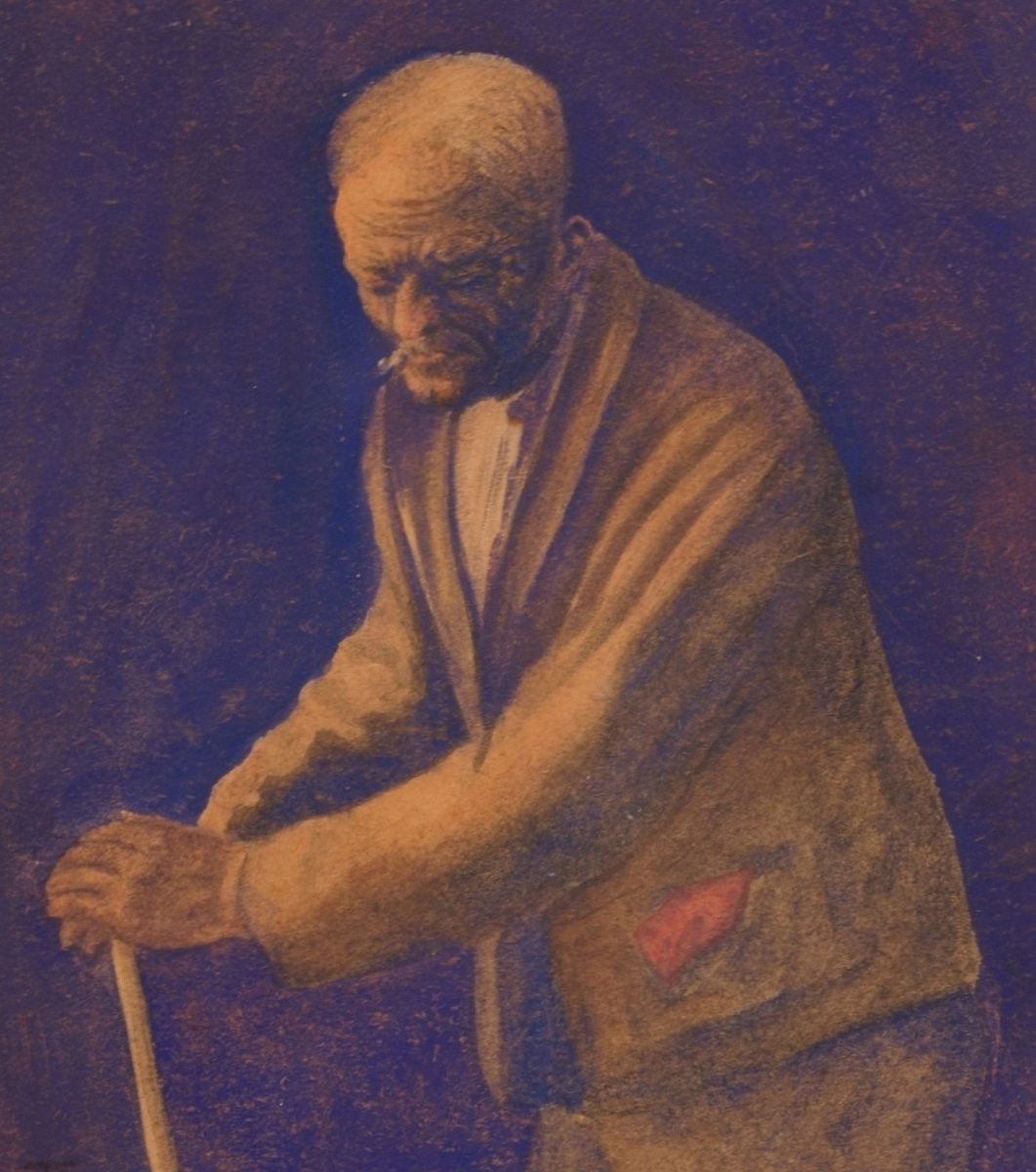
Against apurple background, an old man painted in earthy colors stands out, looking downwith his eyes almost closed. His face is heavily shadowed and furrowed. Theearthy colors make it look like the landscape of life, while the cigaretteburned down to a stub makes it clear that life has been lived almost to thefull. The old man seems to be moving forward toward the end, pausing as he doesso, leaning on his walking stick. Within him is gathered the life he has lived,which was above all hardship, as evidenced by his stooped posture, his roughhands, and above all his furrowed face. A hardship that will lead to theredemption of eternal rest. But the hardship was by no means in vain. Havingrepeatedly taken on the burden of life gives the man the dignity of havingsteadfastly mastered the pilgrimage of life to the end. This dignity of ahard-working life is expressed in color, with the man's uniform yellowish tonemaking him stand out from the purple background, while the colorfulness of thebackground creates a mysterious, fluctuating, auratic effect. An unheroic herowith whom Hans Thoma identifies, as evidenced by the placement of the monogramunder the hands. After all, Thoma also created everything he created with hishands.
About the artist
After failing to complete his apprenticeship asa lithographer, painter and clockmaker, Hans Thoma trained as an autodidactpainter. In 1859 he won a scholarship to the Karlsruhe Art School, where hebecame a student of Wilhelm Schirmer and Ludwig Des Coudres. After graduatingin 1866, Thoma spent time in Basel and Düsseldorf. He met Otto Scholderer, withwhom he traveled to Paris in 1868. There he was impressed by the art of GustaveCourbet and the Barbizon School. After his works were rejected by the KarlsruheKunstverein, Thoma moved to Munich in 1870, where he was close to the Leiblcircle. Wilhelm Trüber worked for a time in Thoma's studio in Munich. In 1874he made the first of a series of trips to Italy with the painter Albert Lang,where he met Hans von Marées and Adolph von Hildebrand and became friends withArnold Böcklin, whose art made a lasting impression on Thoma. On his return toMunich, Thoma became a student of Cella Berteneder, whom he married in 1877.Thoma traveled to England in 1879 at theinvitation of art collector Charles Minoprio. Over the years, Minoprio acquiredmore than 60 oil paintings by Thoma and organized the first exhibition of hisart abroad in Liverpool in 1884. Thoma had lived in Frankfurt since 1878. Thefollowing year, the Frankfurter Kunstverein organized the first solo exhibitionof his work. After a trip to the Netherlands, Thoma moved to Kronberg im Taunusin 1899, where the Kronberg painters' colony was based. That same year he wasappointed professor at the Karlsruhe Art School and director of the KarlsruheKunsthalle. In 1901, together with Wilhelm Süs, Hans Thoma founded the GrandDucal Majolica Manufactory in Karlsruhe, for which he supplied designs fromthen on. Thoma was now at the height of his artisticfame. The 1909 edition of Meyer's Großes Konversations-Lexikon noted that Thomahad become one of the German people's favorite painters. On the occasion of his80th birthday in 1919, Ernst Oppler and Lovis Corinth organized a largecelebration. After Thoma's death, the Berlin National Gallery dedicated a majorexhibition to him in 1922, and the Basel Kunsthalle in 1924.
- Slightlyrubbed in places, overall in very good condition, frame with newly glued joint.
- The sumof life -
Against apurple background, an old man painted in earthy colors stands out, looking downwith his eyes almost closed. His face is heavily shadowed and furrowed. Theearthy colors make it look like the landscape of life, while the cigaretteburned down to a stub makes it clear that life has been lived almost to thefull. The old man seems to be moving forward toward the end, pausing as he doesso, leaning on his walking stick. Within him is gathered the life he has lived,which was above all hardship, as evidenced by his stooped posture, his roughhands, and above all his furrowed face. A hardship that will lead to theredemption of eternal rest. But the hardship was by no means in vain. Havingrepeatedly taken on the burden of life gives the man the dignity of havingsteadfastly mastered the pilgrimage of life to the end. This dignity of ahard-working life is expressed in color, with the man's uniform yellowish tonemaking him stand out from the purple background, while the colorfulness of thebackground creates a mysterious, fluctuating, auratic effect. An unheroic herowith whom Hans Thoma identifies, as evidenced by the placement of the monogramunder the hands. After all, Thoma also created everything he created with hishands.
About the artist
After failing to complete his apprenticeship asa lithographer, painter and clockmaker, Hans Thoma trained as an autodidactpainter. In 1859 he won a scholarship to the Karlsruhe Art School, where hebecame a student of Wilhelm Schirmer and Ludwig Des Coudres. After graduatingin 1866, Thoma spent time in Basel and Düsseldorf. He met Otto Scholderer, withwhom he traveled to Paris in 1868. There he was impressed by the art of GustaveCourbet and the Barbizon School. After his works were rejected by the KarlsruheKunstverein, Thoma moved to Munich in 1870, where he was close to the Leiblcircle. Wilhelm Trüber worked for a time in Thoma's studio in Munich. In 1874he made the first of a series of trips to Italy with the painter Albert Lang,where he met Hans von Marées and Adolph von Hildebrand and became friends withArnold Böcklin, whose art made a lasting impression on Thoma. On his return toMunich, Thoma became a student of Cella Berteneder, whom he married in 1877.Thoma traveled to England in 1879 at theinvitation of art collector Charles Minoprio. Over the years, Minoprio acquiredmore than 60 oil paintings by Thoma and organized the first exhibition of hisart abroad in Liverpool in 1884. Thoma had lived in Frankfurt since 1878. Thefollowing year, the Frankfurter Kunstverein organized the first solo exhibitionof his work. After a trip to the Netherlands, Thoma moved to Kronberg im Taunusin 1899, where the Kronberg painters' colony was based. That same year he wasappointed professor at the Karlsruhe Art School and director of the KarlsruheKunsthalle. In 1901, together with Wilhelm Süs, Hans Thoma founded the GrandDucal Majolica Manufactory in Karlsruhe, for which he supplied designs fromthen on. Thoma was now at the height of his artisticfame. The 1909 edition of Meyer's Großes Konversations-Lexikon noted that Thomahad become one of the German people's favorite painters. On the occasion of his80th birthday in 1919, Ernst Oppler and Lovis Corinth organized a largecelebration. After Thoma's death, the Berlin National Gallery dedicated a majorexhibition to him in 1922, and the Basel Kunsthalle in 1924.
2 200 €
Period: 20th century
Style: Other Style
Condition: Good condition
Material: Paper
Length: 29 cm
Width: 23 cm
Reference (ID): 1677109
Availability: In stock
Print