

"Optical View With Day/night Effect – Rome, Theatre Of Marcellus, Circa 1770 "
Optical View with Day/Night Effect – Rome, Theatre of Marcellus, circa 1770
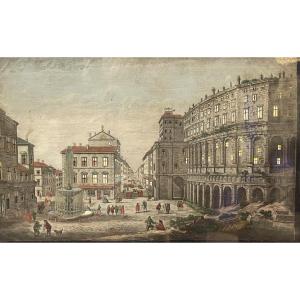
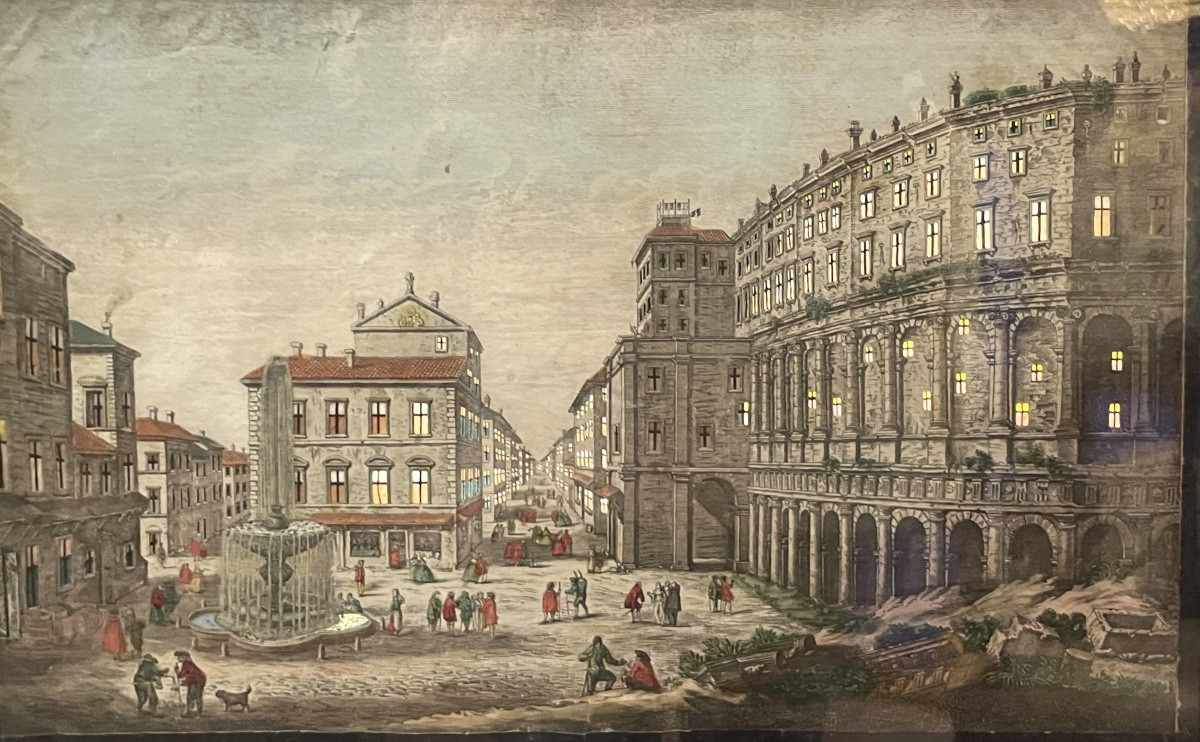
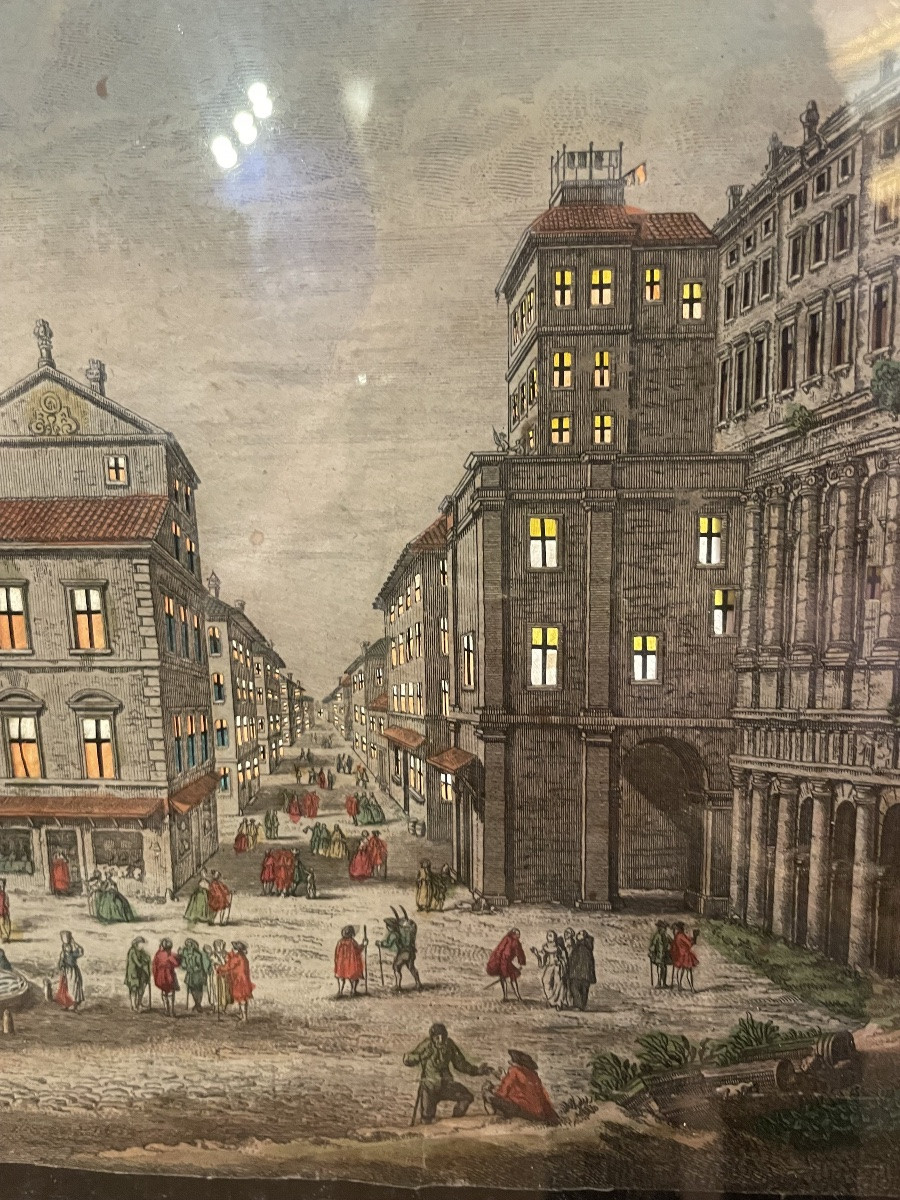
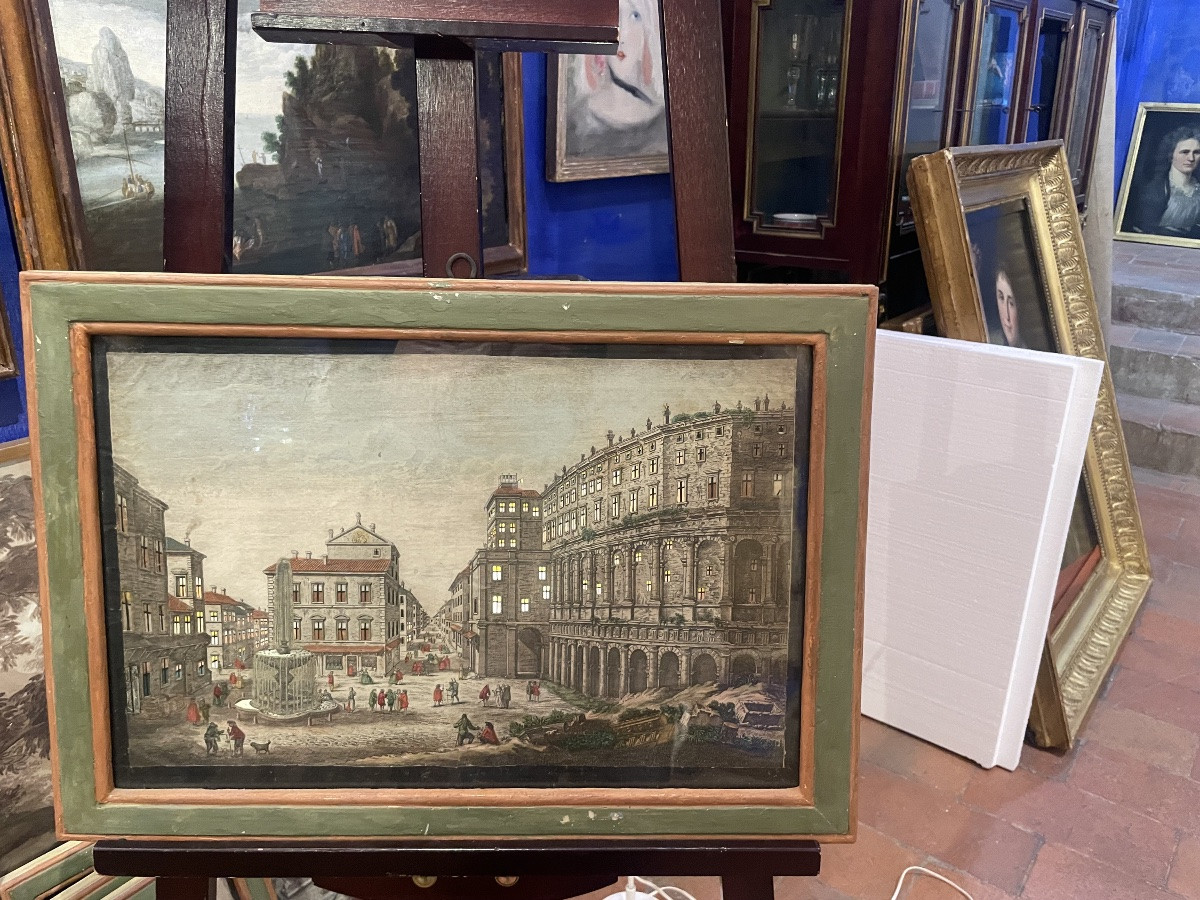
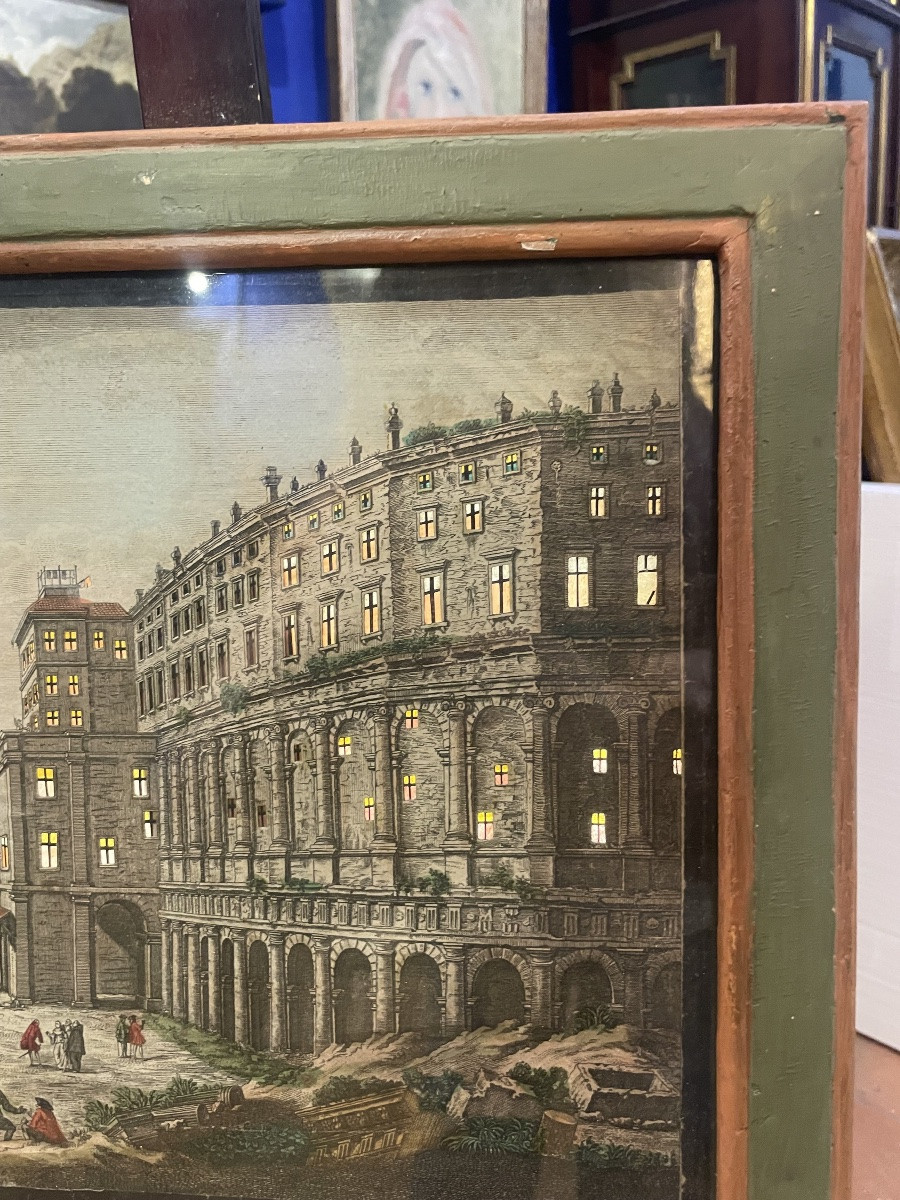
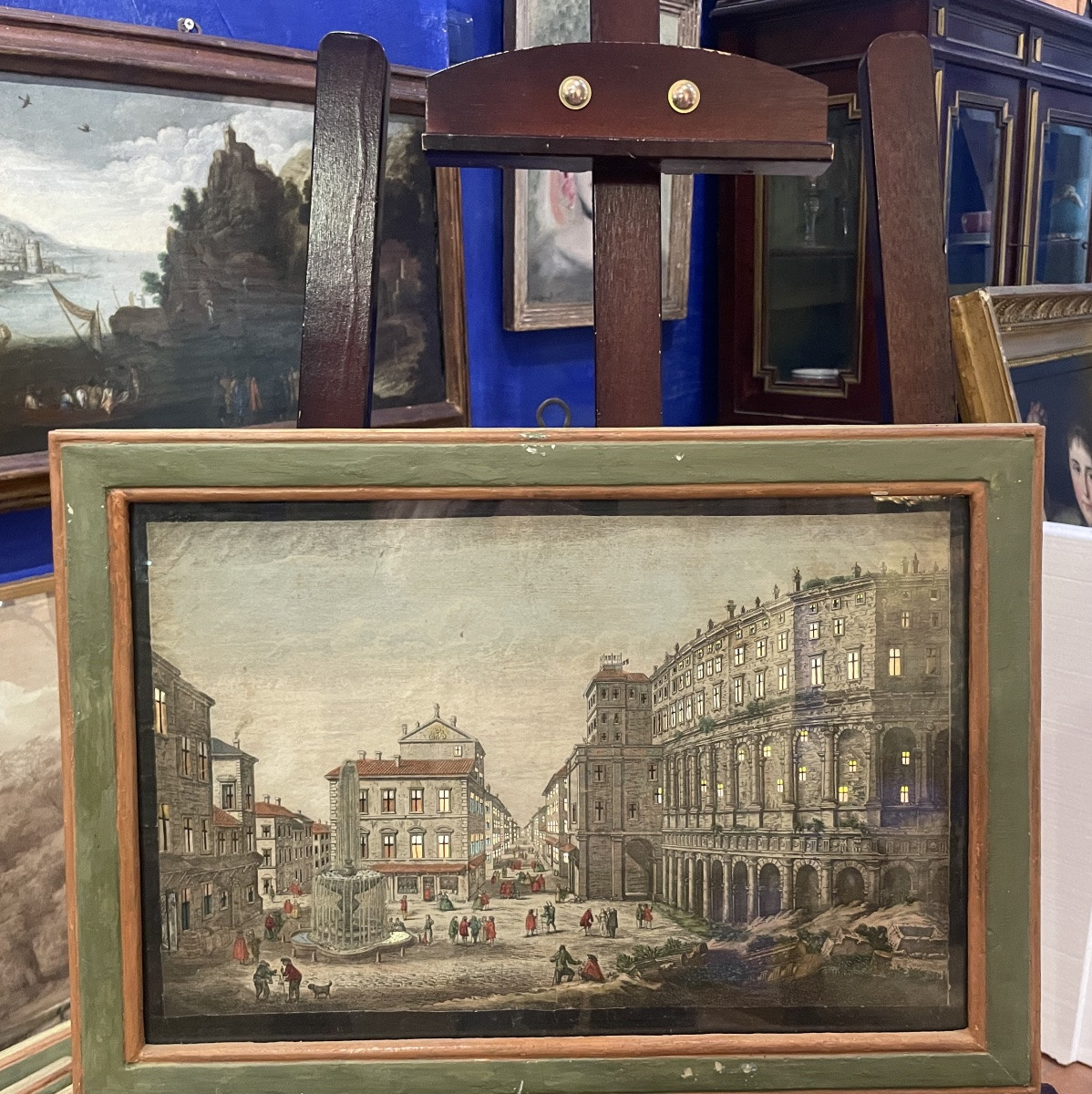
Optical views (vues d’optique) were perspective prints designed to be viewed through specific optical devices and, in their most elaborate versions, to be backlit, transforming the image into a striking visual experience. This example belongs to this more complex type and was conceived from the outset to produce a day/night effect.
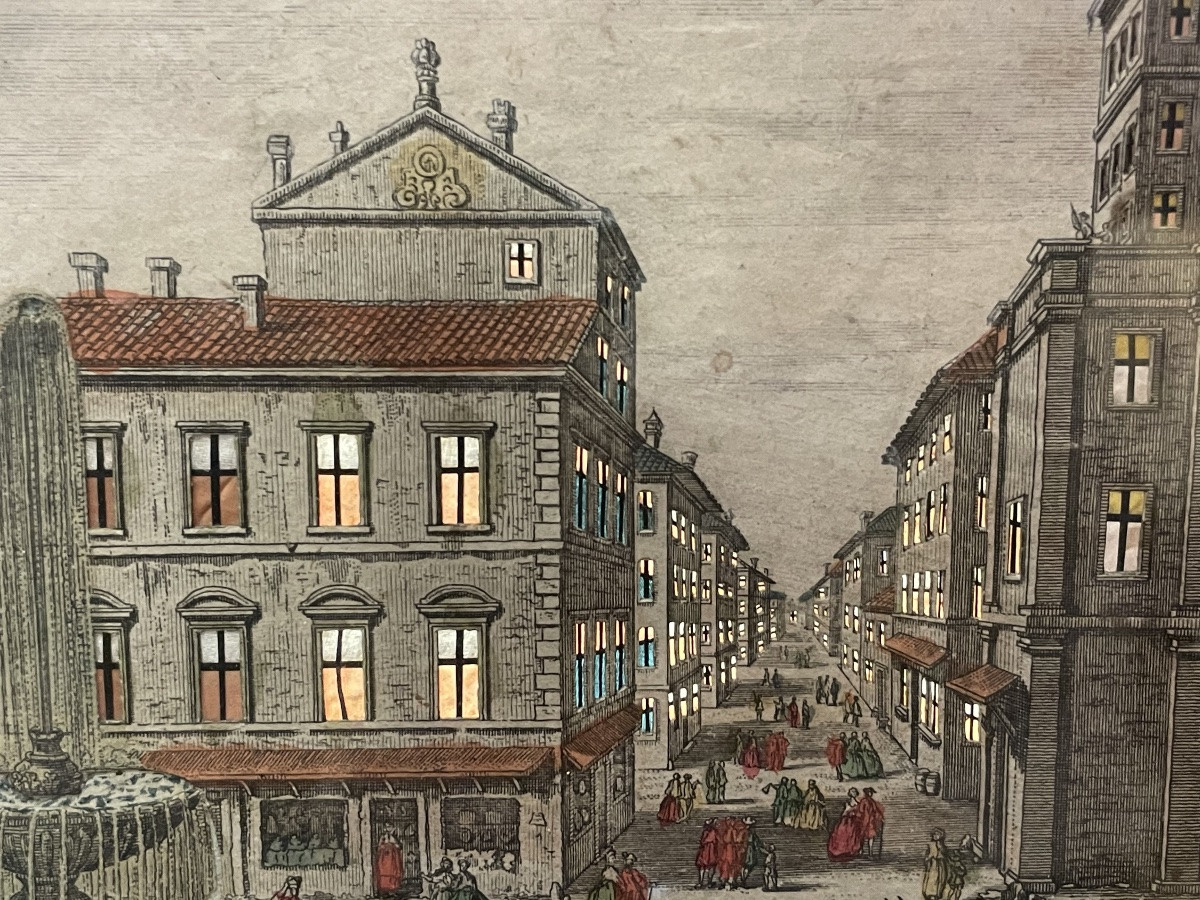
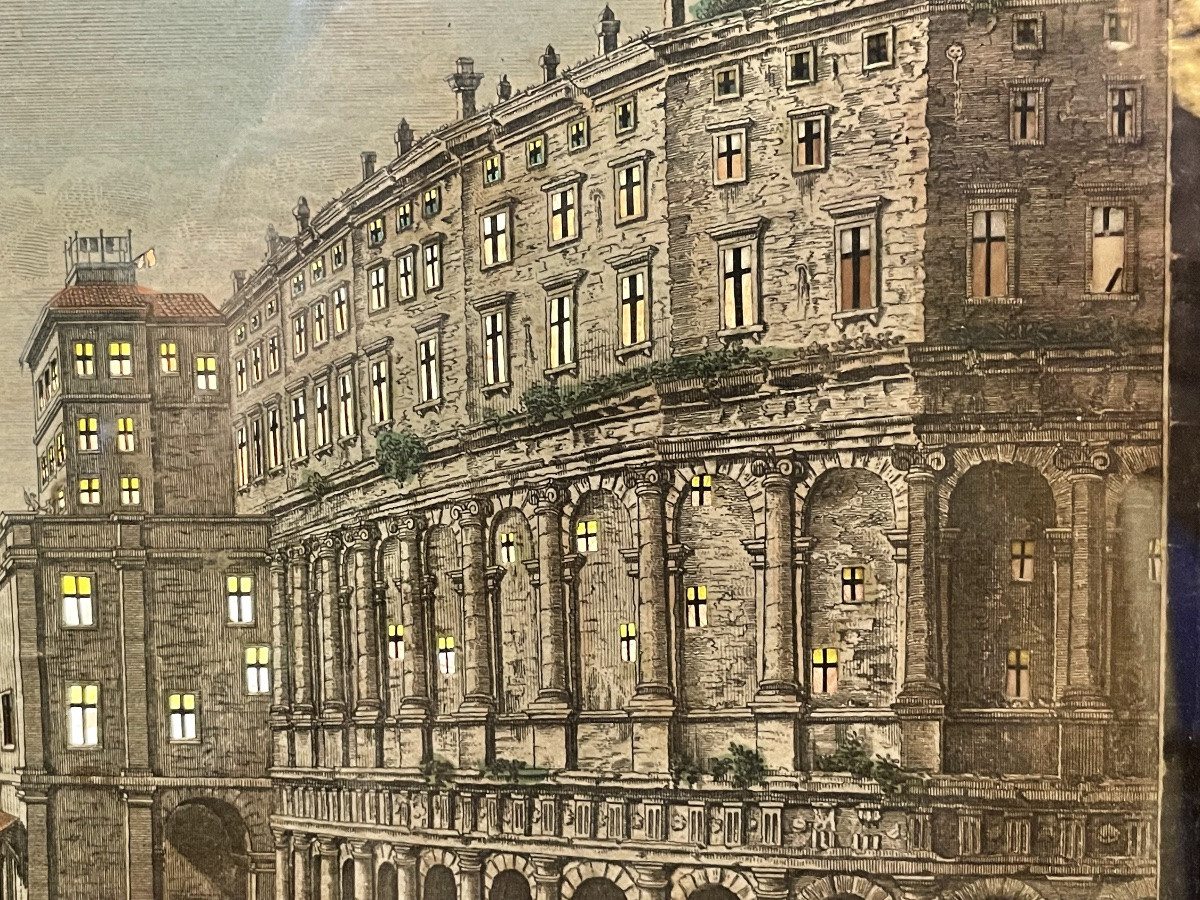
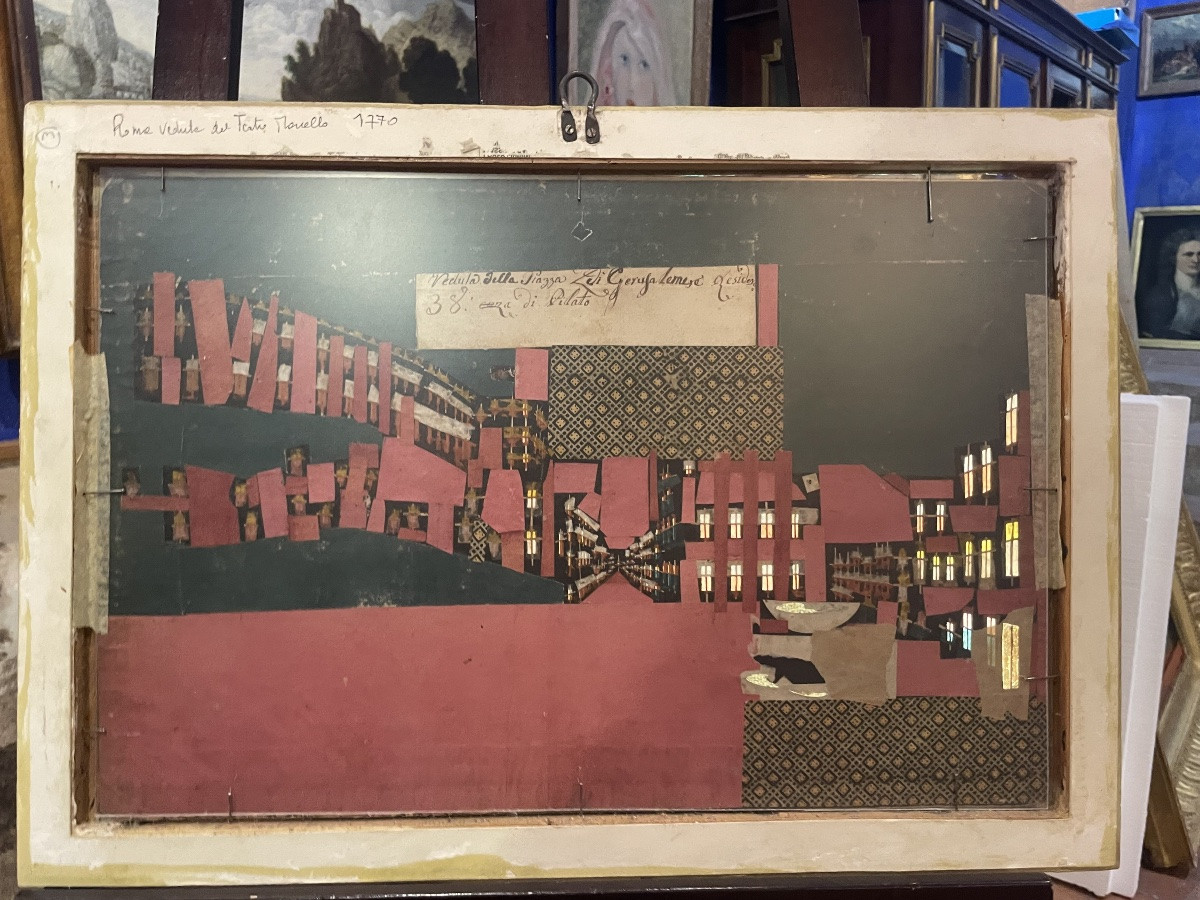
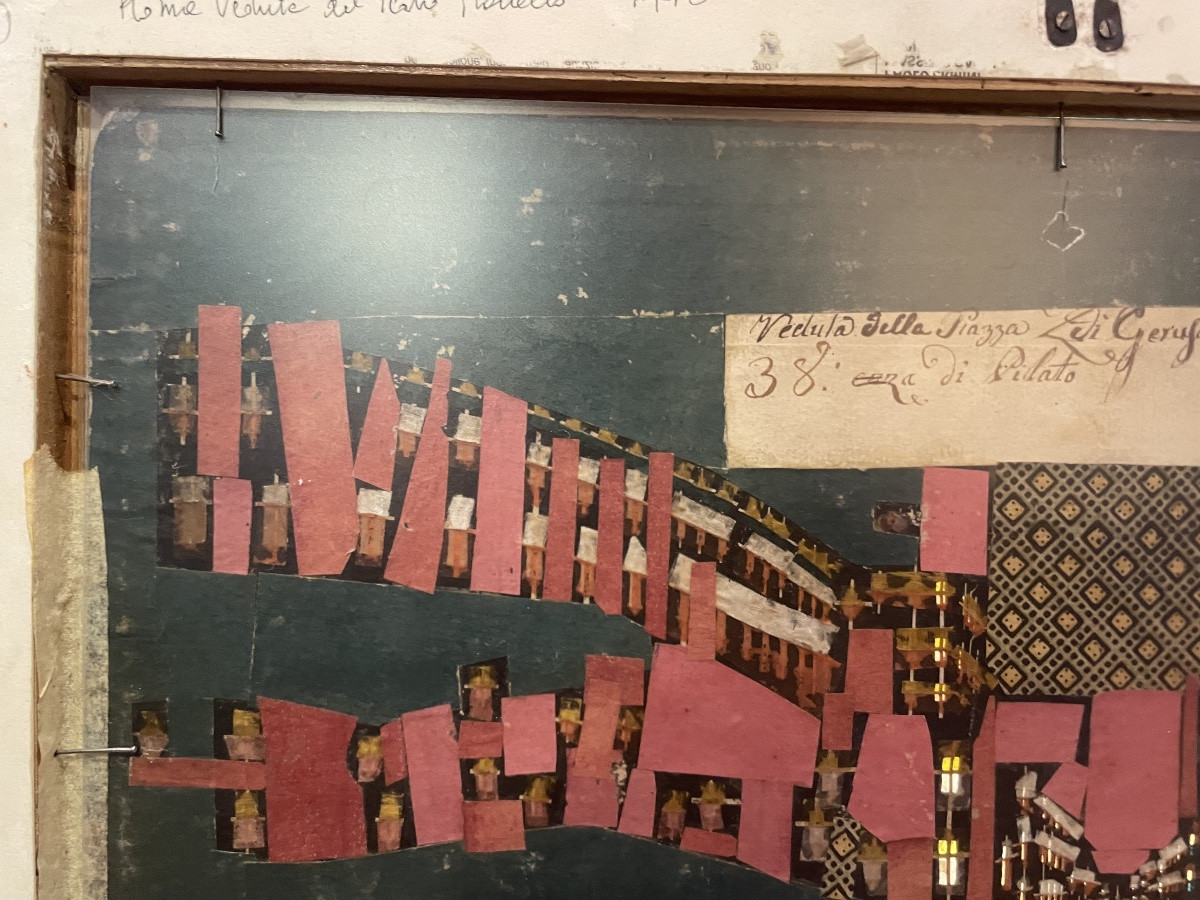
The print, executed in etching and hand-coloured in watercolour, is punched and pierced at the windows and selected architectural elements. On the reverse, coloured paper inserts and areas of black tempera regulate the passage of light. When viewed with frontal lighting, the scene appears as a daytime view; when backlit, it is transformed into a nocturnal scene with illuminated windows and enhanced depth.
The composition depicts Rome, with the Theatre of Marcellus, used as a monumental architectural backdrop. As often occurs in optical views intended for narrative cycles, the setting is not meant as a literal topographical representation but serves a scenographic function, acting as a theatrical backdrop for a broader visual narrative. A handwritten inscription on the reverse records the sequence number 38, indicating that the print formed part of a larger series designed to be viewed in succession within an optical box. In this context, the urban view functioned as a theatrical set, accompanying the narrative without directly illustrating a specific episode. Optical views were intended to be viewed through devices such as the zograscope or optical boxes, equipped with a lens and an angled mirror to heighten the illusion of depth. Objects of this kind were especially prized by educated and affluent collectors and were often kept and displayed in cabinets of curiosities, where viewing in a darkened environment enhanced the visual effect. This genre enjoyed widespread popularity between the mid-18th and early 19th centuries, with major centres of production in London, Paris (rue Saint-Jacques), Augsburg and Bassano del Grappa. Examples featuring complex backlighting arrangements, such as the present one, were among the most sought after. Dimensions: 49 × 35 cm (with frame).








 Le Magazine de PROANTIC
 TRÉSORS Magazine
 Rivista Artiquariato