

Marcel Poissonnié (1880-1949) Ruined Mill At Saint-michel-et-bonnefare Dordogne Montaigne
Artist: Marcel Poissonnié
Marcel POISSONNIÉ
(Bordeaux 1880 – Toulouse 1949)
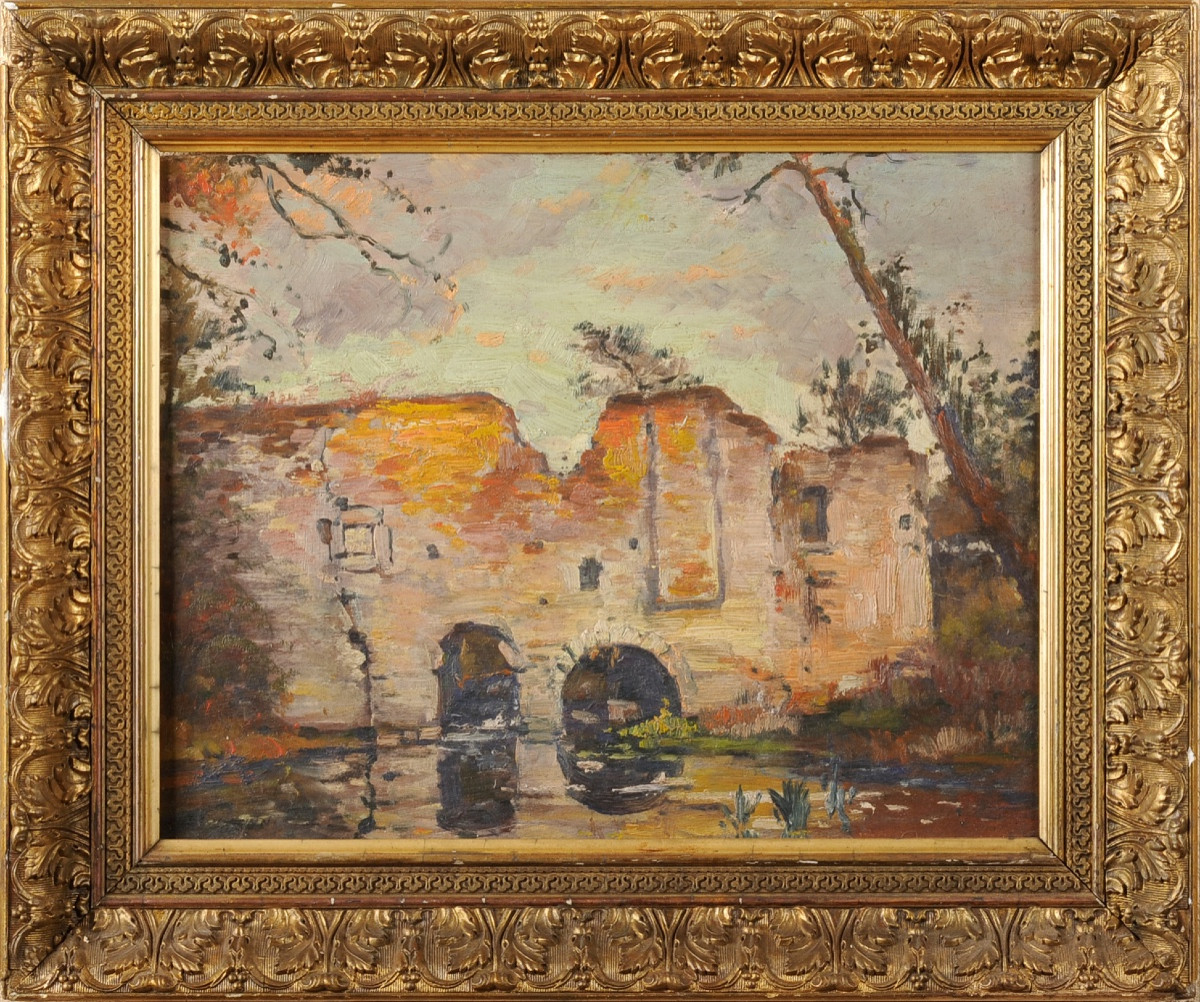
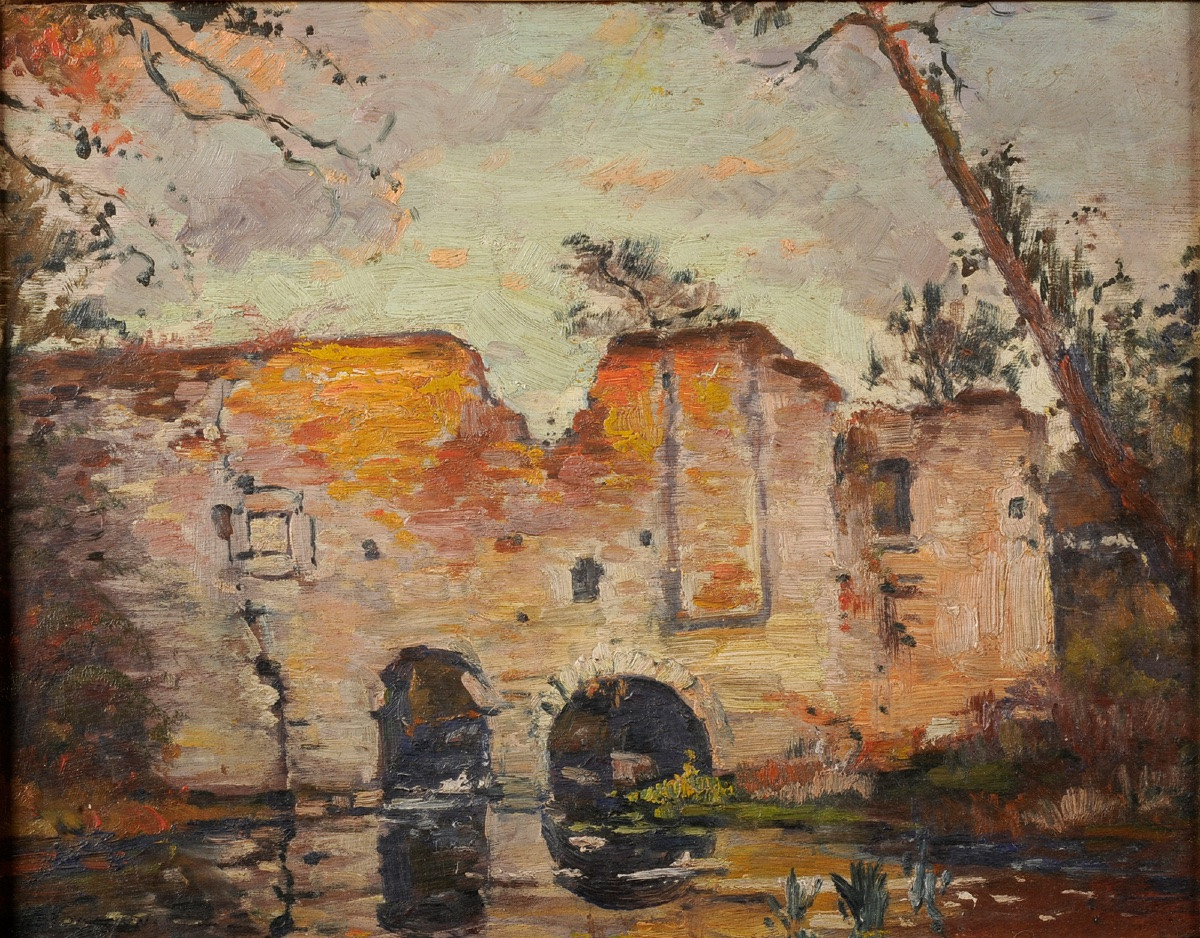
Ruins of a mill at Saint-Michel-et-Bonnefare
Oil on wood
H. 29 cm; W. 38 cm
Signed and located on the back
Provenance: Private collection, Bordeaux
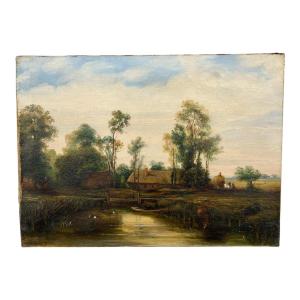
A Bordeaux painter still relatively unknown today, Marcel Poissonnié is part of the tradition of landscape painters from the Southwest of France, sensitive to rustic motifs and architectural remains of the Gironde and Périgord countryside. Trained in the tradition of the Bordeaux regional school under Cabié and alongside Gueit, he developed a body of work primarily focused on landscape, favoring modest sites imbued with silence and memory, far removed from monumental or picturesque views. Poissonnié was particularly drawn to abandoned rural architecture—mills, bridges, ruined farms—which he treated with a generous impasto and a vibrant touch, inherited from both late Impressionism and a post-naturalist sensibility. His work gives central importance to the effects of texture, visible impasto, and a warm palette, often dominated by ochres, red earths, and colored grays. In this painting located in Saint-Michel-et-Bonnefare, the artist depicts a partially collapsed mill, standing on its calm stream, which reflects the weathered architecture. The composition is built around the central arch, dark and gaping, which opens onto a mysterious depth, while the walls, where the plaster fades to reveal the stone, capture a diffuse, almost crepuscular light. Saint-Michel-et-Bonnefare is the present-day commune of Saint-Michel-de-Montaigne, a name adopted in 1936. This commune resulted from a merger, dating back to the French Revolution, of the two parishes of Bonnefare and Saint-Michel-de-Montaigne. This mill is therefore almost certainly located on the Lidoire River, part of whose course has one bank in the Gironde department and the other in the Dordogne. Our painting thus represents two territories!
(Bordeaux 1880 – Toulouse 1949)
Ruins of a mill at Saint-Michel-et-Bonnefare
Oil on wood
H. 29 cm; W. 38 cm
Signed and located on the back
Provenance: Private collection, Bordeaux
A Bordeaux painter still relatively unknown today, Marcel Poissonnié is part of the tradition of landscape painters from the Southwest of France, sensitive to rustic motifs and architectural remains of the Gironde and Périgord countryside. Trained in the tradition of the Bordeaux regional school under Cabié and alongside Gueit, he developed a body of work primarily focused on landscape, favoring modest sites imbued with silence and memory, far removed from monumental or picturesque views. Poissonnié was particularly drawn to abandoned rural architecture—mills, bridges, ruined farms—which he treated with a generous impasto and a vibrant touch, inherited from both late Impressionism and a post-naturalist sensibility. His work gives central importance to the effects of texture, visible impasto, and a warm palette, often dominated by ochres, red earths, and colored grays. In this painting located in Saint-Michel-et-Bonnefare, the artist depicts a partially collapsed mill, standing on its calm stream, which reflects the weathered architecture. The composition is built around the central arch, dark and gaping, which opens onto a mysterious depth, while the walls, where the plaster fades to reveal the stone, capture a diffuse, almost crepuscular light. Saint-Michel-et-Bonnefare is the present-day commune of Saint-Michel-de-Montaigne, a name adopted in 1936. This commune resulted from a merger, dating back to the French Revolution, of the two parishes of Bonnefare and Saint-Michel-de-Montaigne. This mill is therefore almost certainly located on the Lidoire River, part of whose course has one bank in the Gironde department and the other in the Dordogne. Our painting thus represents two territories!
420 €
Period: 20th century
Style: Napoleon 3rd
Condition: Perfect condition
Material: Oil painting on wood
Length: 29 cm hors cadre
Width: 38 cm hors cadre
Reference (ID): 1672681
Availability: In stock
Print