

Rouen 18th Century - Apothecary - Pair Of Canon Jars
ROUEN - 18th Century
Pair of Canon Jars
APOTHECARY
Circa 1740
Ref.: FC 127
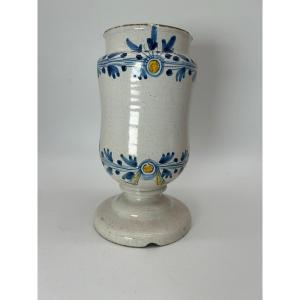
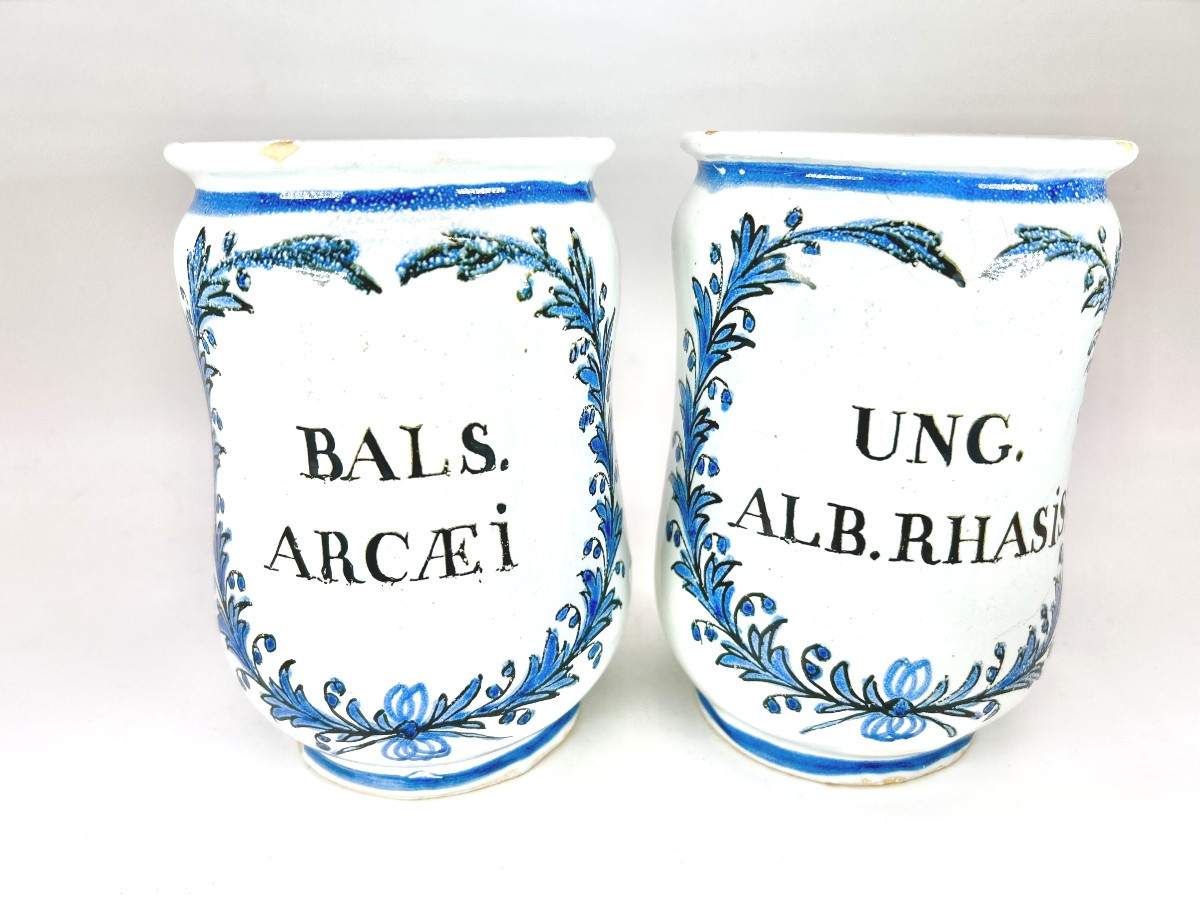
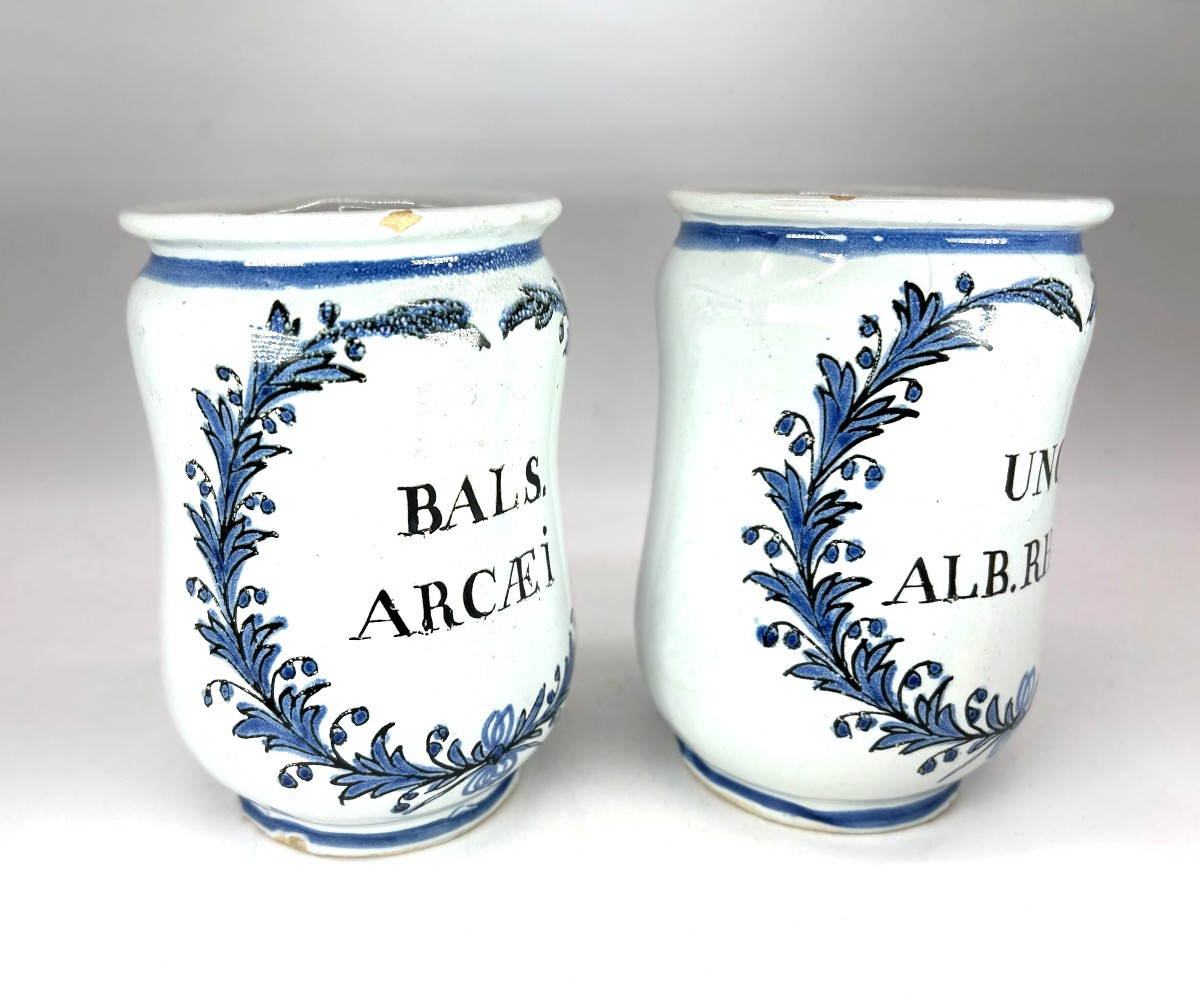
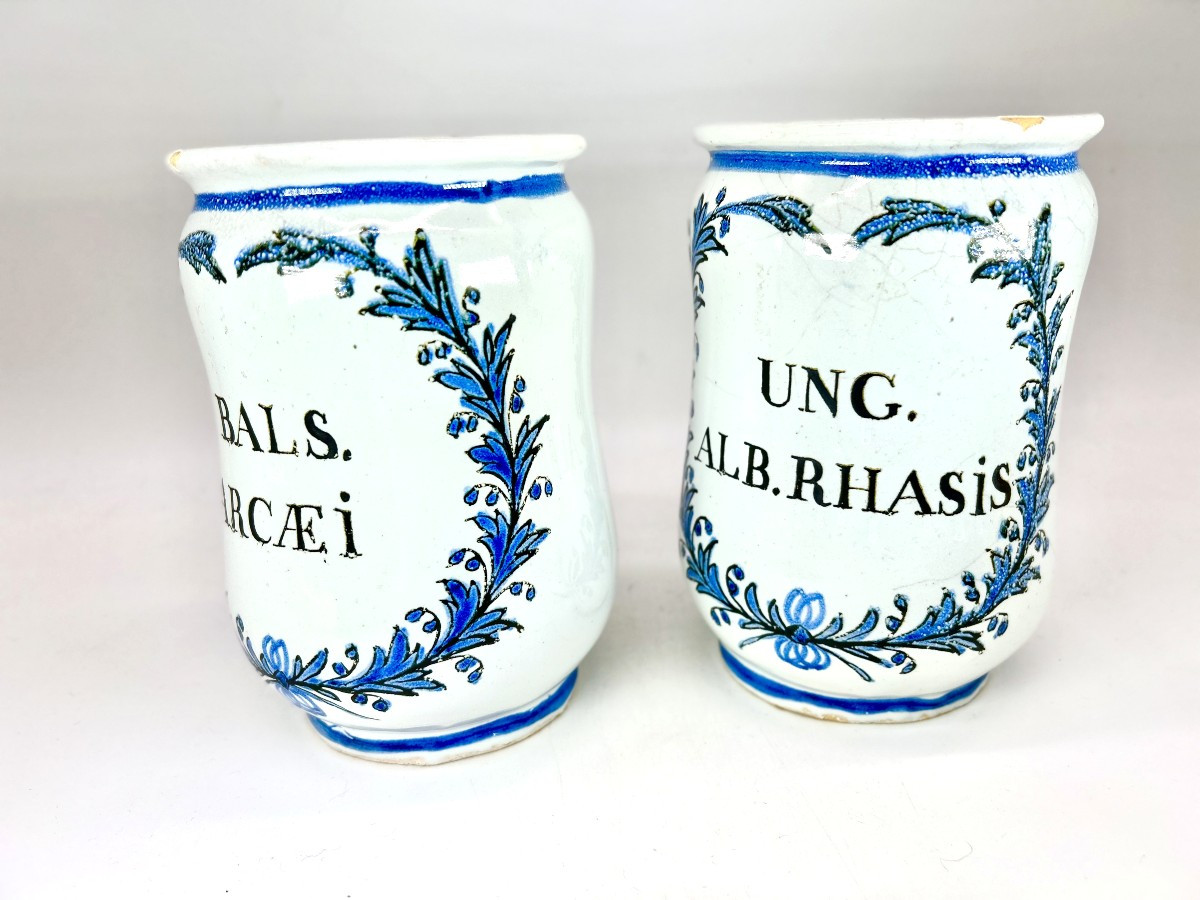
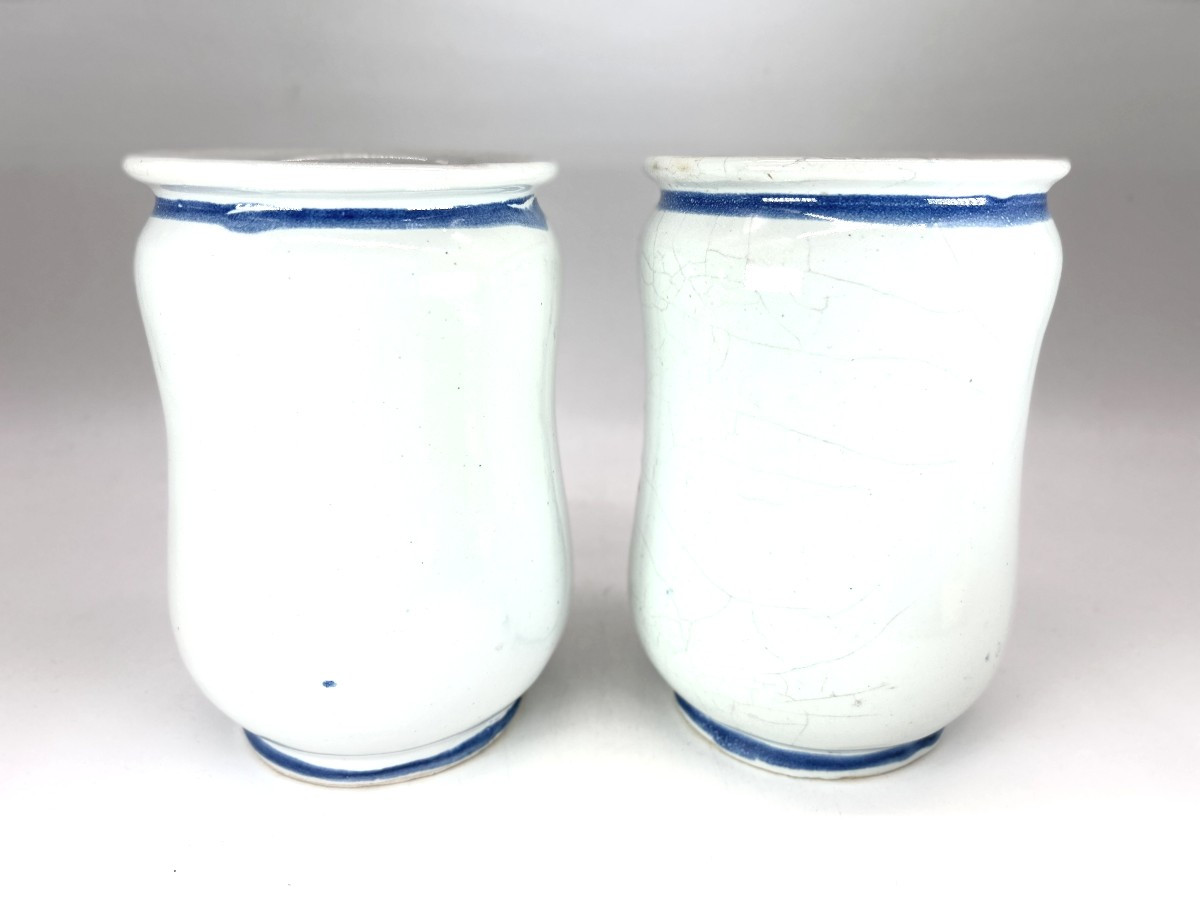
Pair of canon jars in high-fire earthenware with a bluish-white slip.
Slightly curved baluster shape.
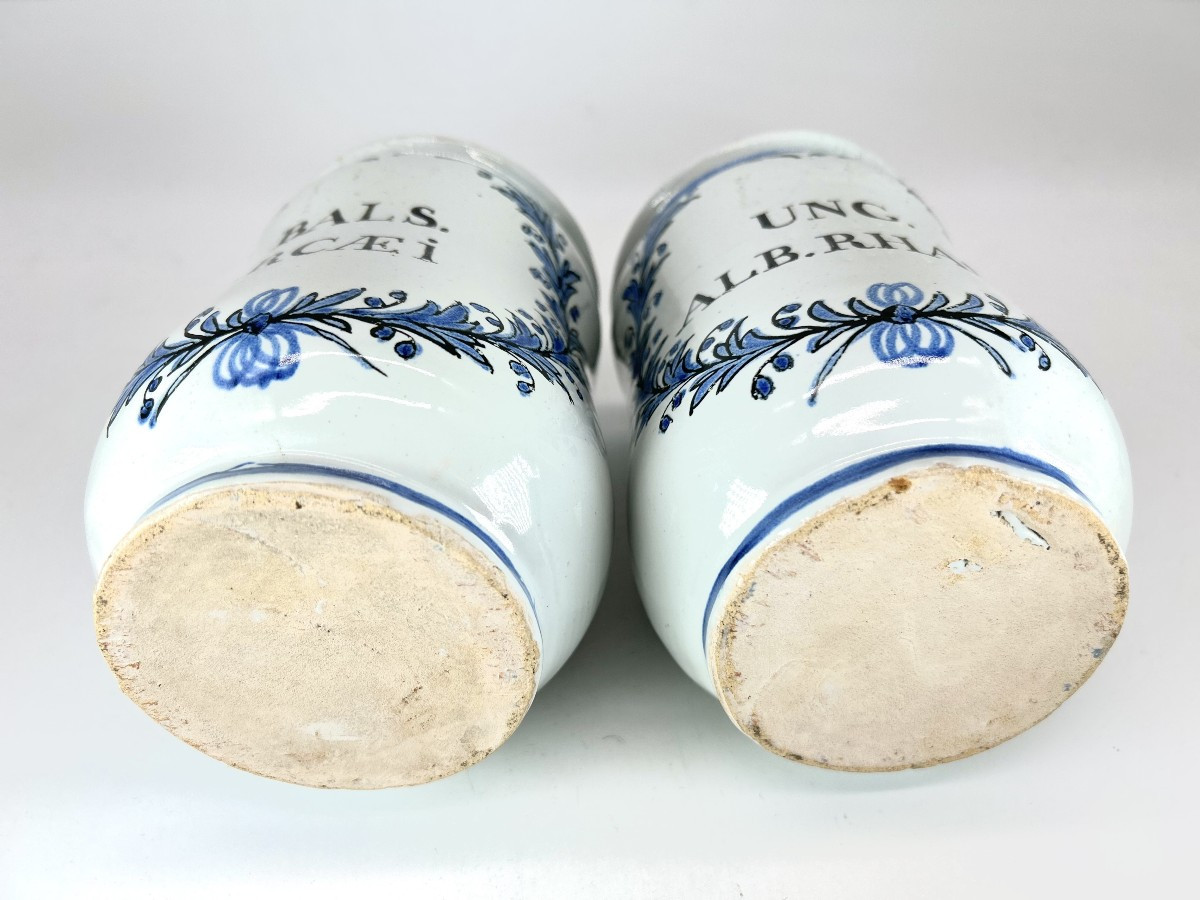
Cartouche of olive leaves tied with small blue ribbons.
Two scrolls:
1. BALS. ARCAEI or Balsamum Arcaei
Arcaeus's balm, also called
White Balm.
Medicinal preparation composed of oil, white wax, turpentine,
sometimes egg white or other agents depending on the period.
Attributed to Arcaeus, an ancient physician who is said to have established the formula.
Traditional use: Soothing and healing ointment. Burns, wounds, skin irritations, inflammations.
2. UNG ALB. RHASIS or Unguentum Album
Rhases “White Ointment of Rhazes”
Origin: Attributed to Rhazes, a great Persian physician of the 9th–10th century.
Description:
Whitish, emollient, soothing ointment made with: Oil (often olive oil), white wax, egg white, sometimes a little turpentine.
It is an ancestor of cold cream and white liniment, in its oriental version.
Traditional Uses:
Used to: Soothe inflammation, calm burns and redness, soften the skin, heal superficial wounds.
Some pharmacy jars had lids. Many did not.
A simple piece of parchment paper held by a string protected the contents.
The paper was easily replaced, unlike the lids, which were broken during handling.
Height: 16 cm.
Very good condition.
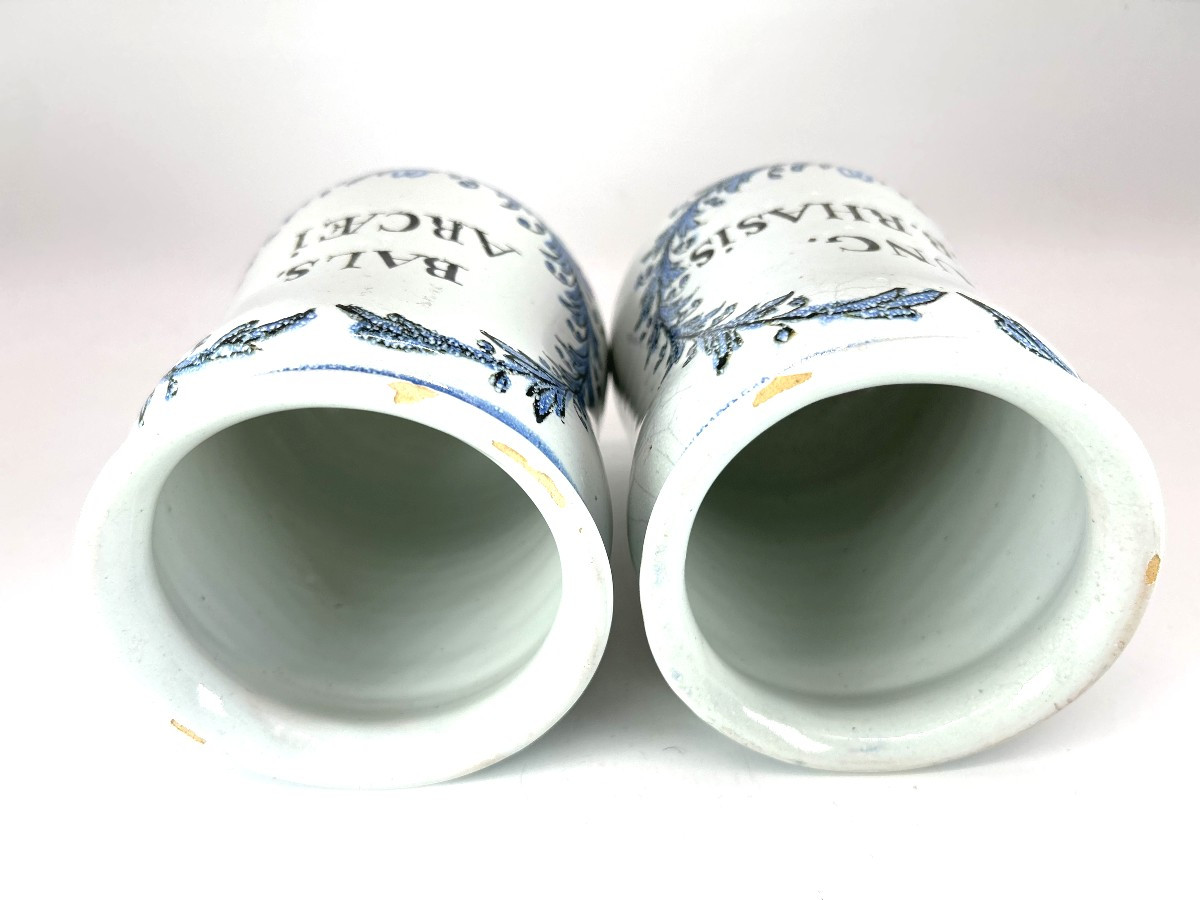
A few very small chips on both necks.
Origin: From the extensive collection of a passionate pharmacist.
Shipping via secure Colissimo.
France: €15.
EEC and Rest of the World: Contact us.
Pair of Canon Jars
APOTHECARY
Circa 1740
Ref.: FC 127
Pair of canon jars in high-fire earthenware with a bluish-white slip.
Slightly curved baluster shape.
Cartouche of olive leaves tied with small blue ribbons.
Two scrolls:
1. BALS. ARCAEI or Balsamum Arcaei
Arcaeus's balm, also called
White Balm.
Medicinal preparation composed of oil, white wax, turpentine,
sometimes egg white or other agents depending on the period.
Attributed to Arcaeus, an ancient physician who is said to have established the formula.
Traditional use: Soothing and healing ointment. Burns, wounds, skin irritations, inflammations.
2. UNG ALB. RHASIS or Unguentum Album
Rhases “White Ointment of Rhazes”
Origin: Attributed to Rhazes, a great Persian physician of the 9th–10th century.
Description:
Whitish, emollient, soothing ointment made with: Oil (often olive oil), white wax, egg white, sometimes a little turpentine.
It is an ancestor of cold cream and white liniment, in its oriental version.
Traditional Uses:
Used to: Soothe inflammation, calm burns and redness, soften the skin, heal superficial wounds.
Some pharmacy jars had lids. Many did not.
A simple piece of parchment paper held by a string protected the contents.
The paper was easily replaced, unlike the lids, which were broken during handling.
Height: 16 cm.
Very good condition.
A few very small chips on both necks.
Origin: From the extensive collection of a passionate pharmacist.
Shipping via secure Colissimo.
France: €15.
EEC and Rest of the World: Contact us.
320 €
Period: 18th century
Style: Louis 15th - Transition
Condition: Excellent condition
Material: Earthenware
Height: 16 cm
Reference (ID): 1667312
Availability: In stock
Print