THIS OBJECT WAS SOLD
Nevers - 18th Century - Revolutionary Period




NEVERS - Late 18th Century
Revolutionary Period
Ref. FC 119
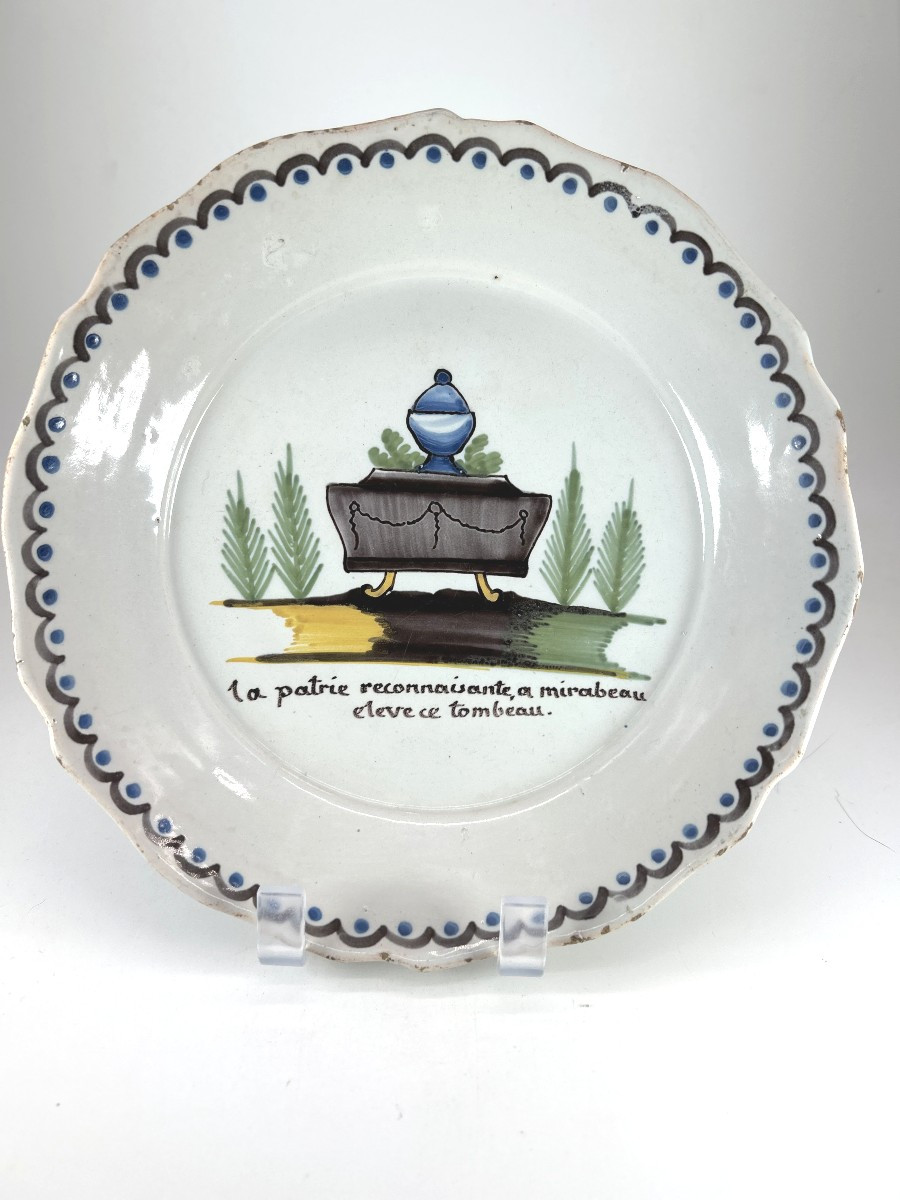
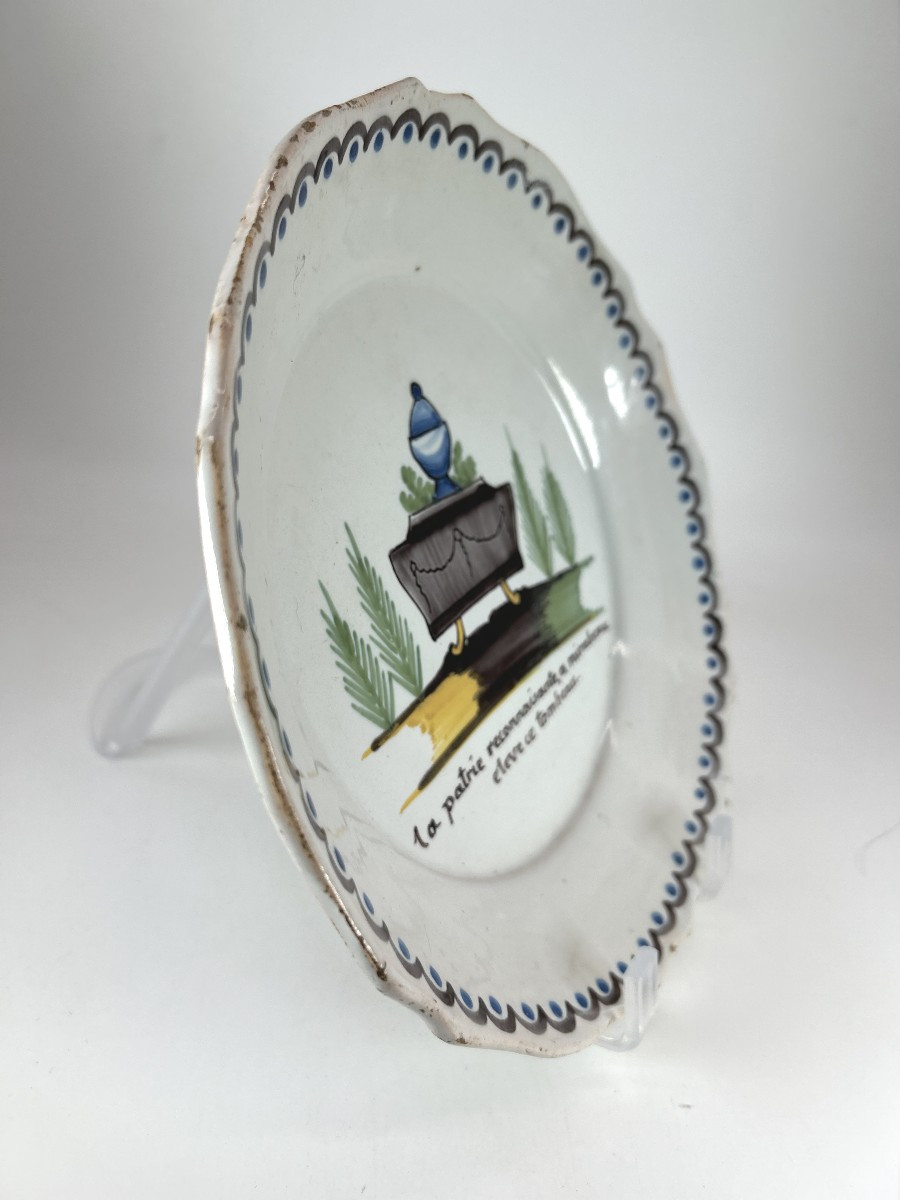
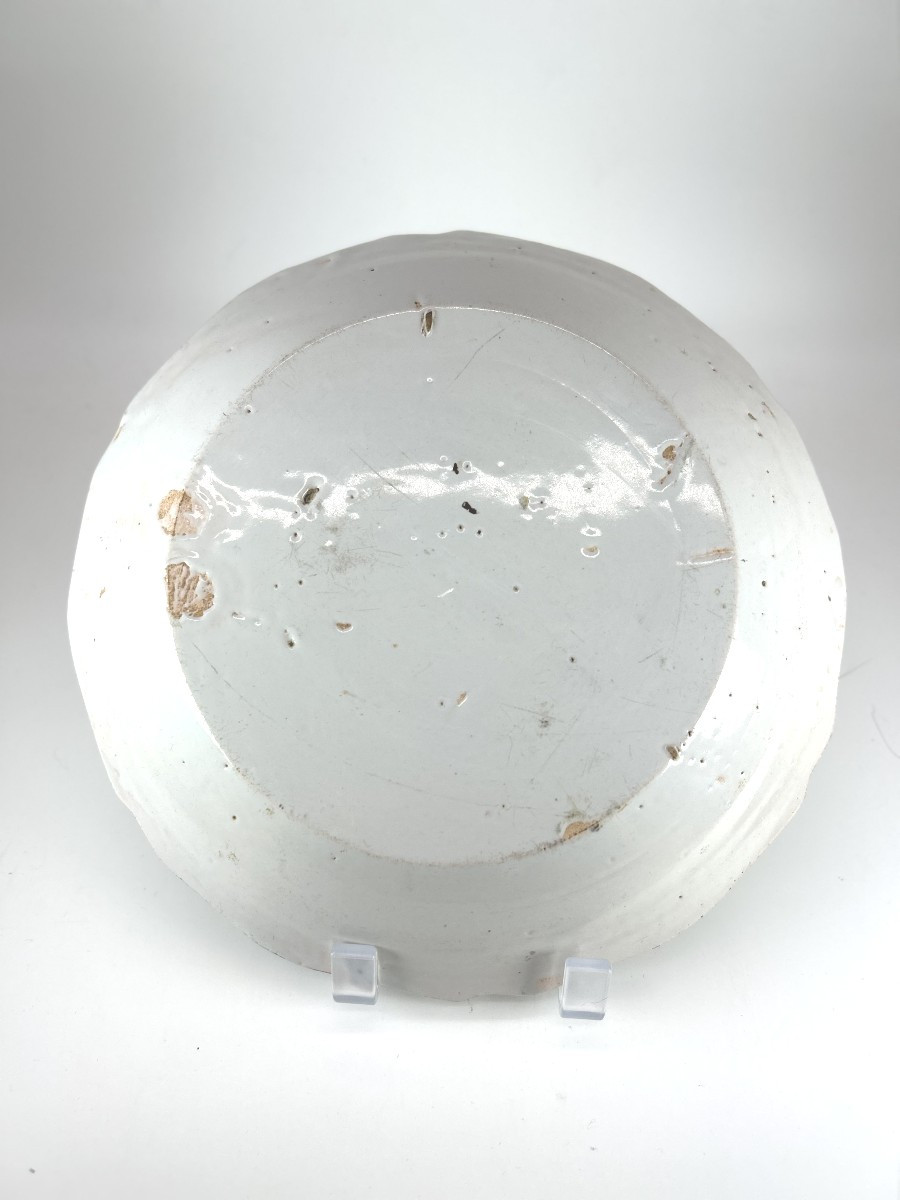
High-fire tin-glazed earthenware plate with a scalloped rim.
Polychrome patriotic decoration in the center of a tomb on a vegetated terrace surrounded by four cypress trees.
Below, the inscription: "The grateful nation, to Mirabeau, erects this tomb."
A little history:
Honoré Gabriel Riqueti, also spelled Riquetti, "Count" of Mirabeau, more commonly known as Mirabeau,
was born on March 9, 1749, in the Château de Bignon-Mirabeau, in the Loiret region, and died on April 2, 1791, in Paris.
A French writer, diplomat, journalist, and politician, he is one of the leading figures of the Revolution.
After a youth marked by libertinism, several years in prison, an adulterous affair, and pamphlets,
Mirabeau embraced the idea of reforming French society as a whole.
He is one of the founding fathers of the French Revolution, a supporter of a constitutional monarchy.
Nicknamed " "The Hercules of Liberty," "The People's Orator," and "The Torch of Provence,"
he remains the foremost symbol of parliamentary eloquence in France.
Although a member of the nobility, he distinguished himself as a representative of the Third Estate
to the Estates-General after being rejected by the nobility.
Much loved by the revolutionaries, his body was transported to the Panthéon upon his death,
but the discovery of his secret dealings with royalty reversed public opinion,
and his remains were removed from the mausoleum, of which he was the first occupant.
As an anecdote, and to demonstrate his popularity,
the street where he died was covered with straw to prevent noise from disturbing his peace during his agony.
It was renamed "Rue Mirabeau-Le Patriote" at the time.
Bibliography: BONNET, Collection of Louis HEITSCHEL, p. 147, no. 263.
MOINET, BILLON-TOURET, Revolutionary Ceramics, p. 159, no. 307. Diameter: 23 cm.
Very good condition.
Some minor wear. Shipping via secure Colissimo.
France: €15.
EEC and Rest of the World: Contact us.
Revolutionary Period
Ref. FC 119
High-fire tin-glazed earthenware plate with a scalloped rim.
Polychrome patriotic decoration in the center of a tomb on a vegetated terrace surrounded by four cypress trees.
Below, the inscription: "The grateful nation, to Mirabeau, erects this tomb."
A little history:
Honoré Gabriel Riqueti, also spelled Riquetti, "Count" of Mirabeau, more commonly known as Mirabeau,
was born on March 9, 1749, in the Château de Bignon-Mirabeau, in the Loiret region, and died on April 2, 1791, in Paris.
A French writer, diplomat, journalist, and politician, he is one of the leading figures of the Revolution.
After a youth marked by libertinism, several years in prison, an adulterous affair, and pamphlets,
Mirabeau embraced the idea of reforming French society as a whole.
He is one of the founding fathers of the French Revolution, a supporter of a constitutional monarchy.
Nicknamed " "The Hercules of Liberty," "The People's Orator," and "The Torch of Provence,"
he remains the foremost symbol of parliamentary eloquence in France.
Although a member of the nobility, he distinguished himself as a representative of the Third Estate
to the Estates-General after being rejected by the nobility.
Much loved by the revolutionaries, his body was transported to the Panthéon upon his death,
but the discovery of his secret dealings with royalty reversed public opinion,
and his remains were removed from the mausoleum, of which he was the first occupant.
As an anecdote, and to demonstrate his popularity,
the street where he died was covered with straw to prevent noise from disturbing his peace during his agony.
It was renamed "Rue Mirabeau-Le Patriote" at the time.
Bibliography: BONNET, Collection of Louis HEITSCHEL, p. 147, no. 263.
MOINET, BILLON-TOURET, Revolutionary Ceramics, p. 159, no. 307. Diameter: 23 cm.
Very good condition.
Some minor wear. Shipping via secure Colissimo.
France: €15.
EEC and Rest of the World: Contact us.
Explore similar pieces and discover your ideal find:
Faience Plates & Dinnerware