THIS OBJECT WAS SOLD
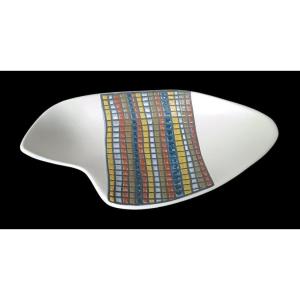
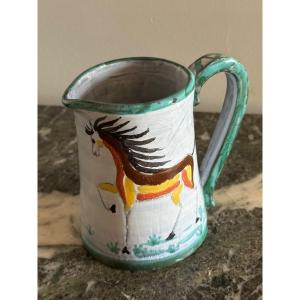
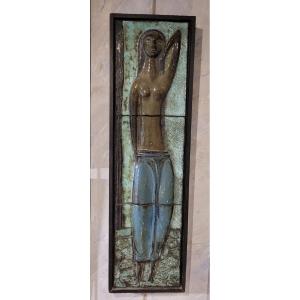
Jean De Lespinasse (1896-1979) Ceramic Plate
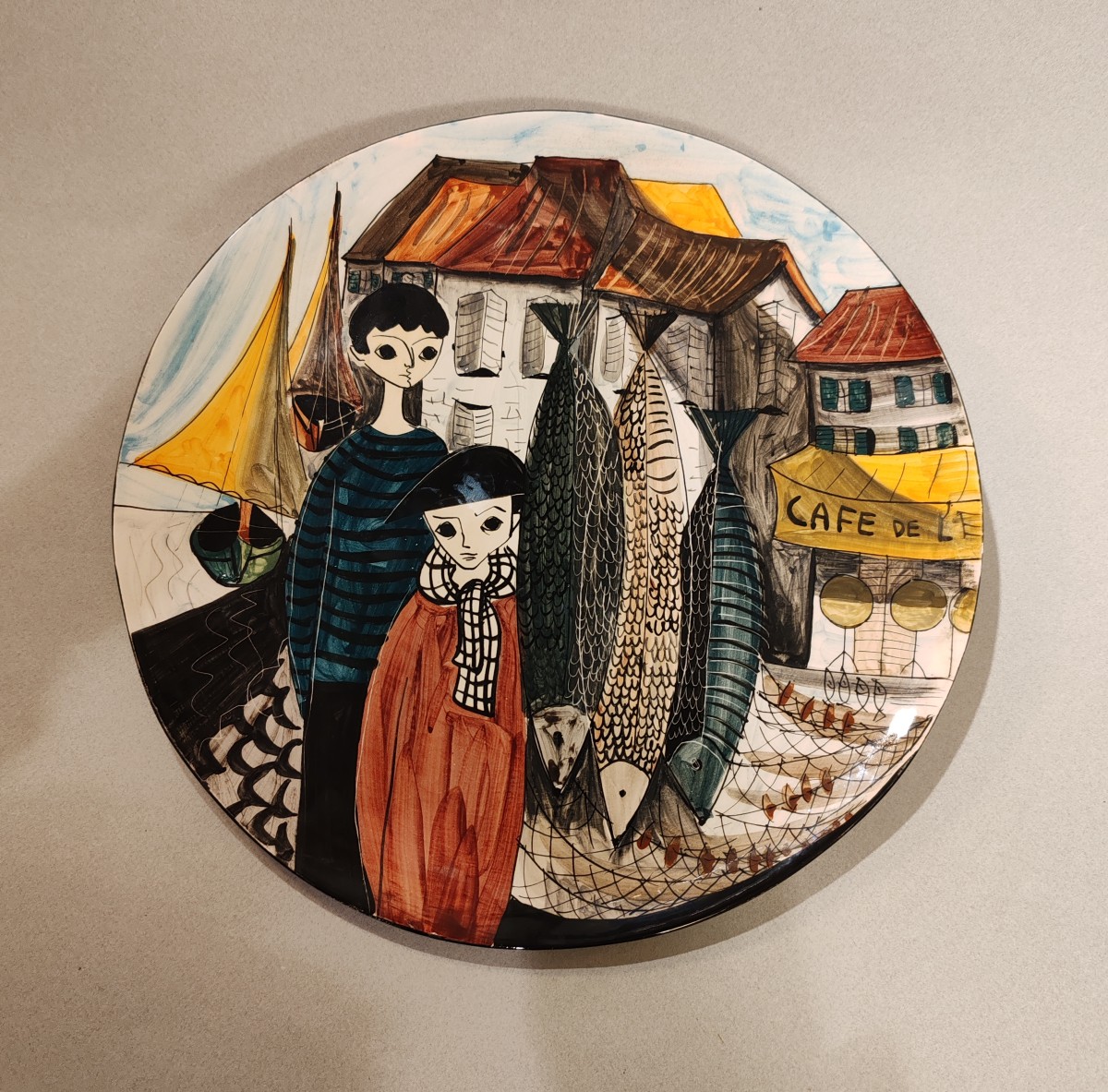


Jean de Lespinasse ceramic plate. Signed on the back Jdl with an inventory number. French ceramist Jean de Lespinasse (signed Jdl) was born in Bréhat (Côtes-du-Nord) in 1896 and died in Nice in 1979. A member of the Resistance on the French Riviera during World War II, Jean de Lespinasse established a local craft business after the war. He and his wife then founded SOCFRA, which produced ceramics from the late 1940s. Their path crossed with those of Roger Capron and his wife Jacotte, the Madoura workshops, Robert Picault, and Georges Tardieu. The ceramics workshop, located in the Cimiez district of Nice, employed about ten people (casting pieces, shaping, firing bisque, decorating, glazing, firing, etc.). The raw materials used to make the bisque and then to glaze the pieces were purchased from L'Hospied et Cie in Golfe-Juan. The ceramics are sold to shops on the French Riviera initially, and later throughout France and abroad. Twice a year, the collections were presented at the Lyon Fair and the Salon des Arts du Feu in Paris (later renamed Ateliers d'Art). The workshop also rented shops during the summer season in Sainte-Maxime (from 1958 to 1961), Saint-Paul-de-Vence, and Vallauris (which is why the name of this town appears under some pieces), to sell its production made in Nice. The pieces generally bear the initials "JdL" on the base, as well as a number, which corresponds to the catalog that Jean de Lespinasse and his son-in-law, Jean Saguès, used when they went on tour to present the collections after each exhibition. The workshop ceased operations in the early 1980s, after the founder's death. Pieces signed by the Jean de Lespinasse workshop are generally large, dynamic, and highly structured. The most striking feature is the masterful use of enamel, with its interplay of matte and glossy finishes, demonstrating a high level of skill in the art of ceramics. These creations are frequently found in auctions of ceramics from the 1950s and 1960s.
Explore similar pieces and discover your ideal find:
other ceramics