THIS OBJECT WAS SOLD
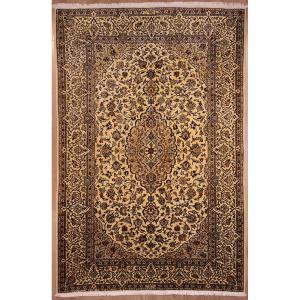
Kashan Iran Rug 208 X 128 Cm
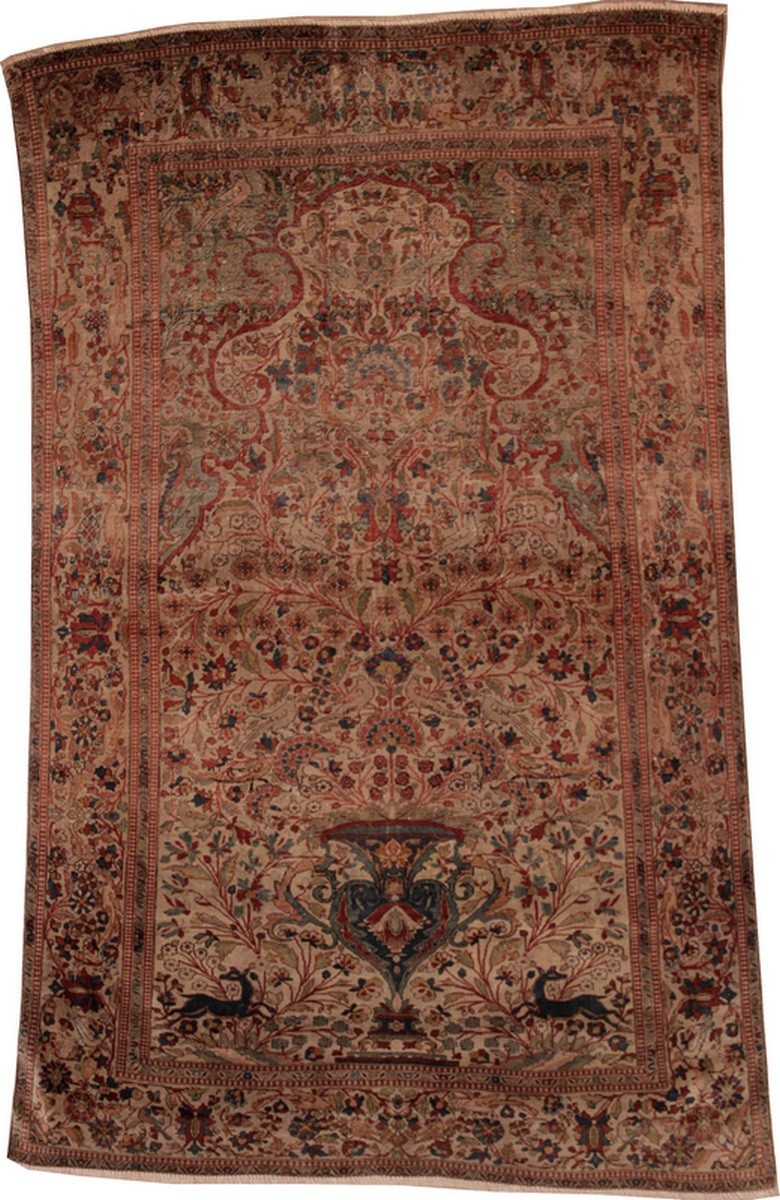
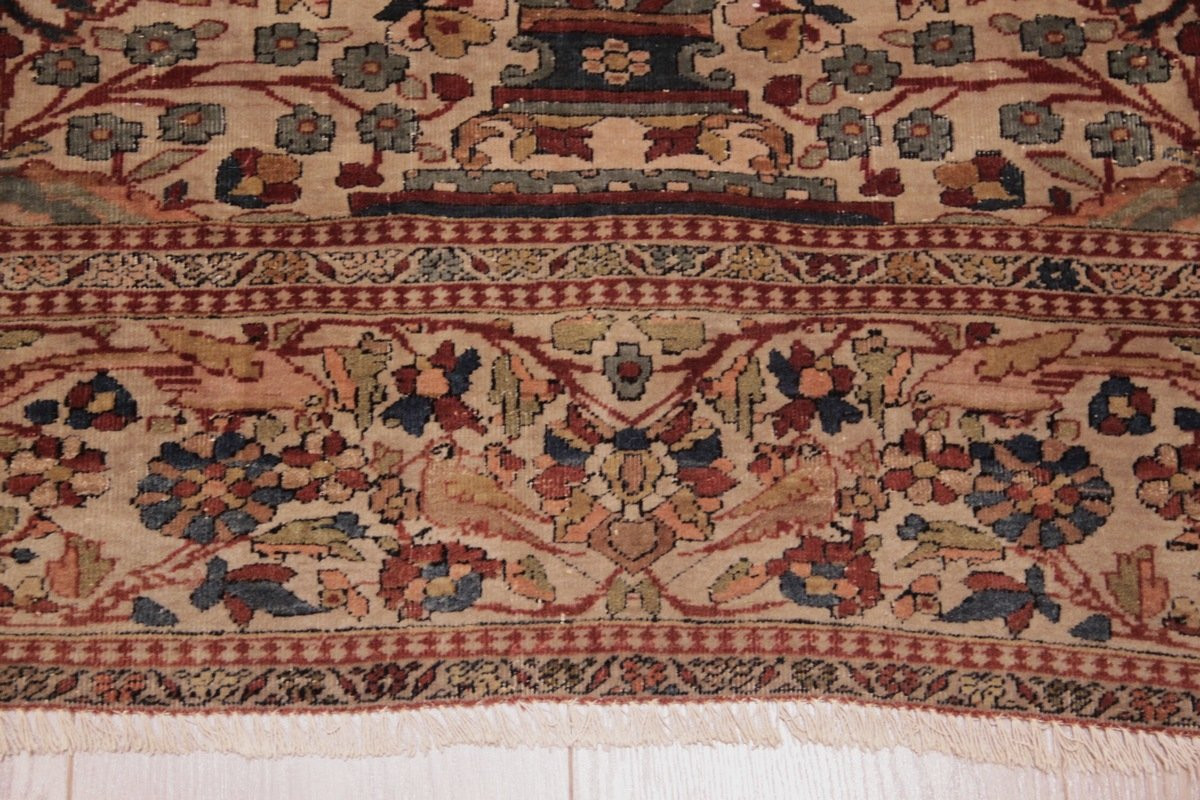
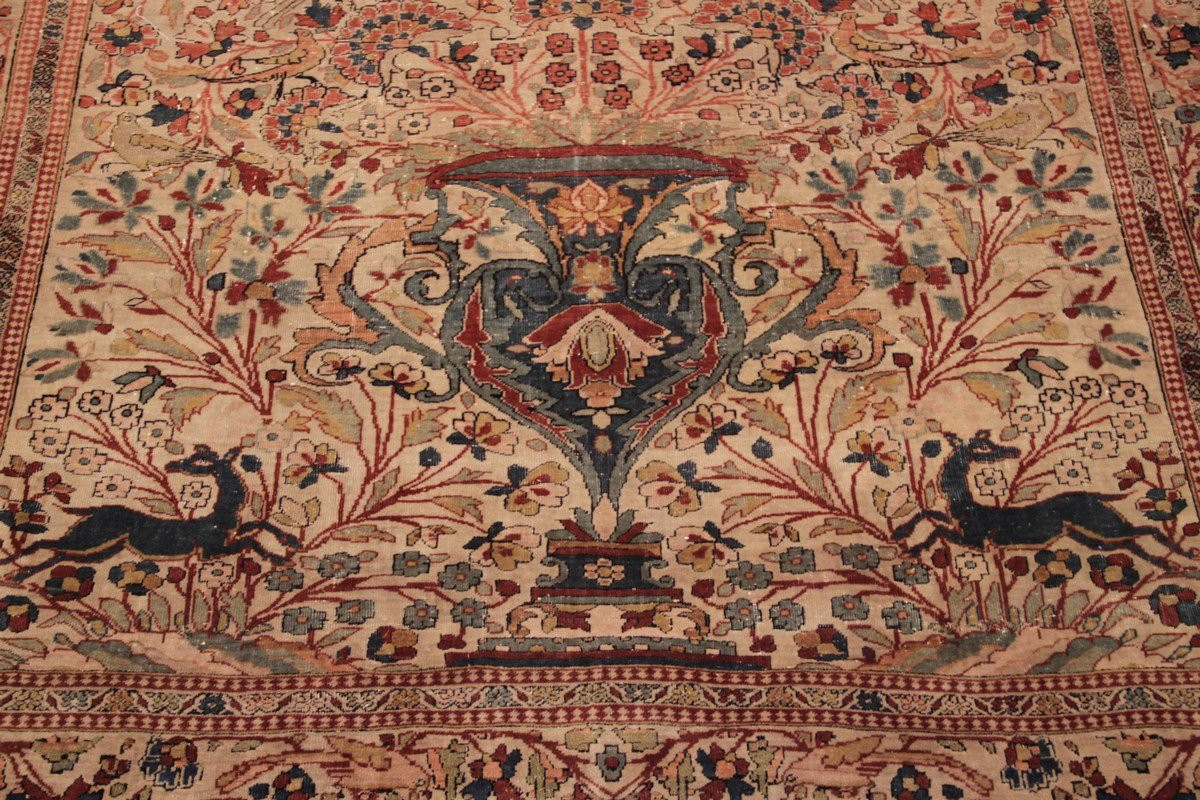
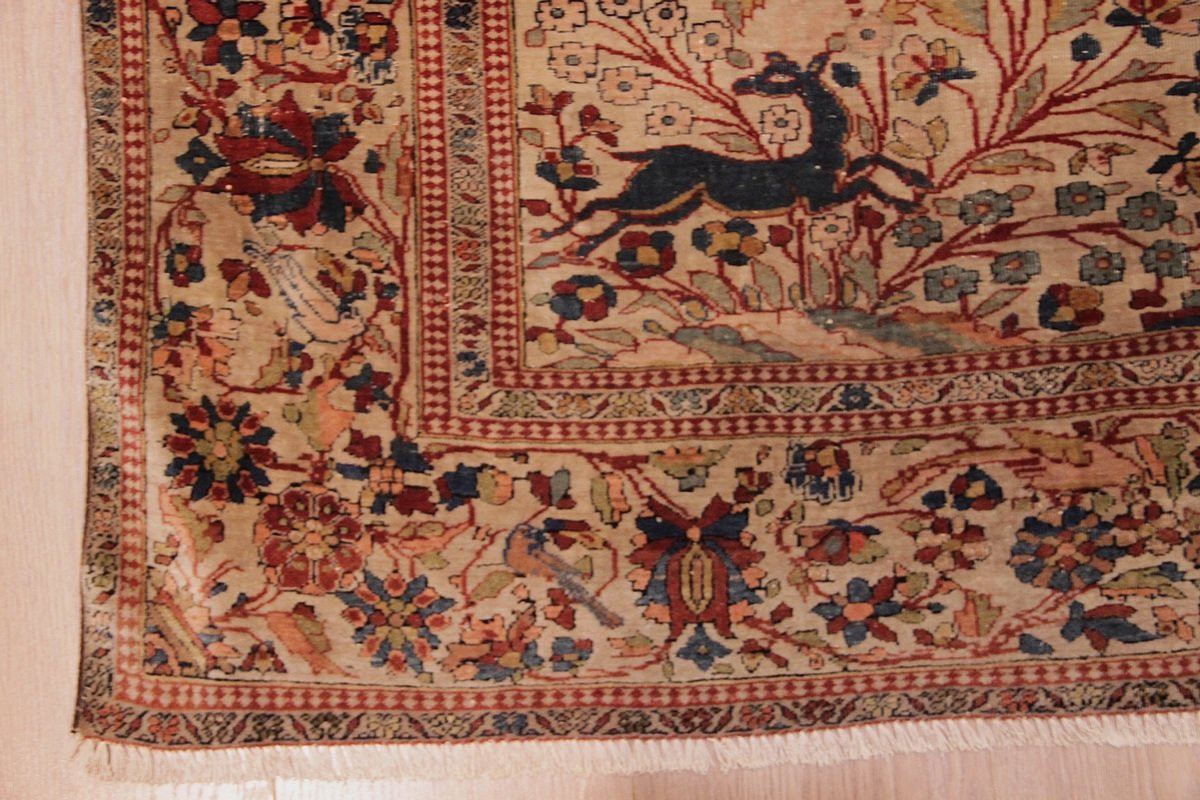
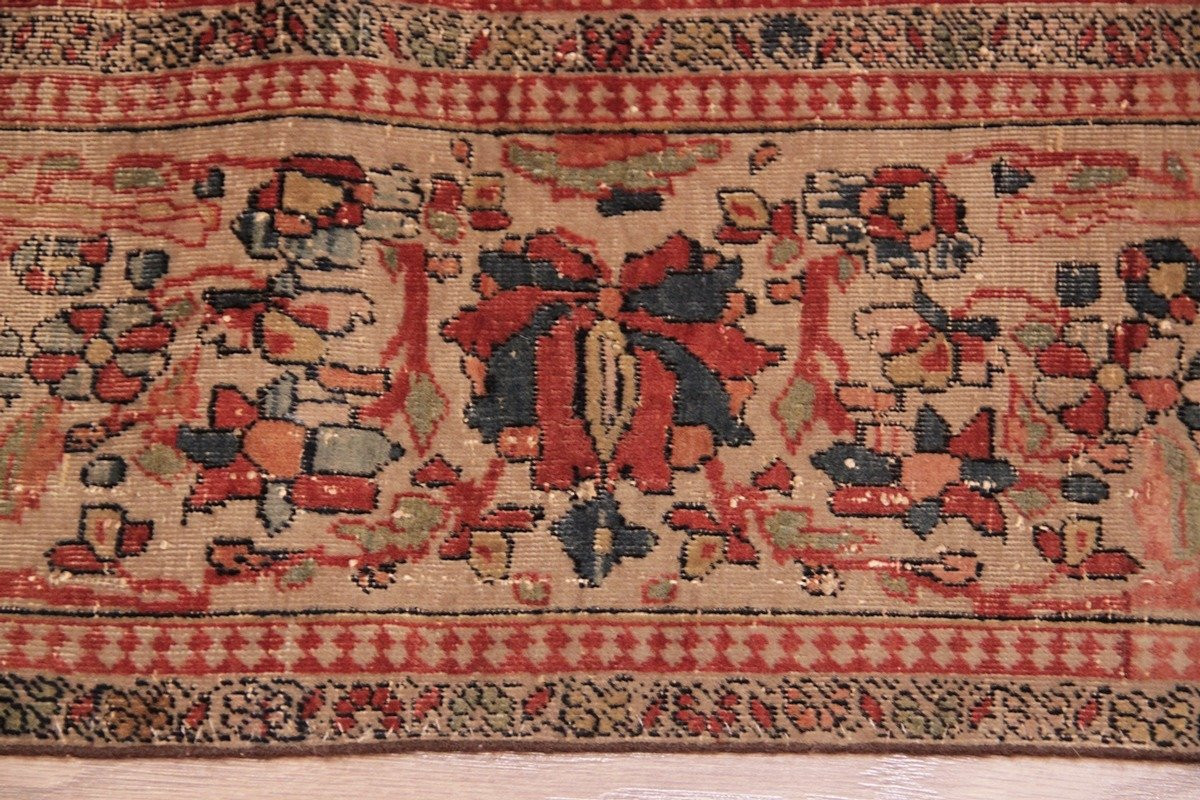
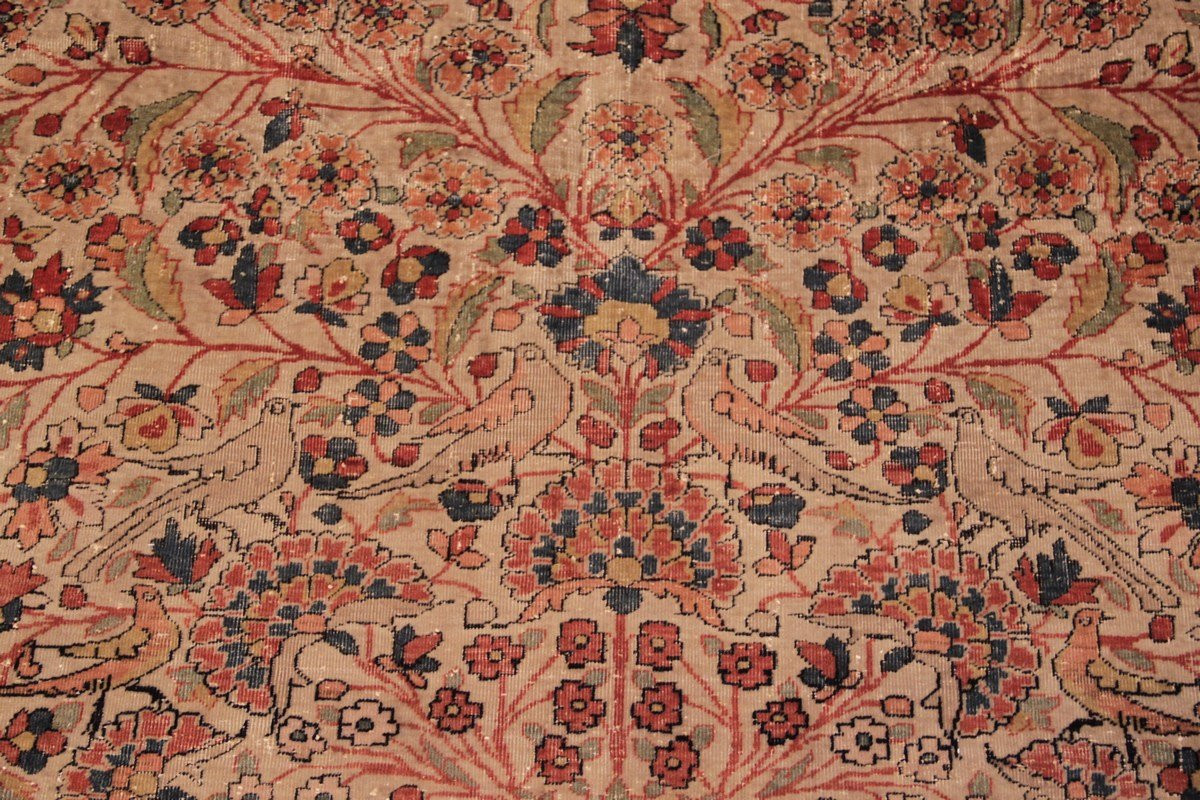
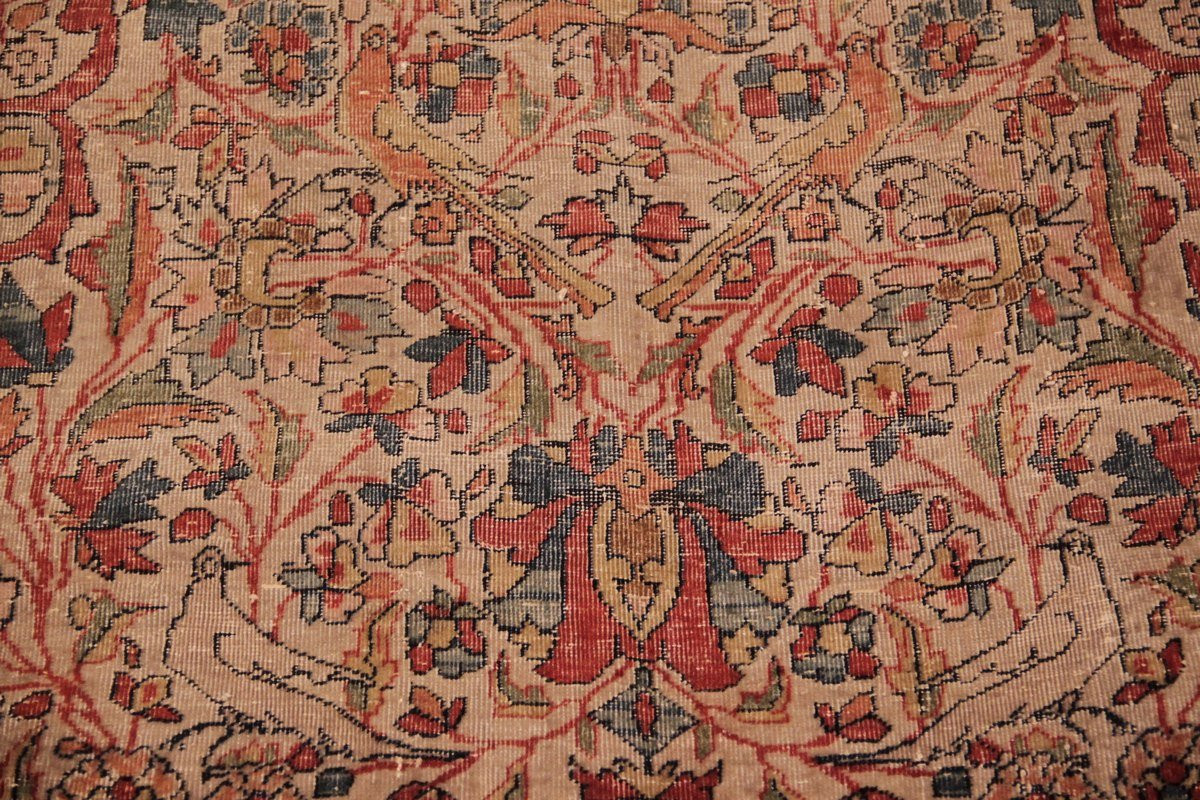
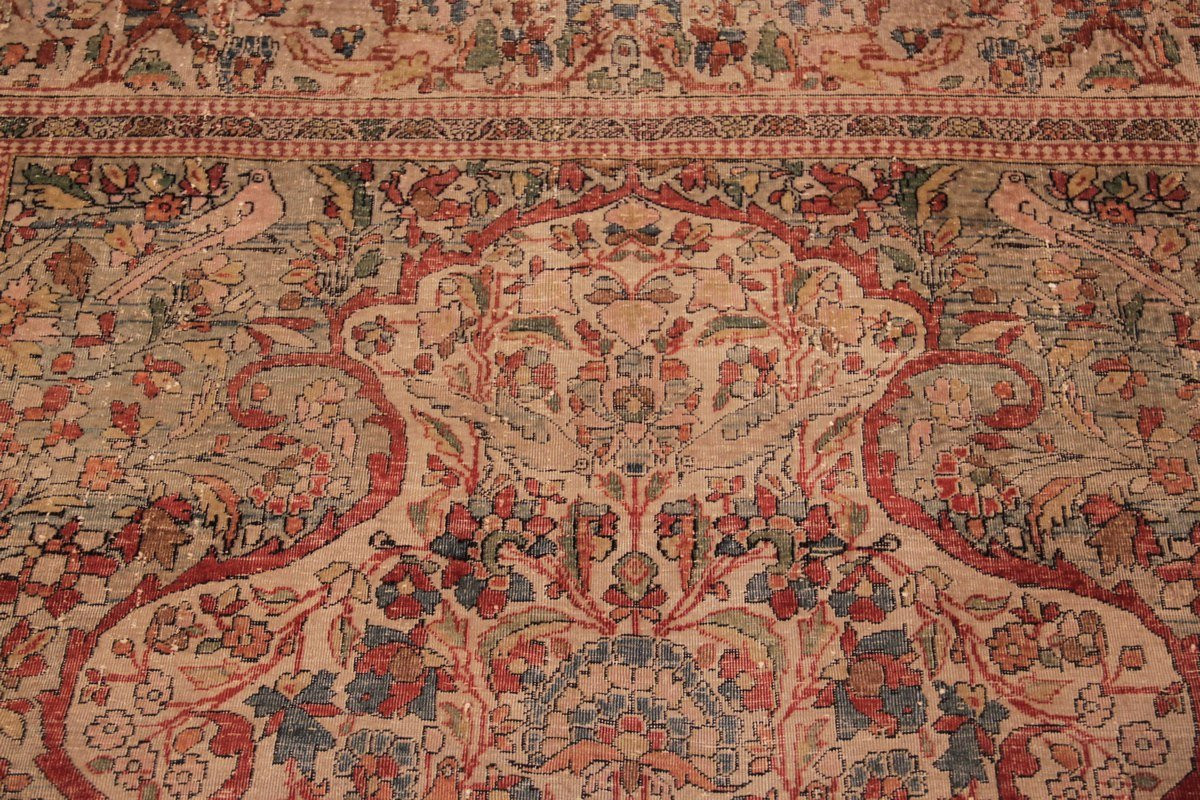
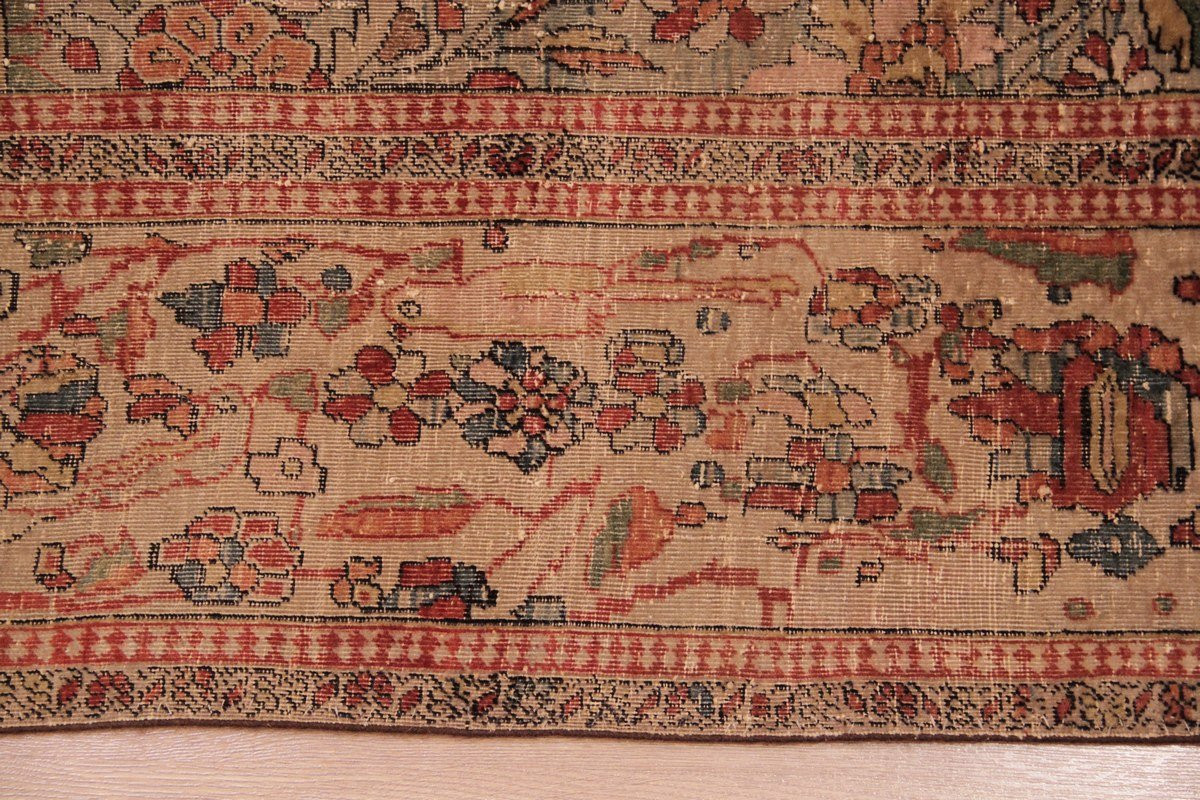
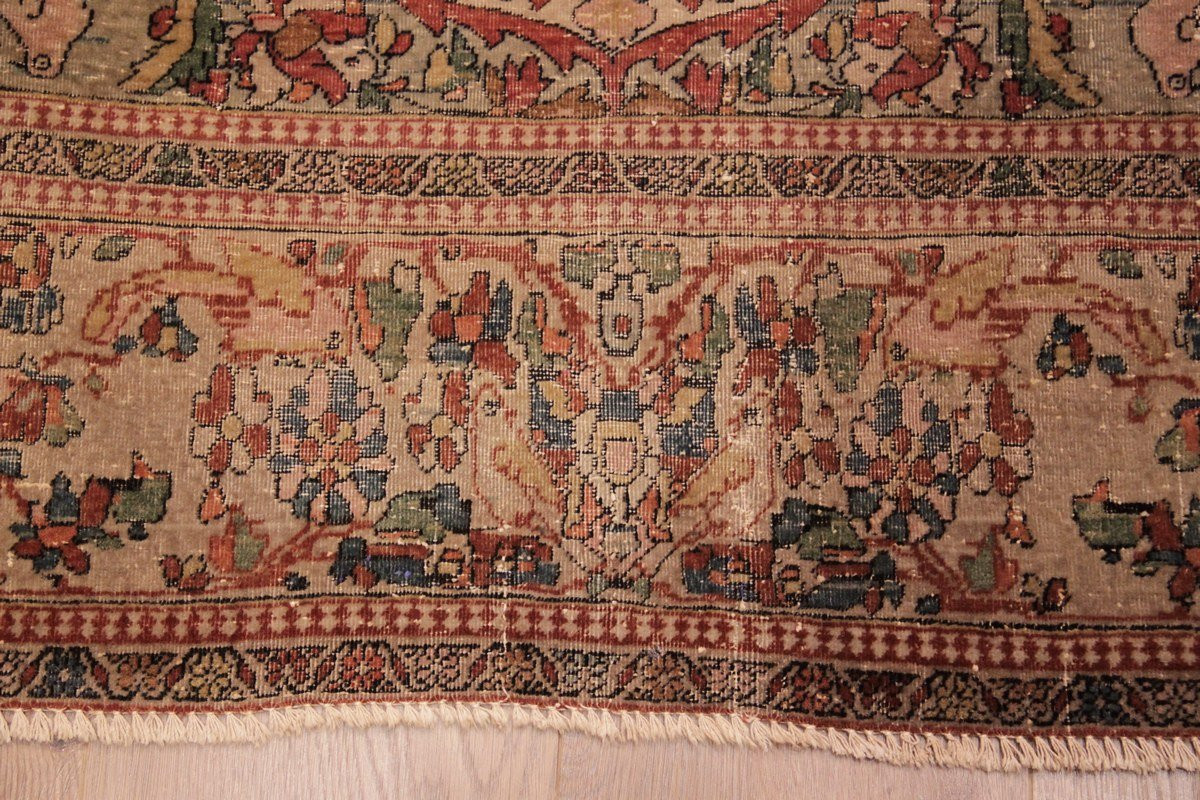
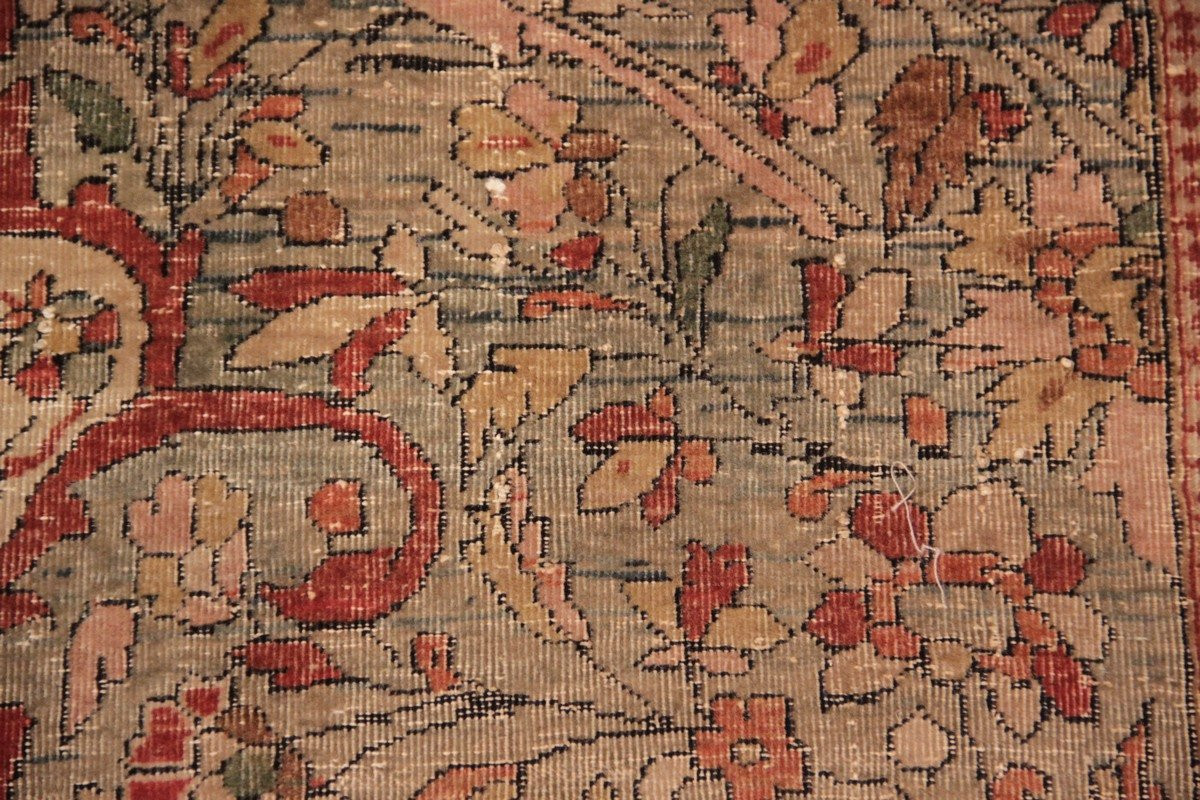
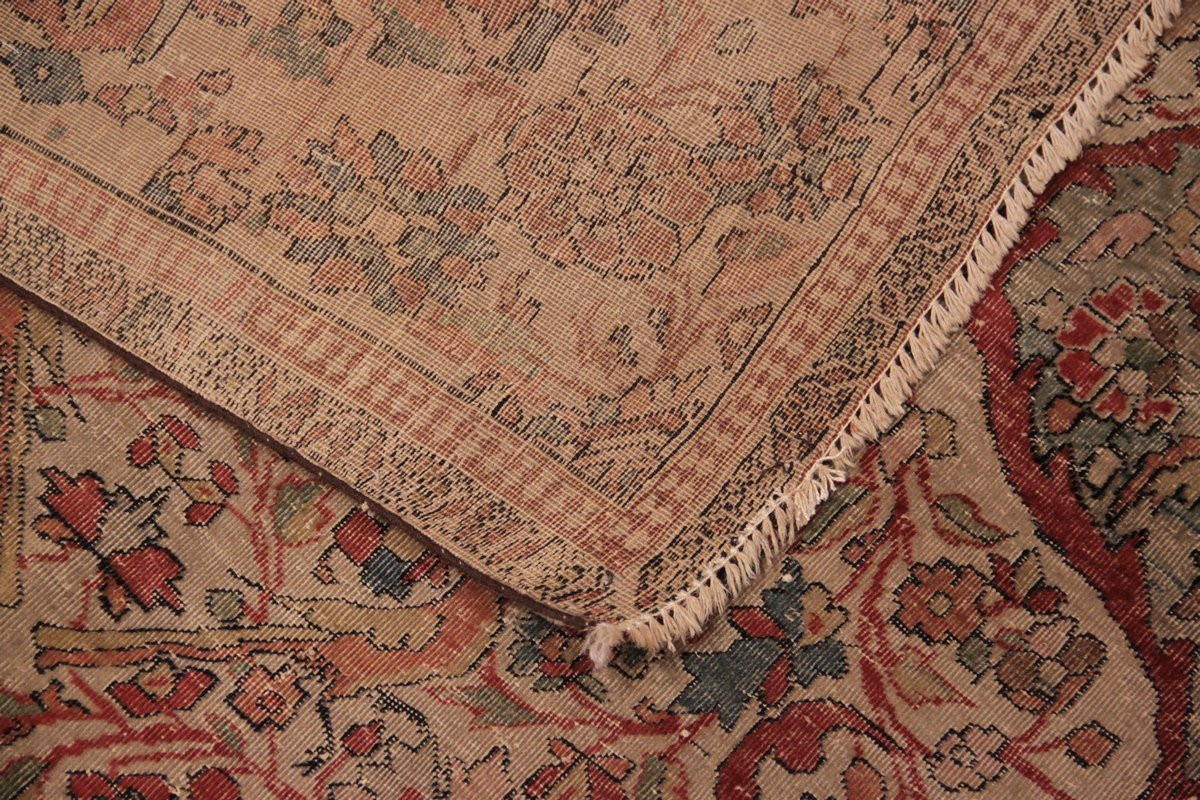


Iranian Kurk wool carpet*, cotton warp and weft, circa 1870. Used condition. Even wear throughout. Asymmetrical. Borders and tacks restored.
Early Kashan academic style, 'dozar' or rather 'ghaliché' format given the carpet's fineness, with a mihrab motif. The lower section features a vase flanked on either side by deer. Across the field, a multitude of flowers and scrolls mingle with birds. The whole is enhanced by 'samovari' (flowers) and bird borders, framed by smaller 'aleh abassi' (tulips) and 'herati' (flowers) borders. Note: abraches (a term describing variations in tone within the same color).
Due to its fineness and elegance, this rug could be described as 'Kashan Motashem'. The term 'Kashan Motashem' refers to the finest rugs from Kashan. The name Motashem also refers to an illustrious master weaver (Ustad) from Kashan whose workshop produced rugs of exceptional quality, fineness, and design. Motashem was renowned for the elegance of his highly refined and richly detailed rug cartoons.
Located in central Iran, Kashan began its rug-making tradition during the Safavid dynasty (1502-1736), specifically under the reign of Shah Abbas (1588-1629). Seeking to develop art in Persia, Shah Abbas established schools where Ustads (master weaver-designers) worked. These Ustads created rug cartoons. The designs consisted of medallion motifs, hunting scenes, floral patterns, trees, gardens, mihrabs, and were also inspired by mosaics. Major carpet creations were produced in the cities of Kashan, Kerman, Mashhad, Tabriz, and Isfahan. Carpet making became academic. Even under the Safavids, Kashan carpets were renowned. After turbulent times, Kashan revived the art of carpet weaving in the 18th century. The creations of the late 19th and early 20th centuries are considered major, both in Kurk wool and silk.
*Kurk wool: fine lamb's wool obtained by combing.
Free Chronopost delivery within France and Europe. Feel free to contact us by phone or email. (We ship our rugs and kilims via Chronopost or Colissimo, at our expense (up to 30 kg) in mainland France and Europe).
Early Kashan academic style, 'dozar' or rather 'ghaliché' format given the carpet's fineness, with a mihrab motif. The lower section features a vase flanked on either side by deer. Across the field, a multitude of flowers and scrolls mingle with birds. The whole is enhanced by 'samovari' (flowers) and bird borders, framed by smaller 'aleh abassi' (tulips) and 'herati' (flowers) borders. Note: abraches (a term describing variations in tone within the same color).
Due to its fineness and elegance, this rug could be described as 'Kashan Motashem'. The term 'Kashan Motashem' refers to the finest rugs from Kashan. The name Motashem also refers to an illustrious master weaver (Ustad) from Kashan whose workshop produced rugs of exceptional quality, fineness, and design. Motashem was renowned for the elegance of his highly refined and richly detailed rug cartoons.
Located in central Iran, Kashan began its rug-making tradition during the Safavid dynasty (1502-1736), specifically under the reign of Shah Abbas (1588-1629). Seeking to develop art in Persia, Shah Abbas established schools where Ustads (master weaver-designers) worked. These Ustads created rug cartoons. The designs consisted of medallion motifs, hunting scenes, floral patterns, trees, gardens, mihrabs, and were also inspired by mosaics. Major carpet creations were produced in the cities of Kashan, Kerman, Mashhad, Tabriz, and Isfahan. Carpet making became academic. Even under the Safavids, Kashan carpets were renowned. After turbulent times, Kashan revived the art of carpet weaving in the 18th century. The creations of the late 19th and early 20th centuries are considered major, both in Kurk wool and silk.
*Kurk wool: fine lamb's wool obtained by combing.
Free Chronopost delivery within France and Europe. Feel free to contact us by phone or email. (We ship our rugs and kilims via Chronopost or Colissimo, at our expense (up to 30 kg) in mainland France and Europe).
Explore similar pieces and discover your ideal find:
Rugs, Carpets