


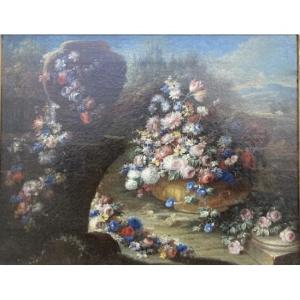


Gaspare Lopez, attrib.
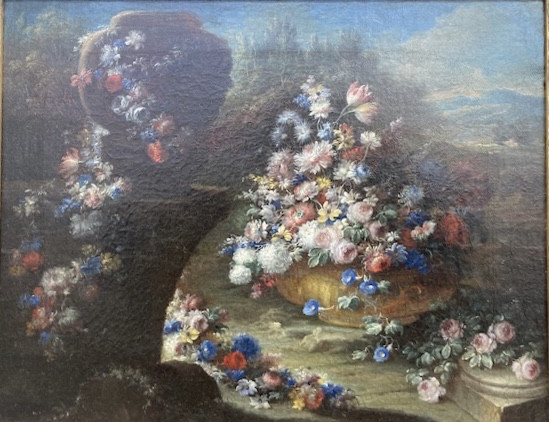
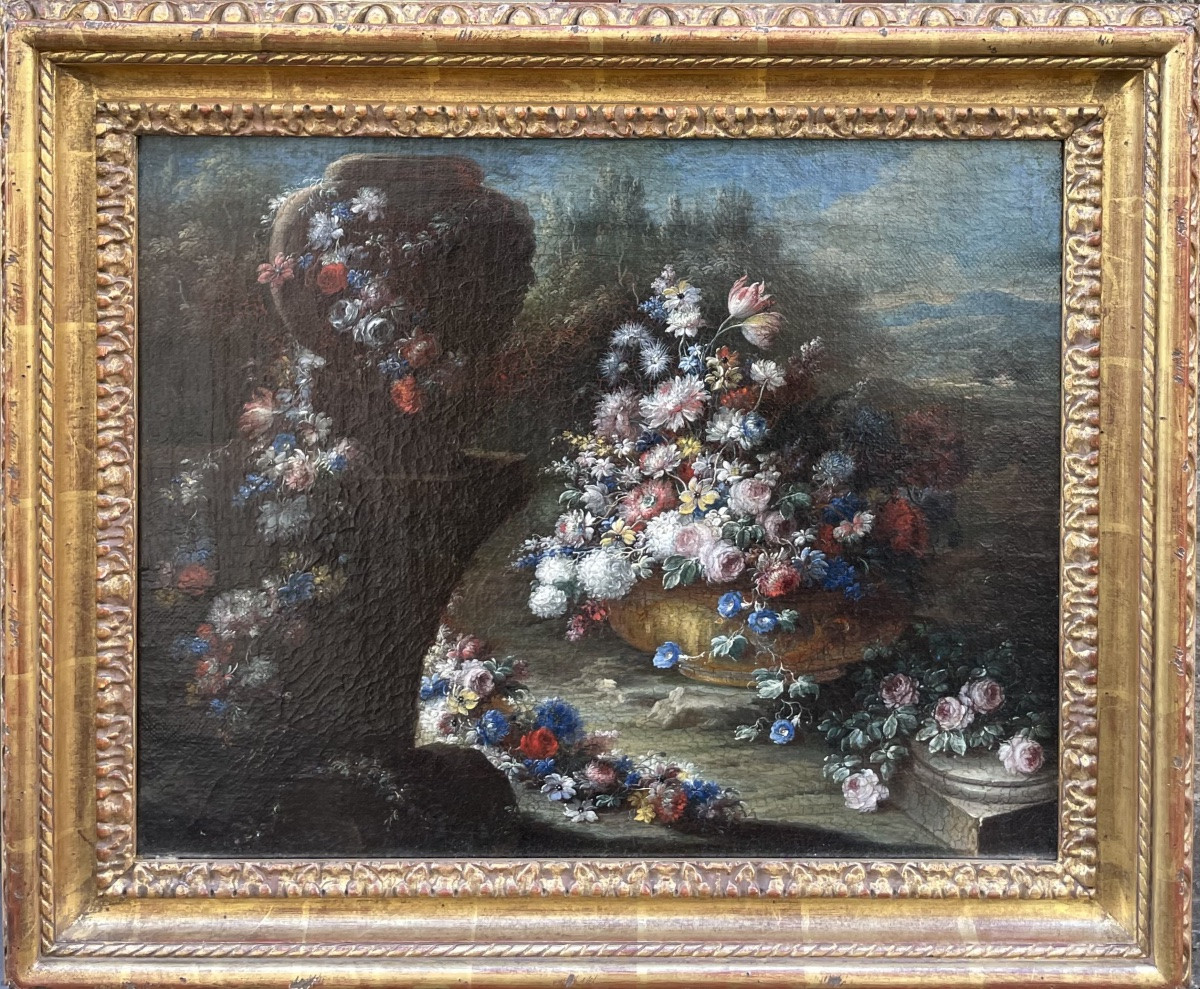
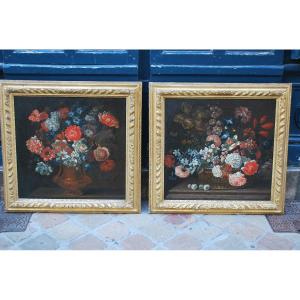
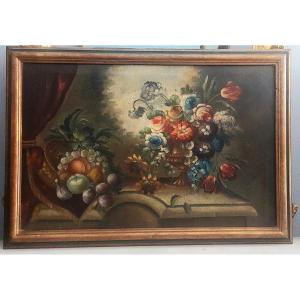
Still Life with Large Vase and Cascade of Flowers in a Garden, Naples, 1720
Oil on canvas, 36 × 45.2 cm (48 × 57.4 cm with frame)
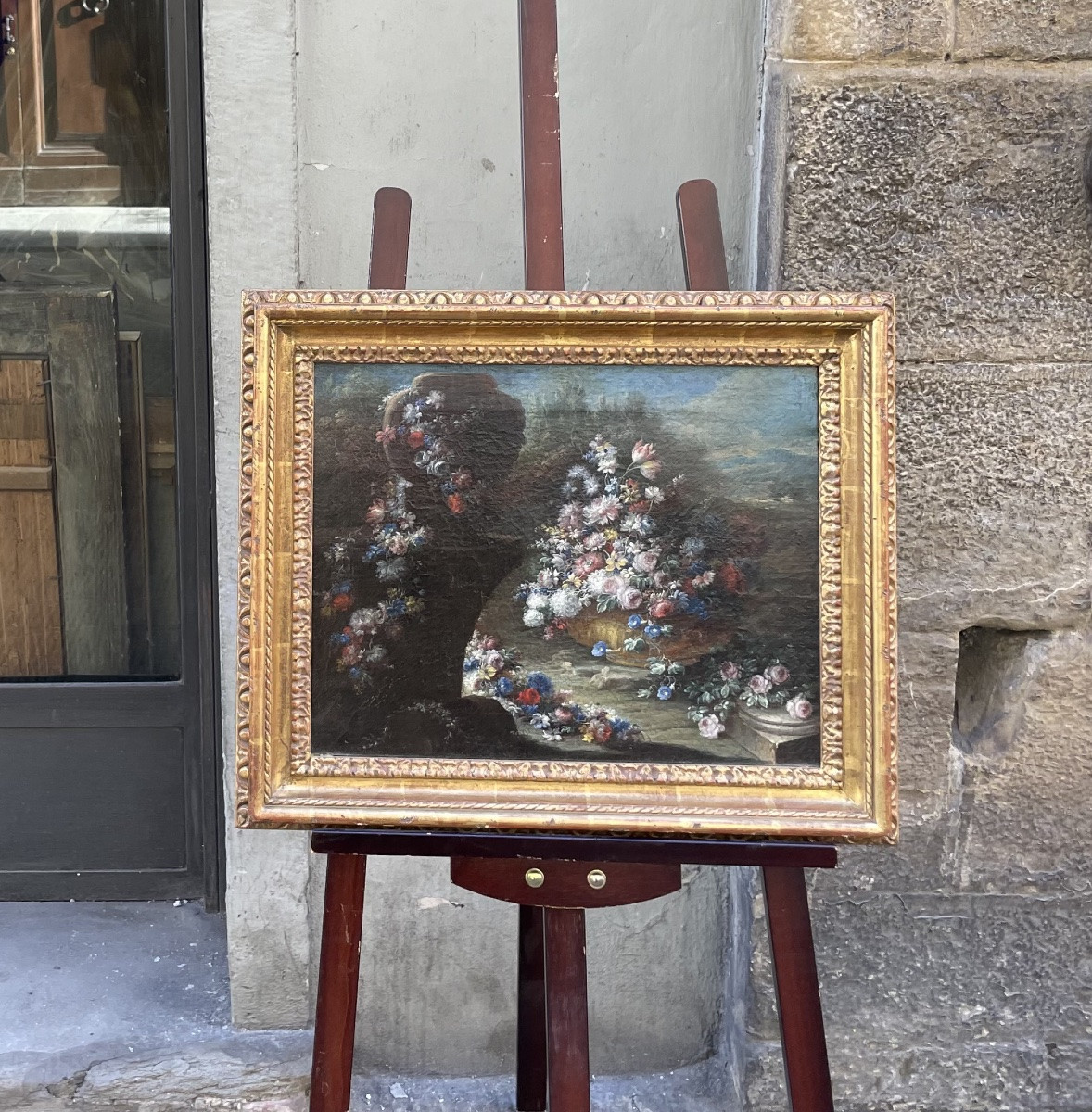
Giltwood frame of later date
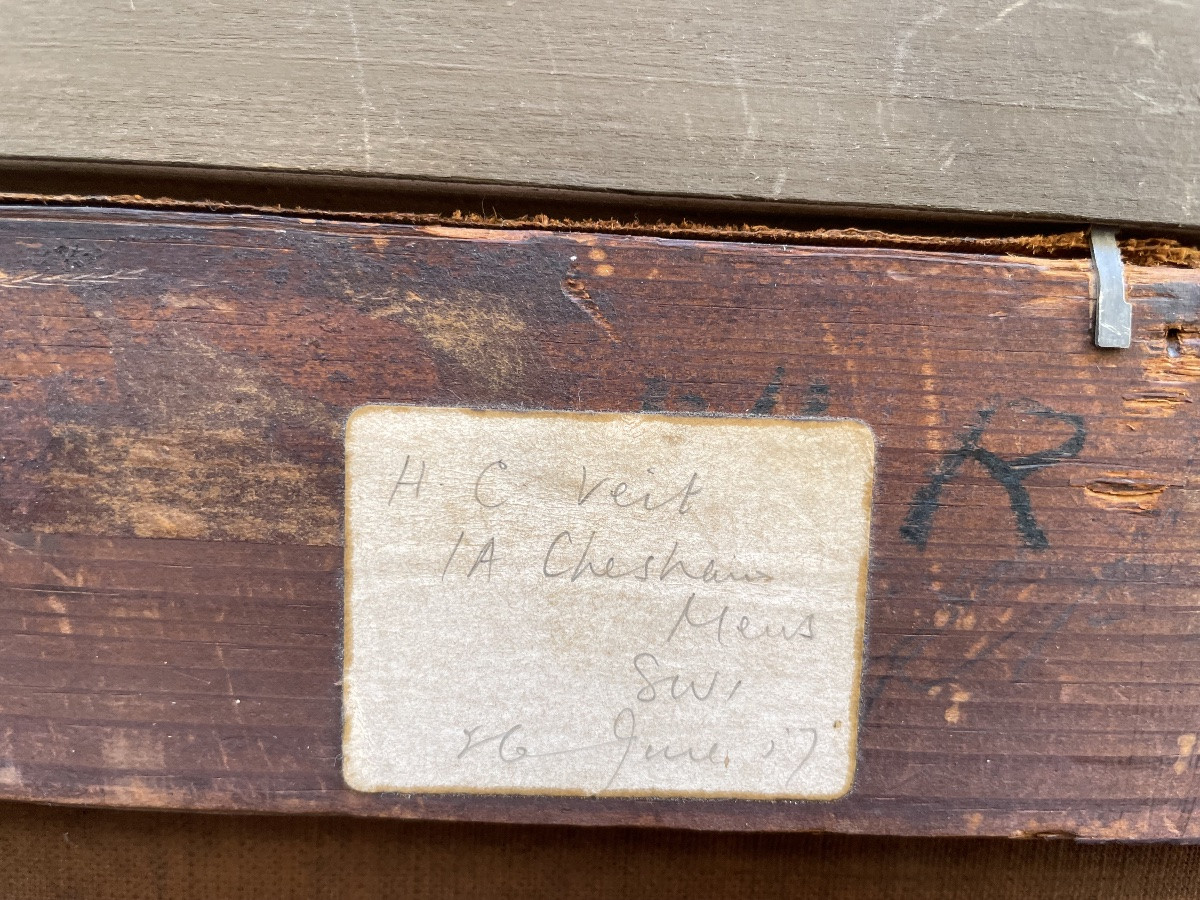
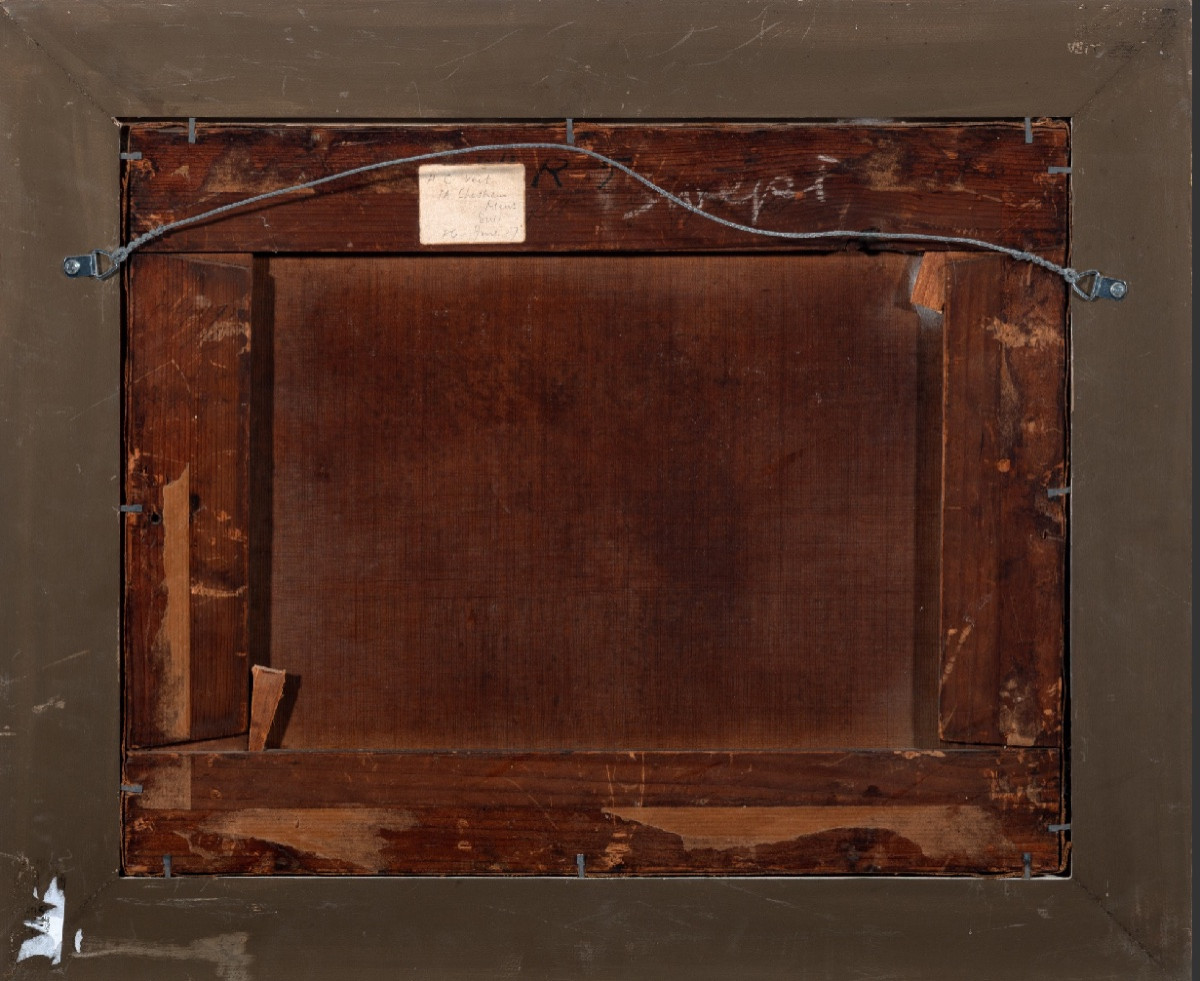
On the reverse, handwritten label: “H. C. Veit – 1A Chesham Mews SW1 – 16 June 1957”
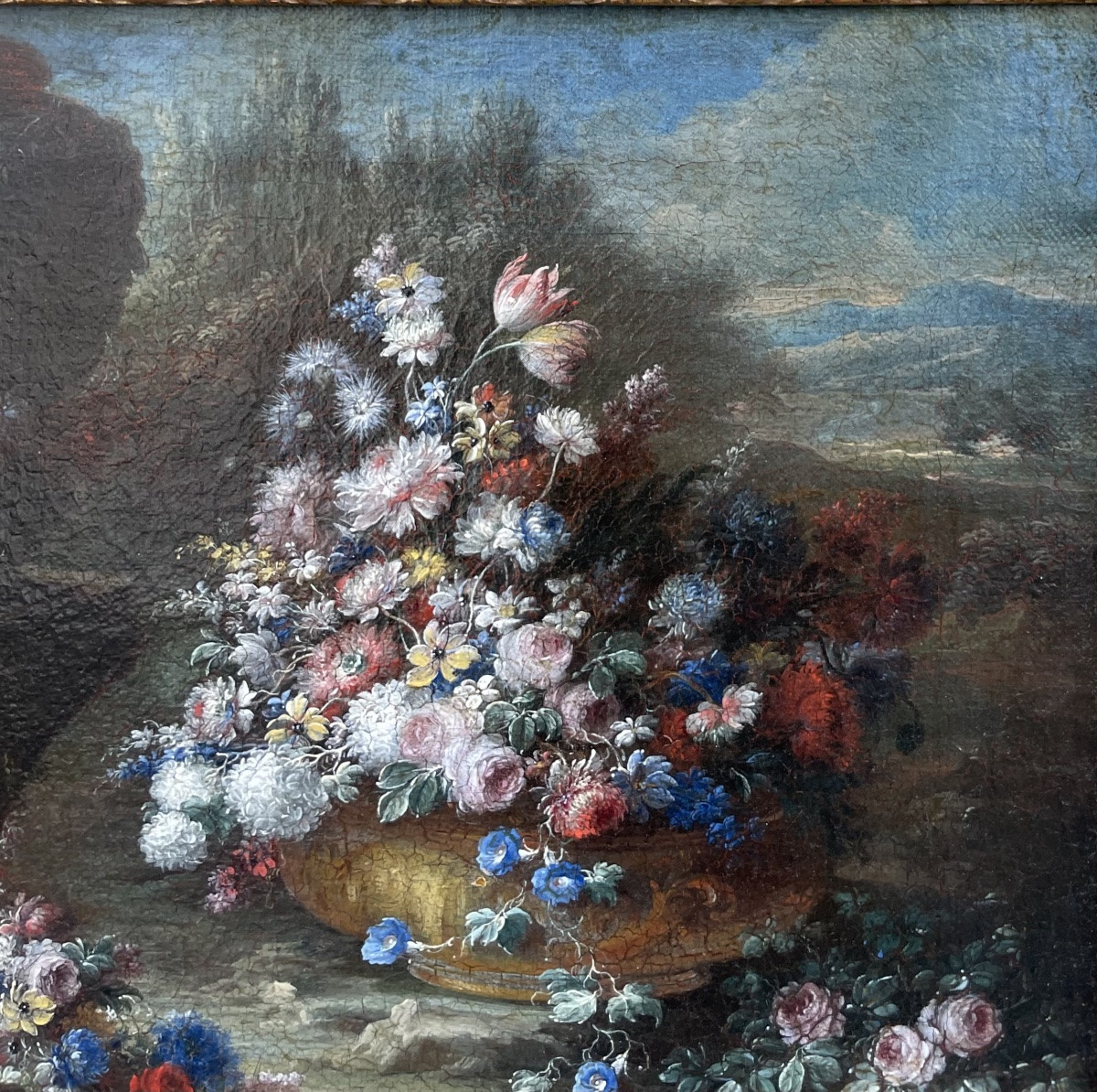
This painting forms part of a pair of early-eighteenth-century Neapolitan still lifes and fits convincingly within the pictorial language of Gaspare Lopez, reflecting his preference for garden settings and richly decorative floral constructions.
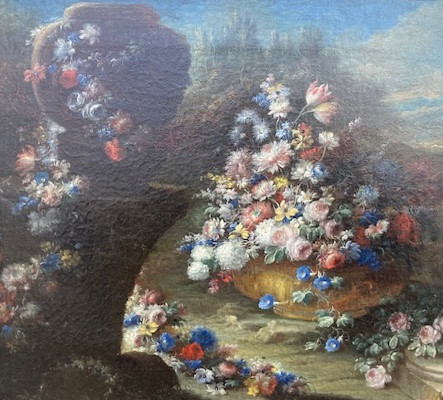
In the foreground stands a large vase set upon a stone ledge and ornamented with a profiled human face in relief, a detail reflecting the Neapolitan Baroque taste for curious and subtly grotesque ornamentation. From this vessel unfolds a true cascade of flowers, arranged with deliberate theatricality and recalling the floral capricci for which Lopez became famous, earning him the contemporary nickname “Gaspare dei fiori.”
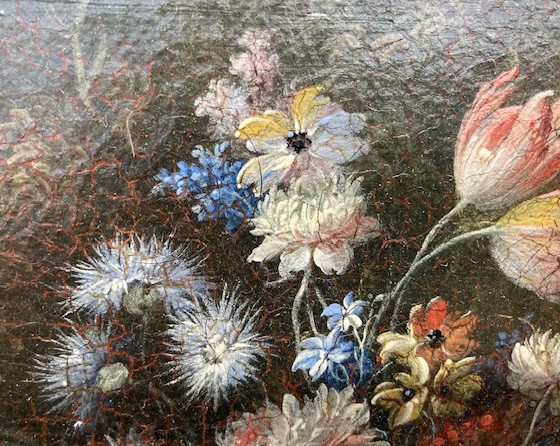
The floral arrangement brings together roses, tulips, carnations, chrysanthemums, small wild flowers and the artist’s characteristic blue climbing bellflowers, painted with a clear and lively touch. The palette is bright, joyful and unmistakably decorative, expressing the Neapolitan vitality of the first half of the eighteenth century, poised between Baroque richness and an emerging pre-Rococo lightness.
In the background appears an Italianate garden with cypresses, terraces and stone structures. This setting finds close parallels in the large garden still lifes preserved in the Kunsthistorisches Museum, Vienna (inv. GG 1658, 1662, 1664), all attributed to Lopez. Though smaller in scale, the present work shares with those paintings the same horizontal arrangement, open bright skies and the balanced interplay between architecture and floral masses—elements that strongly support the attribution.
Lopez’s training under Andrea Belvedere, the leading late-Baroque flower painter in Naples, is reflected in the careful botanical observation, chromatic freshness and decorative balance evident in this work. These qualities would later be developed further as the artist worked between Naples, Rome and Florence.
Condition: old varnish and craquelure.











 Le Magazine de PROANTIC
 TRÉSORS Magazine
 Rivista Artiquariato