THIS OBJECT WAS SOLD
Elegant Oval Coffee Table, By Eero Saarinen, Knoll International, Usa, Circa 1970
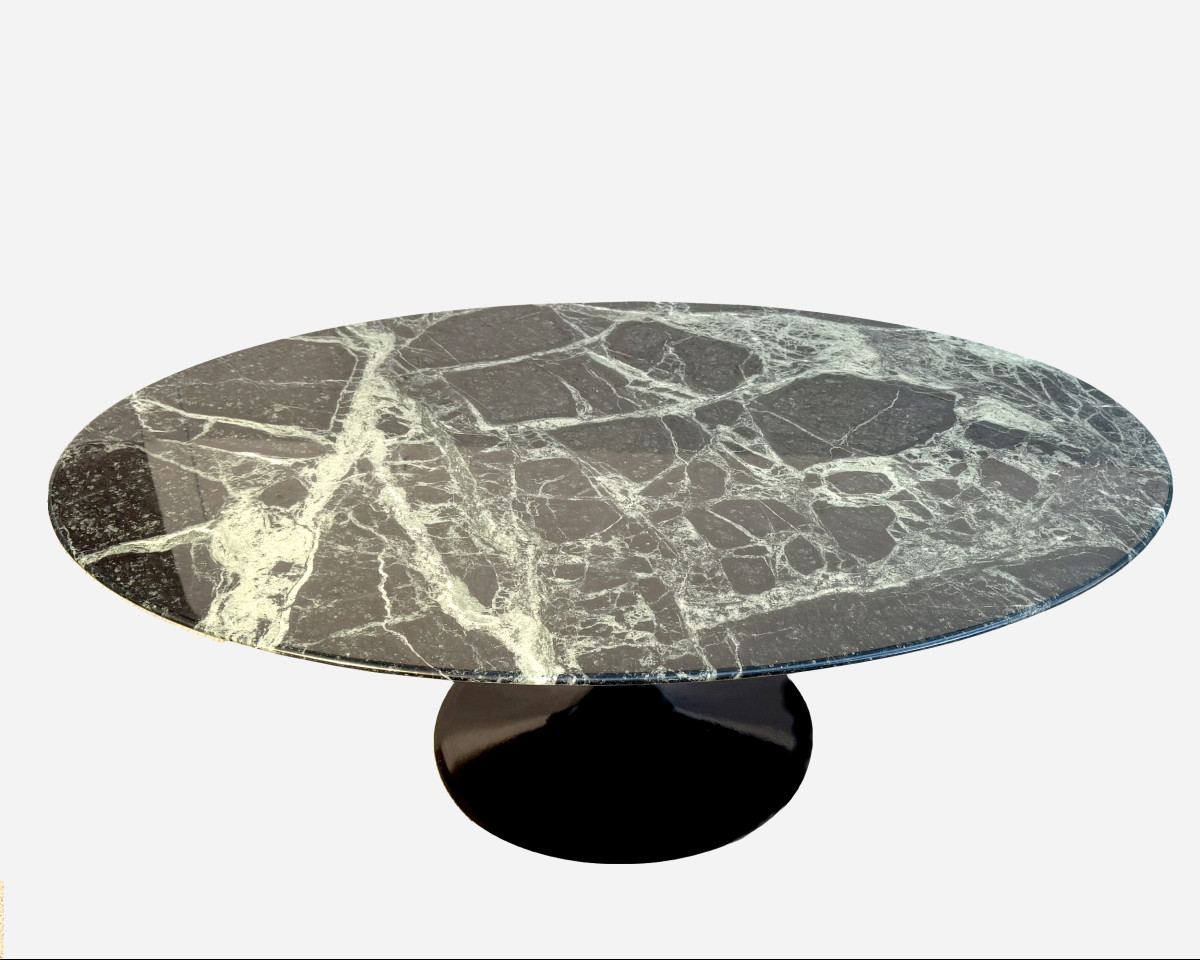
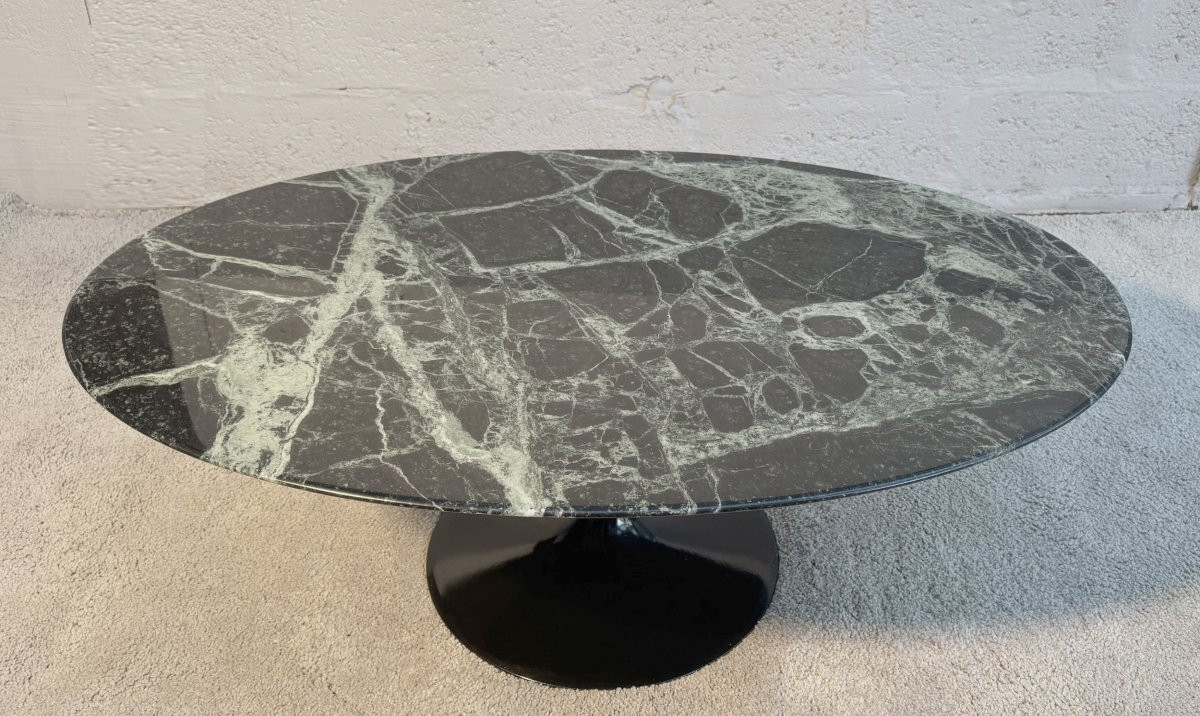
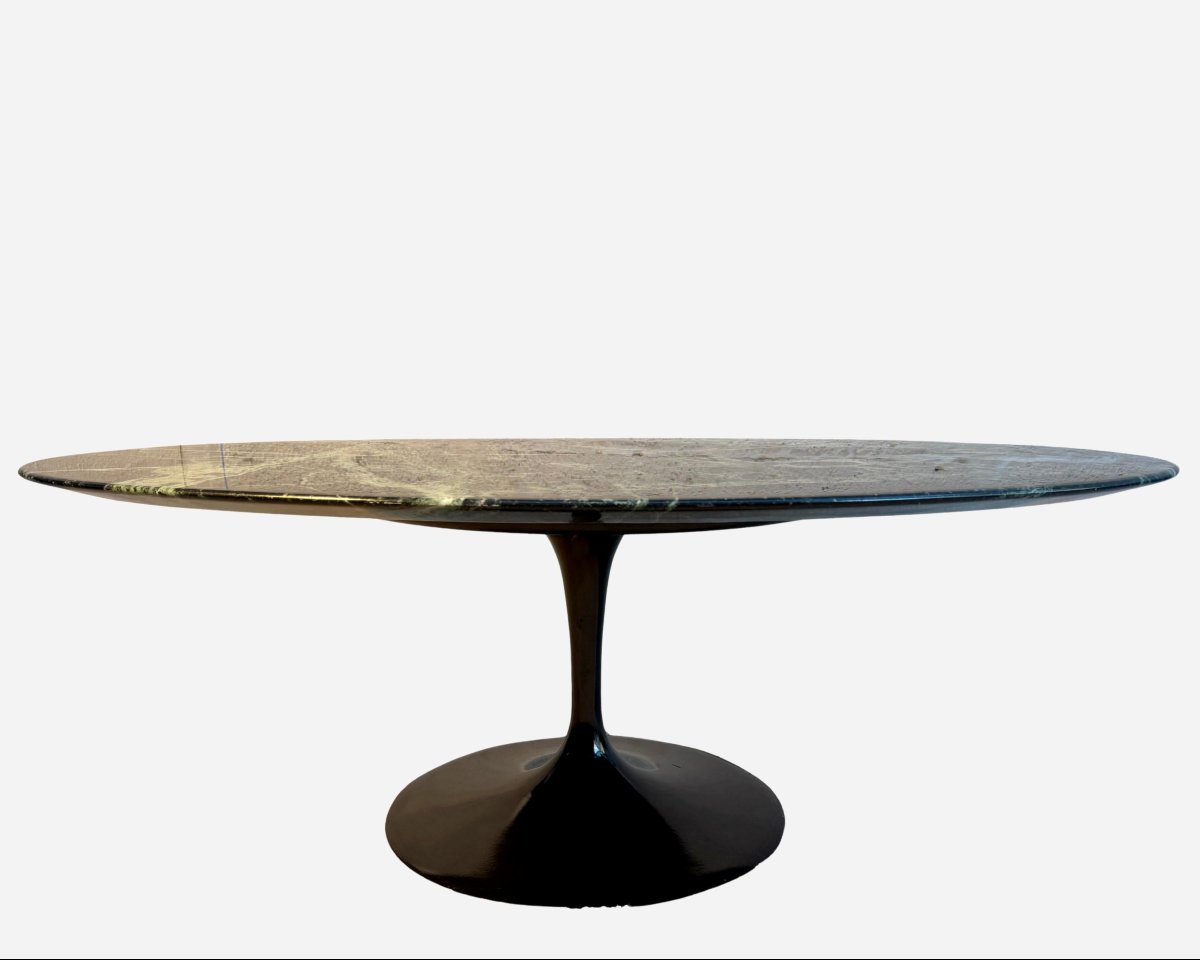
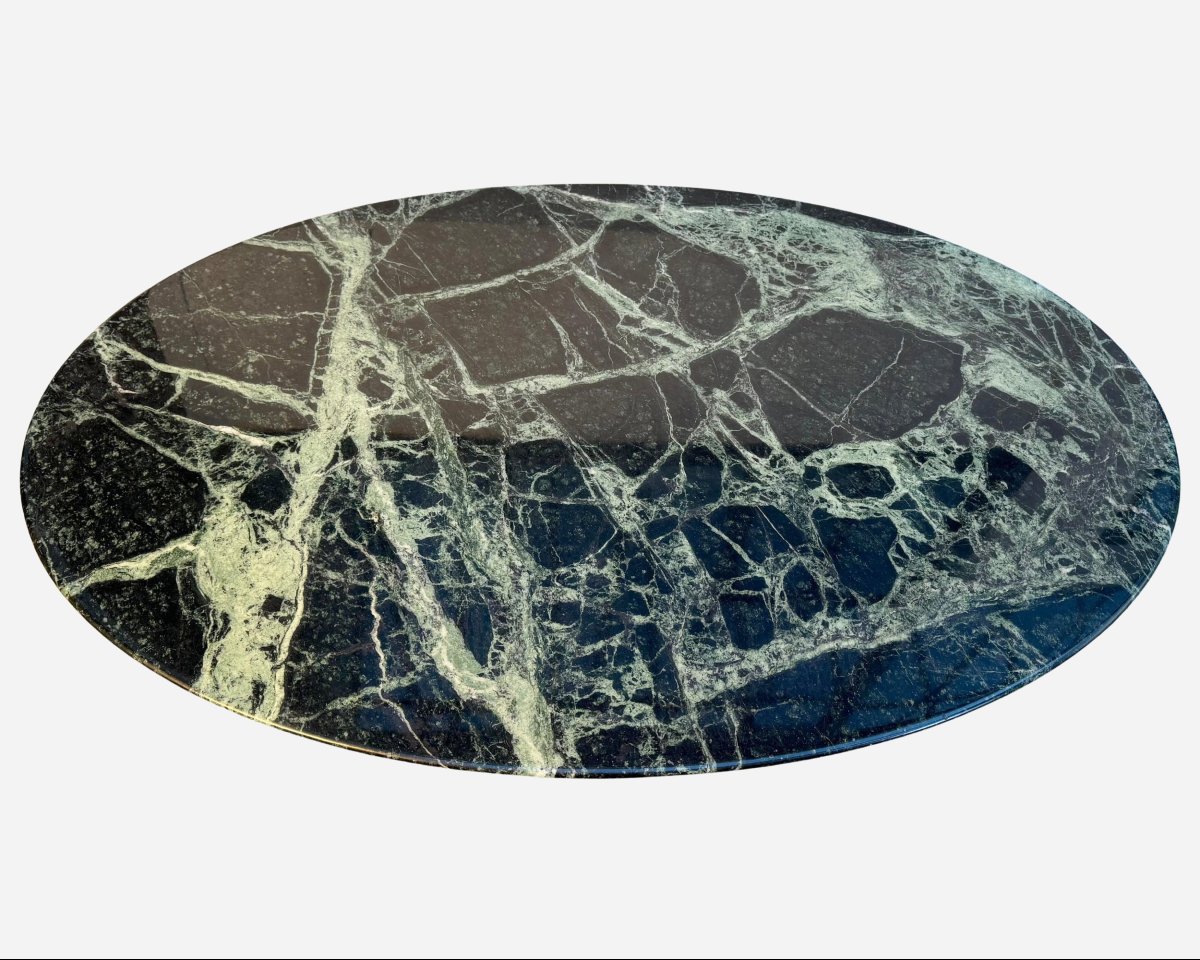
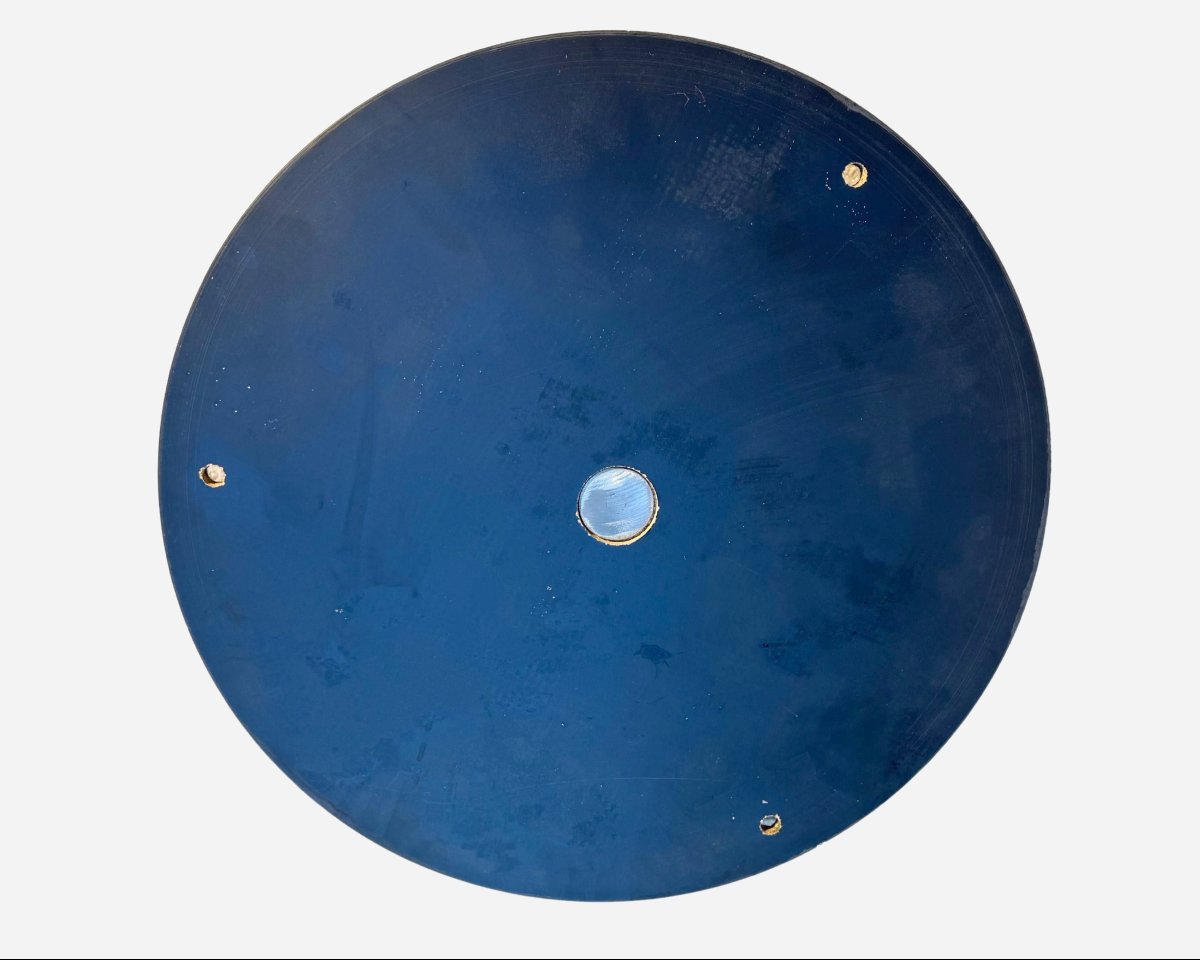
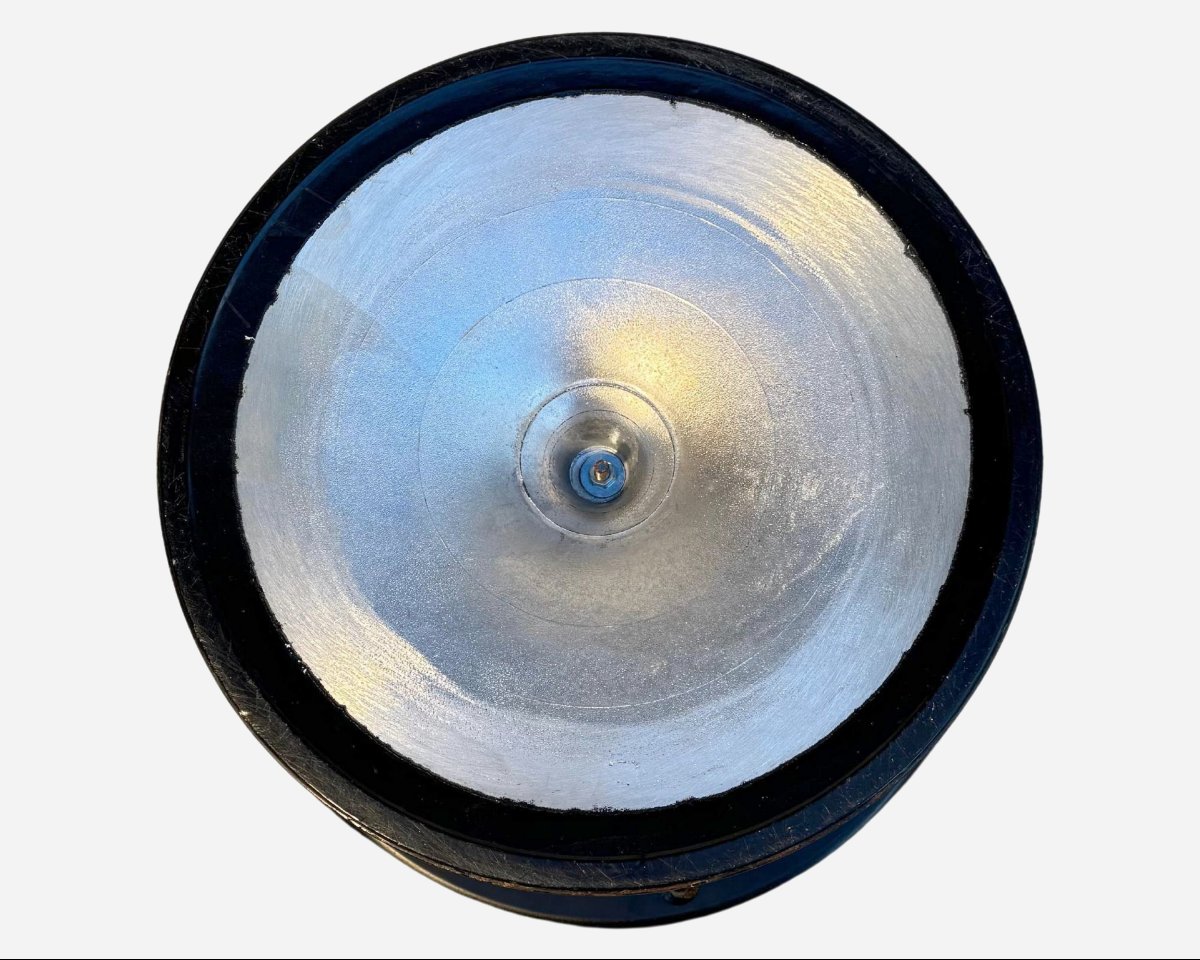


A very elegant oval coffee table from the Tulip collection, designed by Eero Saarinen in the 1940s-1950s for Knoll.
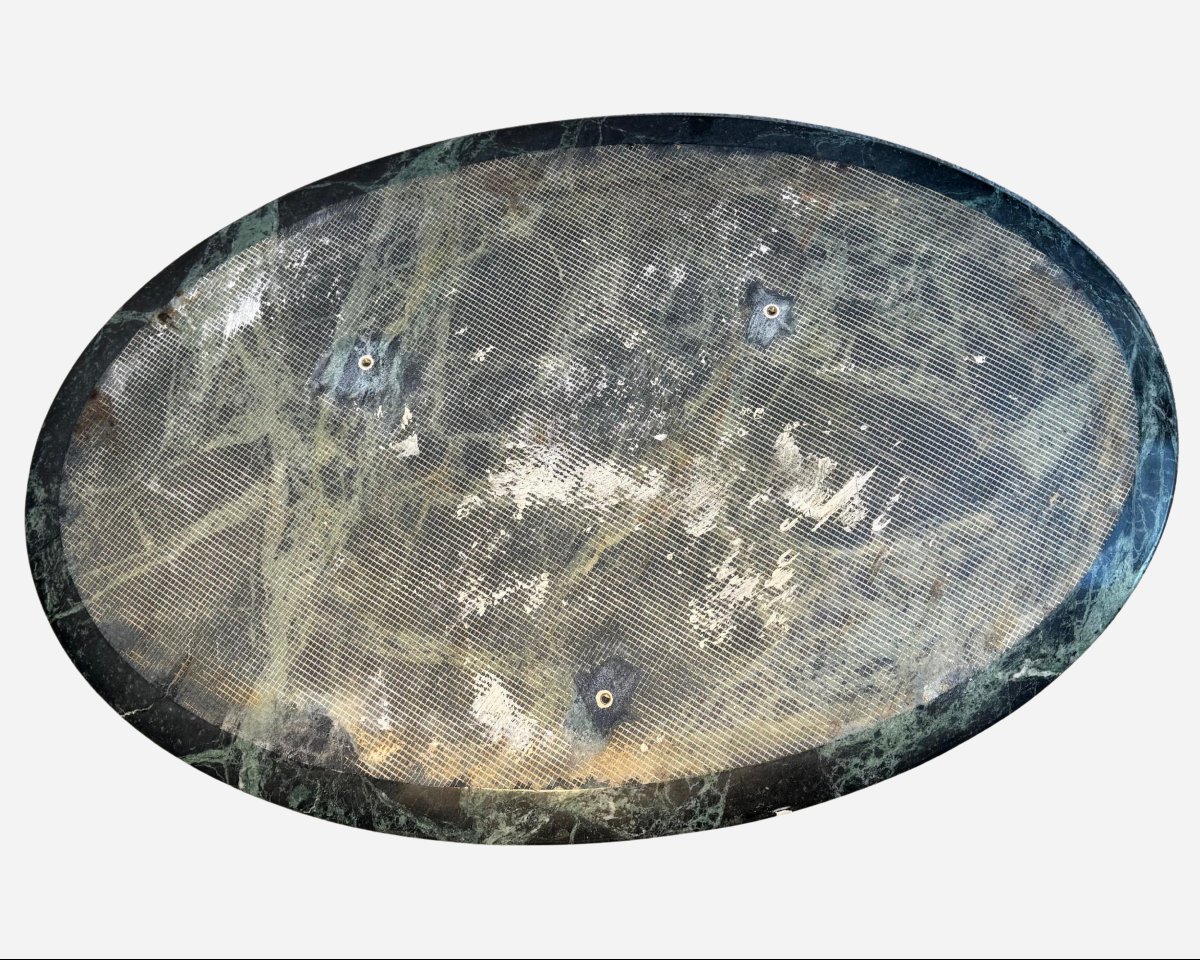
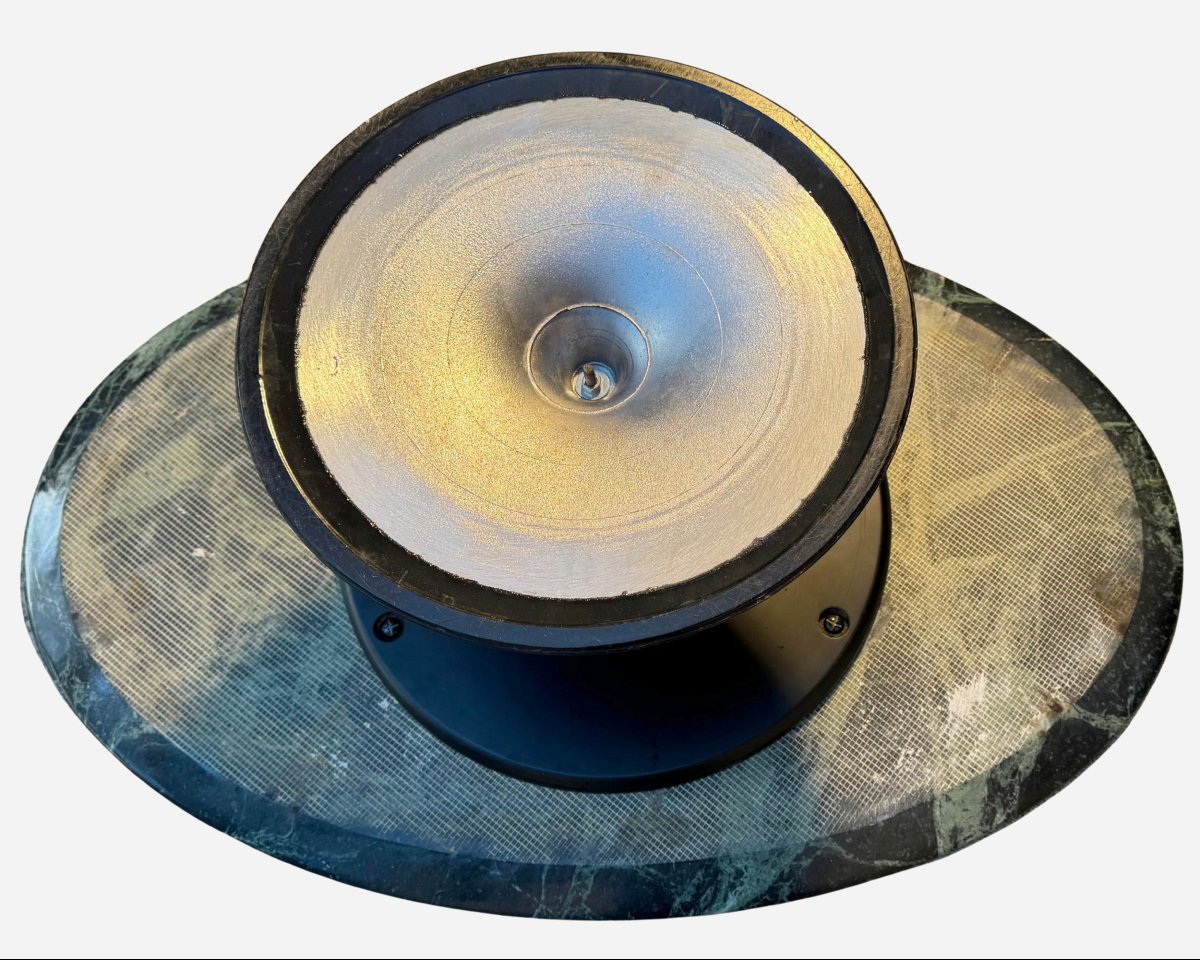
The tabletop is made of black and green « Verde Alpi » marble, and the base and feet are made of black lacquered cast aluminum.
Biography
Eero Saarinen, USA (1910-1961)
American architect and designer of Finnish origin
The son of Eliel Saarinen, a renowned Finnish architect, and Louise, a sculptor and textile designer, Eero Saarinen was born on August 20, 1910, in Kirkkonummi, Finland, and emigrated with his family to the United States as a teenager. Eero initially studied sculpture and then architecture at Yale University. After two years of traveling the world, he joined his father’s firm in 1936. Father and son collaborated on major architectural projects (Tanglewood Theatre, First Christian Church in Columbus, etc.). In 1940, Eero Saarinen became an American citizen.
He became close friends with Charles Eames, his father’s assistant, Lily Swan (his future wife), and Florence Schust (later Florence Knoll), respectively professor and student at Cranbrook. In his father’s architectural firm, Eero gradually managed his own projects and architectural competitions. He notably secured the contract for the construction of the Gateway Arch in St. Louis, Missouri, in 1948. However, construction of the Gateway Arch, which reaches a height of 192 meters, did not begin until 1963, eighteen months after his death, and was completed in 1965.
Alongside these architectural projects, Eero also designs furniture. After cutting his teeth with Charles Eames, he began a long-term collaboration in 1947 with the Knoll company, which had just parted ways with its designer Jens Risom (who was notably responsible for the creation of the Tulip chair, the Grasshopper Model 61 lounge chair, the Womb chair – Model 70, etc.).
Upon Eliel Saarinen’s death in 1950, Eero took over the reins of the architectural firm. The company was subsequently renamed Eero Saarinen and Associates. Eero undertook numerous projects and designed a wide variety of buildings. The General Motors headquarters initiated this long series of large-scale projects and perfectly illustrates Eero’s creative genius: the automaker wanted to build its new center on a 130-hectare site and accommodate 5,000 employees. The architect arranged the company’s five business units—Research, Engineering, Process Development, Industrial Design, and Support Services—around a central basin. Each of these units was further subdivided into five sections of brick and glass. The facades of the blocks are composed of series of glazed frames, and to add a touch of diversity, the end walls of the brick buildings are all glazed in a different color.
Many other successes followed: corporate headquarters (after General Motors, Bell, and others), private residences, university buildings (Yale, Massachusetts Institute of Technology), airport terminals (Dulles, TWA Flight Center), sports centers, and more. Eero’s architectural style evolved over the years, moving from rectilinear forms to designs that incorporated numerous curves.
In 1954, the architect became a member of the American Academy of Arts and Letters. Eero Saarinen died on September 1, 1961, in Ann Arbor and is buried in Michigan. He posthumously received the Gold Medal of the American Institute of Architects in 1962.
To find out more, read the Wikipedia page.
Story
Knoll International
Founded in 1938 in the United States, Knoll is a manufacturer of designer furniture and office furniture whose watchword is excellence. Since its founding, Knoll has always been looking for design modernization.Knoll International has been one of the leading design companies for over 70 years.
Hans and Florence Knoll developed one of the most creative and prolific companies of the post-war era.The couple imposes their vision of development thanks to the Planning Unit, combining interior architecture, design, production, textiles and graphics.Together, they took Knoll internationally by collaborating with designers like Eero Saarinen, Harry Bertoia, Jens Risom and Isamu Noguchi.
The collaboration with Eero Saaarinen also allowed a Knoll classic to be created: the Saarinen table.This Knoll table is one of the cult pieces of furniture in the history of design.Timeless, copied but never equalled, it combines sobriety and elegance.We also speak of the Knoll style to designate the joyful modernist interior decoration, the company’s trademark.
Knoll presents its range of products in numerous showrooms around the world.In addition to its headquarters in the United States, Knoll has production sites in Canada, the United States and Italy.These sites produce with modern techniques, qualified specialists, while respecting the environment.
Knoll continues to manufacture eco-responsible furniture while minimizing its environmental impact.
The tabletop is made of black and green « Verde Alpi » marble, and the base and feet are made of black lacquered cast aluminum.
Biography
Eero Saarinen, USA (1910-1961)
American architect and designer of Finnish origin
The son of Eliel Saarinen, a renowned Finnish architect, and Louise, a sculptor and textile designer, Eero Saarinen was born on August 20, 1910, in Kirkkonummi, Finland, and emigrated with his family to the United States as a teenager. Eero initially studied sculpture and then architecture at Yale University. After two years of traveling the world, he joined his father’s firm in 1936. Father and son collaborated on major architectural projects (Tanglewood Theatre, First Christian Church in Columbus, etc.). In 1940, Eero Saarinen became an American citizen.
He became close friends with Charles Eames, his father’s assistant, Lily Swan (his future wife), and Florence Schust (later Florence Knoll), respectively professor and student at Cranbrook. In his father’s architectural firm, Eero gradually managed his own projects and architectural competitions. He notably secured the contract for the construction of the Gateway Arch in St. Louis, Missouri, in 1948. However, construction of the Gateway Arch, which reaches a height of 192 meters, did not begin until 1963, eighteen months after his death, and was completed in 1965.
Alongside these architectural projects, Eero also designs furniture. After cutting his teeth with Charles Eames, he began a long-term collaboration in 1947 with the Knoll company, which had just parted ways with its designer Jens Risom (who was notably responsible for the creation of the Tulip chair, the Grasshopper Model 61 lounge chair, the Womb chair – Model 70, etc.).
Upon Eliel Saarinen’s death in 1950, Eero took over the reins of the architectural firm. The company was subsequently renamed Eero Saarinen and Associates. Eero undertook numerous projects and designed a wide variety of buildings. The General Motors headquarters initiated this long series of large-scale projects and perfectly illustrates Eero’s creative genius: the automaker wanted to build its new center on a 130-hectare site and accommodate 5,000 employees. The architect arranged the company’s five business units—Research, Engineering, Process Development, Industrial Design, and Support Services—around a central basin. Each of these units was further subdivided into five sections of brick and glass. The facades of the blocks are composed of series of glazed frames, and to add a touch of diversity, the end walls of the brick buildings are all glazed in a different color.
Many other successes followed: corporate headquarters (after General Motors, Bell, and others), private residences, university buildings (Yale, Massachusetts Institute of Technology), airport terminals (Dulles, TWA Flight Center), sports centers, and more. Eero’s architectural style evolved over the years, moving from rectilinear forms to designs that incorporated numerous curves.
In 1954, the architect became a member of the American Academy of Arts and Letters. Eero Saarinen died on September 1, 1961, in Ann Arbor and is buried in Michigan. He posthumously received the Gold Medal of the American Institute of Architects in 1962.
To find out more, read the Wikipedia page.
Story
Knoll International
Founded in 1938 in the United States, Knoll is a manufacturer of designer furniture and office furniture whose watchword is excellence. Since its founding, Knoll has always been looking for design modernization.Knoll International has been one of the leading design companies for over 70 years.
Hans and Florence Knoll developed one of the most creative and prolific companies of the post-war era.The couple imposes their vision of development thanks to the Planning Unit, combining interior architecture, design, production, textiles and graphics.Together, they took Knoll internationally by collaborating with designers like Eero Saarinen, Harry Bertoia, Jens Risom and Isamu Noguchi.
The collaboration with Eero Saaarinen also allowed a Knoll classic to be created: the Saarinen table.This Knoll table is one of the cult pieces of furniture in the history of design.Timeless, copied but never equalled, it combines sobriety and elegance.We also speak of the Knoll style to designate the joyful modernist interior decoration, the company’s trademark.
Knoll presents its range of products in numerous showrooms around the world.In addition to its headquarters in the United States, Knoll has production sites in Canada, the United States and Italy.These sites produce with modern techniques, qualified specialists, while respecting the environment.
Knoll continues to manufacture eco-responsible furniture while minimizing its environmental impact.
Explore similar pieces and discover your ideal find:
Cocktail & Coffee Tables