


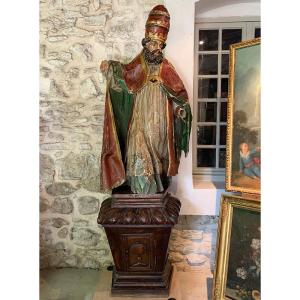


17th-century Sculpture, 195cm, Of Pope Saint Sixtus Ii, In Polychrome Wood, With Glass Eyes
Price:
Sculpture of the Pope alone (H: 125 cm): €8,500.
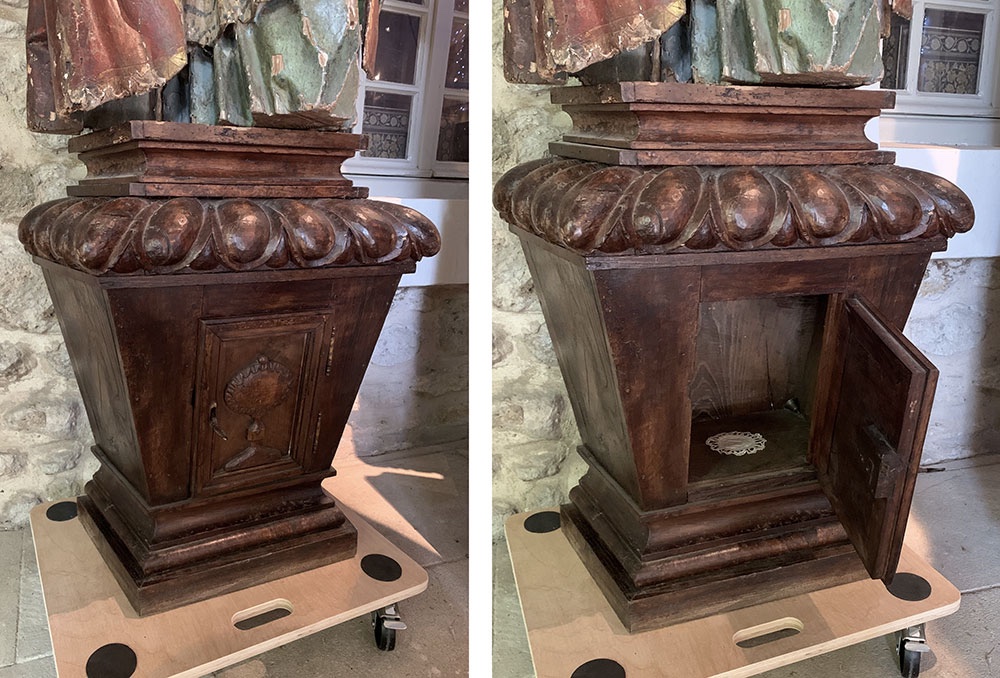
17th-century reliquary tabernacle base (H: 70 cm): €2,500 (can be sold separately).
Sold with invoice and certificate.
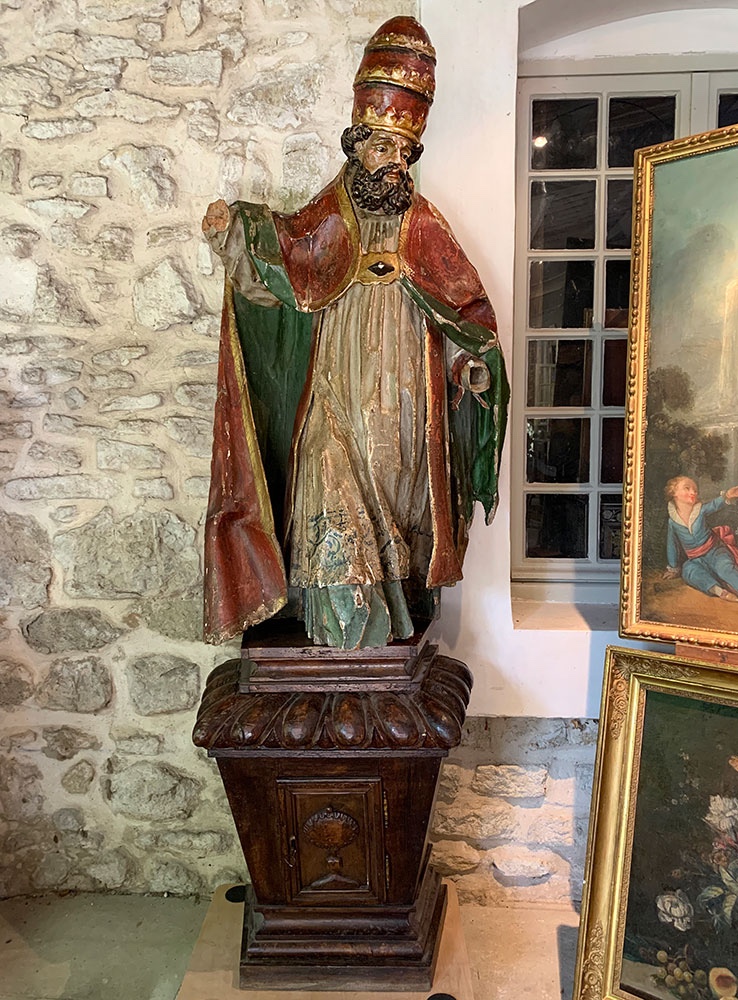
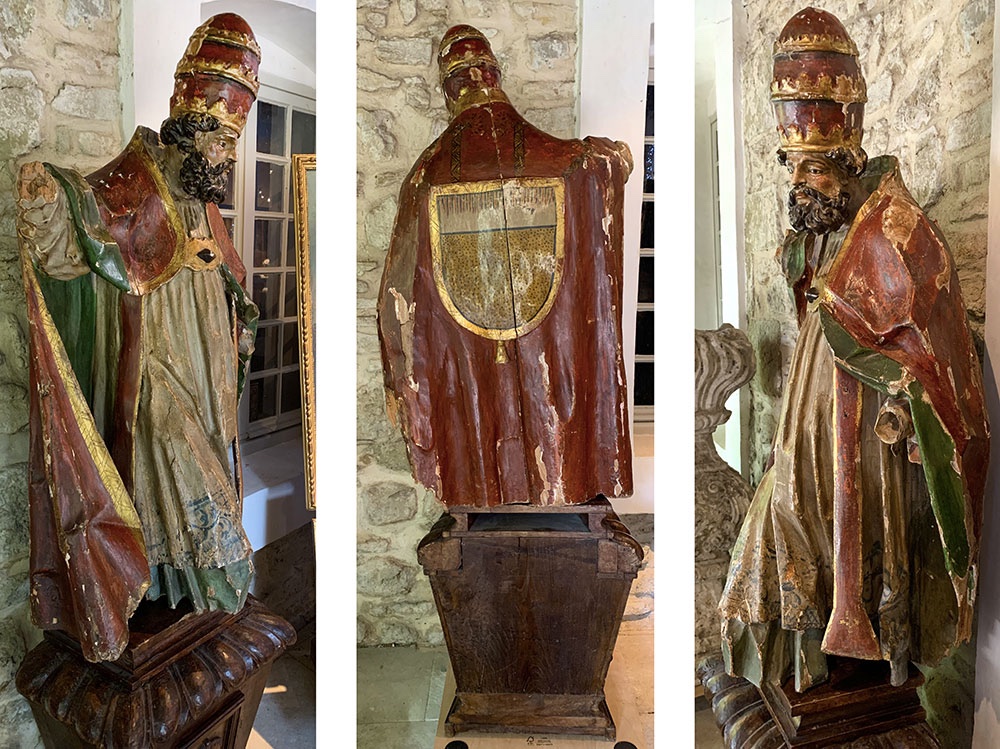
Period: Sculpture from the first half of the 17th century, in good condition, with some losses visible in the photos (the hands).
Independent base: 17th-century reliquary in dark oak, in very good condition.
All in good condition.
Subject:
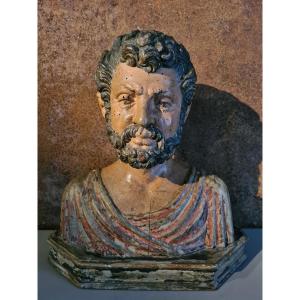
Polychrome wooden sculpture representing Pope Saint Sixtus II.
Note that this sculpture has glass eyes, which is typical of this period. Dimensions: Total height with the reliquary base: 195 cm, width: 70 cm, depth: 45 cm.
Height of the sculpture alone: 125 cm. Sixtus II or Xystus II: (in Greek: Ξυστός) Sixtus II was the 24th Bishop of Rome and Pope of the Catholic Church.
He succeeded Stephen I on August 30, 257.
He was the first pope to bear a name already in use: Sixtus I had reigned in the 2nd century. Of Greek origin, he restored relations with the Eastern and African Churches, which had been severed by his predecessor over the issue of the re-baptism of apostates. During his pontificate, the resumption of persecutions against Christians pushed the internal problems of the Church to the back burner. Indeed, Emperor Valerian, who had been relatively neutral towards Christians until then, demanded their participation in the imperial cult and forbade ceremonies in the catacombs.
Beginning in August 258, drastic measures were taken against the clergy. Sixtus II took refuge with several deacons in a catacomb on the edge of the Appian Way. Discovered on August 6, 258, by soldiers, he was beheaded on the spot along with four of his deacons.
On the same day, two other deacons, Felicissimus and Agapitus, were executed in the cemetery of Praetextatus. The seventh deacon, Lawrence, was put to death on August 10, 258. Saint Sixtus II is the patron saint of Pisa (Italy) and also of Pérols (Gard, France). Sixtus II is buried in the crypt of the Popes in the Catacomb of Saint Callixtus.
A saint and martyr, the Catholic Church celebrates his feast day on August 6. His martyrdom and that of his companions are commemorated on August 7.
Several French towns are dedicated to him: Saint-Laurent-Rochefort, Saint-Sixte, Saint-Donat.
Sold with invoice and certificate.
Sculpture on display at our gallery in L'Isle-sur-la-Sorgue (France) on weekends.
Free shipping within France. Shipping abroad available upon request.
A1248
Sculpture of the Pope alone (H: 125 cm): €8,500.
17th-century reliquary tabernacle base (H: 70 cm): €2,500 (can be sold separately).
Sold with invoice and certificate.
Period: Sculpture from the first half of the 17th century, in good condition, with some losses visible in the photos (the hands).
Independent base: 17th-century reliquary in dark oak, in very good condition.
All in good condition.
Subject:
Polychrome wooden sculpture representing Pope Saint Sixtus II.
Note that this sculpture has glass eyes, which is typical of this period. Dimensions: Total height with the reliquary base: 195 cm, width: 70 cm, depth: 45 cm.
Height of the sculpture alone: 125 cm. Sixtus II or Xystus II: (in Greek: Ξυστός) Sixtus II was the 24th Bishop of Rome and Pope of the Catholic Church.
He succeeded Stephen I on August 30, 257.
He was the first pope to bear a name already in use: Sixtus I had reigned in the 2nd century. Of Greek origin, he restored relations with the Eastern and African Churches, which had been severed by his predecessor over the issue of the re-baptism of apostates. During his pontificate, the resumption of persecutions against Christians pushed the internal problems of the Church to the back burner. Indeed, Emperor Valerian, who had been relatively neutral towards Christians until then, demanded their participation in the imperial cult and forbade ceremonies in the catacombs.
Beginning in August 258, drastic measures were taken against the clergy. Sixtus II took refuge with several deacons in a catacomb on the edge of the Appian Way. Discovered on August 6, 258, by soldiers, he was beheaded on the spot along with four of his deacons.
On the same day, two other deacons, Felicissimus and Agapitus, were executed in the cemetery of Praetextatus. The seventh deacon, Lawrence, was put to death on August 10, 258. Saint Sixtus II is the patron saint of Pisa (Italy) and also of Pérols (Gard, France). Sixtus II is buried in the crypt of the Popes in the Catacomb of Saint Callixtus.
A saint and martyr, the Catholic Church celebrates his feast day on August 6. His martyrdom and that of his companions are commemorated on August 7.
Several French towns are dedicated to him: Saint-Laurent-Rochefort, Saint-Sixte, Saint-Donat.
Sold with invoice and certificate.
Sculpture on display at our gallery in L'Isle-sur-la-Sorgue (France) on weekends.
Free shipping within France. Shipping abroad available upon request.
A1248
8 500 €
Period: 17th century
Style: Renaissance, Louis 13th
Condition: Perfect condition
Material: Painted wood
Width: 70 cm
Height: 125 cm
Reference (ID): 1664548
Availability: In stock
Print