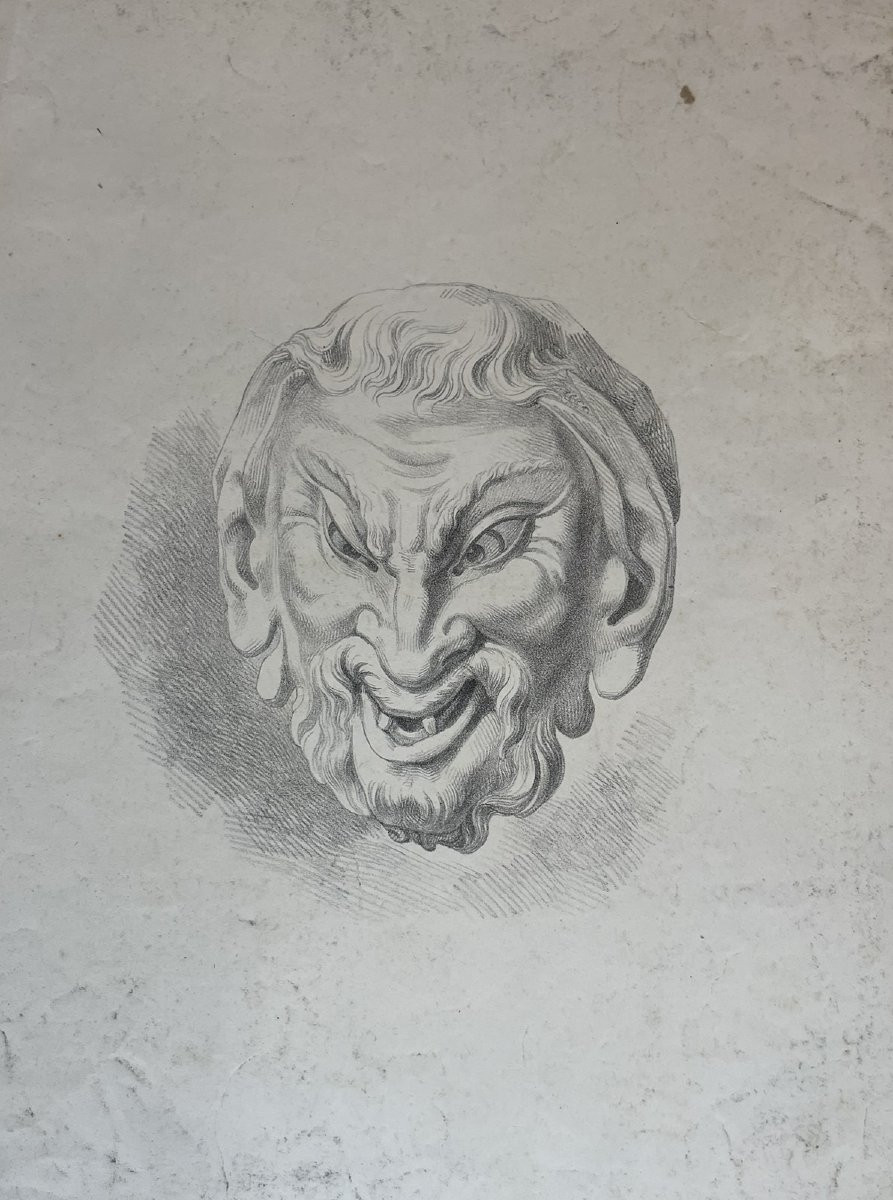


Satyr Mask, Academic Study After An Antique Model And Michelangelo’s Lost Work, 49 × 32.5 Cm
Satyr Mask, Academic Study after an Antique Model and Michelangelo’s Lost Work, 49 × 32.5 cm
Mid-19th century
Pencil on paper
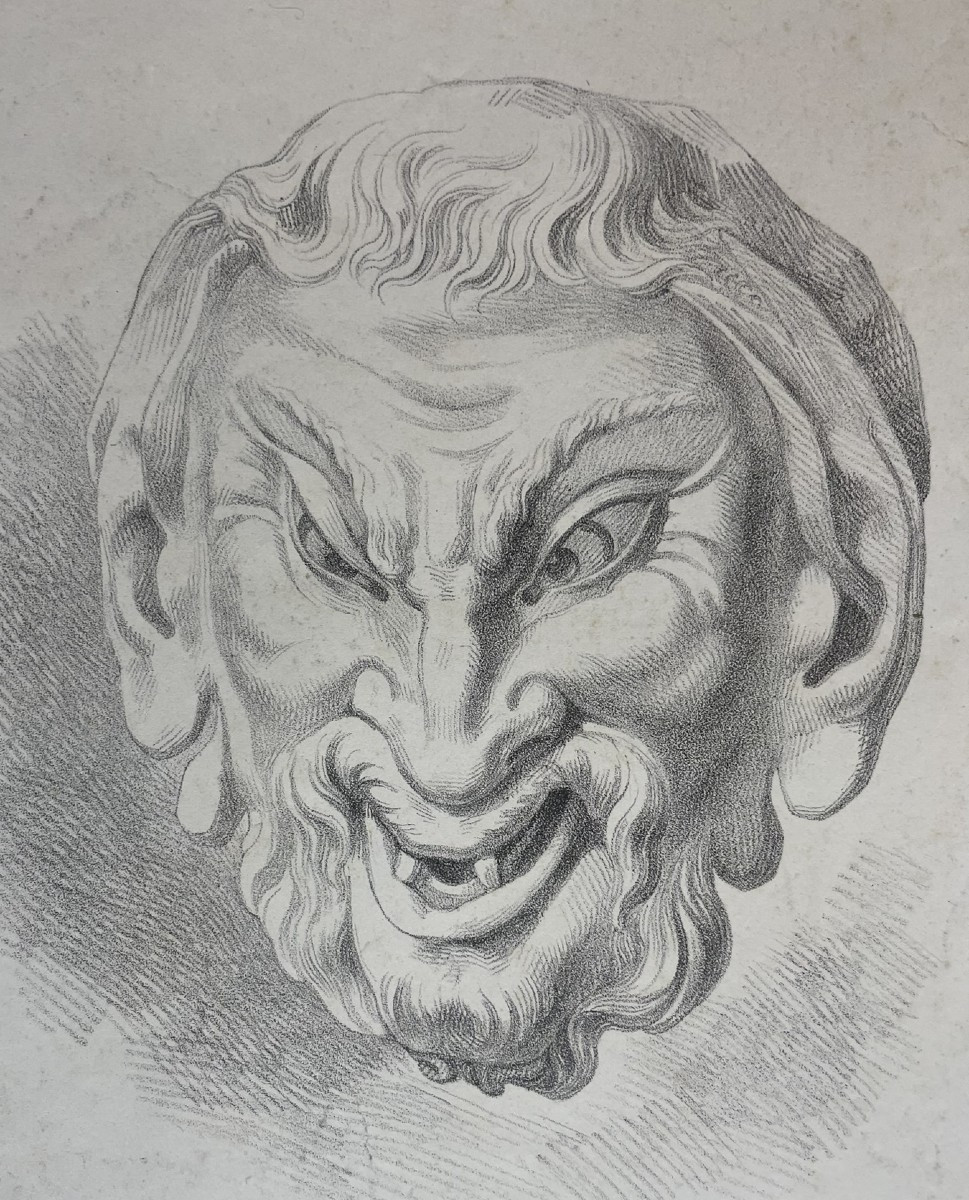
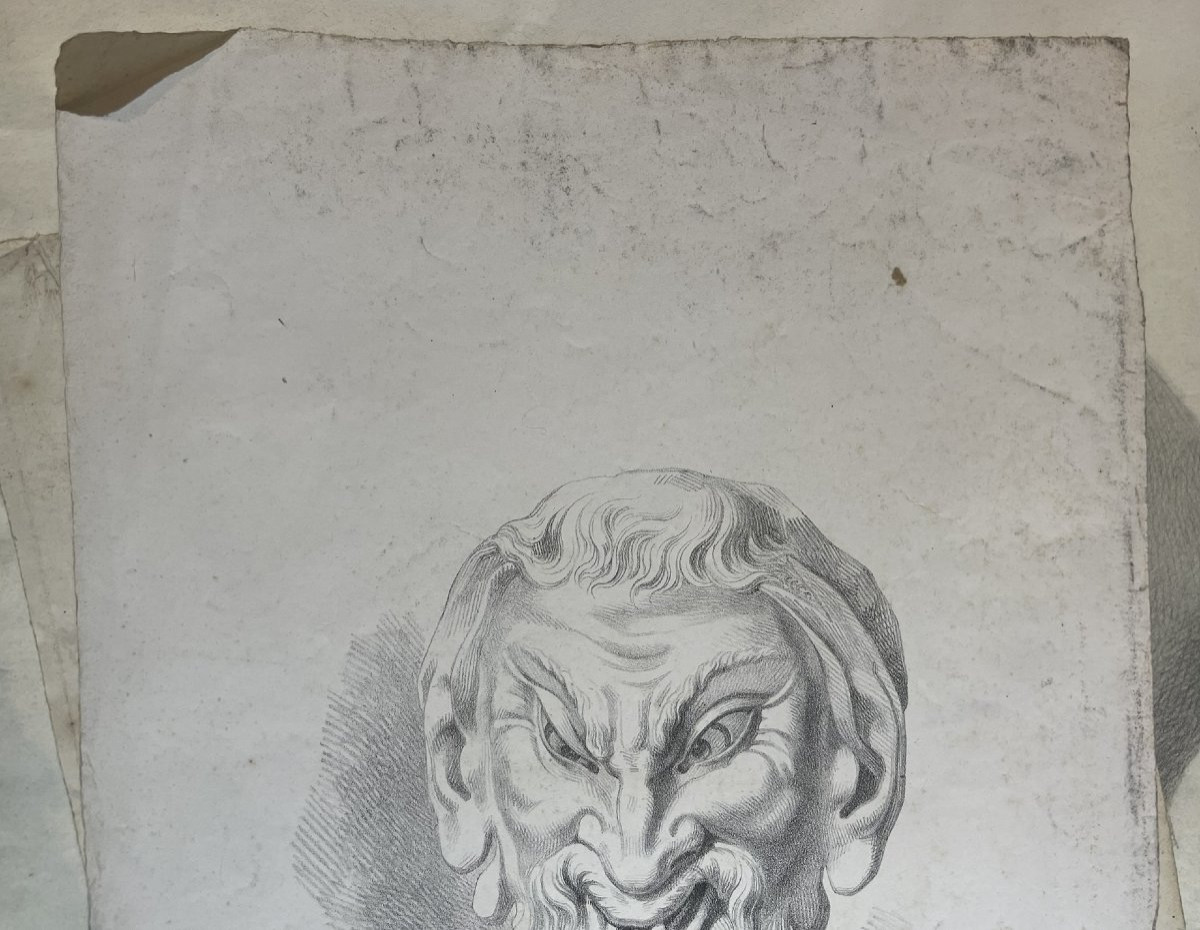
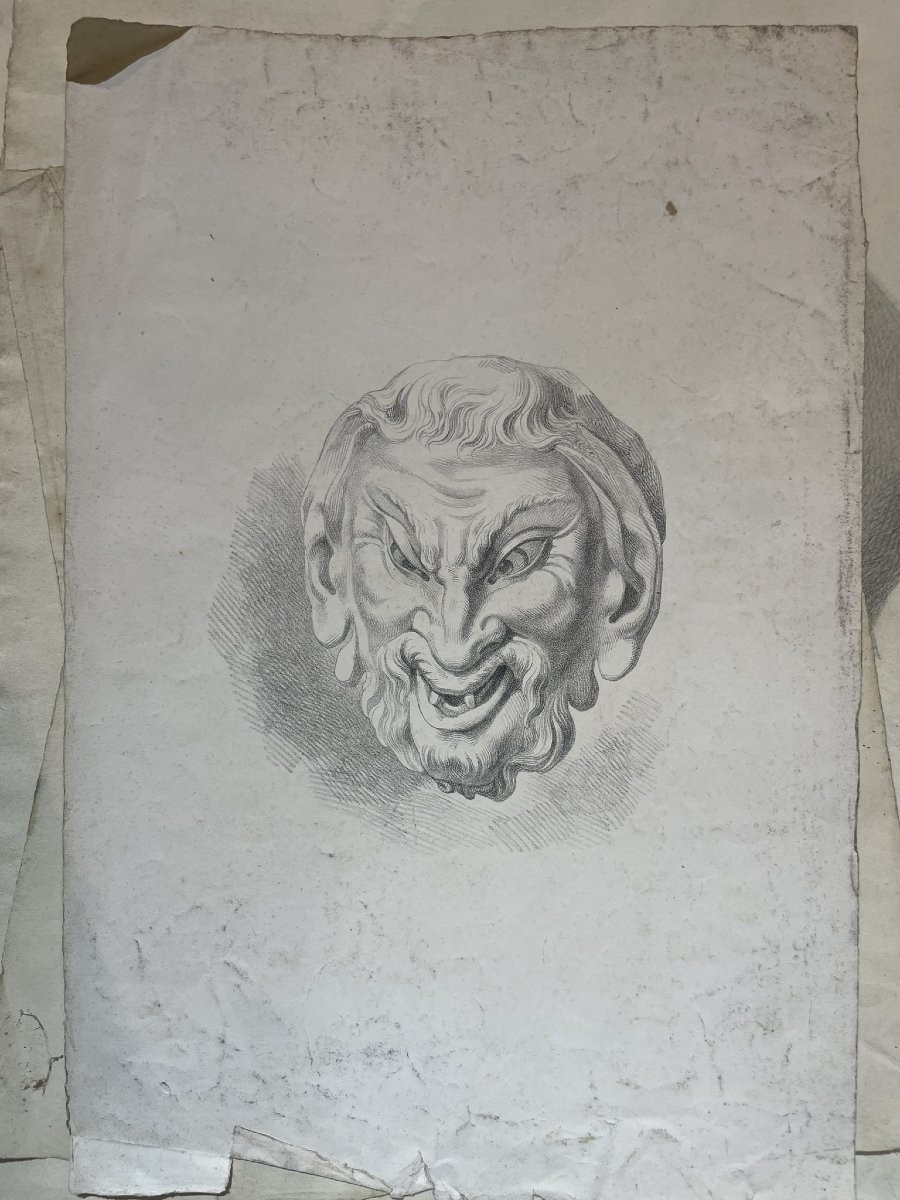
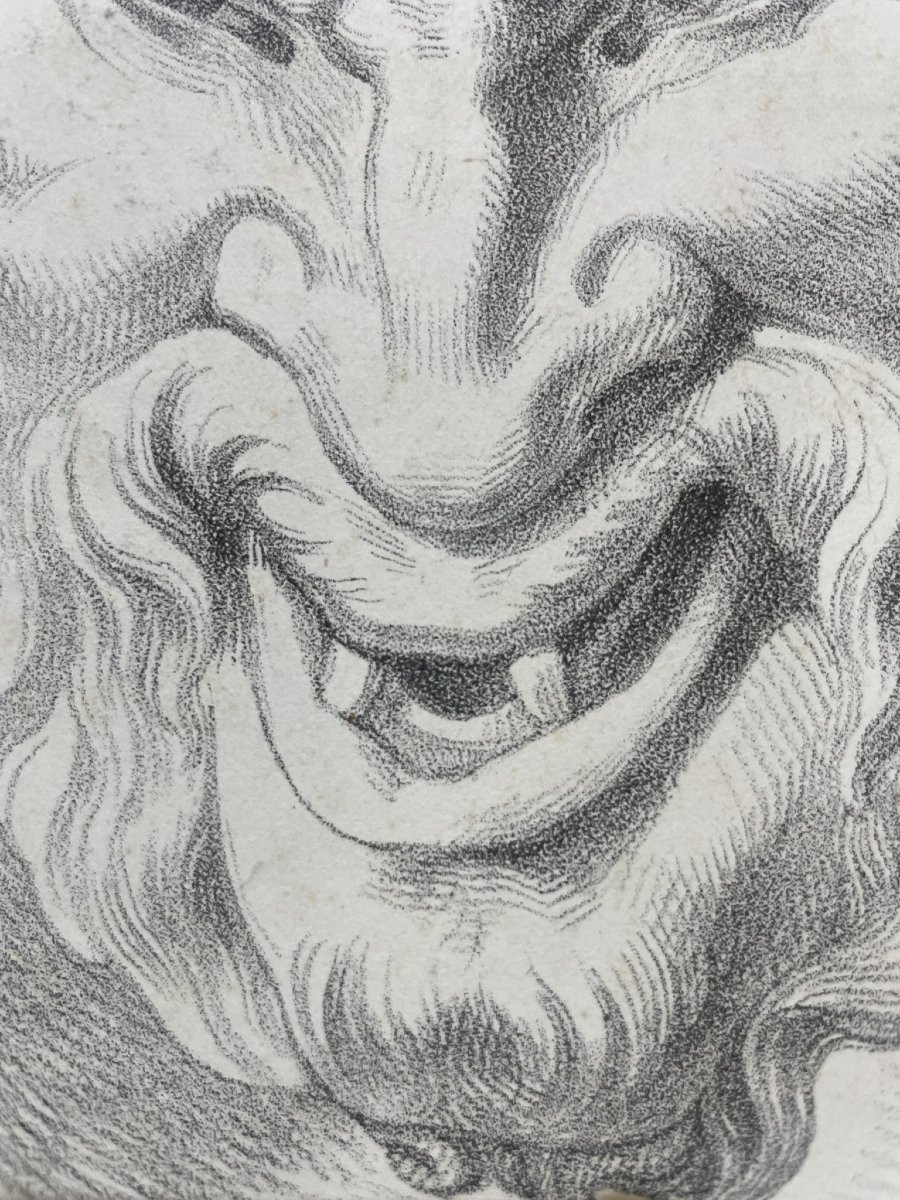
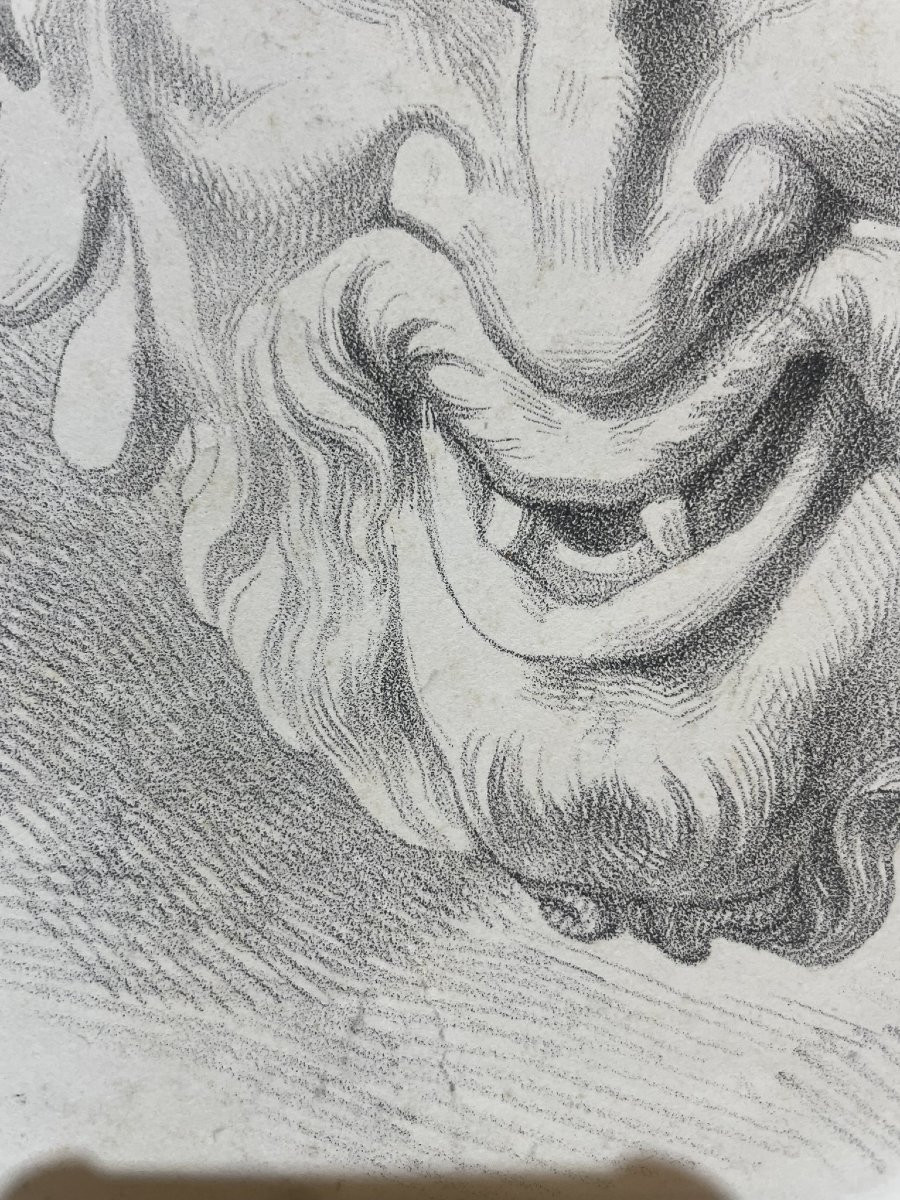
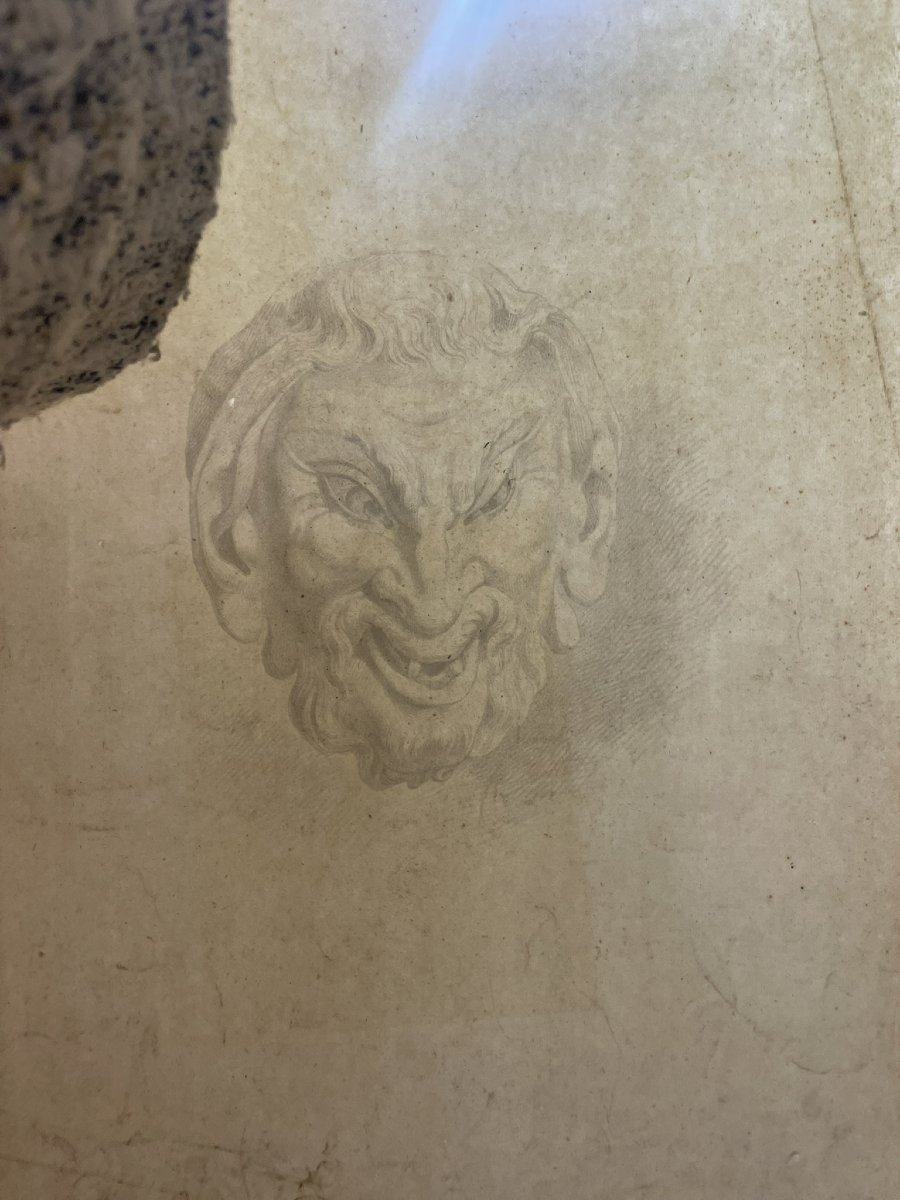
Academic study of a satyr’s head, based on an antique model and linked to the long-standing tradition surrounding Michelangelo’s lost Head of a Satyr. The drawing focuses on the expressive intensity of the face, the curling hair, and the strong modelling of the features, elements closely associated with antique satyr masks used in academic training throughout the 18th and 19th centuries.
The subject also recalls a well-known episode from Michelangelo’s youth in Florence. While studying ancient sculpture in the Garden of San Marco under the patronage of Lorenzo de’ Medici, Michelangelo carved a head of a satyr—now lost. According to the sources, Lorenzo pointed out that the teeth he had given to this “old satyr” were too perfect for an aged figure. Michelangelo corrected them instantly, and the story became part of Florentine artistic memory. Although the original sculpture has disappeared, copies and reinterpretations circulated widely and were used as exercises in light, volume, and expression.
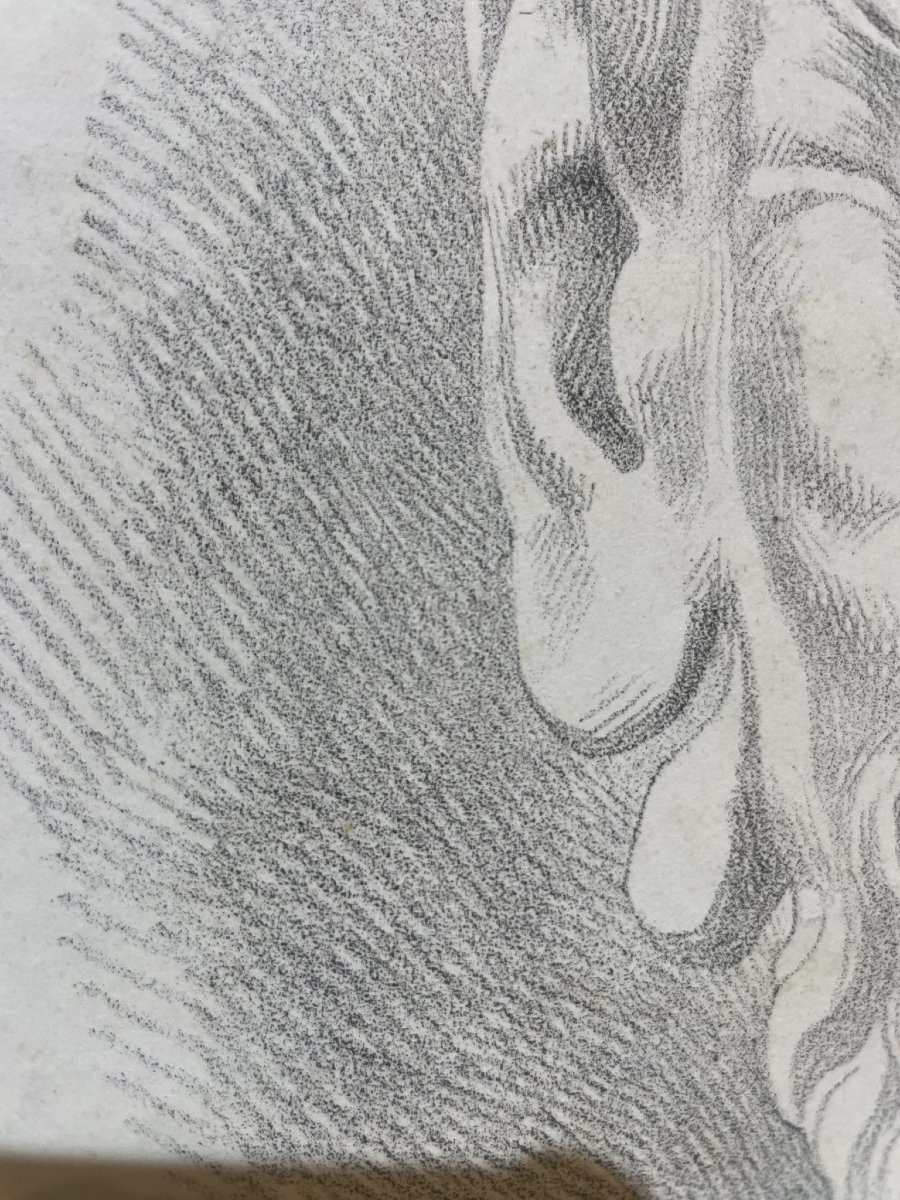
The present drawing fits precisely into this academic tradition: dense hatching, sculptural reading of the forms, and concentrated rendering of the profile, all typical features of 19th-century exercises based on antique models and their later reinterpretations.
From one of the two large portfolios of studies discovered in an old Tuscan property, containing academic exercises and copies produced between the 18th century and the first quarter of the 20th century.
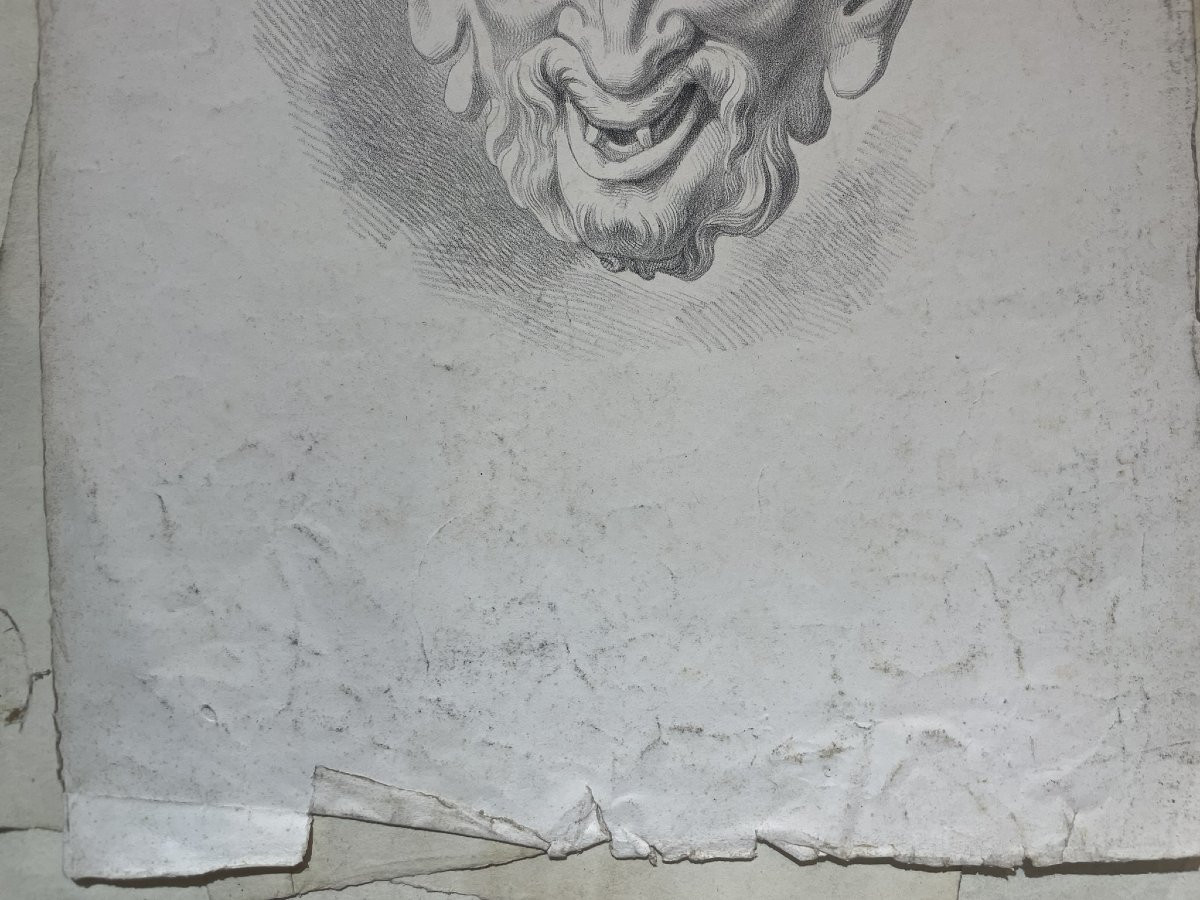
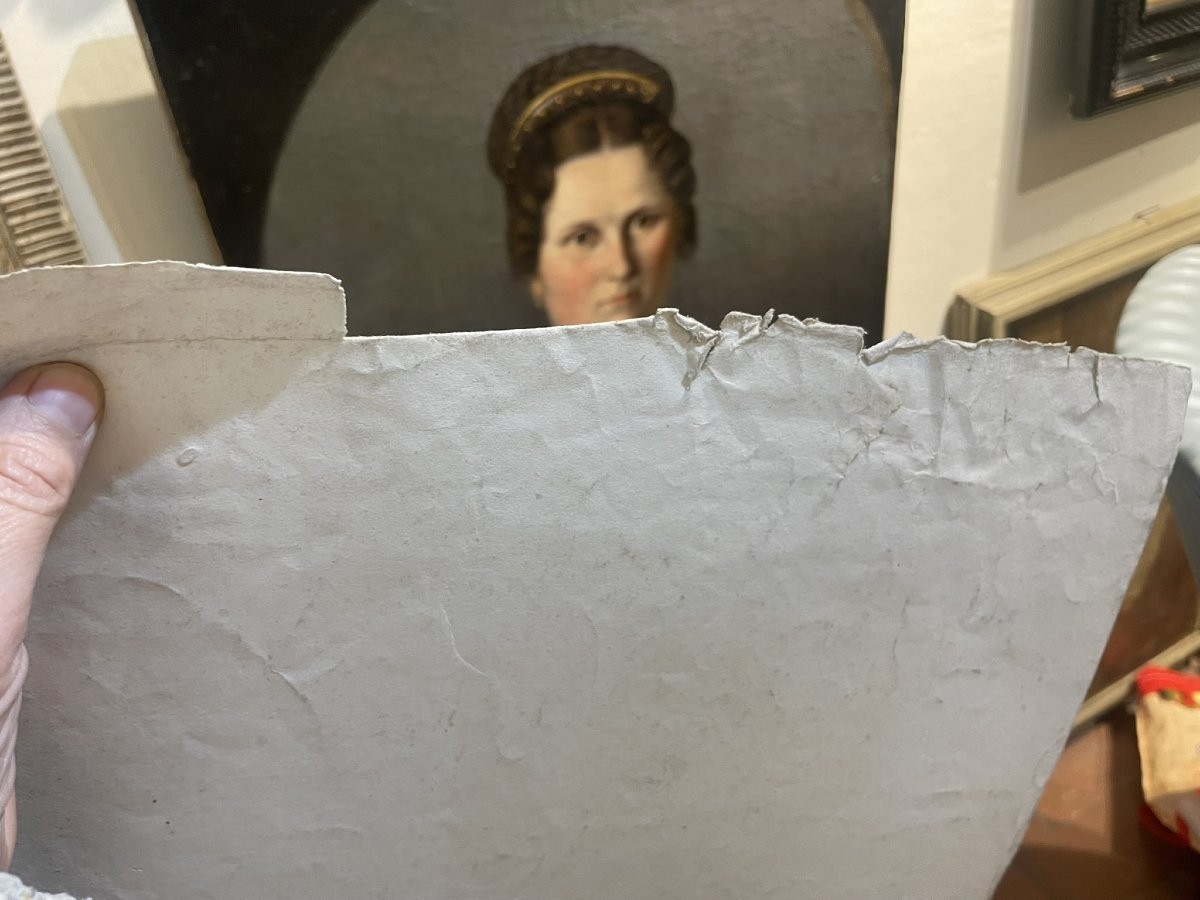
Paper with normal studio traces consistent with its instructional purpose.
Period: 19th century
Style: Louis Philippe, Charles 10th
Condition: En l'etat
Material: Paper
Width: 32,5cm
Height: 49cm
Reference (ID): 1663935
Availability: In stock