





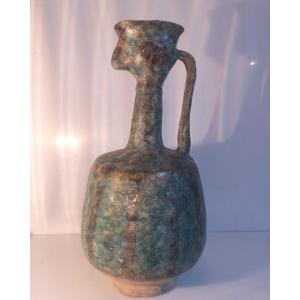


"Iran, Seljuk Period, 13th Century. Zoomorphic Bird-headed Jug – Siliceous Ceramic."
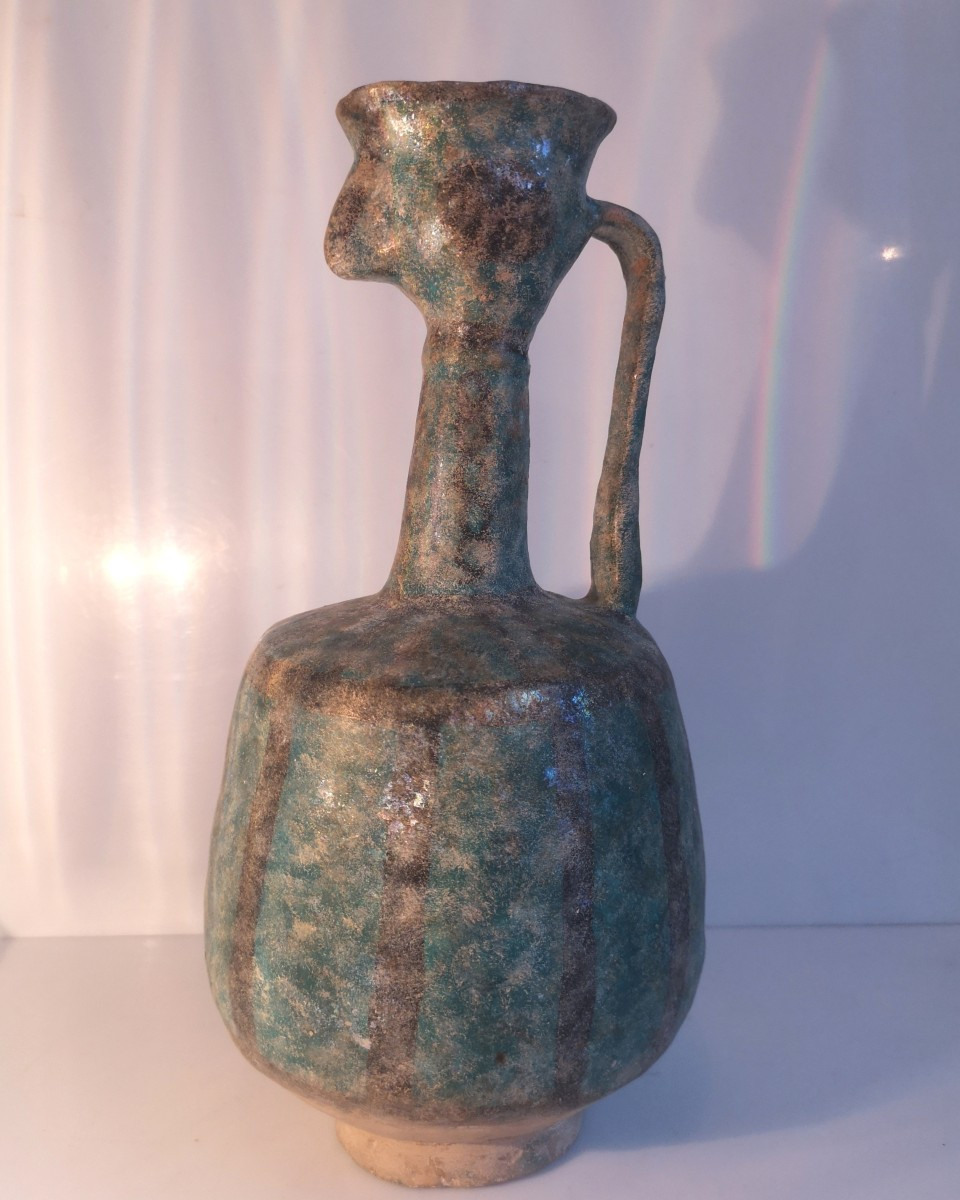
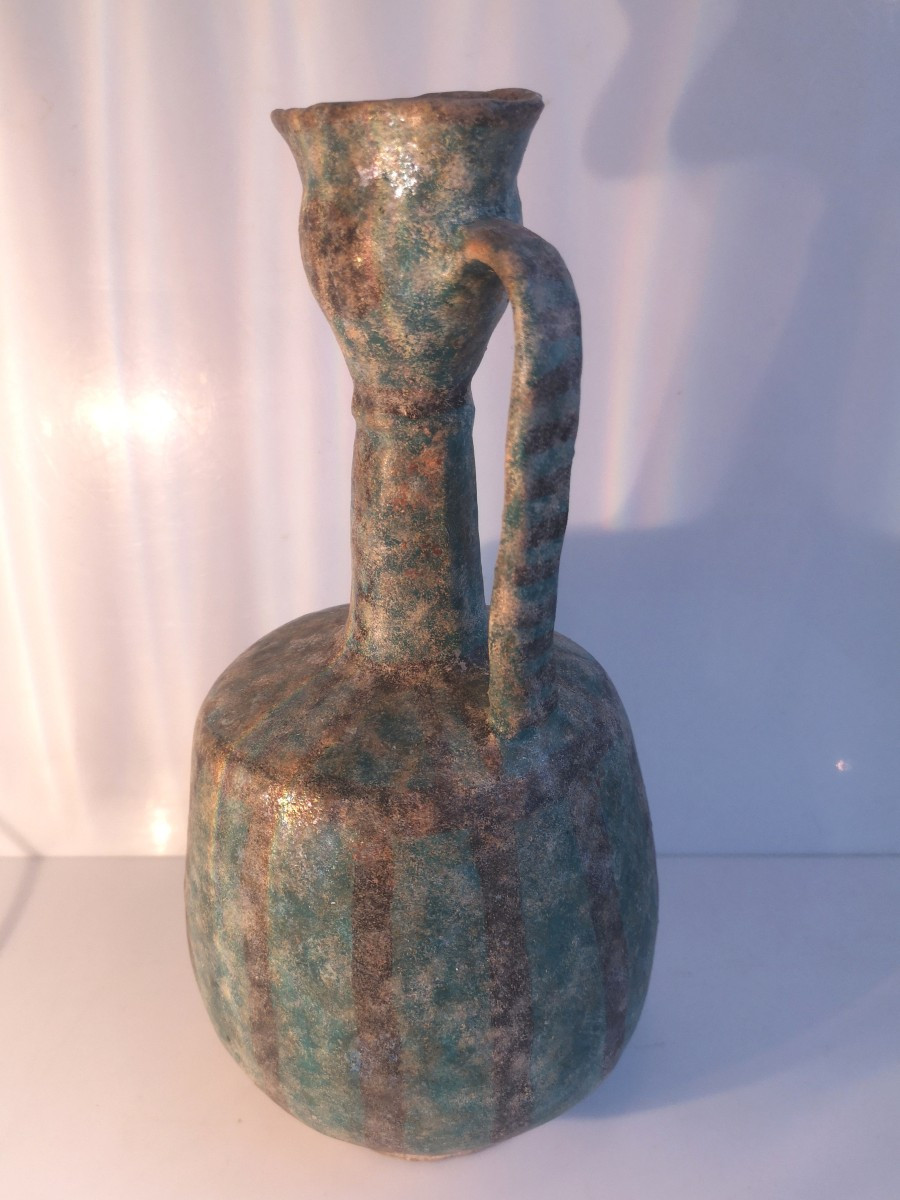
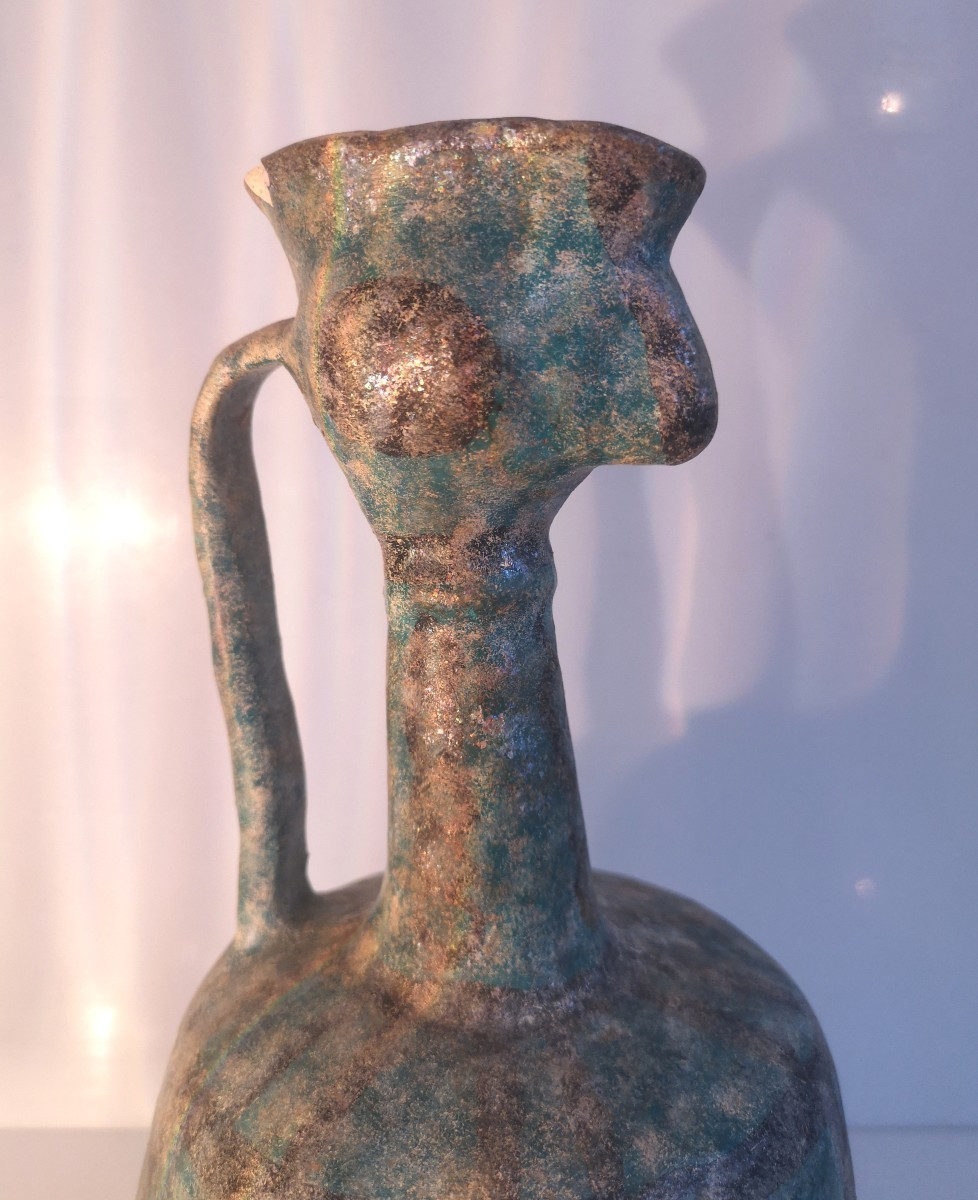
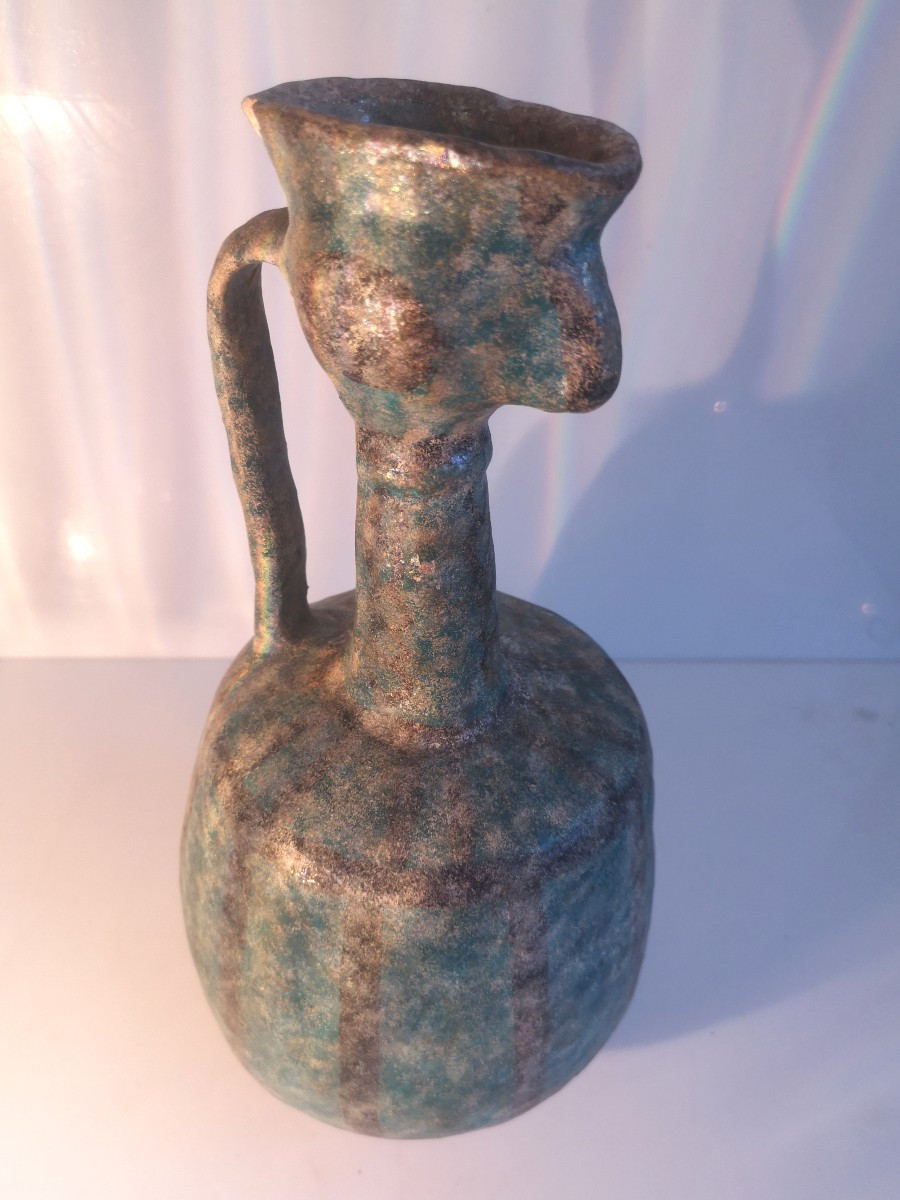
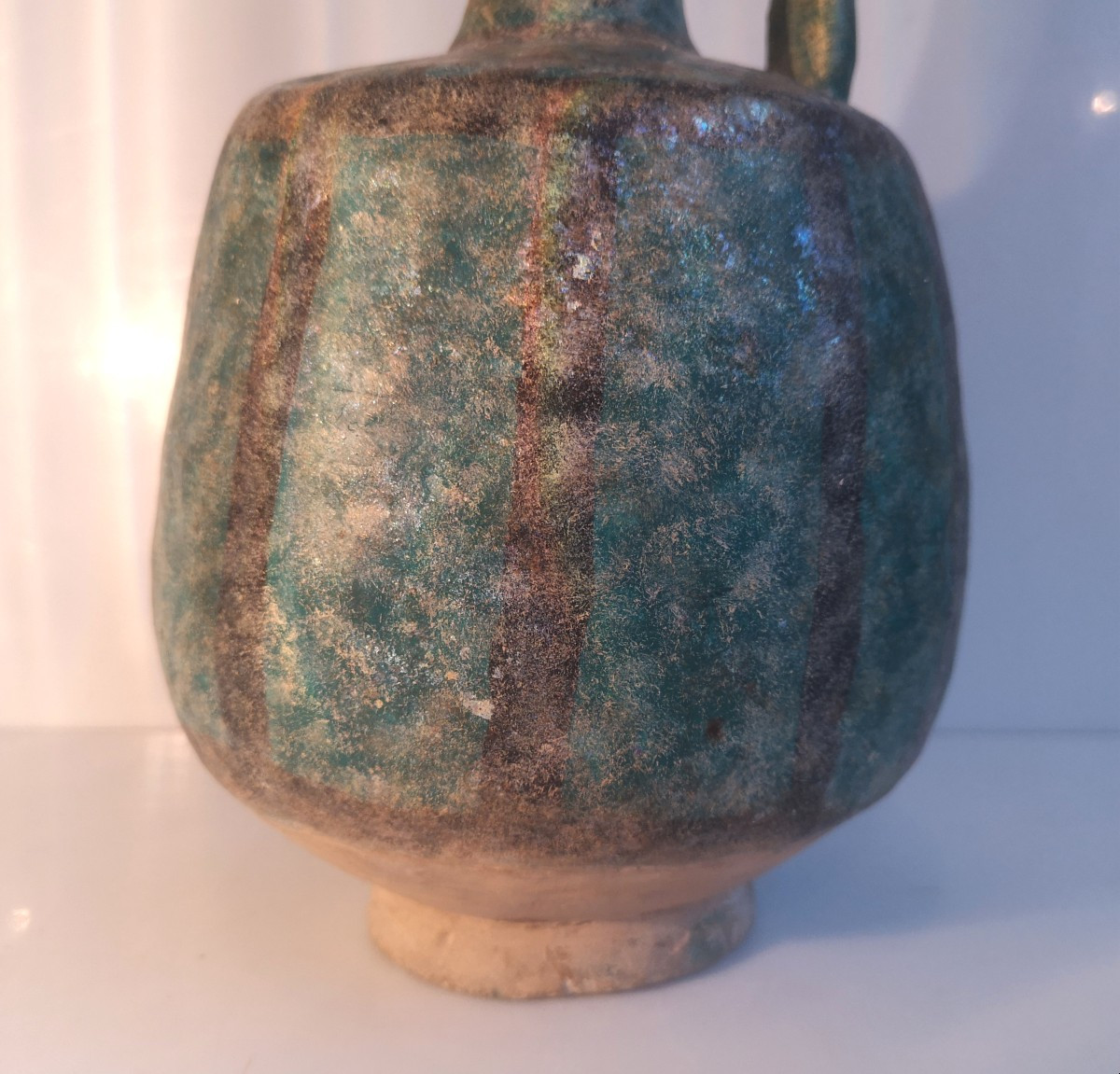
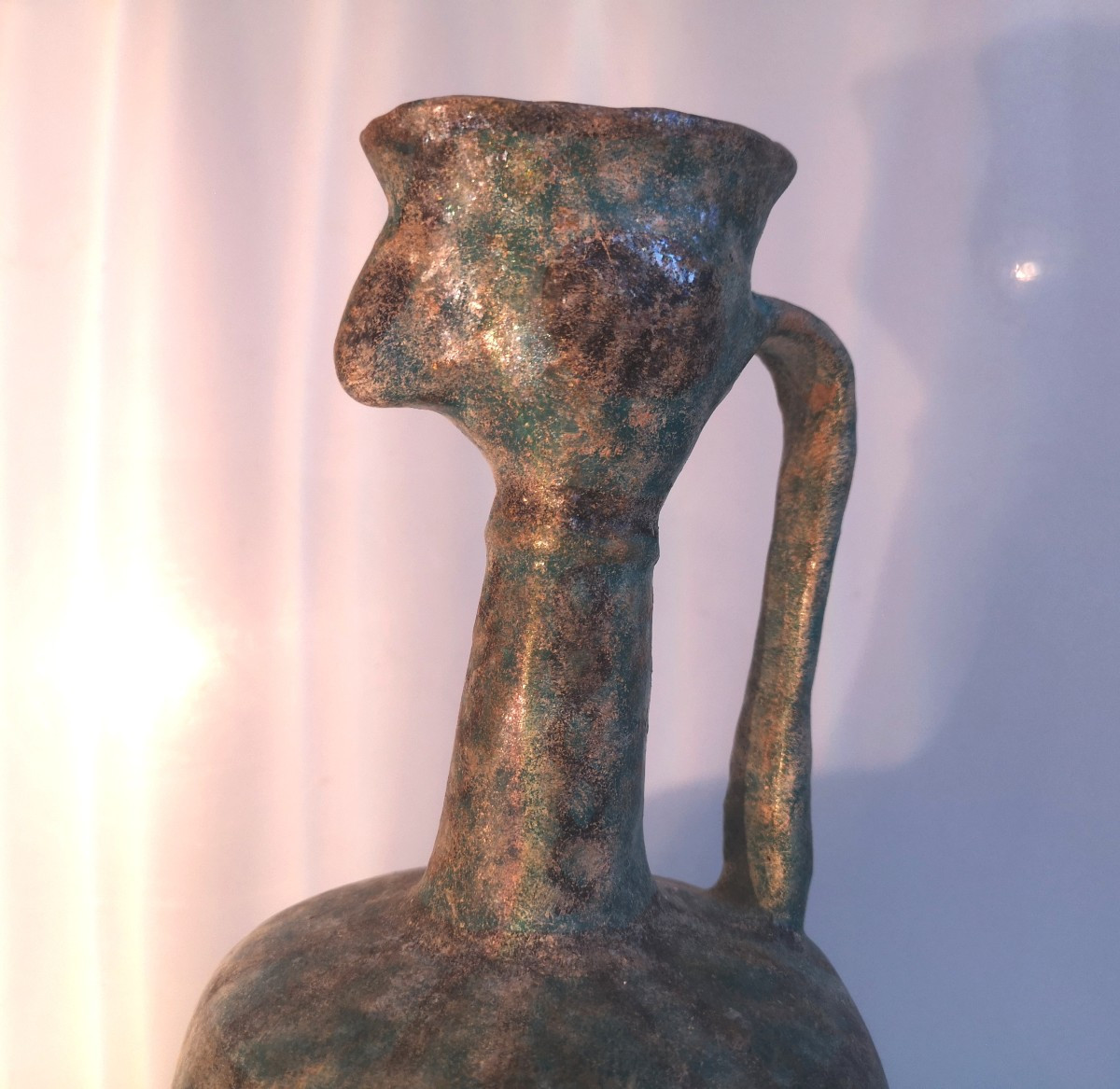
Iran, Seljuk period, 13th century. Zoomorphic bird-head jug – siliceous ceramic with turquoise glaze and manganese highlights. H. 26 cm.Superb Iranian zoomorphic jug from the 13th century, depicting a stylized bird with a powerful and expressive head, large bulging eyes, and a broad, curved beak.
The upper part of the body, distinctly flattened, rises above a very harmonious ovoid body.
A narrow, slightly flared, elliptical neck extends from this remarkably modeled avian head.
The piece is covered with a turquoise-blue-green glaze, characteristic of Seljuk ceramics. An interesting feature is that the color exhibits a "melted" effect in places beneath the glaze, a phenomenon typical of medieval wares rich in copper oxides.
These irregularities are inherent to the ceramics and attest to the manufacturing process: the copper, present in high proportions in the glaze, migrates during firing, creating lighter or more translucent areas, typical of workshops in Kashan and Khorasan around the 13th century.
The whole piece is enlivened by broad lines of brown-ochre manganese glaze, applied to the surface to form an abstract, figureless decoration, intentionally understated yet very elegant.
The exterior glaze displays beautiful reddish iridescence, resulting from firing in a reducing atmosphere followed by slight, ancient surface corrosion. This iridescence, impossible to convincingly reproduce artificially, is an excellent marker of age and a characteristic feature of Khorasan ceramics.
The interior was originally covered with a blue glaze; Only traces remain, a common phenomenon: the turquoise glazes applied in a thin layer to the interior devitrify and erode more rapidly in contact with humidity or mineral salts present in the soil, which confirms the great age of the piece.
A slender, flat-sectioned handle, positioned vertically, rests elegantly on the bird's neck. The base has a small hollow heel (6 cm in diameter), cylindrical on the outside and truncated conical on the inside.
*An old, very discreet, and excellent restoration concerns only the unglazed lower part: no missing pieces have been filled, the impact having been clean.
*Little crack at the neck.
See photos.
Dimensions:
– Height: 26 cm
– Body height: approx. 14 cm
– Neck height: approx. 12 cm – Maximum diameter: 13 cm
– Heel diameter: 6 cm.
An authentic and expressive piece, with a strong sculptural presence, representative of Seljuk zoomorphic productions of the 13th century.
Most 13th-century turquoise pitchers come from the ruins of Rayy, the excavations at Kashan, and the destroyed urban areas of Nishapur, Herat, and Merv in historic Khorasan. Buried beneath layers of rubble after successive invasions and periods of abandonment, these objects were protected for centuries. This stable burial environment explains why some pieces have survived almost intact, with a very well-preserved exterior glaze, while the interior—more exposed to moisture and mineral salts—often shows more pronounced alteration.












 Le Magazine de PROANTIC
 TRÉSORS Magazine
 Rivista Artiquariato