THIS OBJECT WAS SOLD
Chefchaouen, A Silk Embroidery Panel On Linen - Morocco Circa 1880-1930
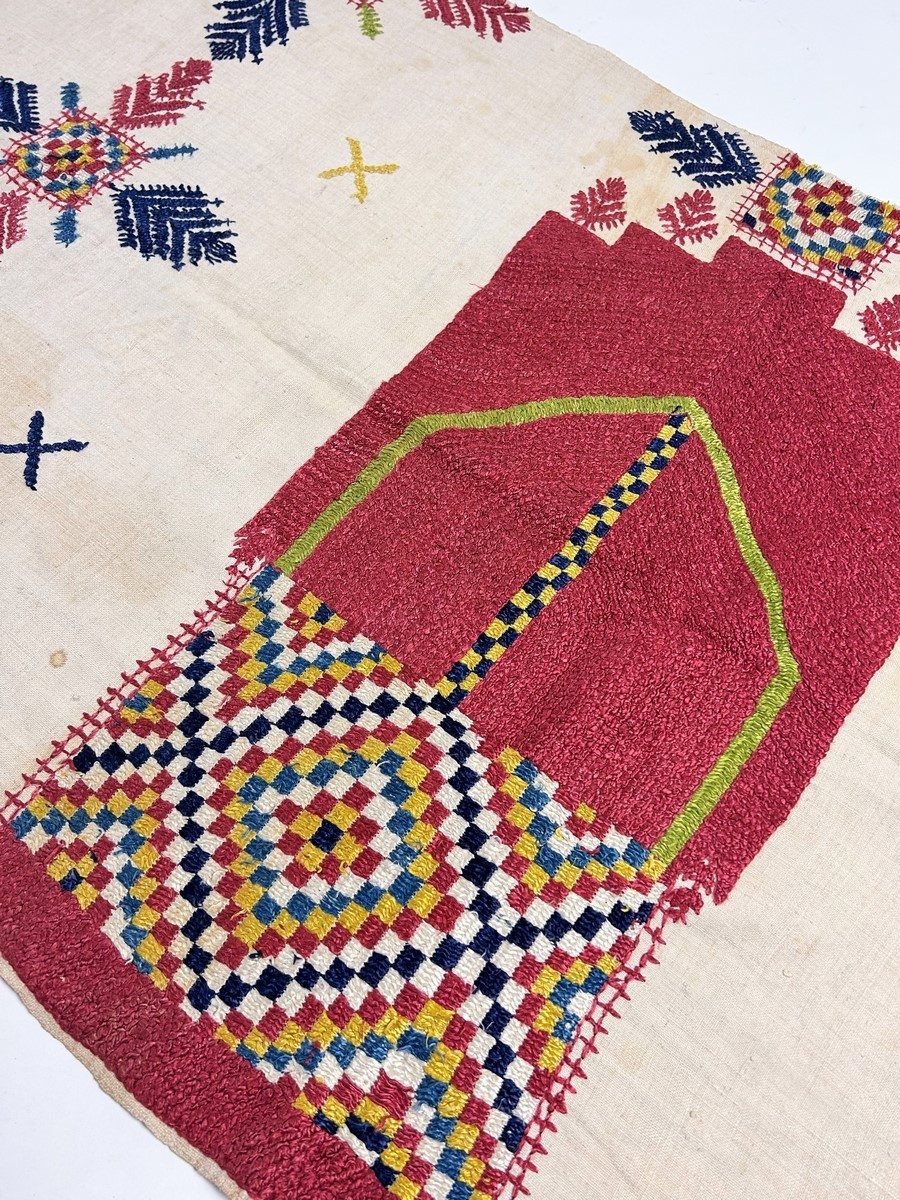
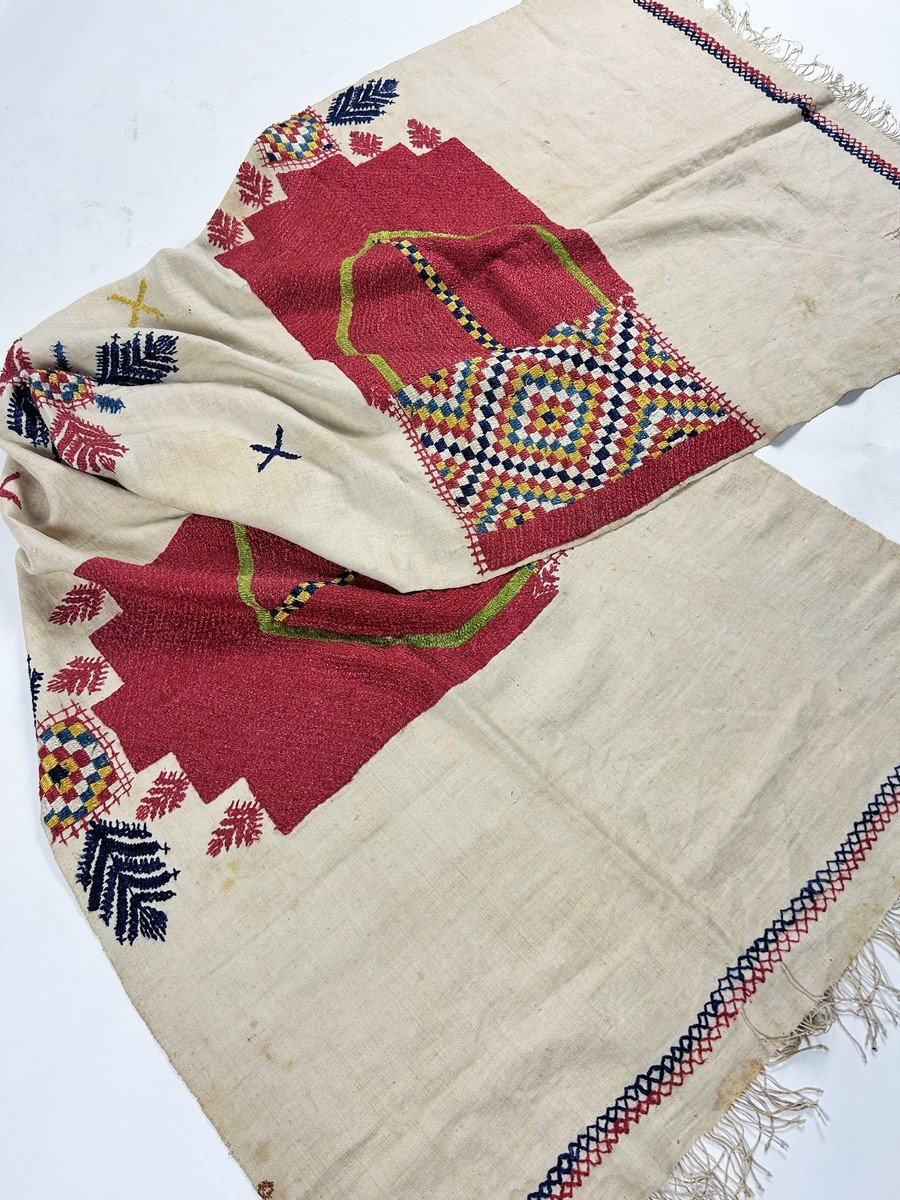
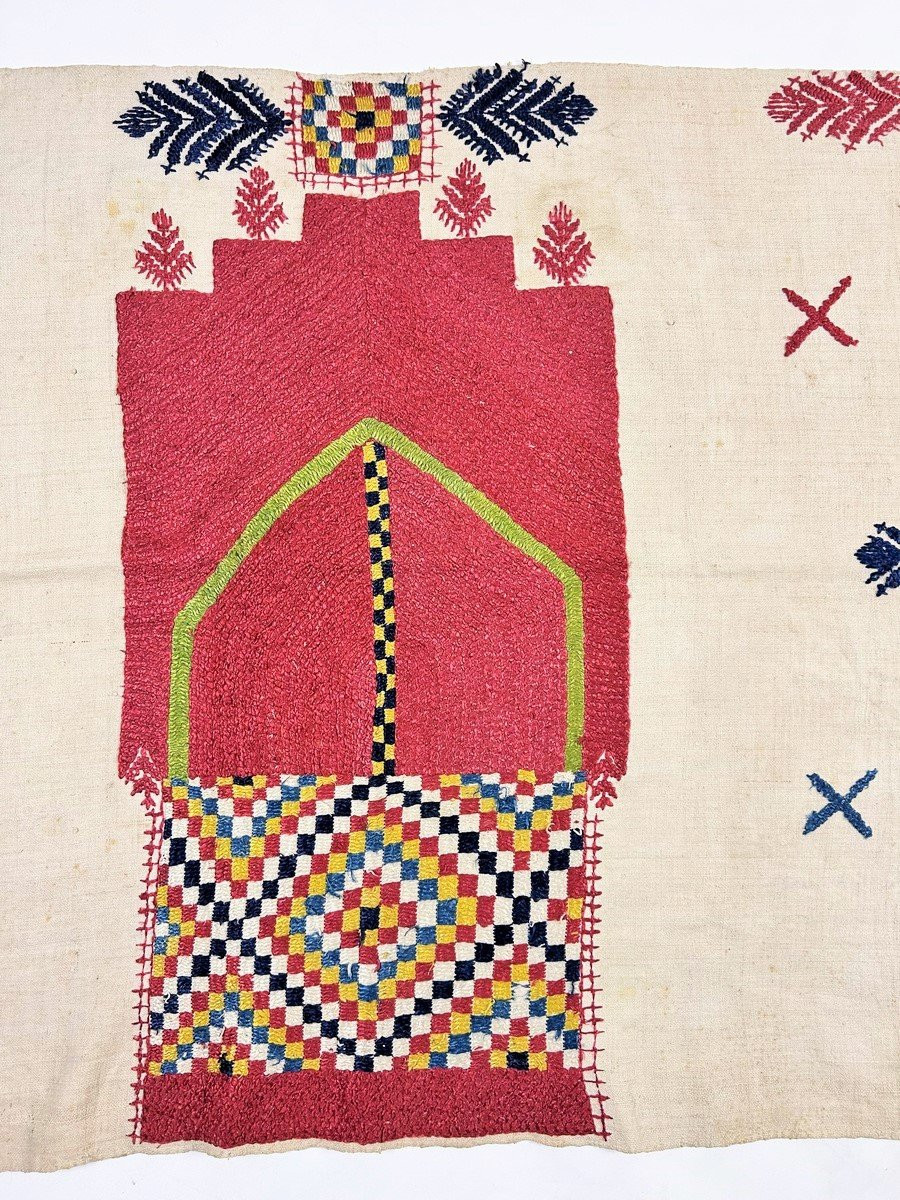
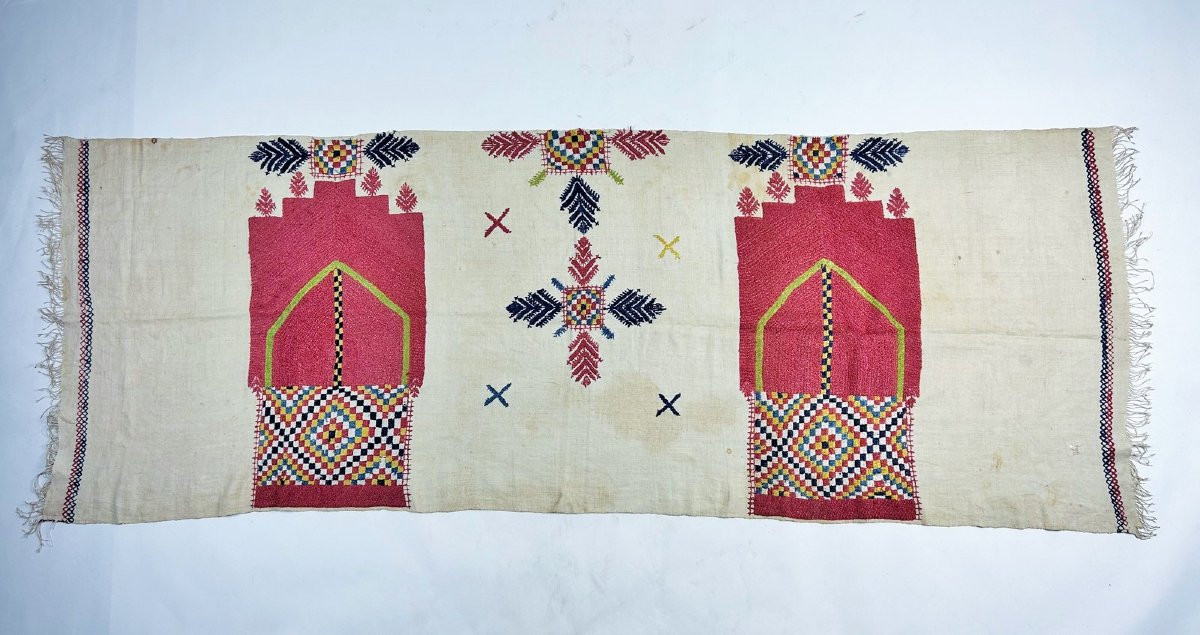
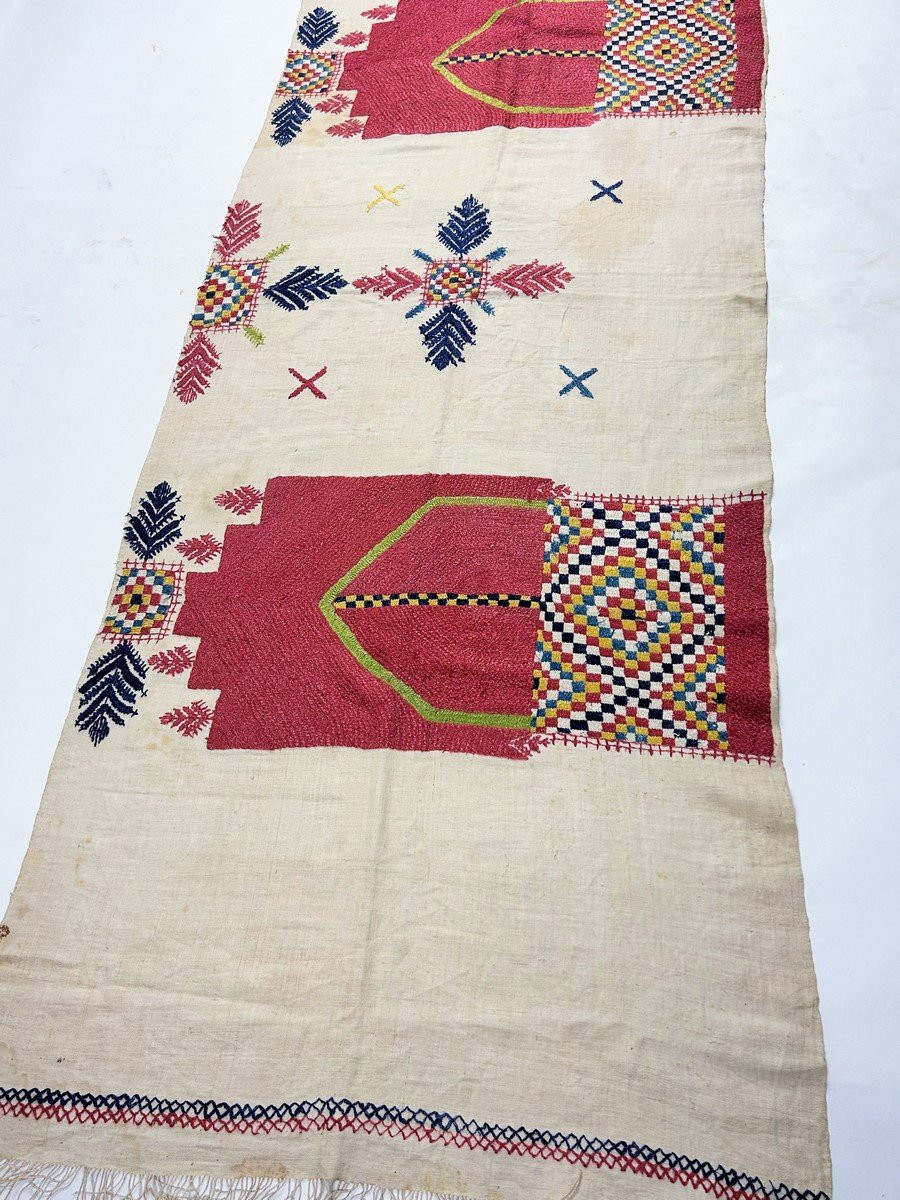
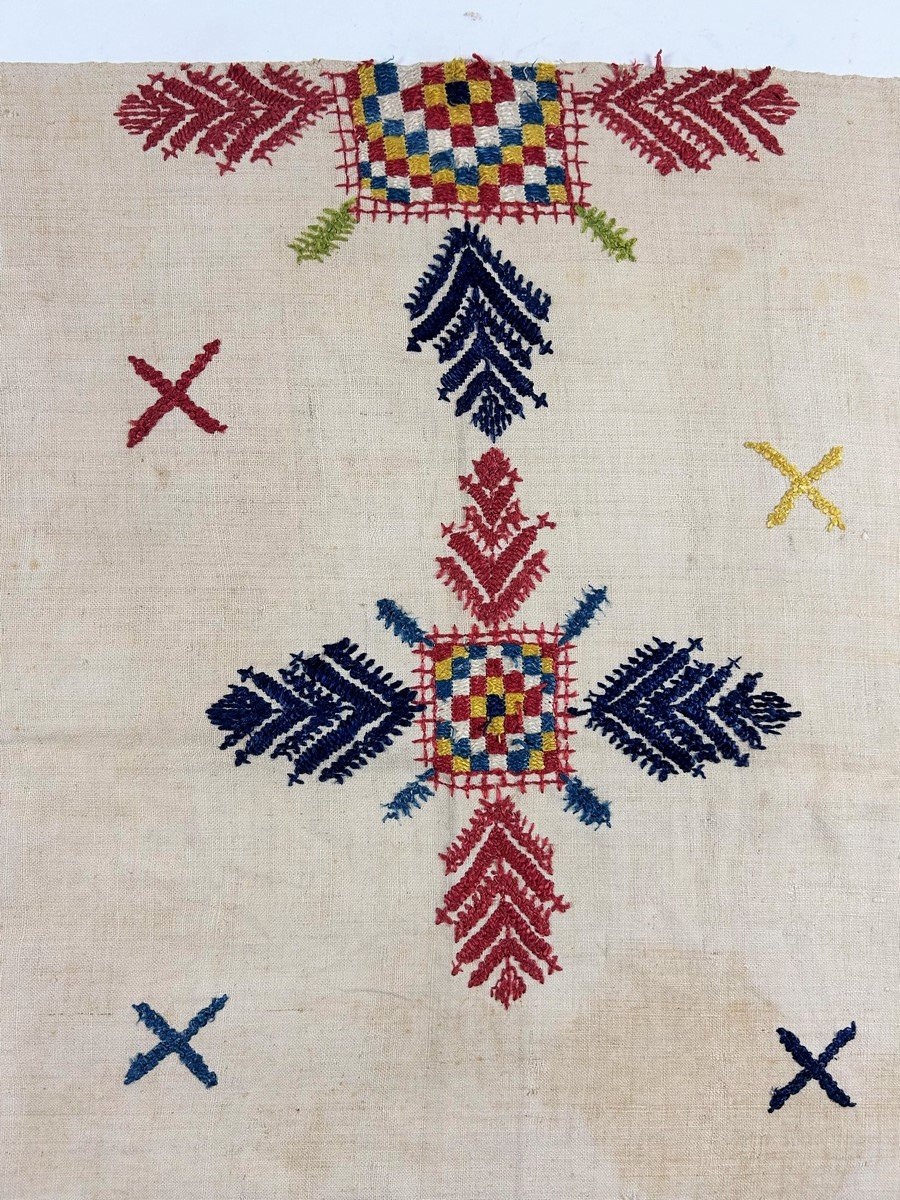
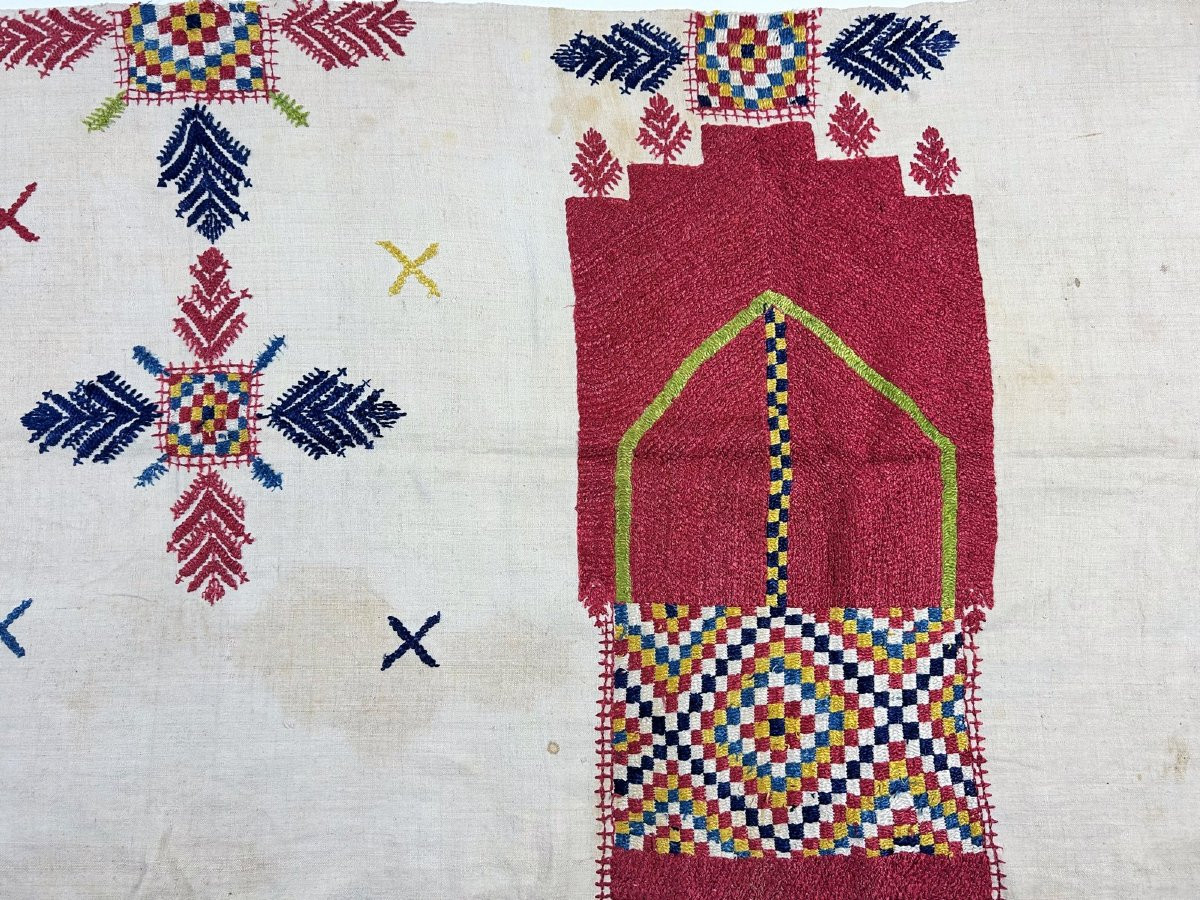
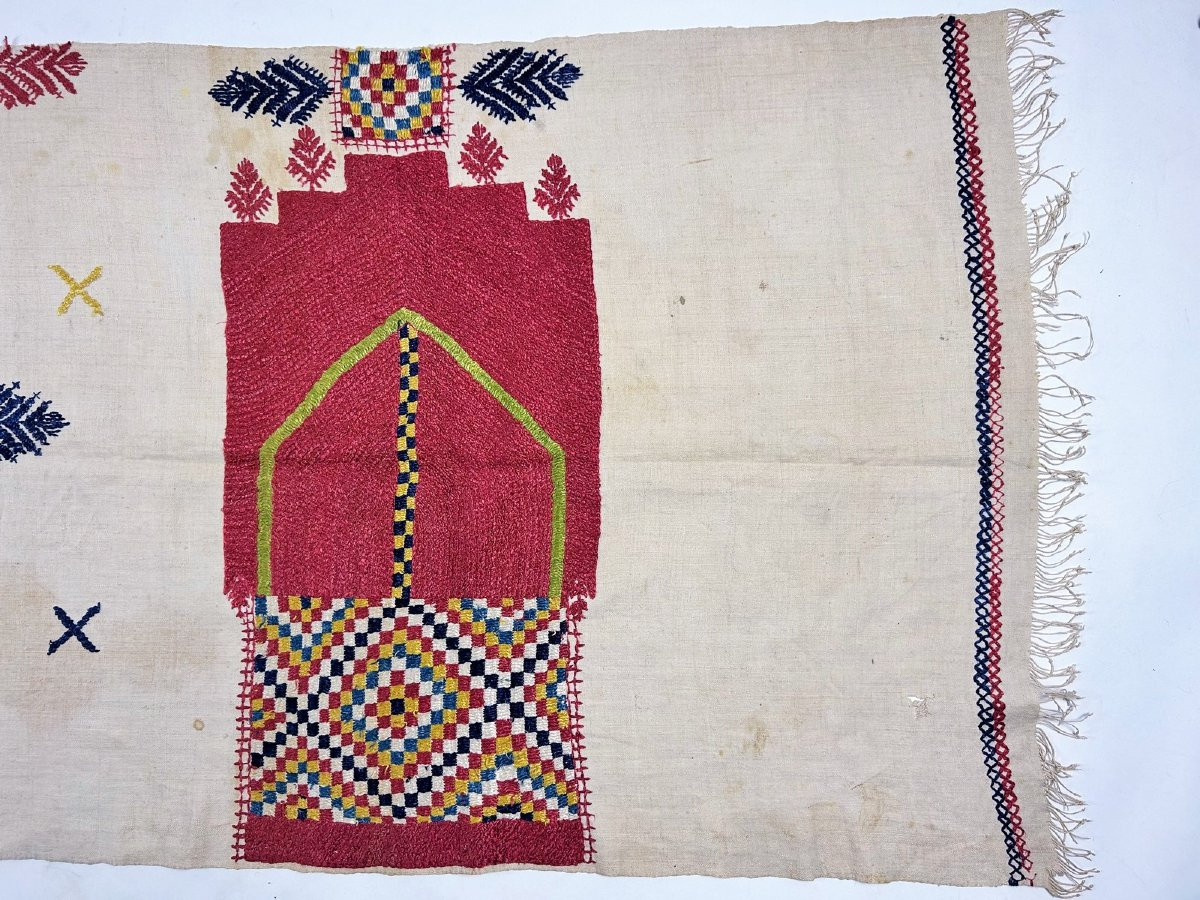

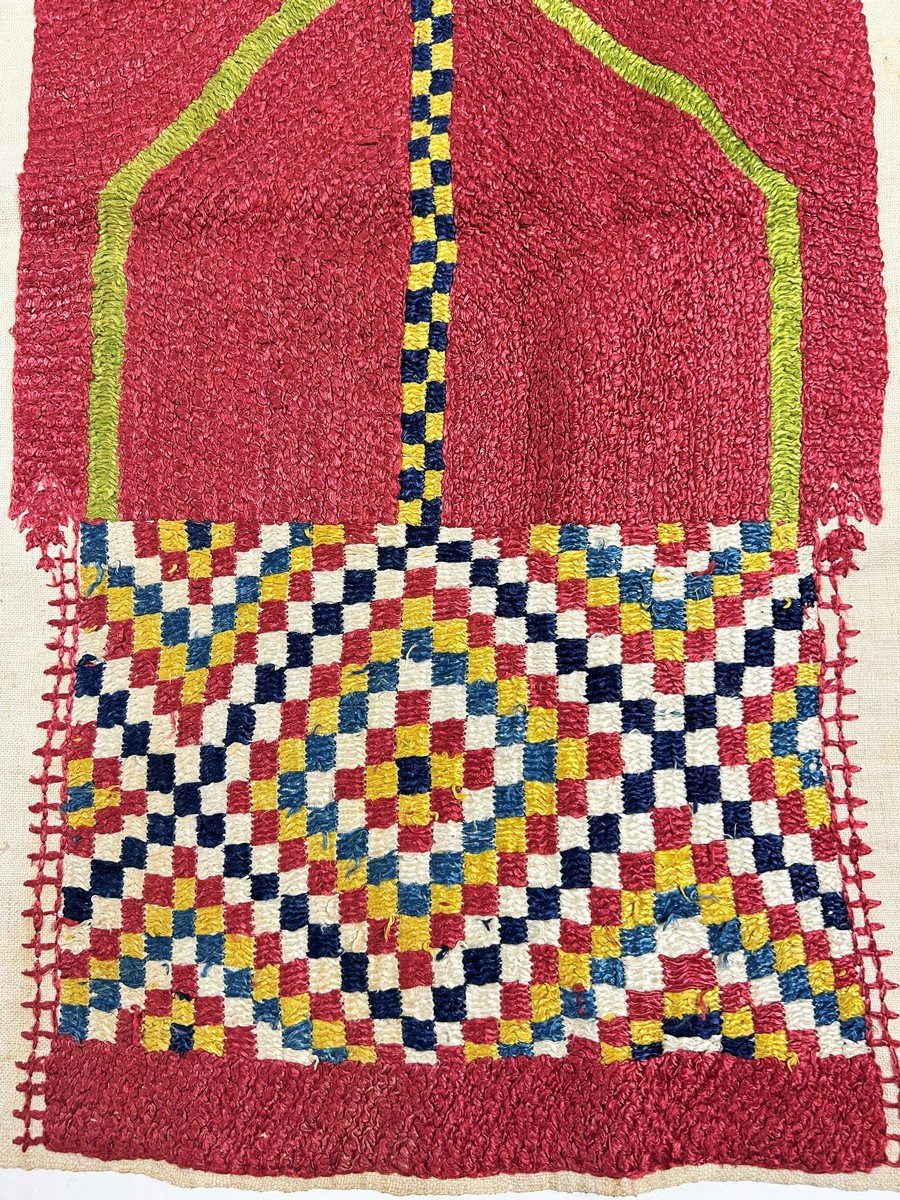
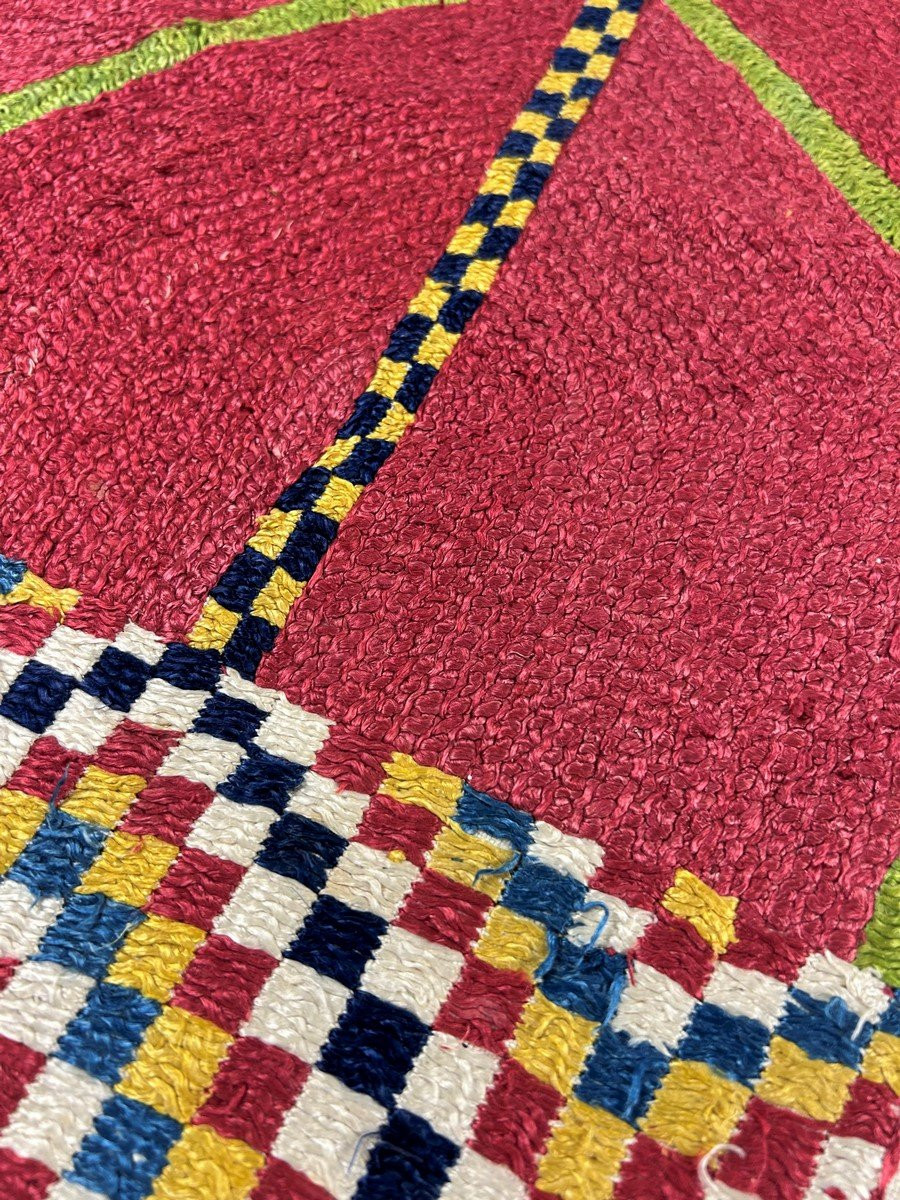
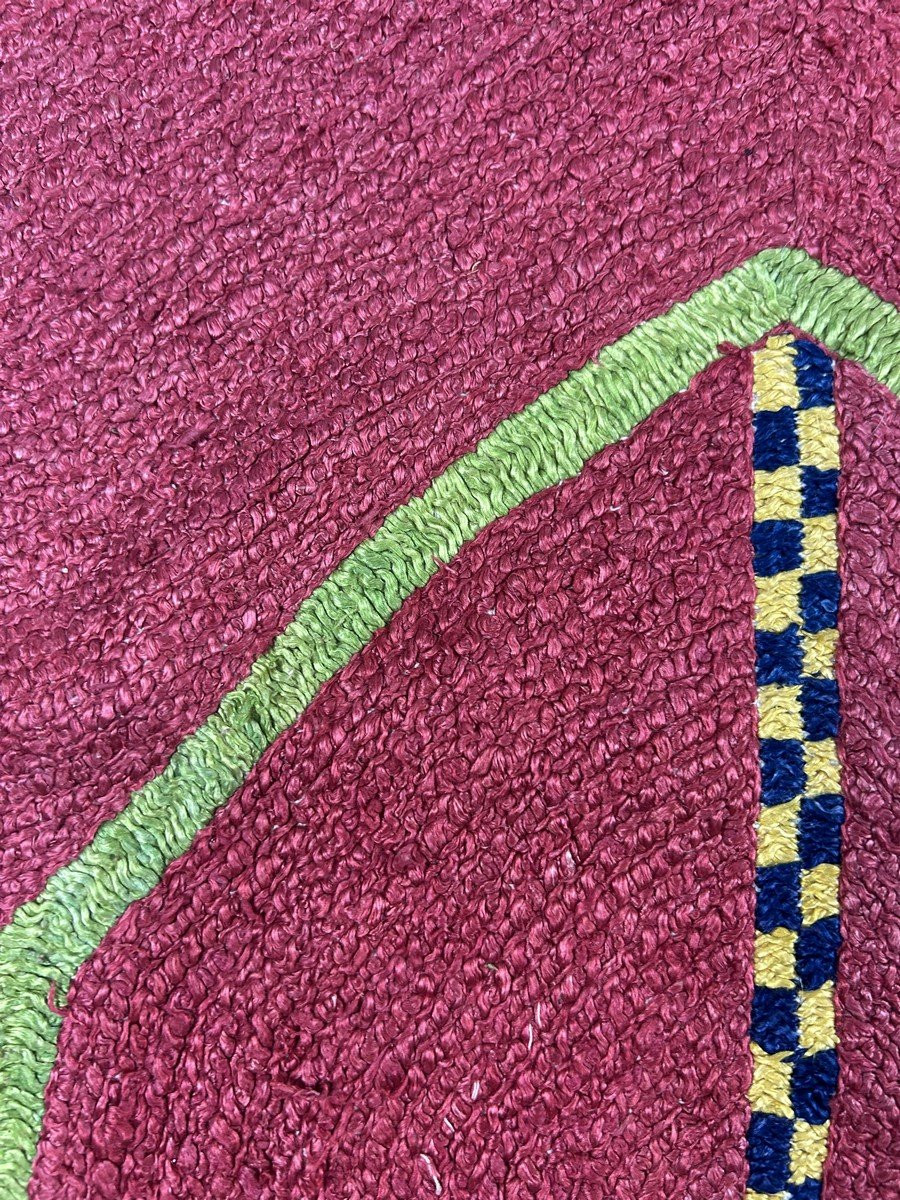
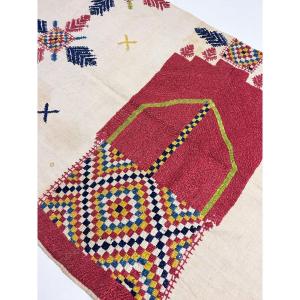


Circa 1880-1930 Chefchaouen - Morocco. Large embroidered panel in silk floss on ecru linen canvas, originating from Chefchaouen, Morocco. This piece, known as an Arid in Moroccan Arabic, is among the most precious of Morocco's heritage. One of the few such pieces recorded worldwide, notably at the Metropolitan Museum of Art in New York, this one dates from the late 19th century. Its design, featuring two large stylized mihrab arches, is inspired by French Cubism, a golden age of Decorative Arts. The intricate embroidery in silk floss with a frilled texture uses a technique similar to that of Azzemour or Rabat. The piece is complete and unaltered, with slight halos and a tiny hole. No other defects are present. It is in excellent overall condition, both in terms of color and preservation. Dimensions: 215 cm x 80 cm. Chefchaouen embroideries are the rarest and most sought-after of all Moroccan embroideries. Chechaouen is a small town in northern Morocco founded at the beginning of the 16th century. Like Tetouan and Fez, it welcomed many Andalusian refugees, Muslims and Jews, and its embroideries were therefore heavily influenced by 15th-century Hispano-Moorish textiles, both in terms of technique and design.
Explore similar pieces and discover your ideal find:
embroidery and lace