
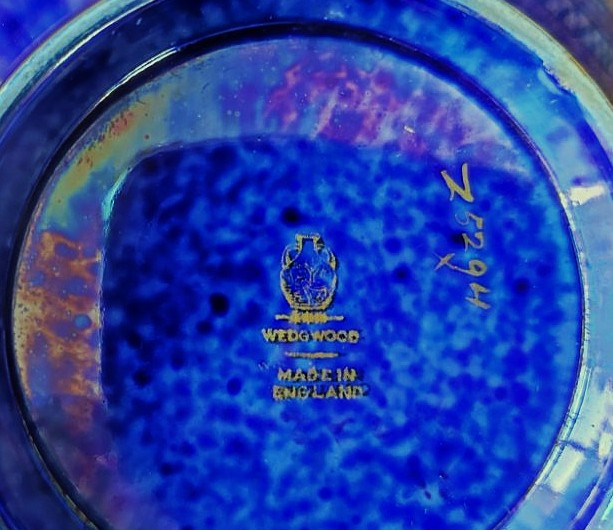


"2 Cuts By Auguste Heiligenstein Ohc + Daisy Makeig-jones, Wedgwood. Art Deco, Goupy, Luce"
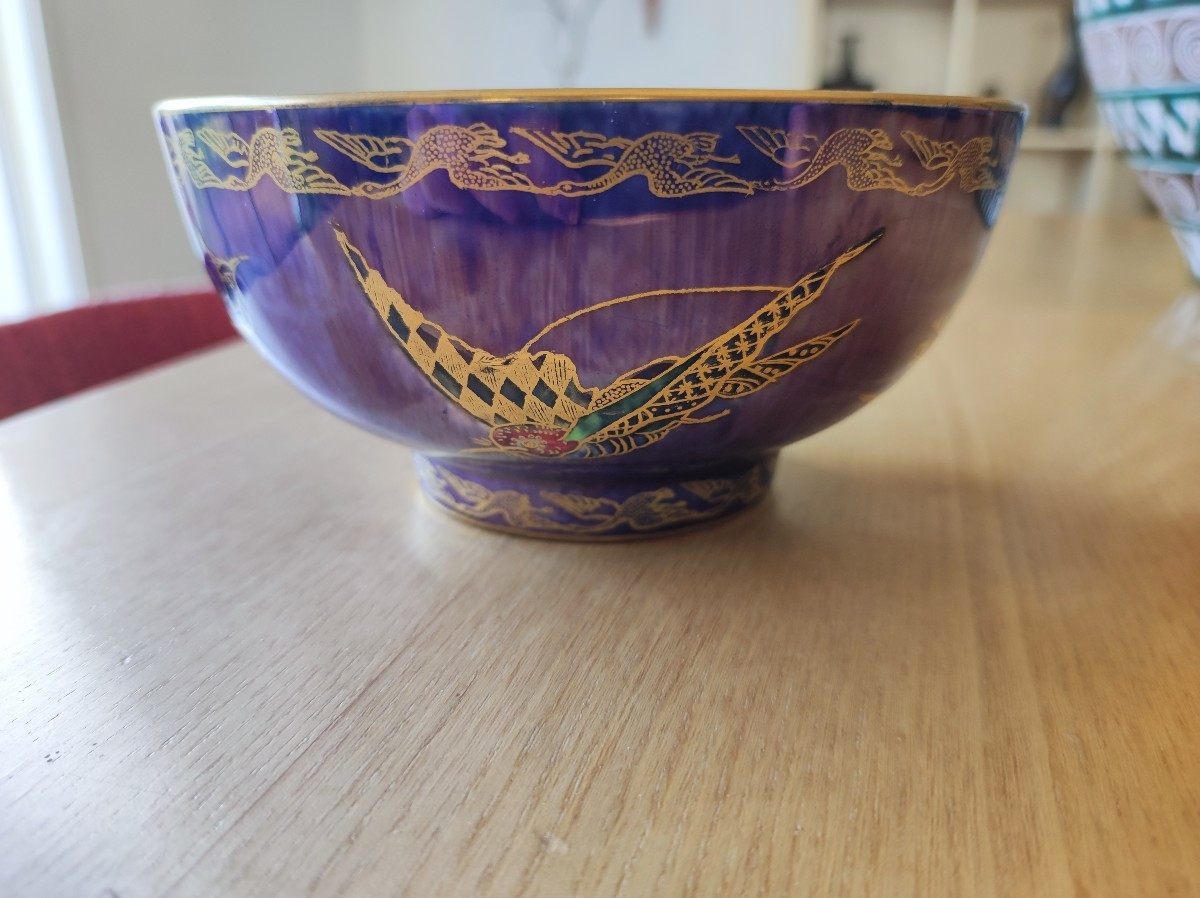
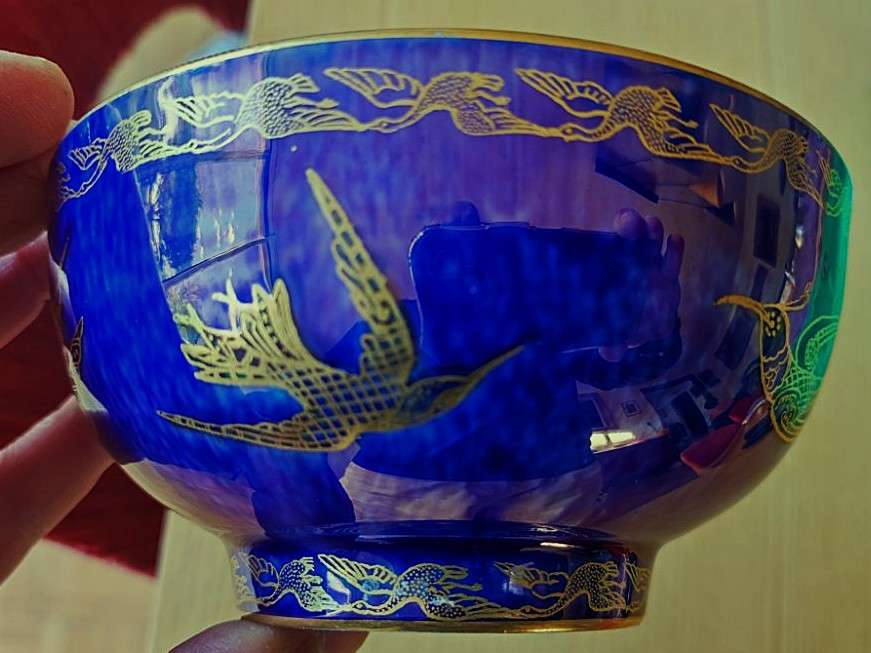
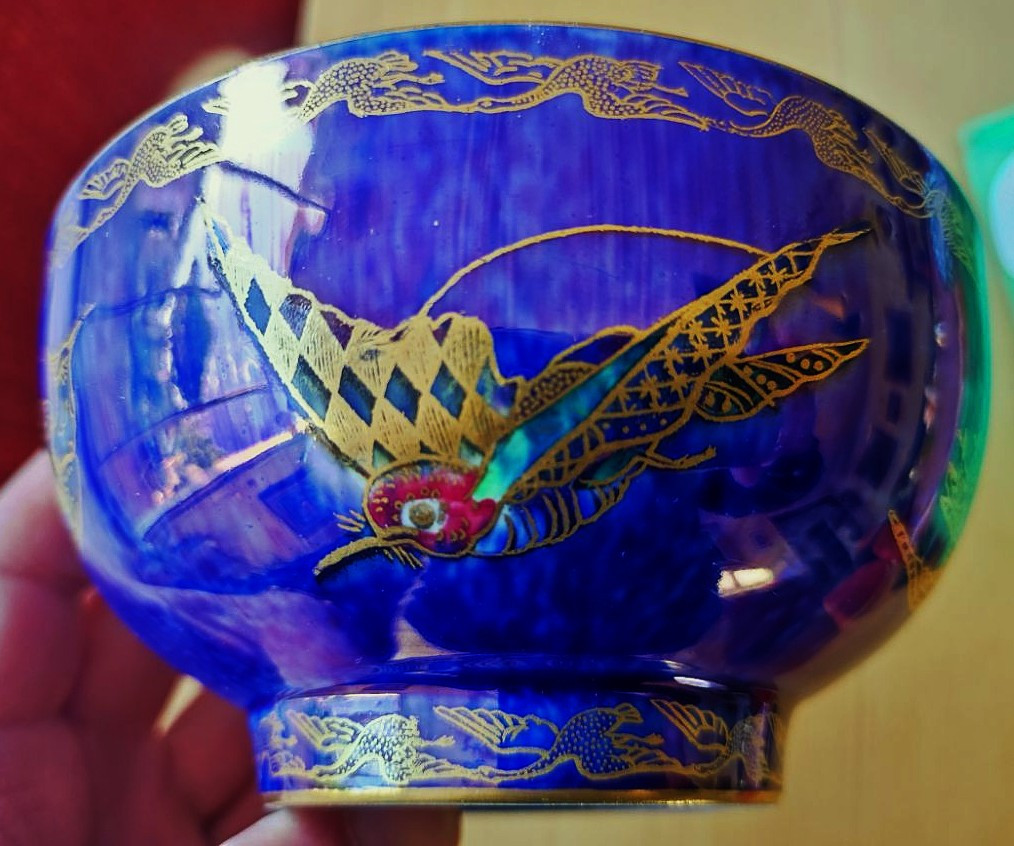
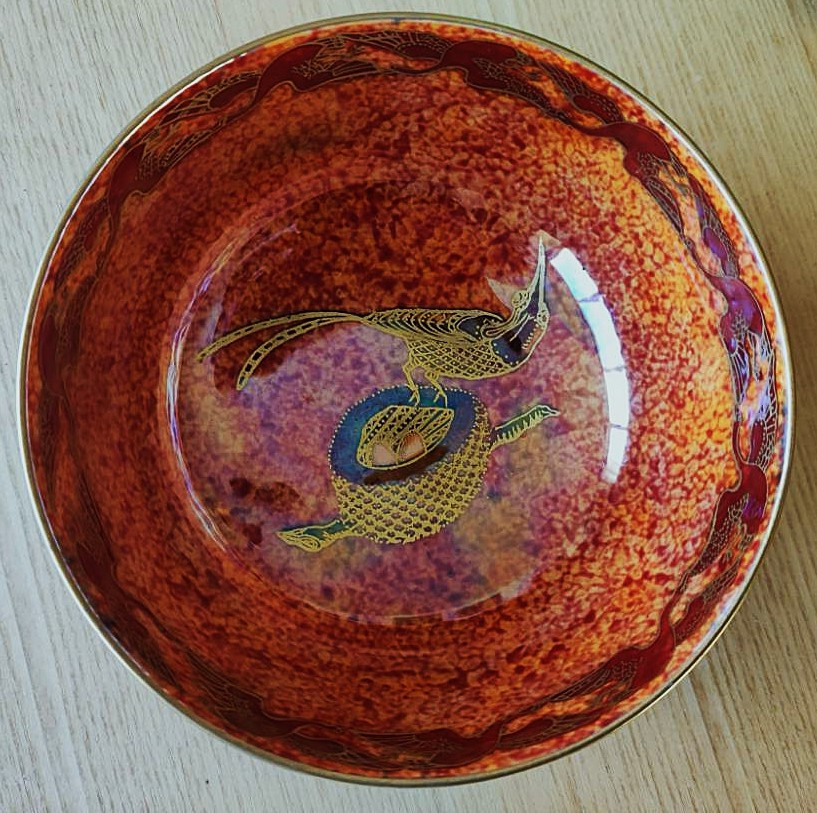
I am offering two superb and rare ceramic bowls from the period 1914-1925, a transitional period between Art Nouveau and Art Deco. The first, by Auguste Heiligenstein and Odette Chartrousse, circa 1925, is decorated with mermaids in an ocean and signed underneath in gold with the signature of Auguste Heiligenstein + OHC for Odette Heiligenstein Chartrousse. It has beautiful dimensions: 9cm high and 13.5cm in diameter. It is in very good original condition. The bowl is hollow on a small foot, and the rim is decorated with two mermaids swimming amidst seaweed and other oceanic elements. The artists used glazes in shades of green, blue, and black, all enhanced with gold. The interior is predominantly green with gold vermiculation, and the upper and lower rims are navy blue. Price of this cup alone: €750. Auguste Heiligenstein, born December 6, 1891, in Saint-Denis and died January 23, 1976, was a French master glassmaker and ceramicist. He participated in the revival of enameled glass decoration in the 1930s. In 1902, he began his apprenticeship at the Legras glassworks in Saint-Denis, where his talent for drawing allowed him to quickly become an apprentice decorator. From 1908, after a stint in the Baccarat decoration workshop, he was hired after his demobilization by Goupy, artistic director of the Rouard company. He began the First World War as a non-commissioned officer near a 75mm gun and earned his rank of second lieutenant. He volunteered to become a balloon observer at the end of 1914. Stationed at Fort des Paroches, he served as a balloon observer. He also set up a mapmaking service based on his observations, before the 65th Division was transferred to the Woëvre plain and the Bois le Prêtre forest near Pont-à-Mousson in June 1915. There, he was assigned as an aerial observer to the division's squadron, MF 5, based in Toul. In 1916, he earned his pilot's license and was transferred to MF-44. In 1917, he also served with C-229, but after being wounded, he finished the war with the Aviation Manufacturing Service. Becoming self-employed in 1923, he met the ceramicist Odette Chatrousse, who would become his wife and introduce him to ceramics. He exhibited his first signed pieces at the Galliera Museum in 1923 and subsequently participated regularly in the Salon, winning a gold medal in 1924. He triumphed at the Salon des Artistes Français in 1933 with a large vase entirely decorated with translucent enamels outlined in gold, using a technique he himself developed. After the Second World War, he devoted himself primarily to ceramics and wrote a book on decoration in the ceramic arts: glassware, porcelain, and earthenware. - The second bowl by Daisy Makeig-Jones for Wedgwood England, circa 1914, decorated with hummingbirds, is signed below the stamp with the Wedgwood amphora made in England and the number Z5294. Dimensions: height: 6 cm and 13 cm in diameter. In perfect original condition. A rare and superb deep bowl on a small foot, the rim is decorated with several gold hummingbirds, one of which is further embellished with green and red enamels, all against a mottled blue background. The edges are also decorated with gold birds, and the interior is mottled orange with a gold decoration of a hummingbird and its eggs in its nest. The upper rim is again decorated with gold birds. Price of this bowl alone: €350. Superb Wedgwood luster porcelain bowl made in England around 1914, belonging to the first "Ordinary Lustre" range designed by Susannah Margaretta "Daisy" Makeig-Jones (1881–1945). Talented and innovative, Makeig-Jones joined the Wedgwood factory in 1909 and quickly became a designer in her own right, with her own workshop. She is famous for her "Fairyland Lustre" and "Ordinary Lustre" series, which introduced vibrant colors, iridescent glazes, and fantastical patterns to luxury porcelain. Price for the two bowls: €1000 










 Le Magazine de PROANTIC
 TRÉSORS Magazine
 Rivista Artiquariato