THIS OBJECT WAS SOLD
19th Century Italian Grand Tour Bronze Sculpture Of Arato, From Casts By Chiurazzi


Bronze
Italy, 19th century
Height 75 cm, width 60 cm, depth 30 cm. Base diameter 22 cm
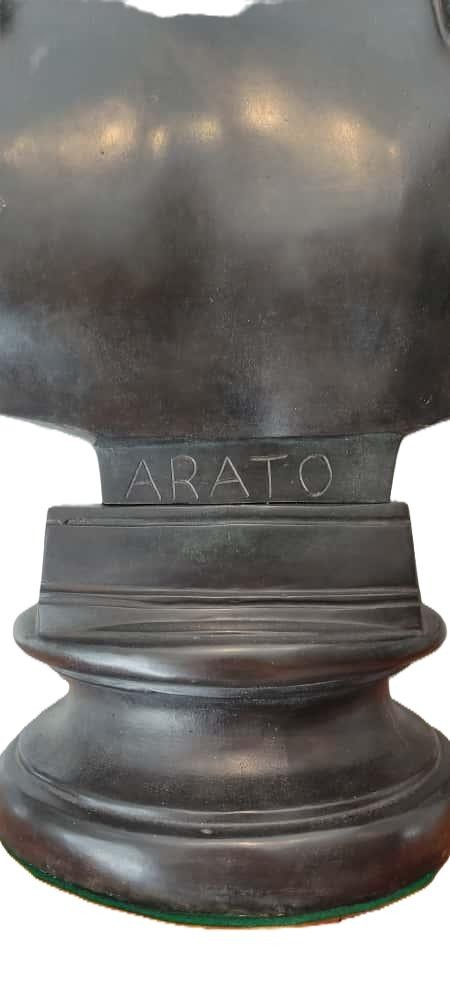
Signed: ARATO
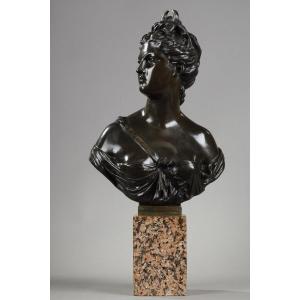
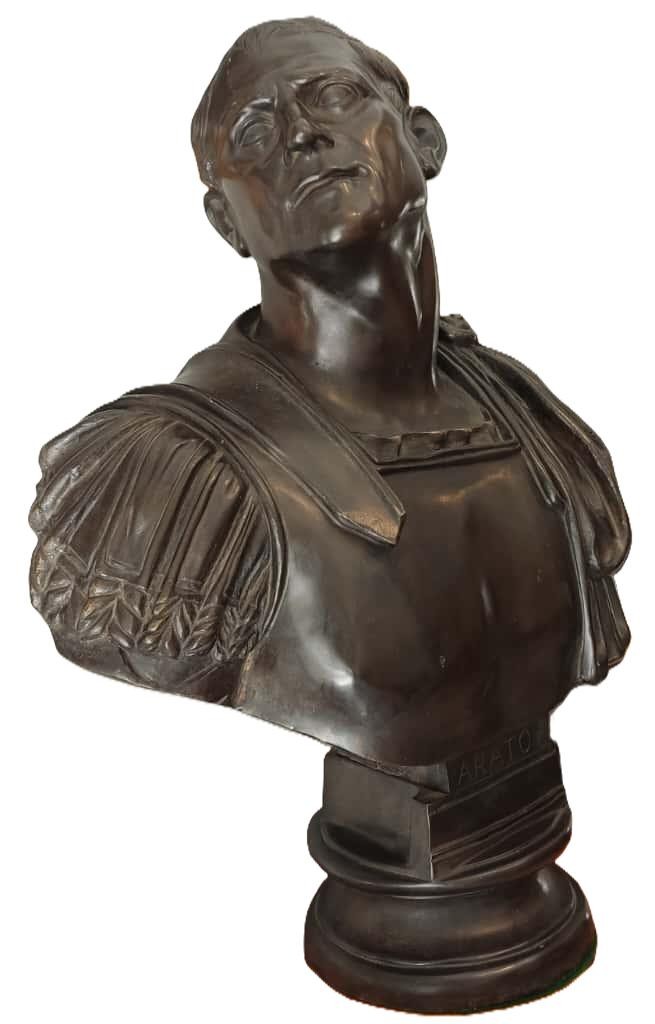
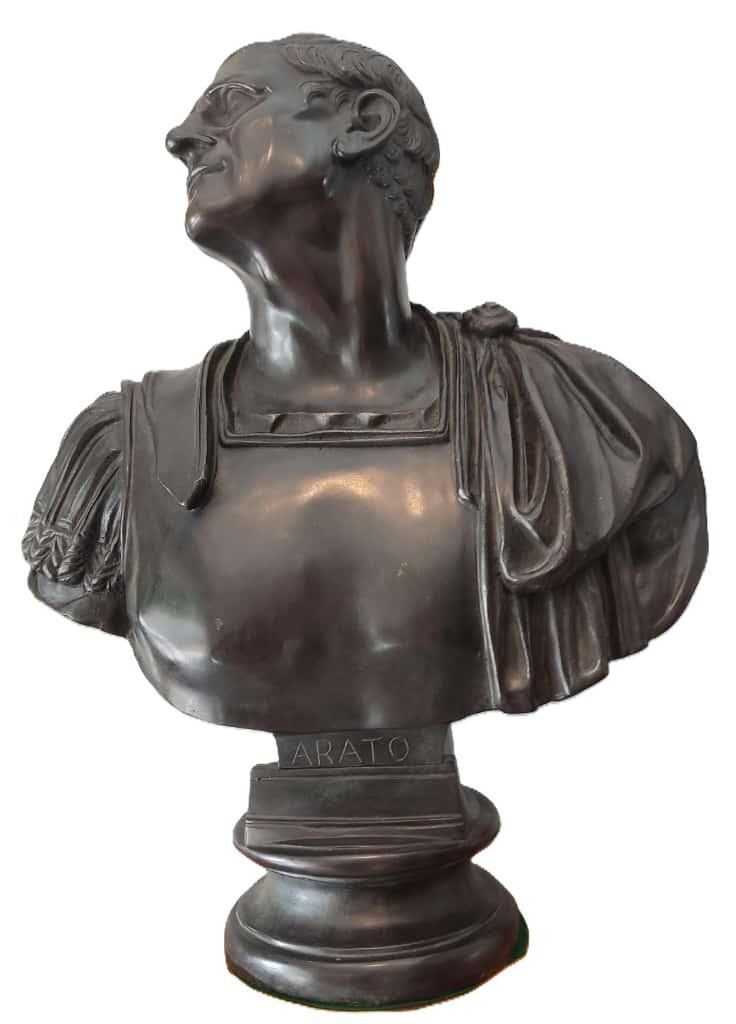
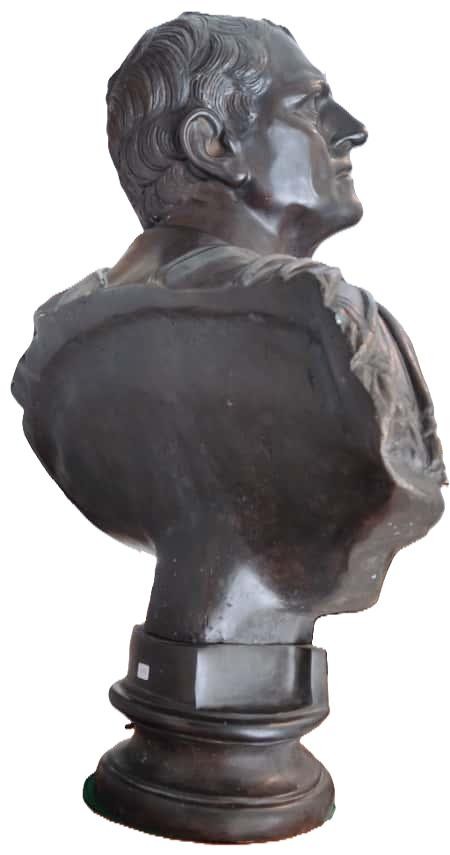
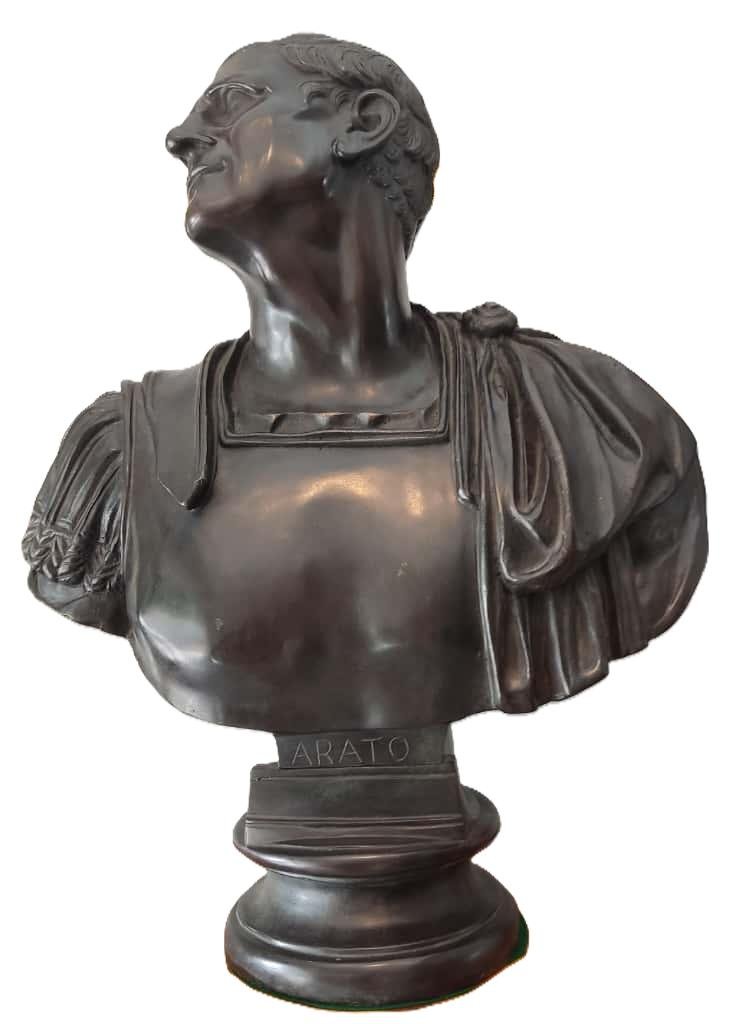
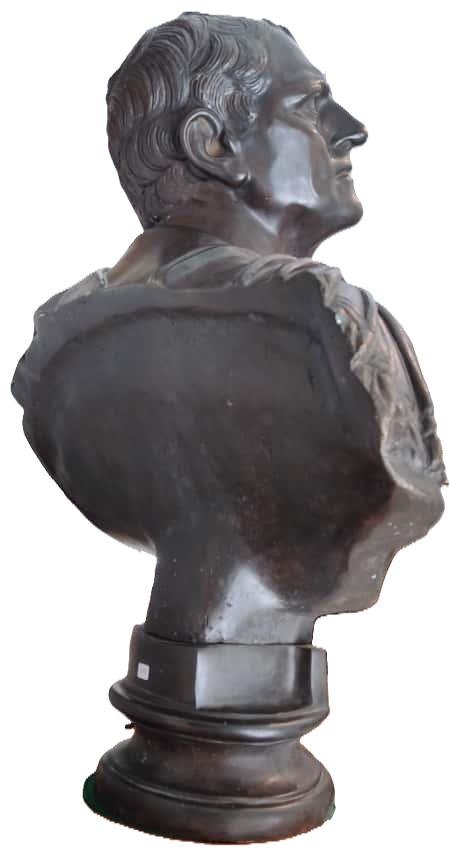
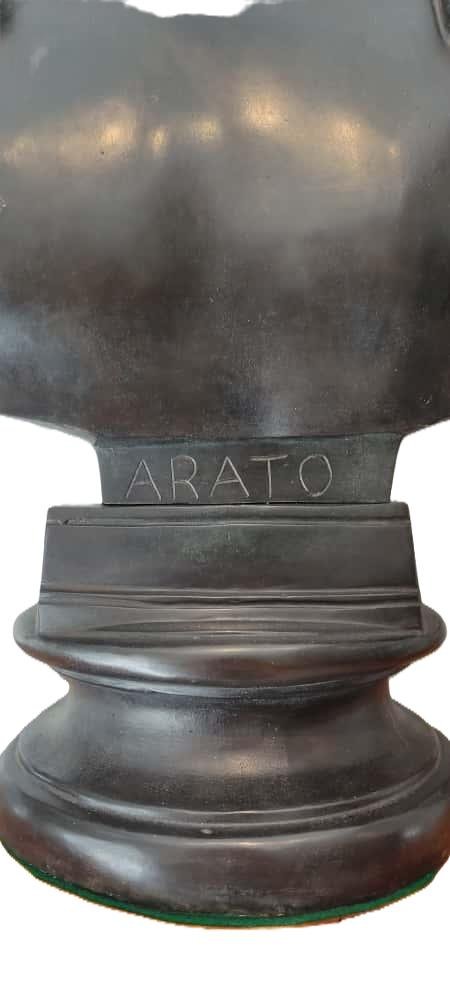
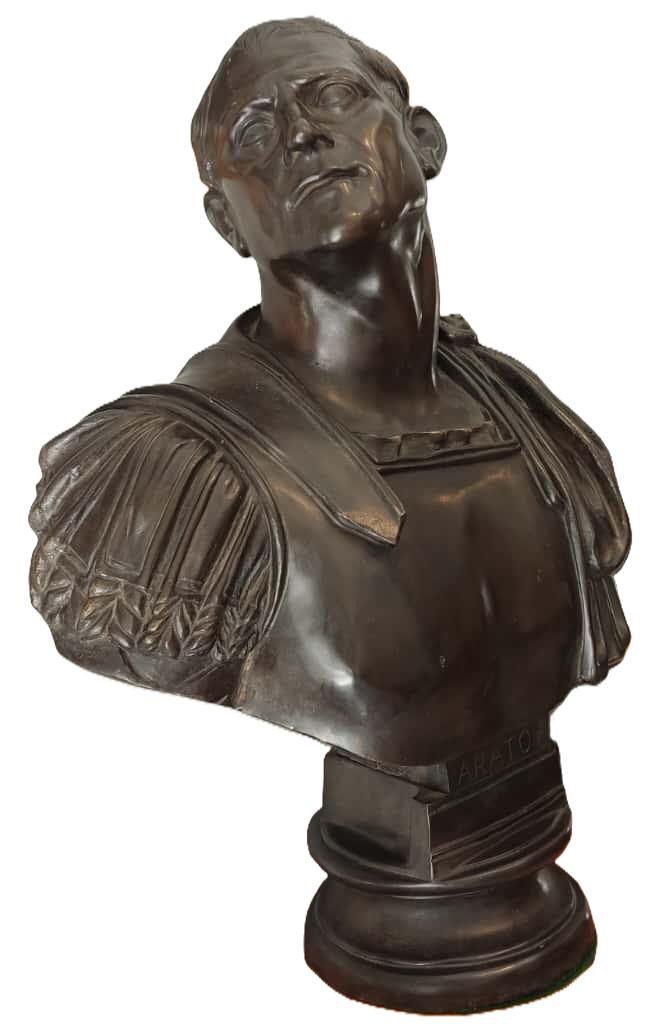
Bronze bust depicting a Roman warrior, cast from models by Chiurazzi. The figure appears with his head turned to the left, slightly raisedand his neck tense, which accentuates the expressiveness of the face andconveys an expression of nobility and drama. The torso is covered with a smooth, straight-lined breast plate, over which rests a cloak with wide folds gathered over the left shoulder. The treatment of the hair, with short,well-defined strands, as well as the modeling of the face and clothing, reflectfidelity to classical canons. The piece stands on a molded circular base, where the name“ARATO” is engraved. The uniform dark patina highlights the volumes and gives the sculpture a solemn appearance.
The work is part of the tradition of 19th-century Italian historicist sculpture, in which foundries, such as the famous Chiurazzi in Naples, produced bronzes inspired by Antiquity to satisfy the collecting tastesof the time. The use of bronze, a material associated with both durability andprestige, together with the quality of the casting, place this piece among theworks of artistic dissemination intended for cultured circles and thedecoration of aristocratic and bourgeois interiors.
Italy, 19th century
Height 75 cm, width 60 cm, depth 30 cm. Base diameter 22 cm
Signed: ARATO
Bronze bust depicting a Roman warrior, cast from models by Chiurazzi. The figure appears with his head turned to the left, slightly raisedand his neck tense, which accentuates the expressiveness of the face andconveys an expression of nobility and drama. The torso is covered with a smooth, straight-lined breast plate, over which rests a cloak with wide folds gathered over the left shoulder. The treatment of the hair, with short,well-defined strands, as well as the modeling of the face and clothing, reflectfidelity to classical canons. The piece stands on a molded circular base, where the name“ARATO” is engraved. The uniform dark patina highlights the volumes and gives the sculpture a solemn appearance.
The work is part of the tradition of 19th-century Italian historicist sculpture, in which foundries, such as the famous Chiurazzi in Naples, produced bronzes inspired by Antiquity to satisfy the collecting tastesof the time. The use of bronze, a material associated with both durability andprestige, together with the quality of the casting, place this piece among theworks of artistic dissemination intended for cultured circles and thedecoration of aristocratic and bourgeois interiors.
Explore similar pieces and discover your ideal find:
bronze sculptures