THIS OBJECT WAS SOLD
Tussian Pendant, Burkina Faso, 19th Century Or Earlier.

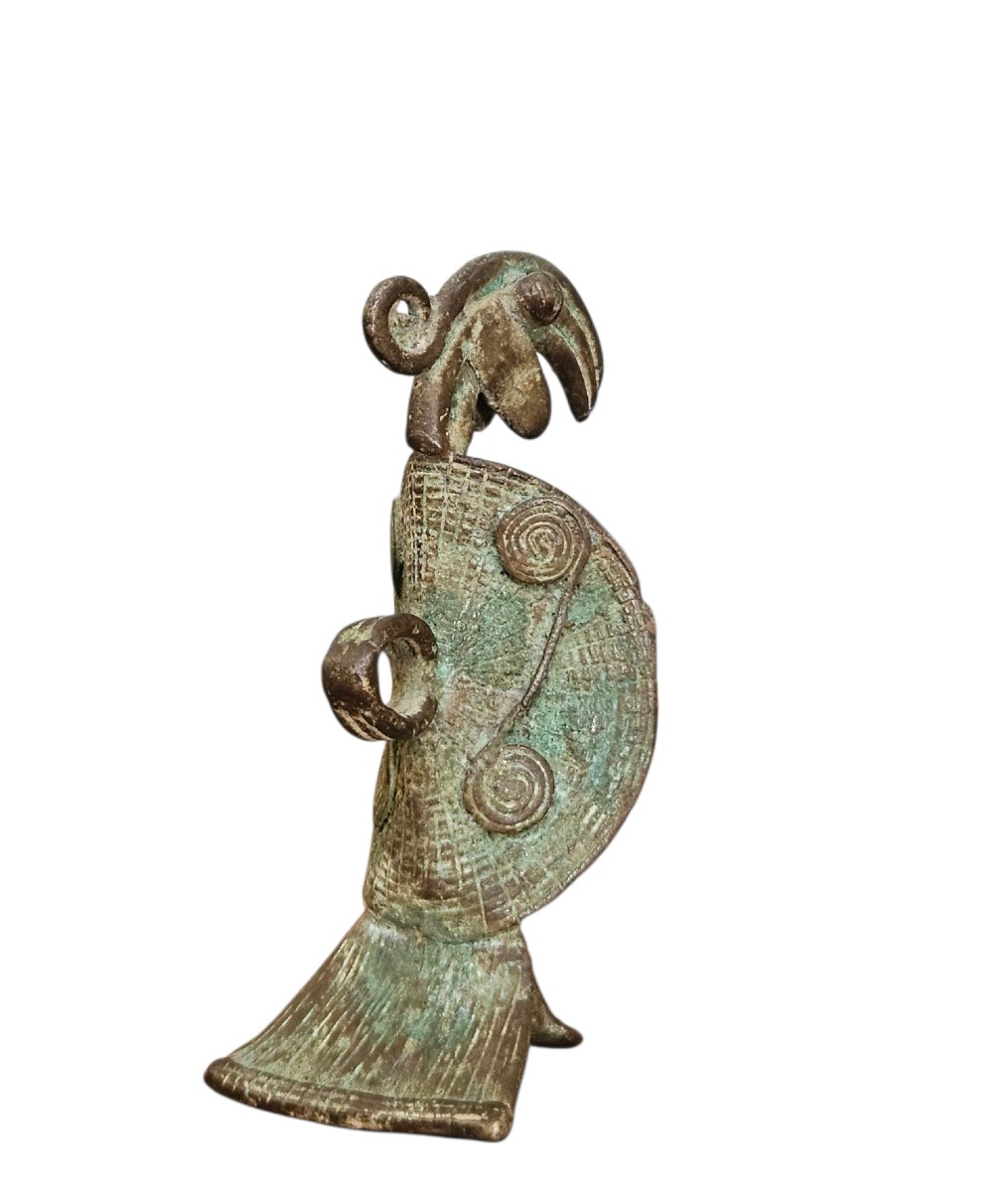


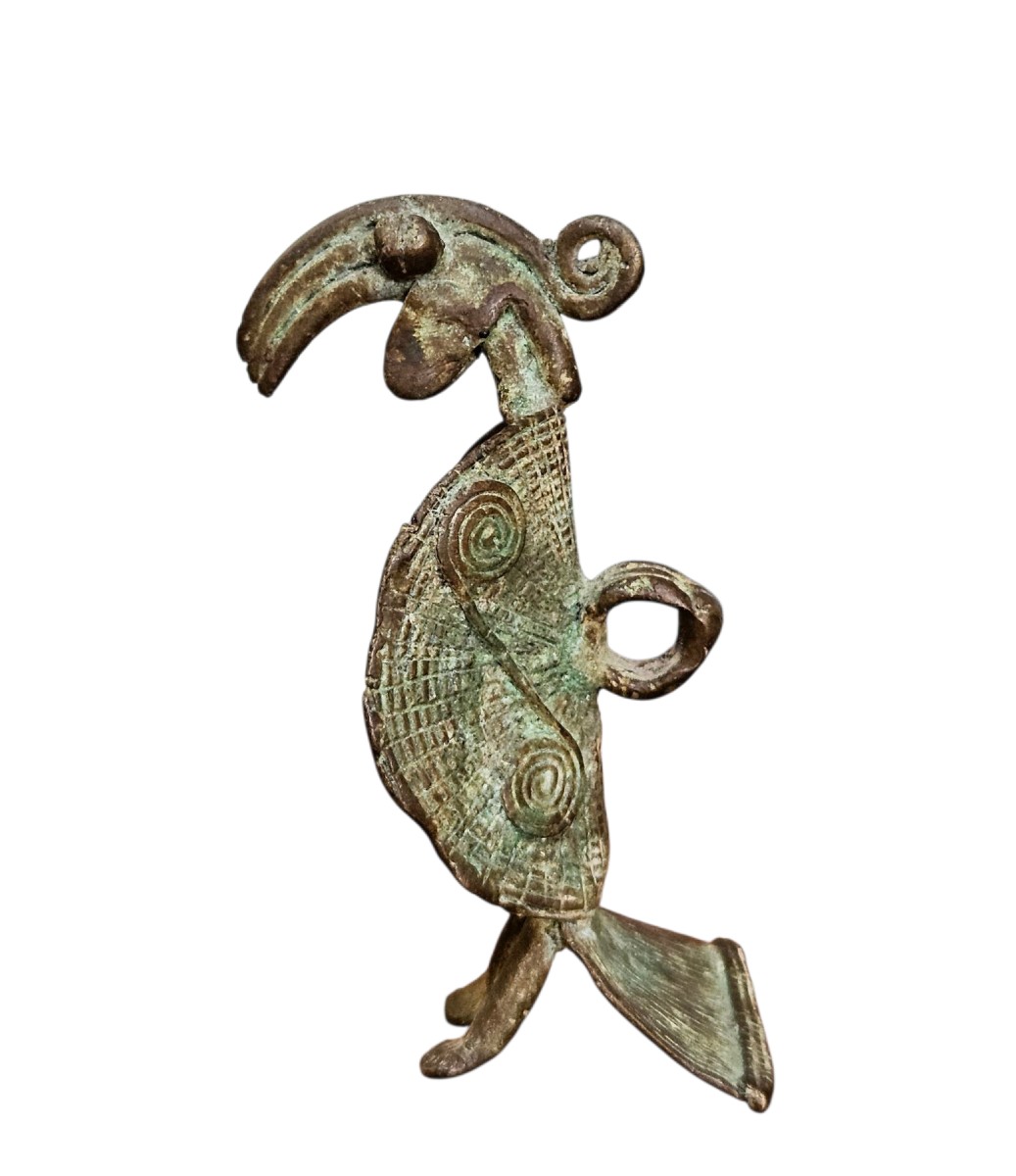

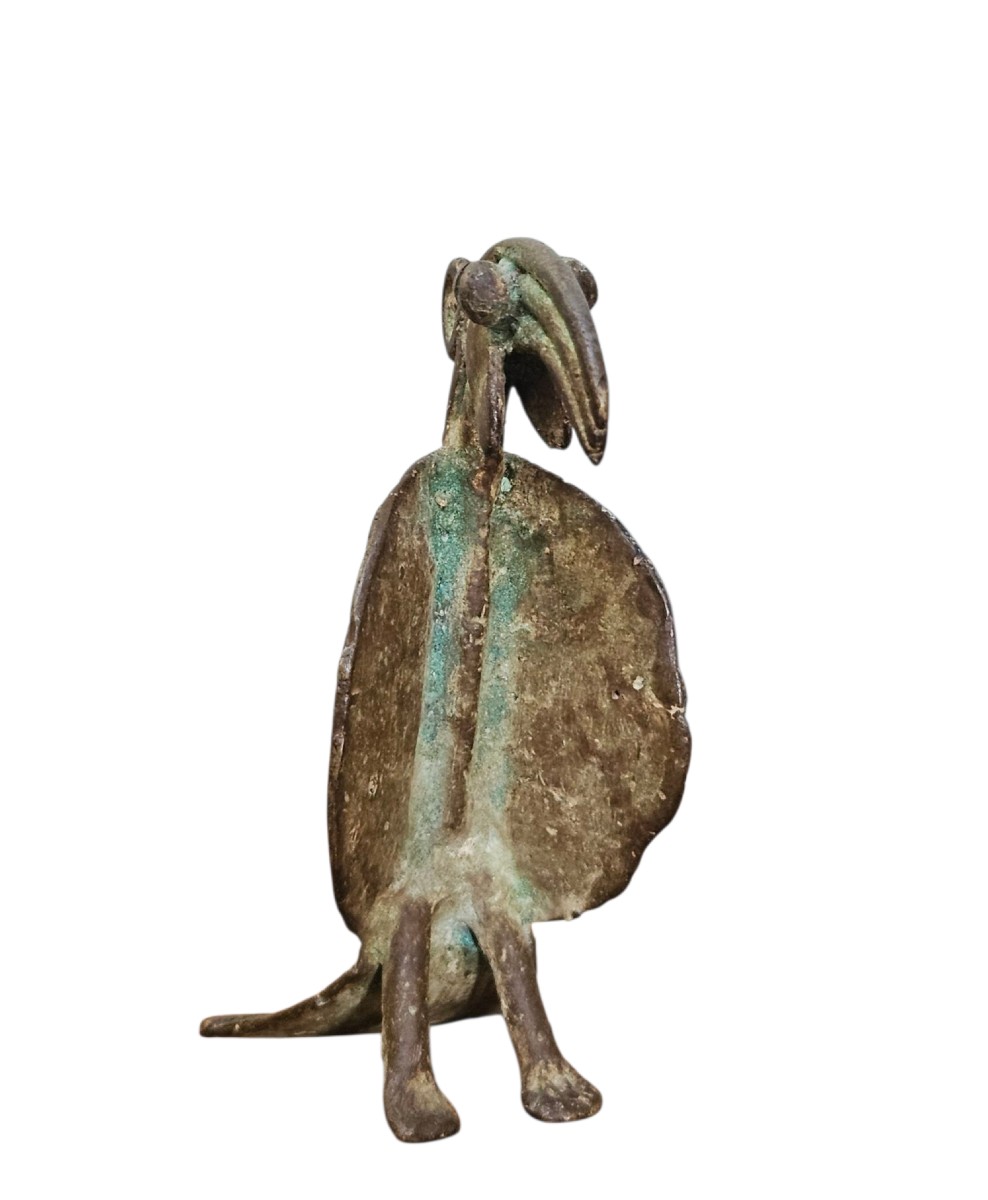



A very old pendant depicting a hornbill standing on its two legs, its tail fanned out. The wings, rendered in stylized volumes, are adorned with spiral motifs forming an abstract face integrated into the body, complemented by a radiating, exquisitely fine incised decoration. The beak and head, arranged in an arc, create a remarkably elegant silhouette. A triple-clamped bail secures the pendant and enhances the overall visual balance. Bronze with a localized green patina, showing signs of wear and age (see photos). Tussian, Burkina Faso, 19th century or earlier. Dimensions: 10.3 × 6.5 × 4.3 cm. Provenance: private collection, Paris. Sold with an invoice from the Ocarina Gallery and a certificate of authenticity from the expert Serge Reynes. Guaranteed origin and period. "The Tussians live mainly in southwestern Burkina Faso, in a wooded savanna zone, where traditions linked to the animal world occupy a central place in symbolic expression. The hornbill embodies a principle of protection, fertility, and mediation between the visible and invisible worlds. This type of pendant could be worn as a personal talisman or a distinctive sign associated with the status and spiritual power of its wearer. The purity of the lines, the mastery of the incised decoration, and the sophistication of the bail give this example a rare formal presence, revealing a keen sense of balance and graphic design. Bibliography: André Blandin, West Africa, Bronzes and Other Alloys, Balder Publishers, Louvain, 1988, p. 68, fig. 8 (similar example)."
Explore similar pieces and discover your ideal find:
Tribal Art