



"Antique Monobloc Stereoscopic Camera With 2 Magasin Plate Holders. France C.1912"
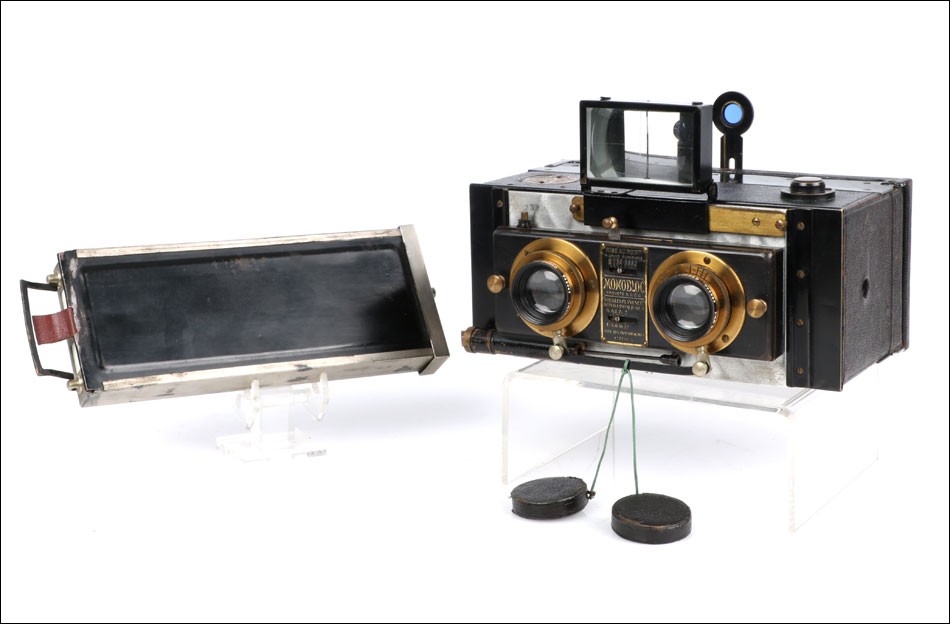
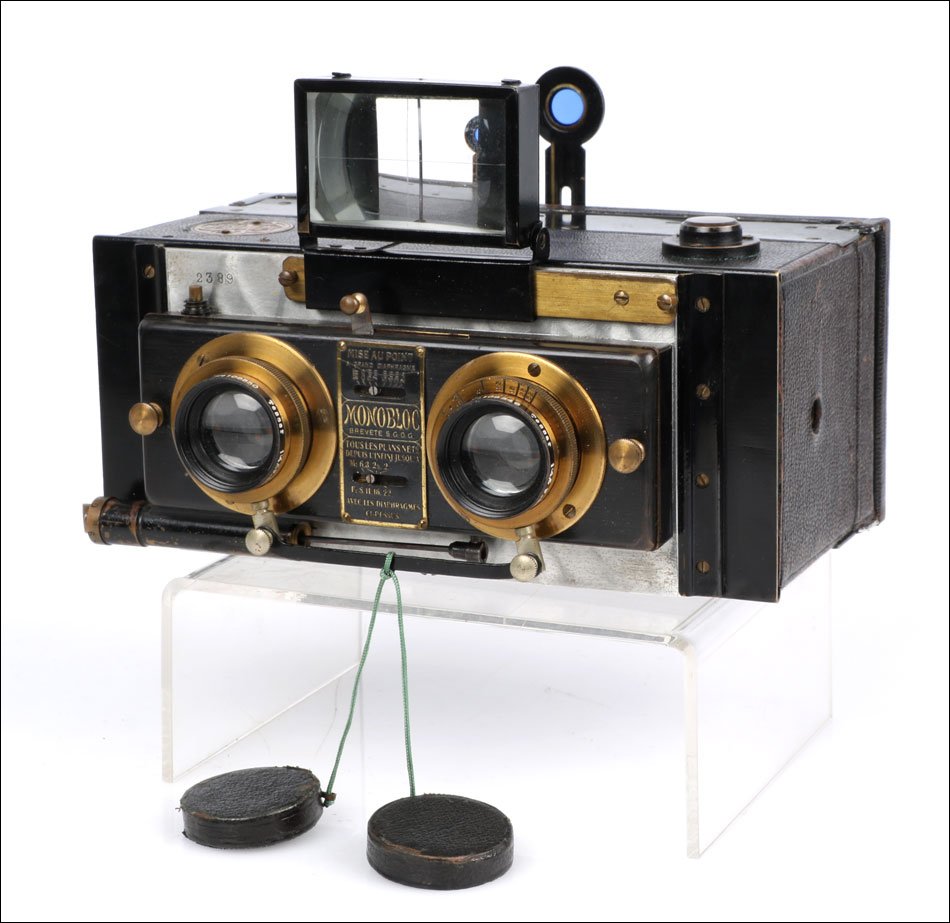
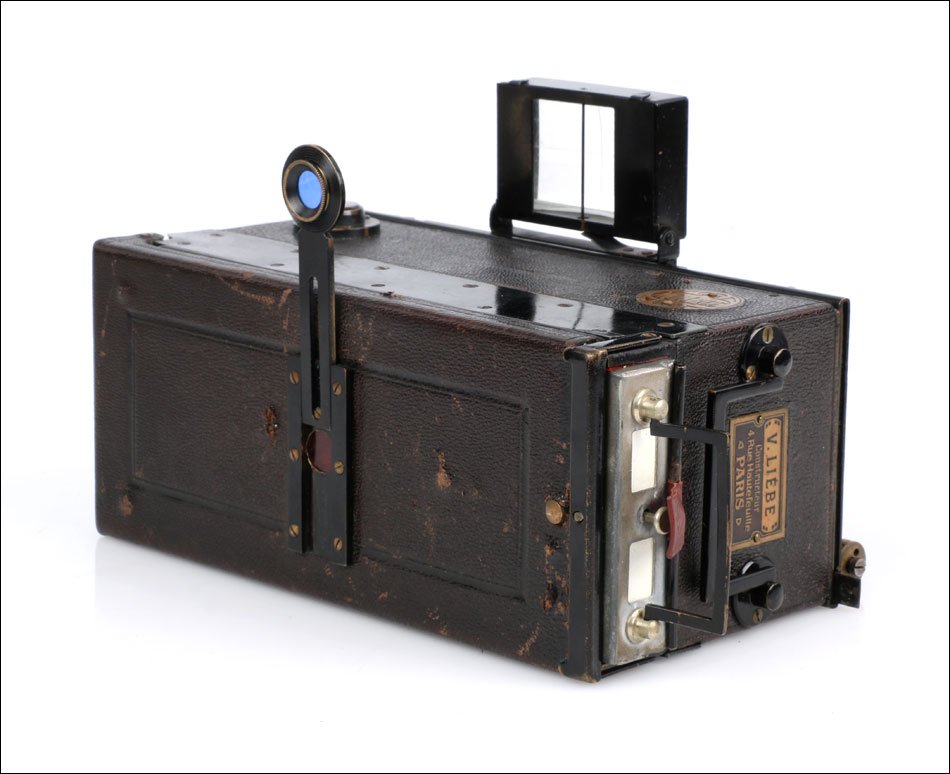
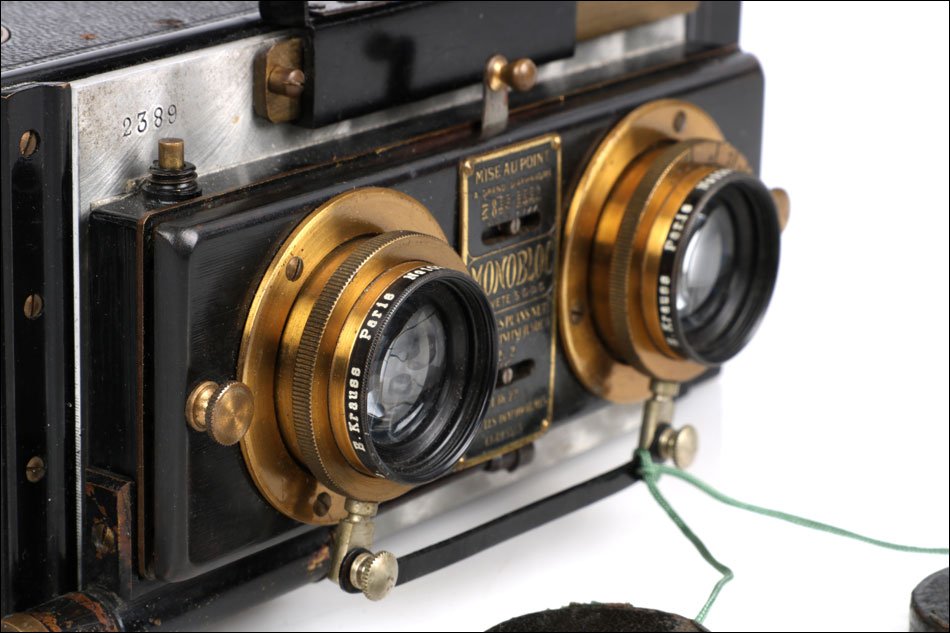
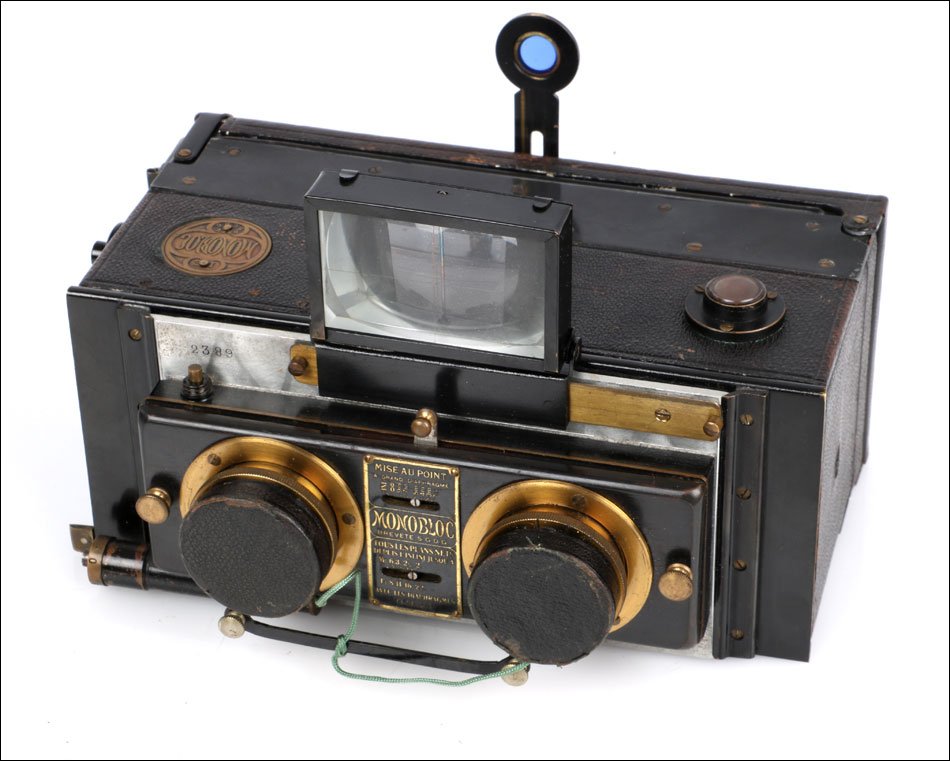
This antique Monobloc stereoscopic camera, manufactured in France around 1912, is an extraordinary piece both for its design and for its complete state of preservation. It is an advanced model for its time, manufactured by V. Lièbe in Paris and intended for the demanding stereoscopic photography market in 6 × 13 cm format. With its characteristic metal body covered in leather, its beautiful lenses with brass mounts and its folding viewfinder, this camera demonstrates the technical and aesthetic elegance that marked French manufacturers of the first quarter of the twentieth century. The serial number 2389, located on the front part of the body, confirms that it is an early example within the total production of the model, which considerably increases its value as a historical and collectible piece. The front stands out for the presence of two stereoscopic lenses with golden mounts, where the contrast creates an unmistakable visual image. The lenses are clean, transparent and in excellent optical condition, something unusual in cameras of more than one hundred years. On both sides the original caps are preserved, a detail highly appreciated by collectors. On the front panel we find the plate with the focusing specifications, the numbered diaphragms and the reference to the French S.G.D.G. patents, a typical inscription of precision instruments manufactured in France before 1968. All of this shows a beautiful natural aging, without significant losses and maintaining the sharpness of each inscription.
The upper folding viewfinder works perfectly and shows the characteristic system of the model. On the right side area the maker’s plate V. Lièbe is preserved, with his Paris address, fixed over the original leather. The whole set exudes authenticity in every detail, from the heads of the rivets to the texture of the covering.
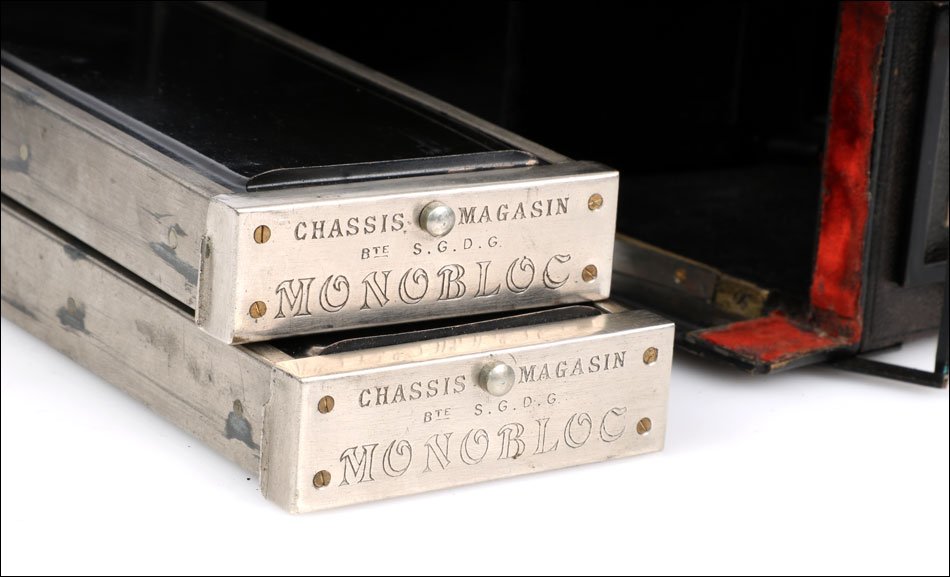
The camera is accompanied by two very rare metal magasin plate holders for multiple 6×13 cm plates. Each holder incorporates its plate-advance system, allowing sequences to be shot without the need to open the camera constantly. Both holders preserve the engraved inscription “MONOBLOC – CHASSIS MAGASIN Bté S.G.D.G.” perfectly legible. This multi-load system, very advanced for its time, makes the set especially desired by lovers of historical stereoscopic photography. The interior of the camera is clean, complete and without later alterations.
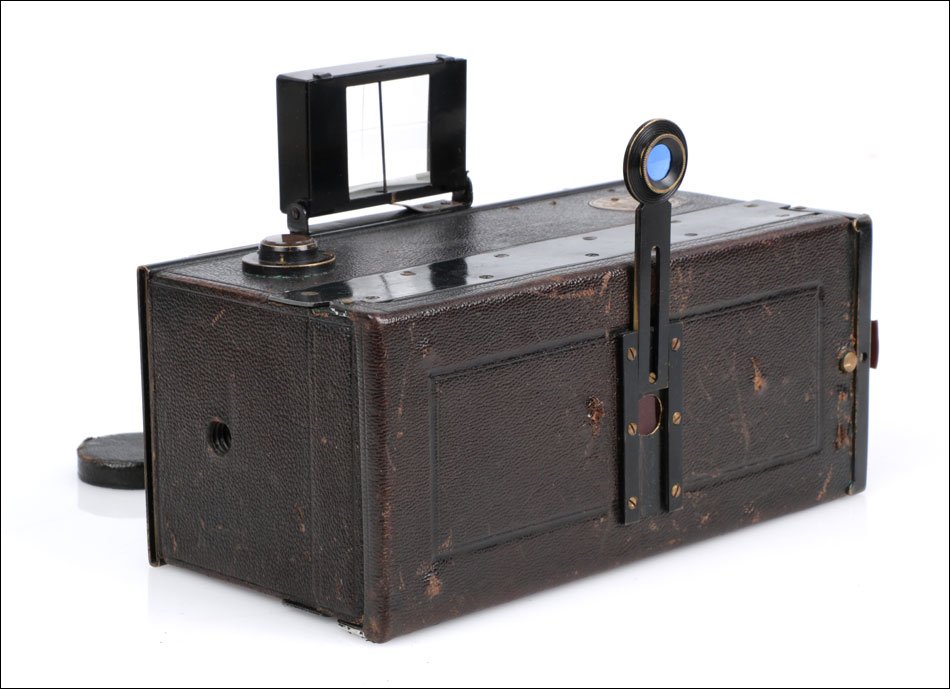
The general condition is magnificent for a piece of more than a century of age. The shutter works, the controls respond smoothly, and the camera maintains its majestic presence without missing elements. The slight wear of the leather and of the black lacquer does not diminish its beauty, on the contrary, it provides an authentic charm that only well-preserved historical cameras possess. It is an exceptional decorative piece that will stand out on the shelf of an amateur of antique photography, and a technical jewel worthy of integrating any advanced collection of stereoscopic cameras.
To own an example like this is to ensure a collectible piece with historical solidity, aesthetic appeal and a very high future value, the beauty of its materials and the precision of its engineering make it a truly irresistible object. Whoever acquires it will enjoy an instrument that combines history, mechanics and elegance like few cameras on the current market, providing character and distinction to any collection. Furthermore, its imposing presence, together with the rarity of the model, its technical perfection and the exceptional preservation it shows, along with the complete set of plate holders and original accessories, make it an extraordinary opportunity to incorporate a unique and charming piece, capable of standing out as a main element in a specialized showcase or on a shelf dedicated to the history of photography.
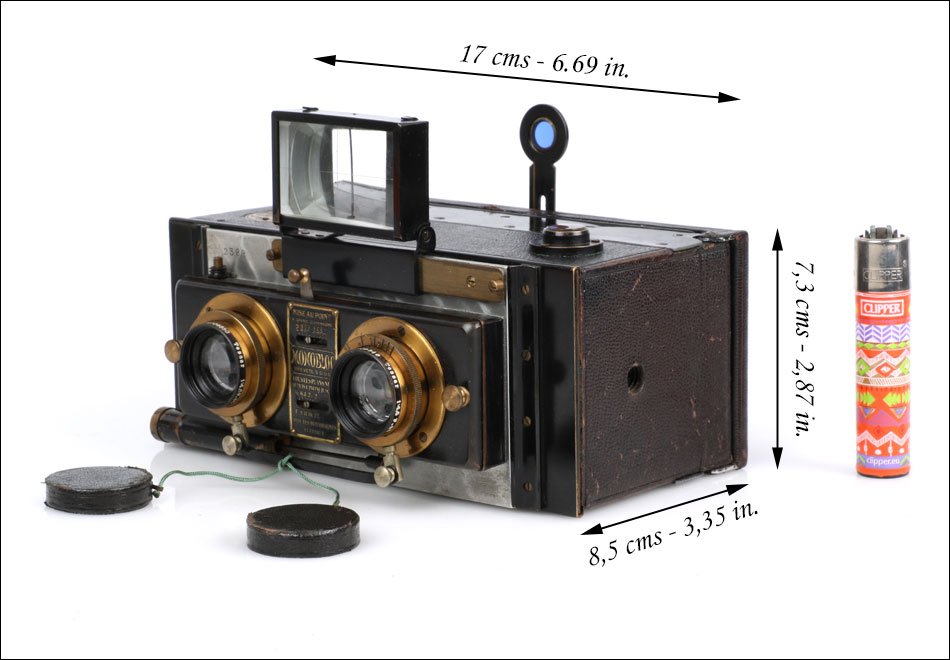
Measurements: 17 cm × 8.5 cm × 7.3 cm (6.69 in × 3.35 in × 2.87 in).
History of the Monobloc
The Monobloc camera is one of the most representative creations of the French manufacturer V. Lièbe, active in Paris during the first decades of the twentieth century. Although not many biographical data are preserved about Viktor or Victor Lièbe, it is known that he established his workshop in Rue Hautefeuille, in the heart of the sixth district of Paris, an area with intense artisanal and technical activity related to optics and scientific instrumentation. During the years prior to the First World War, Paris was one of the main international centers of production of stereoscopic cameras, competing directly with Germany and Austria for technological supremacy in the emerging market of domestic and advanced photography.
The Monobloc models stood out for their solid construction and for the adoption of a metal body, much more resistant than the wooden boxes used by other contemporary manufacturers. This robustness allowed the incorporation of precision systems such as the panoramic lever or the synchronized focusing between both lenses. The brand specialized in stereoscopic cameras of 6×13 cm format, a very popular standard in France thanks to its excellent balance between portability and visual quality. This format, combined with the optical excellence of French lenses, made the Monobloc an instrument highly appreciated by travelers, scientists and educated amateurs.
Between 1911 and 1922, the production of the Monobloc went through different variants, incorporating technical and aesthetic improvements that reflected the advances of the era. The first models, such as the example dated around 1912, are characterized by low serial numbers, by the leather with distinctive embossing and by the beautifully machined brass mounts. Over time, the brand expanded its accessories, among them the multicarga magasin holders, which allowed a notable increase in efficiency when taking stereoscopic photographs without the need to manipulate plates individually.
The Monobloc cameras, although produced during a relatively short period, achieved notable recognition within the twentieth century collecting world. Their constructive quality, their relative scarcity and their combination of metal, leather and brass have made them highly sought-after pieces. Today they represent not only an essential chapter in the history of French photography, but also a testimony of the technical refinement achieved by Parisian manufacturers in the era prior to the industrial standardization of handheld cameras. We are professional antique dealers. To see more photos of this item, Please click on this link:
https://www.antiguedades.es/en/antique-cameras/5374-antique-monobloc-stereoscopic-camera-with-2-magasin-plate-holders-france-c1912.html








 Le Magazine de PROANTIC
 TRÉSORS Magazine
 Rivista Artiquariato