THIS OBJECT WAS SOLD
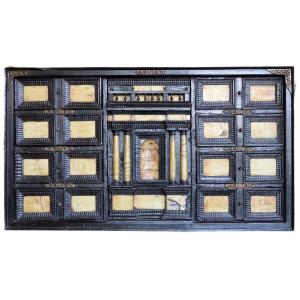
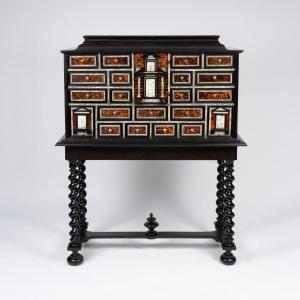
Magnificent Bargueño "salmantino" On Commodus, 17th Century.
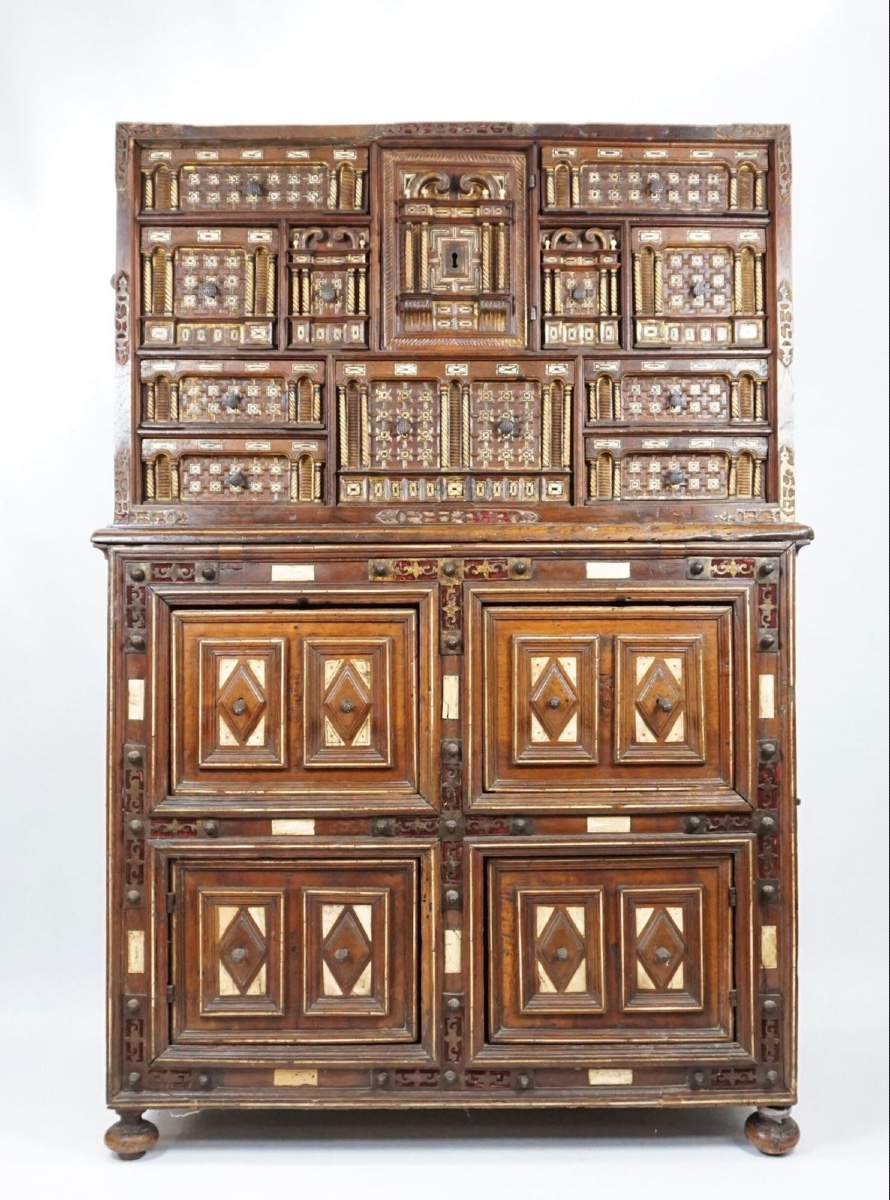
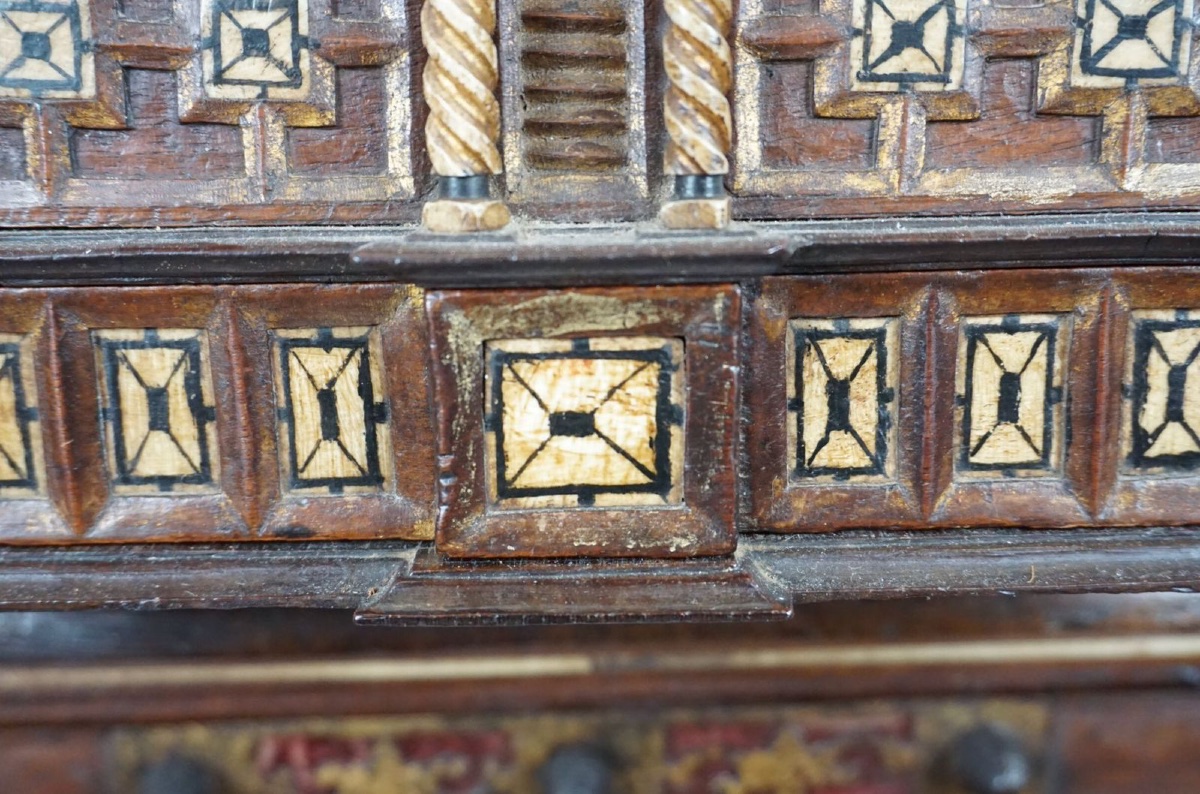
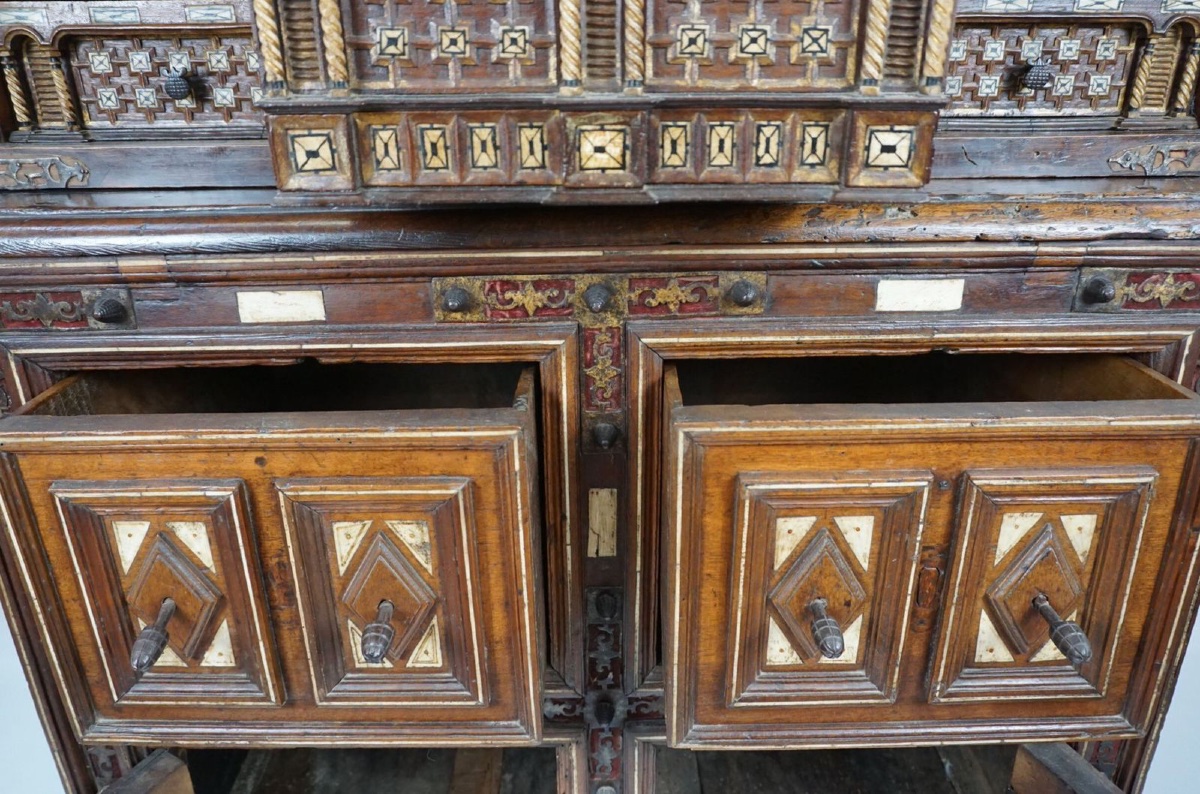

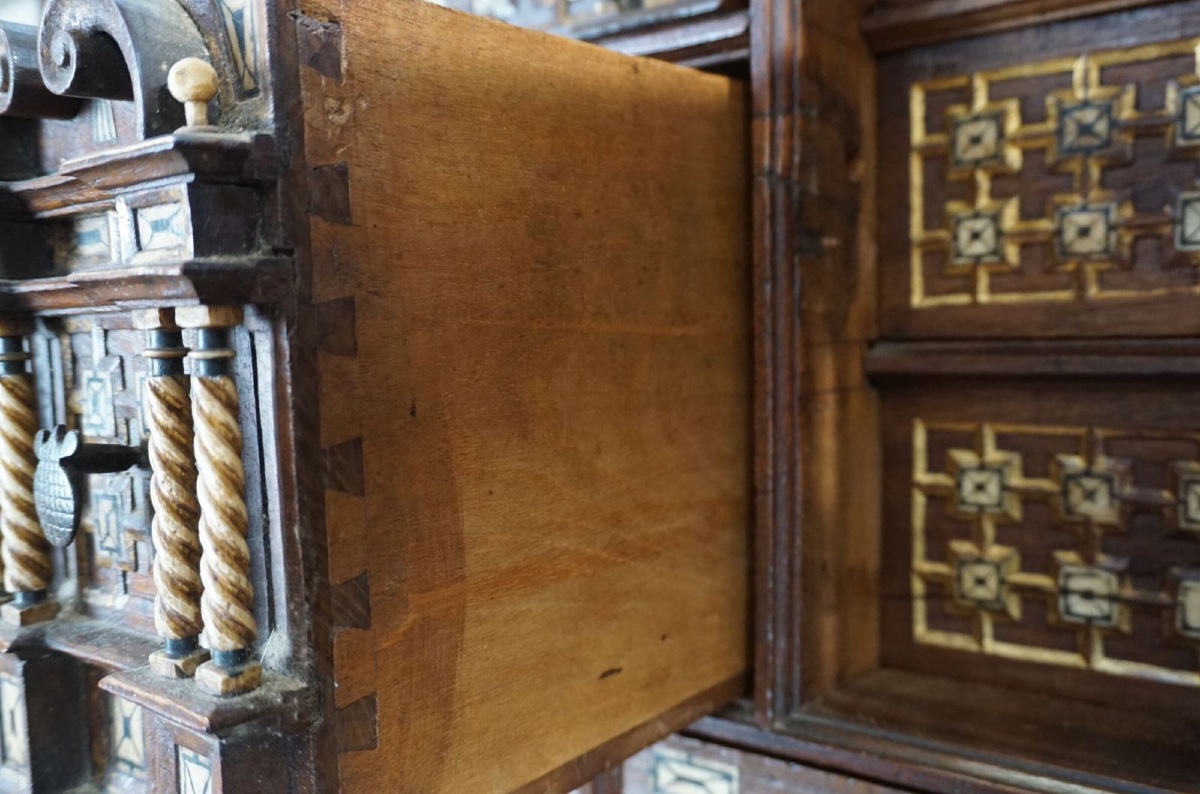
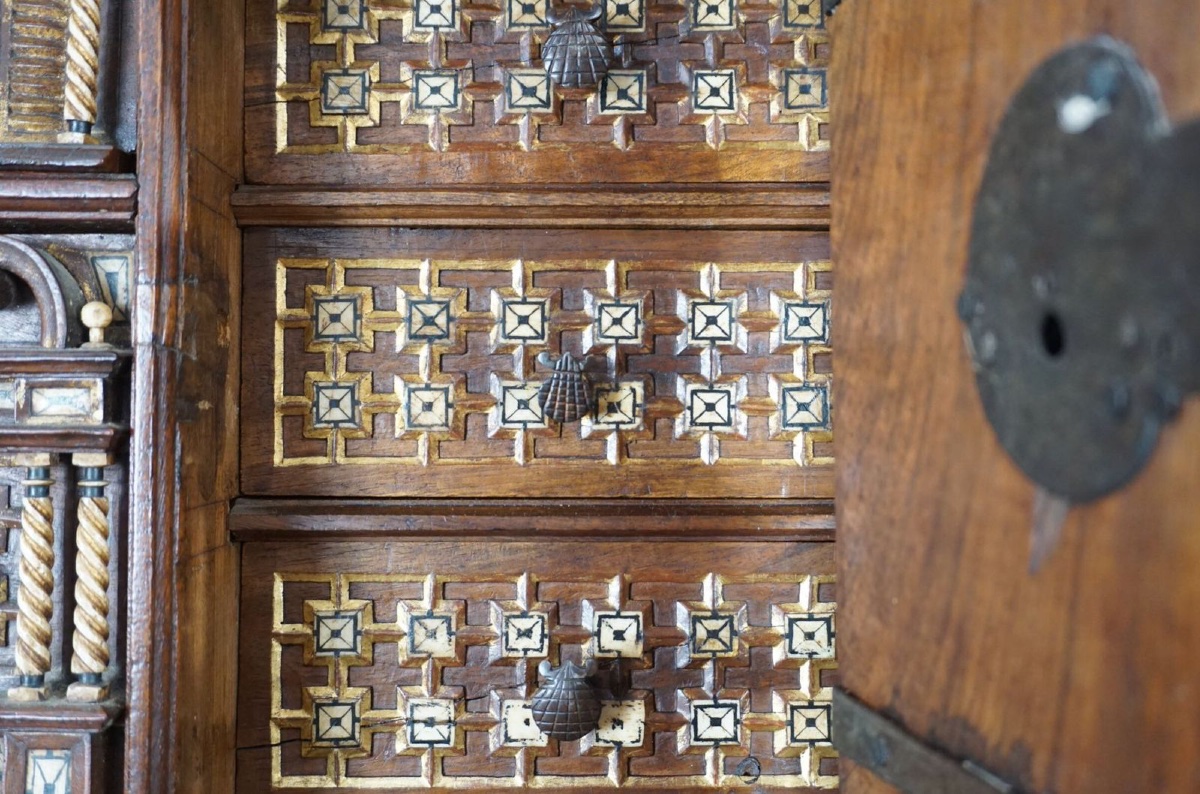
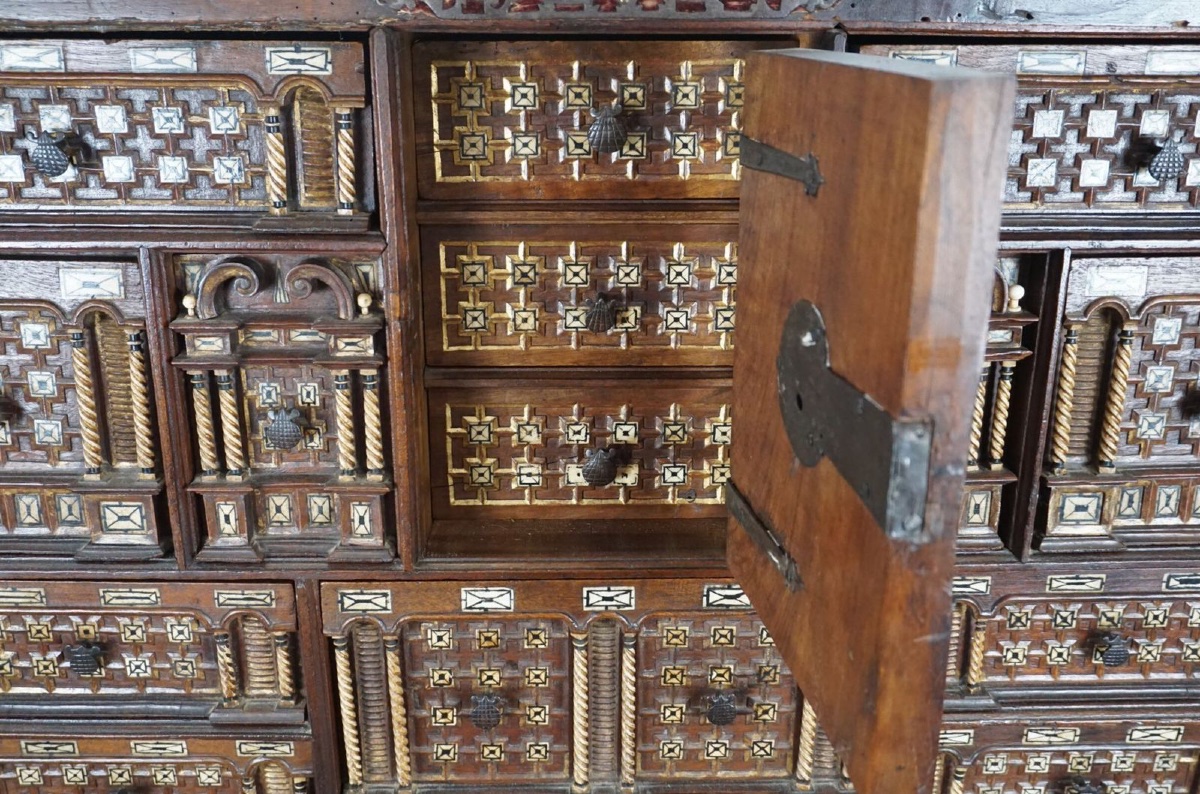
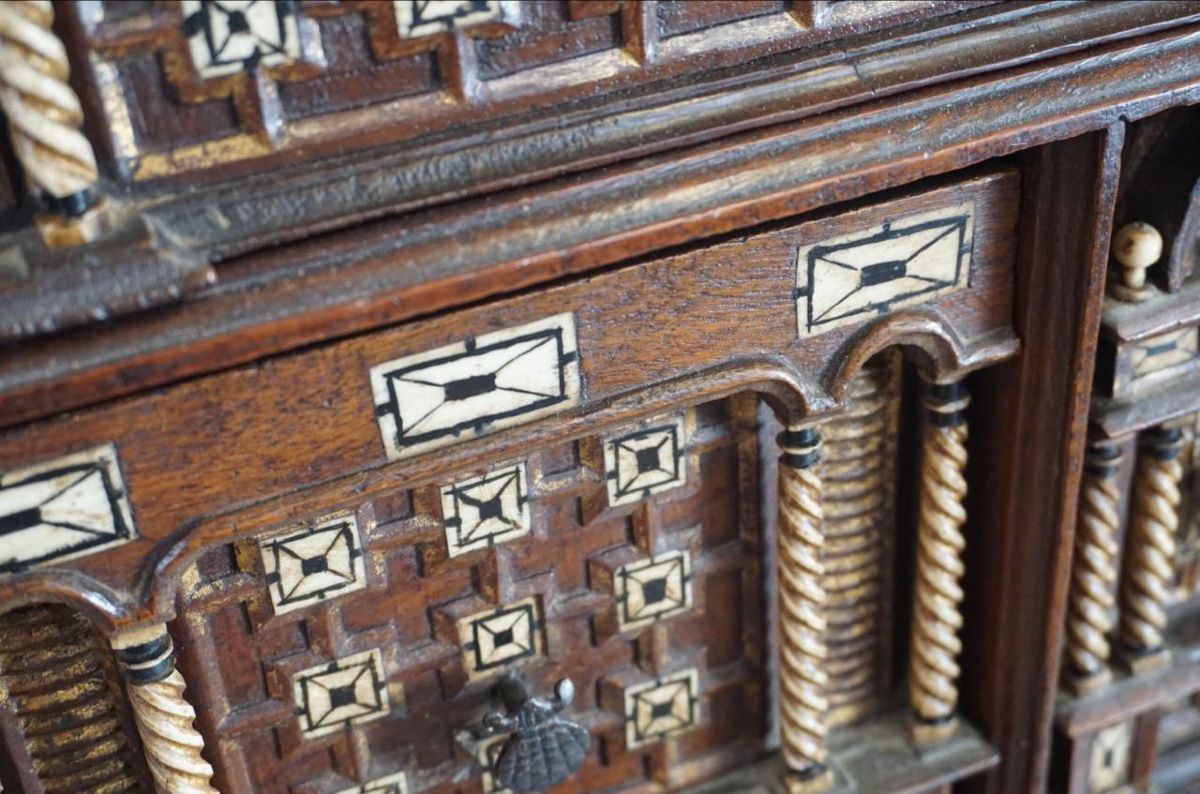
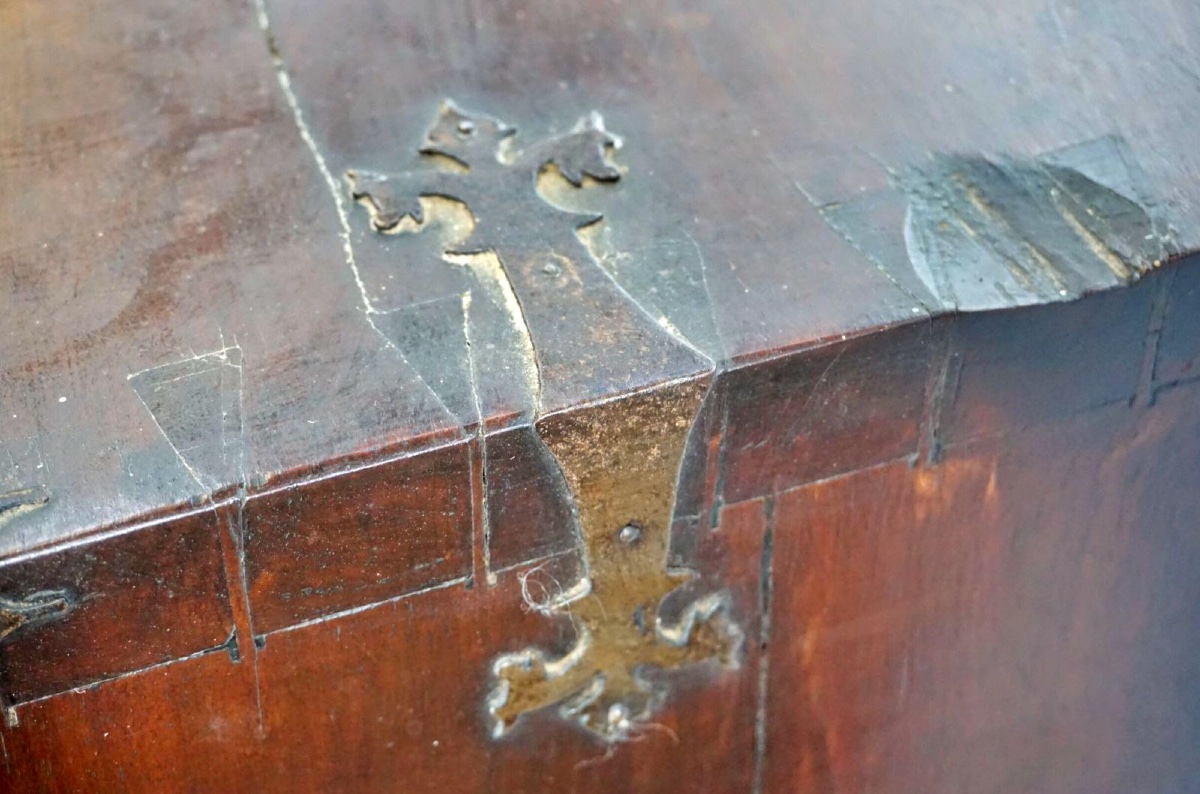
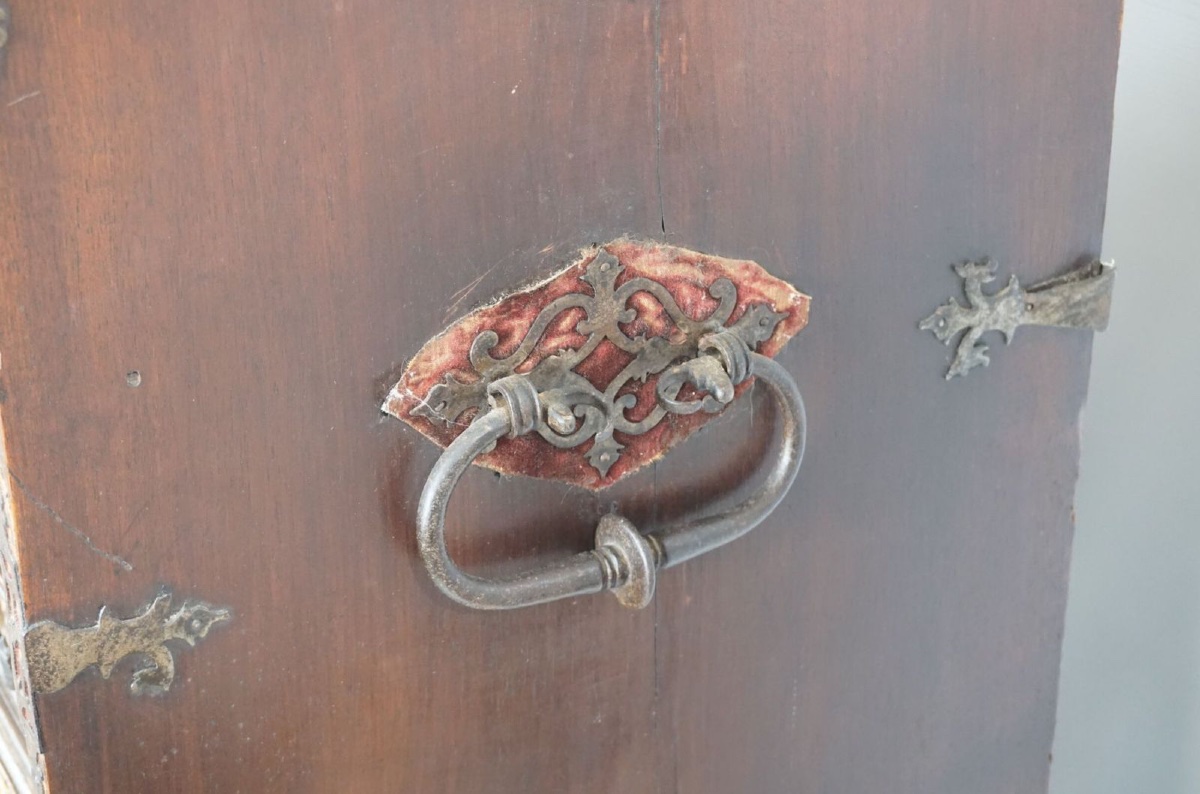

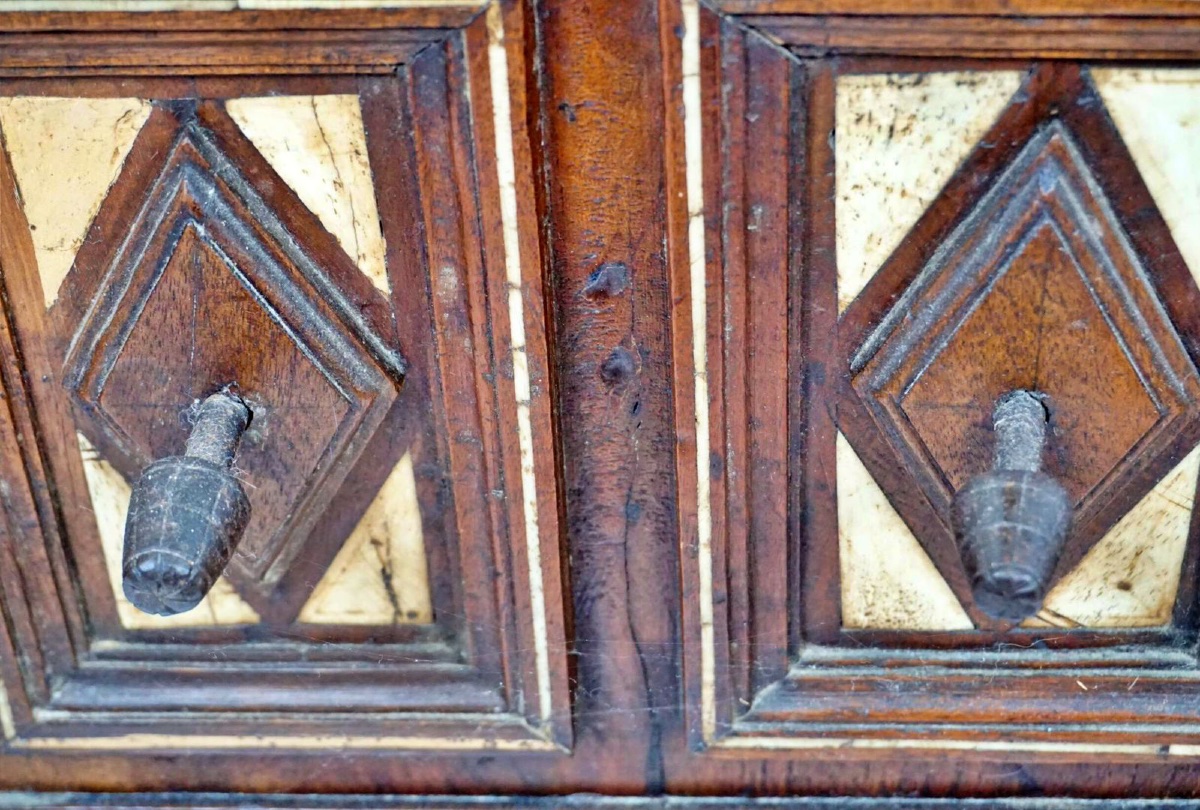


Magnificent "Salmantino" commode, 17th century. Two-compartment commode in carved natural wood, richly inlaid with elephant ivory (Elephas maximus) and bone. The upper compartment opens to reveal eleven front drawers and a central door which, opening to reveal three more drawers, provides additional storage space. The lower compartment opens to reveal four large drawers. SPAIN, 17th century. Restored, showing slight signs of wear. 141 x 96 x 51 cm. Expert: Artemis Estimates - Pierre Grignon Dumoulin. Sold with CITES CIC certificate no. FR2502700103-K. The bargueño is a piece of wooden furniture of Spanish origin, produced between the 16th and 18th centuries, designed for writing or filing documents and transportable by mule or donkey.[1] The most luxurious examples may feature gold leaf finishes and be adorned with inlays of ivory, mother-of-pearl, or other materials. The origin of the name is uncertain; it corresponds to the demonym for the inhabitants of the town of Bargas, in the province of Toledo (Spain) [2]. In other European languages, these pieces of furniture, or their equivalents, are called "cabinets" (in French, English, German, Portuguese, and Italian) and form a set with writing instruments. Described by the Academy as "a small wooden cabinet with many drawers and compartments, decorated with carvings or inlays, partly gilded and partly colored, in the style of those made in Bargas," it may be known by other names: "arquimesa," "contador," "escritorio," "mueble papelera," "bufete," or "bufetillo" [3]. It is generally equipped with a fold-down writing surface. The bargueño is characterized by its numerous drawers of varying sizes, compartments, and sections, some with secret opening mechanisms, and all richly decorated. Its use is determined by the owner's choice, who often uses it as an archive or storage space for various valuables. There are two main types of bargueños: the open-fronted type with visible drawers (also called a "contador"), and the hinged-lid type which, when opened, serves as a writing table. The latter is always separate from the main piece of furniture (two distinct elements), although the whole forms a unit. Originally, it was a portable piece of furniture, hence its side handles and dimensions, which allowed it to be transported on horseback. Regarding the base, there are three types of supports: a coffered table, composed of columns joined in pairs inside an arch or an openwork gallery; a support or table reinforced by X-shaped wrought iron bars that support the structure. A bargueño type sideboard (with open drawers and cabinets, without doors or decorative ornaments) or "taquillón", which consists of several small doors or drawers and also has carrying handles.
Explore similar pieces and discover your ideal find:
cabinets