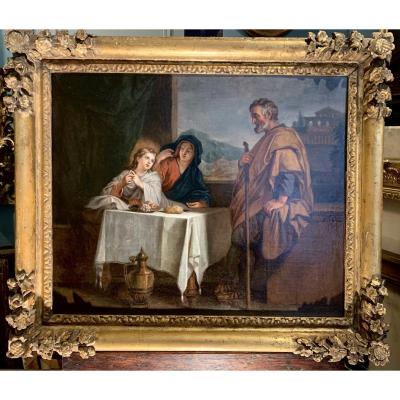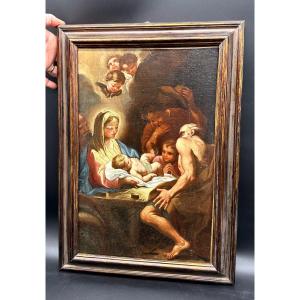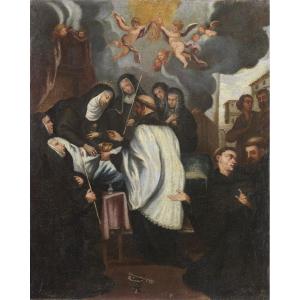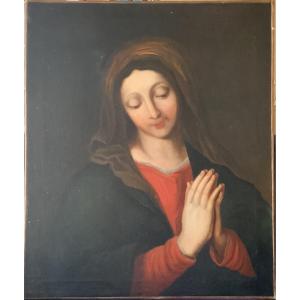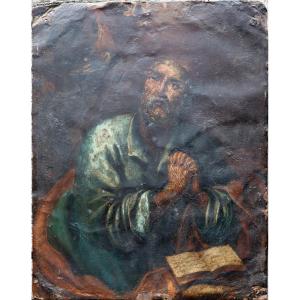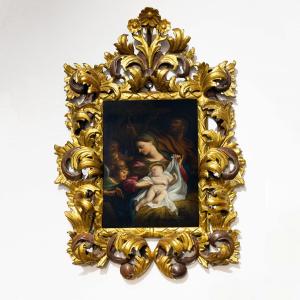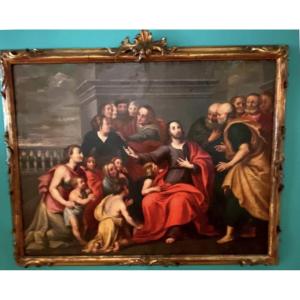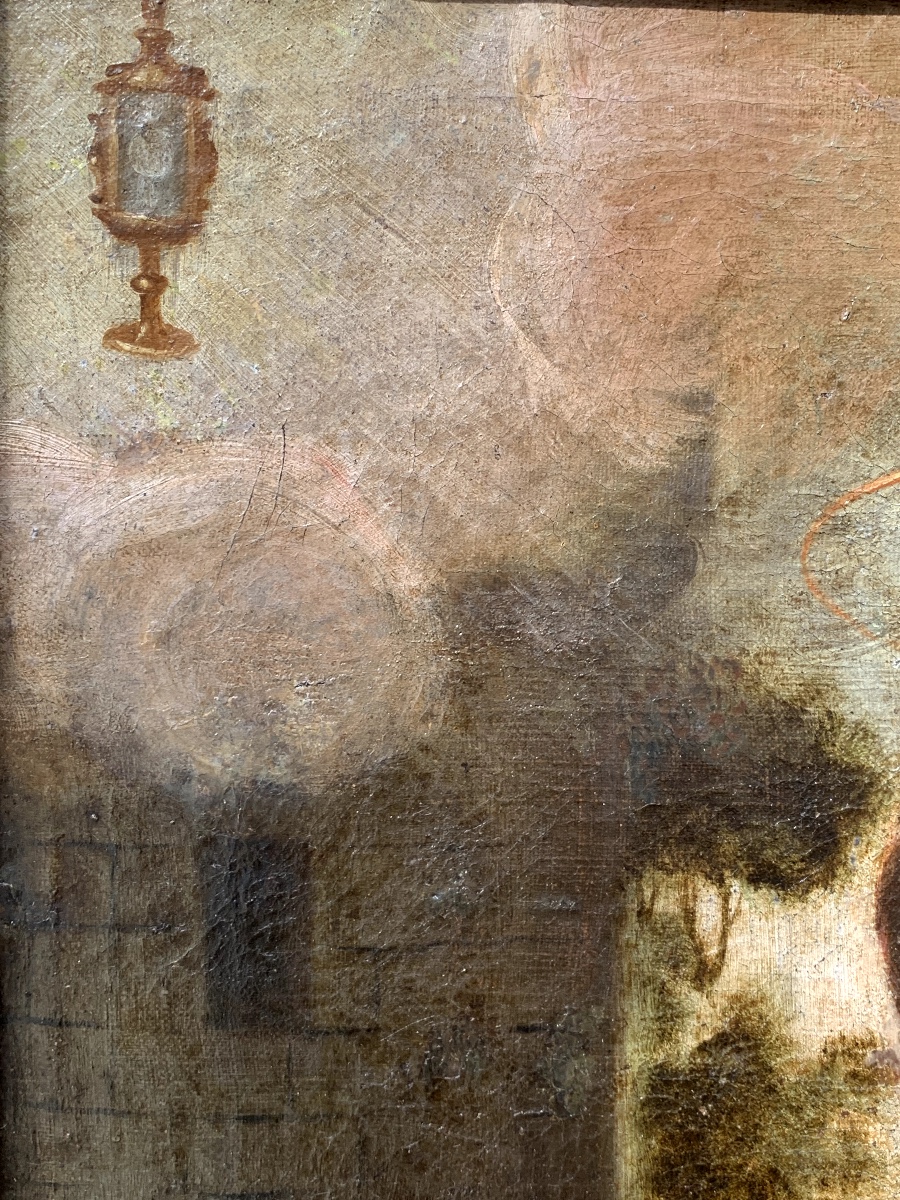


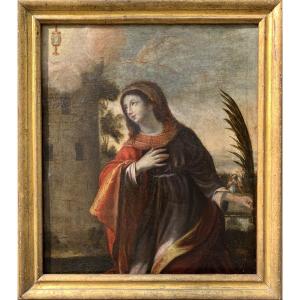


"saint Barbara" 17th Century, Italy
Artist: Anonyme
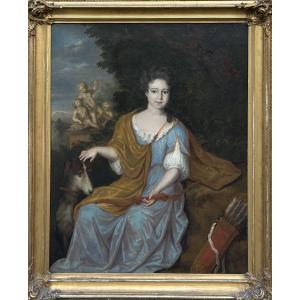
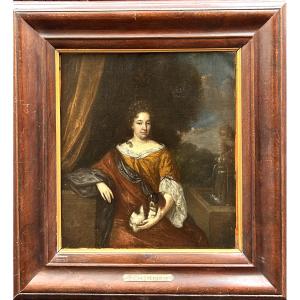
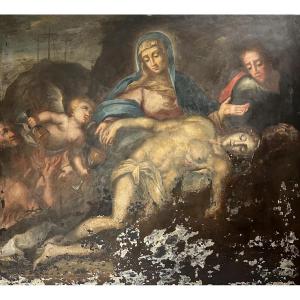
"Saint Barbara," 17th century.
Oil on canvas depicting Saint Barbara, on its original canvas, original giltwood frame." Born in the East in the mid-3rd century, Barbara was the only daughter of Dioscorus. She was of great beauty and received many marriage proposals from powerful lords, but she refused to marry. Her father then imprisoned her in a luxurious tower, where she lived apart from other men. During her father's absence, summoned by the Emperor, Christ revealed himself to her. She converted to Christianity. Her conversion is symbolized by the third window she had pierced in the tower, representing the Trinity. Her father's anger was terrible. He brandished his sword and pursued her through the city. She managed to hide, but a shepherd betrayed her. He seized her by the hair, dragged her to the city, and imprisoned her in a dungeon. The next day, he took her before Judge Marcian. She refused to renounce the Christian faith. The judge condemned her to the worst tortures in front of her father. Her breasts were torn off with iron combs, she was burned with red-hot blades, and then whipped. But, by the grace of God, she felt no pain. Finally, she was paraded naked through the countryside, drawn by a horse. She implored God, and an angel came to cover her nakedness. She still refused to renounce her faith, so her father beheaded her. Immediately, he was struck by lightning and reduced to dust. The wealth of legends surrounding the martyrdom of Saint Barbara has given rise to various beliefs and practices: miners, but also pyrotechnicians, saltpeter makers, foundry workers, gunsmiths, arquebusiers, and of course, firefighters have placed themselves under her protection.
All trades related to lightning and fire turned to her, as did furriers, tanners, and hatters! She was nicknamed "the Saint of Fire." Saint Barbara protected against "unwholesome death," that is, death without having received the last rites, which prevented the faithful from being buried as Christians in the Middle Ages.
17th century, Italy
Oil on canvas depicting Saint Barbara, on its original canvas, original giltwood frame." Born in the East in the mid-3rd century, Barbara was the only daughter of Dioscorus. She was of great beauty and received many marriage proposals from powerful lords, but she refused to marry. Her father then imprisoned her in a luxurious tower, where she lived apart from other men. During her father's absence, summoned by the Emperor, Christ revealed himself to her. She converted to Christianity. Her conversion is symbolized by the third window she had pierced in the tower, representing the Trinity. Her father's anger was terrible. He brandished his sword and pursued her through the city. She managed to hide, but a shepherd betrayed her. He seized her by the hair, dragged her to the city, and imprisoned her in a dungeon. The next day, he took her before Judge Marcian. She refused to renounce the Christian faith. The judge condemned her to the worst tortures in front of her father. Her breasts were torn off with iron combs, she was burned with red-hot blades, and then whipped. But, by the grace of God, she felt no pain. Finally, she was paraded naked through the countryside, drawn by a horse. She implored God, and an angel came to cover her nakedness. She still refused to renounce her faith, so her father beheaded her. Immediately, he was struck by lightning and reduced to dust. The wealth of legends surrounding the martyrdom of Saint Barbara has given rise to various beliefs and practices: miners, but also pyrotechnicians, saltpeter makers, foundry workers, gunsmiths, arquebusiers, and of course, firefighters have placed themselves under her protection.
All trades related to lightning and fire turned to her, as did furriers, tanners, and hatters! She was nicknamed "the Saint of Fire." Saint Barbara protected against "unwholesome death," that is, death without having received the last rites, which prevented the faithful from being buried as Christians in the Middle Ages.
17th century, Italy
1 400 €
Period: 17th century
Style: Louis 14th, Regency
Condition: Perfect condition
Material: Oil painting
Width: 58 cm.
Height: 65 cm.
Reference (ID): 1653019
Availability: In stock
Print