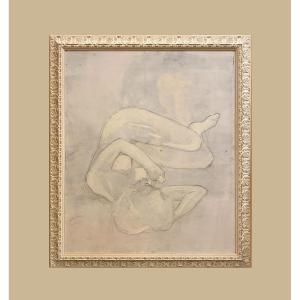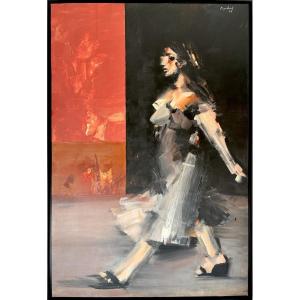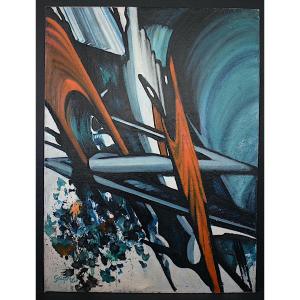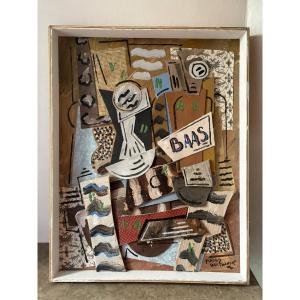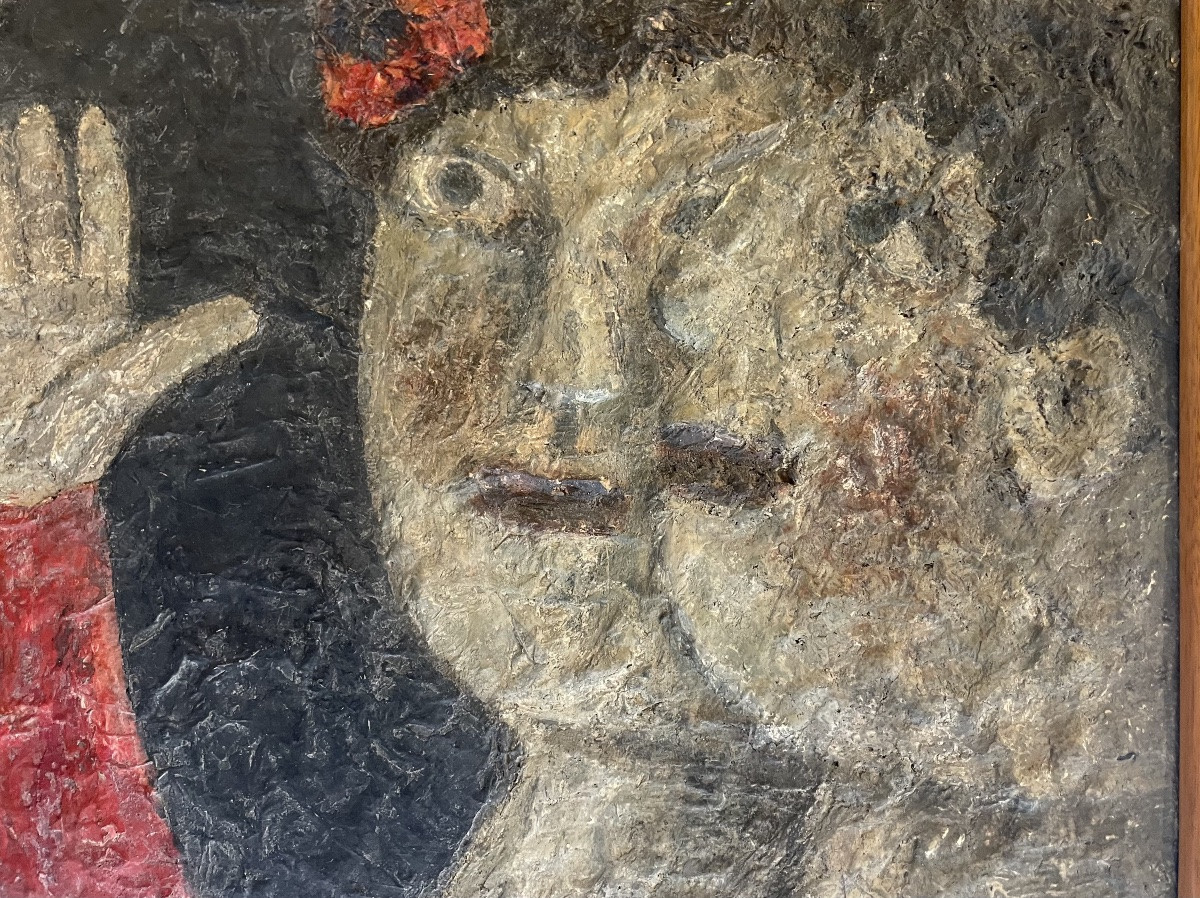


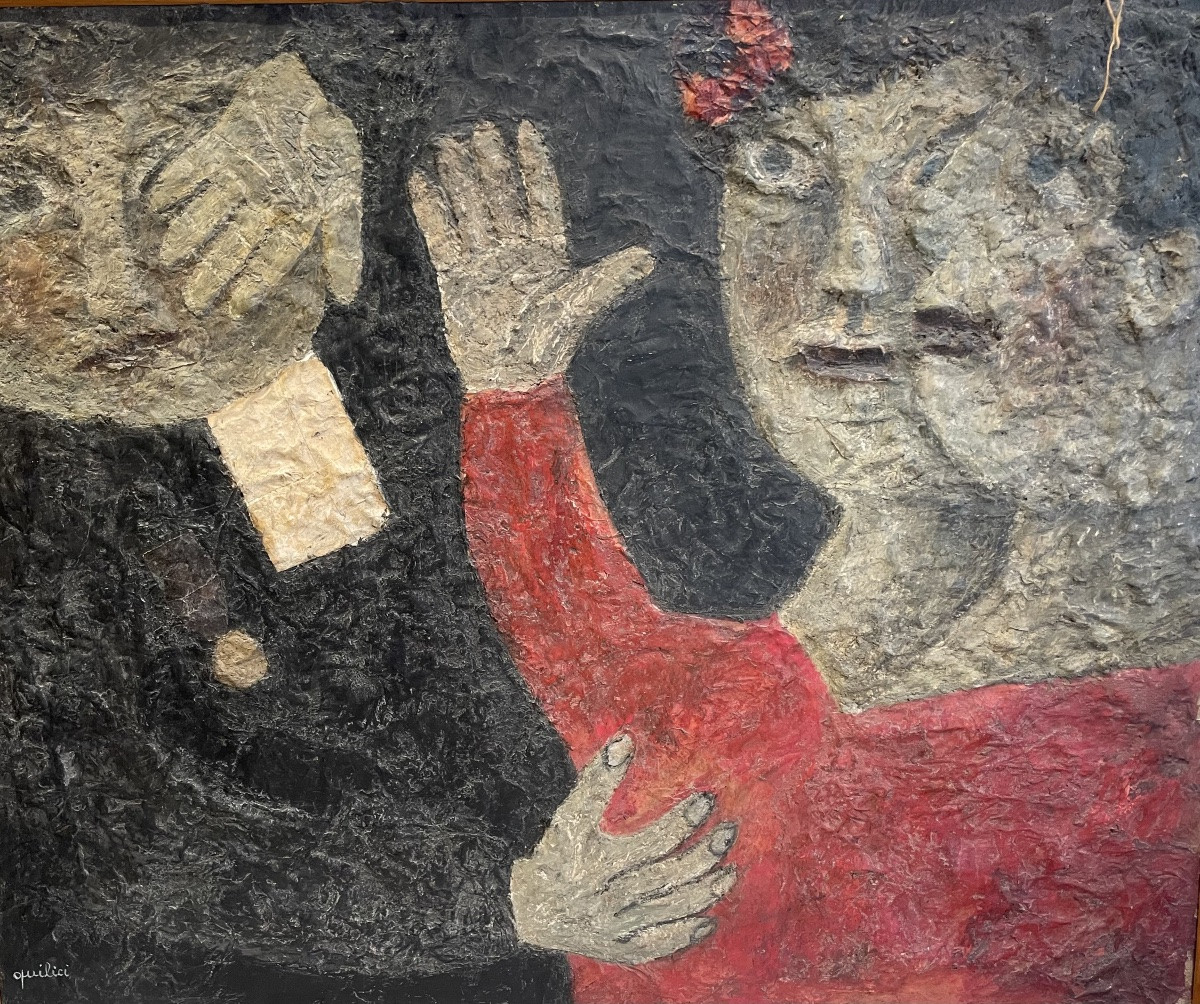
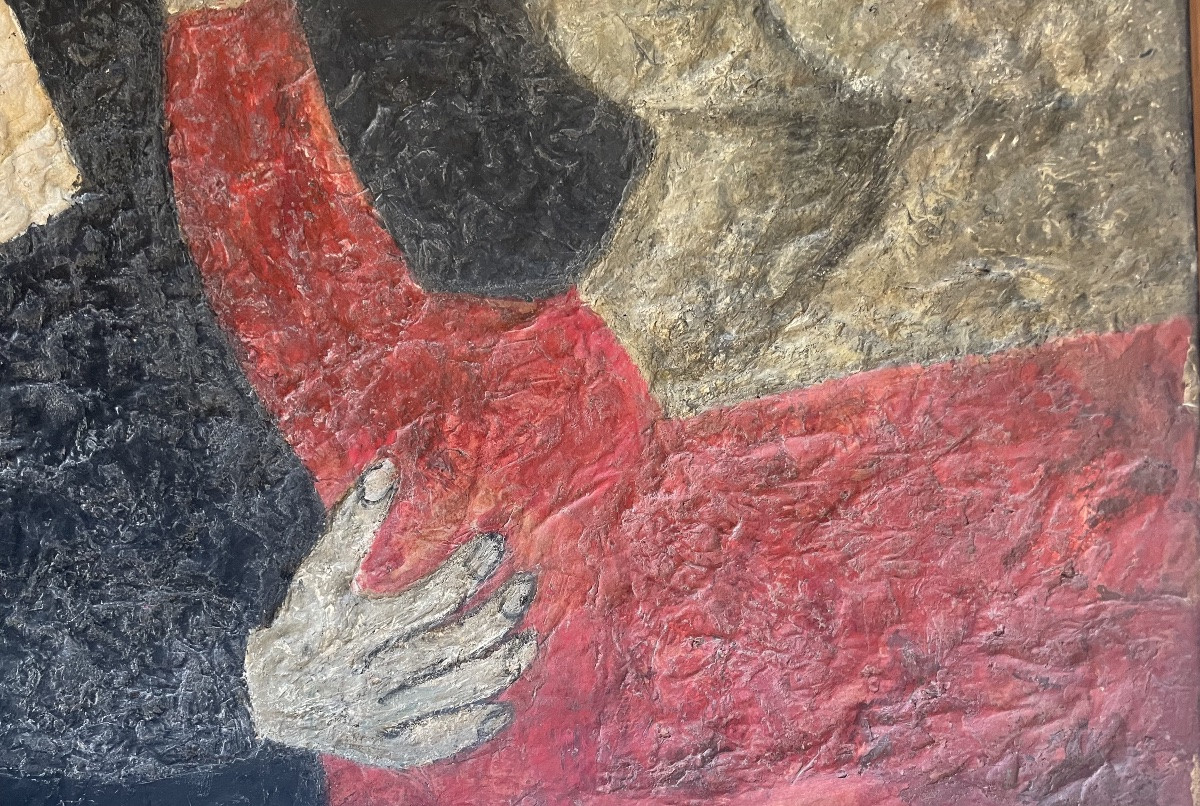
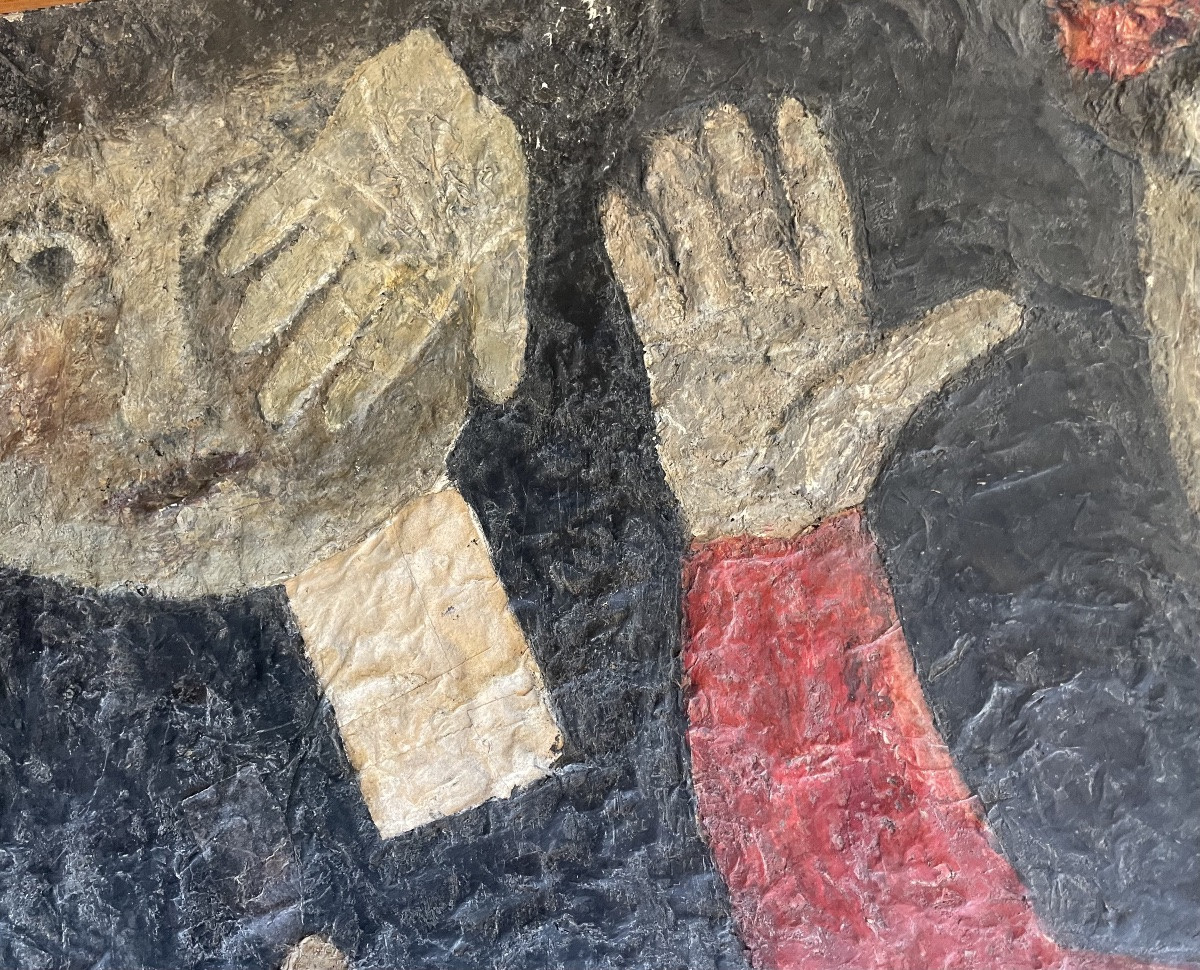

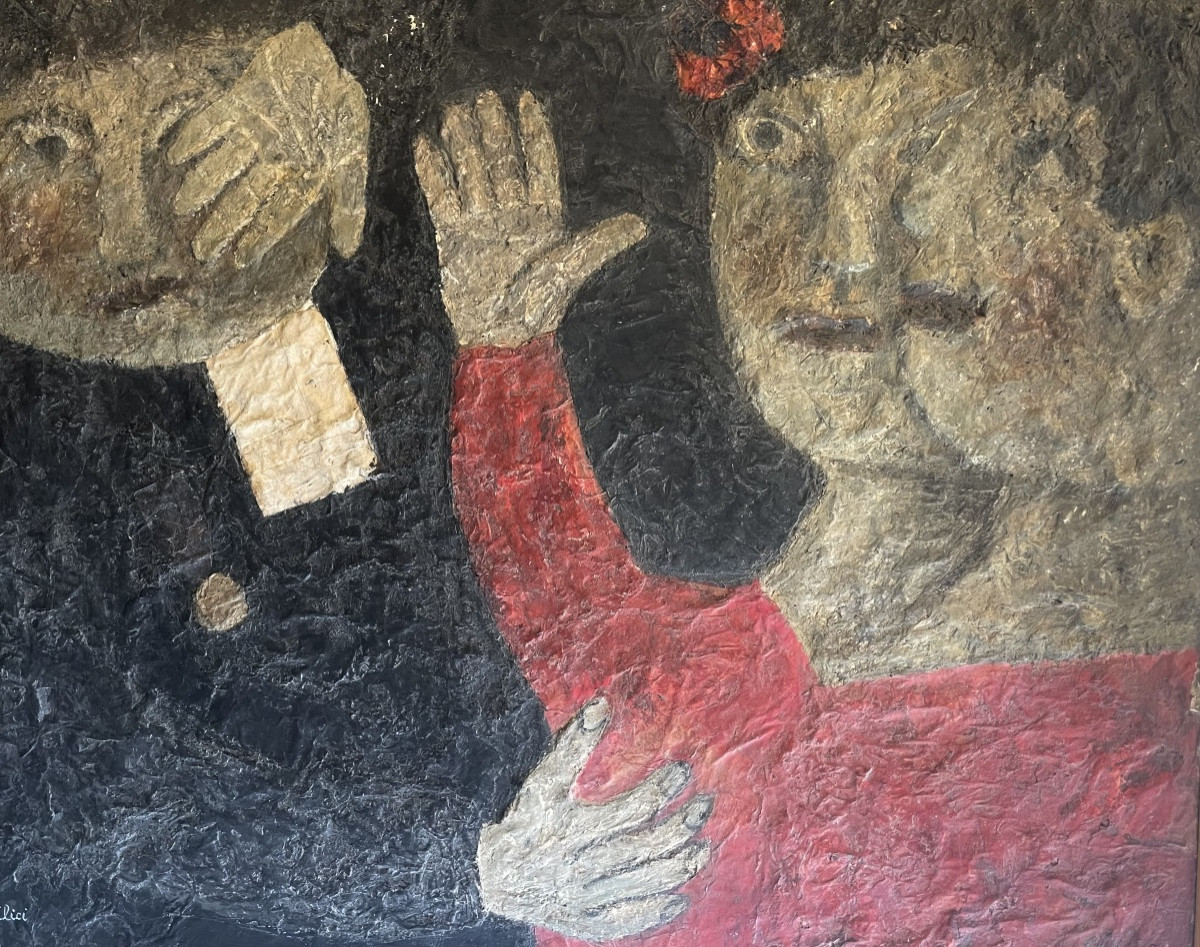


Louis Quilici, Lively Scene, Oil On Canvas
Artist: Louis Quilici (1920-1980)
Louis QUILICI (1920-1980)
Gathering of Figures
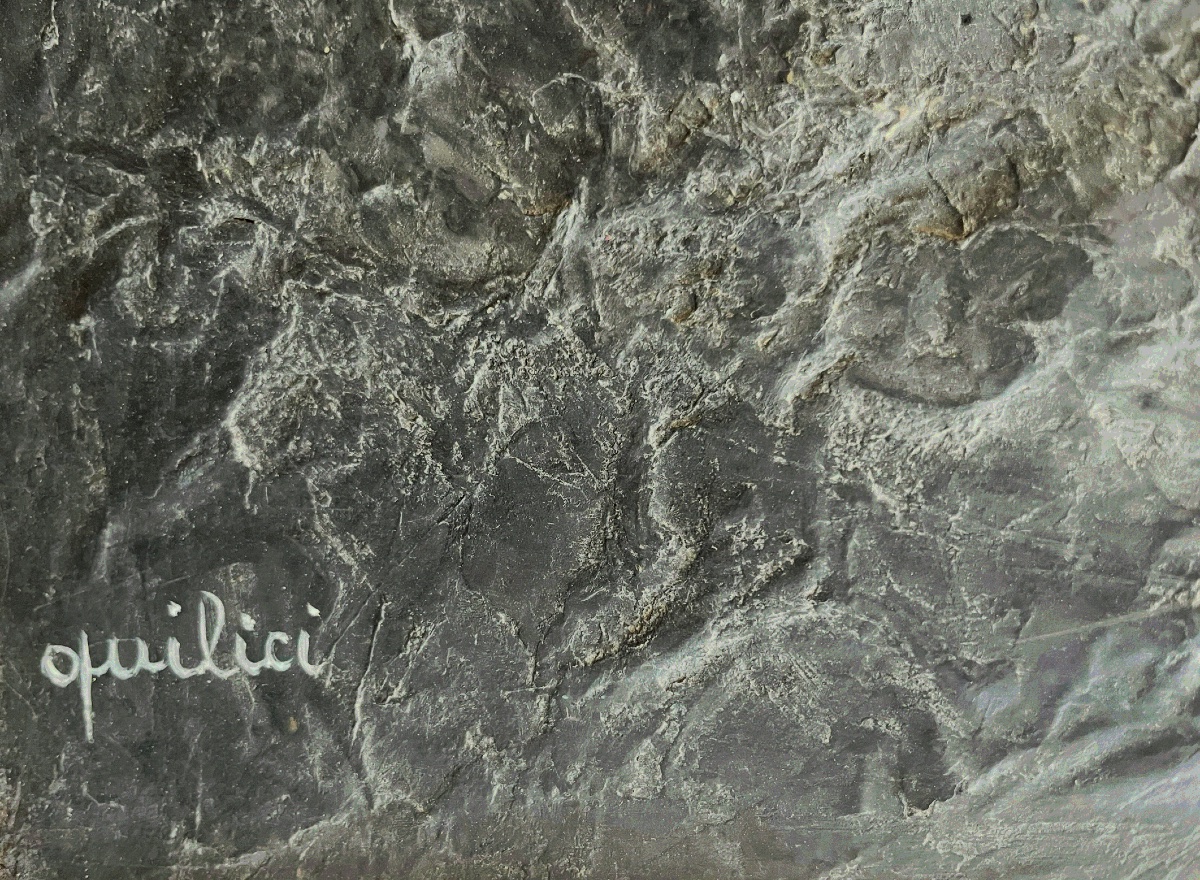
Oil on canvas, signed
60 x 72 cm
Provenance: Jean and Robert Brisson-Duval Collection
Louis QUILICI (1920-1980), a completely self-taught painter, initially managed, using whatever was at hand (old papers, rags, postcards, etc.), to create a world, his world, through the sheer power of vision, which could see beyond the banality of received images—all the poetry, that is to say, all the mystery of life. In 1965, the young artists of Narrative Figuration and the singular painter Louis Quilici found themselves exhibiting at the Creuze Gallery in Paris. This was a de facto cohabitation, due to chance encounters, as Quilici remained an artist on the fringes of artistic movements. Considered for a time as a naïve artist, he was later labeled an expressionist, a new figurative artist, and even a new realist. The support of Georges Detais of the Claude Levin Gallery, and the friendships forged with emerging artists of the 1960s, allowed this self-taught artist to thrive in a vibrant art world. Louis Quilici received only a basic education and had no formal art training. In his early days, he created naive-inspired canvases, snapshots of everyday life in his neighborhood in the 14th arrondissement. In 1959, his encounters with gallery owner Georges Detais and the Spanish painter Eduardo Arroyo, with whom he would share a studio, proved decisive. Becoming a pillar of the Levin Gallery, Quilici held numerous exhibitions and, thanks to his friend Arroyo, found himself propelled into the Parisian artistic and intellectual circles. He became friends with César, Baj, Dado, Ségui, Queffurus, and others, met Picasso and Giacometti, and discovered Bacon. Quilici drew inspiration from these encounters and developed his artistic approach. His works became more unsettling and, through the techniques employed, approached the Pop Art movement then developing in the United States. The inventive approach to his pictorial language allowed him to participate in the important exhibition "Narrative Figuration in Contemporary Art," organized in 1965 at the Creuze Gallery by Gérald Gassiot-Talabot. Born a year earlier in reaction to the omnipresence of abstraction and the triumph of American Pop Art, Narrative Figuration was not established by any formal program. In a tense international context, the artists brought together by Rancillac, Télémaque, Foldès, and Gassiot-Talabot sought to reconnect with a critical history painting. They draw their inspiration from everyday life, subvert images from consumer society, and incorporate new visual universes blending graffiti, comic strips, advertising images, news photographs, and cinematic references. Despite his participation in this seminal 1965 exhibition, the Narrative Figuration painters never fully recognized Quilici as one of their own. His lack of involvement in the political and social conflicts of the late 1960s once again left him on the margins. His own questions lay elsewhere, rooted in a tormented mysticism that drove him to break free from his previous experiences. He now painted large, almost monochromatic canvases with increasingly refined, almost translucent materials, where ghostly silhouettes seemed on the verge of dissolving. • Jeanine Warnod, Article on Louis Quilici published in Le Monde (January 7, 1977). [ARTICLE] Available at the Kandinsky Library under the call number AP QUIL. • Jean-Dominique Rey, Article on Louis Quilici published in La Tribune des Nations (1977). [ARTICLE] Available at the Kandinsky Library under the call number AP QUIL. • G. Detais, S. Brianti, Louis Quilici (1920-1980), a singular figure on the margins of narrative figuration, works 1975-1980, June 21 to September 17, 2006, L'art en stalles - Galeries d'art contemporain Pouzac (Bagnères-de-Bigorre). (1977). [MONOGRAPH] Available at the Kandinsky Library under the call number QUILICI 2006 POUZ. • Thomas Le Guillou (preface writer), Homage to Louis Quilici, exhibition from November 13 to December 23, 1981, Galerie Messine Paris (1981). [MONOGRAPH] Available at the Kandinsky Library under the call number QUI 1981 PARI. • Max Reithmann, Joseph Beuys: If Necessary, We Also Live Without a Heart, ed. Les Presses du Réel / Flammarion 4 / Art édition, (1994). [MONOGRAPH] Available at the Kandinsky Library under the call number IN-8 11549. • Max Reithmann, Space and the Problem of the Subject in the Painting of Barnett Newman (edited by Roland Barthes), ed. EHESS, (1977).
Gathering of Figures
Oil on canvas, signed
60 x 72 cm
Provenance: Jean and Robert Brisson-Duval Collection
Louis QUILICI (1920-1980), a completely self-taught painter, initially managed, using whatever was at hand (old papers, rags, postcards, etc.), to create a world, his world, through the sheer power of vision, which could see beyond the banality of received images—all the poetry, that is to say, all the mystery of life. In 1965, the young artists of Narrative Figuration and the singular painter Louis Quilici found themselves exhibiting at the Creuze Gallery in Paris. This was a de facto cohabitation, due to chance encounters, as Quilici remained an artist on the fringes of artistic movements. Considered for a time as a naïve artist, he was later labeled an expressionist, a new figurative artist, and even a new realist. The support of Georges Detais of the Claude Levin Gallery, and the friendships forged with emerging artists of the 1960s, allowed this self-taught artist to thrive in a vibrant art world. Louis Quilici received only a basic education and had no formal art training. In his early days, he created naive-inspired canvases, snapshots of everyday life in his neighborhood in the 14th arrondissement. In 1959, his encounters with gallery owner Georges Detais and the Spanish painter Eduardo Arroyo, with whom he would share a studio, proved decisive. Becoming a pillar of the Levin Gallery, Quilici held numerous exhibitions and, thanks to his friend Arroyo, found himself propelled into the Parisian artistic and intellectual circles. He became friends with César, Baj, Dado, Ségui, Queffurus, and others, met Picasso and Giacometti, and discovered Bacon. Quilici drew inspiration from these encounters and developed his artistic approach. His works became more unsettling and, through the techniques employed, approached the Pop Art movement then developing in the United States. The inventive approach to his pictorial language allowed him to participate in the important exhibition "Narrative Figuration in Contemporary Art," organized in 1965 at the Creuze Gallery by Gérald Gassiot-Talabot. Born a year earlier in reaction to the omnipresence of abstraction and the triumph of American Pop Art, Narrative Figuration was not established by any formal program. In a tense international context, the artists brought together by Rancillac, Télémaque, Foldès, and Gassiot-Talabot sought to reconnect with a critical history painting. They draw their inspiration from everyday life, subvert images from consumer society, and incorporate new visual universes blending graffiti, comic strips, advertising images, news photographs, and cinematic references. Despite his participation in this seminal 1965 exhibition, the Narrative Figuration painters never fully recognized Quilici as one of their own. His lack of involvement in the political and social conflicts of the late 1960s once again left him on the margins. His own questions lay elsewhere, rooted in a tormented mysticism that drove him to break free from his previous experiences. He now painted large, almost monochromatic canvases with increasingly refined, almost translucent materials, where ghostly silhouettes seemed on the verge of dissolving. • Jeanine Warnod, Article on Louis Quilici published in Le Monde (January 7, 1977). [ARTICLE] Available at the Kandinsky Library under the call number AP QUIL. • Jean-Dominique Rey, Article on Louis Quilici published in La Tribune des Nations (1977). [ARTICLE] Available at the Kandinsky Library under the call number AP QUIL. • G. Detais, S. Brianti, Louis Quilici (1920-1980), a singular figure on the margins of narrative figuration, works 1975-1980, June 21 to September 17, 2006, L'art en stalles - Galeries d'art contemporain Pouzac (Bagnères-de-Bigorre). (1977). [MONOGRAPH] Available at the Kandinsky Library under the call number QUILICI 2006 POUZ. • Thomas Le Guillou (preface writer), Homage to Louis Quilici, exhibition from November 13 to December 23, 1981, Galerie Messine Paris (1981). [MONOGRAPH] Available at the Kandinsky Library under the call number QUI 1981 PARI. • Max Reithmann, Joseph Beuys: If Necessary, We Also Live Without a Heart, ed. Les Presses du Réel / Flammarion 4 / Art édition, (1994). [MONOGRAPH] Available at the Kandinsky Library under the call number IN-8 11549. • Max Reithmann, Space and the Problem of the Subject in the Painting of Barnett Newman (edited by Roland Barthes), ed. EHESS, (1977).
1 000 €
Period: 20th century
Style: Modern Art
Condition: Good condition
Material: Oil painting
Length: 60
Width: 72
Reference (ID): 1648167
Availability: In stock
Print