THIS OBJECT WAS SOLD
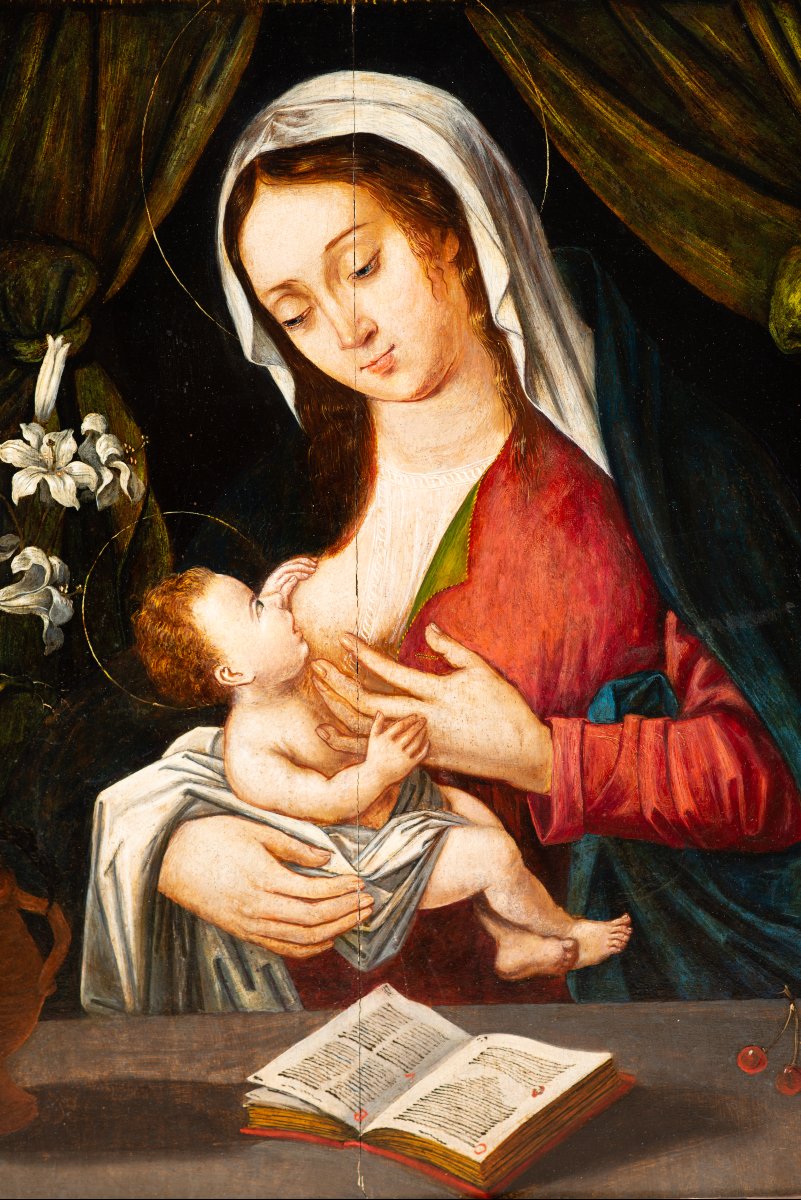
Virgin With Milk. Oil On Panel. Hispano-flemish School, 16th Century.





Virgin with Milk. Oil on panel. Hispano-Flemish School, 16th century.
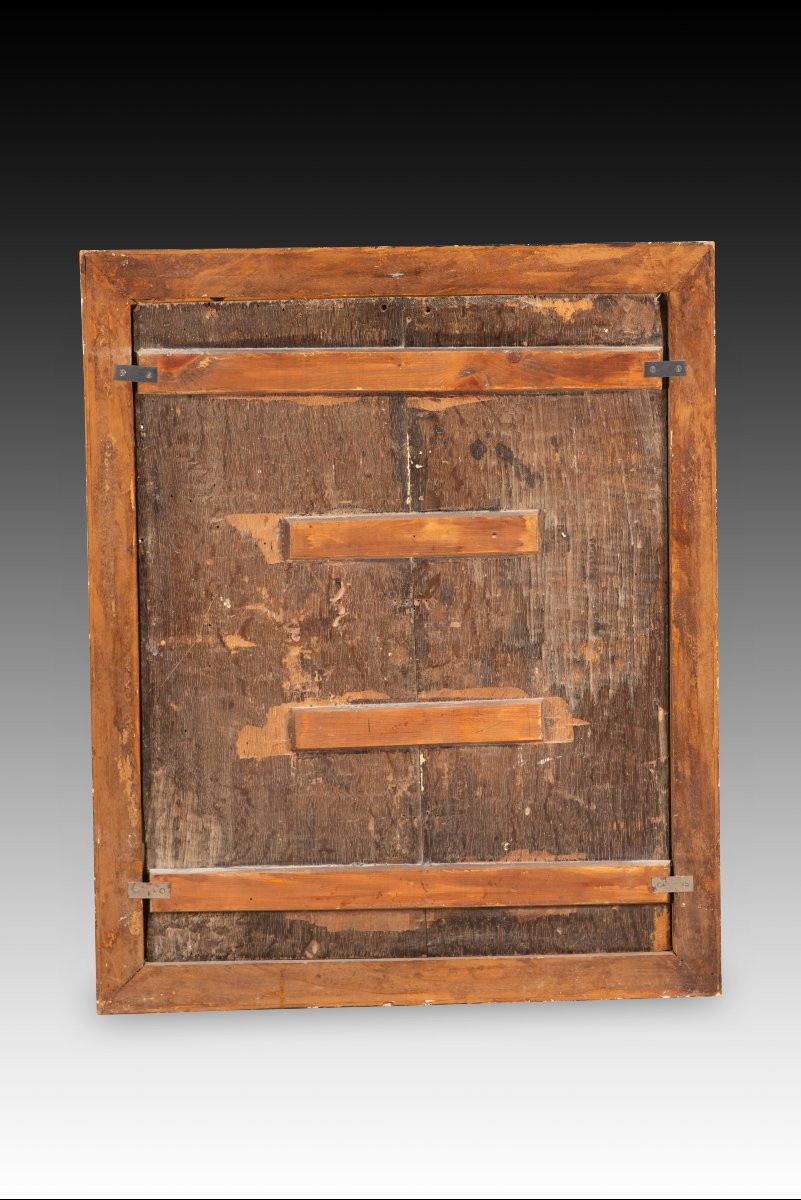
It has some flaws and restorations.
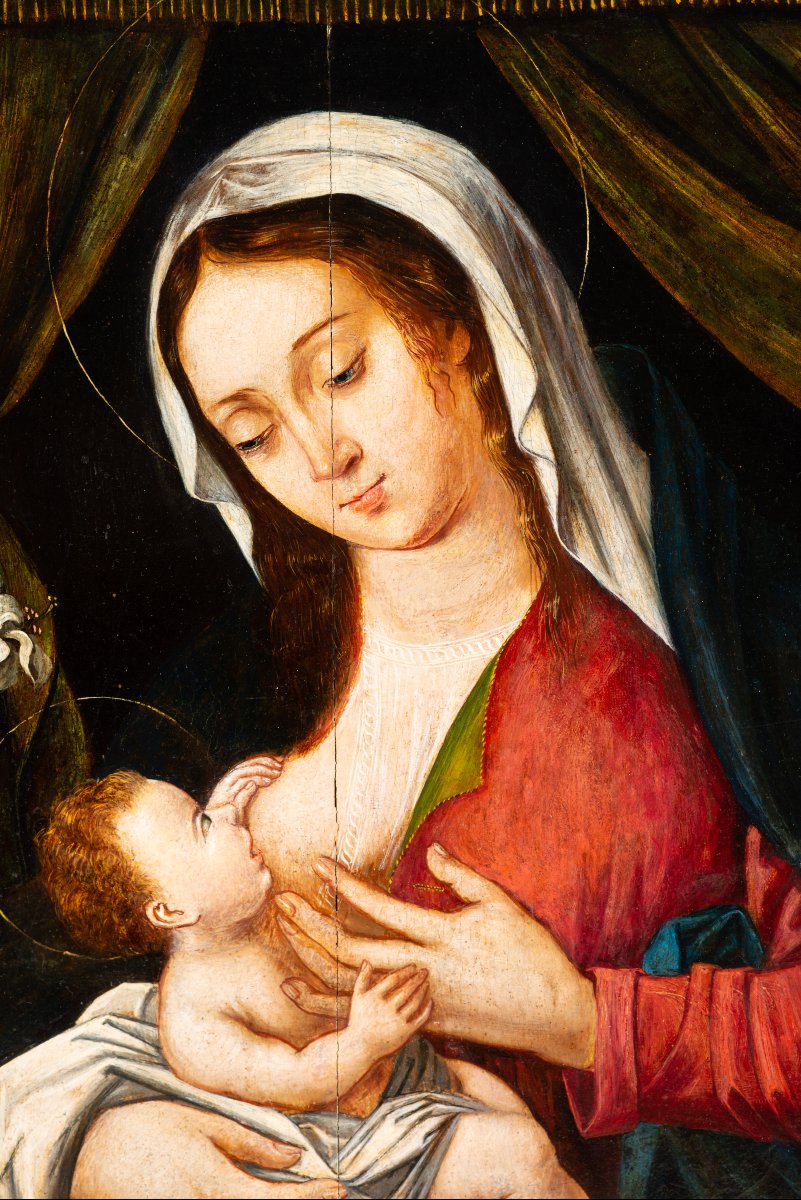
The panel depicts the Virgin Mary, dressed in a tunic and mantle, her hair partially covered, in three-quarter view, with curtains in the background, nursing the Infant Jesus. Their heads are highlighted by a thin halo, and in the foreground is a small platform with a book, cherries, and a vase of flowers (lilies and roses, perhaps alluding to Mary's purity and virginity). This iconography originated in Byzantium (where it was known as Galactotrofusa) and enjoyed great popularity in Europe until the Council of Trent (Italy, 1545–1563), at which point it seems to have ceased to appear as frequently in some parts of the continent due to concerns about modesty. Engravings by Dürer and numerous other works with a composition similar to that of this panel have survived. Stylistically, the influence of the Flemish school and Spanish touches on his painting are evident, placing it within the Hispano-Flemish tradition. Evidence exists of a series of panels in private collections associated with followers of Joos Van Cleve (also known as Joos van der Beke; c. 1485-1490 - 1540/1541; active in Antwerp) that are very similar in composition to this one, suggesting inspiration from one or more shared works. Compare, noting the differences, with van Cleve's panel of the Holy Family in the Metropolitan Museum of Art, New York (inventory no. 32.100.57), which dates from around 1512. Also worth mentioning is the one in the Museum of Fine Arts of La Coruña (Spain), which dates from the 16th century.
Dimensions: 60 x 5 x 73 cm (interior dimensions 50 x 64 cm)
It has some flaws and restorations.
The panel depicts the Virgin Mary, dressed in a tunic and mantle, her hair partially covered, in three-quarter view, with curtains in the background, nursing the Infant Jesus. Their heads are highlighted by a thin halo, and in the foreground is a small platform with a book, cherries, and a vase of flowers (lilies and roses, perhaps alluding to Mary's purity and virginity). This iconography originated in Byzantium (where it was known as Galactotrofusa) and enjoyed great popularity in Europe until the Council of Trent (Italy, 1545–1563), at which point it seems to have ceased to appear as frequently in some parts of the continent due to concerns about modesty. Engravings by Dürer and numerous other works with a composition similar to that of this panel have survived. Stylistically, the influence of the Flemish school and Spanish touches on his painting are evident, placing it within the Hispano-Flemish tradition. Evidence exists of a series of panels in private collections associated with followers of Joos Van Cleve (also known as Joos van der Beke; c. 1485-1490 - 1540/1541; active in Antwerp) that are very similar in composition to this one, suggesting inspiration from one or more shared works. Compare, noting the differences, with van Cleve's panel of the Holy Family in the Metropolitan Museum of Art, New York (inventory no. 32.100.57), which dates from around 1512. Also worth mentioning is the one in the Museum of Fine Arts of La Coruña (Spain), which dates from the 16th century.
Dimensions: 60 x 5 x 73 cm (interior dimensions 50 x 64 cm)
Explore similar pieces and discover your ideal find:
Christian Art