THIS OBJECT WAS SOLD
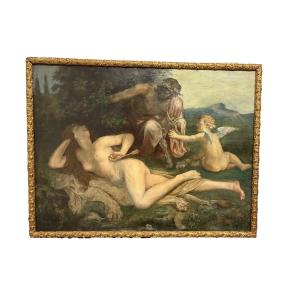
Diana And Actaeon - Roman School - 17th Century







Diana and Actaeon
Oil on canvas
Roman School
17th century
Canvas 74 x 101 cm
Frame 89 x 115 cm
Very good condition
Diana and Actaeon is a classic subject of ancient painting, which enjoyed widespread popularity between the sixteenth and eighteenth centuries. The theme derives from Greek and Roman mythology and is based on an episode from Ovid's "Metamorphoses." This famous myth tells of the hunter Actaeon unwittingly encountering Diana, the goddess of the hunt and the moon, known for her chastity. The goddess is bathing naked in a spring with her equally naked nymphs. The scene is captivating and intrigues the unfortunate Actaeon, who, as he approaches, is discovered. Having realized the hunter's presence, the nymphs scream and try to cover the goddess, who turns angrily toward him. To prevent him from telling what happened, she sprinkles water on his head, transforming him into a deer. Not recognizing him, Actaeon's hunting dogs begin to chase him, and he flees to a spring where he notices his metamorphosis. Finally, his hounds catch up and tear him to pieces. The myth of Diana and Actaeon should be interpreted as a punishment for the violation of privacy and sacredness. Diana, a symbol of purity and virginity, represents the inviolability of nature and the protection of women, while Actaeon embodies human curiosity and lust, with the tragic consequences of overstepping the bounds of what is permitted.
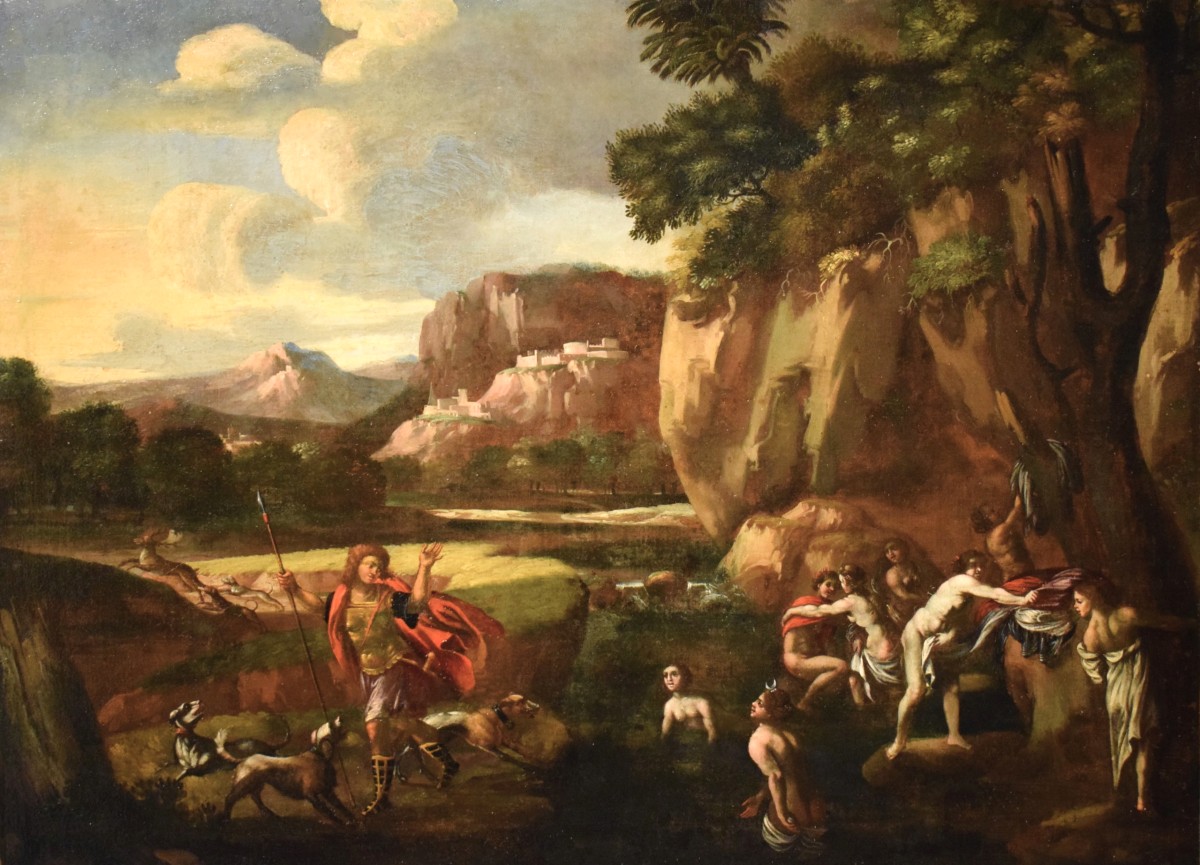
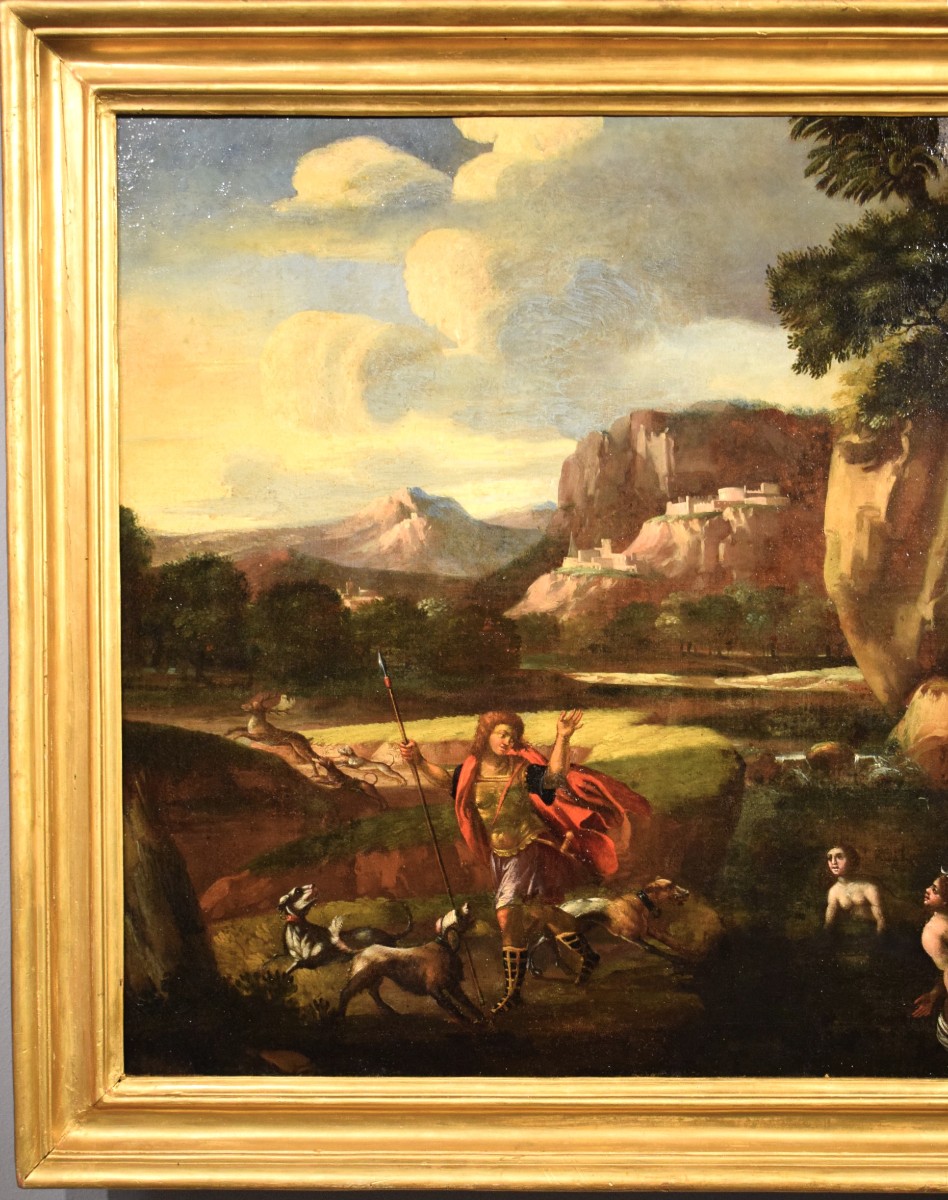
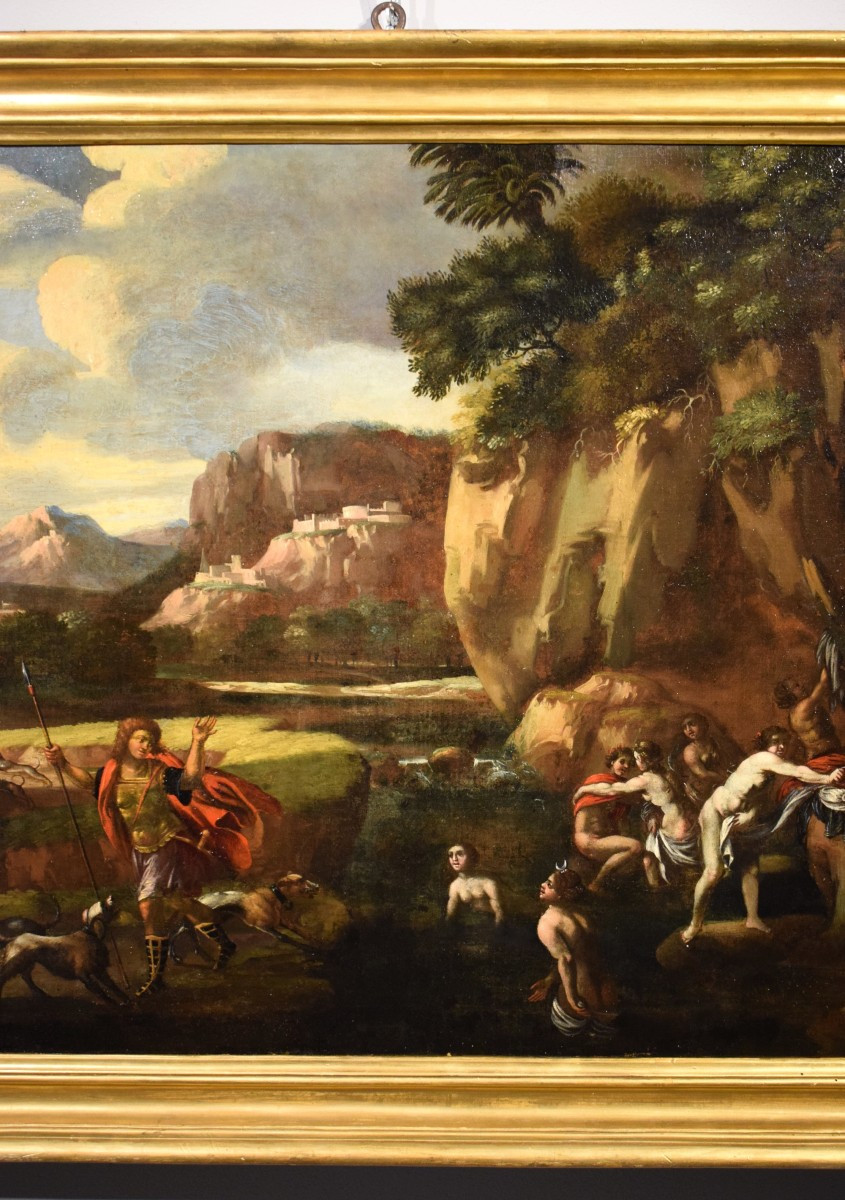
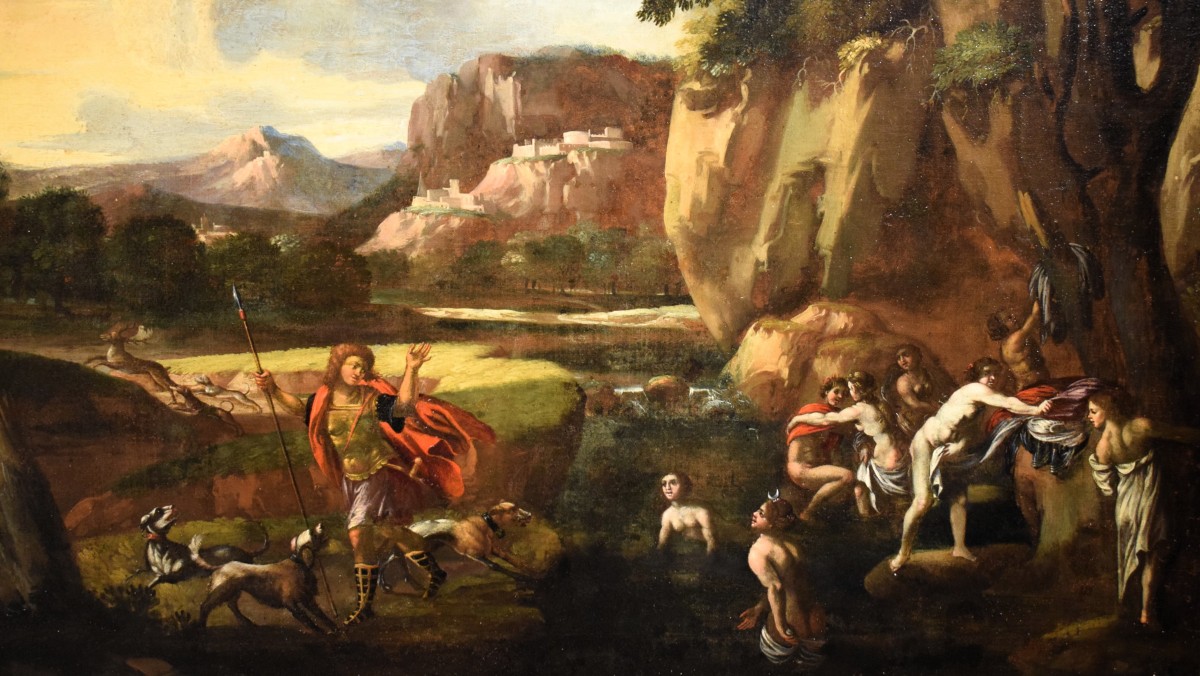
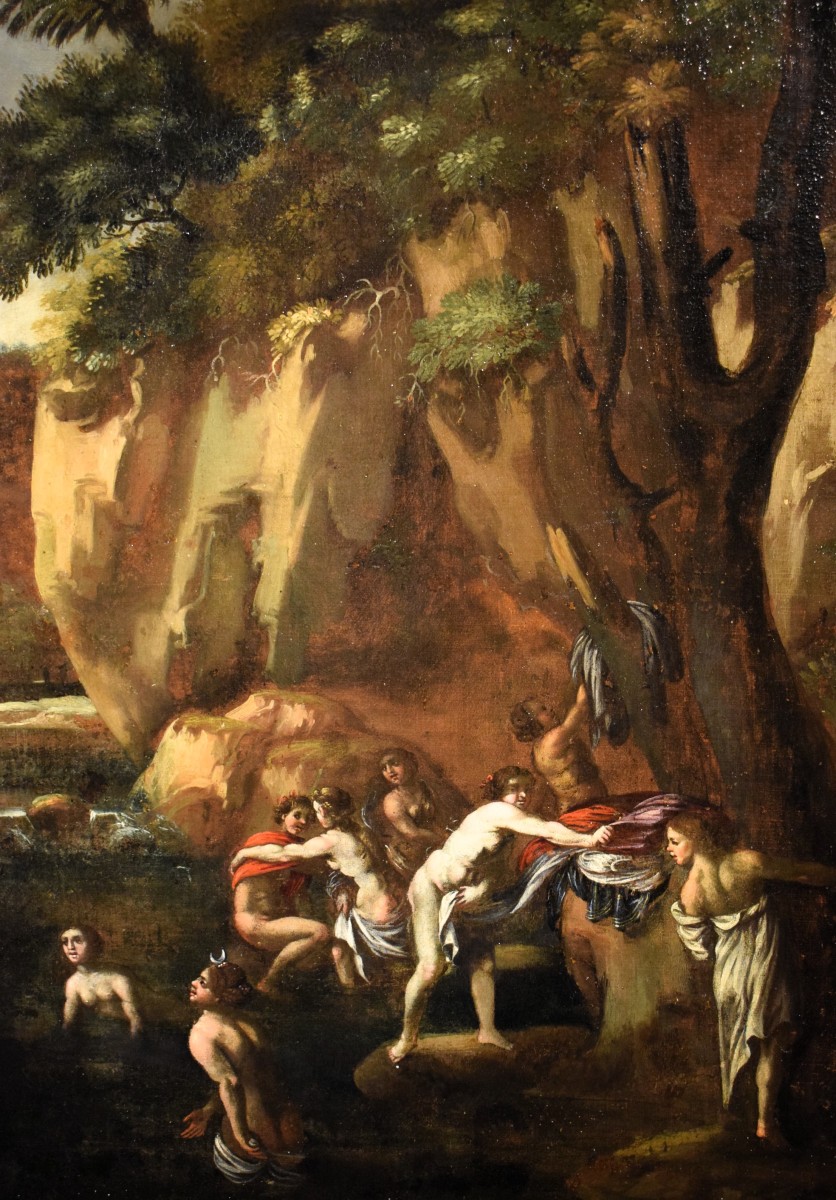
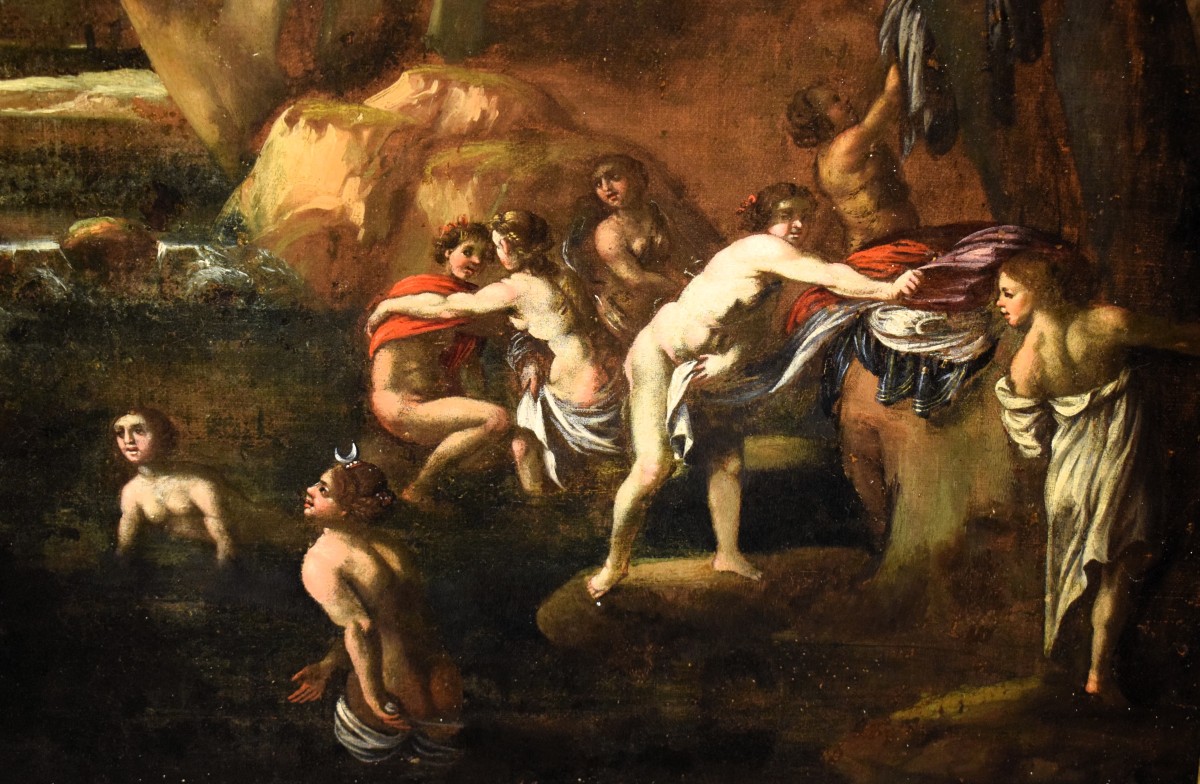
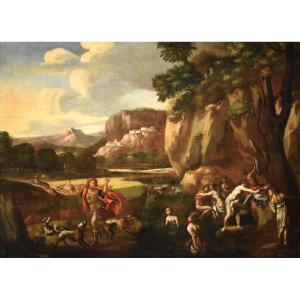
The painting is very interesting and depicts the episode with a wide view that allows us to see the group of bathers in the woods on the right side of the canvas. In the central section, Actaeon begins to flee from Diana, drenched in water. Meanwhile, in the plain of the landscape, the hunter has already transformed into a deer and is being chased by his hounds.
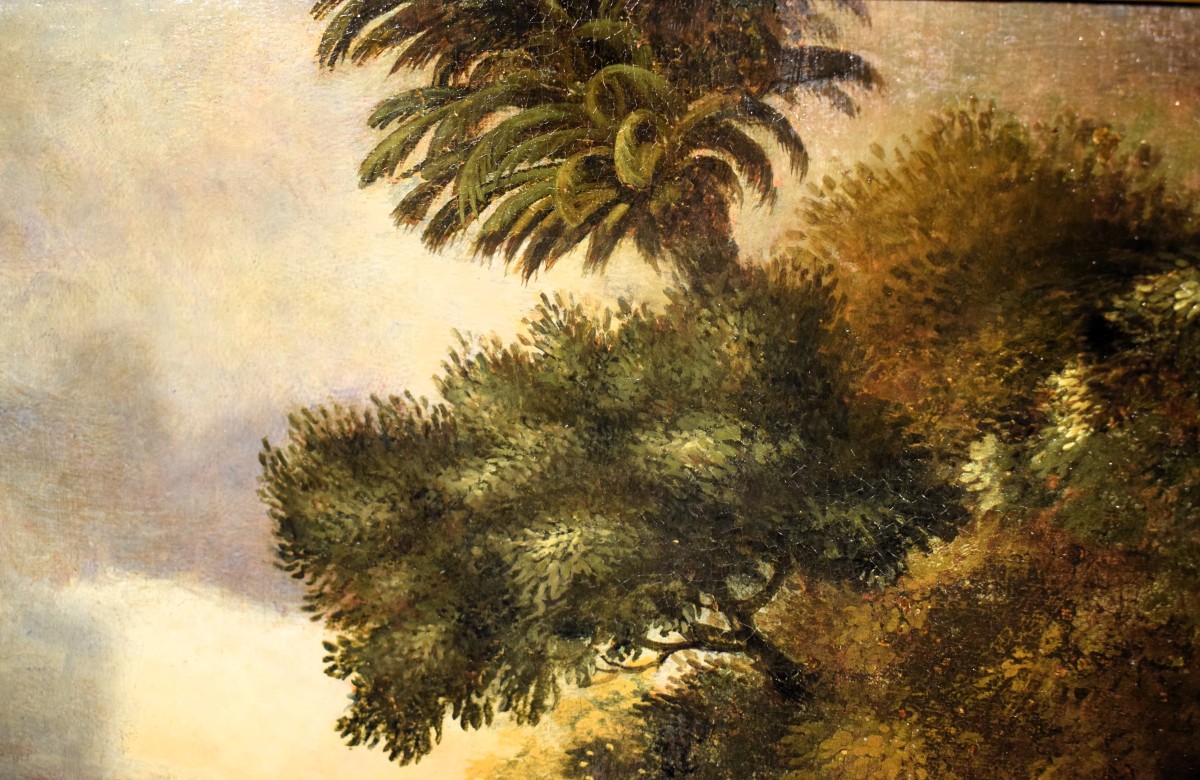
The dim light beneath a majestic tree highlights the naked bodies of the nymphs and the Goddess, contrasting with the wide, luminous landscape that opens up on the opposite side. The work was executed by an artist of the Roman school and dates to the second half of the 17th century. It is in excellent condition, perfectly relined and complete with a gilded frame antique.
Oil on canvas
Roman School
17th century
Canvas 74 x 101 cm
Frame 89 x 115 cm
Very good condition
Diana and Actaeon is a classic subject of ancient painting, which enjoyed widespread popularity between the sixteenth and eighteenth centuries. The theme derives from Greek and Roman mythology and is based on an episode from Ovid's "Metamorphoses." This famous myth tells of the hunter Actaeon unwittingly encountering Diana, the goddess of the hunt and the moon, known for her chastity. The goddess is bathing naked in a spring with her equally naked nymphs. The scene is captivating and intrigues the unfortunate Actaeon, who, as he approaches, is discovered. Having realized the hunter's presence, the nymphs scream and try to cover the goddess, who turns angrily toward him. To prevent him from telling what happened, she sprinkles water on his head, transforming him into a deer. Not recognizing him, Actaeon's hunting dogs begin to chase him, and he flees to a spring where he notices his metamorphosis. Finally, his hounds catch up and tear him to pieces. The myth of Diana and Actaeon should be interpreted as a punishment for the violation of privacy and sacredness. Diana, a symbol of purity and virginity, represents the inviolability of nature and the protection of women, while Actaeon embodies human curiosity and lust, with the tragic consequences of overstepping the bounds of what is permitted.
The painting is very interesting and depicts the episode with a wide view that allows us to see the group of bathers in the woods on the right side of the canvas. In the central section, Actaeon begins to flee from Diana, drenched in water. Meanwhile, in the plain of the landscape, the hunter has already transformed into a deer and is being chased by his hounds.
The dim light beneath a majestic tree highlights the naked bodies of the nymphs and the Goddess, contrasting with the wide, luminous landscape that opens up on the opposite side. The work was executed by an artist of the Roman school and dates to the second half of the 17th century. It is in excellent condition, perfectly relined and complete with a gilded frame antique.
Explore similar pieces and discover your ideal find:
Other Paintings