THIS OBJECT WAS SOLD
Joan Of Arc In Domrémy - Henri Chapu 1833-1891
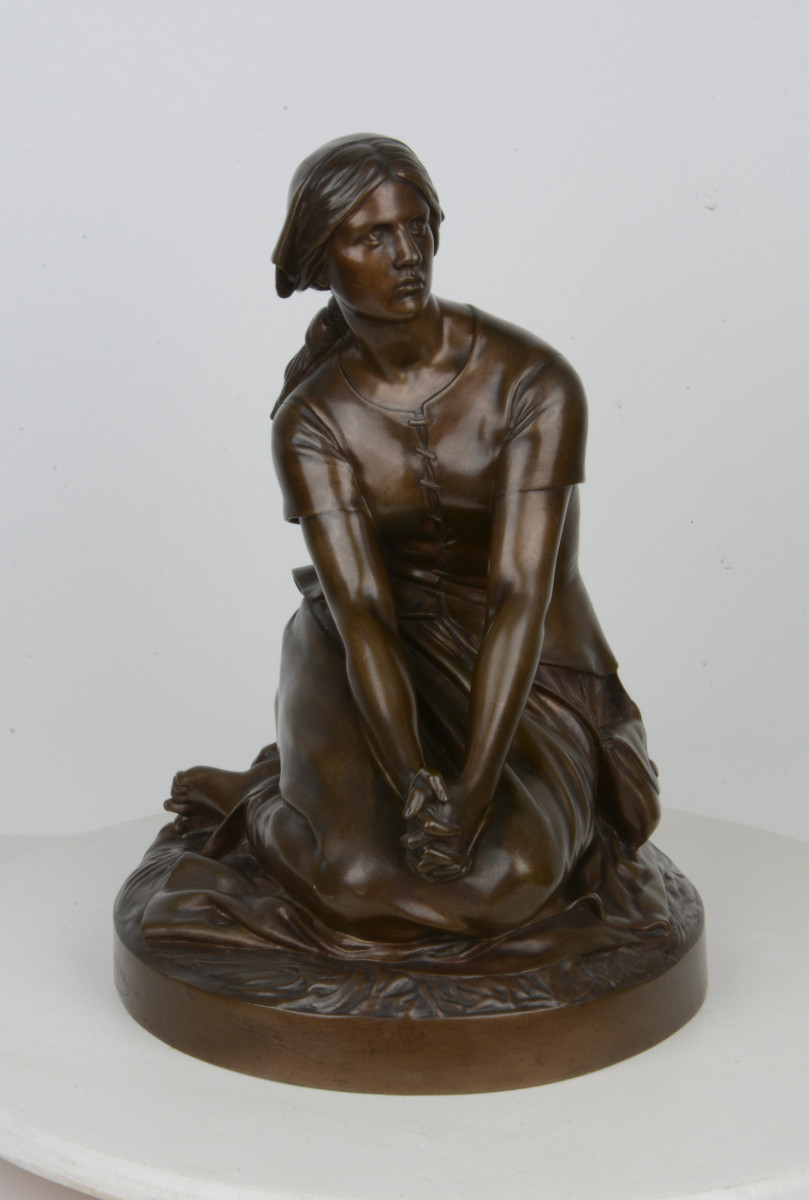
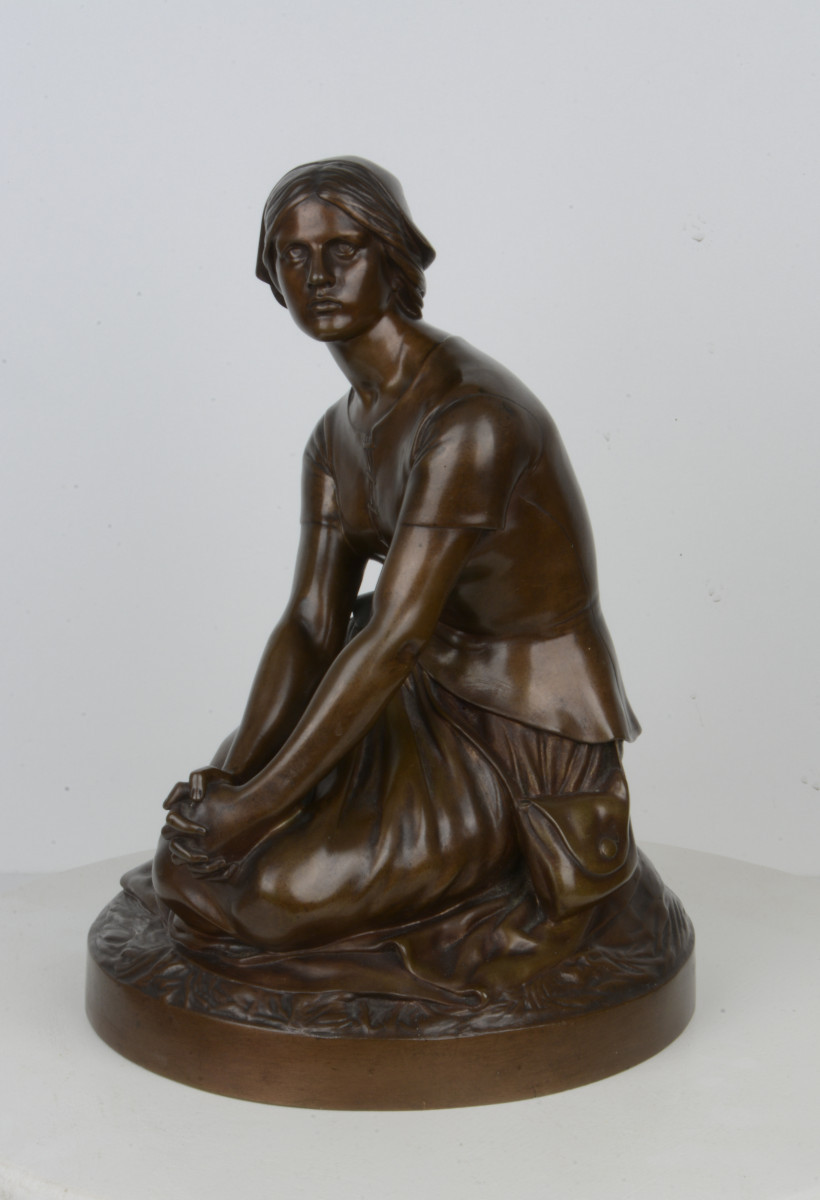
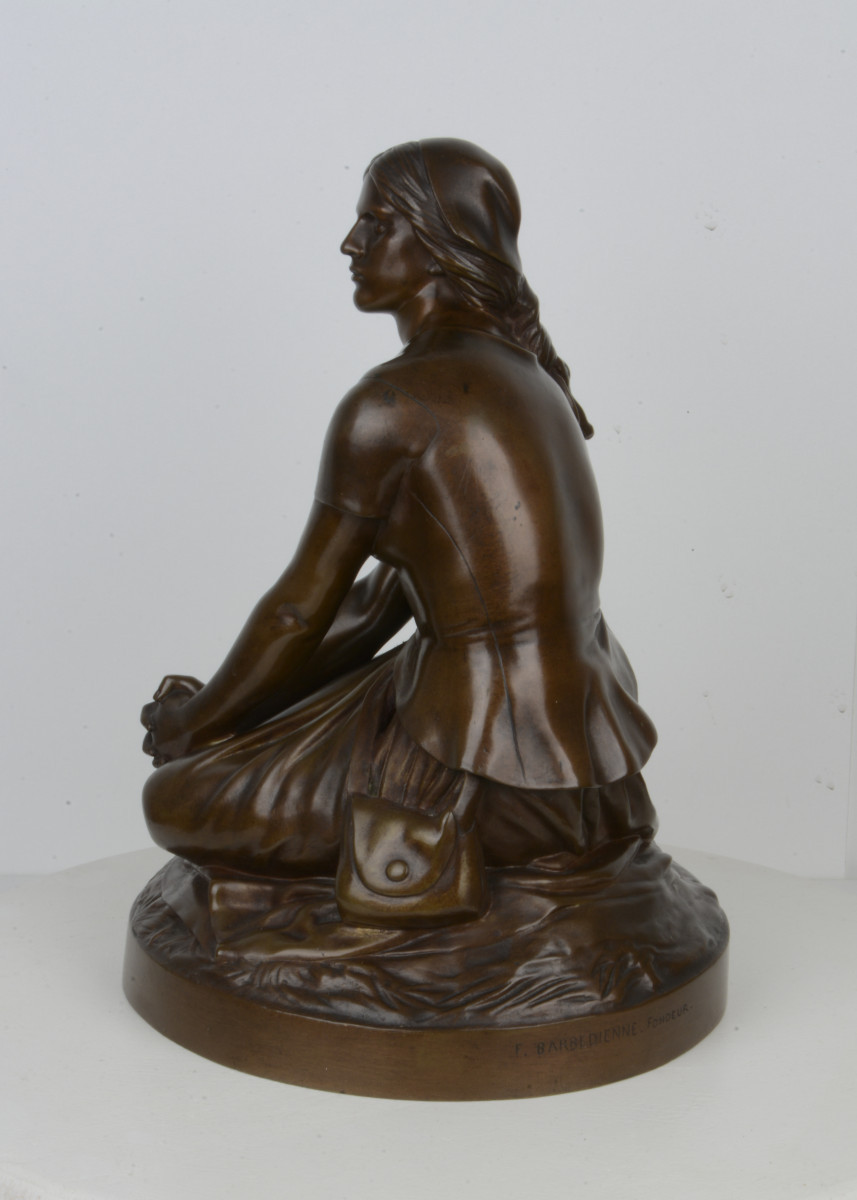
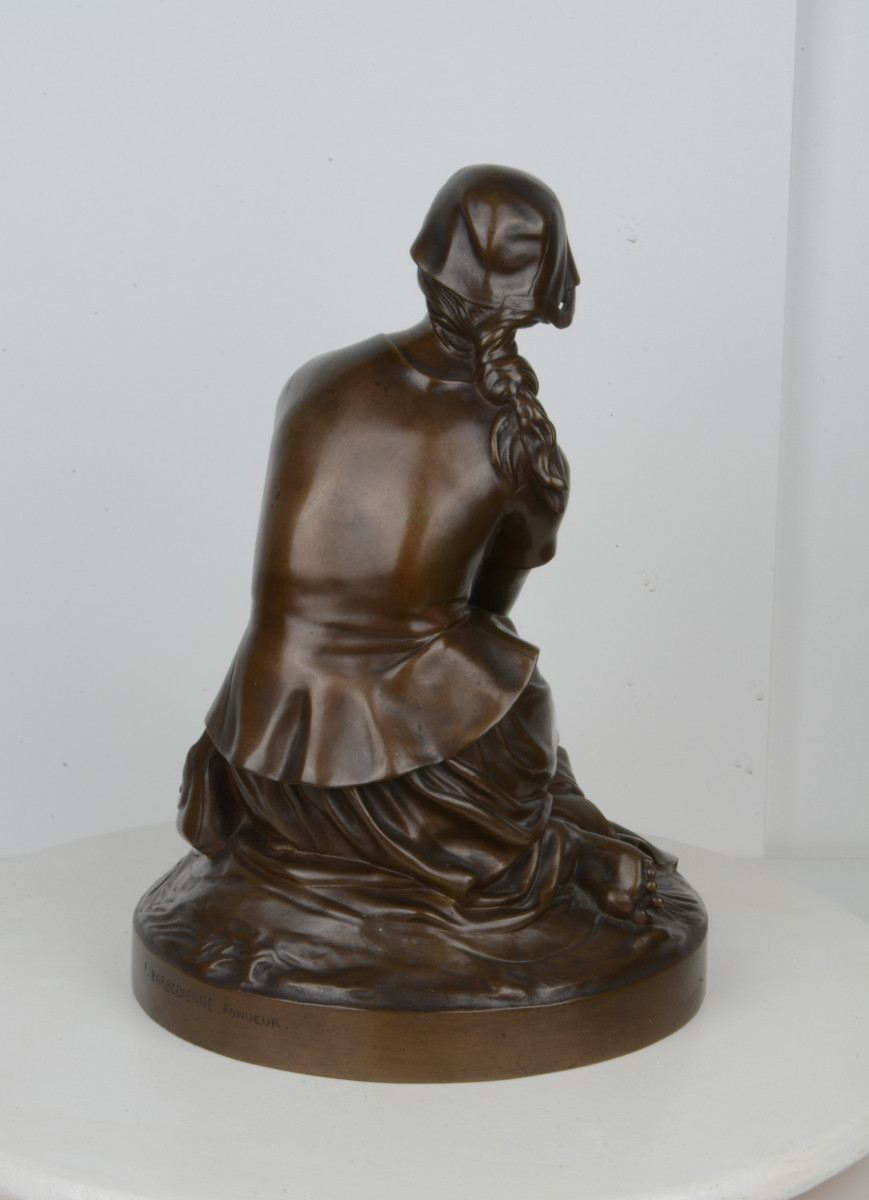
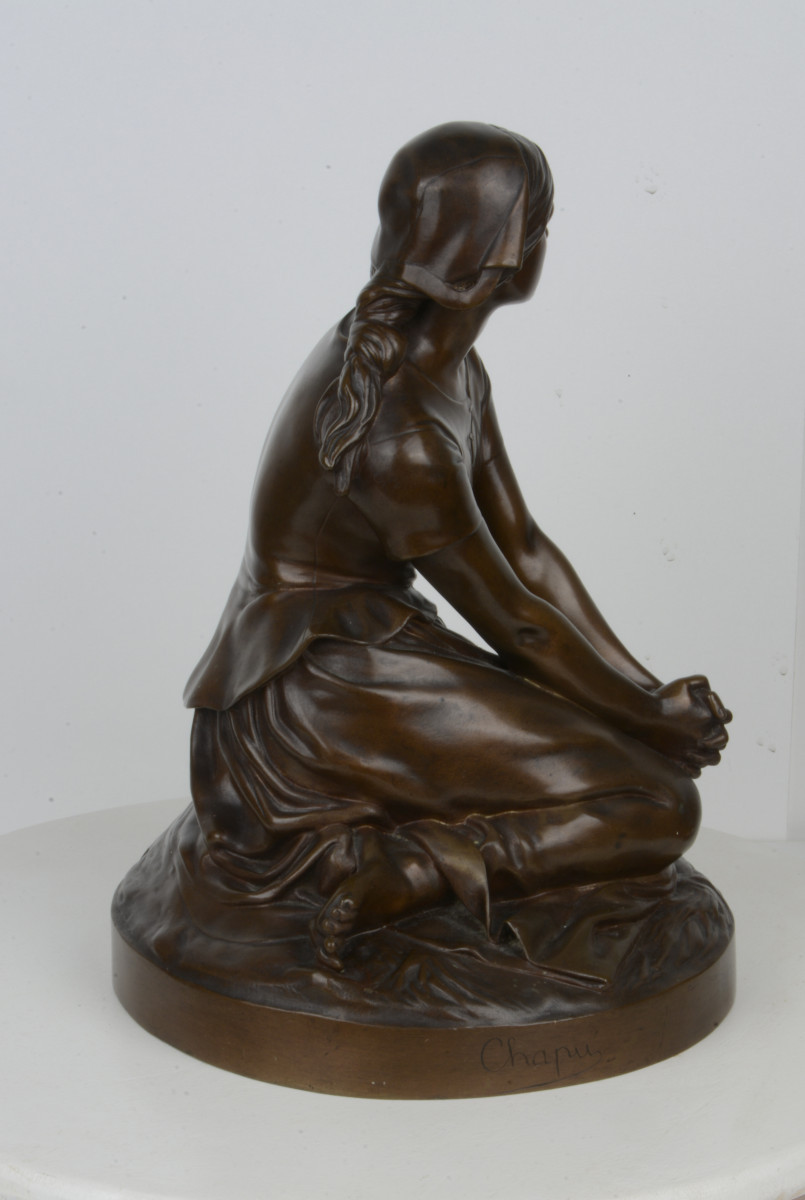
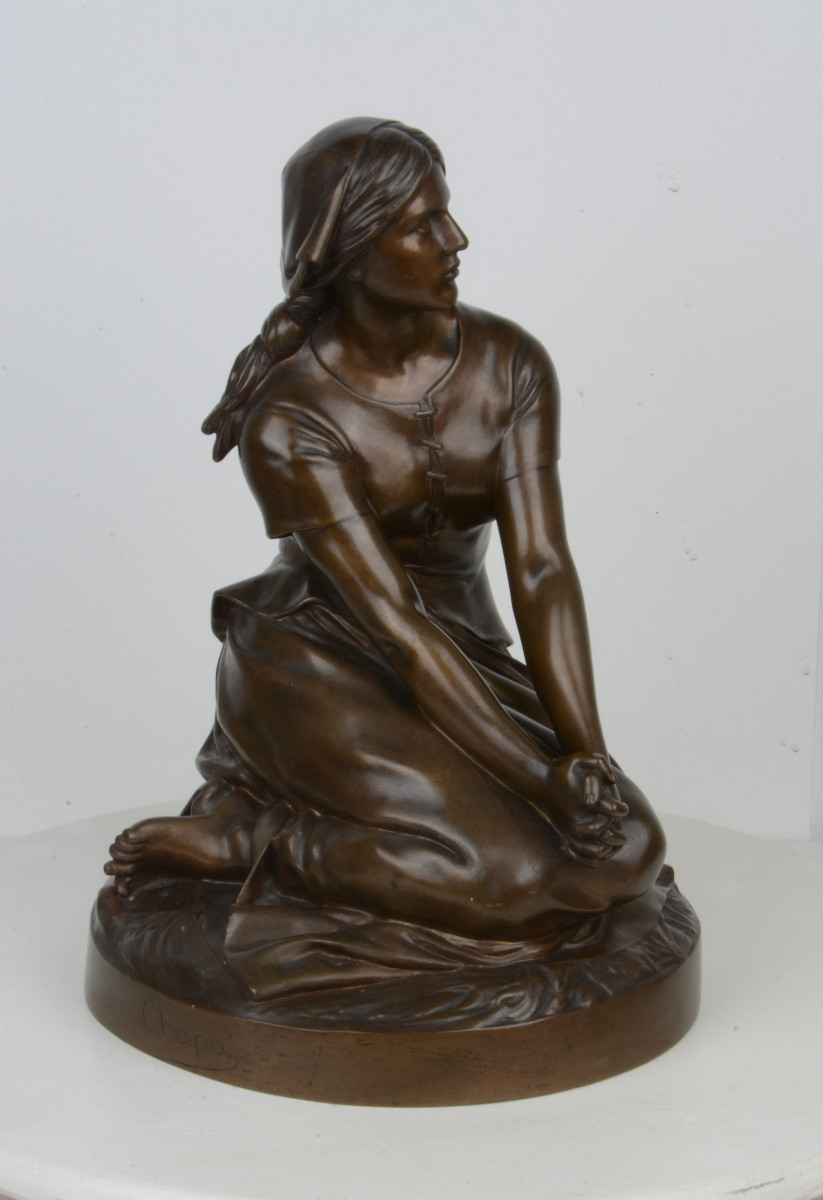
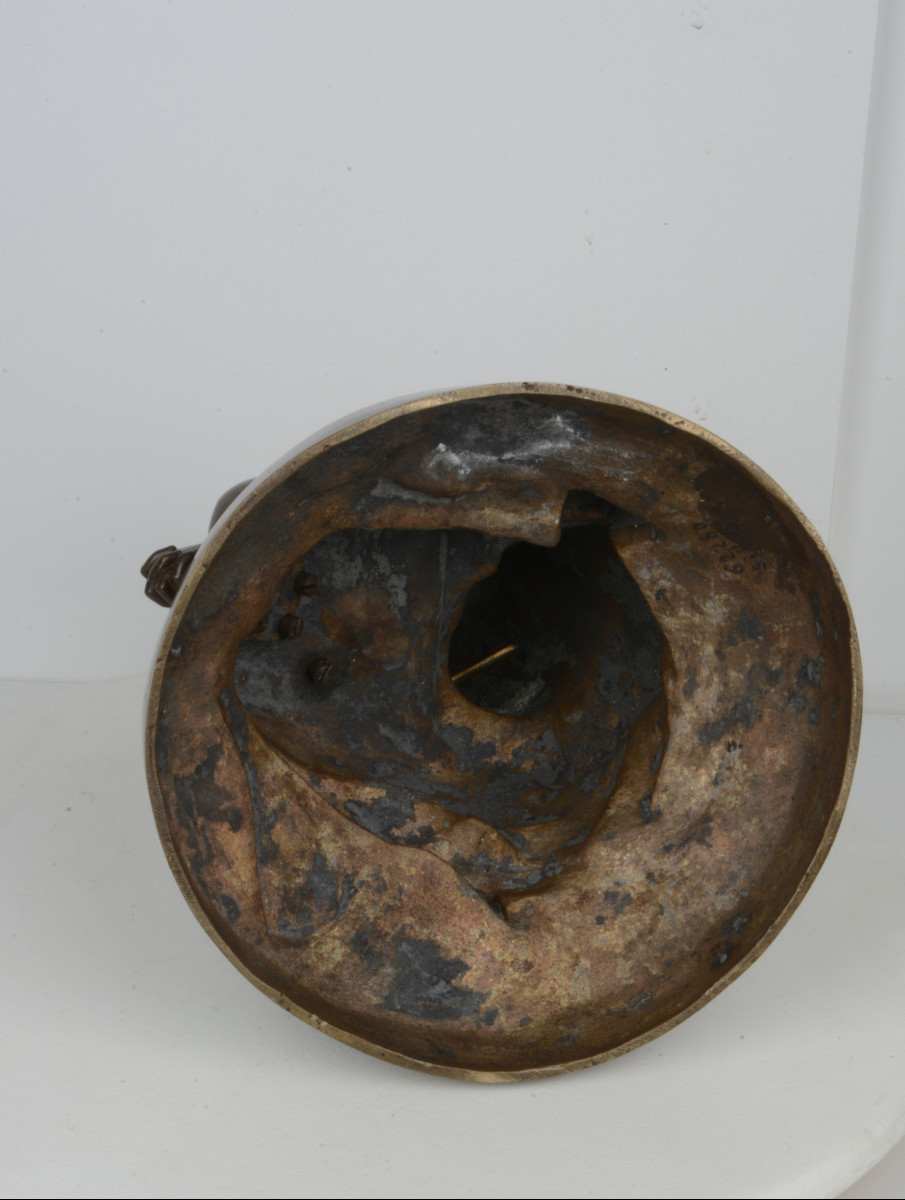


DimensionsHeight: 29 cmØ of the terrace: 20 cmSignatureOn the edge of the terrace: h. ChapuOn the back, on the edge of the terrace: F. Barbedienne, Foundryman. ParisMaterialBronze proof with medal patina.The bronze is complete. It rests on a round terrace.
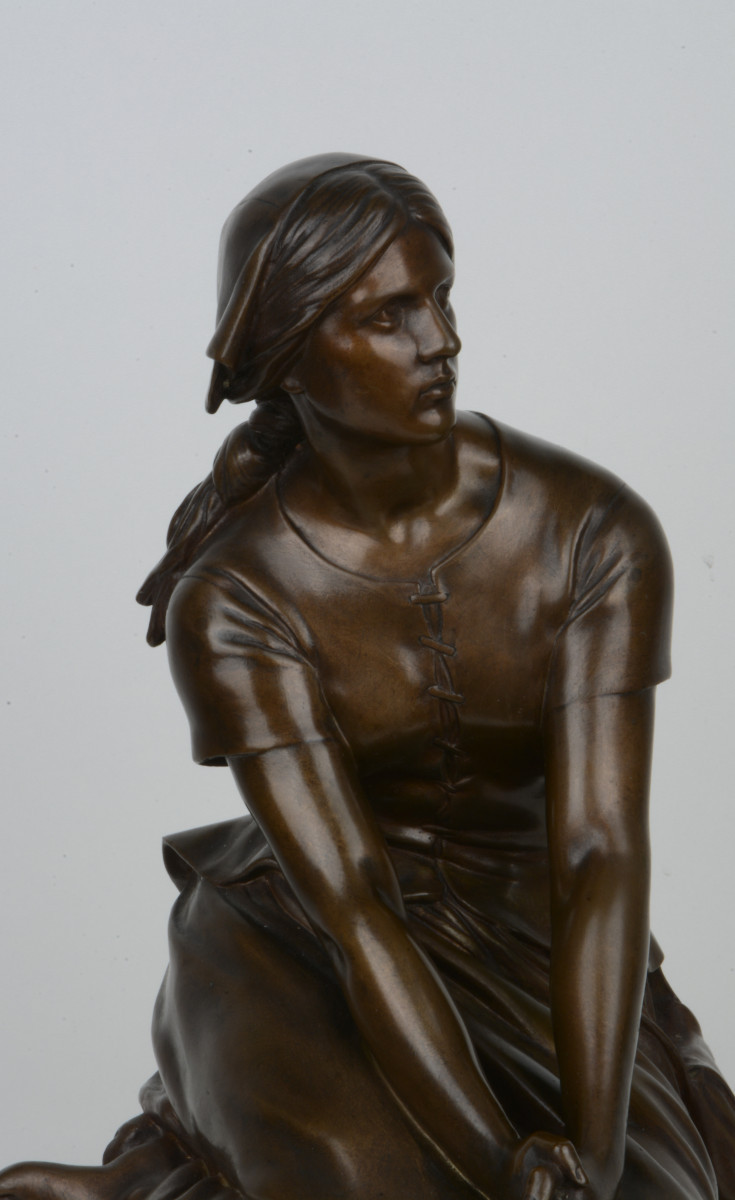
Henri Chapu wanted his sculpture to be beautiful, but without sentimentality. He wants her features to reflect the gentle mystical ardor that animates her. Her legs folded under her body in the posture of the humble shepherdess of Domrémy that she still is, she joins her hands in a gesture of fervent prayer, her gaze is immersed in a world that escapes us, that of her future destiny: battles, glory, martyrdom. Joan of Arc at Domrémy, also often called Joan of Arc listening to her voices, or The Shepherdess of Domrémy, was presented in plaster at the Salon of 1870. But that year, the Salon was not the first concern of the French, who were anxious about the drama that was unfolding.
Although the Emperor was acclaimed in May, danger was brewing at the borders: on July 19, war was declared between France and Prussia. Heroic patron saint of France, symbol of warrior virtues, courage and patriotism, the statue of Joan of Arc could not have come at a better time... But the upheavals of history ignore art, when art feeds on it... When Henri Chapu presented it at the Salon for the first time, it was made of plaster. He transcribed the plaster into marble in 1872, and represented it on the occasion at the first Salon of the Third Republic. Presented out of competition, since its creator was the holder of the Grand Prix de Rome, the statue did not win a medal. However, it confirmed its immense success with the public, driven by the political context: the annexation of Alsace and Lorraine to Germany, after the capitulation of France to the Prussian army on September 2, 1870. Having since become a true national emblem, bearing all the virtues and hopes of the French people, the subject was exploited by painters but especially by sculptors. Joan of Arc warriors in armor, on horseback or dismounted flourished. Breaking with this representation, Henri Chapu portrayed with finesse and elegance a very simple, gentle, bucolic, melancholic and meditative shepherdess. The marble statue of 1872 (as well as the plaster one of 1870) measures 117 cm, presented at the Salon of 1872, it is today preserved at the Musée d'Orsay.
It was cast in bronze by the Barbedienne house, Barbedienne life-size, for the city of Châlons-sur-Marne (today Châlons-en-Champagne) thanks to the donation of Mr. Joseph Chevalier. It adorns the small square at the foot of the Saint-Etienne Cathedral, on the Popelin street side. There is also one in Kobenhavn, Denmark. The Joan of Arc at Domrémy by Henri Chapu, published from 1875 by the Barbedienne house, remained in the catalog until 1911, offered in original size and 6 possible reduction sizes
. COPYRIGHT Les Trésors de Gamaliel
Henri Chapu wanted his sculpture to be beautiful, but without sentimentality. He wants her features to reflect the gentle mystical ardor that animates her. Her legs folded under her body in the posture of the humble shepherdess of Domrémy that she still is, she joins her hands in a gesture of fervent prayer, her gaze is immersed in a world that escapes us, that of her future destiny: battles, glory, martyrdom. Joan of Arc at Domrémy, also often called Joan of Arc listening to her voices, or The Shepherdess of Domrémy, was presented in plaster at the Salon of 1870. But that year, the Salon was not the first concern of the French, who were anxious about the drama that was unfolding.
Although the Emperor was acclaimed in May, danger was brewing at the borders: on July 19, war was declared between France and Prussia. Heroic patron saint of France, symbol of warrior virtues, courage and patriotism, the statue of Joan of Arc could not have come at a better time... But the upheavals of history ignore art, when art feeds on it... When Henri Chapu presented it at the Salon for the first time, it was made of plaster. He transcribed the plaster into marble in 1872, and represented it on the occasion at the first Salon of the Third Republic. Presented out of competition, since its creator was the holder of the Grand Prix de Rome, the statue did not win a medal. However, it confirmed its immense success with the public, driven by the political context: the annexation of Alsace and Lorraine to Germany, after the capitulation of France to the Prussian army on September 2, 1870. Having since become a true national emblem, bearing all the virtues and hopes of the French people, the subject was exploited by painters but especially by sculptors. Joan of Arc warriors in armor, on horseback or dismounted flourished. Breaking with this representation, Henri Chapu portrayed with finesse and elegance a very simple, gentle, bucolic, melancholic and meditative shepherdess. The marble statue of 1872 (as well as the plaster one of 1870) measures 117 cm, presented at the Salon of 1872, it is today preserved at the Musée d'Orsay.
It was cast in bronze by the Barbedienne house, Barbedienne life-size, for the city of Châlons-sur-Marne (today Châlons-en-Champagne) thanks to the donation of Mr. Joseph Chevalier. It adorns the small square at the foot of the Saint-Etienne Cathedral, on the Popelin street side. There is also one in Kobenhavn, Denmark. The Joan of Arc at Domrémy by Henri Chapu, published from 1875 by the Barbedienne house, remained in the catalog until 1911, offered in original size and 6 possible reduction sizes
. COPYRIGHT Les Trésors de Gamaliel
Explore similar pieces and discover your ideal find:
bronze sculptures