

Service With The Cipher Of Emperor Napoleon III
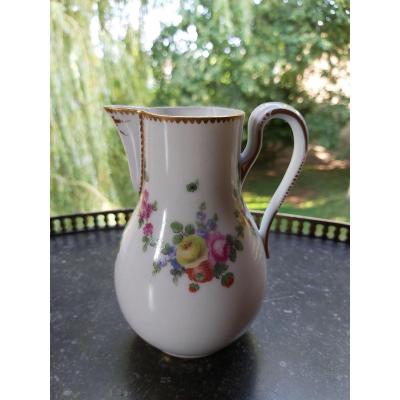
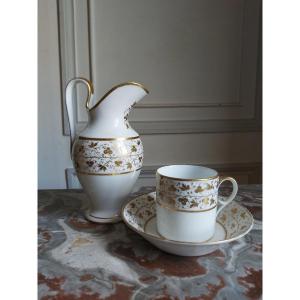
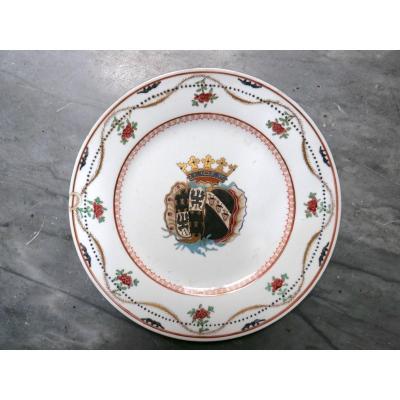
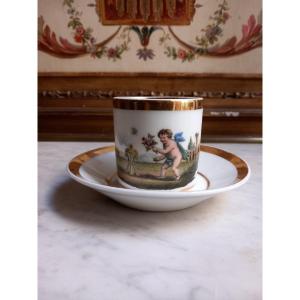
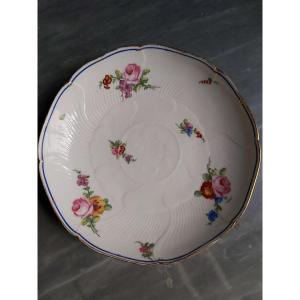
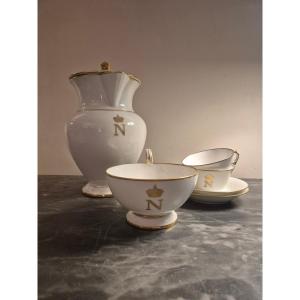
Sèvres Manufacture. Service with the cypher of Emperor Napoleon III. Decoction pot, one cup and two cups and saucer in white porcelain, with gilded threads and cypher "N" under crown. Red gilt mark in Sèvres (1864), green (1862) and intaglio marks under the large cup. Second Empire period. King Louis-Philippe abolished the large cover during the July Monarchy and established five types of Sèvres porcelain services, the richness of which determined the recipient: the Office Service, the Officers Service, the Ball Service, the Princes Service and the State Services. The first four reproduce the king's cypher in blue, red or gold but without polychrome decoration, while the state services are in color. Napoleon III used his predecessor's ceremonial services for his palaces, and for his new Sèvres porcelain services, he adopted the same decorative typology as Louis-Philippe's services, but with his own cipher. Sèvres porcelain comes from one of the most important manufacturers in Europe. Founded in 1740, it remains world-renowned today. The Sèvres factory was developed thanks to the patronage of Louis XV under the influence of Madame de Pompadour. Originally located in Vincennes and then moved to Sèvres in 1756, it produced soft porcelain and then hard porcelain following the discovery of a kaolin deposit near Limoges and was commercialized from 1770. Throughout the political regimes, it was found on all royal, imperial, and presidential tables. Sèvres continually produced new fashionable models that were widely admired and imitated.
450 €
Period: 19th century
Style: Napoleon 3rd
Condition: Good condition
Material: Porcelain
Width: 20cm
Height: 25cm
Reference (ID): 1634896
Availability: In stock
Print