THIS OBJECT WAS SOLD
Roman Empire, Bronze Statuette Of Mercury
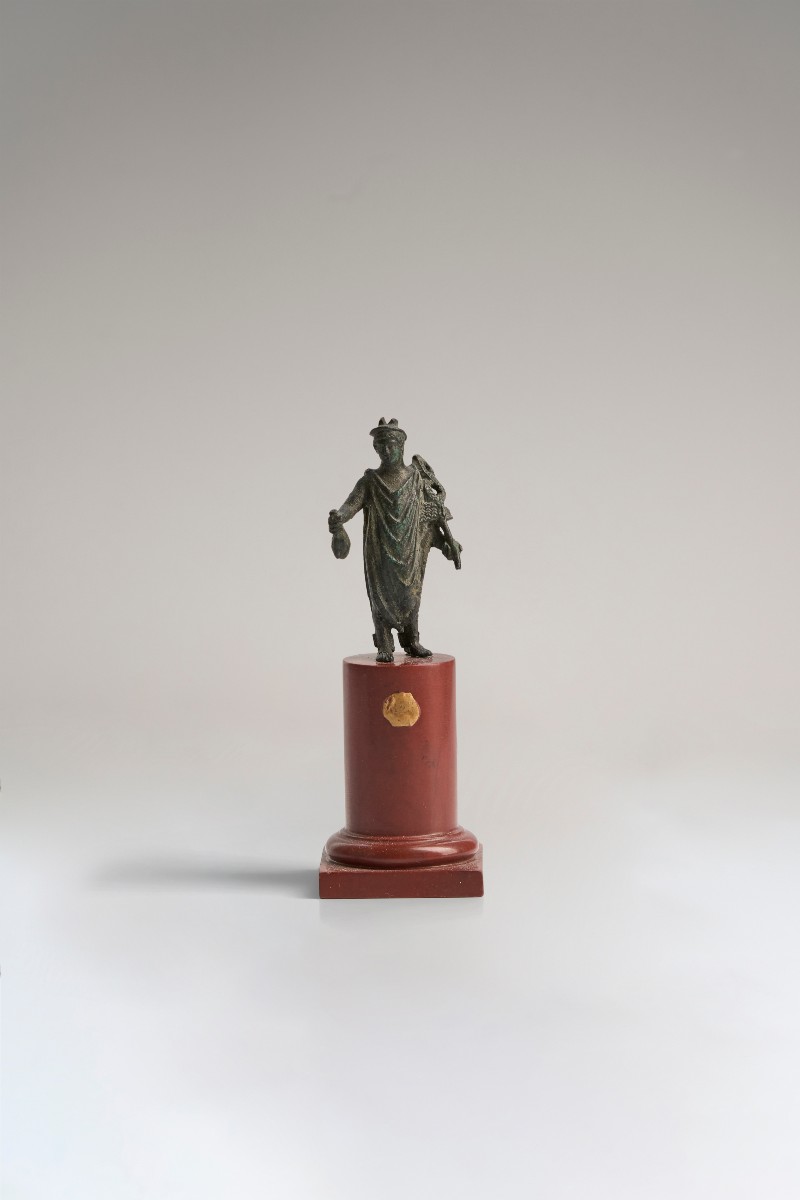
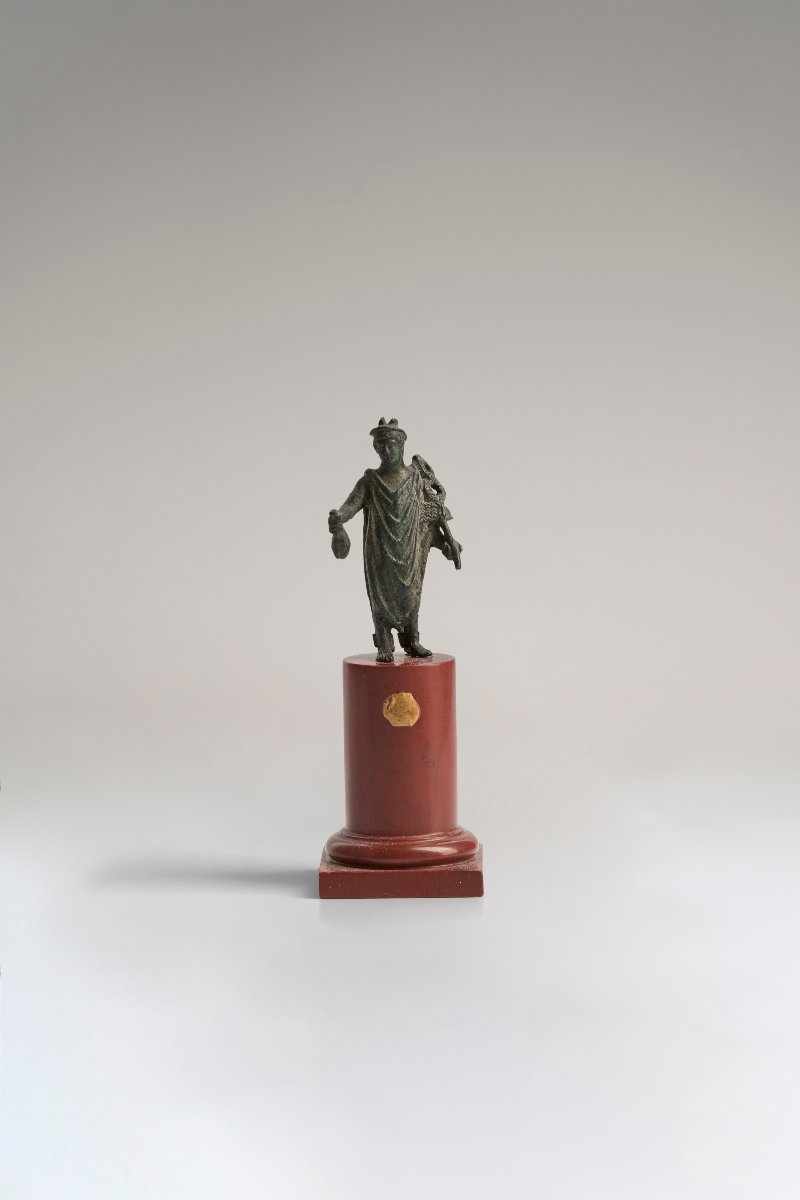
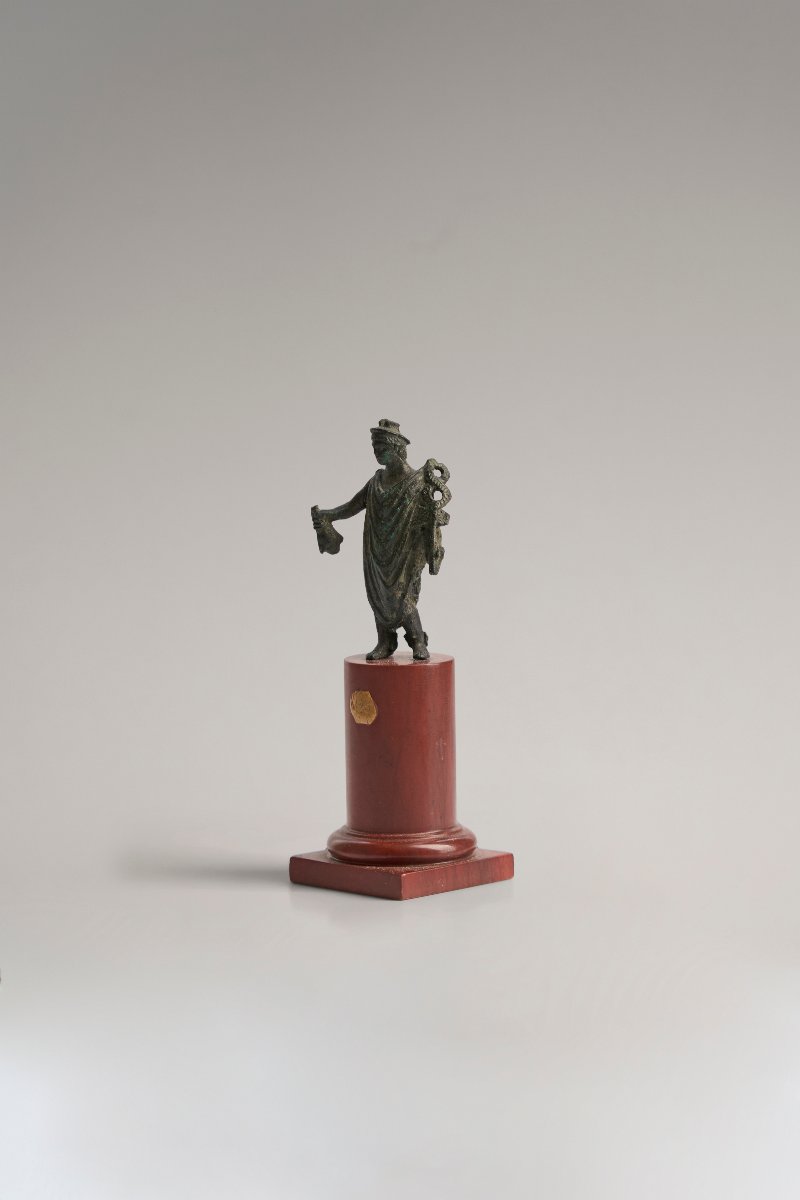
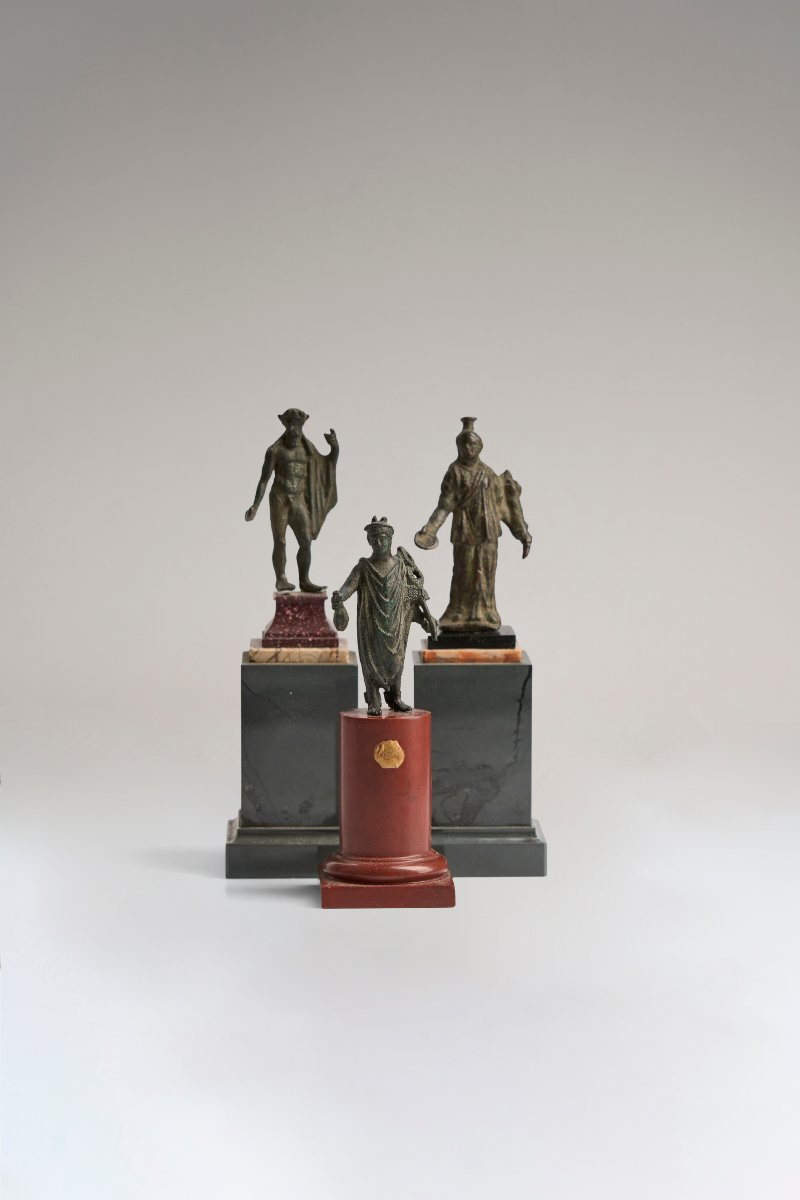


Roman Empire, Bronze Statuette of Mercury
Bronze statuette of Mercury Roman Empire,
1st-2nd century AD Patinated bronze
H. 6.5 cm H. with base: 12.7 cm
Provenance: Former French collection
Mercury, the god of commerce, travelers and messengers, is depicted standing, wearing a chlamys, in a classical and balanced posture. He wears on his head a winged petasus (a wide-brimmed hat decorated with wings), holds in his left hand a caduceus (a staff coiled with two snakes) and carries a purse in his right, symbolizing his role in commerce.
Mercury, the Roman equivalent of the Greek god Hermes, was one of the most popular deities of the Roman Empire. Associated with communication and wealth, he was worshipped by merchants, travelers, and sometimes even thieves.
This statuette reflects the importance of this god in the daily lives of the Romans and demonstrates their skill in miniaturizing artistic forms for personal or sacred uses. These statuettes were often offered as ex-votos in sanctuaries dedicated to Mercury, or used as objects of devotion in private contexts. Our example is distinguished by the quality of its casting, and is mounted on a 19th-century red marble base on which an old collector's label is glued.
Bronze statuette of Mercury Roman Empire,
1st-2nd century AD Patinated bronze
H. 6.5 cm H. with base: 12.7 cm
Provenance: Former French collection
Mercury, the god of commerce, travelers and messengers, is depicted standing, wearing a chlamys, in a classical and balanced posture. He wears on his head a winged petasus (a wide-brimmed hat decorated with wings), holds in his left hand a caduceus (a staff coiled with two snakes) and carries a purse in his right, symbolizing his role in commerce.
Mercury, the Roman equivalent of the Greek god Hermes, was one of the most popular deities of the Roman Empire. Associated with communication and wealth, he was worshipped by merchants, travelers, and sometimes even thieves.
This statuette reflects the importance of this god in the daily lives of the Romans and demonstrates their skill in miniaturizing artistic forms for personal or sacred uses. These statuettes were often offered as ex-votos in sanctuaries dedicated to Mercury, or used as objects of devotion in private contexts. Our example is distinguished by the quality of its casting, and is mounted on a 19th-century red marble base on which an old collector's label is glued.
Explore similar pieces and discover your ideal find:
bronze sculptures