THIS OBJECT WAS SOLD
Etienne Jeaurat (att.) Young Merchant Drawing On Paper French School 18th Century Costume
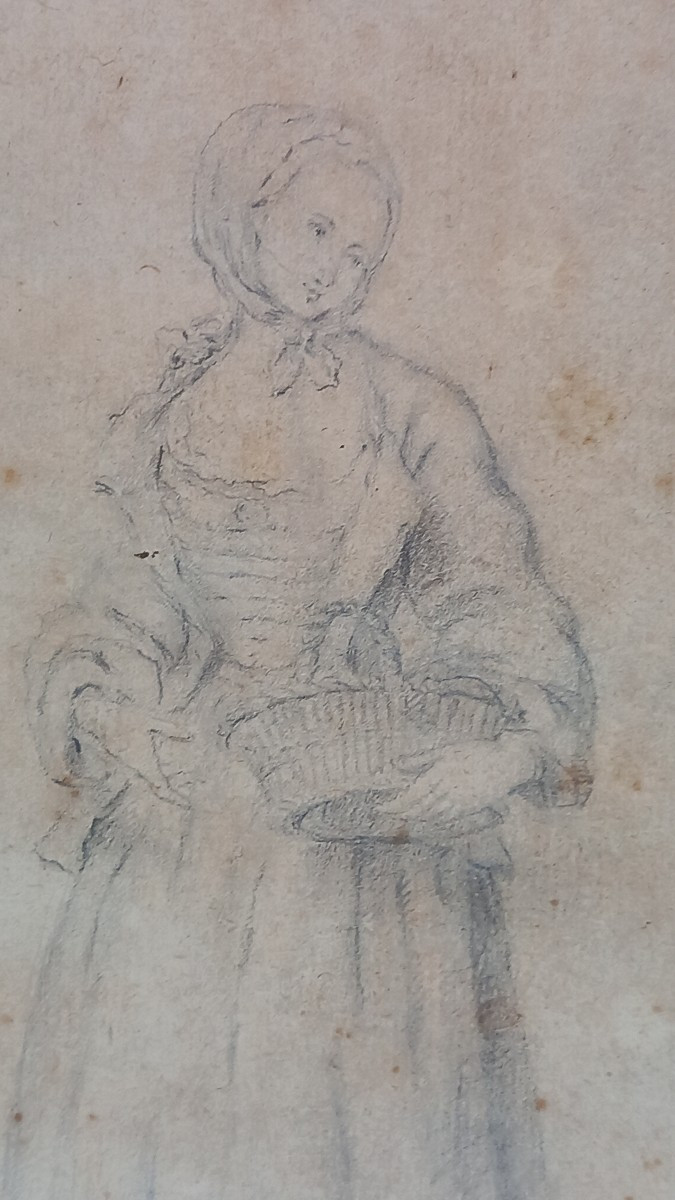
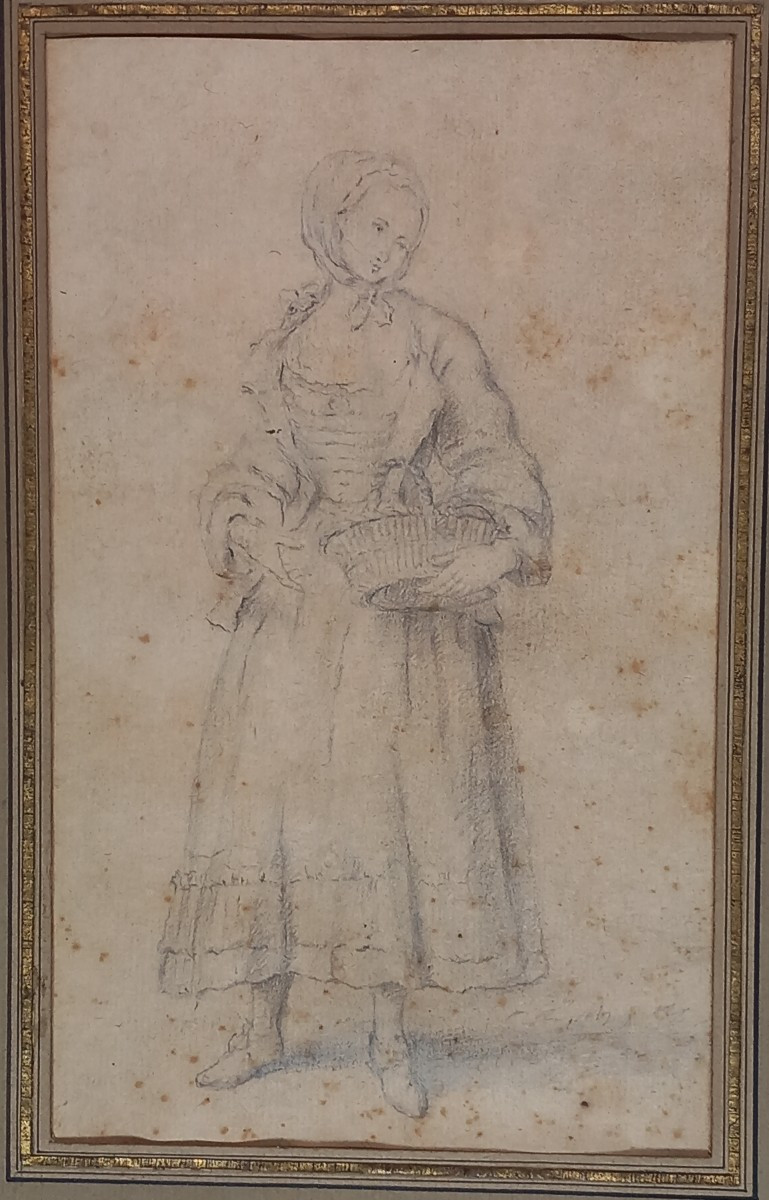

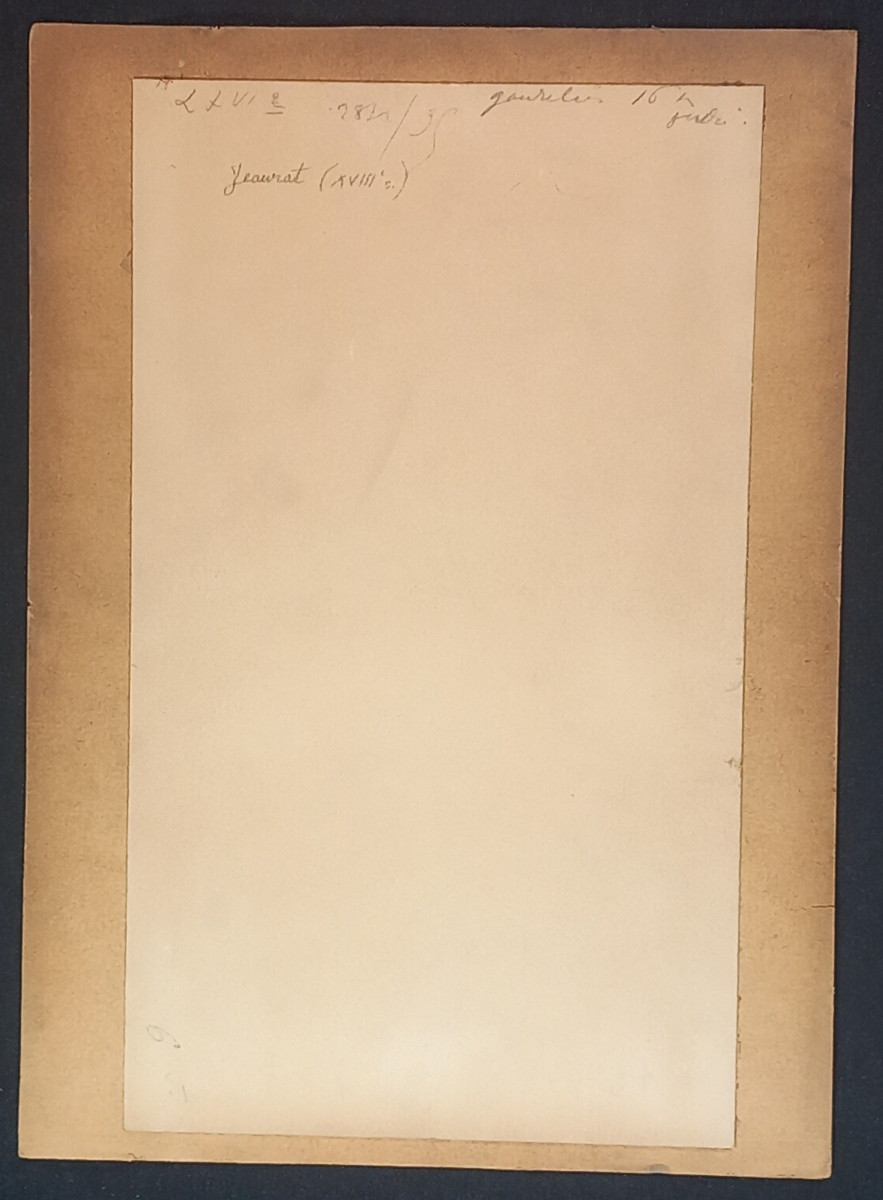
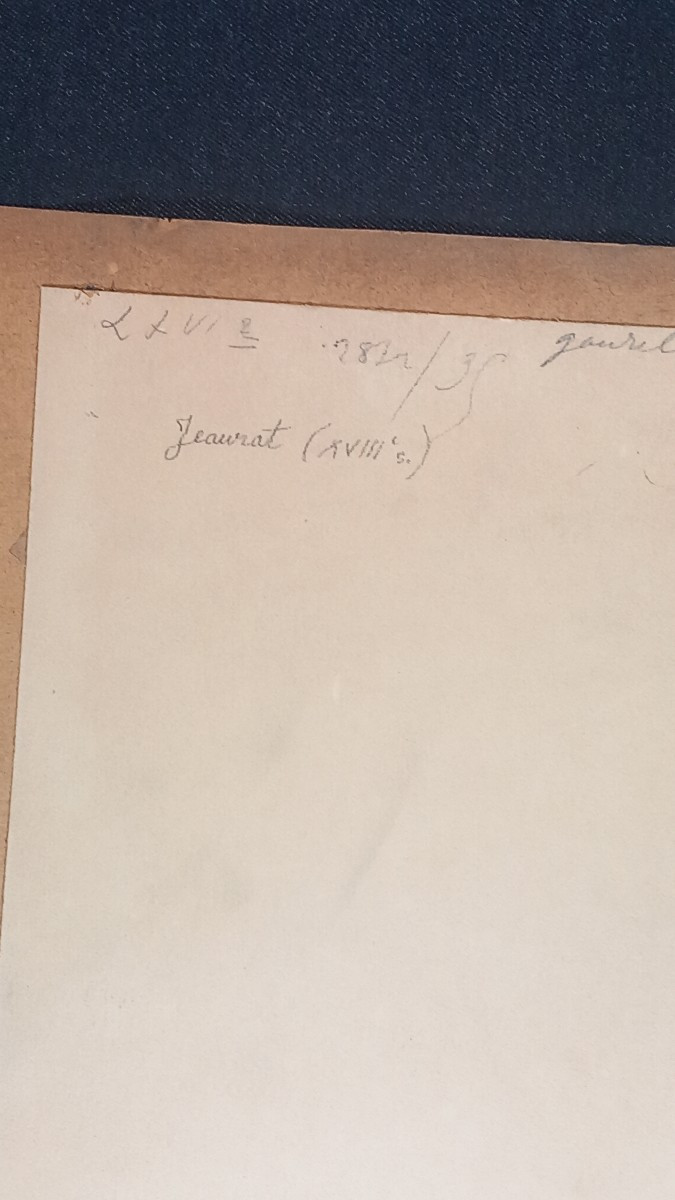
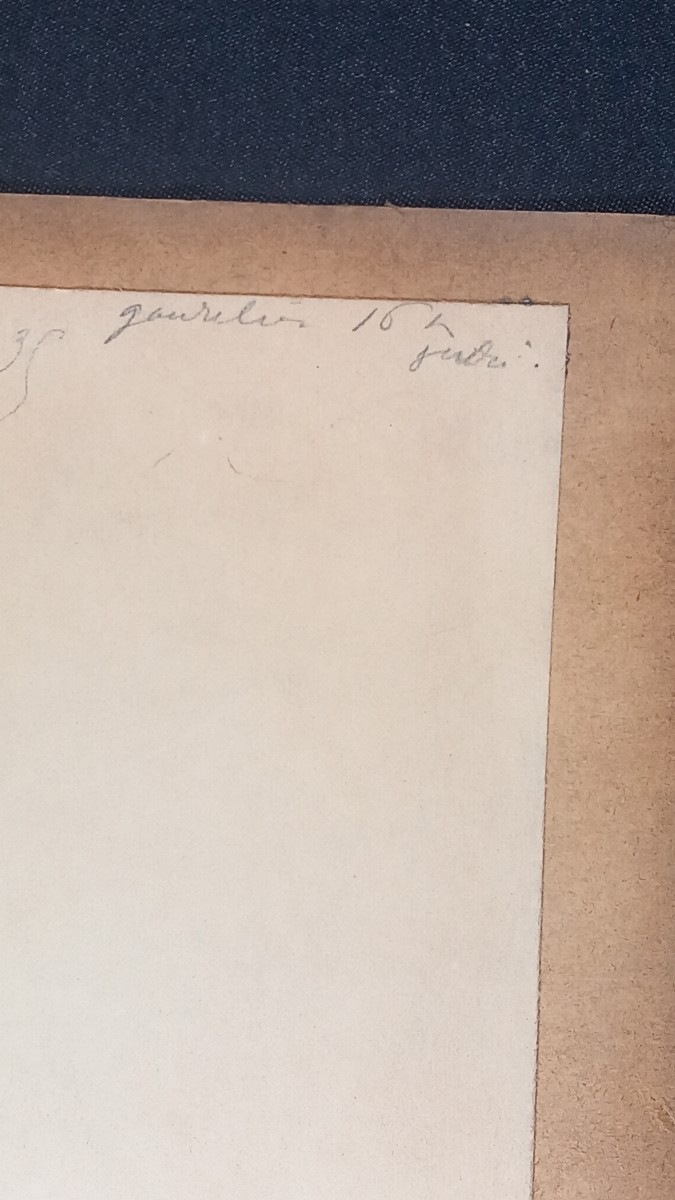


Late 18th century drawing attributed to Etienne Jeaurat. "Young Merchant"Étienne Jeaurat, born February 9, 1699 in Paris and died December 14, 1789 in Versailles, was a French painter and draftsman. Born in a house on the corner of rue Saint-Victor and rue des Fossés Saint-Victor, where his father, Nicolas Jeaurat, and his mother, Marie Bourdillat, both from Vermenton, traded wines under the name of Tête-Noire, and baptized in Saint-Nicolas-du-Chardonnet the day after his birth, Jeaurat was orphaned at a very young age. The most distinguished student of the painter Nicolas Vleughels, who trained him and took him with him to Italy in 1724, when he was appointed director of the school of Rome, he had an excellent official career: approved in 1731 by the Royal Academy, he was received on July 24, 1733 as a history painter, with the adventure of Pyramus and Thisbe as a reception piece. Having become a professor in 1743, he became rector in 1765 and chancellor in 1781. He exhibited at all the salons from 1737 to 1769. He was also a guard of the King's Cabinet at Versailles from 1767. His elder brother, Edme, was an engraver. The latter's son, Nicolas Henry Jeaurat, also a painter, studied under his uncle. The main engravers to have worked, in the 18th century, after Jeaurat, were: Tardieu, Lépicié, Claude-Augustin Duflos, Lempereur, Pasquier, Aliamet, Dominique Sornique (d), Beauvarlet, Simon, Bonnet, Lucas, Aubert, Gaillard, Fessard, Daullé and his brother Edme Jeaurat. Two tapestries after Jeaurat are found among the works executed from 1750 to 1791 at the Gobelins factory: one in seven pieces, of the History of Daphnis and Chloe, the other, in four pieces, representing Village Festivals. The models for these tapestries had been executed after special commissions from the entrepreneur Audran. Jeaurat attempted to imitate Chardin, although with less accuracy in observation and less lightness of hand, but it was less his quality as a history painter than the genre scene, and even better in the conversation paintings, in the style of Teniers, which made Jeaurat successful with genre scenes "charming [...] full of movement and strikingly true" depicting the Parisian street or domestic life as in his Pea Scoopers, Salad Peelers or Painter's Move. His Conduct of the Girls of Joy to the Salpêtrière, which was praised in the review of the 1757 Salon in the Mercure de France, undoubtedly remains his best-known work, and his paintings of Parisian street life remain picturesque and precious documents. The choice of these subjects earned him the title of the Vadé of painting by Diderot. Jeaurat, who met Vadé at the dinners of the Société du bout du banc at Jeanne-Françoise Quinault's house, was, in fact, surely influenced by the "fishmonger genre" practiced by Vadé, Piron, Collé Panard or Caylus. Jeaurat painted The Poet Piron at Table with His Friends Gallet and Collé, considered one of the painter's best works. According to Ch. Blanc, Jeaurat nevertheless lacked "verve, enthusiasm, what Diderot called 'the devil in the flesh'. His compositions betray embarrassment, his gaiety has something forced and suspicious about it, like Vadé's parades." According to La Fizelière, at the 1763 salon, Madame de Pompadour upset van Loo, who was escorting her while explaining the paintings, when the marquise passed in front of his Graces Chained by Love without noticing them. Someone said to her: "What, Madame, are you not paying attention to Mr. Van Loo's Graces?" —These, Graces? she said disdainfully; these, Graces! " and she pirouetted on her heels to go and admire a second time the Citrons of Javotte de Jeaurat. Drawing glued on a cardboard, and mounted with old Marie-Louise. Dimensions of the cardboard: 16 x 27.4 cm Dimensions of the Mounting: 21.2 x 29.6 cm
Explore similar pieces and discover your ideal find:
drawings