THIS OBJECT WAS SOLD
18th Century Russian Icon Depicting The Virgin Of Tenderness (eleousa)
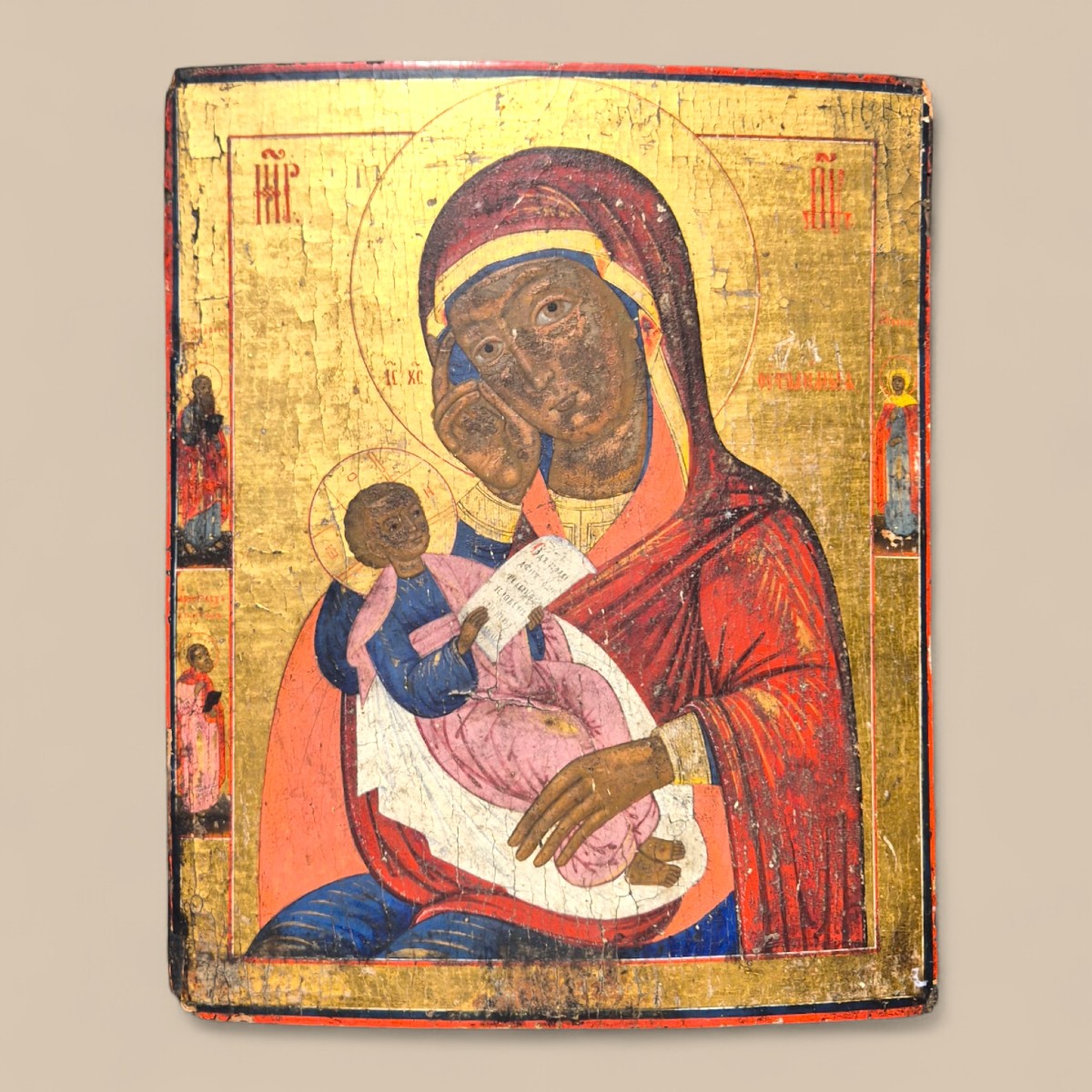
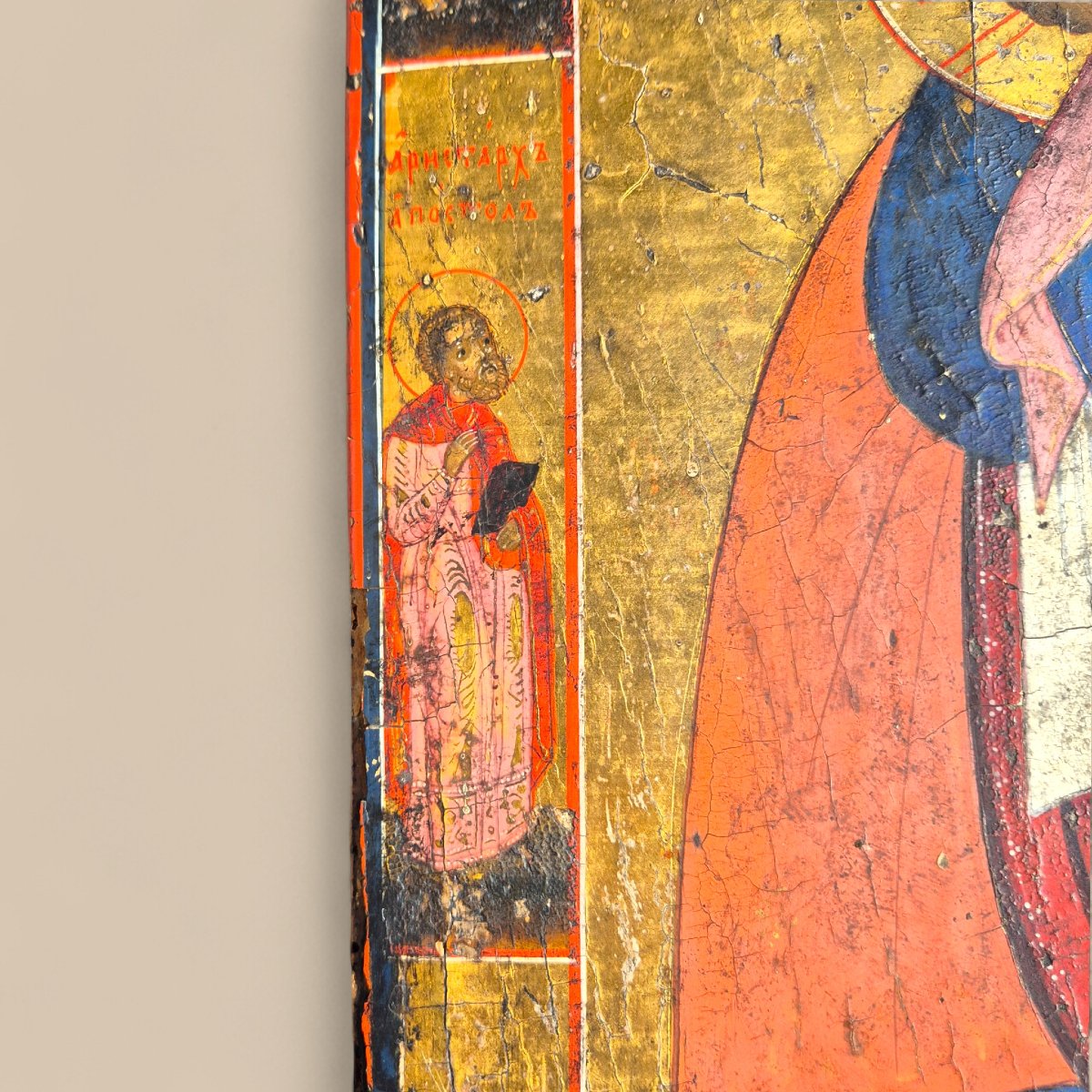
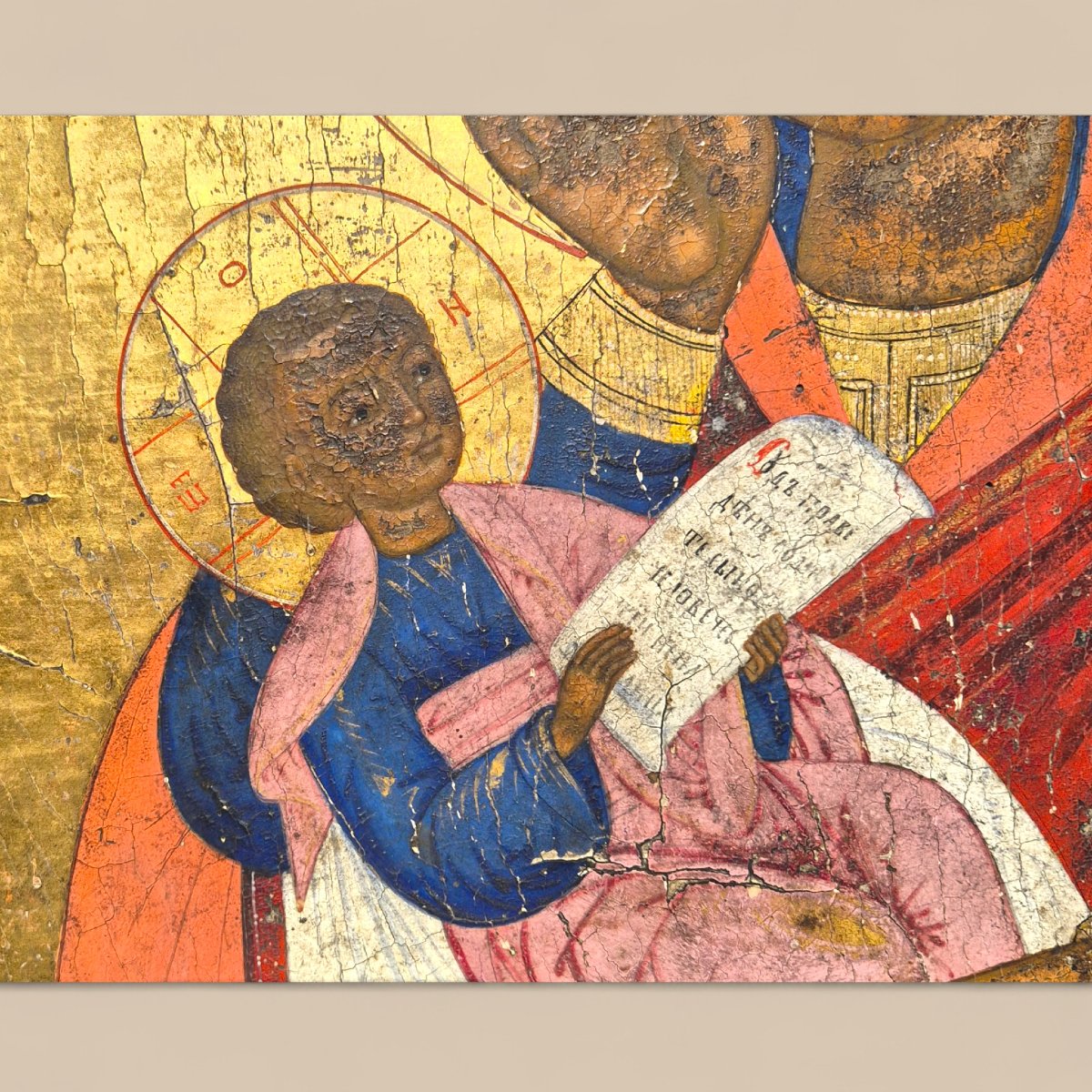
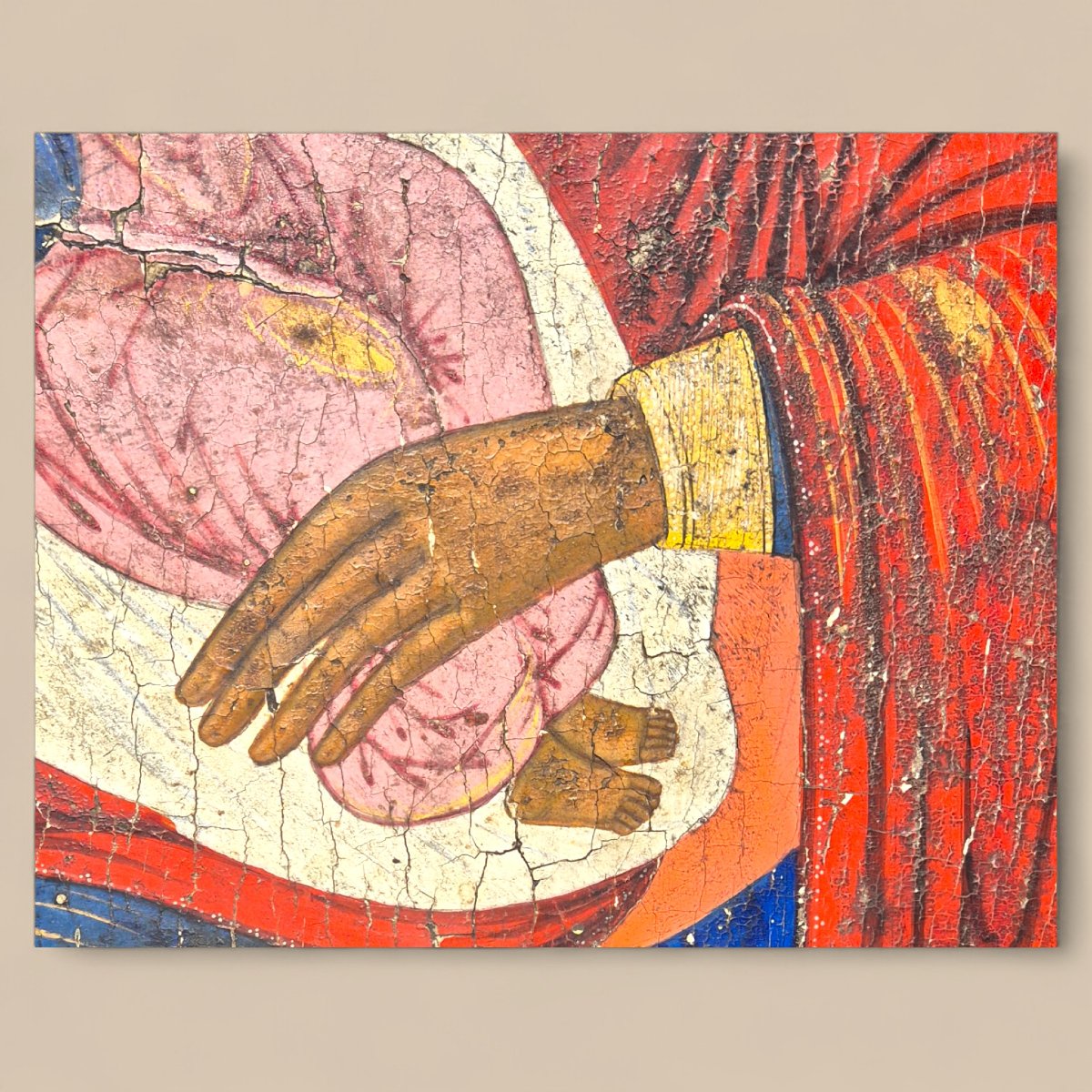
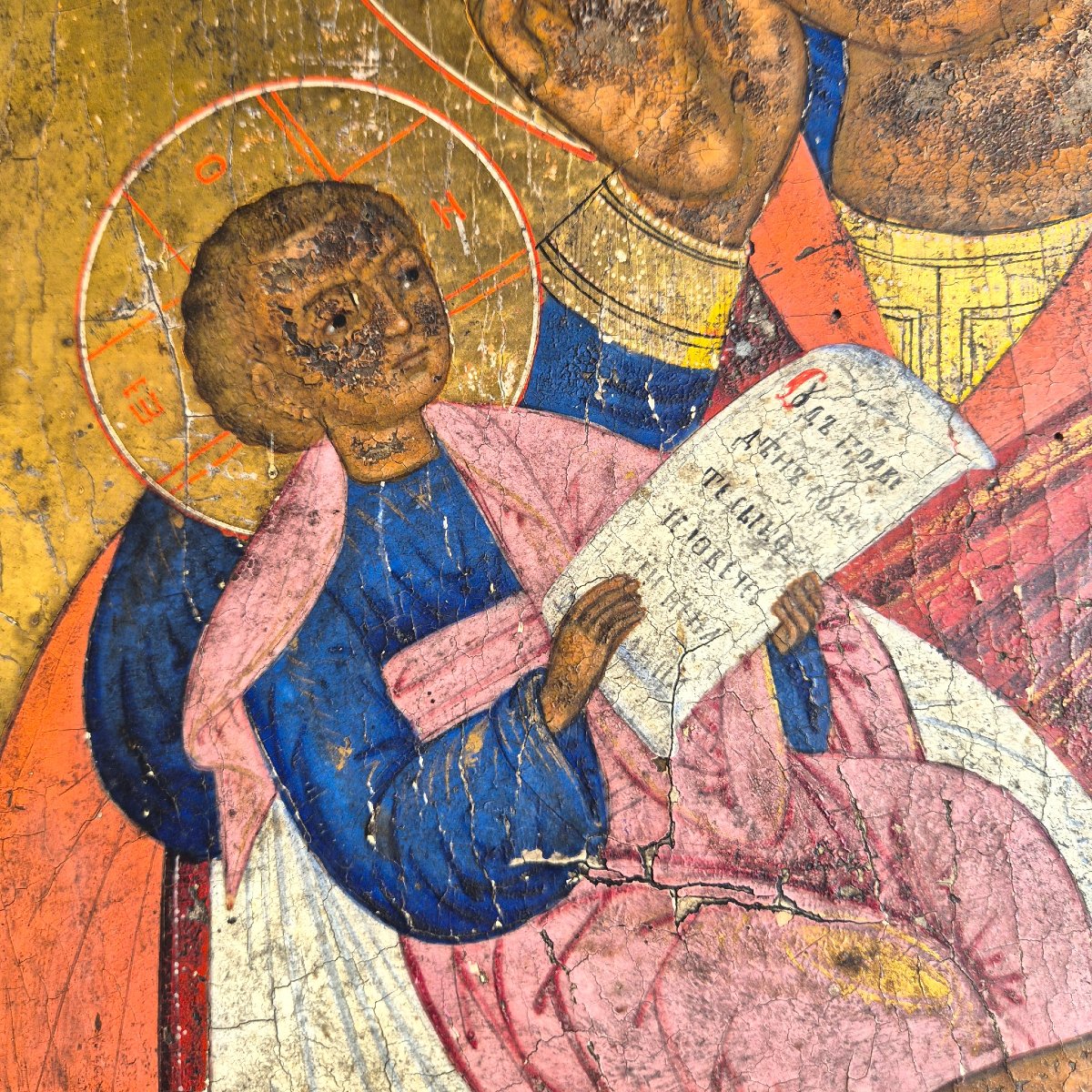
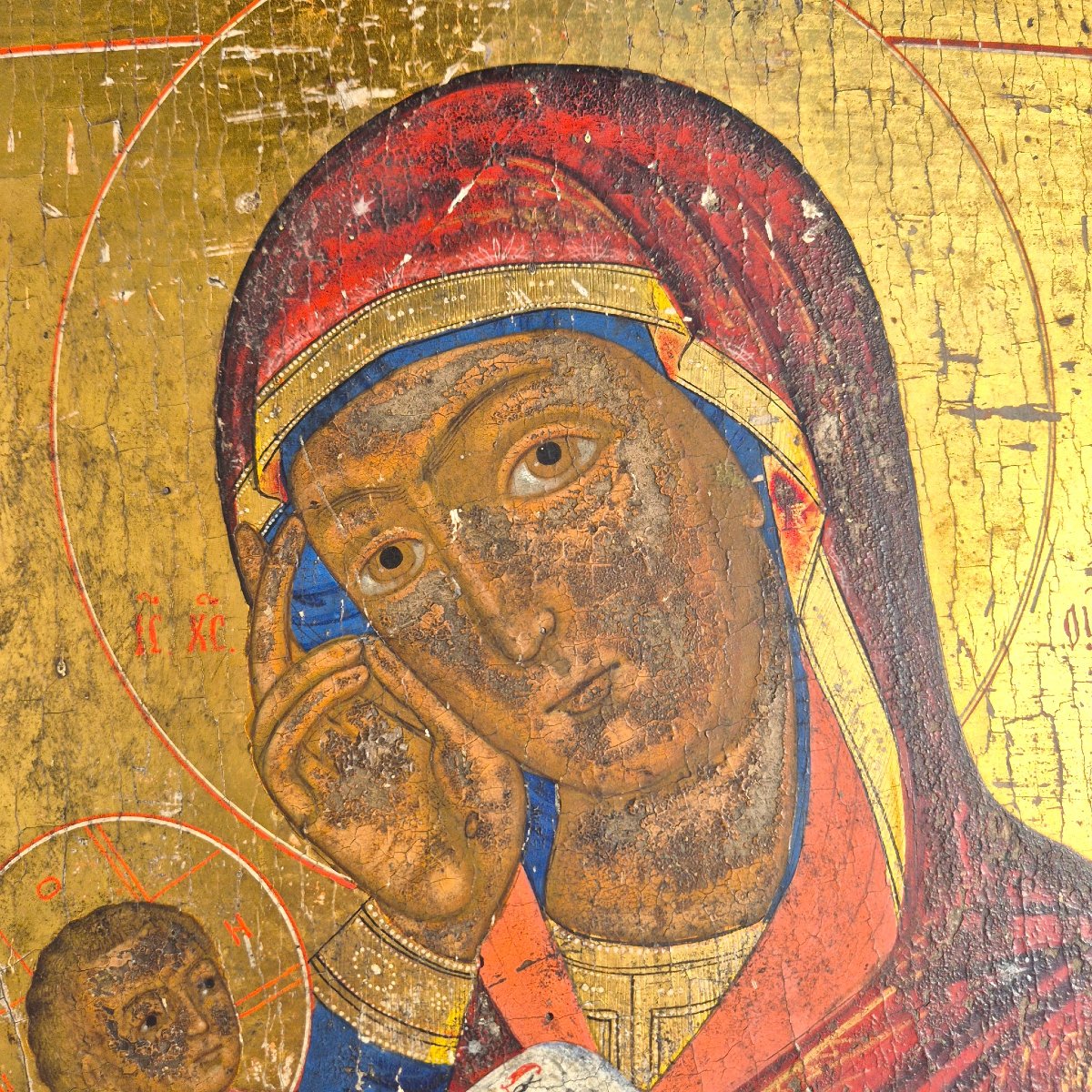
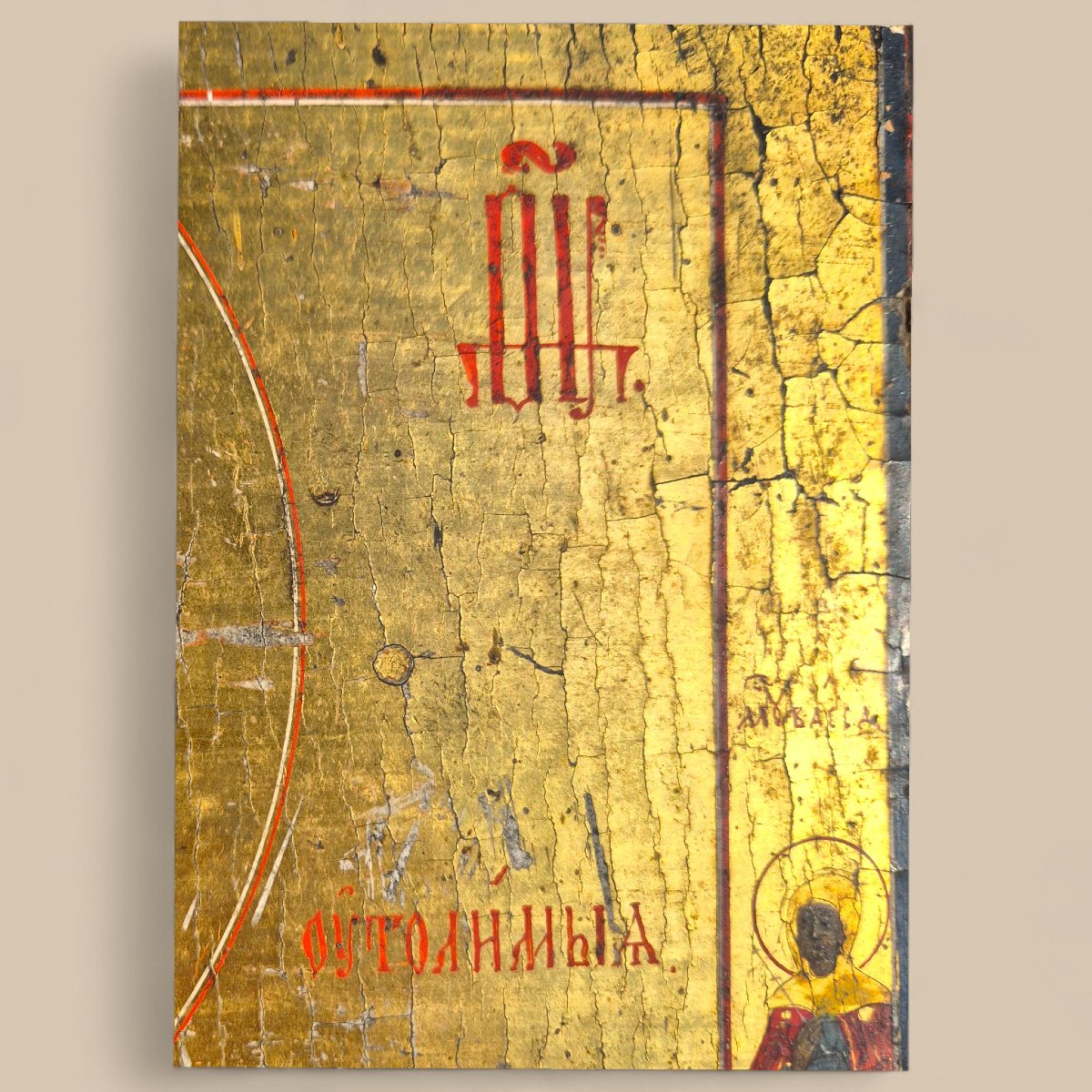
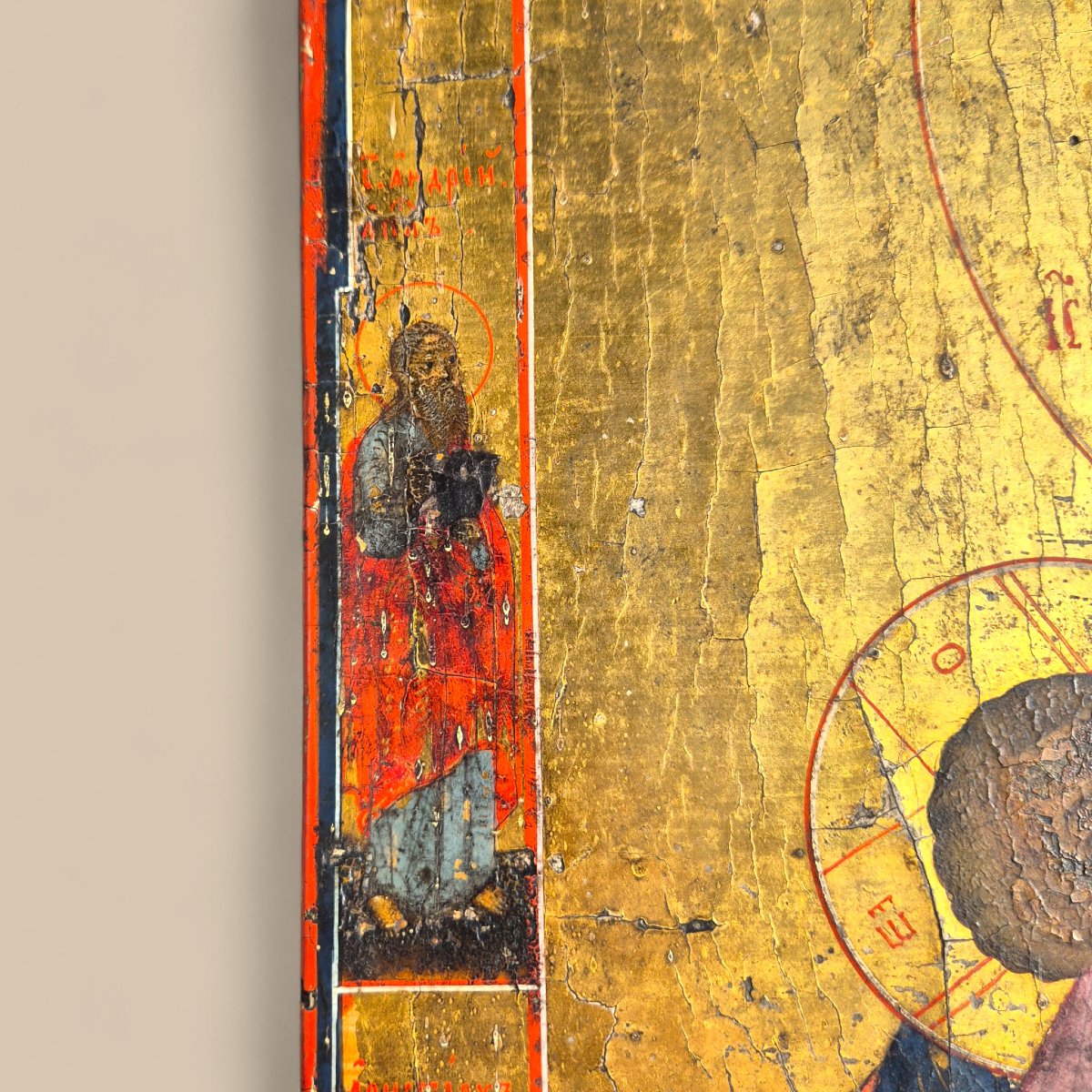
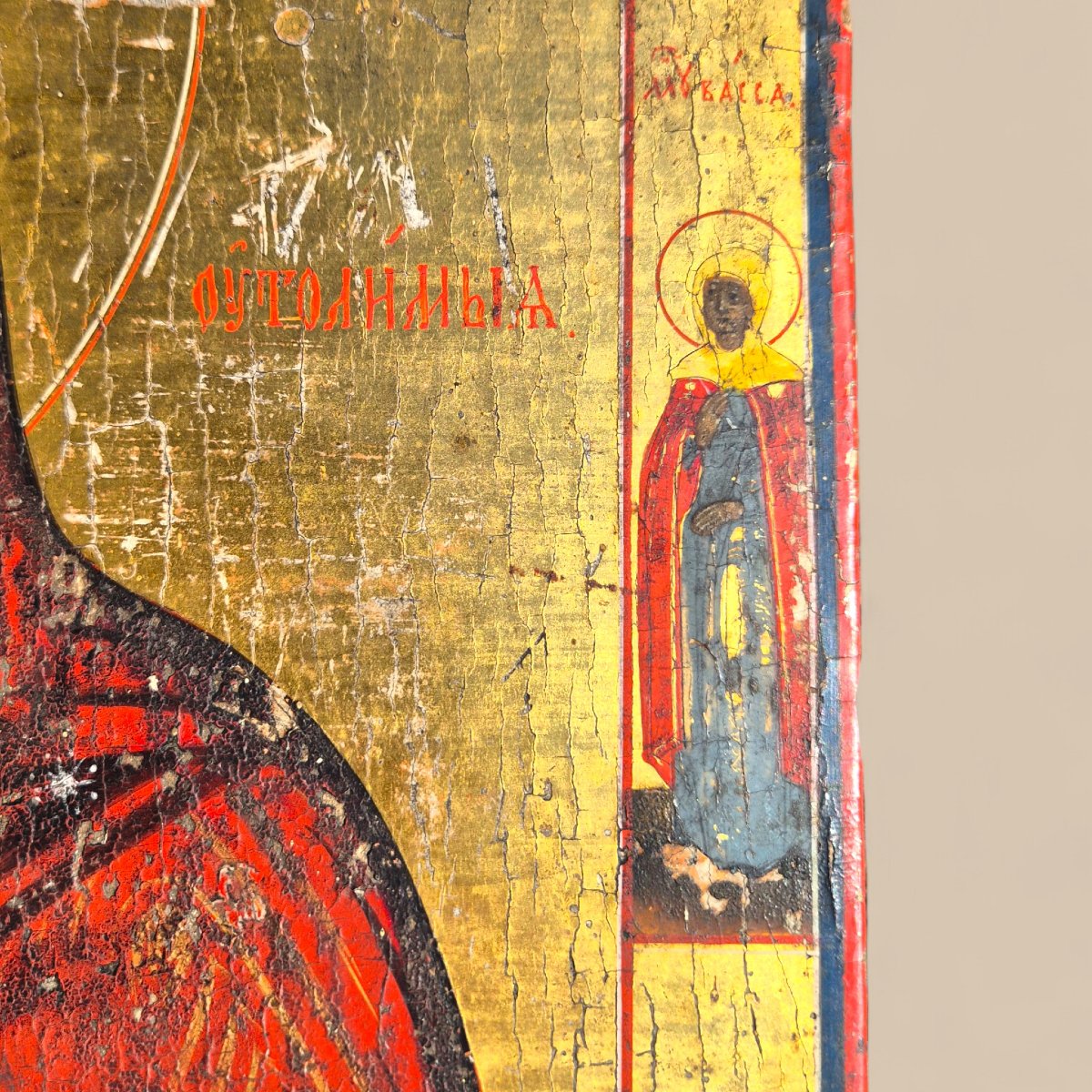
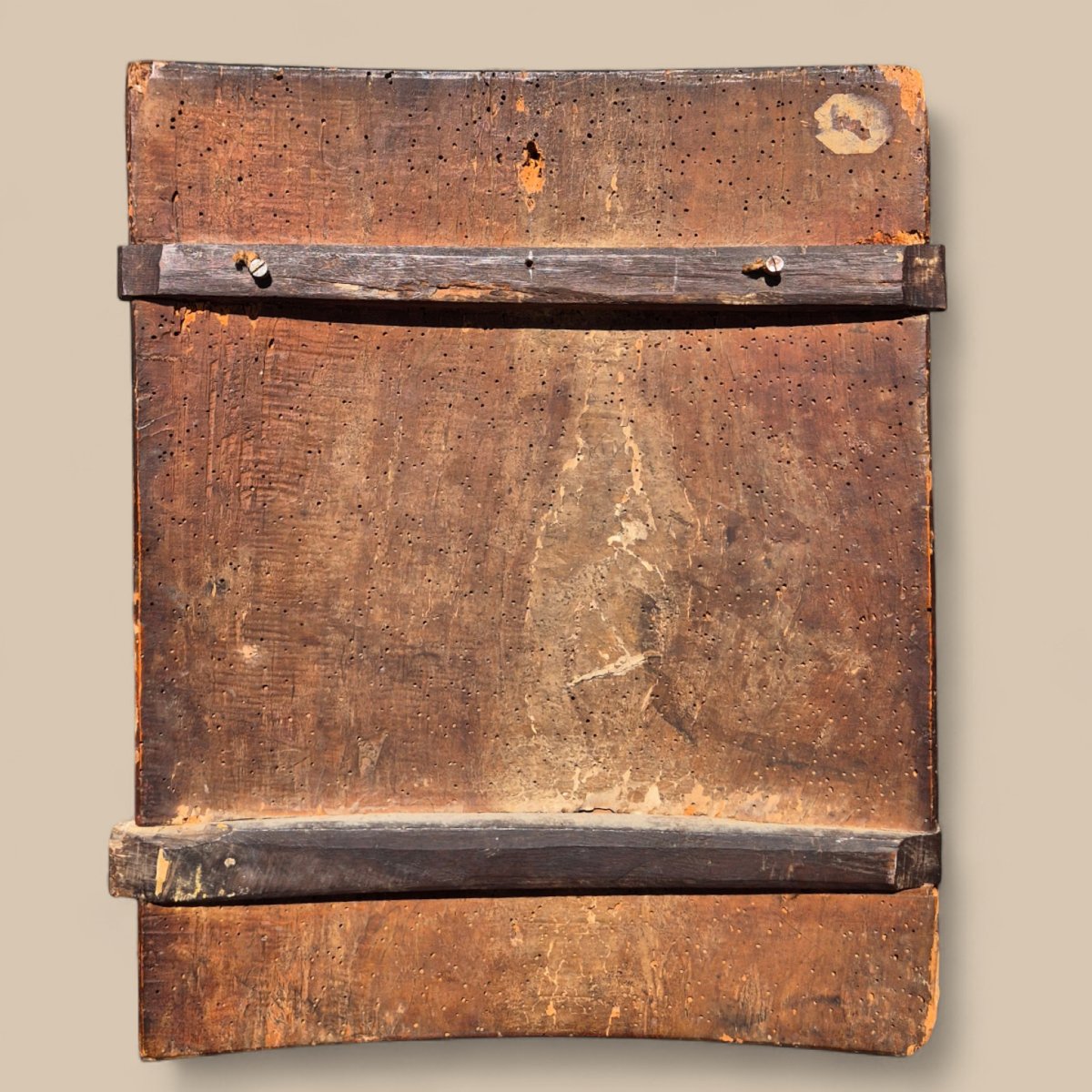
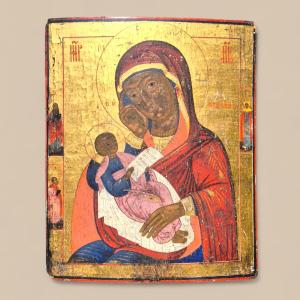


This icon, painted in tempera on wood and enhanced with a gold background, belongs to the great iconographic type of the Virgin of Tenderness (Eleousa).
Dating from the 18th century in Russia, it perpetuates Byzantine canons while revealing a popular and devotional style.
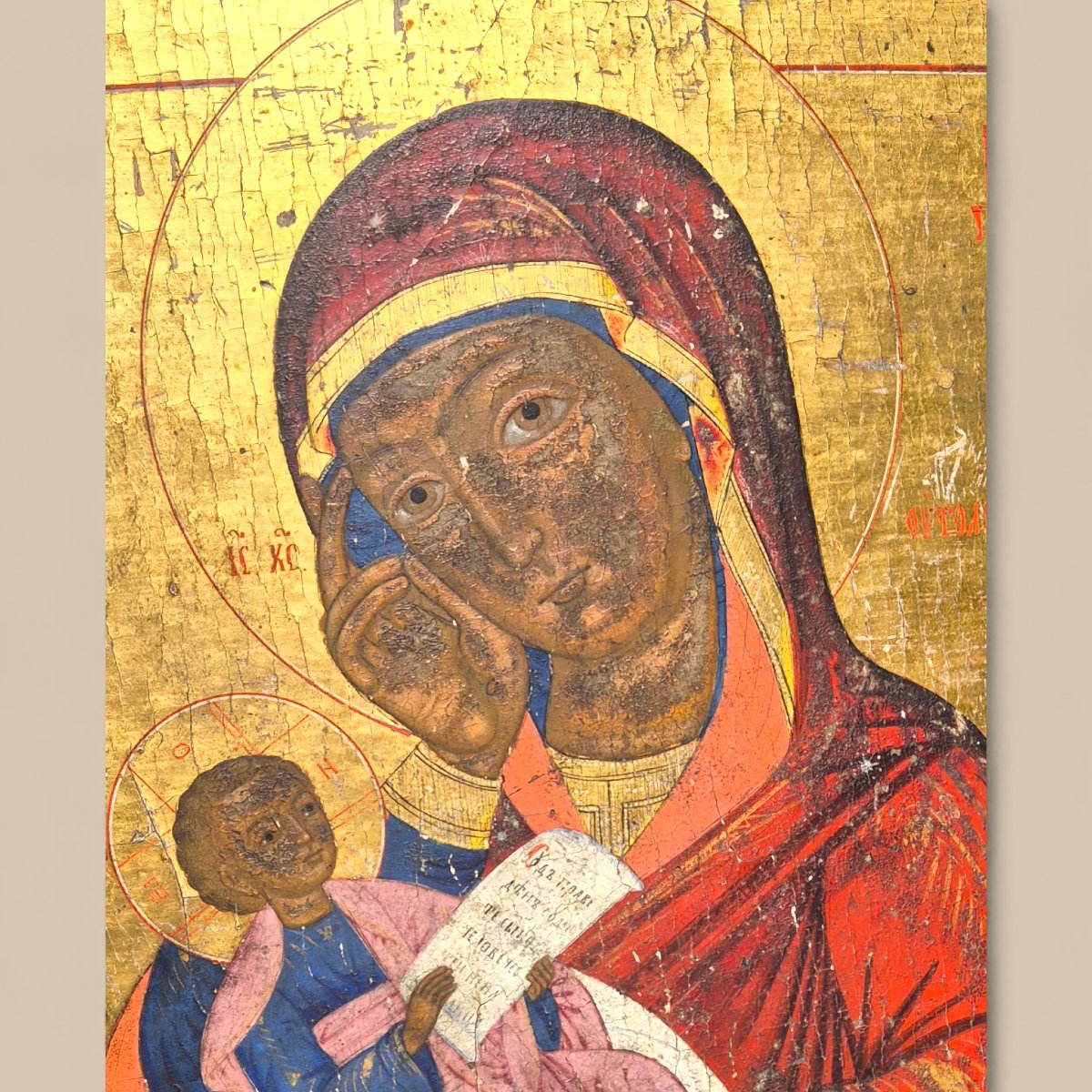
In the center, the Mother of God gently inclines her head toward the Child, whom she supports with her left arm. Their faces touch, in a gesture of intimacy and compassion, symbolizing the union of the two natures—human and divine—of Christ.
The Virgin is dressed in a dark purple maphorion, edged in gold and enhanced with light touches of blue, a sign of her spiritual royalty and her participation in heavenly glory. Three golden stars (on the forehead and shoulders, here partially erased) recall her triple virginity. The cracked golden background represents the uncreated light of the divine Kingdom: it is not a simple decoration but a mystical presence.
The red inscriptions at the top left and right of the Virgin — ΜΡ ΘΥ (abbreviation of Μήτηρ Θεοῦ, “Mother of God”) — confirm her sacred identity.
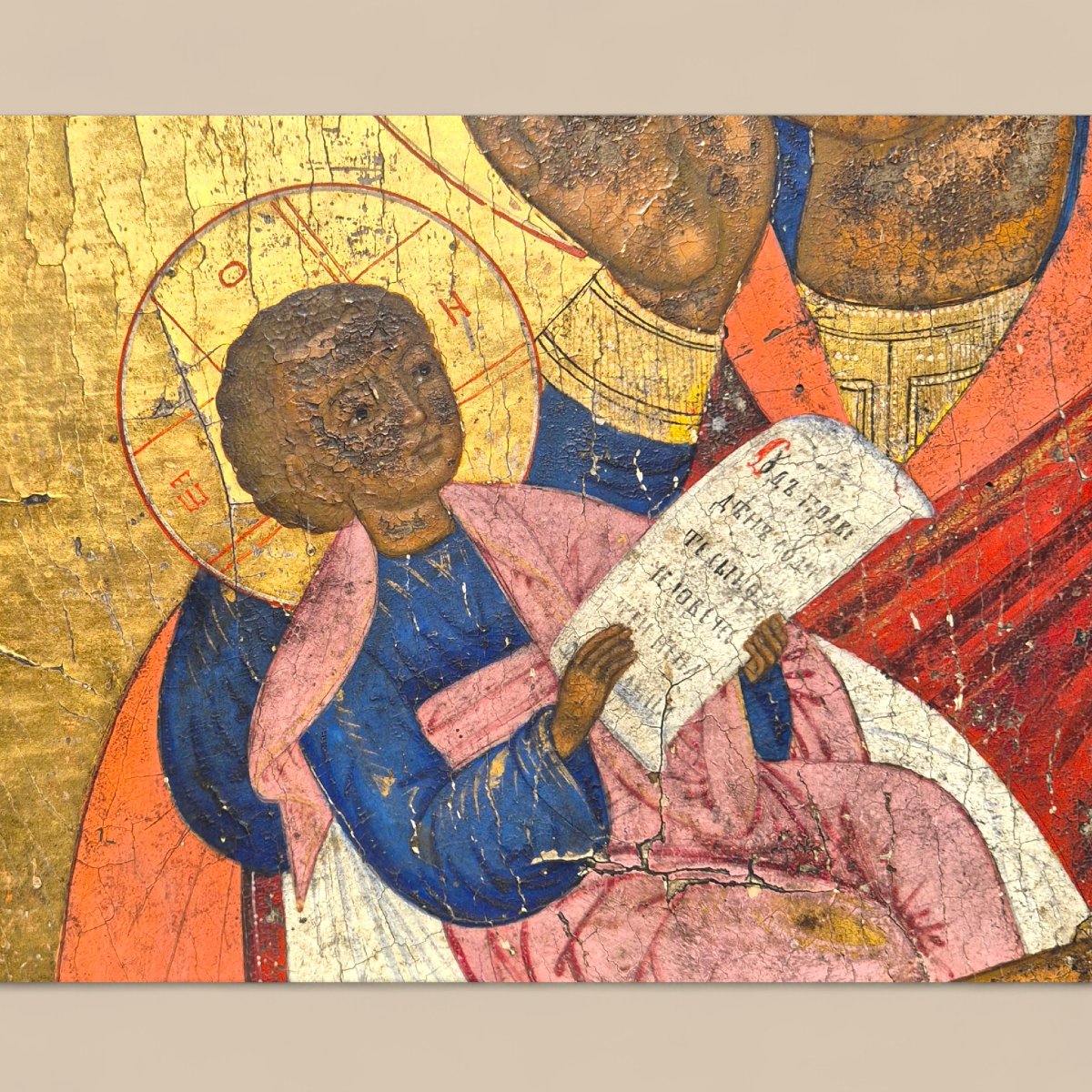
To the left of the Child’s head, the letters IC XC designate “Jesus Christ” (Ἰησοῦς Χριστός).
The Child, dressed in a blue chiton and a pink himation, blesses with his right hand while in his left he holds an unfurled scroll, symbolizing the divine Word and the fulfilled Law. This gesture presents him as the incarnate Logos, bearer of Revelation.
On the left edge, two vertical cartouches present two full-length saints: At the top, a bishop in omophorion, identifiable as Saint Nicholas of Myra, patron saint of miracles and charity. Below, a holy monk, dressed in brown, probably Saint Sergius of Radonezh or Saint Anthony the Great, a figure of renunciation and the spiritual life.
On the right margin, a holy martyr is depicted standing, holding a cross: an attribute of her martyrdom and triumphant faith. Her name, partially legible in red, probably evokes Saint Paraskeva Piatnitsa, highly venerated in 18th-century Russia.
These saints, arranged at the margins, act as secondary intercessors, mediators between the viewer and the Virgin.
They frame the central scene and form a kind of visual litany: the prayer of the faithful joins theirs.
The style, both rigorous and expressive, betrays a regional Russian origin, probably from a provincial workshop: the features are accentuated, the complexions dark, the clothes stylized in flat tints broken by light.
The painter respects the Byzantine canons, while introducing a softer emotional sensitivity, specific to 18th-century production. Thus, the icon is not only an object of art: it is a place of presence, a door to the sacred, designed for prayer and contemplation.
Dating from the 18th century in Russia, it perpetuates Byzantine canons while revealing a popular and devotional style.
In the center, the Mother of God gently inclines her head toward the Child, whom she supports with her left arm. Their faces touch, in a gesture of intimacy and compassion, symbolizing the union of the two natures—human and divine—of Christ.
The Virgin is dressed in a dark purple maphorion, edged in gold and enhanced with light touches of blue, a sign of her spiritual royalty and her participation in heavenly glory. Three golden stars (on the forehead and shoulders, here partially erased) recall her triple virginity. The cracked golden background represents the uncreated light of the divine Kingdom: it is not a simple decoration but a mystical presence.
The red inscriptions at the top left and right of the Virgin — ΜΡ ΘΥ (abbreviation of Μήτηρ Θεοῦ, “Mother of God”) — confirm her sacred identity.
To the left of the Child’s head, the letters IC XC designate “Jesus Christ” (Ἰησοῦς Χριστός).
The Child, dressed in a blue chiton and a pink himation, blesses with his right hand while in his left he holds an unfurled scroll, symbolizing the divine Word and the fulfilled Law. This gesture presents him as the incarnate Logos, bearer of Revelation.
On the left edge, two vertical cartouches present two full-length saints: At the top, a bishop in omophorion, identifiable as Saint Nicholas of Myra, patron saint of miracles and charity. Below, a holy monk, dressed in brown, probably Saint Sergius of Radonezh or Saint Anthony the Great, a figure of renunciation and the spiritual life.
On the right margin, a holy martyr is depicted standing, holding a cross: an attribute of her martyrdom and triumphant faith. Her name, partially legible in red, probably evokes Saint Paraskeva Piatnitsa, highly venerated in 18th-century Russia.
These saints, arranged at the margins, act as secondary intercessors, mediators between the viewer and the Virgin.
They frame the central scene and form a kind of visual litany: the prayer of the faithful joins theirs.
The style, both rigorous and expressive, betrays a regional Russian origin, probably from a provincial workshop: the features are accentuated, the complexions dark, the clothes stylized in flat tints broken by light.
The painter respects the Byzantine canons, while introducing a softer emotional sensitivity, specific to 18th-century production. Thus, the icon is not only an object of art: it is a place of presence, a door to the sacred, designed for prayer and contemplation.
Explore similar pieces and discover your ideal find:
Christian Art