

Genre Scene, Attr. Jan Miel
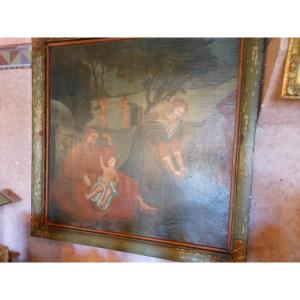
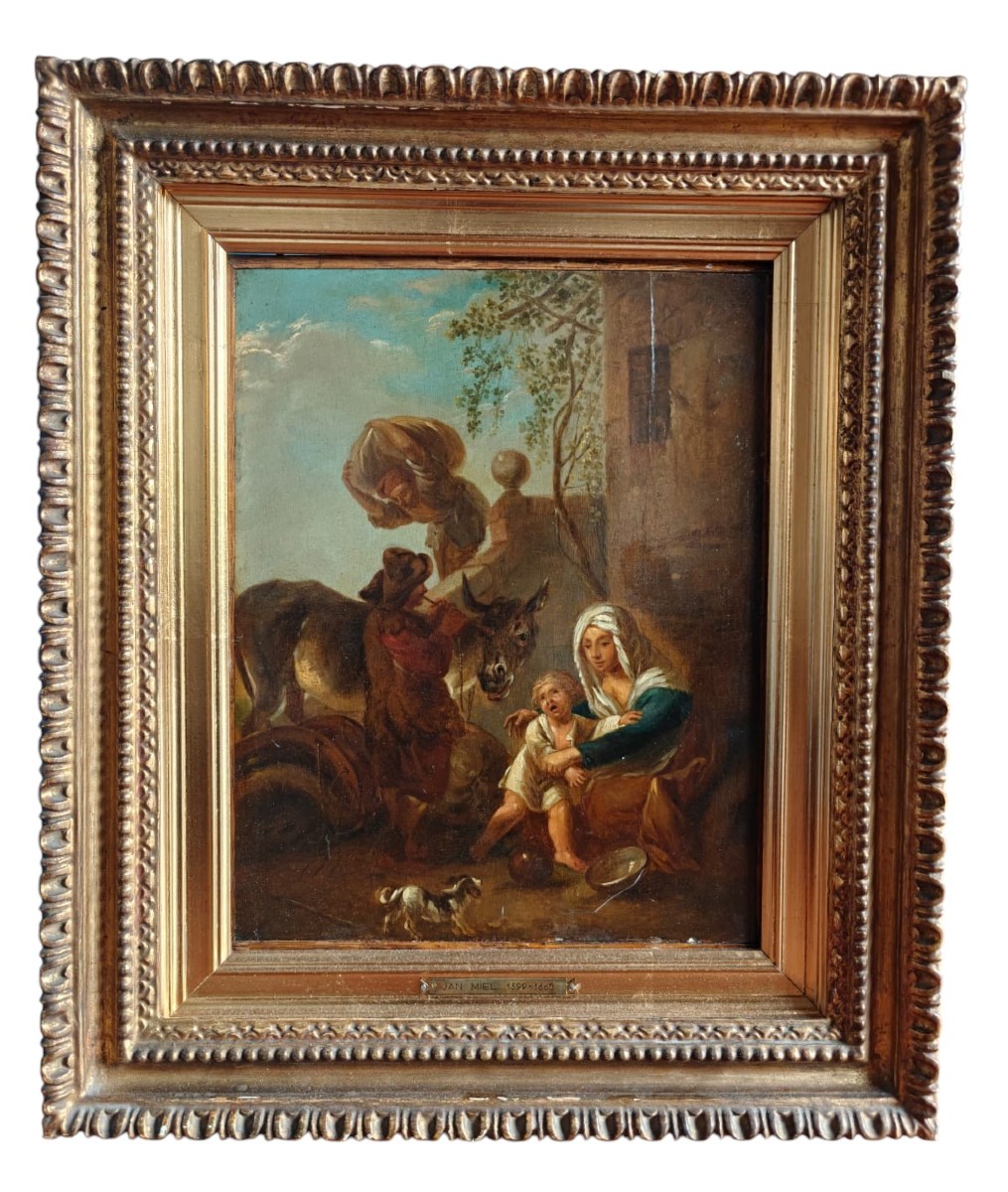
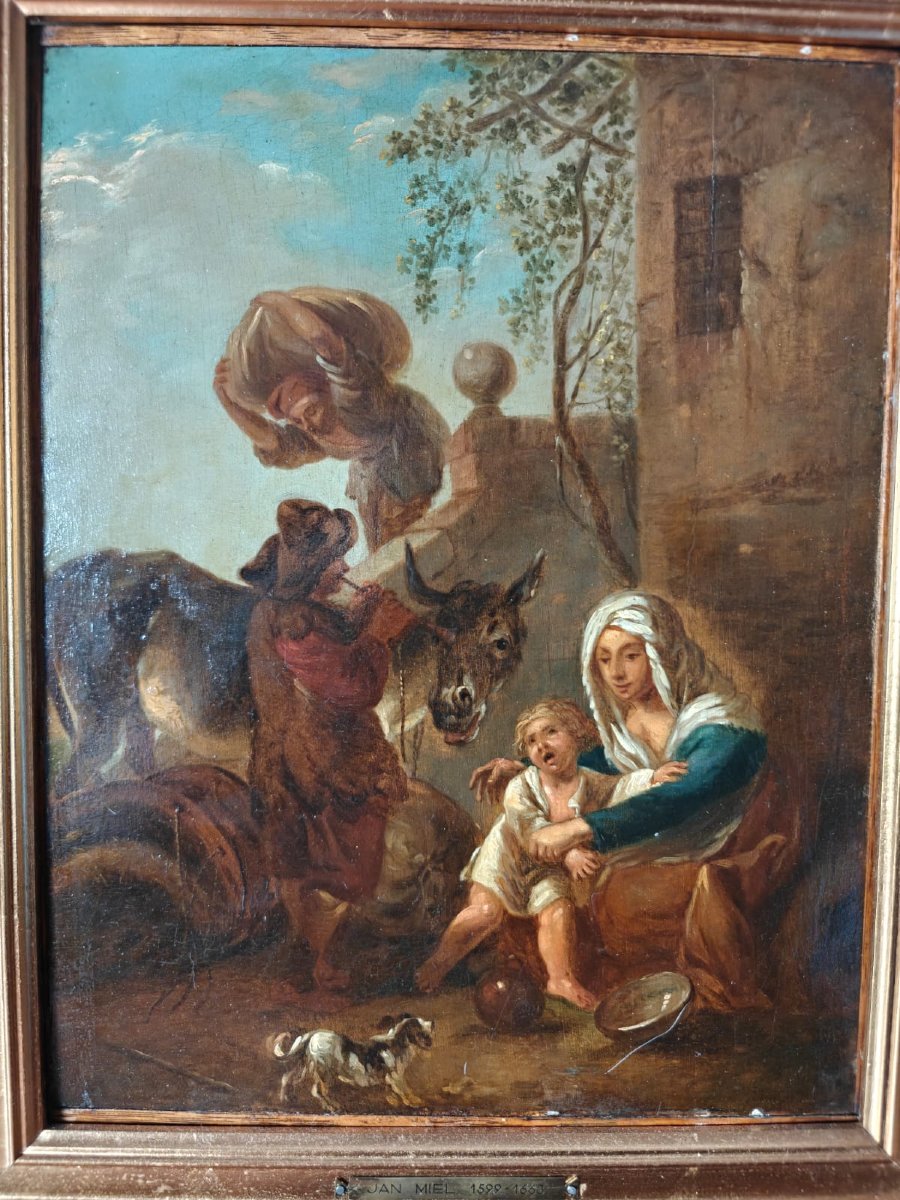
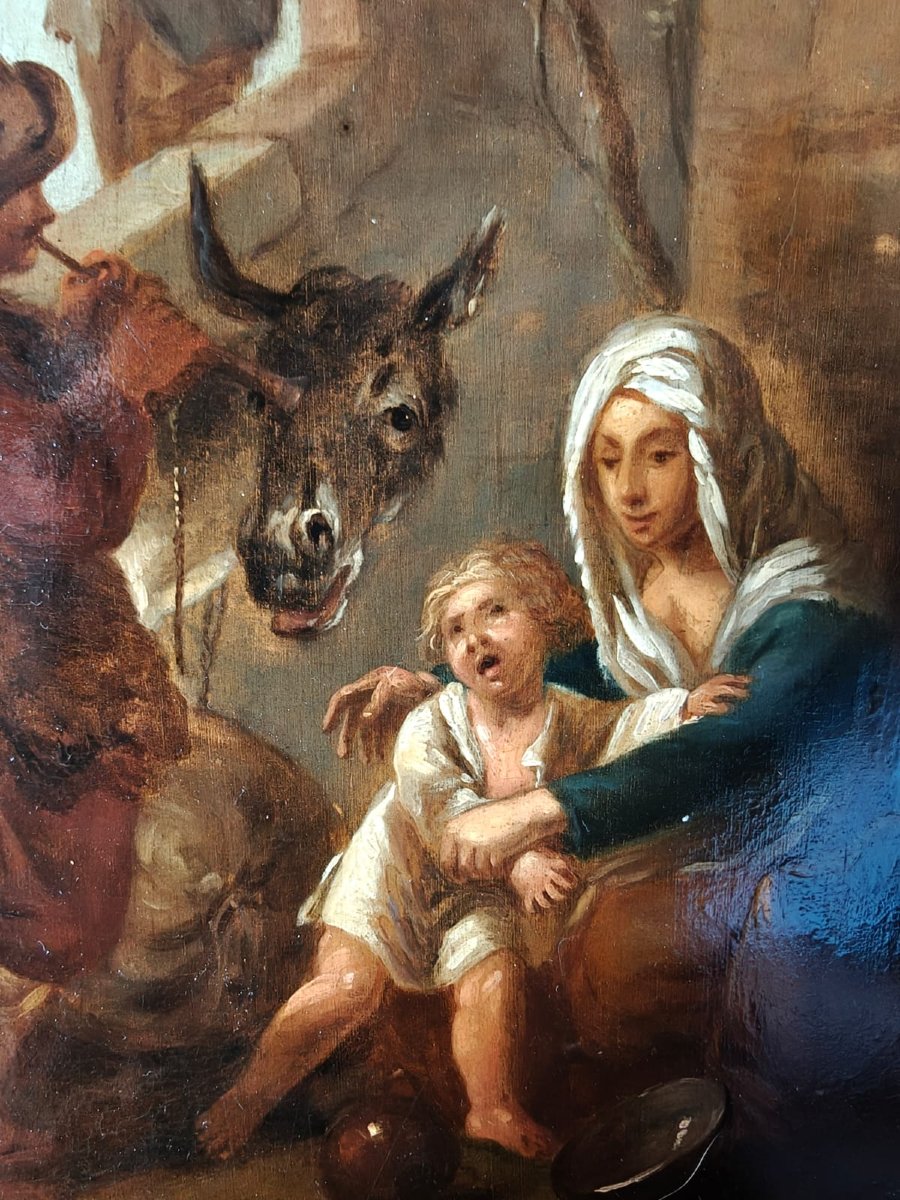
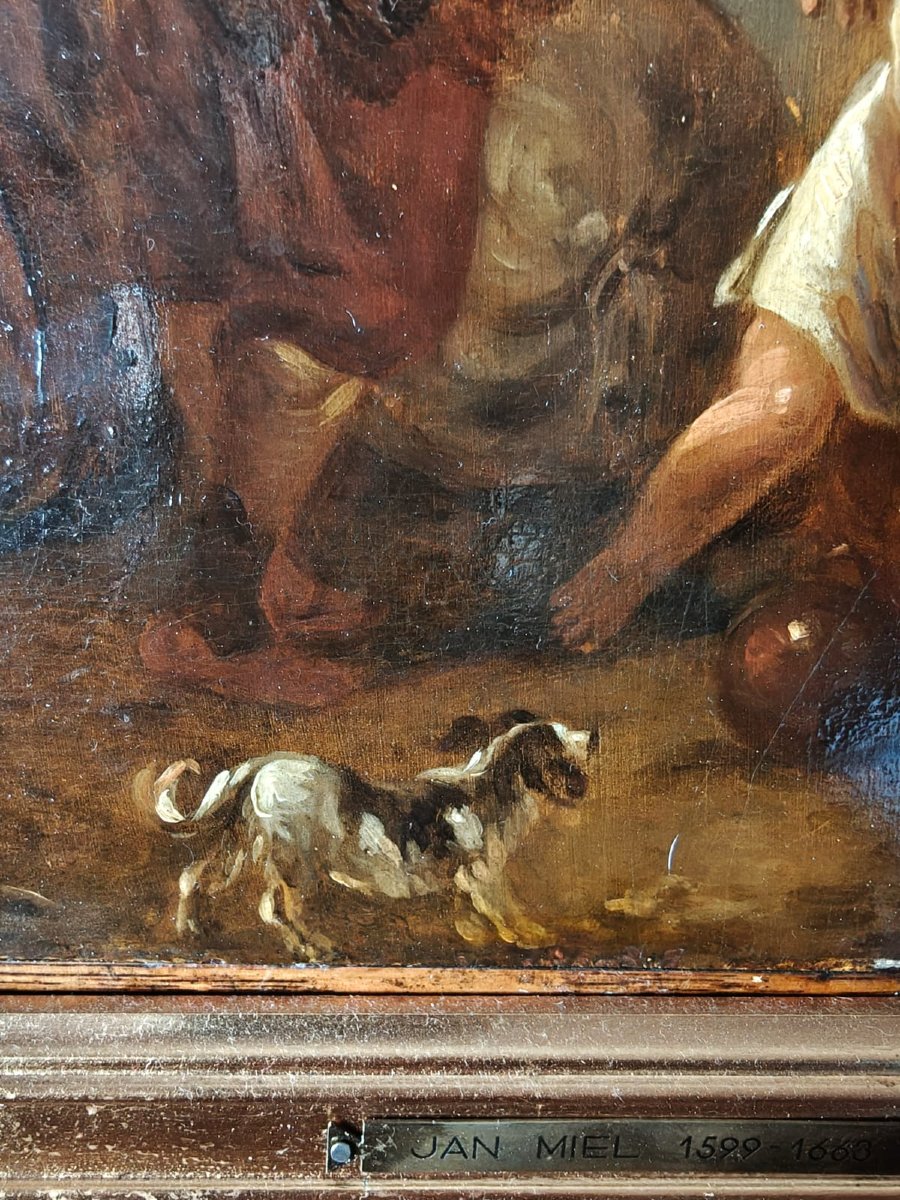
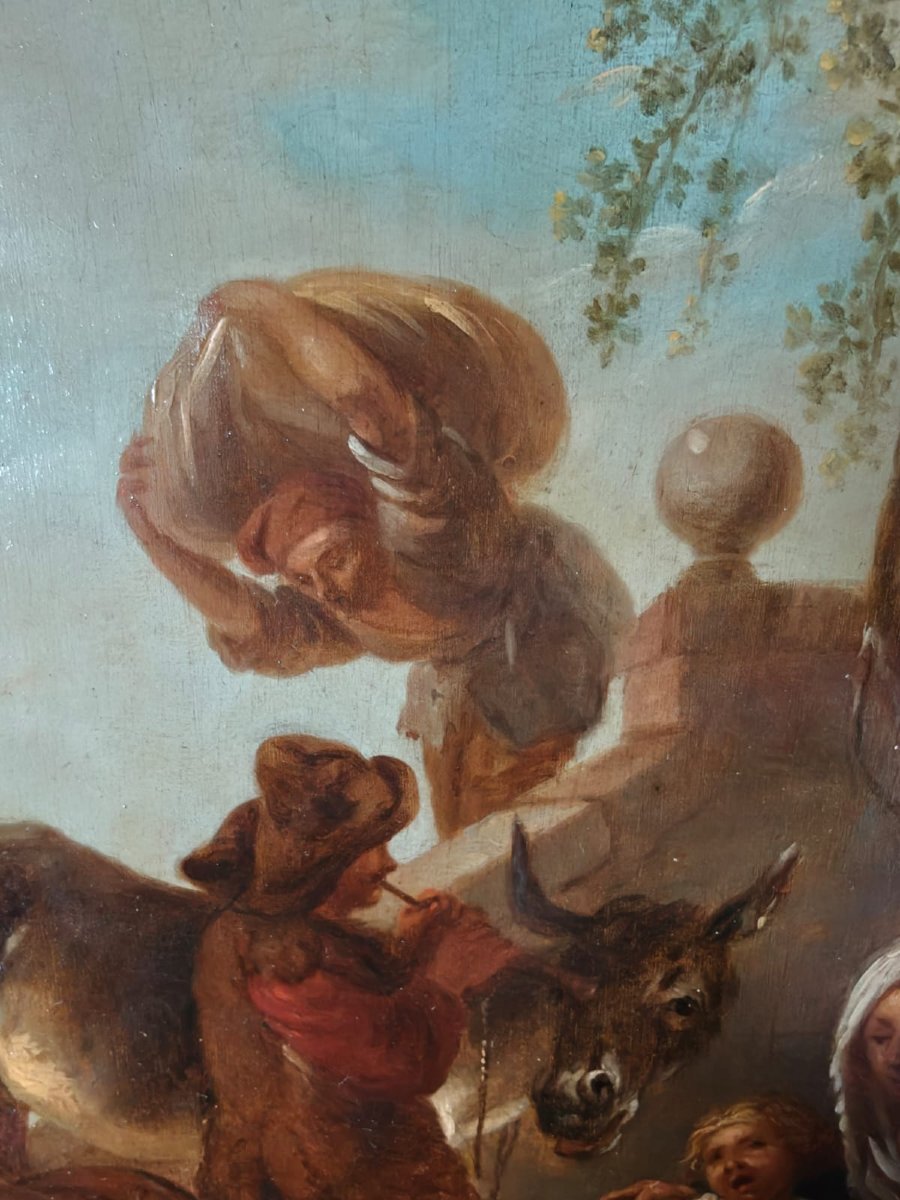
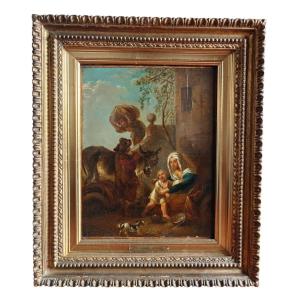
The painting depicts a popular genre scene typical of the Flemish and Italian seventeenth century, and it is attributed to the Flemish painter Jan Miel. In the foreground, a seated mother with her head covered by a white veil holds a fair-haired child in her arms. Next to them stands a man wearing a hat and rustic clothing, engaged with a donkey. In the lower left corner, a small dog appears observing the scene, adding a lively and domestic touch. The setting is rural or peasant, with earthy tones and warm light suggesting late afternoon.
These features are highly consistent with Jan Miel’s activity during his Roman period, when he produced scenes of popular life with vivid tone and realistic observation. Jan Miel was a Flemish painter born in Antwerp around 1599. After moving to Italy, he spent most of his life in Rome, where he came into contact with the group of the Bamboccianti, Northern artists active in the city who depicted with great realism the daily life of peasants, vagabonds, markets, and taverns. In Rome, he collaborated with artists such as Andrea Sacchi and Guido Reni.
His early works are lively, crowded, and narrative, very detailed in the humble figures and animals. Later, his style became more elegant and influenced by Roman classicism. Towards the end of his life, he worked at the court of the House of Savoy in Turin, where he also devoted himself to frescoes and mythological subjects, though without entirely abandoning popular scenes.
Dimensions: with frame 50 × 44 cm, thickness 5 cm; without frame 32 × 26 cm
These features are highly consistent with Jan Miel’s activity during his Roman period, when he produced scenes of popular life with vivid tone and realistic observation. Jan Miel was a Flemish painter born in Antwerp around 1599. After moving to Italy, he spent most of his life in Rome, where he came into contact with the group of the Bamboccianti, Northern artists active in the city who depicted with great realism the daily life of peasants, vagabonds, markets, and taverns. In Rome, he collaborated with artists such as Andrea Sacchi and Guido Reni.
His early works are lively, crowded, and narrative, very detailed in the humble figures and animals. Later, his style became more elegant and influenced by Roman classicism. Towards the end of his life, he worked at the court of the House of Savoy in Turin, where he also devoted himself to frescoes and mythological subjects, though without entirely abandoning popular scenes.
Dimensions: with frame 50 × 44 cm, thickness 5 cm; without frame 32 × 26 cm
2 600 €
Period: 17th century
Style: Renaissance, Louis 13th
Condition: Perfect condition
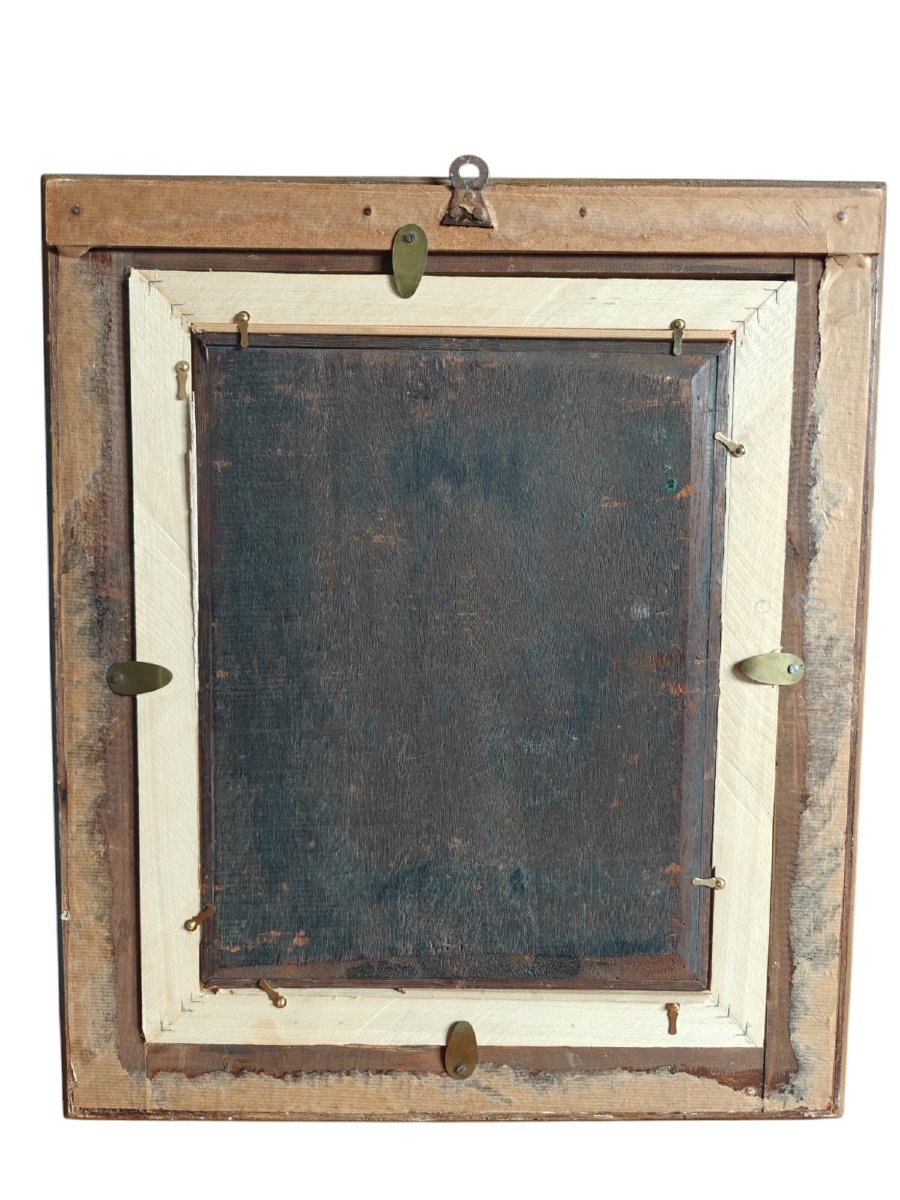
Material: Oil painting on wood
Width: 44 cm
Height: 50 cm
Depth: 5 cm
Reference (ID): 1624029
Availability: In stock
Print