THIS OBJECT WAS SOLD
Fishermen Sheltered By The Cliffs – Claude Joseph Vernet (1714 – 1789)

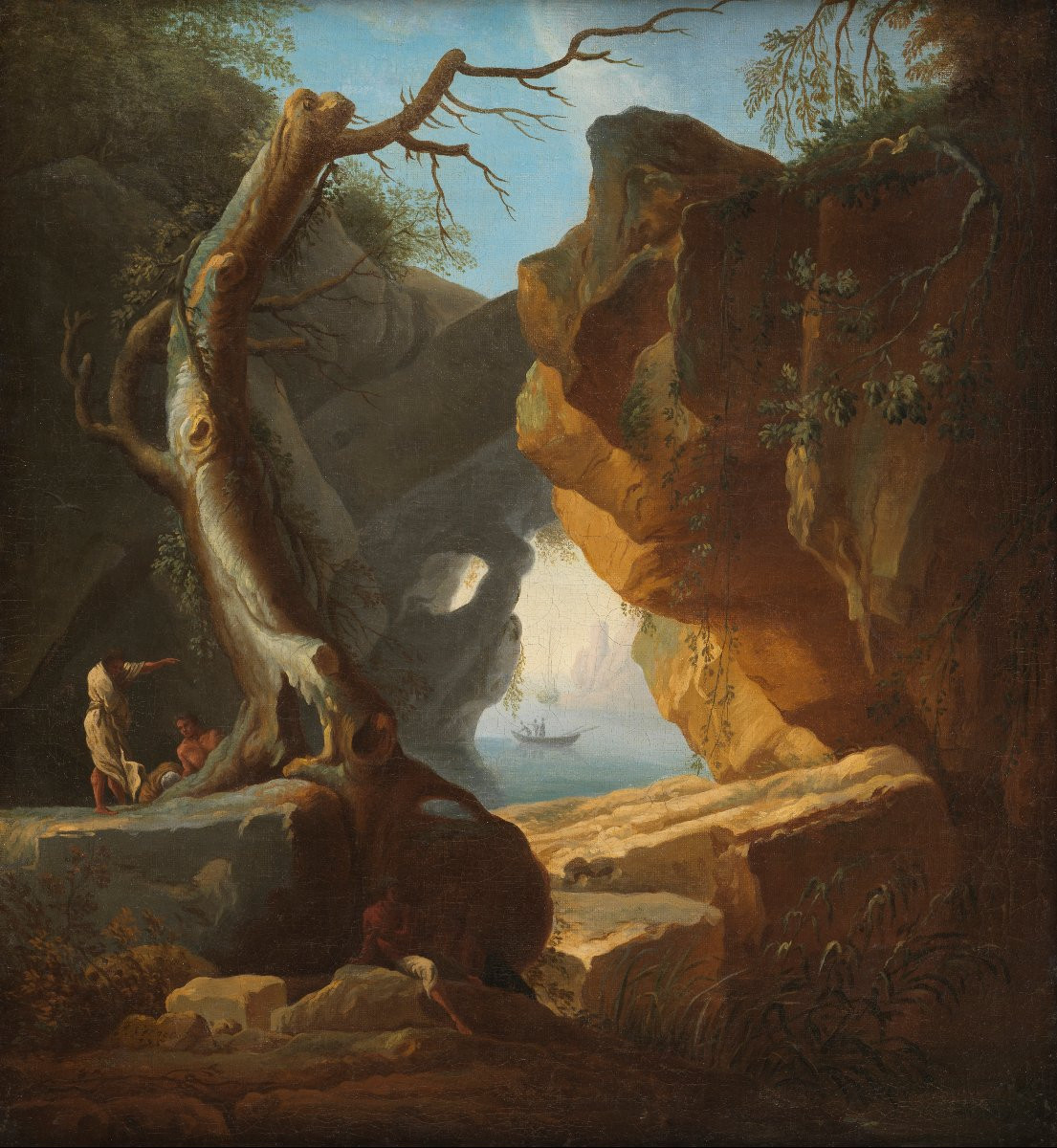
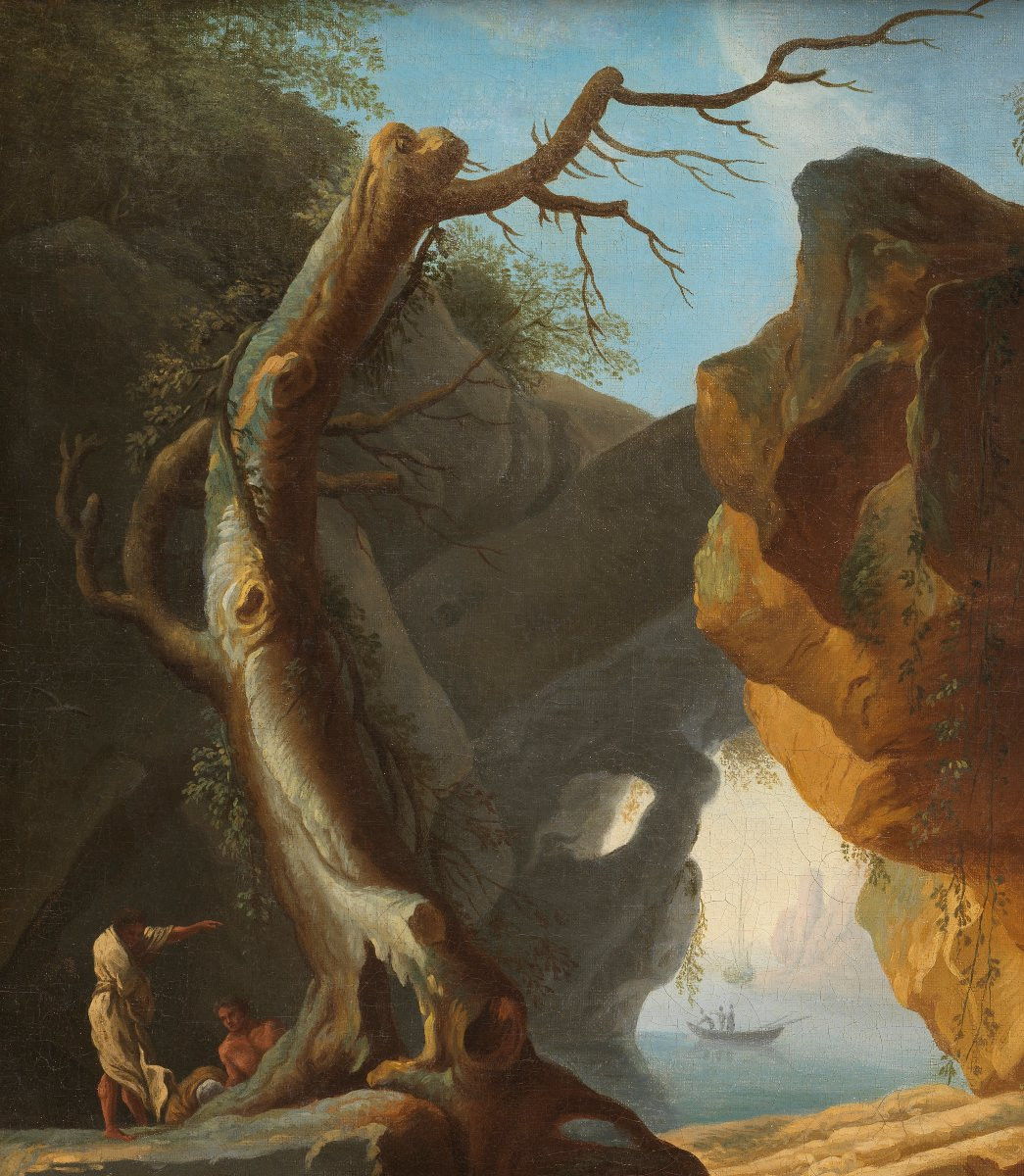
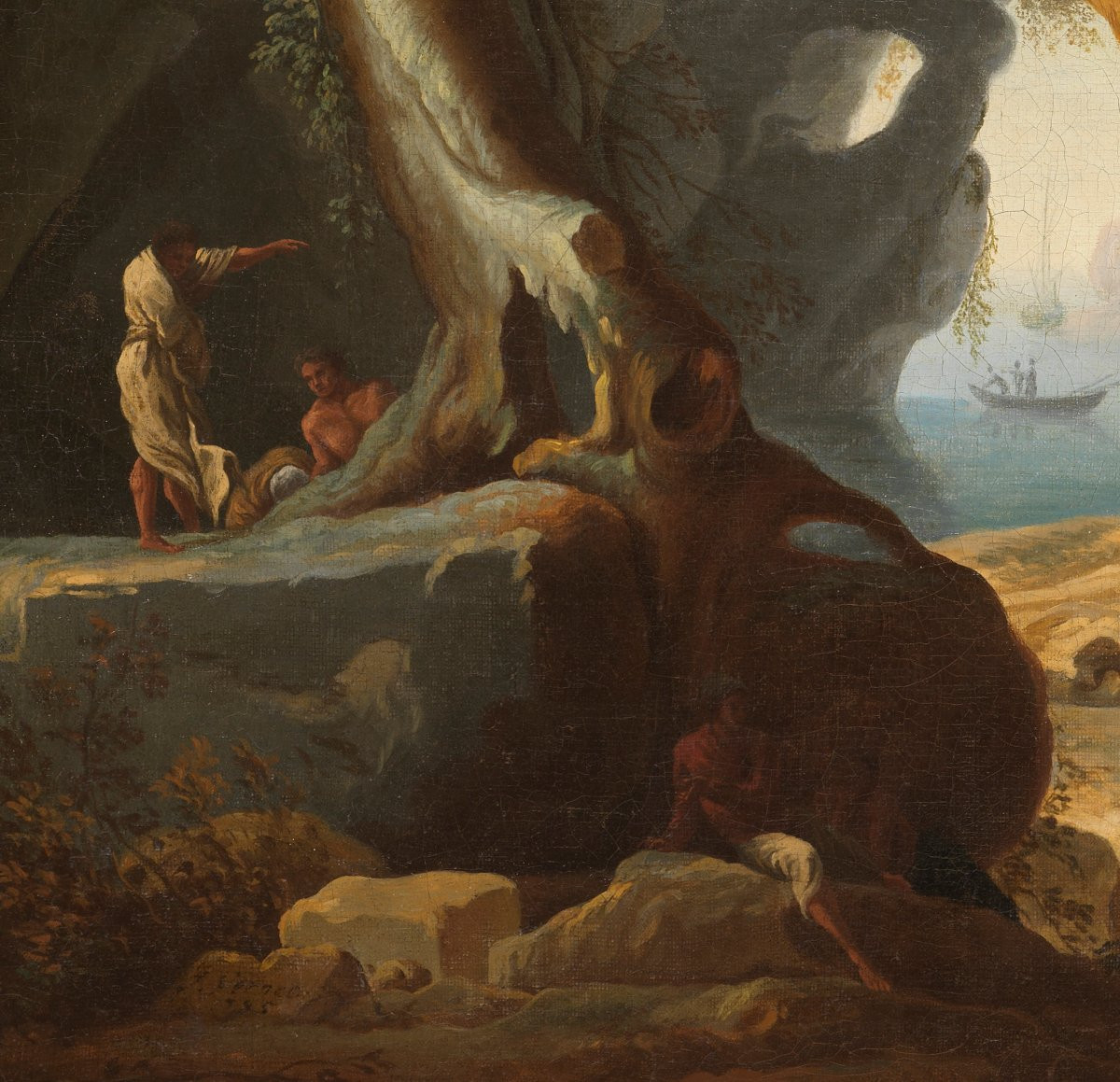
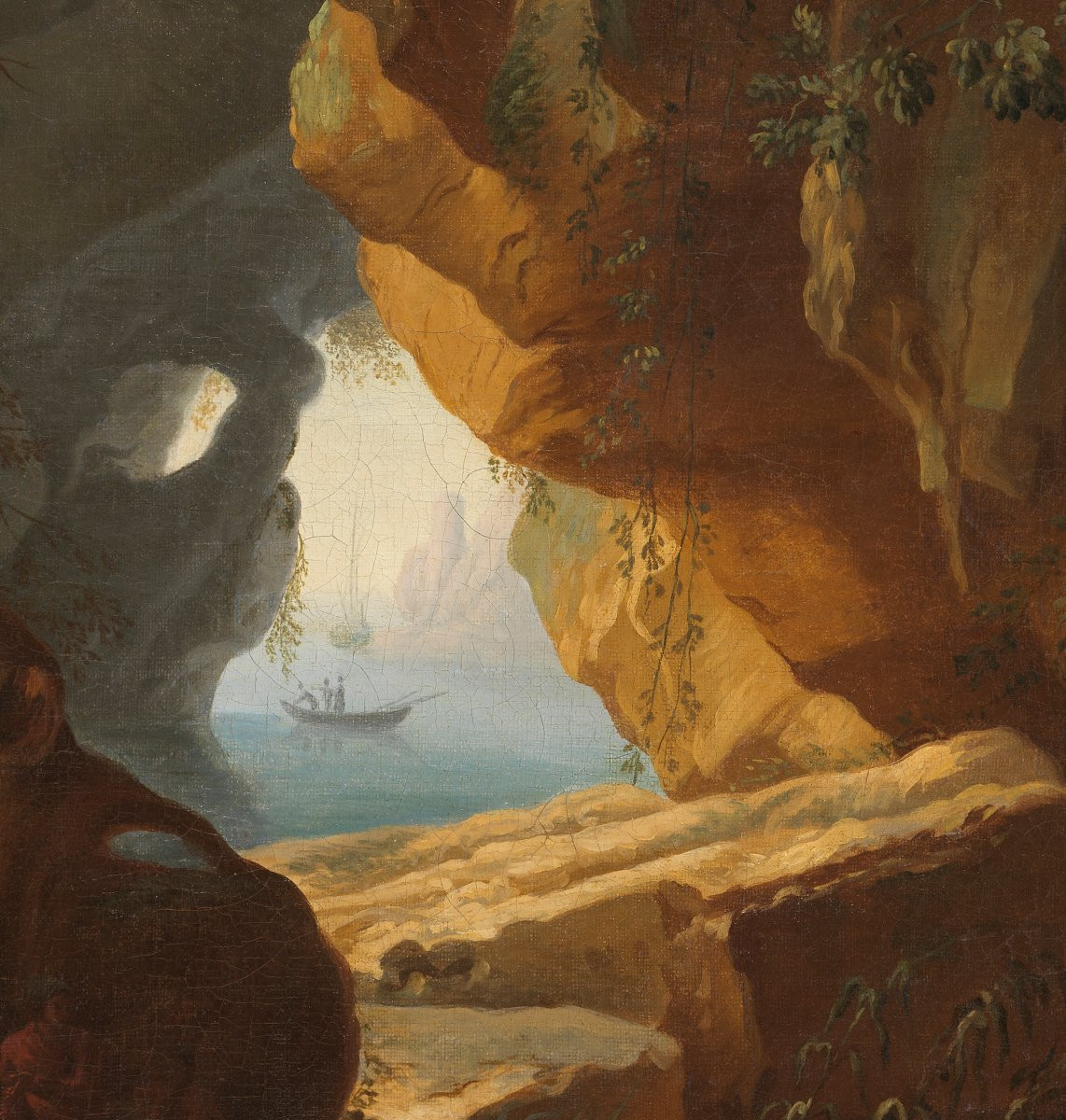


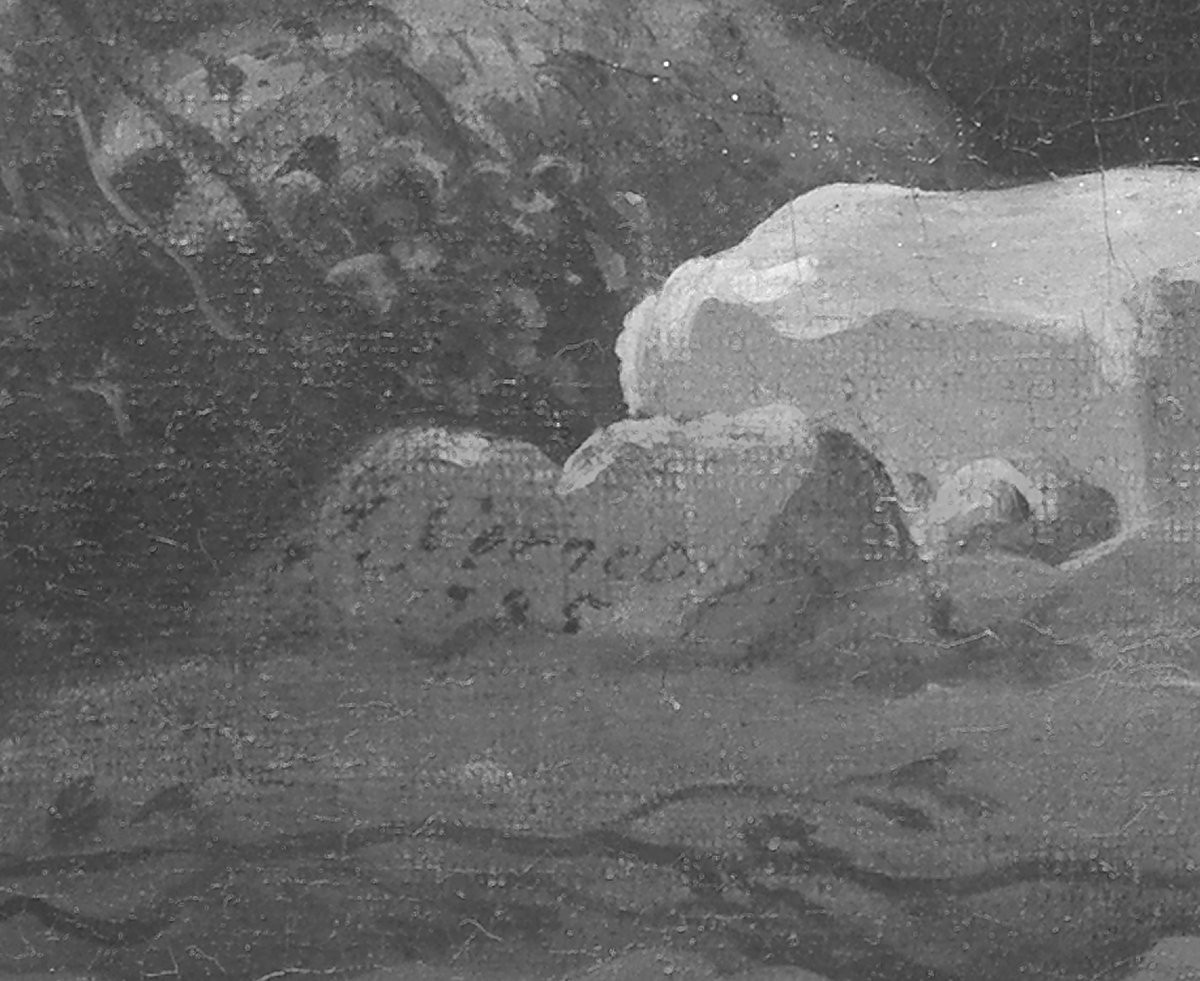

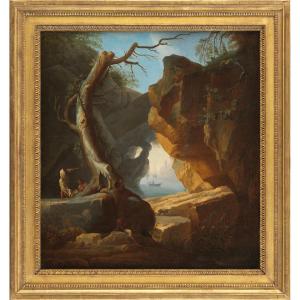


Oil on canvas. 18th century French school. Signed and dated J. Vernet S - 1735
The French master of marine painting invites us to a true spectacle. As if in the darkness of a theater, the spectator is hidden in the shadows, witnessing the rest of fishermen who have come to shelter in a natural coastal cavity. At the heart of this rocky fortress, it is the mineral nature that is highlighted, the characters being relegated to supporting roles. Both exuberant and disturbing, the setting is composed of sharp rocks in warm colors on which trees and shrubs come to anchor themselves. In the gap, like a glimmer of hope, a fishing boat on a vaporous sea is offered to the gaze.
This previously unpublished early work is one of the very first that Vernet painted during his stay in Rome (between 1734 and 1752), a period during which he was "left to his own tastes, and gravitated towards the still-vibrant art of Salvator Rosa." How can we not see in this composition the influence of his illustrious Neapolitan predecessor? Clearly, our painting belongs to "the series of pictures painted in the warm manner of S. Rosa, mostly mountainous sites... with small secondary figures." Cf. Florence Ingersoll-Smouse
Although Vernet was at the dawn of his career in 1735, our composition is no less virtuoso; it illustrates the skill with which, at a very young age, he played with materials, light, and atmosphere. The soul of the man whom art history will remember as the French landscape-marine painter is omnipresent.
Our composition is soberly set in a carved and gilded wooden frame with hearts and pearls, Louis XVI period.
Dimensions: 59.5 x 54.5 cm – 72.5 x 67.5 cm with frame
Provenance: Private German collection.
Biography:
Claude Joseph Vernet (Avignon 1714 – Paris 1789) was one of seven children, including three boys (Antoine Ignace, Antoine François, and himself), all three of whom were taught by their father, Antoine Vernet, a modest provincial painter and decorator. Around 1731, he was probably a student of Jacques Vialy in Aix. The Marquis de Caumont and the Count de Quinson, admiring the talent of the young Claude Joseph, encouraged him to go to Rome, where he was noted as early as November 1734. It was from the compositions of Adrien Manglard that he drew the elements for his first works, which were directly related to the classical tradition of seascapes initiated by Claude Lorrain. Vernet made numerous studies from nature, in the valley of Tivoli, on the banks of the Tiber, and in the Bay of Naples. Returning to France in 1753, he enjoyed great renown (his paintings were admired at the Salon of 1750) and was admitted to the Académie. The Marquis de Marigny, Director General of the King's Buildings, immediately commissioned the series of Ports of France, which was to have numbered 18—6 Mediterranean ports and 12 on the Atlantic coast—but only 15 were completed.
Joseph Vernet's oeuvre includes nearly four hundred paintings. On the eve of the advent of Romanticism, Vernet's work remains one of the best examples of the research of French landscape artists and will be imitated by many minor masters (his brother Antoine Ignace, Lacroix of Marseille, Henri d'Arles, Jean-François Hue, and Pierre-Jacques Volaire), who will take up his effects of light and water.
"With Claude-Joseph Vernet, the classical seascape dies, this Latin conception which... owes its development first in the 17th century to the genius of two Frenchmen established in Rome, Claude Lorrain and Poussin... Vernet's art is the end of a genre, and, from now on, it is towards another conception of landscape and nature that new generations of painters will move..." Cf. Florence Ingersoll-Smouse
Bibliography :
- Ingersoll-Smouse Florence, Joseph Vernet, peintrede marine, 1714 – 1789, Etienne Bignou, 1926
- ConisbeePhilip, Claude-Joseph Vernet, 1714 – 1789, France’s most famous landscape andmarine painter of the eighteenth century, Greater London Council, catalogue del’exposition au Greater London CouncilHeld du 4 juin au 19 sept 1976.
- Ouvrage collectif, Joseph Vernet 1714 – 1789,catalogue de l’exposition du musée de la marine 15 oct. 76 au 9 janv. 77,Réunion des Musées Nationaux, 1976
- Lagrange Léon, Joseph Vernet : sa vie, safamille, son siècle, d’après des documents inédits, reprint de l’édition de1858, Hachette Livres, 2013
- Delaborde Henri, Joseph Vernet, Le Savoir enpoche, 2017
- Boulaire Alain, La France maritime au temps deLouis XV et Louis XVI, Editions du Layeur, 2001
- Ouvrage collectif, La marine à voile de 1650 à1890, autour de Claude-Joseph Vernet, Musée des Beaux-Arts de Rouen, Anthese,1999
The French master of marine painting invites us to a true spectacle. As if in the darkness of a theater, the spectator is hidden in the shadows, witnessing the rest of fishermen who have come to shelter in a natural coastal cavity. At the heart of this rocky fortress, it is the mineral nature that is highlighted, the characters being relegated to supporting roles. Both exuberant and disturbing, the setting is composed of sharp rocks in warm colors on which trees and shrubs come to anchor themselves. In the gap, like a glimmer of hope, a fishing boat on a vaporous sea is offered to the gaze.
This previously unpublished early work is one of the very first that Vernet painted during his stay in Rome (between 1734 and 1752), a period during which he was "left to his own tastes, and gravitated towards the still-vibrant art of Salvator Rosa." How can we not see in this composition the influence of his illustrious Neapolitan predecessor? Clearly, our painting belongs to "the series of pictures painted in the warm manner of S. Rosa, mostly mountainous sites... with small secondary figures." Cf. Florence Ingersoll-Smouse
Although Vernet was at the dawn of his career in 1735, our composition is no less virtuoso; it illustrates the skill with which, at a very young age, he played with materials, light, and atmosphere. The soul of the man whom art history will remember as the French landscape-marine painter is omnipresent.
Our composition is soberly set in a carved and gilded wooden frame with hearts and pearls, Louis XVI period.
Dimensions: 59.5 x 54.5 cm – 72.5 x 67.5 cm with frame
Provenance: Private German collection.
Biography:
Claude Joseph Vernet (Avignon 1714 – Paris 1789) was one of seven children, including three boys (Antoine Ignace, Antoine François, and himself), all three of whom were taught by their father, Antoine Vernet, a modest provincial painter and decorator. Around 1731, he was probably a student of Jacques Vialy in Aix. The Marquis de Caumont and the Count de Quinson, admiring the talent of the young Claude Joseph, encouraged him to go to Rome, where he was noted as early as November 1734. It was from the compositions of Adrien Manglard that he drew the elements for his first works, which were directly related to the classical tradition of seascapes initiated by Claude Lorrain. Vernet made numerous studies from nature, in the valley of Tivoli, on the banks of the Tiber, and in the Bay of Naples. Returning to France in 1753, he enjoyed great renown (his paintings were admired at the Salon of 1750) and was admitted to the Académie. The Marquis de Marigny, Director General of the King's Buildings, immediately commissioned the series of Ports of France, which was to have numbered 18—6 Mediterranean ports and 12 on the Atlantic coast—but only 15 were completed.
Joseph Vernet's oeuvre includes nearly four hundred paintings. On the eve of the advent of Romanticism, Vernet's work remains one of the best examples of the research of French landscape artists and will be imitated by many minor masters (his brother Antoine Ignace, Lacroix of Marseille, Henri d'Arles, Jean-François Hue, and Pierre-Jacques Volaire), who will take up his effects of light and water.
"With Claude-Joseph Vernet, the classical seascape dies, this Latin conception which... owes its development first in the 17th century to the genius of two Frenchmen established in Rome, Claude Lorrain and Poussin... Vernet's art is the end of a genre, and, from now on, it is towards another conception of landscape and nature that new generations of painters will move..." Cf. Florence Ingersoll-Smouse
Bibliography :
- Ingersoll-Smouse Florence, Joseph Vernet, peintrede marine, 1714 – 1789, Etienne Bignou, 1926
- ConisbeePhilip, Claude-Joseph Vernet, 1714 – 1789, France’s most famous landscape andmarine painter of the eighteenth century, Greater London Council, catalogue del’exposition au Greater London CouncilHeld du 4 juin au 19 sept 1976.
- Ouvrage collectif, Joseph Vernet 1714 – 1789,catalogue de l’exposition du musée de la marine 15 oct. 76 au 9 janv. 77,Réunion des Musées Nationaux, 1976
- Lagrange Léon, Joseph Vernet : sa vie, safamille, son siècle, d’après des documents inédits, reprint de l’édition de1858, Hachette Livres, 2013
- Delaborde Henri, Joseph Vernet, Le Savoir enpoche, 2017
- Boulaire Alain, La France maritime au temps deLouis XV et Louis XVI, Editions du Layeur, 2001
- Ouvrage collectif, La marine à voile de 1650 à1890, autour de Claude-Joseph Vernet, Musée des Beaux-Arts de Rouen, Anthese,1999
Explore similar pieces and discover your ideal find:
Seascapes, Marine Paintings