THIS OBJECT WAS SOLD
Pardon Of Clarity In Combrit Brittany Finistère By Emile Simon
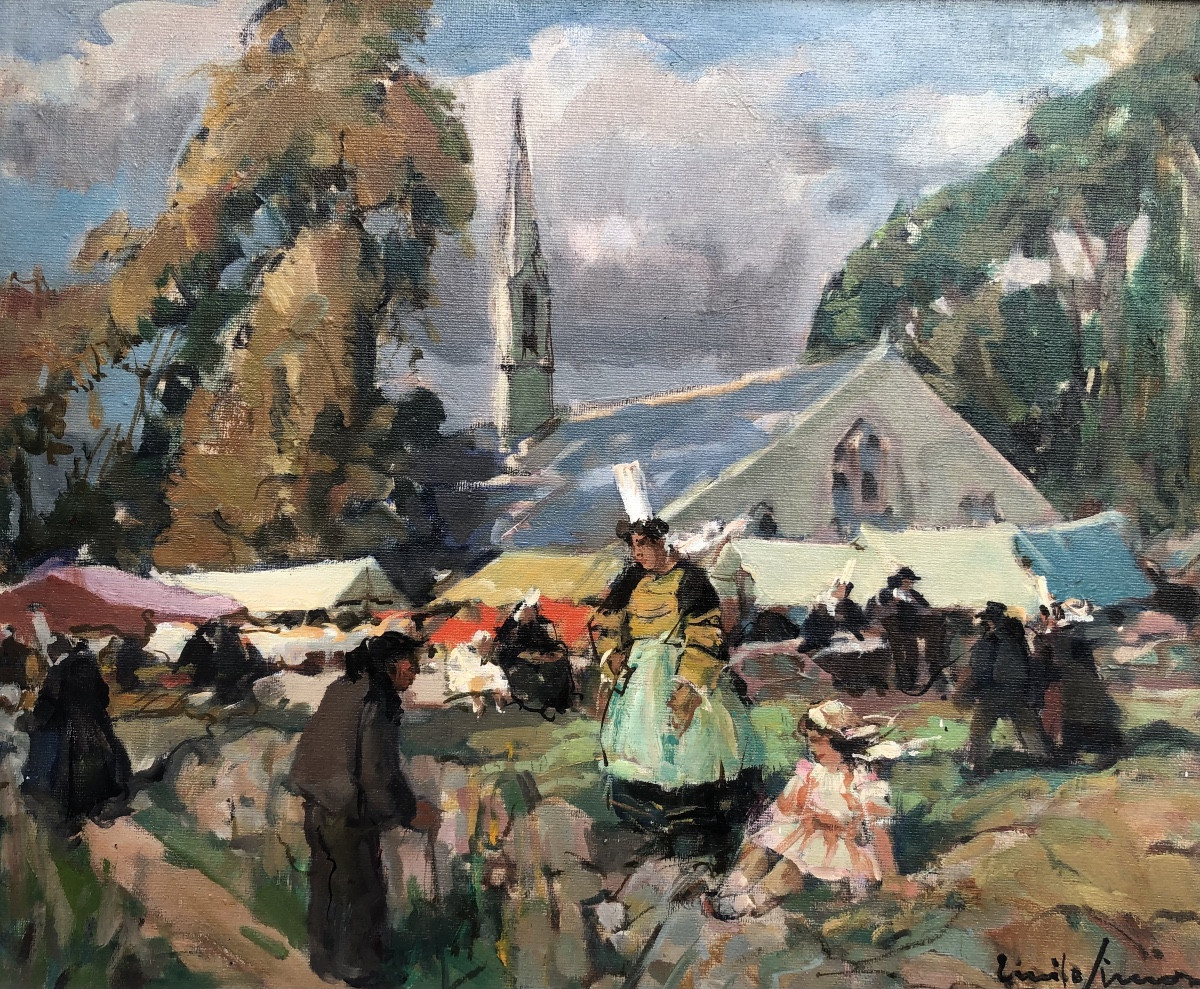


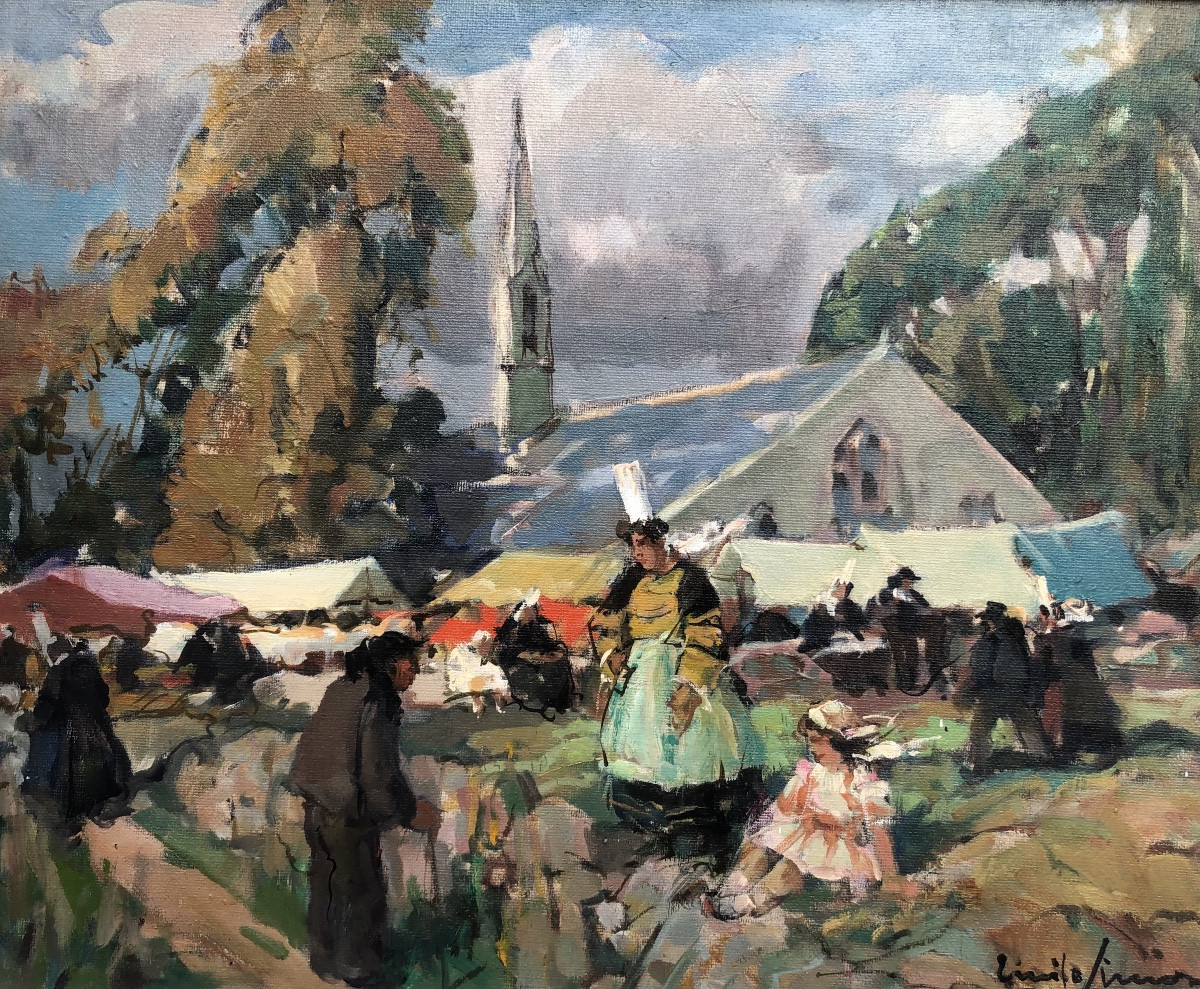


Style: Breton school 1930Condition: Very good conditionTechnique: Oil on canvas Other: Signed lower rightDimension: 33/41cmDimension with frame: 49/57 cmShipping France: 30 euros, other countries contact usDelightful oil on canvas by the artist Emile Simon. Raised invoice and vibrant colors for this traditional scene of Breton life in the 1930s. The painting is signed lower right.Emile Simon 1890 - 1976 PainterEmile Simon's father was a typographer, his mother a seamstress. He was first a student at the École des Beaux-Arts in Rennes, then obtained a scholarship that allowed him to enter Fernand Cormon's studio at the École des Beaux-Arts in Paris. He won the Prix de Rome in 1912 and agreed to let Cormon send an older competitor in his place, who would not have another opportunity to make the trip to Rome. Two years later, the First World War broke out, preventing him from going to Rome himself. Émile Simon earned his living by drawing for Parisian jewelers. In 1913, he went to Cairo where he found a teaching position. This stay would later inspire several paintings he painted from memory, such as The Water Carrier of Cairo in 1925. After his mobilization during the First World War, he fell seriously ill with the Spanish flu in 1917 and was repatriated to the hospital in Rennes. He recovered, then in 1922 found a job as a professor at the École des Beaux-Arts in Nantes, directed by Emmanuel Fougerat. He took as his subject urban landscapes of Nantes such as Le Port de Nantes or Rue de la Miséricorde, where he lived. Around 1930, Émile Simon was the victim of a motorcycle accident on the road to Rennes where he lost his left eye, but hid his disability so well that no one noticed. He married a young model who died three years later. He then met his student Madeleine Fié-Fieux who helped him buy a house in Nantes for himself and his mother. He draws his inspiration from the Breton landscapes and the inhabitants of this region in their traditional and daily activities. On the eve of the Second World War, Émile Simon lives in Nantes, but paints in Cornouaille: The View of Locronan, Fier Bigouden, The Entrance to Mass at Pont-Croix, The Calvary of Saint-Evi, The Old Hulls of Camaret, On the Departure… The threatening war inspires him to paint The Murdered Alsace, a painting which in 1970 received the medal of honor from the Salon des Artistes Français. In 1943, he moved to the Squividan manor in Clohars-Fouesnant (Finistère) with the painter Madeleine Fié-Fieux and her husband. After the war, he had to return to Nantes as director of the École des Beaux-Arts. He only stayed there for a year, and in 1947 settled permanently in Squividan. In this corner of greenery and tranquility, he would continue the bulk of his work. He tirelessly traveled the roads of Brittany, seeking the landscape, the scene of rustic life, the ports, the old streets, the typical characters. He painted Vitré, Josselin, Vannes, Tréguier, Dinan, Quimper, these ancient towns that charmed him. He captured the landscapes of Finistère with Guissény, Porspoder, Camaret, Douarnenez, Pont-Croix, Audierne and Penmarch'. He painted the interior with Rumengol, Lannédern, the chapel of Saint-Côme near Châteaulin. He was also captivated by Auray and its surrounding areas: Saint-Goustan, Saint-Avoye, Plescop. He also painted genre scenes such as Le Fier Bigouden, Le Repose des Musiciens, Le Maire, Le Joueur de Dames, Le Retour des Champs and painted the Portrait of Madeleine Fié-Fieux. Sheltered from financial worries thanks to his Fié-Fieux friends, Émile Simon did not sell his paintings, all of which remained in Squividan. In 1970, he suffered a stroke that forced him to paint with his left hand. He died at the Squividan manor, surrounded by Madeleine Fié-Fieux, who was his assistant and ensured the conservation and promotion of his work.
Explore similar pieces and discover your ideal find:
Genre Scenes, Nudes