



Large Impressionist Faience Planter Montigny Sur Loing Signed Charles Virion 19th Century Barbotine
Artist: Charles Virion
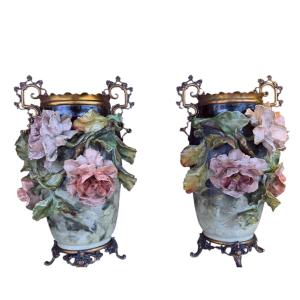
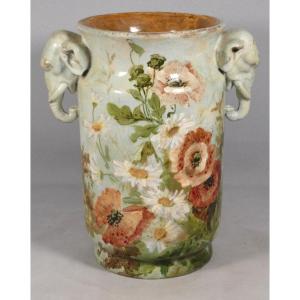
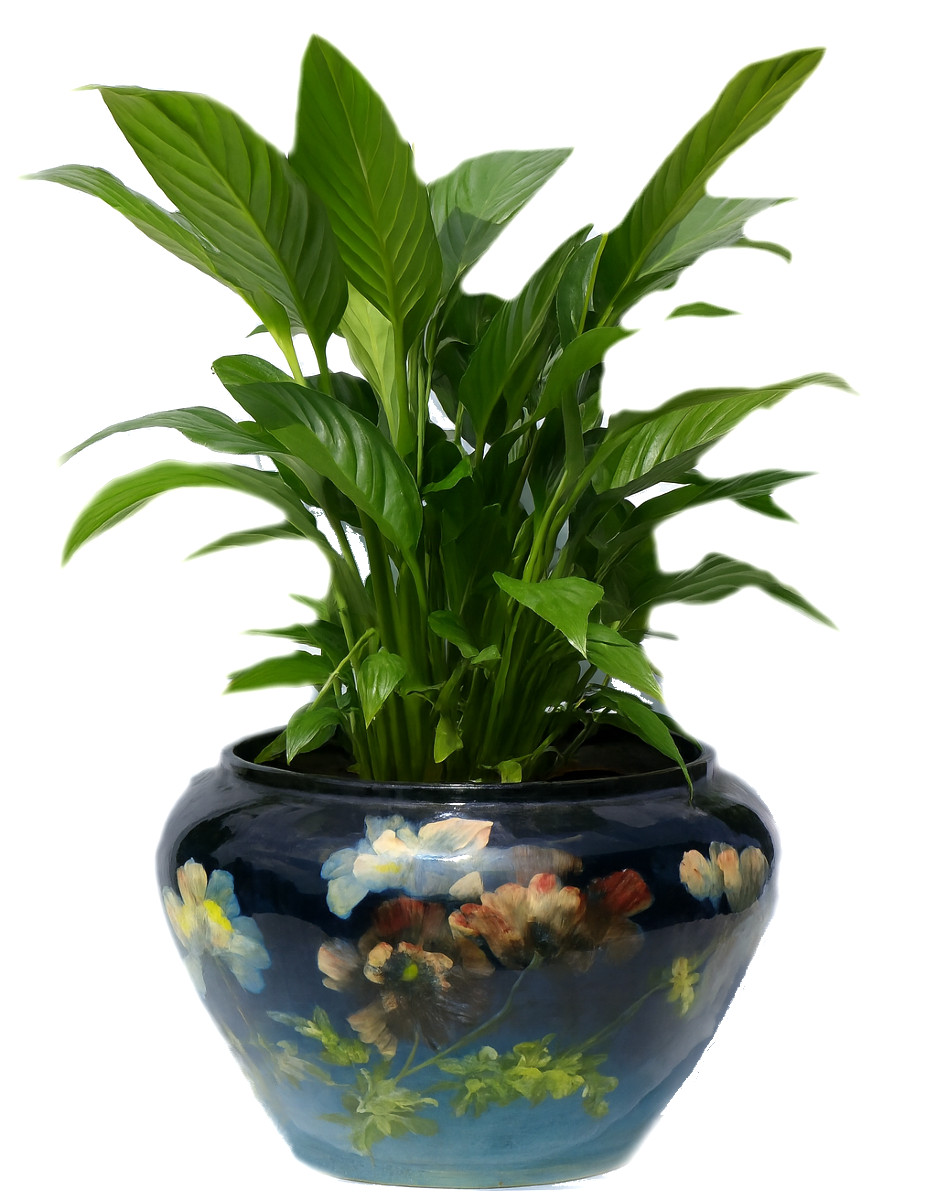
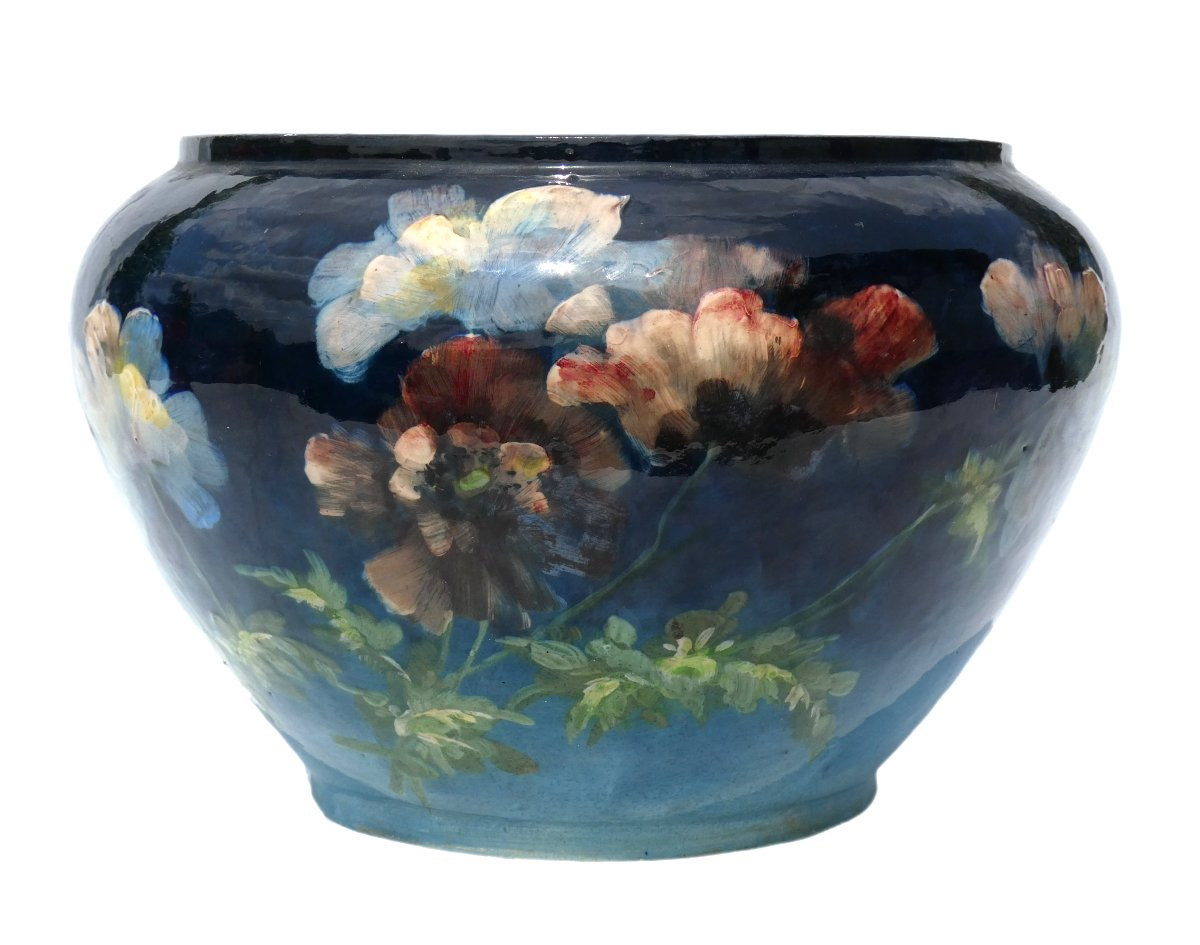
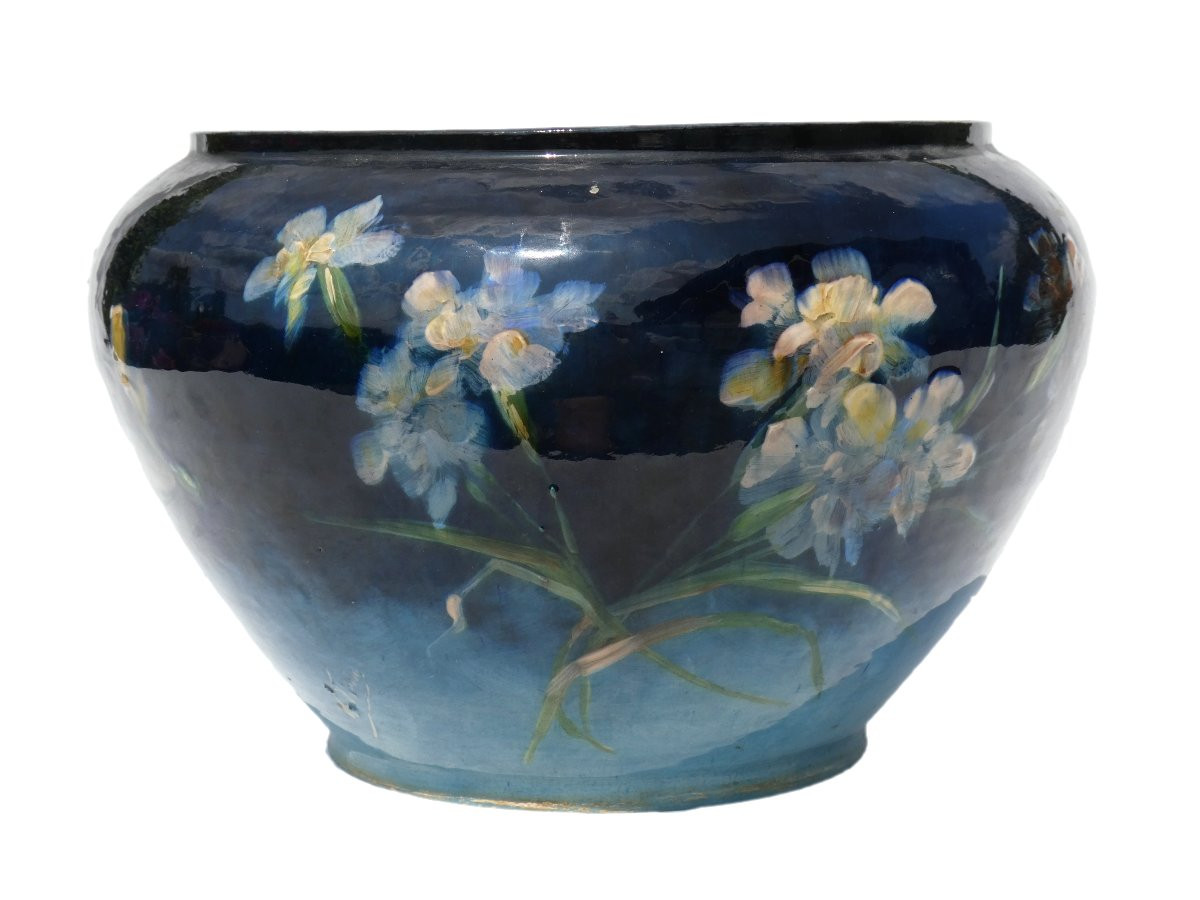
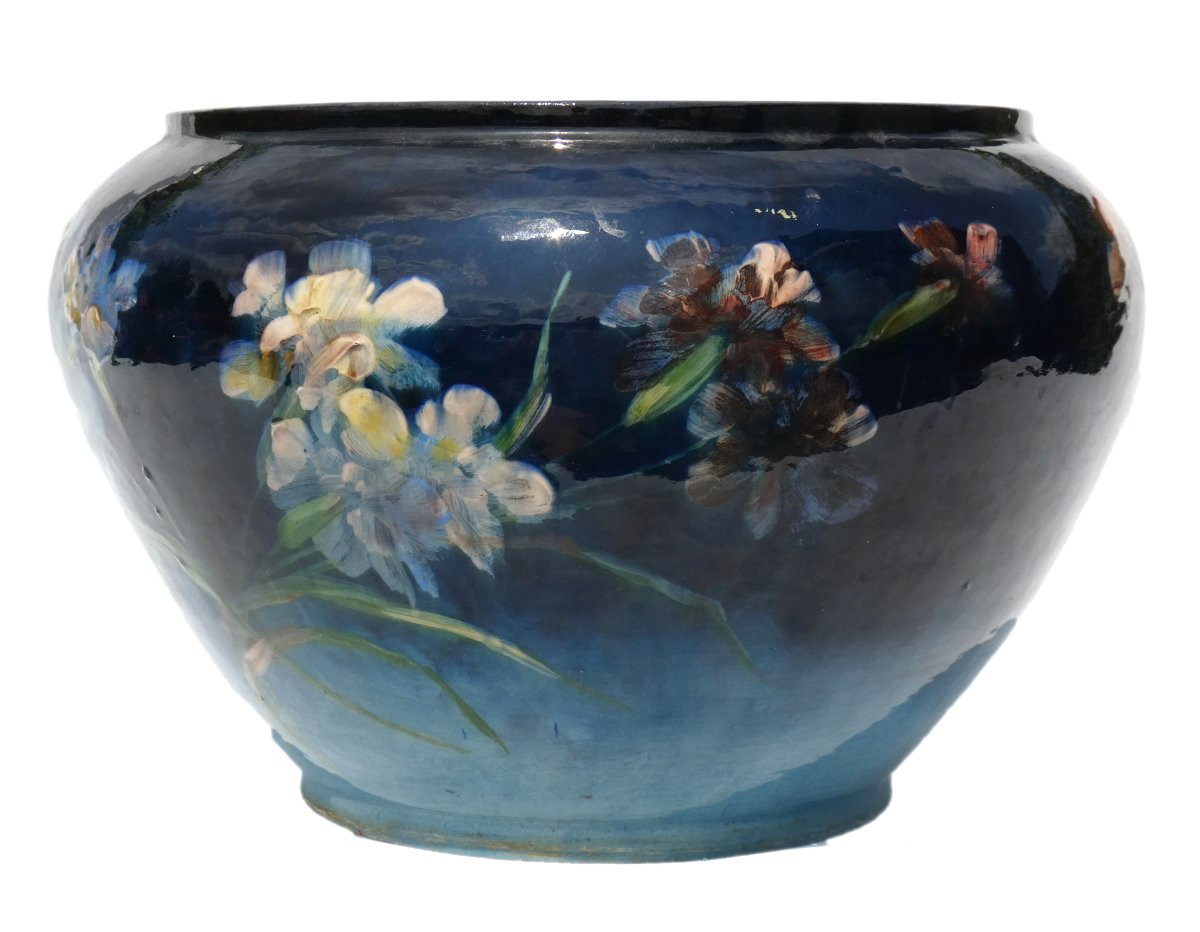
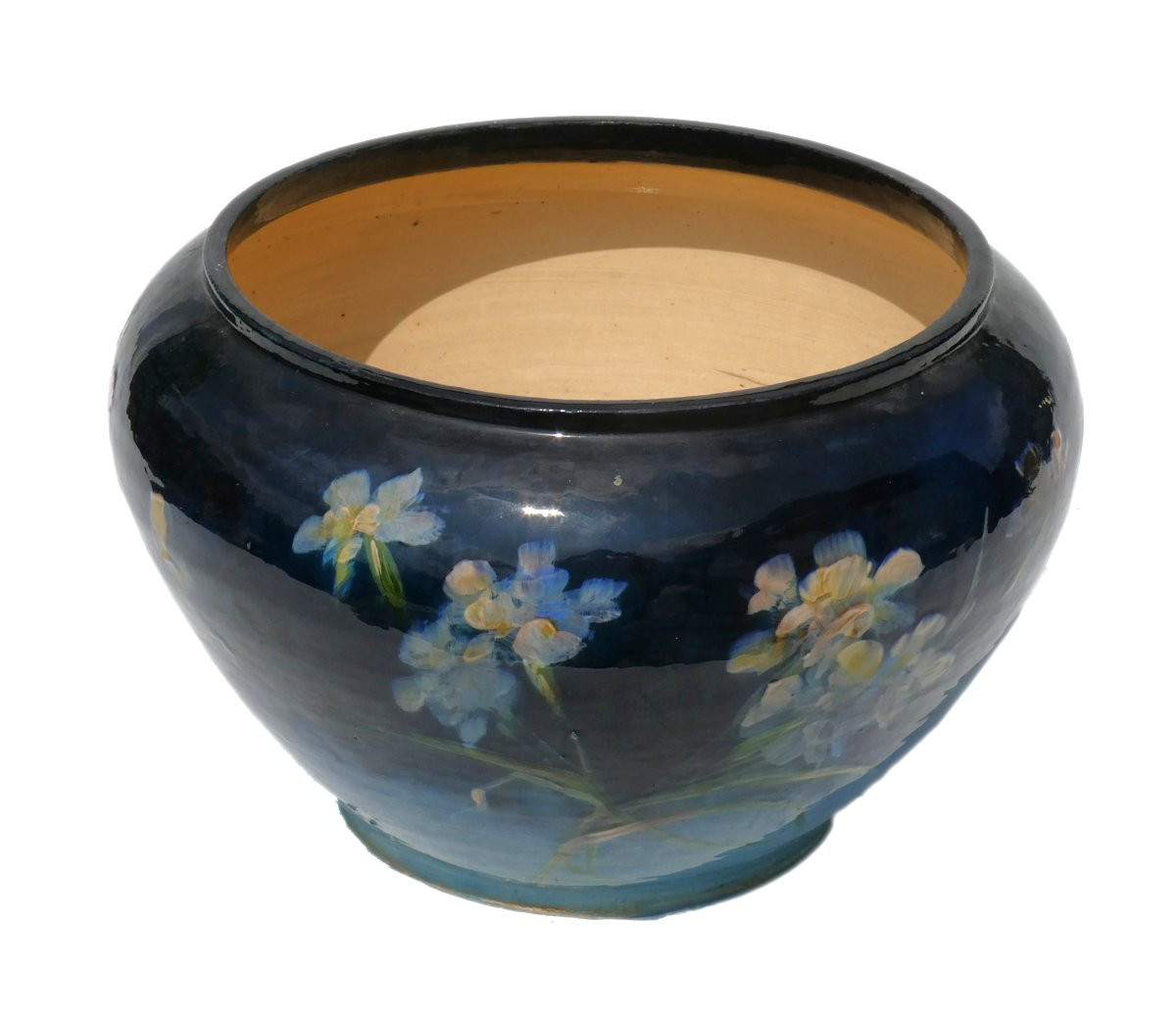
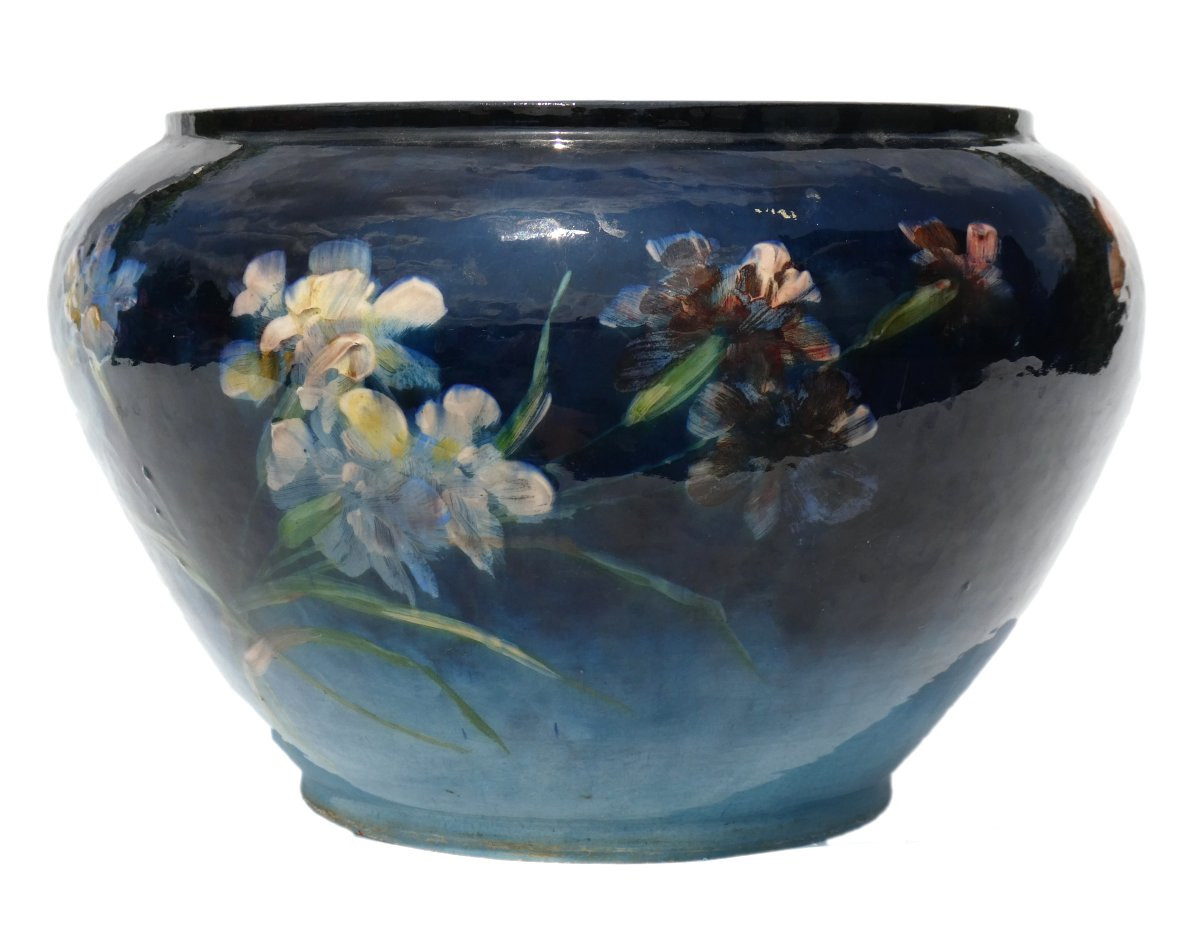
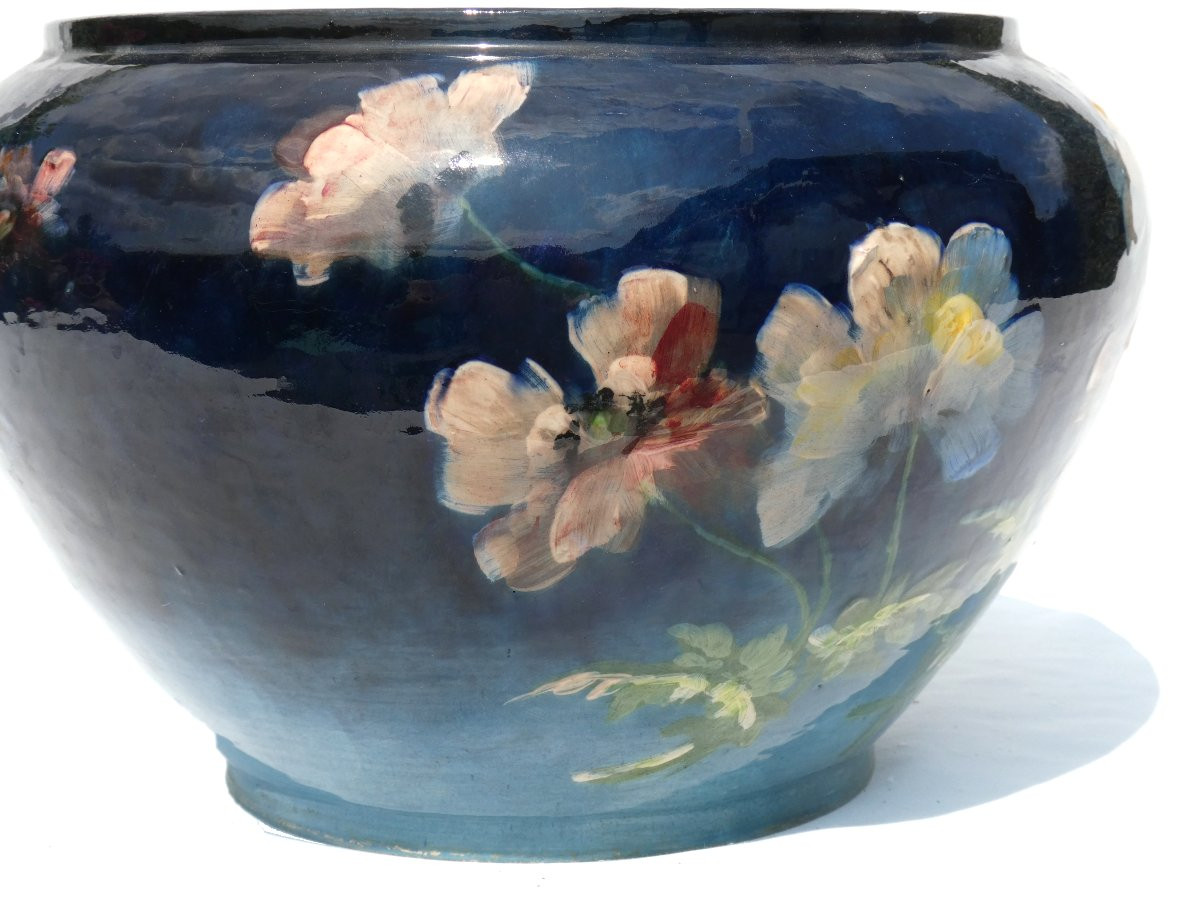
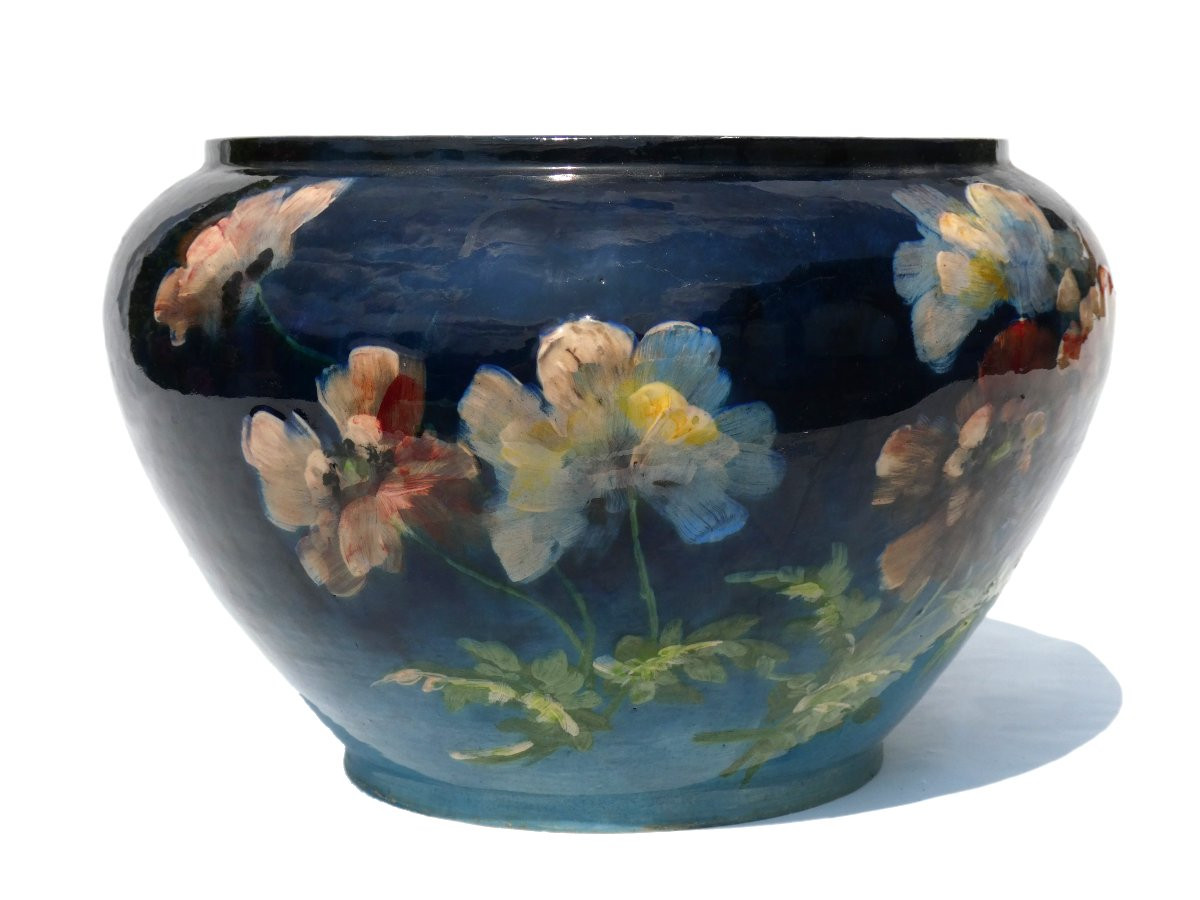
Antique & large impressionist earthenware planter.
Very beautiful floral decoration on a blue background.
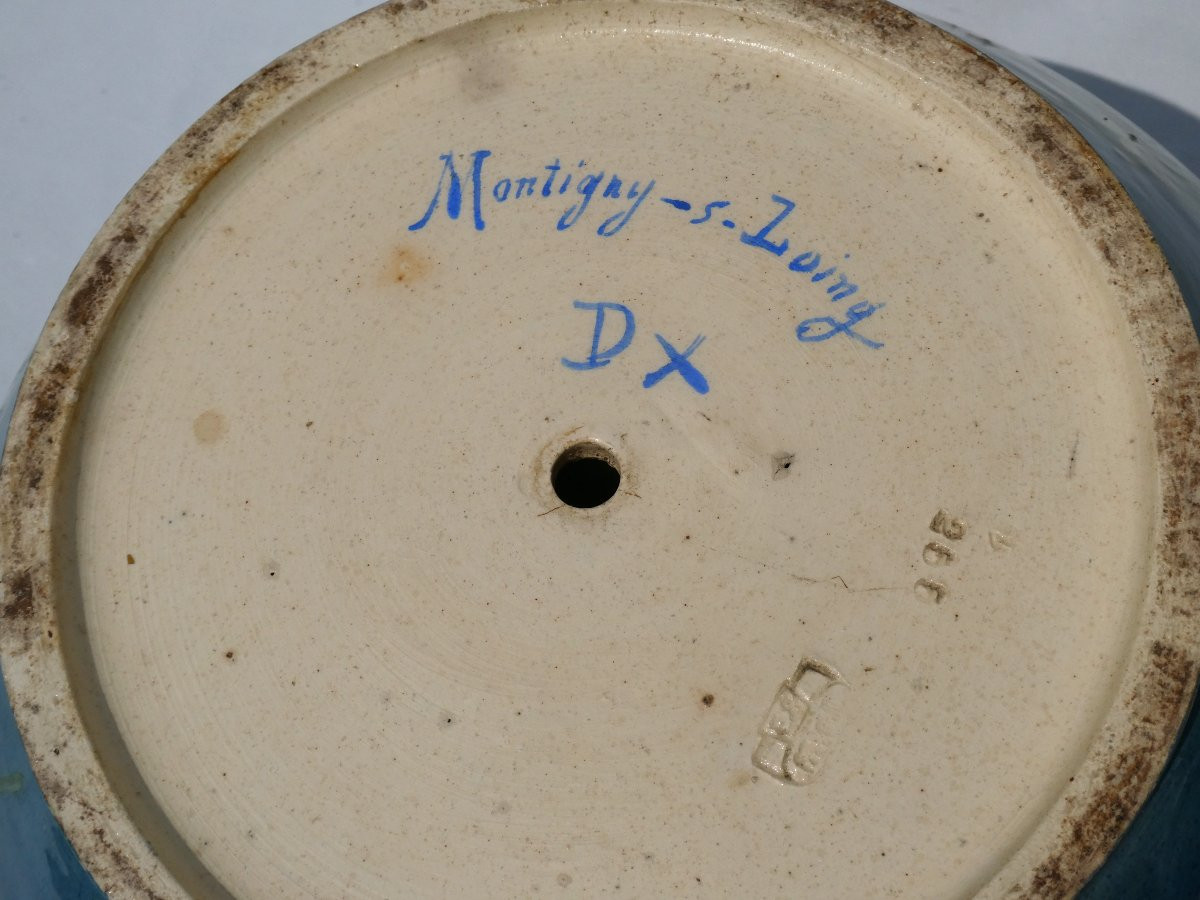
Planter bearing the stamp of the Montigny Sur Loing factory.
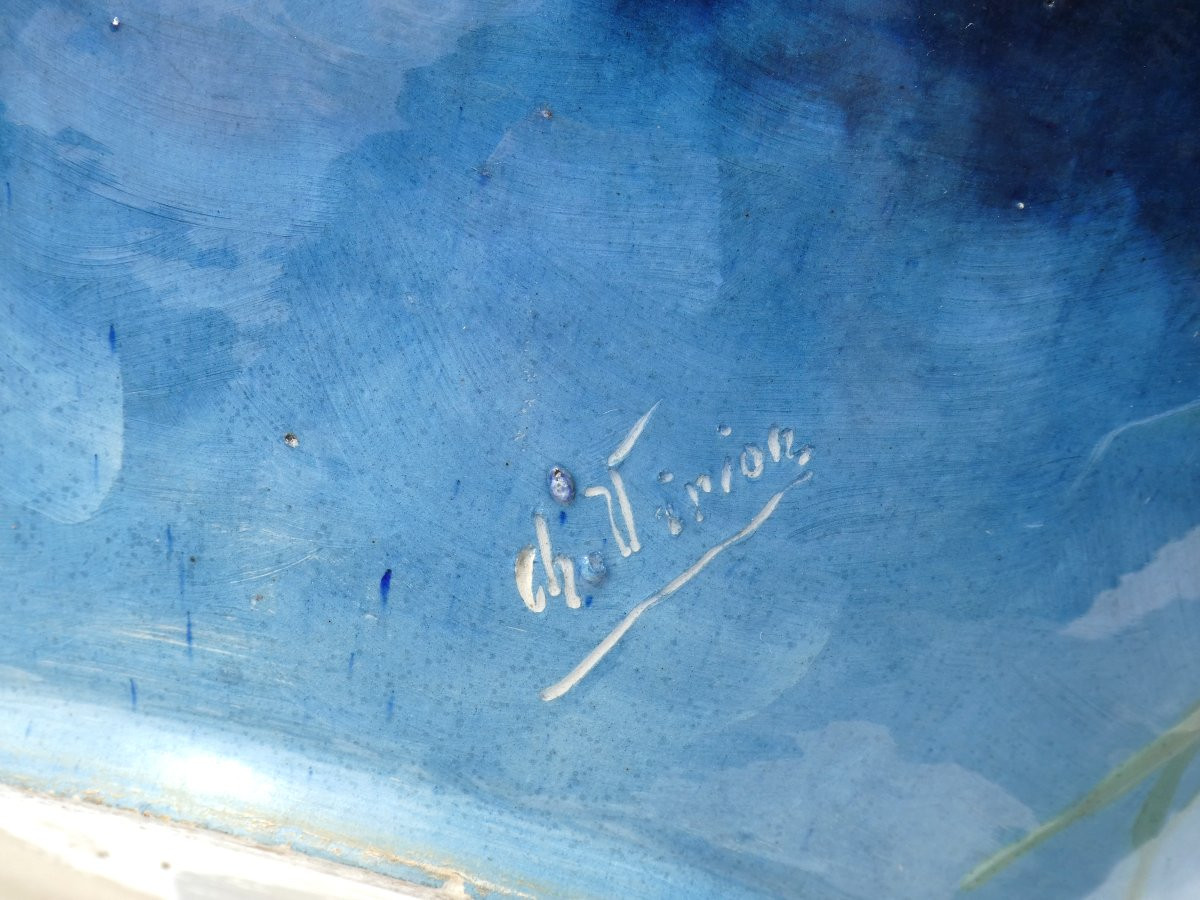
Decoration signed by the artist Charles Virion 22.5cm high and 27cm in diameter.
Very good condition
Charles Virion, an artist between nature and ceramics In 1865, in Ajaccio, Charles Louis Eugène Virion was born. Nothing yet suggested that this son of Corsica would become one of the leading artists of the Loing, a renowned animal sculptor but also a ceramist deeply attached to the small town of Montigny-sur-Loing. Very early on, he turned to the arts. After a stint at the École des Beaux-Arts in Nancy, he moved to Paris and immersed himself in the teachings of Charles Gauthier and Jean-Paul Aubé. His Parisian beginnings were promising: his sculptures, presented at the Salon des Artistes Français, earned him distinctions and medals. Yet, it was far from the tumult of the capital that Virion chose to anchor his life and work. In 1889, he settled in Montigny-sur-Loing. The village, nestled between the river and the Fontainebleau forest, attracted painters, poets, and artisans. Since the middle of the century, sought-after earthenware and stoneware were being crafted there, in the spirit of a renewed decorative art. It was there that Virion found fertile ground: the Montigny-sur-Loing factory, run by Boué and Petit, opened its doors to him. In the workshops, the sculptor discovered the infinite possibilities of ceramics. He transposed into stoneware what already nourished his sculpture: the strength of the animal, the fragile grace of nature. His vases, often populated with frogs, lizards, or birds, seem animated by a vital breath. The glaze accentuates the reliefs, the hues recall the forest and the undergrowth. Each piece bears the double mark: that of the master sculptor and that of the factory, sometimes accompanied by the famous rooster, an emblem he favored. These creations, exhibited and sold at the turn of the century, placed Montigny-sur-Loing in the international Art Nouveau movement. The small factory became, thanks to Virion and other artists, a center of innovation and poetry. But Virion did not stop there. While he continued his career as an animal sculptor—awarded at the 1900 World's Fair—and created several war memorials after the Great War, including the one in Montigny-sur-Loing, he remained loyal to his village and his factory. He died there in 1946, leaving behind works now housed in prestigious museums, from the Musée d'Orsay to the Indianapolis Museum of Art. The history of Charles Virion is inseparable from that of Montigny-sur-Loing. Through his sculptures and ceramics, he gave form to a nature that was both real and imagined, and permanently inscribed the village's name on the map of the great centers of French decorative art.
Very beautiful floral decoration on a blue background.
Planter bearing the stamp of the Montigny Sur Loing factory.
Decoration signed by the artist Charles Virion 22.5cm high and 27cm in diameter.
Very good condition
Charles Virion, an artist between nature and ceramics In 1865, in Ajaccio, Charles Louis Eugène Virion was born. Nothing yet suggested that this son of Corsica would become one of the leading artists of the Loing, a renowned animal sculptor but also a ceramist deeply attached to the small town of Montigny-sur-Loing. Very early on, he turned to the arts. After a stint at the École des Beaux-Arts in Nancy, he moved to Paris and immersed himself in the teachings of Charles Gauthier and Jean-Paul Aubé. His Parisian beginnings were promising: his sculptures, presented at the Salon des Artistes Français, earned him distinctions and medals. Yet, it was far from the tumult of the capital that Virion chose to anchor his life and work. In 1889, he settled in Montigny-sur-Loing. The village, nestled between the river and the Fontainebleau forest, attracted painters, poets, and artisans. Since the middle of the century, sought-after earthenware and stoneware were being crafted there, in the spirit of a renewed decorative art. It was there that Virion found fertile ground: the Montigny-sur-Loing factory, run by Boué and Petit, opened its doors to him. In the workshops, the sculptor discovered the infinite possibilities of ceramics. He transposed into stoneware what already nourished his sculpture: the strength of the animal, the fragile grace of nature. His vases, often populated with frogs, lizards, or birds, seem animated by a vital breath. The glaze accentuates the reliefs, the hues recall the forest and the undergrowth. Each piece bears the double mark: that of the master sculptor and that of the factory, sometimes accompanied by the famous rooster, an emblem he favored. These creations, exhibited and sold at the turn of the century, placed Montigny-sur-Loing in the international Art Nouveau movement. The small factory became, thanks to Virion and other artists, a center of innovation and poetry. But Virion did not stop there. While he continued his career as an animal sculptor—awarded at the 1900 World's Fair—and created several war memorials after the Great War, including the one in Montigny-sur-Loing, he remained loyal to his village and his factory. He died there in 1946, leaving behind works now housed in prestigious museums, from the Musée d'Orsay to the Indianapolis Museum of Art. The history of Charles Virion is inseparable from that of Montigny-sur-Loing. Through his sculptures and ceramics, he gave form to a nature that was both real and imagined, and permanently inscribed the village's name on the map of the great centers of French decorative art.
600 €
Period: 19th century
Style: Napoleon 3rd
Condition: Perfect condition
Material: Earthenware
Reference (ID): 1601079
Availability: In stock
Print